Tropical Climate Furniture in Bali | Durable Stylish
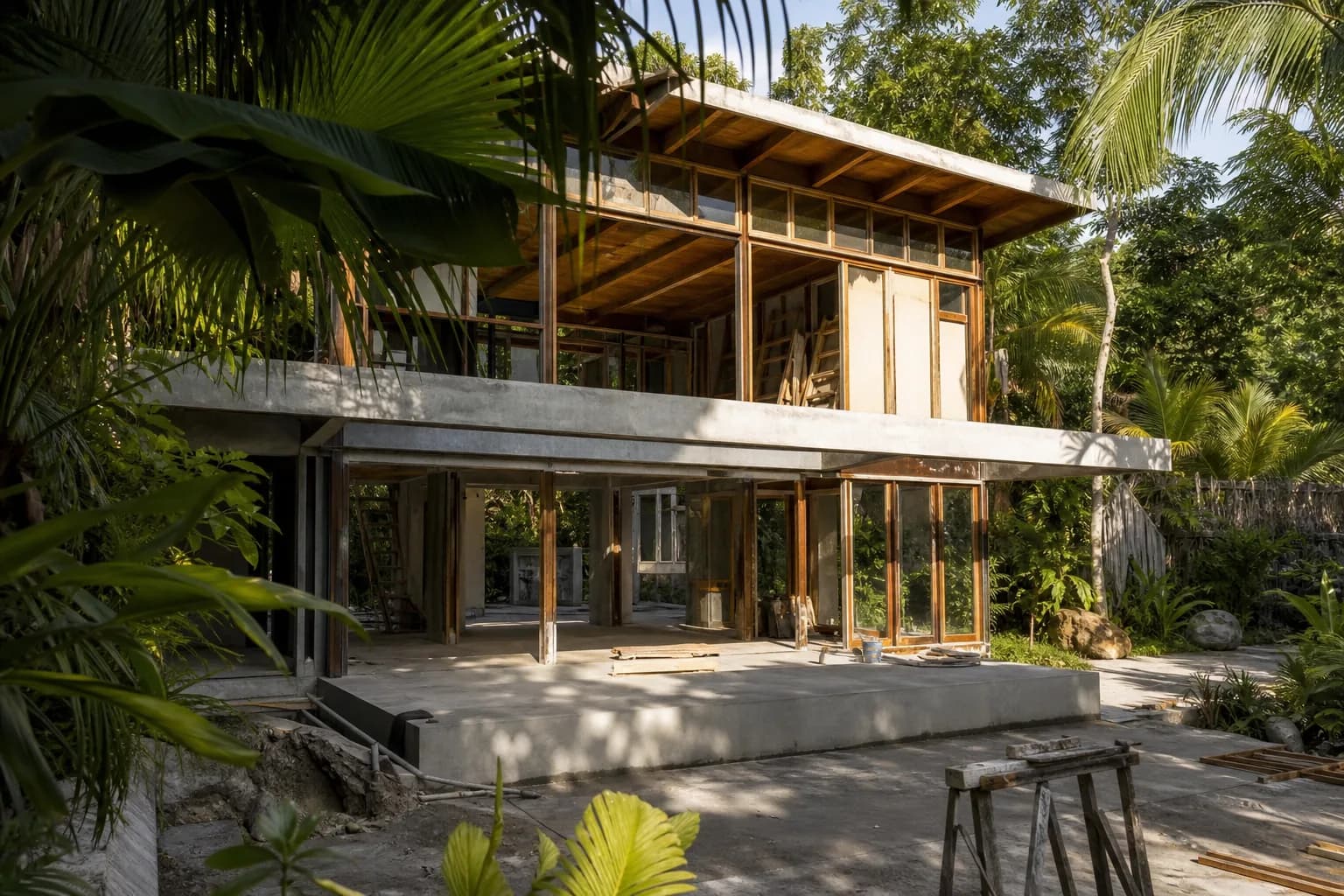
Expert Guide to Selecting Furniture for Tropical Climate in Bali
Choosing appropriate furniture for Bali’s tropical climate represents one of the most critical decisions in villa construction and interior design. The island’s unique environmental conditions—persistent humidity, intense UV exposure, salt-laden coastal air, and endemic wood-boring insects—create challenges that standard furniture simply cannot withstand. At Teville, we’ve observed countless instances where poorly selected furniture deteriorates within months, requiring expensive replacements that could have been avoided with proper material selection and supplier guidance.
This comprehensive guide examines the technical considerations for furniture selection in Bali’s tropical environment, drawing from our experience constructing high-quality villas across the island. Whether you’re furnishing a private residence or a rental property, understanding material performance, maintenance requirements, and local sourcing options will protect your investment and ensure long-term durability.
Understanding Bali’s Climate Challenges for Furniture
Humidity and Moisture Exposure
Bali maintains relative humidity levels between 75-85% year-round, with peaks during the monsoon season from November through March. This constant moisture exposure affects furniture in several ways. Wood expands and contracts continuously, causing joints to loosen, veneers to separate, and structural integrity to deteriorate. Metal components develop surface corrosion unless properly treated with marine-grade finishes. Upholstery fabrics absorb moisture, creating ideal conditions for mold growth and unpleasant odors.
The humidity challenge intensifies in coastal areas where salt particles accelerate corrosion on metal hardware and fittings. Properties within two kilometers of the ocean require particularly careful material selection. We’ve documented cases where standard furniture hardware failed within six months in beachfront villas, while marine-grade alternatives remained functional after five years of continuous exposure.
Temperature Fluctuations and UV Degradation
While Bali’s temperature remains relatively stable between 26-32°C, direct sunlight creates localized heating that affects furniture positioned near windows or in outdoor areas. UV radiation causes significant degradation to untreated wood, fading natural colors and breaking down lignin structures. Synthetic materials including plastics and certain fabrics become brittle and crack under prolonged UV exposure.
Indoor furniture near large glass surfaces experiences accelerated aging unless protected by UV-filtering window films or positioned strategically away from direct sunlight. Outdoor furniture requires UV-resistant finishes that must be reapplied annually to maintain protection. The combination of heat and humidity creates particularly aggressive conditions that standard furniture finishes cannot withstand without proper specification.
Wood-Boring Insects and Biological Threats
Bali hosts several species of wood-boring insects, with powder post beetles and termites presenting the most significant threats to furniture. These insects target untreated softwoods and certain hardwoods, creating extensive internal damage before external signs become visible. Furniture constructed from insufficiently dried timber or lacking proper chemical treatment becomes vulnerable within the first year of use.
Termite pressure varies significantly across Bali, with higher concentrations in areas with dense vegetation and older structures. Furniture that makes direct contact with floors requires particular attention, as termites typically enter through ground-level access points. We recommend furniture legs treated with borate solutions and regular inspections for early detection of infestation signs including fine sawdust accumulation and small exit holes.
Mold and Fungal Growth
The combination of warmth and humidity creates optimal conditions for mold and mildew growth on furniture surfaces, particularly upholstered pieces and items stored in poorly ventilated spaces. Mold appears as black or green spots on fabric surfaces and can penetrate deep into cushion foam, making remediation difficult and often requiring complete replacement.
Leather furniture proves especially susceptible to mold growth unless treated with anti-fungal compounds and maintained with regular cleaning. Natural fiber upholstery including cotton and linen requires synthetic blends or chemical treatments to resist biological growth. Storage furniture in closets and enclosed spaces needs adequate ventilation to prevent mold development on both the furniture itself and stored contents.
Material Options for Furniture in Tropical Climate Bali
Teak Wood: The Premium Standard
Teak remains the gold standard for furniture in tropical climate Bali due to its natural oil content that repels water and resists insect damage. The wood’s tight grain structure prevents moisture absorption while its natural silica content deters termites and other wood-boring insects. Properly maintained teak furniture can last decades in Bali’s climate without structural deterioration.
Quality varies significantly among teak furniture available in Bali. Plantation-grown teak from Java offers good performance at moderate prices, while old-growth teak commands premium pricing but provides superior density and oil content. Grade A teak shows consistent color and minimal knots, while Grade B and C contain more variation and may include sapwood that requires additional treatment.
Teak furniture requires minimal maintenance compared to other wood species. Untreated teak develops a silver-gray patina over time, which many owners prefer for its natural appearance. Those wanting to maintain the original honey-brown color must apply teak oil or sealer every 3-4 months. We specify teak for outdoor dining sets, sun loungers, and poolside furniture where durability justifies the higher initial investment.
Rattan and Wicker Construction
Rattan furniture represents a traditional choice for furniture tropical climate Bali, offering flexibility, light weight, and natural aesthetic appeal. Natural rattan comes from climbing palms harvested in Indonesia’s forests, while synthetic rattan uses polyethylene or PVC materials molded to replicate natural appearance. Both options perform well in tropical conditions when properly constructed and maintained.
Natural rattan requires regular maintenance including cleaning to remove dust and mold spores, plus periodic application of protective varnish to prevent drying and cracking. The material works best for covered outdoor areas or indoor spaces where direct rain exposure doesn’t occur. Synthetic rattan offers superior weather resistance and requires minimal maintenance, making it preferable for fully exposed outdoor locations.
Quality assessment for rattan furniture focuses on frame construction and weaving density. Frames should use thick-walled aluminum or treated hardwood rather than thin metal tubes that corrode quickly. Weaving should be tight and uniform without gaps or loose ends. We’ve found that mid-range synthetic rattan furniture often outperforms premium natural rattan in Bali’s climate, particularly for rental properties where maintenance schedules may be inconsistent.
Synthetic and Composite Materials
Modern synthetic materials including high-density polyethylene (HDPE), polywood, and marine-grade composites offer excellent performance for outdoor furniture in tropical environments. These materials resist moisture absorption completely, require no seasonal maintenance, and withstand UV exposure better than most natural materials when properly formulated with UV stabilizers.
HDPE furniture made from recycled plastics provides environmental benefits while delivering durability that exceeds most natural materials. The material doesn’t splinter, crack, or require painting, and can be cleaned with simple soap and water. Color options remain limited compared to painted wood, but quality manufacturers offer realistic wood-grain textures that provide acceptable aesthetics for many applications.
Marine-grade aluminum frames with powder-coated finishes provide excellent structural support for outdoor furniture. The powder coating must be applied correctly with proper surface preparation and adequate thickness to prevent corrosion in coastal environments. We specify marine-grade aluminum for pool furniture and beachfront applications where salt exposure would quickly degrade standard aluminum or steel frames.
Outdoor Fabric Selection
Fabric selection for furniture tropical climate Bali requires careful attention to moisture resistance, UV stability, and mold prevention. Solution-dyed acrylic fabrics like Sunbrella offer the best performance for outdoor cushions and upholstery, with UV resistance that prevents fading and water-repellent treatments that shed rain quickly. These fabrics cost 2-3 times more than standard outdoor fabrics but last 5-7 years in Bali’s climate compared to 1-2 years for cheaper alternatives.
Quick-dry foam cushion cores prevent water retention that leads to mold growth. Standard polyurethane foam absorbs water and takes days to dry, creating ideal conditions for mold development. Quick-dry foam uses an open-cell structure that allows water to drain through, with cushions drying within hours after rain exposure. This specification adds approximately 30% to cushion costs but eliminates the most common failure mode for outdoor furniture.
Indoor upholstery fabrics require different considerations, with synthetic blends outperforming natural fibers in humid conditions. Polyester-cotton blends resist mold better than pure cotton while maintaining acceptable comfort. Leather requires regular conditioning with anti-fungal products to prevent mold growth and surface deterioration. We generally recommend synthetic fabrics for rental properties and reserve natural materials for owner-occupied residences where maintenance can be closely controlled.
Indoor Versus Outdoor Furniture Requirements
Indoor Furniture Specifications
Indoor furniture in Bali faces less severe environmental stress than outdoor pieces but still requires tropical-appropriate specifications. Solid wood furniture should use kiln-dried timber with moisture content below 12% to prevent warping and joint failure. Engineered wood products including plywood and MDF require marine-grade specifications with waterproof glue and sealed edges to prevent moisture absorption and swelling.
Upholstered indoor furniture benefits from removable, washable covers that allow regular cleaning to prevent mold accumulation. Fixed upholstery should use synthetic fabrics with anti-microbial treatments. Cushion foam requires adequate density (minimum 28 kg/m³) to resist compression and maintain shape in humid conditions. Lower-density foam deteriorates quickly and develops permanent deformation within 1-2 years.
Metal furniture components including drawer slides, hinges, and fasteners should use stainless steel rather than zinc-plated or standard steel hardware. The cost difference remains minimal (typically 10-15% premium) while dramatically extending functional life. We’ve replaced countless drawer slides and hinges in furniture that used standard hardware, with failures occurring within 2-3 years compared to 10+ years for stainless steel alternatives.
Outdoor and Semi-Outdoor Furniture
Outdoor furniture requires the most robust specifications for furniture tropical climate Bali, with material selection determining whether pieces last one year or ten. Fully exposed locations demand teak, synthetic materials, or marine-grade aluminum construction. Semi-covered areas including balés and covered terraces allow broader material choices but still require weather-resistant specifications.
Dining furniture for outdoor use should avoid glass tabletops unless tempered and properly supported, as thermal stress from sun exposure can cause spontaneous breakage. Teak or synthetic tabletops provide better durability and require less maintenance. Chair and lounger frames must use corrosion-resistant fasteners and avoid designs that trap water in structural members where it accelerates deterioration.
Storage considerations for outdoor furniture affect longevity significantly. Cushions should be stored indoors when not in use, even when using premium outdoor fabrics. Furniture covers provide additional protection but must allow ventilation to prevent moisture accumulation underneath. We design outdoor storage solutions into villa projects to protect furniture investments and extend replacement cycles.
Maintenance Routines for Tropical Climate Furniture
Regular Cleaning Protocols
Establishing consistent cleaning routines prevents most furniture deterioration in Bali’s tropical climate. Weekly cleaning removes dust, salt deposits, and organic matter that promote mold growth and surface degradation. Different materials require specific cleaning approaches to avoid damage while effectively removing contaminants.
Teak furniture requires only soap and water for routine cleaning, with soft brushes removing dirt from grain patterns. Avoid pressure washers that can damage wood fibers and drive water deep into joints. Synthetic rattan cleans easily with mild detergent and water, while natural rattan needs gentler treatment to prevent fiber damage. Upholstered furniture benefits from regular vacuuming to remove dust and debris before it embeds in fabric fibers.
Metal furniture requires inspection during cleaning to identify early corrosion signs. Surface rust should be removed immediately with fine steel wool and touched up with appropriate paint or coating. Stainless steel maintains appearance with simple soap and water cleaning, though coastal locations may require occasional treatment with specialized stainless steel cleaners to remove salt deposits and restore shine.
Protective Treatments and Refinishing
Protective treatments extend furniture life significantly when applied on appropriate schedules. Teak furniture benefits from oil or sealer application every 3-4 months if maintaining original color, or can be left untreated to develop natural patina. Teak sealers provide UV protection and water repellency but require complete removal and reapplication every 1-2 years as they wear unevenly.
Natural rattan furniture requires annual varnish application to prevent drying and cracking. The existing finish must be lightly sanded before applying new coats to ensure proper adhesion. Synthetic rattan needs no treatment but benefits from UV protectant sprays in fully exposed locations to prevent color fading and material embrittlement.
Upholstery fabrics should receive water-repellent treatment annually, even when using premium outdoor fabrics. These treatments wash away gradually and require reapplication to maintain effectiveness. Anti-fungal sprays provide additional protection for indoor upholstery in particularly humid locations or poorly ventilated spaces.
Mold Remediation and Prevention
Mold growth on furniture requires immediate attention to prevent permanent damage and health concerns. Surface mold on hard surfaces can be removed with diluted bleach solution (1:10 ratio) or specialized mold cleaners. Affected areas should be dried thoroughly and treated with anti-fungal spray to prevent recurrence.
Upholstery mold presents more serious challenges, as spores penetrate deep into fabric and foam. Surface cleaning removes visible mold but doesn’t eliminate embedded spores that will regrow. Professional cleaning with steam and anti-fungal treatments provides the best results, though severely affected cushions often require replacement to fully resolve the problem.
Prevention strategies prove more effective than remediation. Adequate ventilation in all spaces prevents moisture accumulation that enables mold growth. Dehumidifiers in enclosed spaces maintain relative humidity below 60%, significantly reducing mold risk. Regular furniture use and movement prevents moisture accumulation in contact points with floors and walls where mold typically initiates.
Local Suppliers Versus Imported Furniture
Bali Furniture Manufacturing Capabilities
Bali hosts numerous furniture manufacturers producing pieces specifically designed for furniture tropical climate Bali conditions. Local manufacturers understand environmental challenges and typically use appropriate materials and construction methods. Quality varies significantly among producers, from small workshops creating basic pieces to sophisticated manufacturers producing export-quality furniture.
Local sourcing provides several advantages including shorter lead times, easier customization, and lower transportation costs. Manufacturers can visit project sites to verify measurements and discuss specific requirements. Warranty service and repairs are more accessible when dealing with local suppliers compared to imported furniture where replacement parts may be unavailable.
Price competitiveness of local furniture depends on material and quality specifications. Basic rattan and teak pieces often cost less locally than imported equivalents, while high-end designer furniture may be cheaper to import from established international brands. We typically recommend local sourcing for outdoor furniture and standard indoor pieces, reserving imports for specialty items unavailable locally.
Imported Furniture Considerations
Imported furniture offers access to specific brands, designs, and materials unavailable from local manufacturers. International furniture designed for tropical climates (particularly from Southeast Asian manufacturers) often meets appropriate specifications, while furniture designed for temperate climates typically fails quickly in Bali regardless of brand reputation or price point.
Import logistics add significant cost and complexity to furniture procurement. Shipping costs, import duties (typically 15-25%), and customs clearance fees can double the original purchase price. Lead times extend to 2-4 months for sea freight, making project scheduling more complex. Damage during shipping remains a persistent risk, with claims processes often proving difficult and time-consuming.
We recommend importing furniture only when specific requirements cannot be met locally. Designer pieces for owner-occupied villas may justify import costs, while rental properties benefit more from locally-sourced furniture that can be easily replaced or repaired. Mixed approaches work well, with statement pieces imported and supporting furniture sourced locally.
Custom Furniture Makers in Bali
Quality Assessment and Selection
Bali’s custom furniture makers range from individual craftsmen to established workshops employing dozens of skilled workers. Quality assessment requires examining previous work, understanding construction methods, and verifying material sources. We maintain relationships with several reliable custom furniture makers who consistently deliver appropriate quality for villa projects.
Workshop visits reveal important information about capabilities and quality control. Well-organized workshops with proper equipment produce more consistent results than informal operations. Kiln-drying facilities indicate serious commitment to proper wo
 164 m²7 month(s)from 79.000 USD
Private: Haridas Villas, Tegallalang
164 m²7 month(s)from 79.000 USDTALA TWO
 3180 m²7 month(s)from 142.000 USD
Vasudeva
 2144 m²11 month(s)from 104.000 USD
Narayana
 3124 m²6 month(s)from 123.000 USD
TALA 8
 3173 m²6 month(s)from 125.000 USD
TALA FOUR
 172 m²8 month(s)from 120.000 USD
Keshava
 3127 m²9 month(s)from 177.000 USD
Mukunda

Want to calculate?
 1from 198.000 USD
Private: Haridas Villas
 3104 m²11 month(s)from 99.000 USD
TALA 100
 4344 m²16 month(s)from 290.000 USD
Radha
Start With Real Numbers, Not Guesses
Check realistic build cost range for your Bali project.
Available lands
 325 m²15 min$ 44472Bali, Ungasan
 420 m²15 min$ 41897Bali, Tabanan
 7250 m²56 min$ 235714Bali, Tabanan
 700 m²15 min$ 109052Bali, Buduk
 3000 m²15 min$ 738916Bali, Cepaka
 3100 m²15 min$ 257697Bali, Tegallalang
 3900 m²10 min$ 432266Bali, Tabanan
 680 m²15 min$ 110751Bali, Pererenan
 3700 m²15 min$ 738177Bali, Tabanan
 204 m²5 min$ 40899Bali, Kedungu
 2200 m²3 min$ 183842Bali, Berawa
 700 m²15 min$ 162500Bali, Tabanan
 1300 m²10 min$ 348214Bali, Tabanan
 1000 m²10 min$ 230911Bali, Kerobokan
 889 m²15 min$ 145612Bali, Cepaka
Essential Bali build & buy guides
- Bali villa construction cost per m² in 2026
- How much will your villa cost? Calculator
- Building a villa in Bali: the complete guide
- Buying land in Bali: step-by-step for foreigners
- Bali villa investment: yields, risks, returns
- Leasehold vs freehold: what foreigners can own
- Construction defect liability & 10-year warranty
- Bali building codes and construction standards
Related guides
Villa Handover in Bali: Snagging Checklist and What to Test Before Final Payment
A disciplined villa handover in Bali: room-by-room snagging tests, numbered defect documentation, the PBG/SLF and warranty documents to insist on, and payment terms that keep leverage until the list is closed.
7 min read
Energy-Efficient Villa in Bali: Solar, Insulation and Passive Cooling That Pay Back
Which energy-efficiency measures actually pay back in Bali's tropical climate — passive design and roof insulation first, efficient equipment second, and self-consumption solar last — with honest 2026 numbers.
7 min read
Choosing a General Contractor in Bali: Red Flags, Questions and Contract Must-Haves
A practical filter for hiring a general contractor in Bali: the red flags that end conversations, the questions professionals answer with documents, and the contract clauses no villa build should start without.
7 min read