Synthetic Rattan UV Degradation Timeline: Bali Equatorial Exposur
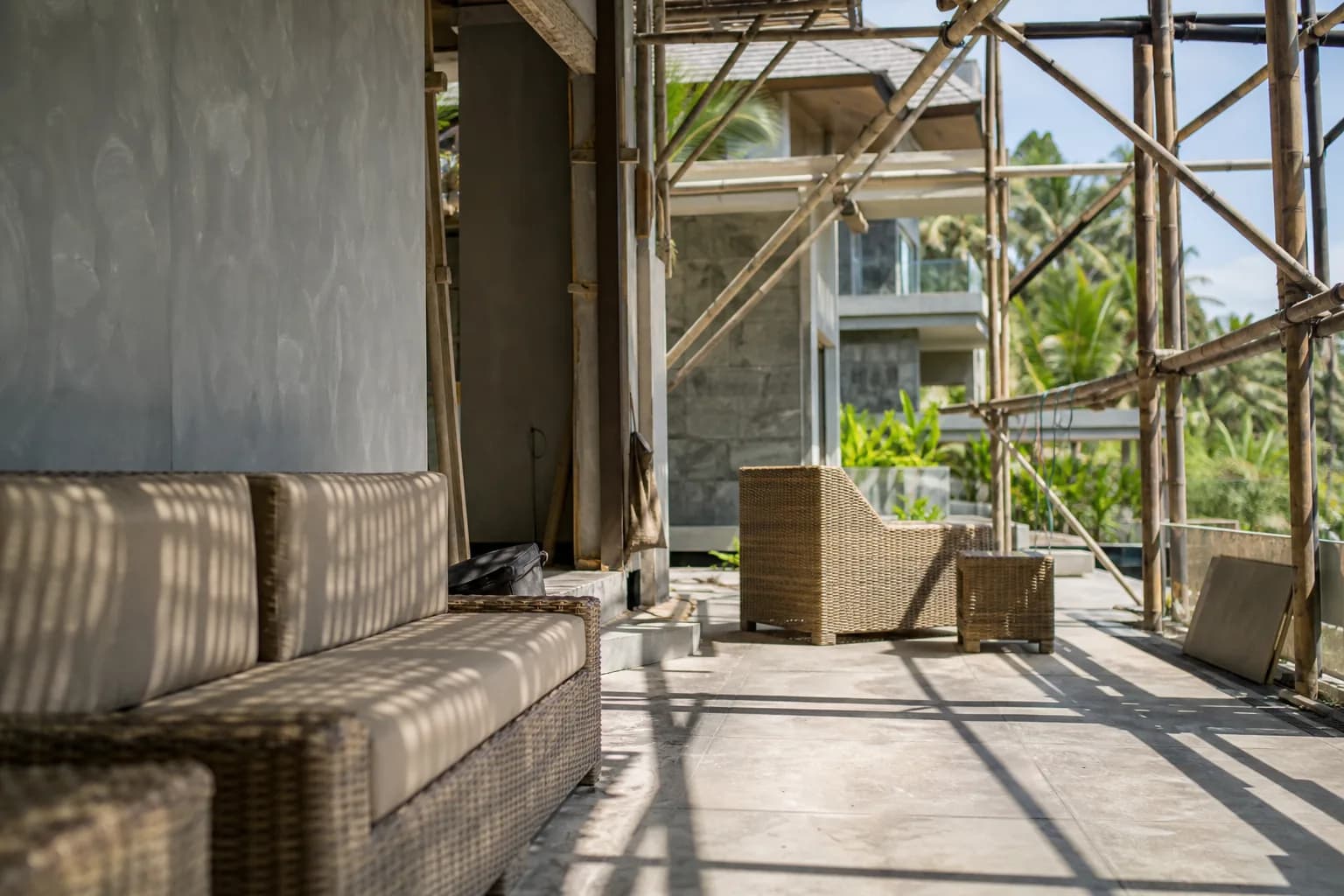
Understanding Synthetic Rattan Degradation in Bali’s Intense UV Environment
Property owners investing in outdoor furniture for their Bali villas face a critical question: how long will synthetic rattan furniture actually last under equatorial UV exposure? With Bali positioned 8 degrees south of the equator, UV radiation intensity reaches 12+ on the UV Index during peak hours, creating one of the harshest environments for outdoor materials globally. Unlike temperate climates where synthetic rattan can last 10-15 years, Bali’s combination of intense UV radiation, high humidity (75-85%), and temperatures consistently above 30°C accelerates polymer degradation significantly. For villa developers and renovation projects, understanding the realistic 5-7 year degradation timeline isn’t just about furniture replacement budgets—it’s about selecting appropriate materials during the finishing stage that align with maintenance capabilities and aesthetic longevity expectations for rental properties or permanent residences.
Technical Analysis: UV Degradation Mechanisms in Equatorial Conditions
Synthetic rattan, typically manufactured from high-density polyethylene (HDPE) or polyvinyl chloride (PVC), undergoes photodegradation when exposed to UV radiation wavelengths between 290-400nm. In Bali’s equatorial location, UV-B radiation (280-315nm) remains consistently high year-round, unlike seasonal variations in higher latitudes. This constant bombardment breaks down polymer chains through a process called photo-oxidation, where UV energy creates free radicals that attack the carbon-hydrogen bonds in the plastic structure.
The degradation timeline follows predictable stages in Bali’s climate. During months 0-18, quality synthetic rattan with UV stabilizers shows minimal visible deterioration, though molecular-level changes begin immediately. The polymer matrix starts losing plasticizers, and the material’s flexibility gradually decreases. Surface gloss retention drops from 100% to approximately 75% during this initial phase. For villa projects in coastal areas like Canggu or Seminyak, salt spray accelerates this process by an additional 15-20%.
Between months 18-42, visible degradation becomes apparent. Color fading intensifies as chromophores in the pigment system break down—darker colors like espresso brown fade to grayish-tan, while lighter beiges develop a chalky appearance. Surface micro-cracking begins, typically starting at stress points like weave intersections and frame joints. The material’s tensile strength decreases by 30-40% from original specifications. This is the critical period where maintenance interventions can extend lifespan significantly.
The final degradation phase (months 42-84) sees accelerated deterioration. Surface cracks deepen and propagate, the weave pattern loosens as individual strands lose structural integrity, and brittleness increases to the point where normal use causes breakage. In Bali’s climate, synthetic rattan reaching this stage typically fails between years 5-7, depending on quality grade and maintenance history. Premium HDPE rattan with 2% UV stabilizer content and proper maintenance reaches the upper end of this range, while economy-grade PVC products often fail by year 4.
Temperature cycling compounds UV damage in tropical environments. Bali’s synthetic rattan surfaces can reach 65-70°C during midday sun exposure, then cool to 25°C overnight. This thermal cycling creates expansion-contraction stress that propagates micro-cracks initiated by UV degradation. The combination explains why Bali-installed furniture degrades 40-50% faster than identical products in temperate climates with similar annual UV exposure but lower temperature extremes.
Installation Process for Maximum UV Resistance
Proper installation during the finishing stage significantly impacts synthetic rattan longevity. The process begins with site assessment—identifying areas with partial shade potential, prevailing wind patterns that affect rain exposure, and proximity to reflective surfaces like pools or white walls that increase UV exposure through reflection.
Foundation and Frame Preparation
Start with powder-coated aluminum frames rather than steel, as aluminum doesn’t rust and maintains structural integrity longer in humid conditions. Apply additional UV-protective clear coat to frame joints and welds where powder coating may be thinner. For built-in furniture installations common in Bali villa designs, ensure concrete or stone bases have proper drainage—standing water accelerates degradation at contact points. Install stainless steel (grade 316) fasteners exclusively; standard grade 304 corrodes in coastal environments, and corrosion stains permanently discolor synthetic rattan.
Rattan Weave Installation Techniques
When installing replacement rattan weaving or custom furniture pieces, maintain consistent tension across the weave pattern. Over-tensioning creates stress concentration points that crack prematurely under UV exposure, while under-tensioning allows excessive movement that abrades the material. Use UV-resistant zip ties or stainless steel staples for securing weave ends—never use standard plastic ties that degrade faster than the rattan itself.
Apply initial UV protectant treatment before furniture placement. Quality marine-grade UV protectant sprays create a sacrificial barrier that absorbs UV radiation before it reaches the polymer structure. This initial treatment should cure for 24 hours in a covered area before sun exposure. For villa renovation projects, this step is often overlooked but extends first-phase longevity by 6-8 months.
Strategic Placement Considerations
Position furniture to minimize direct overhead sun exposure during peak UV hours (10:00-14:00). Even 3-4 hours of daily shade during peak intensity extends lifespan by 30-40%. Install retractable shade sails or pergolas with adjustable louvers for flexible protection. For poolside installations, position furniture at least 2 meters from water edges to reduce reflected UV exposure and chlorine vapor contact, which accelerates polymer degradation.
Create drainage pathways beneath furniture—elevate pieces 5-10cm above ground level using adjustable feet or pavers. This prevents water pooling during Bali’s intense rain season (November-March) and allows air circulation that reduces humidity-related degradation. For built-in seating in outdoor living areas, incorporate 2-3% slope in base surfaces to ensure water runoff.
Materials and Specifications for Bali Climate
Material selection determines whether synthetic rattan reaches 5 years or 7+ years in Bali’s environment. Specify HDPE rattan with minimum 2% UV stabilizer content—this specification should be documented in supplier certificates. Premium brands incorporate both UV absorbers (benzotriazoles) and hindered amine light stabilizers (HALS) for dual-mechanism protection. Avoid PVC-based synthetic rattan entirely for Bali installations; PVC’s lower heat tolerance makes it unsuitable for equatorial climates.
Rattan strand diameter affects durability—specify 1.2-1.5mm diameter strands for seating surfaces and 1.0-1.2mm for decorative elements. Thicker strands have greater cross-sectional area, meaning UV degradation penetrates more slowly relative to total material thickness. Flat weave profiles (4-6mm width) resist cracking better than round profiles because stress distributes across wider surface areas.
For cushions and upholstery accompanying synthetic rattan furniture, specify solution-dyed acrylic fabrics (Sunbrella or equivalent) with minimum 1,500 hours fade resistance rating. Standard outdoor fabrics rated for 500-800 hours fail within 18 months in Bali. Cushion fill should be open-cell foam that drains water and dries quickly—closed-cell foam traps moisture and promotes mold growth in humid conditions.
Protective treatments require specific formulations for tropical climates. Specify marine-grade UV protectants containing titanium dioxide or zinc oxide nanoparticles—these create physical UV barriers superior to chemical absorbers alone. Application frequency should be every 3-4 months during the first two years, extending to every 6 months after initial weathering stabilizes. Avoid silicone-based protectants that create slippery surfaces and attract dust in Bali’s environment.
Cost Breakdown for Synthetic Rattan Installation
Understanding realistic costs for quality synthetic rattan furniture installation helps budget villa construction projects accurately. Premium HDPE synthetic rattan dining sets (table + 6 chairs) range from IDR 15,000,000-25,000,000 ($950-1,600 USD) depending on design complexity and brand. Economy options starting at IDR 8,000,000 ($500 USD) typically use lower-grade materials that fail by year 3-4 in Bali’s climate, making them false economy for permanent installations.
Modular sectional seating for outdoor living areas costs IDR 8,000,000-12,000,000 per linear meter for quality construction. This includes powder-coated aluminum frames, premium HDPE weaving, and weather-resistant cushions. Custom built-in installations add 30-40% to material costs due to fabrication complexity and site-specific measurements.
Installation labor for standard furniture placement runs IDR 500,000-800,000 per piece, including positioning, leveling, and initial UV treatment application. Built-in installations require skilled carpentry and metalwork, costing IDR 2,500,000-4,000,000 per linear meter including structural preparation and finishing.
Ongoing maintenance costs include UV protectant treatments (IDR 350,000-500,000 per application covering 15-20 pieces), professional deep cleaning every 6 months (IDR 150,000-250,000 per piece), and cushion replacement every 3-4 years (IDR 800,000-1,500,000 per seat). Annual maintenance typically totals 8-12% of initial furniture investment for properties maintaining optimal condition.
For villa developers, budget 15-20% of total furniture cost as replacement reserve annually from year 4 onward. A villa with IDR 100,000,000 in outdoor furniture should allocate IDR 15,000,000-20,000,000 annually for staged replacement, ensuring consistent aesthetic quality for rental properties.
Common Mistakes in Synthetic Rattan Installation
The most critical error in Bali villa construction is treating synthetic rattan as maintenance-free. Even premium materials require regular UV protectant application and cleaning to reach their 7-year potential. Properties neglecting quarterly maintenance see furniture fail by year 4-5, requiring premature replacement that negates any initial cost savings from choosing synthetic over natural materials.
Incorrect cleaning methods accelerate degradation. High-pressure washing (common in Bali villa maintenance) forces water into weave interstices and damages the polymer surface structure. Pressure exceeding 1,500 PSI creates micro-abrasions that become crack initiation points. Similarly, using harsh chemical cleaners containing bleach or ammonia breaks down UV stabilizers and accelerates photo-oxidation. Proper cleaning uses soft brushes, mild soap solutions, and low-pressure rinsing.
Inadequate drainage design causes premature failure at furniture bases. Many installations place synthetic rattan directly on sealed concrete or tile surfaces where water pools during rain. Constant moisture contact leaches plasticizers from the polymer and promotes algae growth that stains and degrades material. This mistake is particularly common in poolside installations where drainage wasn’t considered during the finishing works phase.
Mixing material grades within a single installation creates aesthetic problems as degradation rates differ. Using premium HDPE for visible seating areas but economy PVC for planters or decorative elements results in uneven fading and deterioration—the economy pieces fail first, creating a patchwork appearance. Specify consistent material grades across all synthetic rattan elements in a space.
Ignoring microclimate variations within a property leads to unexpected degradation patterns. West-facing terraces receive intense afternoon UV exposure that degrades furniture 20-30% faster than north-facing areas. Furniture near white walls or reflective surfaces experiences 15-25% higher UV exposure from reflection. Failing to account for these variations during furniture placement and maintenance scheduling results in some pieces failing years before others, complicating replacement planning.
Frequently Asked Questions
How can I tell if my synthetic rattan is entering the critical degradation phase?
Visual indicators include color fading beyond the original shade (compare hidden areas under cushions to exposed surfaces), surface chalking that leaves residue when rubbed, and flexibility loss—the material feels stiffer and less pliable than when new. Check weave intersections for small cracks or gaps where strands have loosened. If you notice these signs before year 3, your furniture is lower quality or maintenance has been inadequate. Between years 3-5, these indicators are normal and signal the need for increased maintenance frequency. After year 5, these signs indicate approaching end-of-life, and replacement planning should begin.
Does synthetic rattan perform differently in Bali’s coastal versus inland locations?
Coastal installations (within 2km of ocean) experience 15-20% faster degradation due to salt spray exposure. Salt particles act as catalysts for photo-oxidation and create hygroscopic surfaces that retain moisture longer. However, inland locations at higher elevations (Ubud, Bedugul) have slightly lower temperatures that partially offset this advantage—the net difference is approximately 6-8 months in total lifespan. For coastal villa projects, specify marine-grade UV protectants and increase maintenance frequency to quarterly rather than semi-annually.
Can I repair synthetic rattan furniture showing early degradation signs, or is replacement necessary?
Early-stage degradation (years 1-3) responds well to intensive restoration: deep cleaning, UV protectant reapplication, and targeted repairs of loose weaving. Professional restoration costs IDR 1,500,000-3,000,000 per piece but can extend lifespan by 18-24 months. Mid-stage degradation (years 4-5) allows partial repairs—replacing damaged sections while retaining structural frames. Advanced degradation (years 6+) rarely justifies repair costs; replacement provi
 1from 198.000 USD
Private: Haridas Villas
 3173 m²6 month(s)from 125.000 USD
TALA FOUR
 3104 m²11 month(s)from 99.000 USD
TALA 100
 164 m²7 month(s)from 79.000 USD
TALA TWO
 3124 m²6 month(s)from 123.000 USD
TALA 8
164 m²7 month(s)from 79.000 USDPrivate: Haridas Villas, Tegallalang
 4344 m²16 month(s)from 290.000 USD
Radha
 3127 m²9 month(s)from 177.000 USD
Mukunda
 3180 m²7 month(s)from 142.000 USD
Vasudeva
 172 m²8 month(s)from 120.000 USD
Keshava

Want to calculate?
 2144 m²11 month(s)from 104.000 USD
Narayana
Start With Real Numbers, Not Guesses
Before buying land or finalizing a design, check the realistic build cost range for your project in Bali.
Our team reviews your inputs and gives a grounded estimate.
Available lands
 2000 m²5 min$ 1440887Bali, Pecatu
 2850 m²15 min$ 315887Bali, Tabanan
 5028 m²10 min$ 361000Bali, Ubud
 800 m²8 min$ 113300Bali, Ungasan
 3100 m²15 min$ 257697Bali, Tegallalang
 220 m²2 min$ 66565Bali, Cemagi
 610 m²10 min$ 165271Bali, Seminyak
 1362 m²15 min$ 335468Bali, Tumbak
 300 m²55 min$ 32475Bali, Tegelalang
 1158 m²12 min$ 291996Bali, Mengwi
 1700 m²10 min$ 632257Bali, Kuta
 1430 m²5 min$ 209862Bali, Klungkung
 5000 m²8 min$ 424877Bali, Ungasan
 7900 m²25 min$ 413485Bali, Tabanan
 6000 m²30 min$ 55419Bali, Tabanan
Essential Bali build & buy guides
- Bali villa construction cost per m² in 2026
- How much will your villa cost? Calculator
- Building a villa in Bali: the complete guide
- Buying land in Bali: step-by-step for foreigners
- Bali villa investment: yields, risks, returns
- Leasehold vs freehold: what foreigners can own
- Construction defect liability & 10-year warranty
- Bali building codes and construction standards
Related guides
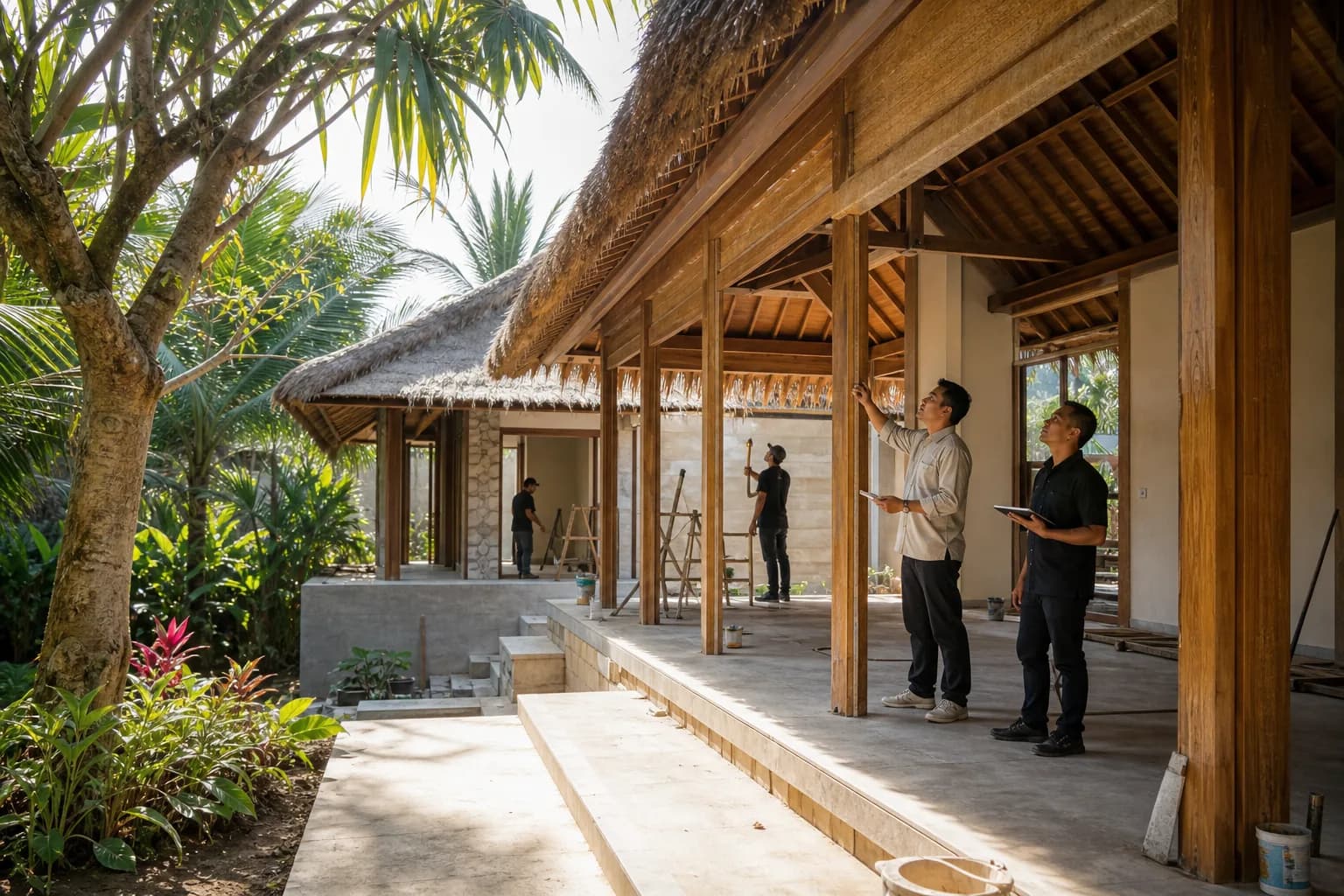
Villa Handover in Bali: Snagging Checklist and What to Test Before Final Payment
A disciplined villa handover in Bali: room-by-room snagging tests, numbered defect documentation, the PBG/SLF and warranty documents to insist on, and payment terms that keep leverage until the list is closed.
7 min read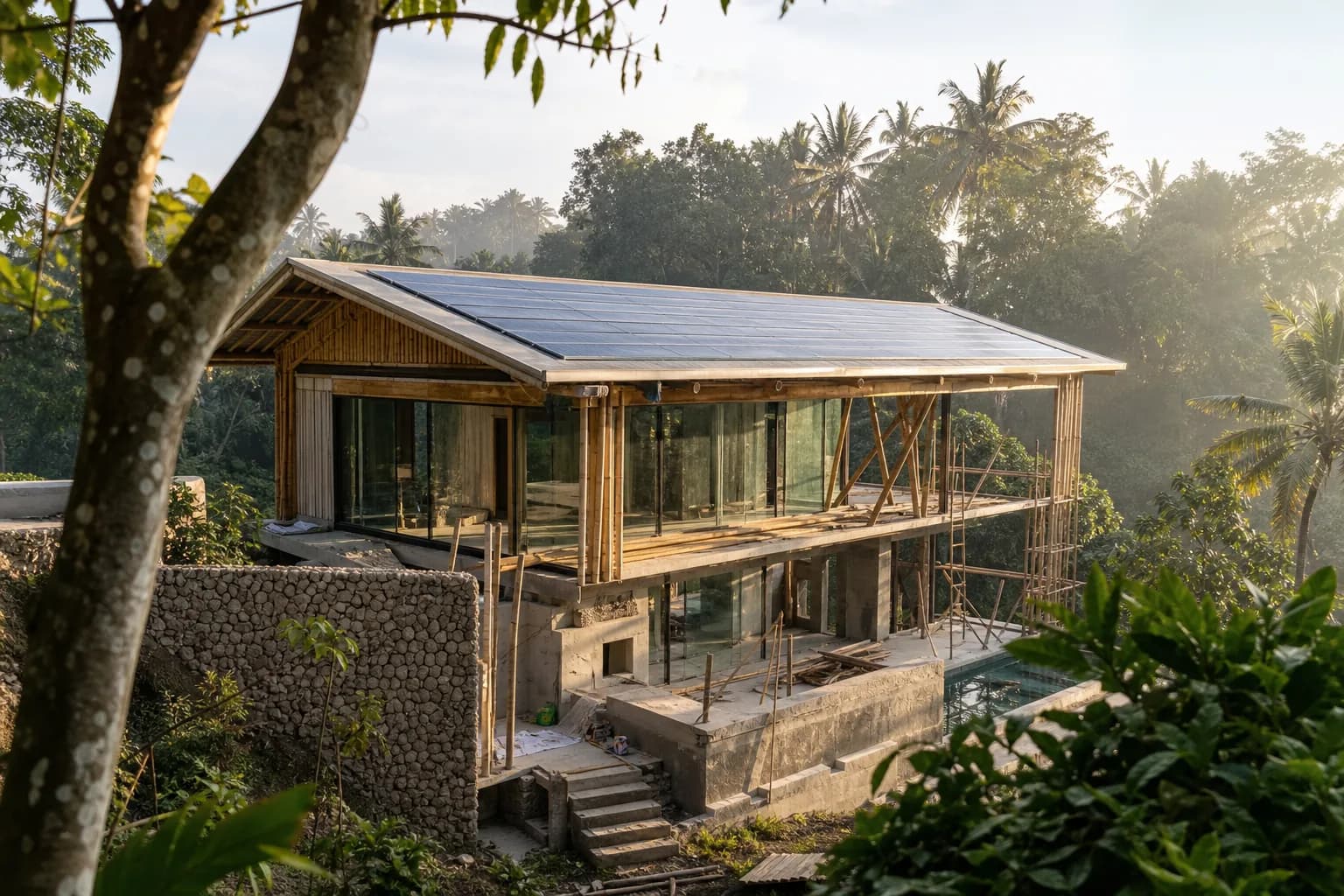
Energy-Efficient Villa in Bali: Solar, Insulation and Passive Cooling That Pay Back
Which energy-efficiency measures actually pay back in Bali's tropical climate — passive design and roof insulation first, efficient equipment second, and self-consumption solar last — with honest 2026 numbers.
7 min read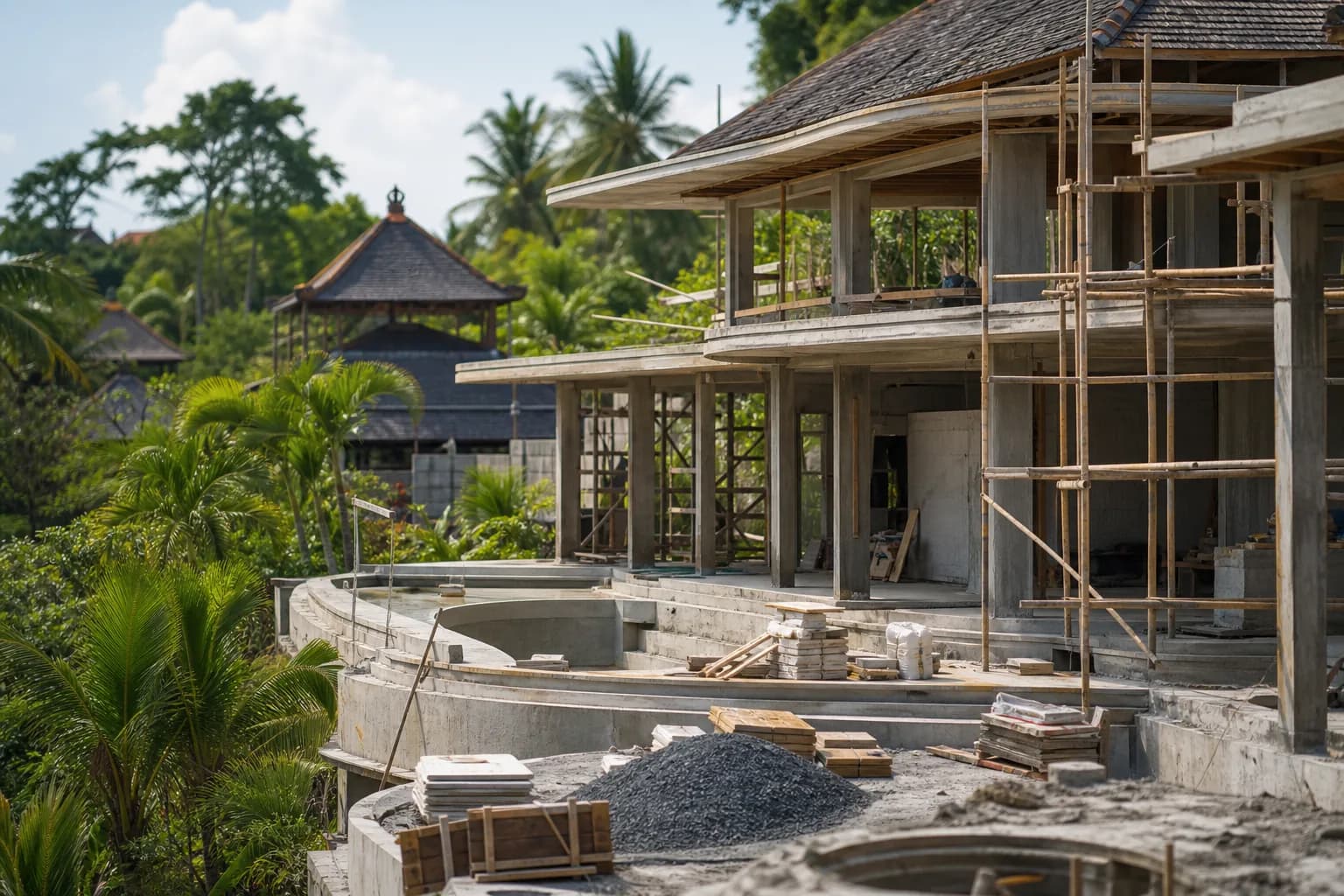
Choosing a General Contractor in Bali: Red Flags, Questions and Contract Must-Haves
A practical filter for hiring a general contractor in Bali: the red flags that end conversations, the questions professionals answer with documents, and the contract clauses no villa build should start without.
7 min read