Sanur Tidal Flood Zone Construction Costs Drainage in Bali
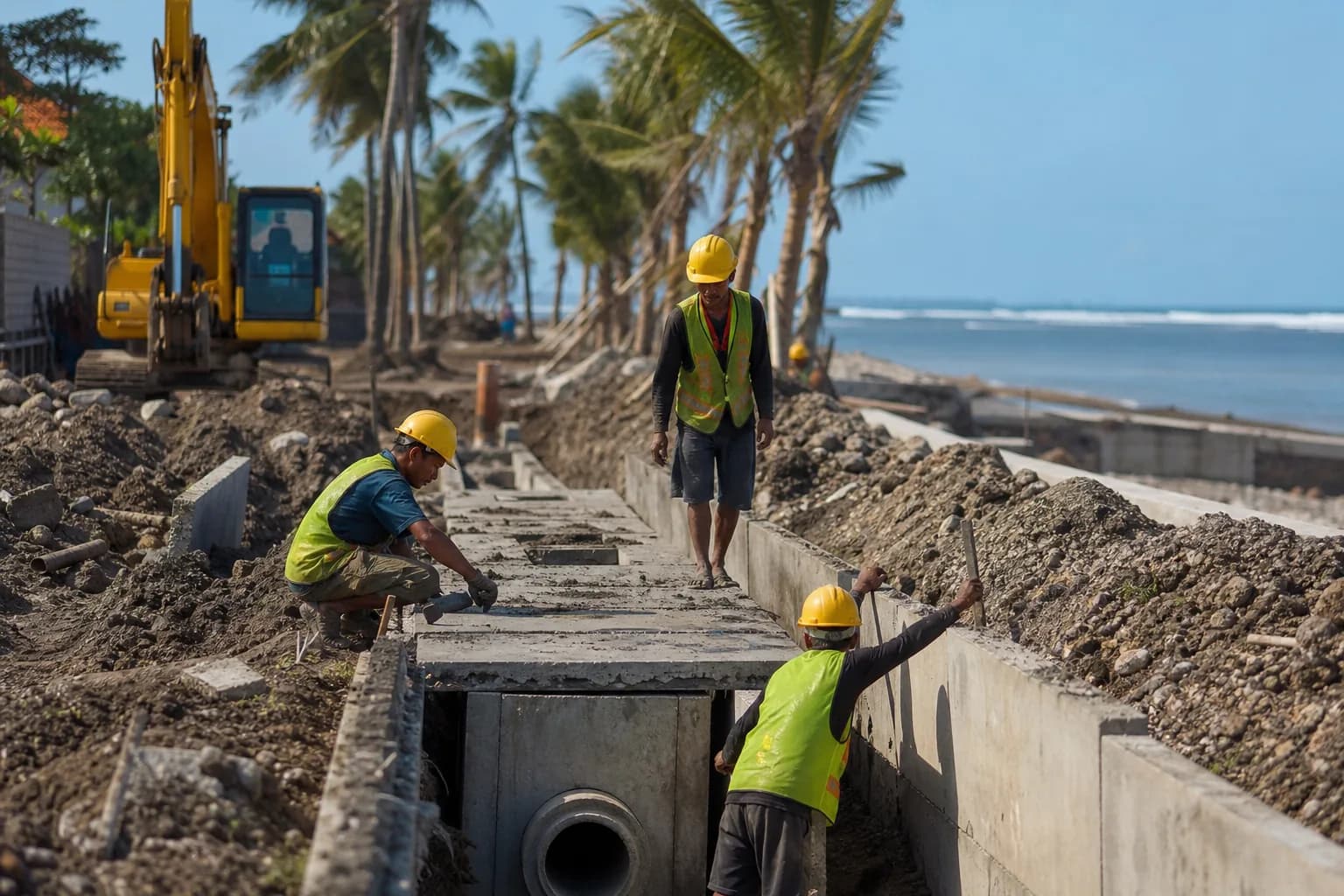
Why Sanur’s Tidal Flood Zones Demand Specialized Foundation Engineering
Sanur’s coastal geography presents a critical construction challenge that many villa developers discover too late: tidal flood zones require elevated foundation systems that can cost 40-65% more than standard Bali construction. The combination of high water tables, seasonal tidal surges, and strict coastal setback regulations creates a technical environment where standard slab-on-grade foundations fail within 3-5 years. Properties within 500 meters of Sanur’s coastline face groundwater levels that fluctuate between 0.8-2.1 meters below surface during tidal cycles, making conventional foundation approaches structurally inadequate and legally non-compliant with Bali’s coastal construction codes.
Engineering Requirements for Tidal Flood Zone Construction in Sanur
Sanur’s tidal flood zones require foundation systems engineered specifically for high water table conditions and periodic inundation. The technical requirements differ fundamentally from standard Bali villa construction, beginning with soil bearing capacity analysis in saturated conditions. Geotechnical investigations in Sanur’s coastal areas typically reveal sandy clay soils with bearing capacities of 80-120 kPa when saturated—significantly lower than the 150-200 kPa found in elevated areas like Canggu or Ubud.
Elevated foundation systems for tidal zones employ three primary approaches: raised pile foundations with reinforced concrete grade beams, elevated slab systems on engineered fill with perimeter drainage, or hybrid systems combining deep piles with elevated floor plates. Pile foundations in Sanur’s flood zones typically require 25-35 cm diameter reinforced concrete piles driven to depths of 6-10 meters to reach stable bearing strata below the saturated zone. Each pile must be designed for both vertical loads and lateral forces from hydrostatic pressure during flood events.
The structural floor plate in flood-resistant designs sits minimum 80-120 cm above natural grade, creating a crawl space that allows tidal water to flow beneath the structure without compromising structural integrity. This elevation requirement directly impacts construction costs through increased foundation volume, extended utility runs, and accessibility modifications. The crawl space itself requires engineered ventilation systems to prevent moisture accumulation and structural corrosion—a detail frequently overlooked in cost estimates.
Drainage engineering in Sanur’s tidal zones extends beyond simple surface water management. Subsurface drainage systems must account for groundwater infiltration, tidal backflow prevention, and seasonal monsoon volumes that can exceed 300mm in 24-hour periods. French drain systems with 150-200mm perforated pipes, surrounded by graded aggregate and geotextile fabric, must be installed at depths below the foundation level with positive drainage to collection points equipped with tidal check valves. Without these valves, tidal surges reverse drainage flow, flooding foundation zones from below.
The coastal setback regulation—prohibiting permanent structures within 100 meters of the high tide line—creates additional complexity. Properties violating this setback face demolition orders with penalties exceeding $45,000, plus demolition costs ranging $180,000-$220,000 for typical villa structures. This regulatory framework means that buildable areas in Sanur’s coastal zone are limited, and every square meter of foundation must be precisely positioned based on certified coastal survey data, not approximate measurements.
Material specifications for tidal zone construction require marine-grade corrosion resistance. Reinforcing steel must meet minimum 60mm concrete cover requirements (versus 40mm for standard construction), and all steel must be epoxy-coated or stainless grade in areas subject to saltwater exposure. Concrete mixes require minimum 350 kg/m³ cement content with supplementary cementitious materials like fly ash or silica fume to reduce permeability. These specifications increase material costs by 25-35% compared to standard Bali villa construction.
Hidden Risks in Sanur Coastal Construction Projects
The most critical oversight in Sanur tidal zone projects is underestimating long-term maintenance costs associated with saltwater exposure. Developers focus on initial construction budgets while ignoring that coastal structures require specialized maintenance protocols costing $8,000-$15,000 annually for a 300m² villa. Saltwater accelerates corrosion of embedded metals, degrades sealants and waterproofing membranes, and promotes biological growth that compromises building envelopes.
Many buyers purchase land in Sanur without conducting tidal elevation surveys, relying instead on seller representations about flood risk. Standard topographic surveys do not capture tidal datum relationships or seasonal high water marks. A proper coastal engineering survey costs $2,800-$4,200 but reveals whether a site experiences tidal inundation during spring tides or storm surge events—information that fundamentally changes foundation design requirements and project feasibility.
Permit approval timelines in coastal zones extend 40-60% longer than inland projects due to additional environmental impact assessments and coastal zone management reviews. Projects within 500 meters of coastline require specialized permits from maritime authorities, adding 8-12 weeks to approval processes. Developers who budget standard 16-week permit timelines face construction delays and cost overruns when coastal permits require 24-28 weeks.
The interaction between tidal flooding and septic system design creates another hidden risk. Standard septic systems fail in high water table conditions, requiring expensive aerobic treatment units or connection to municipal systems where available. Septic tank installations in tidal zones must be anchored against buoyancy forces and equipped with effluent pumps—modifications adding $6,500-$9,800 to wastewater system costs.
Step-by-Step Process for Tidal Zone Villa Construction
Phase 1: Coastal Engineering Assessment (Weeks 1-3)
Commission a certified coastal engineering survey establishing tidal datums, seasonal high water marks, and 100-year flood elevations for the specific site. This survey must include soil boring analysis to minimum 8-meter depth, groundwater monitoring during spring tide cycles, and bearing capacity testing in saturated conditions. The engineering report determines minimum floor elevation requirements and foundation system recommendations. Cost range: $4,200-$6,800 for comprehensive coastal site analysis.
Phase 2: Regulatory Compliance Verification (Weeks 4-6)
Verify coastal setback compliance through certified boundary survey tied to official high tide line markers. Engage legal counsel specializing in coastal property law to review title documents for any existing violations or encumbrances related to coastal zone regulations. Obtain preliminary approval from maritime authorities before proceeding with detailed design. This phase prevents the catastrophic scenario of discovering setback violations after construction begins.
Phase 3: Foundation System Design (Weeks 7-10)
Structural engineers design the elevated foundation system based on coastal survey data, specifying pile depths, spacing, reinforcement schedules, and drainage integration. The design must address hydrostatic uplift forces, lateral earth pressures in saturated conditions, and differential settlement potential. Drainage system design occurs concurrently, integrating subsurface drains with foundation layout and incorporating tidal backflow prevention. Design fees for tidal zone foundations run 30-45% higher than standard projects due to specialized engineering requirements.
Phase 4: Permit Application and Approval (Weeks 11-28)
Submit building permit applications with coastal zone management documentation, environmental impact assessments, and drainage plans to multiple agencies including local building departments, environmental agencies, and maritime authorities. The extended timeline reflects sequential review processes and potential revision requests. Maintain regular communication with permit authorities to address questions promptly and prevent approval delays.
Phase 5: Foundation Construction (Weeks 29-38)
Execute pile driving operations during dry season months when groundwater levels are lowest. Install subsurface drainage systems before pouring grade beams and floor slabs. Implement strict quality control for concrete placement in high water table conditions, including permeability testing and cover depth verification for all reinforcing steel. The elevated foundation phase requires 40-55% more time than standard slab construction due to complexity and weather dependencies.
Phase 6: Superstructure and Systems (Weeks 39-62)
Construct building superstructure on completed elevated foundation, integrating marine-grade materials and corrosion-resistant systems throughout. Install specialized wastewater systems designed for high water table conditions. Implement comprehensive waterproofing and drainage details at all foundation-to-wall transitions. The construction timeline for tidal zone villas extends 25-35% longer than comparable inland projects.
Realistic Cost Analysis for Sanur Tidal Zone Construction
Elevated foundation systems in Sanur’s tidal zones cost $185-$280 per square meter of floor area, compared to $95-$140 per square meter for standard slab-on-grade foundations in non-flood areas. For a 300m² villa, foundation costs alone range $55,500-$84,000 versus $28,500-$42,000 for standard construction—a premium of $27,000-$42,000 attributable specifically to tidal zone requirements.
Comprehensive drainage systems including subsurface drains, tidal check valves, and stormwater management infrastructure add $18,000-$28,000 to project costs for typical villa sites. Marine-grade material specifications increase overall construction costs by 15-22% compared to standard specifications, translating to $45,000-$88,000 additional cost for a 300m² villa with $300,000 base construction budget.
Total construction costs for tidal zone villas in Sanur range $1,850-$2,400 per square meter for quality construction meeting all coastal engineering requirements, compared to $1,400-$1,800 per square meter for comparable villas in non-flood zones. These figures reflect complete projects including elevated foundations, marine-grade materials, specialized drainage, and extended construction timelines. Developers should budget an additional 20-25% contingency for tidal zone projects versus the standard 10-15% contingency for inland construction.
Permit and engineering fees for coastal projects run $22,000-$35,000 for a standard villa, approximately double the $11,000-$18,000 typical for inland projects. Timeline extensions add indirect costs through extended land holding costs, financing charges, and delayed project completion—factors that can add $15,000-$25,000 to total project costs for developments with construction financing.
Frequently Asked Questions: Sanur Tidal Flood Zone Construction
Can I build a standard slab foundation in Sanur if my land is 300 meters from the beach?
Distance from beach does not determine foundation requirements—groundwater elevation and tidal influence do. Properties 300-500 meters inland in Sanur frequently experience groundwater tables within 1.5 meters of surface during high tide cycles, requiring elevated foundation systems. A coastal engineering survey measuring actual groundwater fluctuations and soil bearing capacity in saturated conditions determines appropriate foundation design. Standard slab foundations in high water table areas experience premature failure through concrete degradation, floor heaving, and chronic moisture problems within 3-5 years. The survey investment of $4,200-$6,800 prevents foundation system failures costing $85,000-$140,000 to remediate.
How do I verify my Sanur land complies with the 100-meter coastal setback regulation?
Coastal setback compliance requires a certified boundary survey conducted by a licensed surveyor with coastal zone certification, tied to official government high tide line markers. The survey must reference the legal high tide datum established by maritime authorities, not visual observation of current water levels. Existing structures on neighboring properties do not indicate setback compliance—many older structures predate current regulations or violate them. Legal verification costs $2,200-$3,800 and should occur before land purchase, not after. Properties violating setback regulations face demolition orders with combined penalties and demolition costs exceeding $225,000, making pre-purchase verification essential.
What drainage system prevents tidal water from flooding my villa’s foundation?
Effective tidal zone drainage requires subsurface French drain systems installed below foundation level, connected to collection points equipped with tidal check valves that prevent backflow during high tide. The system uses 150-200mm perforated pipes surrounded by graded aggregate and geotextile fabric, sloped at minimum 1% grade toward collection points. Check valves automatically close when tidal water levels exceed drainage outlet elevation, preventing reverse flow while allowing drainage during low tide periods. Surface drainage alone is insufficient—tidal zones require subsurface systems managing groundwater infiltration and preventing hydrostatic pressure buildup beneath floor slabs. Properly engineered systems cost $18,000-$28,000 for typical villa sites but prevent chronic flooding and foundation damage costing multiples of that amount.
How much does pile foundation construction add to my Sanur villa budget?
Pile foundation systems for tidal zone construction add $90,000-$140,000 to total project costs for a 300m² villa compared to standard slab construction. This includes pile installation ($35,000-$55,000), elevated grade beams and floor systems ($32,000-$48,000), extended utility runs ($12,000-$18,000), and specialized drainage integration ($11,000-$19,000). The cost premium reflects both material quantities and specialized engineering requirements. However, pile foundations in high water table areas provide 25-30 year service life versus 3-5 years for improperly designed slab systems, making the investment essential for long-term structural integrity. Budget planning should include th
 3104 m²11 month(s)from 99.000 USD
TALA 100
 3127 m²9 month(s)from 177.000 USD
Mukunda
 3173 m²6 month(s)from 125.000 USD
TALA FOUR
 1from 198.000 USD
Private: Haridas Villas
 172 m²8 month(s)from 120.000 USD
Keshava
 164 m²7 month(s)from 79.000 USD
Private: Haridas Villas, Tegallalang
164 m²7 month(s)from 79.000 USDTALA TWO
 3124 m²6 month(s)from 123.000 USD
TALA 8

Want to calculate?
 2144 m²11 month(s)from 104.000 USD
Narayana
 4344 m²16 month(s)from 290.000 USD
Radha
 3180 m²7 month(s)from 142.000 USD
Vasudeva
Start With Real Numbers, Not Guesses
Before buying land or finalizing a design, check the realistic build cost range for your project in Bali.
Our team reviews your inputs and gives a grounded estimate.
Available lands
 1158 m²12 min$ 291996Bali, Mengwi
 1000 m²8 min$ 134544Bali, Bukit
 220 m²2 min$ 66565Bali, Cemagi
 600 m²12 min$ 101970Bali, Mengwi
 700 m²15 min$ 90517Bali, Central Bali
 615 m²15 min$ 113608Bali, Tabanan
 1000 m²10 min$ 280788Bali, Pecatu
 2850 m²15 min$ 315887Bali, Tabanan
 2700 m²30 min$ 314224Bali, Sidemen
 400 m²15 min$ 67192Bali, Tabanan
 515 m²7 min$ 570813Bali, Canggu
 2500 m²5 min$ 609606Bali, Kedungu
 200 m²5 min$ 59113Bali, Bukit
 700 m²7 min$ 400000Bali, Canggu
 500 m²10 min$ 107143Bali, Tabanan
Essential Bali build & buy guides
- Bali villa construction cost per m² in 2026
- How much will your villa cost? Calculator
- Building a villa in Bali: the complete guide
- Buying land in Bali: step-by-step for foreigners
- Bali villa investment: yields, risks, returns
- Leasehold vs freehold: what foreigners can own
- Construction defect liability & 10-year warranty
- Bali building codes and construction standards
Related guides
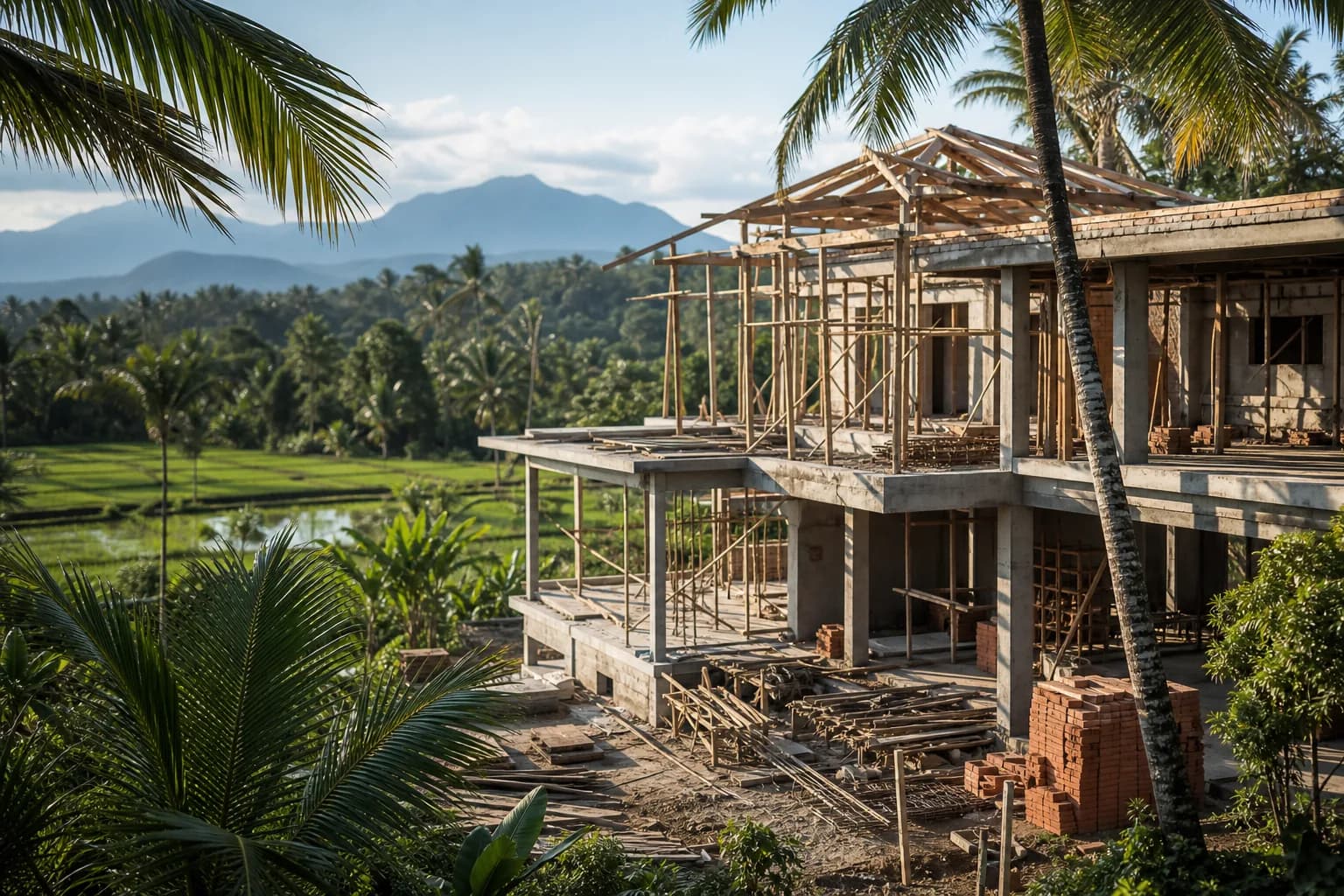
How to Build a Villa in Bali: The Complete Step-by-Step Process (2026)
Every stage of building a villa in Bali as a foreigner — from securing land and permits to handover — with realistic timelines, costs and the mistakes that derail first-time builders.
5 min read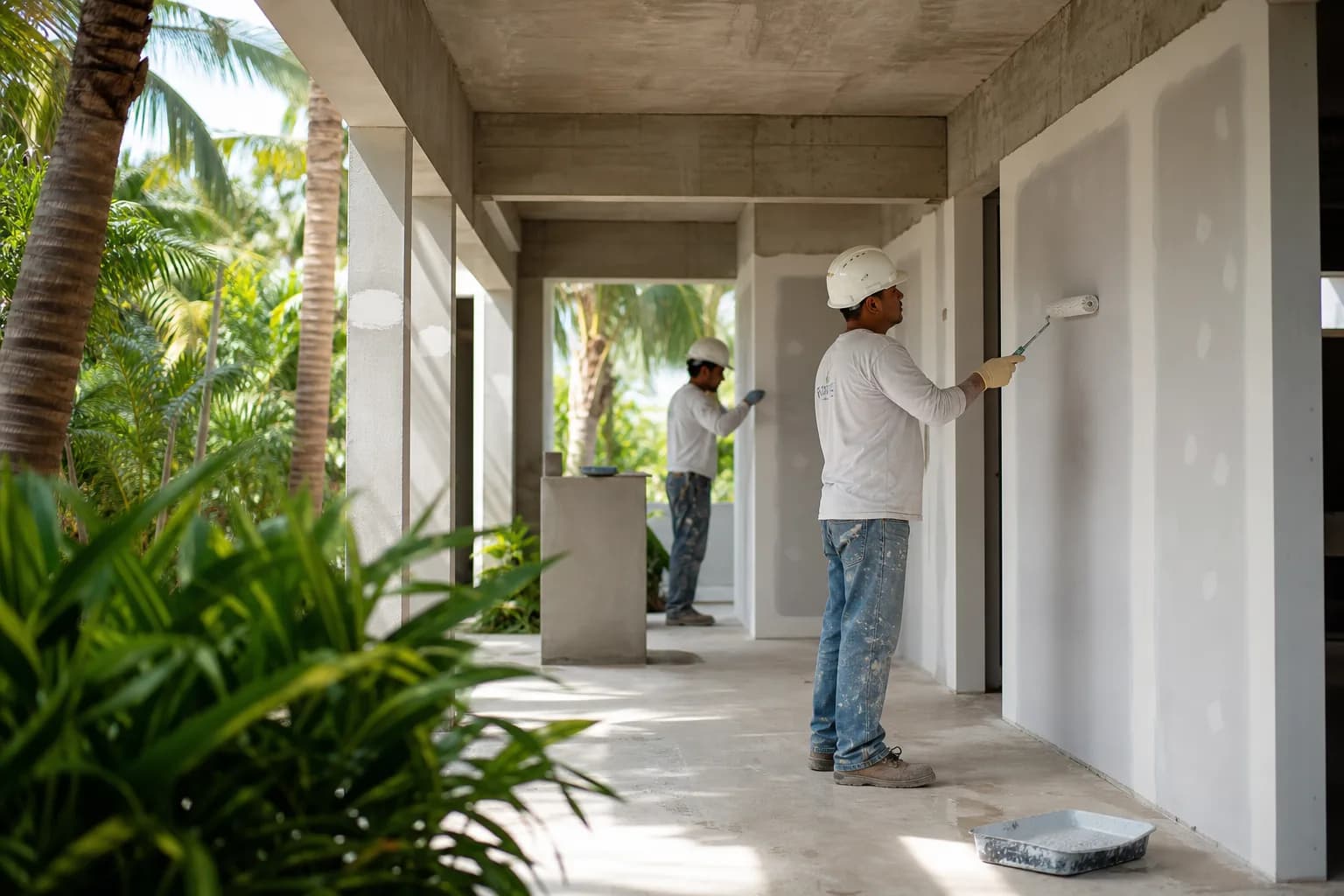
Moisture-Resistant Gypsum Board Finishing with Epoxy Primer Bali
Learn how moisture-resistant gypsum boards with epoxy primer boost durability, finish quality, and mold resistance in Bali projects. Great for Bali homes.
10 min read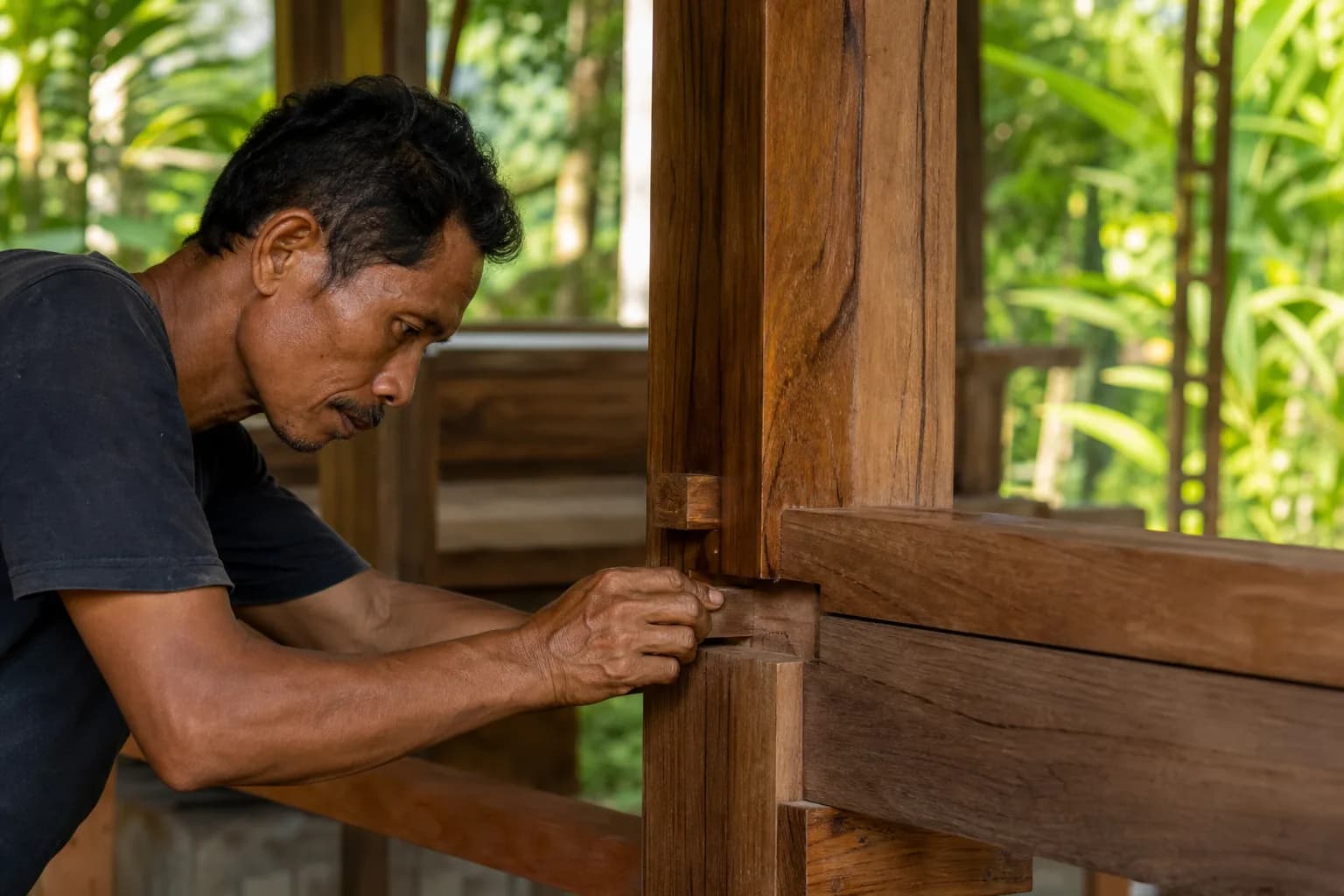
Marine-Grade Timber Joinery Finishing Corrosion Protection Bali
Discover marine-grade timber joinery finishing and corrosion protection in Bali. Durable coastal timber care, coatings, and maintenance for lasting protection.
8 min read