Off Plan Villas in Bali | Luxury Investment Opportunities
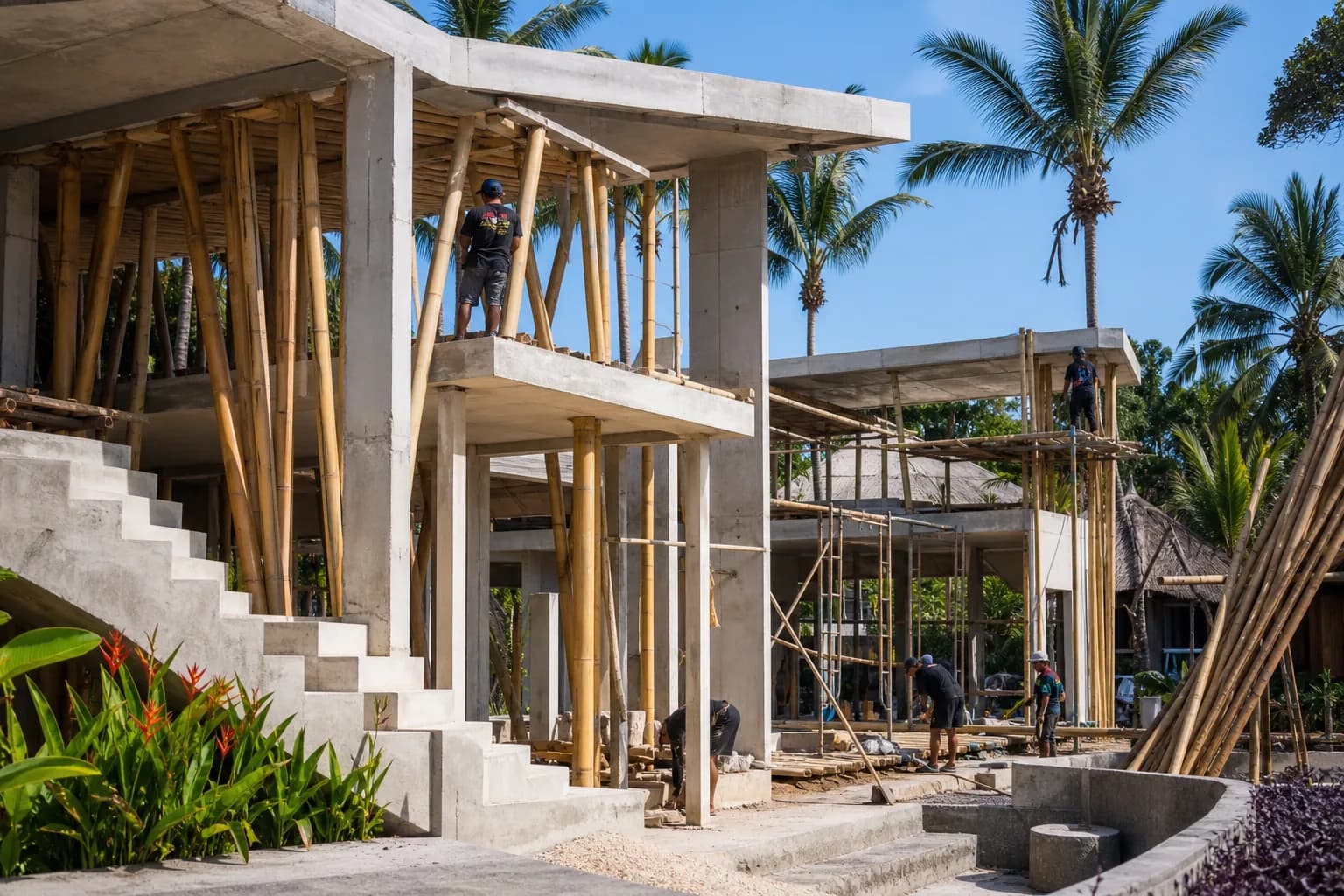
Off Plan Villa Bali: What You’re Really Buying When Construction Hasn’t Started
The term “off plan villa Bali” appears frequently in property listings across the island, typically accompanied by glossy renderings, attractive price points, and completion dates that seem just around the corner. For buyers and investors exploring Bali’s construction market, these opportunities promise the chance to secure a property before it exists, often at a lower entry price than completed villas command.
But what does purchasing an off plan villa in Bali actually mean in practical terms? More importantly, what separates a professionally managed off-plan construction project from a speculative development that may never materialize as promised?
At Teville, we’ve spent years building villas across Bali—from single custom residences to multi-unit developments like Haridas Villas. We’ve also witnessed the aftermath when off-plan projects go wrong: buyers left with incomplete structures, contractors who’ve disappeared, and construction quality that bears little resemblance to the original renderings. This article examines the off-plan villa market in Bali from a construction perspective, not a sales pitch, so you understand exactly what you’re committing to before any money changes hands.
What “Off Plan Villa Bali” Actually Means in Practice
An off plan villa is a property sold before construction is complete—sometimes before it has even started. You’re purchasing based on architectural drawings, specifications, and promises about what will eventually be built. In established markets with strong legal frameworks, off-plan purchases come with substantial buyer protections, escrow arrangements, and regulatory oversight.
Bali’s construction market operates differently. The island’s property development landscape includes everything from professionally managed projects with complete documentation to informal arrangements where a “developer” is simply a local contact with access to land and a network of subcontractors.
When you encounter an off plan villa Bali listing, you might be looking at:
- A licensed construction company with detailed architectural plans, engineering calculations, and a proven track record of completed projects
- A real estate agent marketing a concept on behalf of a landowner, with construction details to be “figured out later”
- A foreign investor who’s purchased land and hired the cheapest contractor they could find, now pre-selling units to fund construction
- A legitimate developer who’s built successfully before but is now overextended across multiple projects simultaneously
The challenge is that from a buyer’s perspective, these scenarios can look remarkably similar in the initial marketing materials. All feature beautiful renderings. All promise completion within 12-18 months. All offer payment plans tied to construction milestones. The critical differences only become apparent when you examine the documentation, the contractor’s capabilities, and the project’s actual construction readiness.
Common Risks When Buying Off Plan Villas in Bali
The appeal of off-plan purchases is understandable: lower initial prices, the ability to customize finishes, and the potential for value appreciation between purchase and completion. However, Bali’s construction environment presents specific risks that buyers frequently underestimate.
Construction Delays That Extend Indefinitely
Completion date estimates for off plan villa Bali projects are often optimistic to the point of fiction. A project marketed as “12 months to completion” can easily stretch to 24 or 36 months—or never complete at all.
Delays occur for legitimate reasons: monsoon seasons that halt foundation work, supply chain disruptions for imported materials, permit processing that takes longer than anticipated. But they also occur because the project was never properly planned, the contractor lacks sufficient working capital, or the developer is juggling multiple projects and prioritizing whichever has the most immediate cash flow.
Unlike established markets where delays trigger penalty clauses and compensation, most off-plan contracts in Bali contain vague language about completion being subject to “unforeseen circumstances” with no meaningful recourse for buyers.
Quality That Doesn’t Match Specifications
Renderings show premium finishes, high-end fixtures, and meticulous attention to detail. The actual construction may deliver something quite different. We’ve been called to assess off-plan villas where:
- Specified waterproofing systems were replaced with cheaper alternatives that failed within months
- “Natural stone” turned out to be concrete pavers with a stone-effect finish
- Structural elements were undersized compared to engineering drawings, creating long-term stability concerns
- Electrical and plumbing installations didn’t meet basic safety standards, let alone the specifications in the contract
The problem isn’t always intentional fraud. Sometimes it’s simple incompetence—a contractor who doesn’t understand the specifications they’ve agreed to deliver. Other times it’s a cash flow issue where the developer needs to cut costs mid-project to stay afloat. Regardless of the reason, the buyer is left with a property that isn’t what they paid for.
Unclear or Incomplete Specifications
Many off plan villa Bali contracts contain surprisingly vague specifications. A contract might state “modern kitchen” without specifying brands, models, or quality grades. “Swimming pool” without detailing the filtration system, finish materials, or structural specifications. “Air conditioning throughout” without naming the capacity, brand, or installation standards.
This vagueness isn’t accidental. It gives the developer maximum flexibility to substitute cheaper alternatives while technically fulfilling the contract. When you question the quality of what’s been installed, they can point to the contract and argue they’ve delivered exactly what was promised—just not what you reasonably expected based on the price point and marketing materials.
Weak Contractual Protections
Off-plan purchase agreements in Bali often heavily favor the developer. Payment schedules may require substantial upfront deposits before any construction begins. Milestone payments may be tied to vague completion stages rather than verified construction progress. Penalty clauses for developer delays are absent or toothless, while buyer cancellation terms result in forfeiture of all payments made.
The contract may be governed by Indonesian law but contain no clear dispute resolution mechanism. If problems arise, your options are limited: accept whatever is delivered, attempt to negotiate from a weak position, or pursue legal action in an unfamiliar legal system where outcomes are uncertain and timelines are measured in years.
The Contractor-Developer Separation Problem
A common structure in Bali’s off-plan market involves a developer who markets and sells the project but subcontracts the actual construction to a separate builder. This separation creates accountability gaps.
When issues arise, the developer blames the contractor. The contractor claims they’re just following the developer’s instructions and budget. The buyer is caught between two parties, neither of whom takes full responsibility for the outcome. If the developer runs out of money or loses interest, the contractor may stop work, leaving the project incomplete with no clear path to resolution.
How Teville Approaches Off-Plan Villa Construction
At Teville, we structure off-plan projects differently because we’re a construction company first, not a property developer looking to flip units. When we offer an off plan villa Bali opportunity, it’s because we’re building a project ourselves—like Haridas Villas—and offering buyers the chance to secure a unit during construction.
This approach eliminates the contractor-developer separation problem. You’re dealing directly with the company that will physically build your villa, using our own project management systems, quality control processes, and construction teams. There’s no middleman to create confusion or dilute accountability.
Complete Architectural and Engineering Documentation
Before we offer any off-plan opportunity, the project has complete architectural drawings, structural engineering calculations, MEP (mechanical, electrical, plumbing) designs, and site plans. These aren’t conceptual sketches—they’re construction-ready documents that have been reviewed by engineers and, where required, submitted for permitting.
Buyers receive access to these documents. You can see exactly what will be built, down to the structural reinforcement specifications and electrical load calculations. If you have your own engineer or architect review the plans, we welcome that scrutiny. Our construction process is designed to be transparent from the beginning.
Detailed Bill of Quantities (BOQ)
Every off plan villa Bali project we offer includes a comprehensive Bill of Quantities—a line-by-line breakdown of every material and labor component in the construction. The BOQ specifies:
- Exact quantities of concrete, steel reinforcement, and structural materials
- Specific brands and models for fixtures, fittings, and finishes
- Quality grades for materials (not just “tiles” but the specific tile series, size, and finish)
- Labor rates and estimated hours for each construction phase
- Allowances for items to be selected later, with clear parameters for what that allowance covers
The BOQ serves as both a pricing document and a quality commitment. It removes ambiguity about what you’re purchasing. If we specify a particular waterproofing system or pool filtration brand in the BOQ, that’s what gets installed. Substitutions require written approval and documentation of equivalent or superior specifications.
Payment Tied to Verified Construction Stages
Payment schedules for our off-plan projects are structured around actual construction progress, not arbitrary percentages or calendar dates. A typical payment structure might include:
- Initial deposit upon contract signing (typically 20-30%)
- Foundation completion payment after structural foundations are poured and cured
- Structure completion payment when the main building frame and roof structure are complete
- Enclosed building payment when walls, windows, and doors are installed
- Systems installation payment when electrical, plumbing, and HVAC are operational
- Final payment upon completion and handover
Each payment stage is verified through site inspections and photographic documentation. You’re not paying for promises—you’re paying for completed work that you can physically see and verify. This structure protects buyers by ensuring that the majority of payments are made only after substantial construction progress is evident.
For buyers who want additional oversight, we accommodate third-party inspections at each milestone. Some clients engage their own quantity surveyors or engineers to verify that work completed matches the payment stage requirements. We view this as a sign of prudent due diligence, not a lack of trust.
Single Point of Accountability
When you purchase an off plan villa through Teville, you have one point of contact for everything: design questions, construction progress, specification changes, timeline updates, and problem resolution. There’s no developer to blame the contractor, or contractor to blame the developer.
Our project managers provide regular construction updates with photos and progress reports. Site visits are encouraged—we want buyers to see their villa taking shape and understand exactly how it’s being built. Questions about construction methods, material choices, or timeline adjustments are answered directly by the people actually managing the build.
This accountability extends beyond completion. Our villas come with structural warranties and clear maintenance guidelines. If issues arise after handover, you’re contacting the same company that built the property, with full knowledge of how it was constructed and access to all the original documentation.
Case Study: Haridas Villas as a Proper Off-Plan Approach
The Haridas Villas project demonstrates how we structure off plan villa Bali opportunities when we’re building for our own account. This multi-unit development in Canggu was designed as a cohesive project from the beginning, with complete documentation prepared before any marketing began.
Each villa in the development had:
- Identical structural specifications to ensure consistent quality across all units
- Detailed architectural plans showing exact layouts, elevations, and finishes
- Engineering calculations for foundations, structural frames, and roof systems
- Comprehensive BOQs with specified brands for all fixtures and fittings
- Clear completion timelines based on realistic construction schedules
Buyers who purchased off-plan received regular construction updates and could visit the site to see progress. Payment schedules were tied to construction milestones that applied across all units, creating transparency and predictability. Because we were building multiple villas simultaneously, buyers could see completed or near-completed units that demonstrated the actual quality and finishes they would receive.
The project completed on schedule because it was properly planned from the beginning. There were no surprises mid-construction, no specification changes to cut costs, and no quality compromises. Buyers received exactly what was documented in their contracts because those contracts were based on realistic construction plans, not optimistic marketing projections.
This is the standard we apply to any off-plan opportunity we offer. If we’re not confident we can deliver to the documented specifications within the stated timeline, we don’t market the project. Our reputation as a construction company depends on completed projects, not sales promises.
Building Your Own Villa vs. Buying Generic Off-Plan
For many buyers exploring off plan villa Bali options, there’s an alternative worth considering: building your own custom villa with a transparent contractor rather than purchasing a pre-designed unit from a developer.
The decision depends on your priorities, timeline, and how much control you want over the final product.
When Off-Plan Makes Sense
Purchasing an off-plan villa from a reputable builder works well when:
- You want a faster path to ownership without managing a custom design process
- The developer’s standard designs align well with your needs and preferences
- You’re comfortable with limited customization in exchange for a more predictable outcome
- The project is being built by the same company selling it, eliminating contractor-developer separation
- You can verify the builder’s track record through completed projects in their portfolio
Off-plan purchases offer efficiency. The design work is done, permits are in process or approved, and construction follows a proven template. If the builder is competent and the documentation is solid, you’re buying a known quantity with relatively predictable timing and costs.
When Custom Building Is Better
Building your own villa makes more sense when:
- You have specific design requirements that standard off-plan units don’t accommodate
- You want complete control over material selections, finishes, and construction quality
- You’ve found land in a location that suits your needs better than available off-plan projects
- You’re willing to invest time in the design and planning process for a truly customized outcome
- You want direct oversight of construction rather than relying on a developer’s quality standards
Custom building takes longer and requires more involvement, but it delivers exactly what you want rather than what a developer thinks will appeal to the broadest market. You control the budget allocation—spending more on aspects that matter to you and economizing on features you don’t value.
At Teville, we support both approaches. Our projects catalog shows off-plan opportunities when we have them available. Our custom building service, detailed in our construction process, walks you through designing and building a villa from scratch. We also maintain a curated selection of available land for clients who want to build custom but need help finding the right location.
The Hybrid Approach: Customizing Off-Plan
Sometimes the best solution is a hybrid: starting with an off-plan design but customizing it to your specific needs. If we’re in the early stages of a project and you want to purchase a unit, there’s often flexibility to modify layouts, upgrade finishes, or adjust specifications before construction reaches that unit.
This approach offers some of the efficiency of off-plan purchasing with some of the customization benefits of building from scratch. The structural design and core systems remain standardized (keeping costs predictable), but interior layouts and finish selections can be tailored to your preferences.
The key is engaging early, before construction has progressed too far. Once foundations are poured and structural frames are built, major changes become expensive or impossible. But if you’re purchasing during the planning phase, there’s often substantial flexibility to customize within the overall project framework.
Due Diligence: What to Verify Before Committing
Whether you’re considering an off plan villa Bali opportunity from Teville or any other builder, certain due diligence steps are essential before committing funds.
Verify the Builder’s Track Record
Don’t rely on renderings and promises. Visit completed projects. Talk to previous clients. Verify that the company has actually built what they’re claiming they can build. A builder’s portfolio should show finished projects, not just ongoing construction or conceptual designs.
Ask specific questions: How many projects have you completed in the last three years? Can I visit them? Can you provide references from previous clients? How many projects are you currently managing simultaneously? What’s your typical timeline from start to completion?
Be wary of builders who can’t provide verifiable completed projects or who are managing so many simultaneous developments that your project is likely to receive divided attention.
Review Complete Documentation
Before signing any contract or making any deposit, review complete architectural plans, engineering calculations, and a detailed BOQ. If the builder can’t provide these documents, the project isn’t
 4344 m²16 month(s)from 290.000 USD
Radha
 3127 m²9 month(s)from 177.000 USD
Mukunda
 172 m²8 month(s)from 120.000 USD
Keshava
 2144 m²11 month(s)from 104.000 USD
Narayana
 1from 198.000 USD
Private: Haridas Villas
 3104 m²11 month(s)from 99.000 USD
TALA 100
 3180 m²7 month(s)from 142.000 USD
Vasudeva
 3124 m²6 month(s)from 123.000 USD
TALA 8
 164 m²7 month(s)from 79.000 USD
Private: Haridas Villas, Tegallalang
 3173 m²6 month(s)from 125.000 USD
TALA FOUR
164 m²7 month(s)from 79.000 USDTALA TWO

Want to calculate?
Start With Real Numbers, Not Guesses
Before buying land or finalizing a design, check the realistic build cost range for your project in Bali.
Our team reviews your inputs and gives a grounded estimate.
Available lands
 3100 m²20 min$ 272968Bali, Tabanan
 770 m²5 min$ 163578Bali, Kedungu
 200 m²11 min$ 89286Bali, Tabanan
 8313 m²15 min$ 716670Bali, Buduk
 2200 m²15 min$ 508005Bali, Canggu
 800 m²10 min$ 307882Bali, Tibubeneng
 608 m²15 min$ 310377Bali, Seminyak
 550 m²15 min$ 164594Bali, Mengwi
 1000 m²10 min$ 303571Bali, Tabanan
 2000 m²5 min$ 738916Bali, Ungasan
 2200 m²3 min$ 183842Bali, Berawa
 1000 m²10 min$ 280788Bali, Pecatu
 1300 m²10 min$ 312192Bali, Kutuh South Bali
 1410 m²15 min$ 390702Bali, Tabanan
 3900 m²10 min$ 432266Bali, Tabanan
Essential Bali build & buy guides
- Bali villa construction cost per m² in 2026
- How much will your villa cost? Calculator
- Building a villa in Bali: the complete guide
- Buying land in Bali: step-by-step for foreigners
- Bali villa investment: yields, risks, returns
- Leasehold vs freehold: what foreigners can own
- Construction defect liability & 10-year warranty
- Bali building codes and construction standards
Related guides
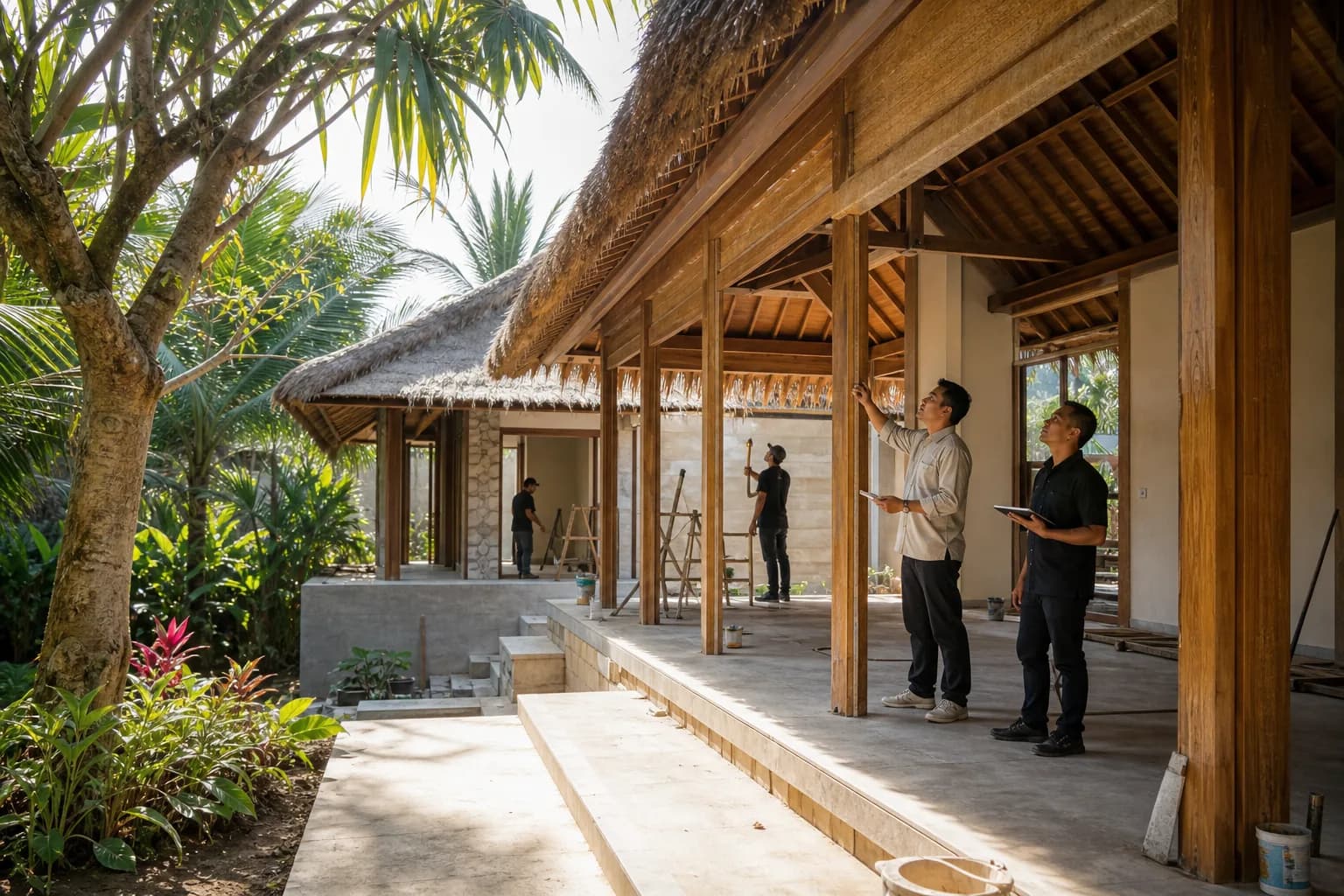
Villa Handover in Bali: Snagging Checklist and What to Test Before Final Payment
A disciplined villa handover in Bali: room-by-room snagging tests, numbered defect documentation, the PBG/SLF and warranty documents to insist on, and payment terms that keep leverage until the list is closed.
7 min read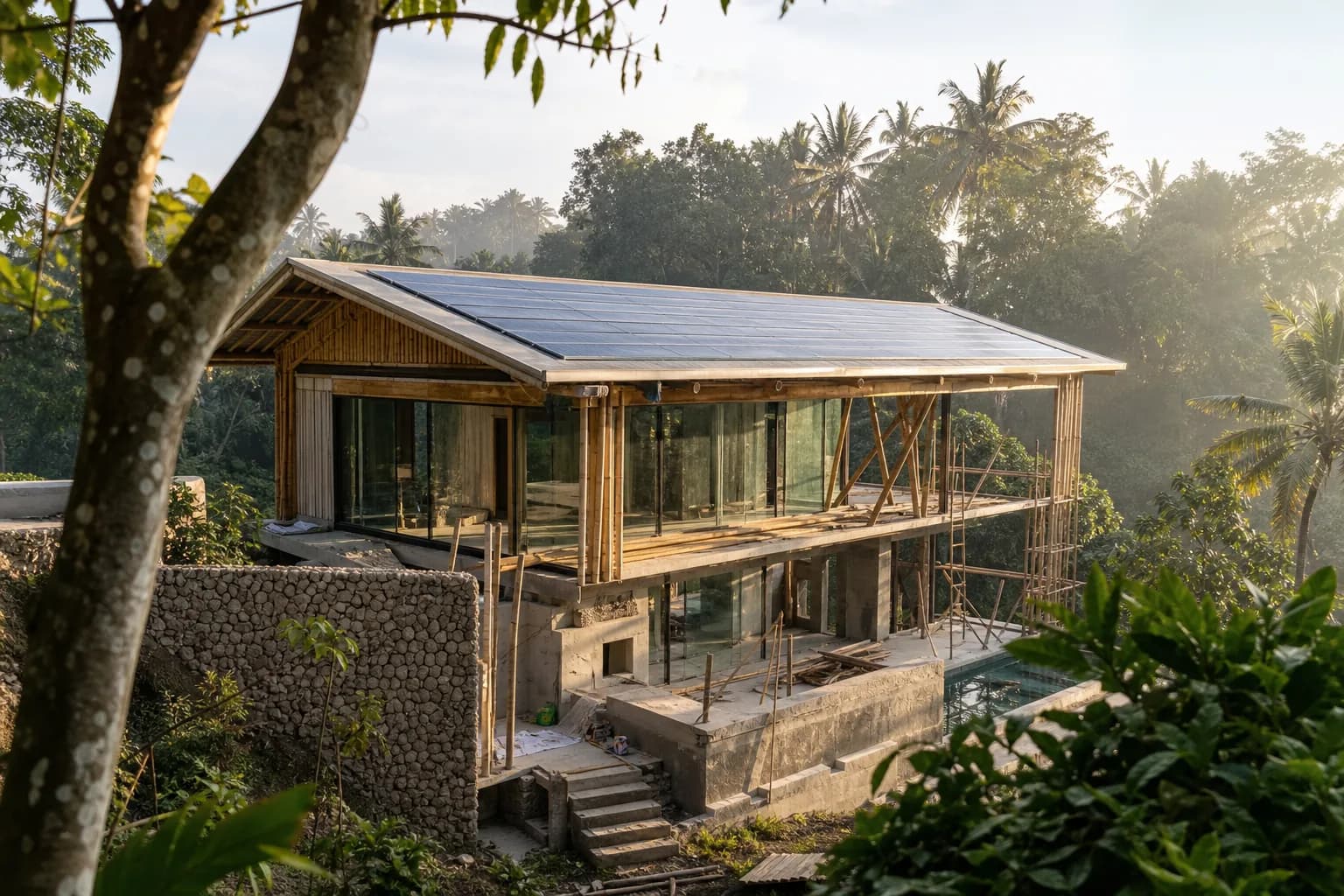
Energy-Efficient Villa in Bali: Solar, Insulation and Passive Cooling That Pay Back
Which energy-efficiency measures actually pay back in Bali's tropical climate — passive design and roof insulation first, efficient equipment second, and self-consumption solar last — with honest 2026 numbers.
7 min read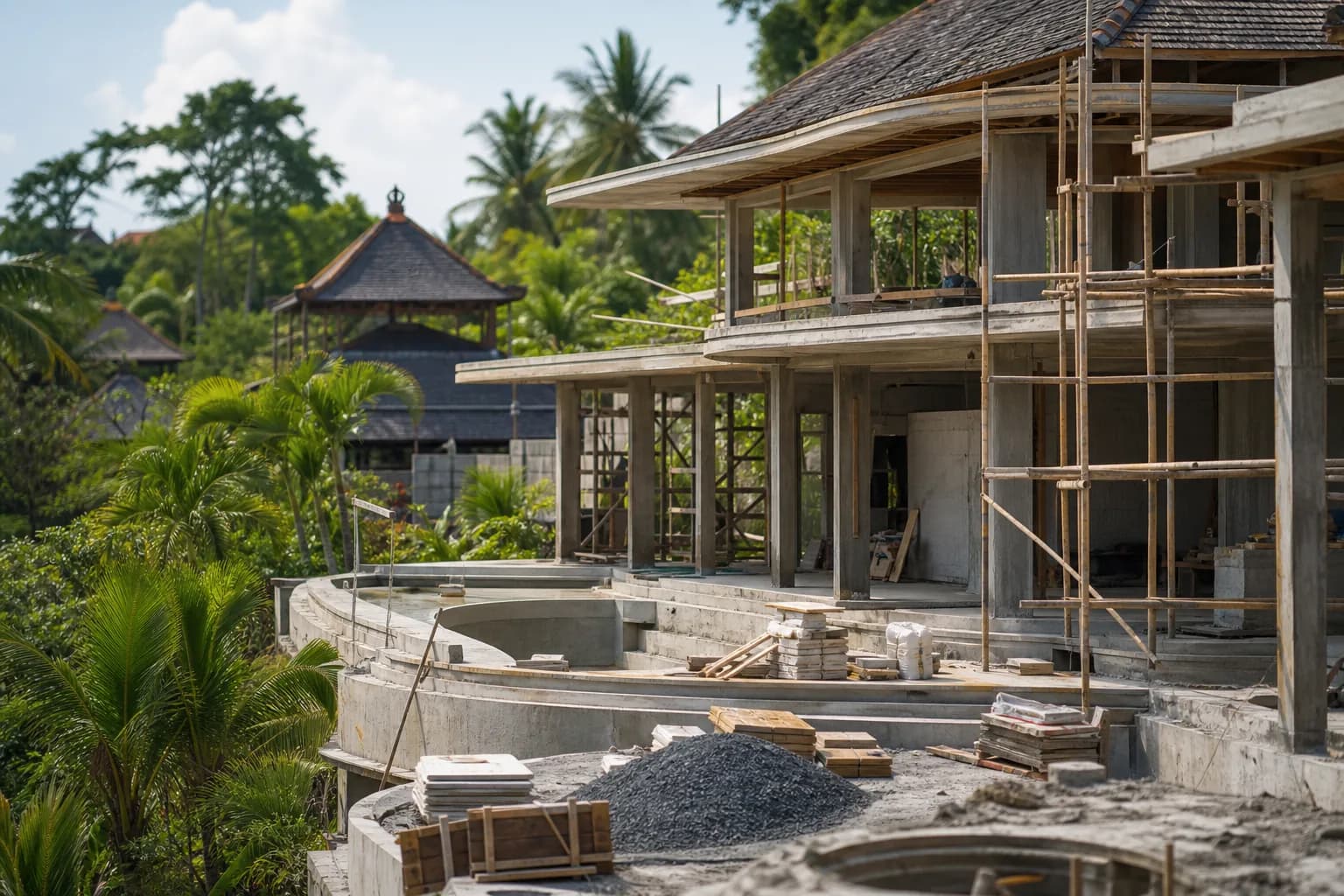
Choosing a General Contractor in Bali: Red Flags, Questions and Contract Must-Haves
A practical filter for hiring a general contractor in Bali: the red flags that end conversations, the questions professionals answer with documents, and the contract clauses no villa build should start without.
7 min read