Salt Air Corrosion Protection Costs for Steel in Bali
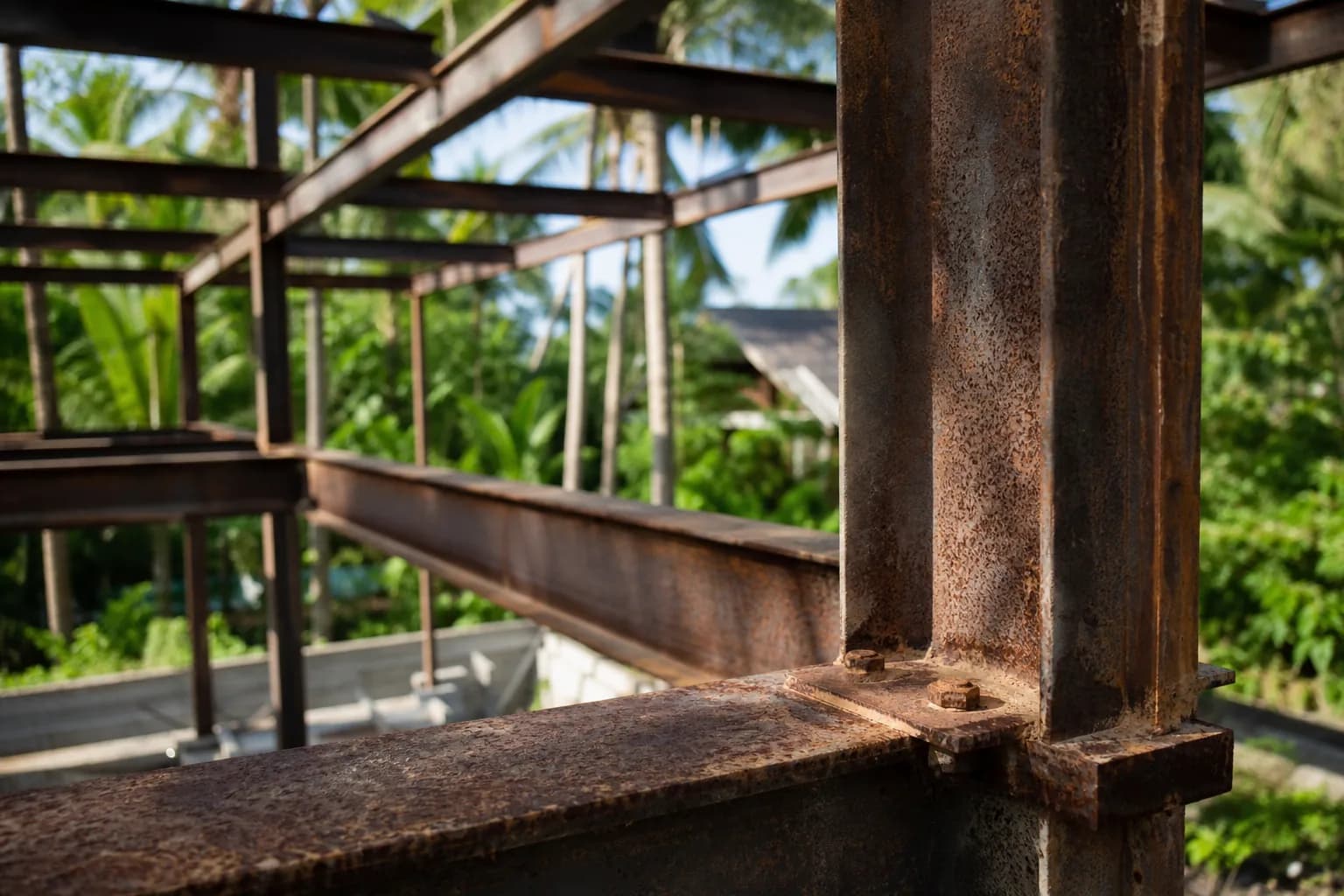
Why Jimbaran Bay’s Salt Air Demands Premium Steel Protection Investment
Jimbaran Bay’s proximity to the Indian Ocean creates an aggressive chloride-rich microclimate that accelerates steel reinforcement corrosion at rates 3-5 times faster than inland Bali locations. Property developers building within 500 meters of the coastline face a critical engineering decision: invest in comprehensive corrosion protection systems upfront, or accept structural degradation that manifests within 5-8 years instead of the expected 30-50 year concrete lifespan. The atmospheric chloride deposition in Jimbaran’s beachfront zone reaches 150-300 mg/m²/day during monsoon seasons, creating conditions classified as “very severe” under ISO 9223 corrosion categories—yet many villa projects still specify standard rebar protection suitable only for inland environments.
The Engineering Reality of Marine Corrosion in Jimbaran’s Coastal Zone
Jimbaran Bay’s salt air corrosion mechanism operates through three simultaneous pathways that distinguish it from typical tropical construction challenges. First, airborne chloride particles penetrate concrete cover through capillary absorption and diffusion, reaching steel reinforcement depth within 18-36 months in standard 40mm cover specifications. Second, the constant 75-85% relative humidity maintains the electrolytic conditions necessary for continuous corrosion cell activity. Third, daily temperature cycling between 24°C nights and 32°C afternoons drives moisture movement that concentrates chlorides at the rebar interface.
The concrete cover depth specified in Indonesian construction standards (SNI 2847) recommends 40mm for general exposure and 50mm for marine environments—specifications that prove inadequate for Jimbaran’s beachfront conditions. Research from Udayana University’s Civil Engineering Department demonstrates that chloride ion concentration at 50mm depth in Jimbaran coastal structures reaches the critical threshold of 0.4% by cement weight within 3-4 years, initiating active corrosion despite meeting code minimums.
Steel reinforcement corrosion in this environment follows a predictable degradation sequence. The initiation phase (chloride penetration to rebar depth) completes in 2-4 years for standard protection systems. The propagation phase then produces visible cracking within 3-5 additional years as corrosion products expand to 2-6 times the original steel volume. Spalling of concrete cover typically appears 8-12 years post-construction, followed by structural capacity reduction as rebar cross-section diminishes by 15-30% over the subsequent decade.
The economic impact extends beyond repair costs. A villa project in Jimbaran’s Kedonganan area documented repair expenses exceeding USD $45,000 for corrosion remediation at year 9, representing 12% of the original construction budget. The property experienced three consecutive rental cancellations due to visible concrete deterioration, demonstrating how structural degradation directly impacts operational viability.
Effective protection requires multi-layer defense systems engineered specifically for marine exposure classification C5-M under ISO 12944 standards. The primary protection layer consists of corrosion-resistant reinforcement—either epoxy-coated rebar, stainless steel reinforcement, or galvanized steel. Secondary protection involves concrete mix optimization with supplementary cementitious materials (SCMs) that reduce permeability and increase chloride binding capacity. Tertiary protection applies surface treatments that block chloride ingress pathways.
Concrete mix design for Jimbaran coastal construction should specify water-cement ratios below 0.40, minimum cement content of 400 kg/m³, and incorporation of 10-15% silica fume or 30-40% fly ash replacement. These specifications produce concrete with chloride diffusion coefficients below 5 x 10⁻¹² m²/s, compared to 15-20 x 10⁻¹² m²/s for standard mixes. The denser microstructure extends the initiation phase from 3-4 years to 12-18 years, fundamentally altering the structure’s service life economics.
Critical Oversights in Coastal Villa Construction Specifications
The most consequential error in Jimbaran villa projects involves specifying protection systems based on distance from shoreline rather than actual chloride deposition rates. Properties located 300-500 meters inland often receive “moderate marine exposure” classifications, yet atmospheric chloride measurements reveal deposition rates comparable to beachfront locations due to prevailing wind patterns and topography. This misclassification results in under-specified protection systems that fail prematurely.
Second, developers frequently implement single-layer protection strategies—typically epoxy-coated rebar alone—without addressing concrete permeability or surface protection. This approach ignores the reality that coating damage during installation (occurring in 2-5% of bars) creates localized corrosion cells that propagate more aggressively than uncoated systems. Comprehensive protection requires redundancy across multiple defense layers.
Third, construction detailing often overlooks the critical vulnerability points: rebar splices, column-beam joints, and areas with congested reinforcement where achieving specified concrete cover becomes practically impossible. These locations require enhanced protection specifications, yet standard drawings rarely differentiate protection levels based on constructability constraints.
The procurement process introduces additional risks when contractors substitute specified corrosion-resistant materials with standard alternatives to recover margin on fixed-price contracts. Without rigorous material verification protocols and on-site testing, epoxy-coated rebar may arrive with coating thickness below the specified 175-300 microns, or stainless steel grades may not meet the required PRE (Pitting Resistance Equivalent) values for marine exposure.
Implementing Comprehensive Corrosion Protection: The Teville Engineering Protocol
Effective corrosion protection begins during site analysis, before architectural design commences. Teville’s construction process incorporates atmospheric chloride deposition monitoring at the specific building site, using ISO 9225 wet candle methodology over a minimum 90-day period spanning both dry and wet seasons. This data determines the actual corrosion category rather than relying on generic coastal zone classifications.
Step 1: Corrosion Risk Classification and Protection Strategy Selection
Based on measured chloride deposition rates, sites are classified into protection tiers. Tier 1 (>300 mg/m²/day chloride deposition) requires stainless steel reinforcement (316L or 2205 duplex grades) for all structural elements within 3 meters of exterior surfaces. Tier 2 (150-300 mg/m²/day) specifies epoxy-coated rebar with enhanced concrete mix design. Tier 3 (<150 mg/m²/day) allows galvanized reinforcement with standard marine-grade concrete. This classification drives material specifications and cost modeling.
Step 2: Structural Design Integration
Structural drawings specify increased concrete cover depths: 75mm for beams and columns, 65mm for slabs in direct salt air exposure. Detailing includes corrosion-resistant bar chairs and spacers (plastic or stainless steel, never mild steel), minimum 50mm edge distance for all reinforcement, and specific splice location requirements that avoid high-stress zones. The structural engineer calculates capacity based on reduced effective cover (accounting for construction tolerances), ensuring structural adequacy even with 15mm cover reduction.
Step 3: Concrete Mix Optimization and Testing
Mix designs undergo laboratory validation testing chloride migration coefficient (NT BUILD 492 method), compressive strength development, and workability under tropical conditions. The approved mix typically specifies: OPC 42.5 grade cement, 10% silica fume replacement, water-cement ratio 0.38, superplasticizer for workability, and maximum aggregate size 20mm for adequate consolidation around reinforcement. Pre-construction mock-ups verify achievability of specified cover depths with the designed mix.
Step 4: Installation Quality Control
On-site protocols include: epoxy coating thickness verification using magnetic gauges (minimum 5 measurements per 100 bars), coating damage repair procedures before concrete placement, cover depth verification using rebar locators (minimum 20% of bars checked), and concrete curing procedures extending to 14 days with wet burlap and plastic sheeting. These measures ensure design assumptions translate to built reality.
Step 5: Surface Protection Application
After 28-day concrete curing, penetrating silane/siloxane sealers are applied to all exterior surfaces at manufacturer-specified coverage rates (typically 4-6 m²/liter). These hydrophobic treatments reduce water absorption by 85-95% while maintaining vapor permeability. Reapplication occurs at 5-year intervals as part of planned maintenance protocols.
Actual Cost Implications for Jimbaran Coastal Construction
Comprehensive corrosion protection adds 8-15% to structural frame costs compared to standard inland specifications, translating to 3-5% of total villa construction budget for typical single-story designs. For a 250m² villa with construction budget of USD $180,000, enhanced corrosion protection represents USD $5,400-9,000 in additional upfront investment.
Material cost differentials break down as follows: epoxy-coated rebar costs USD $0.95-1.15/kg versus USD $0.75-0.85/kg for standard rebar (25-35% premium). Stainless steel 316L reinforcement costs USD $4.50-5.50/kg (500-600% premium), making it economically viable only for highest-risk elements. Marine-grade concrete with SCMs adds USD $15-25/m³ versus standard mix. Surface sealers cost USD $8-12/m² including application.
For a typical Jimbaran beachfront villa requiring 18 tonnes of reinforcement and 85m³ of concrete, material premiums total: USD $3,600-5,400 for epoxy-coated rebar, USD $1,275-2,125 for enhanced concrete mix, and USD $1,600-2,400 for surface protection—totaling USD $6,475-9,925 for comprehensive protection.
The economic justification becomes clear when comparing lifecycle costs. Standard protection systems require major remediation at year 8-12, costing USD $35,000-55,000 (concrete removal, rebar replacement, structural repairs). Enhanced systems extend maintenance-free service life to 25-35 years, with only surface sealer reapplication (USD $2,000-3,000 per 5-year cycle) required. The net present value analysis shows 340-420% return on corrosion protection investment over a 30-year ownership period.
Frequently Asked Questions: Jimbaran Salt Air Corrosion Protection
How far from Jimbaran Beach does salt air corrosion remain a critical concern?
Atmospheric chloride deposition measurements in Jimbaran demonstrate corrosive conditions extending 800-1,200 meters inland from the high-tide line, not the commonly assumed 300-500 meters. Properties in Kedonganan village, despite being 600+ meters from the beach, record chloride deposition rates of 120-180 mg/m²/day during monsoon months—still classified as “high corrosivity” requiring enhanced protection. Topography and prevailing wind patterns matter more than simple distance measurements. Site-specific atmospheric monitoring provides the only reliable classification method for protection system specification.
Can corrosion protection be added after construction if budget constraints require phasing?
Post-construction corrosion protection offers limited effectiveness compared to integrated design approaches. Surface-applied treatments (sealers, coatings) can reduce chloride ingress rates by 70-85%, but cannot address inadequate concrete cover depth or permeable concrete already in place. If chloride has already reached reinforcement depth (typically 2-4 years in unprotected Jimbaran structures), surface treatments only slow ongoing corrosion rather than preventing initiation. Cathodic protection systems can be retrofitted but cost USD $85-120/m² of structural surface—far exceeding the USD $25-35/m² cost of proper initial protection. Budget phasing should never compromise corrosion protection in marine environments.
Does stainless steel reinforcement eliminate all corrosion risk in Jimbaran coastal villas?
Stainless steel reinforcement dramatically improves corrosion resistance but requires correct grade selection for marine chloride environments. Austenitic 304 grade stainless steel, sometimes specified due to lower cost, remains vulnerable to pitting corrosion in high-chloride conditions. Marine applications require 316L (molybdenum-enhanced) or duplex 2205 grades with PRE values above 25. Even with appropriate grades, stainless steel reinforcement does not eliminate the need for adequate concrete cover, low-permeability concrete, and proper construction practices. Galvanic corrosion risks emerge if stainless steel contacts carbon steel elements (tie wire, embedded plates), requiring isolation details. Stainless reinforcement represents the highest-performance option but must be specified and installed correctly within a comprehensive protection system.
What maintenance protocols preserve corrosion protection effectiveness over decades?
Long-term protection requires active maintenance rather than passive reliance on initial systems. Surface sealers degrade under UV exposure and require reapplication every 5-7 years; delaying reapplication by even 2-3 years can allow sufficient chloride ingress to initiate corrosion. Visual inspections should occur annually, specifically examining areas prone to cracking (beam-column joints, cantilever edges, pool coping). Concrete cracks exceeding 0.3mm width require immediate repair with epoxy injection to prevent accelerated chloride penetration. Teville villa projects include detailed maintenance schedules specifying inspection intervals, sealer reapplication timing, and crack monitoring protocols. Proper maintenance extends protection system life from 25-30 years to 40-50+ years, fundamentally altering lifecycle economics.
How do Jimbaran corrosion protection costs compare to other Bali coastal areas like Canggu or Sanur?
Jimbaran Bay’s southwest-facing exposure to prevailing winds creates higher chloride deposition rates than Sanur’s eastern coastline (sheltered by the island mass) but sim

Want to calculate?
 2144 m²11 month(s)from 104.000 USD
Narayana
 1from 198.000 USD
Private: Haridas Villas
 3124 m²6 month(s)from 123.000 USD
TALA 8
 3180 m²7 month(s)from 142.000 USD
Vasudeva
 3104 m²11 month(s)from 99.000 USD
TALA 100
 3173 m²6 month(s)from 125.000 USD
TALA FOUR
 172 m²8 month(s)from 120.000 USD
Keshava
 164 m²7 month(s)from 79.000 USD
TALA TWO
 3127 m²9 month(s)from 177.000 USD
Mukunda
164 m²7 month(s)from 79.000 USDPrivate: Haridas Villas, Tegallalang
 4344 m²16 month(s)from 290.000 USD
Radha
Start With Real Numbers, Not Guesses
Before buying land or finalizing a design, check the realistic build cost range for your project in Bali.
Our team reviews your inputs and gives a grounded estimate.
Available lands
 2000 m²10 min$ 243842Bali, Mengwi
 800 m²5 min$ 295567Bali, Seseh
 1000 m²10 min$ 123154Bali, Jimbaran
 3254 m²5 min$ 631800Bali, All
 7250 m²56 min$ 235714Bali, Tabanan
 2000 m²5 min$ 1440887Bali, Pecatu
 7500 m²5 min$ 206281Bali, Kedungu
 220 m²2 min$ 66565Bali, Cemagi
 3000 m²15 min$ 738916Bali, Cepaka
 500 m²10 min$ 107143Bali, Tabanan
 1700 m²10 min$ 632257Bali, Kuta
 422 m²15 min$ 93547Bali, Kerobokan
 700 m²15 min$ 109052Bali, Buduk
 1000 m²10 min$ 230911Bali, Kerobokan
 1000 m²10 min$ 184729Bali, Kutuh South Bali
Essential Bali build & buy guides
- Bali villa construction cost per m² in 2026
- How much will your villa cost? Calculator
- Building a villa in Bali: the complete guide
- Buying land in Bali: step-by-step for foreigners
- Bali villa investment: yields, risks, returns
- Leasehold vs freehold: what foreigners can own
- Construction defect liability & 10-year warranty
- Bali building codes and construction standards
Related guides
Villa Handover in Bali: Snagging Checklist and What to Test Before Final Payment
A disciplined villa handover in Bali: room-by-room snagging tests, numbered defect documentation, the PBG/SLF and warranty documents to insist on, and payment terms that keep leverage until the list is closed.
7 min read
Energy-Efficient Villa in Bali: Solar, Insulation and Passive Cooling That Pay Back
Which energy-efficiency measures actually pay back in Bali's tropical climate — passive design and roof insulation first, efficient equipment second, and self-consumption solar last — with honest 2026 numbers.
7 min read
Choosing a General Contractor in Bali: Red Flags, Questions and Contract Must-Haves
A practical filter for hiring a general contractor in Bali: the red flags that end conversations, the questions professionals answer with documents, and the contract clauses no villa build should start without.
7 min read