Interior Finishing Materials for Bali Villas | Premium Quality
Interior Finishing Materials for Bali Villas: A Comprehensive Technical Guide
Selecting appropriate interior finishing materials Bali villas requires understanding the unique challenges of tropical construction. The island’s high humidity, salt-laden air, intense UV exposure, and temperature fluctuations demand materials that perform reliably over decades, not just months. This guide examines material categories, climate-specific considerations, durability comparisons, cost structures, and installation complexities to help villa owners and developers make informed decisions.
At Teville, we’ve completed numerous villa projects across Bali’s diverse microclimates, from coastal Canggu to inland Ubud. Our experience reveals that material selection directly impacts long-term maintenance costs, structural integrity, and occupant comfort. The wrong choices lead to premature deterioration, mold growth, and expensive remediation work. The right materials create resilient, beautiful spaces that age gracefully in Bali’s demanding environment.
Understanding Bali’s Climate Impact on Interior Materials
Before examining specific materials, understanding Bali’s climate parameters is essential. The island experiences 70-85% relative humidity year-round, with peaks during the wet season from November to March. Coastal areas face additional salt air exposure, which accelerates corrosion of metal components and degrades certain finishes. Inland areas experience slightly lower humidity but greater temperature variations between day and night.
UV radiation intensity remains high throughout the year, affecting materials near windows and open-air spaces common in Bali villa design. Termites and other wood-boring insects pose constant threats to organic materials. Mold and mildew growth occurs rapidly on surfaces that trap moisture or lack adequate ventilation. These factors eliminate many materials that perform well in temperate climates but fail catastrophically in tropical conditions.
Humidity and Moisture Management
Humidity affects interior finishing materials Bali villas through several mechanisms. Hygroscopic materials like untreated wood absorb moisture during humid periods and release it during drier conditions, causing dimensional changes that lead to warping, cracking, or joint separation. Non-breathable finishes applied over moisture-sensitive substrates trap water vapor, creating conditions for mold growth and material degradation.
Effective material selection requires matching permeability characteristics across the assembly. Vapor-impermeable finishes work only when applied over equally impermeable substrates with proper moisture barriers. Breathable finishes require breathable substrates and adequate air circulation. Mixed approaches typically fail, as moisture becomes trapped at the interface between dissimilar materials.
Heat and Thermal Expansion
Bali’s temperatures range from 24°C to 33°C, with roof spaces and upper floors experiencing significantly higher temperatures. Materials expand and contract with temperature changes at different rates, creating stress at joints and connections. Large-format tiles, for example, require expansion joints every 3-4 meters to prevent cracking. Metal fixtures expand more than surrounding masonry, requiring flexible mounting systems.
Dark-colored materials absorb more heat, becoming uncomfortable to touch and radiating heat into living spaces. Light-colored, reflective finishes help maintain comfortable surface temperatures. Thermal mass materials like stone and concrete moderate temperature swings by absorbing heat during the day and releasing it at night, though this benefit is less pronounced in Bali’s consistently warm climate compared to regions with greater diurnal temperature variation.
Salt Air Corrosion
Villas within 2 kilometers of the coast face accelerated corrosion of metal components. Standard steel fasteners, hinges, and fixtures rust rapidly. Aluminum oxidizes, creating white powdery deposits. Even stainless steel grades below 316 show corrosion over time. Salt particles carried by sea breezes deposit on surfaces, attracting moisture and creating localized corrosion cells.
Coastal projects require marine-grade materials: 316 stainless steel fasteners, powder-coated aluminum fixtures, or non-metallic alternatives. Regular washing of exterior surfaces helps, but interior materials near open walls or large windows still experience salt exposure. Material specifications for coastal villas must account for this aggressive environment from the initial design phase.
Flooring Materials: Performance and Selection Criteria
Flooring represents the largest surface area of interior finishing materials Bali villas and receives the most wear. Material selection must balance durability, comfort, maintenance requirements, and aesthetic goals while addressing climate-specific challenges.
Natural Stone Flooring
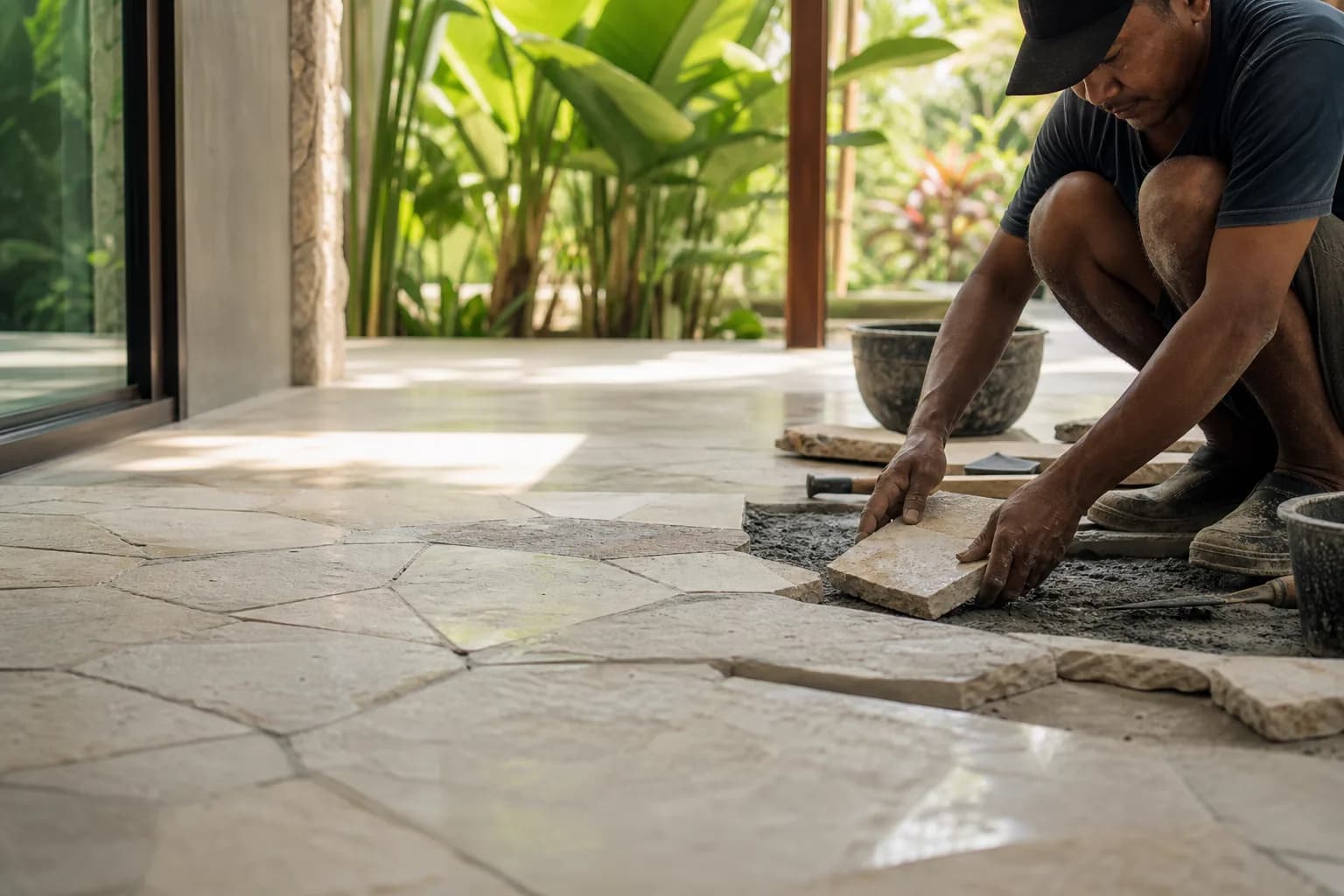
Natural stone remains the most popular flooring choice for Bali villas, offering excellent durability, thermal mass, and timeless aesthetics. Local options include Bali green stone (andesite), Palimanan limestone, Jogja stone, and various sandstones. Imported options include granite, marble, and slate, though these significantly increase costs.
Andesite, a volcanic stone quarried in Bali, provides exceptional durability and slip resistance when honed or flamed. Its dark gray to black color shows less dirt than lighter stones but absorbs more heat in direct sunlight. Cost ranges from 250,000 to 450,000 IDR per square meter installed, depending on finish quality and tile size. Larger format tiles (60x60cm or 80x80cm) cost more but reduce grout lines and create a more seamless appearance.
Palimanan limestone, quarried in West Java, offers warm cream to beige tones that complement tropical design aesthetics. This sedimentary stone is softer than andesite, making it more susceptible to scratching and etching from acidic substances. Proper sealing is essential, requiring reapplication every 1-2 years in high-traffic areas. Costs range from 300,000 to 550,000 IDR per square meter installed.
All natural stone requires professional installation with proper substrate preparation. The concrete slab must be level within 3mm over 3 meters, clean, and fully cured. Thin-set mortar application requires experienced installers to achieve proper coverage and avoid hollow spots that lead to cracking. Grout selection matters: epoxy grouts resist staining and mold growth better than cement-based grouts but cost 3-4 times more and require skilled application.
Terracotta and Clay Tiles
Terracotta tiles align with 2026 trends toward natural, locally sourced interior finishing materials Bali villas. These fired clay tiles offer warm earth tones, excellent thermal properties, and authentic tropical character. Local Balinese terracotta costs 150,000 to 300,000 IDR per square meter, while imported European terracotta ranges from 800,000 to 1,500,000 IDR per square meter.
Terracotta’s porosity requires proper sealing to prevent staining and moisture absorption. Unsealed terracotta in humid environments develops mold and mildew in grout lines and on the tile surface. Quality sealers penetrate the tile, providing protection without creating a plastic-looking surface film. Resealing frequency depends on traffic levels and cleaning practices, typically every 1-3 years.
Installation complexity is moderate. Terracotta tiles vary slightly in thickness and dimension, requiring skilled installers who can adjust mortar bed thickness to create a level surface. Handmade tiles show more variation than machine-made tiles, contributing to their artisanal character but requiring more installation time and expertise.
Engineered Wood and Bamboo
Solid hardwood flooring performs poorly in Bali’s humidity, expanding and contracting excessively. Engineered wood products with dimensional stability treatments offer better performance but still require careful specification. Marine-grade engineered teak, with a solid teak wear layer over a stable plywood core, provides the warmth of wood with improved dimensional stability.
Costs for quality engineered teak range from 800,000 to 1,400,000 IDR per square meter installed. Cheaper products using thin veneers over softwood cores fail quickly in tropical conditions. The wear layer should be at least 4mm thick to allow for refinishing. Factory-applied UV-cured finishes outperform site-applied finishes in durability and moisture resistance.
Bamboo flooring, particularly strand-woven bamboo, offers sustainability credentials and good dimensional stability. Quality varies dramatically between manufacturers. Inferior products delaminate in humid conditions or show excessive color fading. Reputable suppliers provide products tested for tropical climates, with costs ranging from 600,000 to 1,000,000 IDR per square meter installed.
Both engineered wood and bamboo require climate-controlled storage before installation and proper acclimatization to site conditions. Installation over concrete requires a moisture barrier and floating installation method with expansion gaps at all perimeters. Direct glue-down installations often fail as humidity-driven substrate moisture migrates into the flooring.
Polished Concrete
Polished concrete has gained popularity as a modern, low-maintenance flooring option. The existing concrete slab is ground, densified, and polished to create a durable, seamless surface. Costs range from 350,000 to 650,000 IDR per square meter, depending on the level of polish and any decorative treatments like staining or scoring.
Advantages include excellent durability, no grout lines to maintain, and good thermal mass properties. The surface remains cool underfoot, comfortable in Bali’s climate. Disadvantages include hardness (dropped items break easily) and acoustic reflectivity (sound bounces off hard surfaces, requiring soft furnishings for acoustic comfort).
Quality depends entirely on the concrete slab quality and the polishing contractor’s skill. Existing slabs with poor finishing, cracks, or repairs may not polish well. New construction allows specification of concrete mixes optimized for polishing, with controlled curing and proper finishing. The polishing process takes 3-5 days for a typical villa, with progressive grinding through finer grits followed by densifier application and final polishing.
Porcelain and Ceramic Tiles
Porcelain tiles offer excellent durability, moisture resistance, and design flexibility. Modern manufacturing produces tiles mimicking natural stone, wood, or concrete at lower costs and with superior performance characteristics. Quality porcelain tiles are denser and less porous than ceramic tiles, making them more suitable for tropical environments.
Costs vary enormously based on origin and quality. Indonesian-manufactured tiles range from 150,000 to 400,000 IDR per square meter. Italian or Spanish imports range from 500,000 to 1,500,000 IDR per square meter. Installation costs add 100,000 to 200,000 IDR per square meter, depending on tile size and pattern complexity.
Large-format tiles (120x60cm or larger) create a more seamless appearance with fewer grout lines but require perfectly flat substrates and skilled installation. Rectified edges allow for minimal grout joints (2-3mm), creating a nearly seamless appearance. Non-rectified tiles require wider joints (5-8mm) to accommodate dimensional variations.
Slip resistance is critical for bathroom and pool deck areas. Polished porcelain becomes dangerously slippery when wet. Textured or matte finishes provide better traction. The R-rating system (R9-R13) indicates slip resistance, with R10 or higher recommended for wet areas.
Wall Finishing Materials and Techniques
Wall finishes significantly impact the aesthetic character and maintenance requirements of interior finishing materials Bali villas. Options range from traditional plaster and paint to contemporary panels and natural materials.
Plaster and Paint Systems
Standard cement plaster with acrylic paint remains the most common wall finish, offering good durability at reasonable cost. Proper execution requires multiple coats: a base coat to level the masonry, a finish coat for smoothness, and primer before paint. Rushing this process or skipping steps leads to cracking, poor paint adhesion, and premature failure.
Paint selection matters significantly in humid environments. Quality acrylic paints with mold inhibitors cost 80,000 to 150,000 IDR per liter and cover 10-12 square meters per liter per coat. Two finish coats over primer provide adequate coverage and durability. Cheaper paints lack sufficient binder content, leading to poor adhesion, faster fading, and more frequent repainting.
Clay-washed walls, trending in 2026 villa design, offer a natural, textured alternative to conventional paint. These breathable finishes allow moisture vapor transmission, reducing mold risk. Application requires skilled craftspeople, with costs ranging from 200,000 to 400,000 IDR per square meter. The finish is less durable than paint, showing marks from contact, but can be easily touched up or refreshed.
Natural Stone Cladding
Stone cladding creates dramatic feature walls with natural texture and color variation. Palimanan limestone, Bali green stone, and Java sandstone are popular choices. Installation methods include thick-set (mortar bed) or thin-set (adhesive) applications, depending on stone thickness and weight.
Costs range from 400,000 to 800,000 IDR per square meter installed for local stones, including materials and labor. Imported stones cost significantly more. The substrate must be structurally sound and properly prepared. Heavy stone cladding on upper floors requires structural verification to ensure adequate load capacity.
Sealing is essential to prevent moisture absorption and staining. Penetrating sealers maintain the natural appearance while providing protection. Some designers prefer the weathered patina that develops on unsealed stone, accepting increased maintenance requirements for the authentic aged appearance.
Reclaimed Wood Paneling
Reclaimed teak paneling aligns with sustainability trends and provides rich texture and warmth. Salvaged wood from old Javanese houses offers character impossible to replicate with new materials. Proper treatment is essential: fumigation to eliminate insects, kiln drying to stabilize moisture content, and sealing to prevent future moisture absorption.
Costs range from 800,000 to 1,800,000 IDR per square meter installed, depending on wood quality, panel size, and installation complexity. Installation requires a framework of treated timber battens attached to the masonry wall, with air space behind the panels for ventilation. Direct attachment to masonry without ventilation traps moisture and promotes rot.
Maintenance includes periodic inspection for insect activity and reapplication of protective finishes every 2-3 years. Despite higher initial costs and maintenance requirements, reclaimed wood creates distinctive character that justifies the investment for many villa owners.
Decorative Concrete and Microcement
Microcement and decorative concrete finishes create seamless, contemporary surfaces applicable to walls, floors, and even furniture. These thin-layer systems (2-3mm total thickness) bond to existing substrates, offering design continuity between surfaces. Costs range from 450,000 to 850,000 IDR per square meter, depending on finish complexity and contractor expertise.
Application requires skilled craftspeople. The substrate must be sound, clean, and properly primed. Multiple thin coats are applied and troweled to create the desired texture. Final sealing provides protection and determines the surface sheen. Quality varies dramatically between applicators; reviewing completed projects and obtaining references is essential.
These finishes perform well in humid environments when properly sealed. They’re particularly effective in bathrooms and wet areas, creating waterproof surfaces without grout lines. Maintenance involves periodic resealing (every 2-3 years) and avoiding abrasive cleaners that damage the sealer.
Ceiling Options and Considerations
Ceiling finishes impact thermal comfort, acoustics, and spatial perception. Options for interior finishing materials Bali villas range from exposed structures to finished ceilings with various materials.
Exposed Timber Structures
Exposed timber roof structures create dramatic spatial volume and showcase traditional Balinese construction techniques. Coconut wood, bamboo, or reclaimed teak beams provide authentic tropical character. Proper treatment is non-negotiable: pressure treatment or boron-based preservatives prevent insect infestation and fungal decay.
Costs vary based on timber species and structural complexity. Coconut wood structures range from 350,000 to 600,000 IDR per square meter of roof area. Reclaimed teak costs 800,000 to 1,400,000 IDR per square meter. These costs include structural framing but not roofing materials or insulation.
Thermal performance requires attention. Exposed structures without insulation allow significant heat gain from the roof. Installing reflective foil insulation above the ceiling plane or using insulated roofing panels maintains the visual appeal of exposed structure while improving thermal comfort. This adds 150,000 to 250,000 IDR per square meter but dramatically reduces cooling loads.
Gypsum Board Ceilings
Gypsum board (drywall) ceilings offer smooth, finished surfaces at moderate cost. Standard gypsum board performs poorly in humid environments, absorbing moisture and supporting mold growth. Moisture-resistant gypsum board (green board) or cement board provides better performance in tropical conditions.
Costs for moisture-resistant gypsum board ceilings range from 180,000 to 280,000 IDR per square meter installed, including framing, board, taping, finishing, and paint. Proper installation requires adequate ventilation above the ceiling to prevent moisture accumulation. Sealed ceiling cavities without ventilation trap moisture, leading to mold growth and material degradation.
Acoustic performance benefits from gypsum board ceilings, which absorb and block sound better than hard surfaces. This matters in multi-story villas where footfall noise from upper floors transmits to spaces below. Adding insulation batts in the ceiling cavity further improves acoustic and thermal performance.
Timber Ceiling Boards
Timber ceiling boards create warmth and texture while concealing roof structures and services. Species selection impacts durability and cost. Treated pine boards offer economy (250,000 to 400,000 IDR per square meter installed) but require regular maintenance. Hardwood species like merbau or bangkirai provide superior durability (450,000 to 750,000 IDR per square meter installed) with less maintenance.
Installation over a framework of timber battens allows air circulation above the boards, essential for moisture management. Tongue-and-groove profiles create tight joints while allowing for wood movement. Boards should be acclimatized to site conditions before installation to minimize post-installation movement.
Finishing options include clear sealers that showcase natural wood grain, stains that modify color while showing texture, o
 172 m²8 month(s)from 120.000 USD
Keshava
 3180 m²7 month(s)from 142.000 USD
Vasudeva

Want to calculate?
 3124 m²6 month(s)from 123.000 USD
TALA 8
 2144 m²11 month(s)from 104.000 USD
Narayana
 1from 198.000 USD
Private: Haridas Villas
 164 m²7 month(s)from 79.000 USD
Private: Haridas Villas, Tegallalang
 3104 m²11 month(s)from 99.000 USD
TALA 100
164 m²7 month(s)from 79.000 USDTALA TWO
 3127 m²9 month(s)from 177.000 USD
Mukunda
 3173 m²6 month(s)from 125.000 USD
TALA FOUR
 4344 m²16 month(s)from 290.000 USD
Radha
Start With Real Numbers, Not Guesses
Check realistic build cost range for your Bali project.
Available lands
 1700 m²10 min$ 392549Bali, Nusadua
 700 m²20 min$ 90517Bali, Cepaka
 2000 m²15 min$ 110837Bali, Karangasem
 750 m²15 min$ 187038Bali, Kerobokan
 600 m²12 min$ 101970Bali, Mengwi
 2000 m²5 min$ 738916Bali, Ungasan
 420 m²15 min$ 41897Bali, Tabanan
 204 m²5 min$ 40899Bali, Kedungu
 610 m²10 min$ 165271Bali, Seminyak
 220 m²2 min$ 66565Bali, Cemagi
 770 m²5 min$ 163578Bali, Kedungu
 1000 m²10 min$ 230911Bali, Kerobokan
 3800 m²15 min$ 100616Bali, Pererenan
 5028 m²10 min$ 361000Bali, Ubud
 2115 m²5 min$ 1139547Bali, Pererenan
Essential Bali build & buy guides
- Bali villa construction cost per m² in 2026
- How much will your villa cost? Calculator
- Building a villa in Bali: the complete guide
- Buying land in Bali: step-by-step for foreigners
- Bali villa investment: yields, risks, returns
- Leasehold vs freehold: what foreigners can own
- Construction defect liability & 10-year warranty
- Bali building codes and construction standards
Related guides
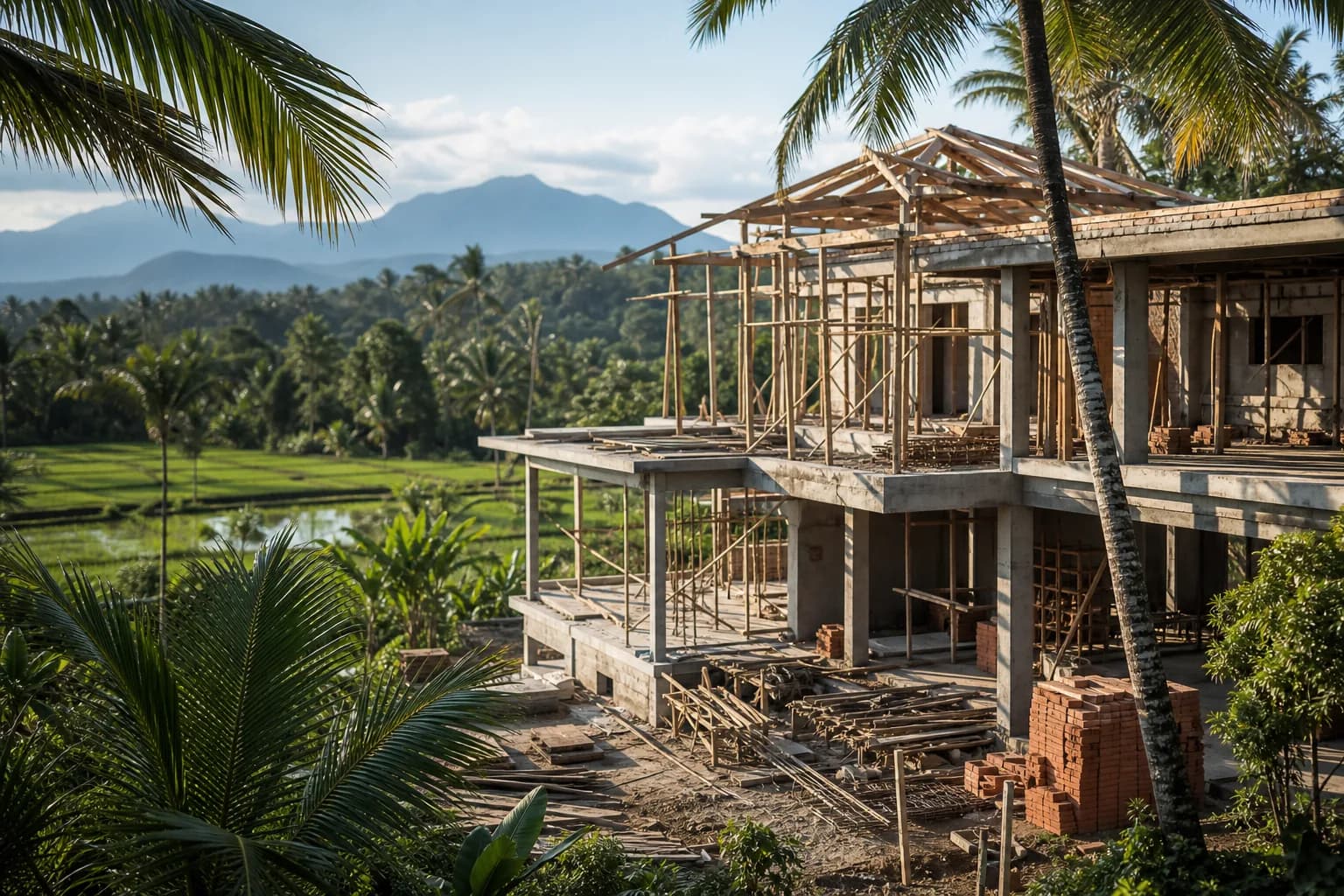
How to Build a Villa in Bali: The Complete Step-by-Step Process (2026)
Every stage of building a villa in Bali as a foreigner — from securing land and permits to handover — with realistic timelines, costs and the mistakes that derail first-time builders.
5 min read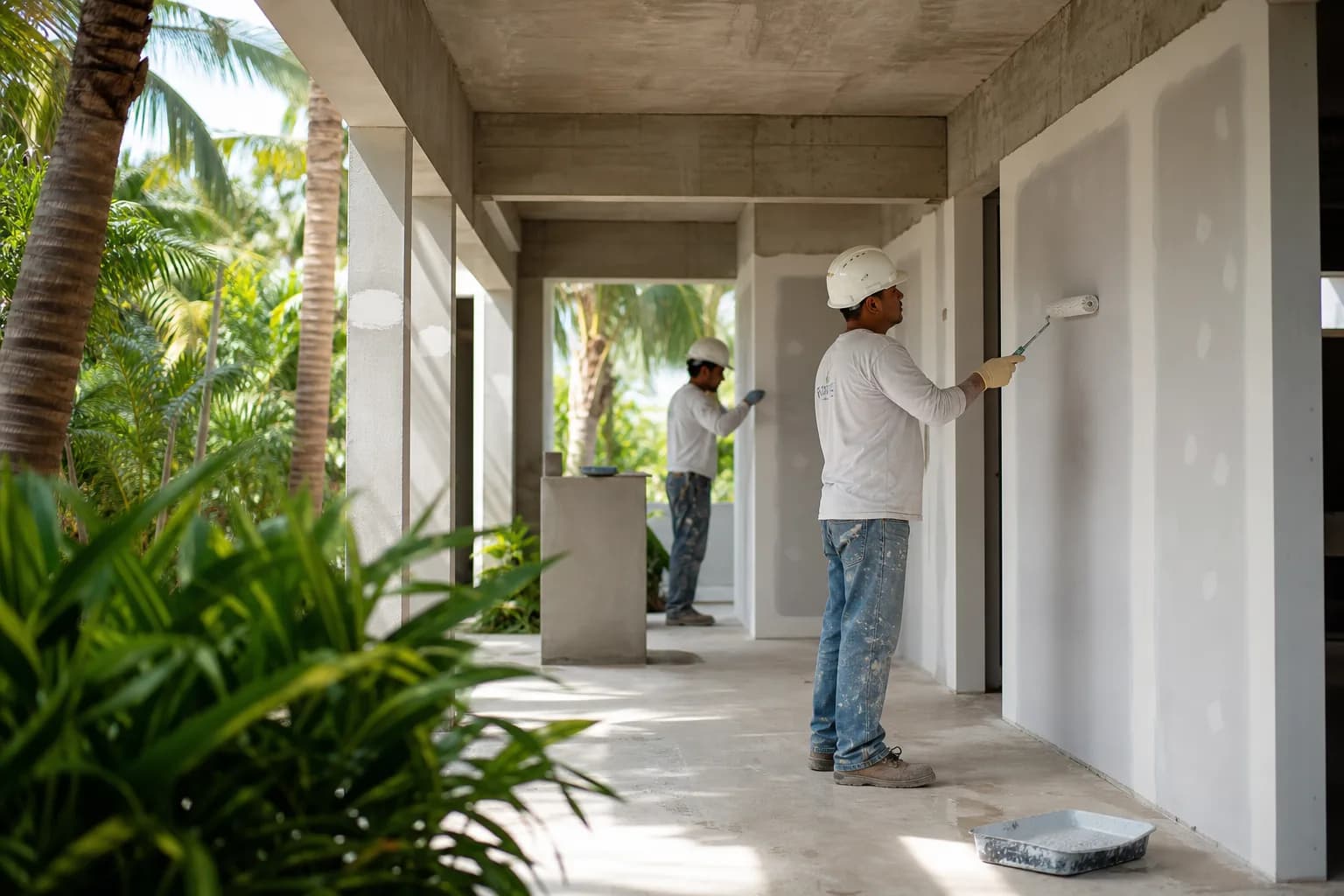
Moisture-Resistant Gypsum Board Finishing with Epoxy Primer Bali
Learn how moisture-resistant gypsum boards with epoxy primer boost durability, finish quality, and mold resistance in Bali projects. Great for Bali homes.
10 min read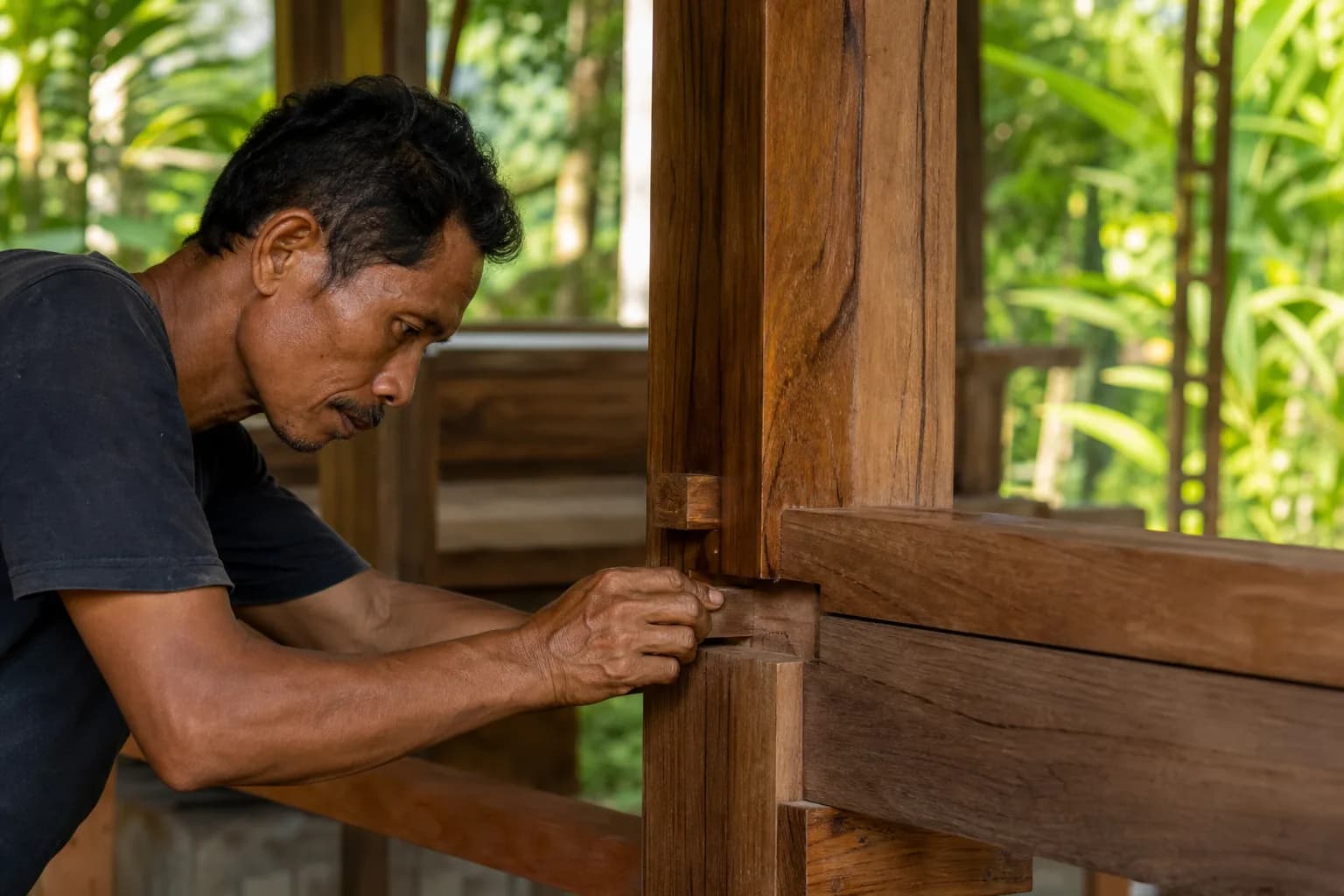
Marine-Grade Timber Joinery Finishing Corrosion Protection Bali
Discover marine-grade timber joinery finishing and corrosion protection in Bali. Durable coastal timber care, coatings, and maintenance for lasting protection.
8 min read