Gianyar Terraced Slope Construction: Cut-Fill Ratios Bali
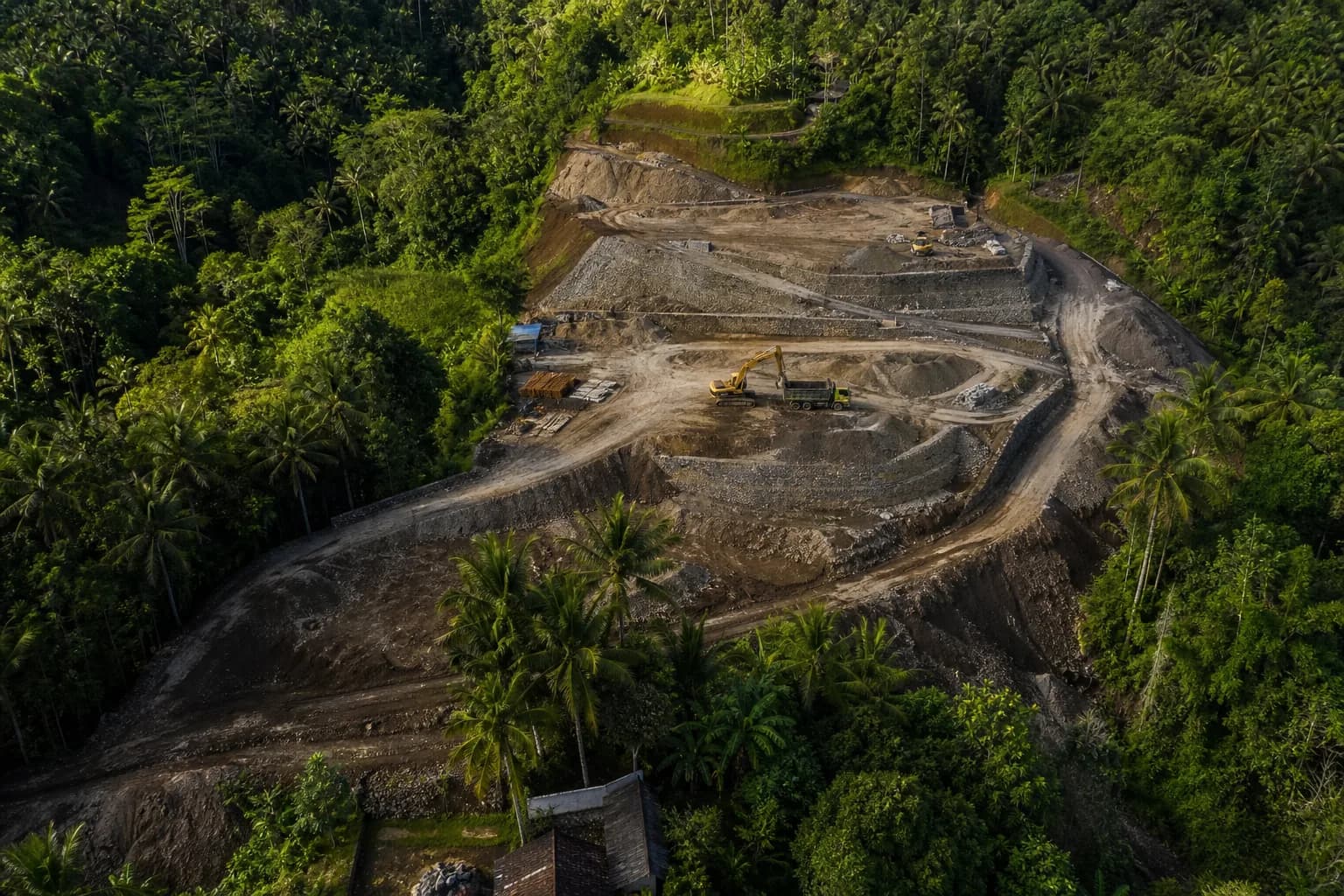
The Hidden Engineering Challenge: Why Gianyar’s Terraced Slopes Demand Precision Cut-Fill Analysis
When purchasing sloped land in Gianyar for villa construction, most buyers focus on the view and price per are—but the real cost driver lies beneath the surface. A 15-degree slope requiring three terraced levels can transform a $1,200/m² construction budget into $1,800/m² once cut-fill earthworks, retaining structures, and drainage engineering are properly calculated. The difference between a 1:1 cut-fill ratio and a 3:1 ratio can mean an additional $45,000-$80,000 in earthwork costs alone for a standard 300m² villa footprint. In Gianyar’s volcanic clay soils with seasonal water tables, understanding these ratios before land purchase isn’t optional—it’s the difference between a structurally sound investment and a perpetual maintenance liability.
Technical Engineering Framework for Gianyar Slope Construction
Gianyar’s topography presents unique geotechnical challenges that directly impact cut-fill calculations. The region’s soil composition—predominantly volcanic clay with intermittent sand layers—exhibits different bearing capacities depending on depth and moisture content. During dry season, surface soils may show 150-200 kPa bearing capacity, dropping to 80-120 kPa during monsoon saturation.
Cut-Fill Ratio Fundamentals for Terraced Construction
The cut-fill ratio represents the volume relationship between excavated material (cut) and material needed for building pads and backfill (fill). In Gianyar terraced construction, three scenarios dominate:
- Balanced Cut-Fill (1:1 ratio): Excavated material equals fill requirements. Achievable on 8-12 degree slopes with two-level terracing. Minimal material import/export costs. Typical for sites where natural contours align with architectural program.
- Cut-Heavy (2:1 to 3:1 ratio): More excavation than fill needed. Common on 15-20 degree slopes requiring significant pad creation. Excess material disposal adds $8-$15 per cubic meter for transport and dumping fees in Gianyar.
- Fill-Heavy (1:2 to 1:3 ratio): Requires imported material. Rare in Gianyar slope construction but occurs when preserving existing trees or minimizing excavation near boundaries. Imported engineered fill costs $25-$40 per cubic meter delivered.
Retaining Wall Engineering Requirements
Gianyar’s building regulations require engineered retaining structures for any cut or fill exceeding 1.5 meters in height. The structural approach directly correlates with cut-fill ratios:
Gravity Retaining Walls (1.5-3m height): Reinforced concrete structures 300-500mm thick, requiring 150kg/m³ steel reinforcement. Foundation depth must reach 1.2x wall height or competent bearing strata. Cost range: $180-$280 per linear meter including excavation, formwork, concrete (K-300 grade), and waterproofing membrane. Suitable for balanced cut-fill scenarios where wall loading remains predictable.
Cantilever Retaining Walls (3-5m height): Engineered L-shaped or inverted-T sections with 200kg/m³ steel reinforcement. Require geotechnical investigation to confirm lateral earth pressure coefficients. Foundation must extend minimum 1.5m depth with proper drainage aggregate backfill. Cost range: $320-$480 per linear meter. Essential for cut-heavy ratios where significant elevation changes occur.
Tiered Retaining Systems (5m+ total height): Multiple walls with intermediate terraces minimum 2m wide for drainage and maintenance access. Each tier engineered independently with weep holes every 2-3 meters. Cost range: $450-$650 per linear meter of total retained height. Required when cut-fill ratios exceed 2:1 and single-wall solutions become structurally impractical.
Drainage Integration and Subsurface Water Management
Cut-fill operations in Gianyar expose subsurface water flows that weren’t apparent during dry-season site visits. Proper drainage design adds 15-25% to retaining wall costs but prevents catastrophic failure. Required elements include perforated drainage pipes behind all retaining walls, gravel drainage blankets minimum 300mm thick, and surface water diversion channels directing runoff away from cut faces. Bio-engineering approaches using vetiver grass root systems can reduce hydrostatic pressure by 30-40% while providing erosion control during establishment phases.
Hidden Risks in Gianyar Terraced Slope Projects
The most expensive mistakes occur during the planning phase, long before excavators arrive. Buyers purchasing sloped Gianyar land without geotechnical investigation routinely underestimate retaining costs by 40-60%. A site appearing to need two simple retaining walls may actually require four engineered structures once proper cut-fill analysis reveals intermediate terrace requirements for structural stability.
Seasonal Water Table Fluctuations: Gianyar’s water table can rise 2-3 meters during peak monsoon months (December-February). Cut operations that expose this seasonal high-water mark require permanent dewatering systems or deeper drainage infrastructure. This discovery mid-construction typically adds $15,000-$30,000 in unbudgeted costs and 4-6 week delays while redesigning foundation systems.
Soil Expansion Characteristics: Volcanic clay soils in Gianyar exhibit 15-25% volume expansion when excavated and loosened. A cut-fill calculation showing balanced 1:1 ratio on paper becomes 1:1.2 in reality, meaning 20% excess material requiring disposal. For a 400m³ earthwork project, this represents 80m³ of unexpected disposal costs ($640-$1,200) plus additional truck movements through narrow Gianyar village roads.
Boundary Setback Complications: Gianyar village regulations (perarem desa) often require 3-5 meter setbacks from property boundaries. On narrow lots, this forces retaining walls inward, increasing cut depths and wall heights. A site initially planned for 2-meter retaining walls may require 3.5-meter structures once setbacks are properly applied, increasing costs by $8,000-$15,000 per wall section.
Access Road Engineering: Terraced construction requires construction vehicle access to each level. Temporary ramps must maintain maximum 12-degree grades for concrete truck access. On sites with 3:1 cut-fill ratios, these access ramps consume 15-20% of the construction footprint and require separate engineering for stability during the build phase.
Step-by-Step Process for Accurate Cut-Fill Planning
Phase 1: Pre-Purchase Geotechnical Assessment (2-3 weeks)
Before committing to sloped Gianyar land, commission a preliminary geotechnical investigation including minimum three test borings to 6-meter depth. This reveals soil stratification, bearing capacities at various depths, and seasonal water table indicators. Cost: $800-$1,500. This investment prevents $30,000-$80,000 in construction surprises. Request wet-season and dry-season water table data from neighboring properties to understand annual fluctuation ranges.
Phase 2: Topographic Survey and Conceptual Grading Plan (1-2 weeks)
Engage a licensed surveyor to produce a topographic map with 0.5-meter contour intervals. Overlay your architectural program to identify required building pad elevations. Work with a civil engineer to develop three grading scenarios: minimal cut (preserving natural contours), balanced cut-fill (optimizing earthwork costs), and maximum cut (creating level pads). Each scenario produces different retaining wall requirements and total costs. This comparative analysis typically reveals $25,000-$60,000 cost variations between approaches.
Phase 3: Detailed Cut-Fill Calculation and Material Balance (1 week)
Using the selected grading plan, calculate precise cut and fill volumes using cross-sectional analysis. Apply the 1.2x expansion factor for Gianyar volcanic clays. Determine if excess material can be used for landscaping berms or driveway base, reducing disposal costs. Calculate haul distances for any material requiring off-site disposal—Gianyar disposal sites are 8-15km from most villa locations, directly impacting per-cubic-meter costs.
Phase 4: Retaining Wall Engineering and Drainage Design (2-3 weeks)
With confirmed cut-fill volumes, engineer all retaining structures including foundation depths, reinforcement schedules, and drainage integration. Specify weep hole locations, drainage aggregate specifications, and waterproofing membranes. For walls exceeding 3 meters, include geogrid reinforcement in backfill zones. Design surface water management systems directing runoff to appropriate discharge points—never toward retaining wall faces or neighboring properties.
Phase 5: Permit Application and Village Coordination (4-8 weeks)
Submit engineered plans to Gianyar building authority (Dinas PUPR) including structural calculations for all retaining walls. Simultaneously coordinate with the local banjar regarding construction traffic routes, working hours, and any ceremonial requirements before earthwork begins. Budget $2,000-$4,000 for permit fees and village coordination costs. Obtain written approval for material disposal locations if using off-site facilities.
Phase 6: Phased Earthwork Execution (3-6 weeks)
Execute cut-fill operations in dry season (April-October) when soil stability is optimal. Work from top terrace downward, completing retaining walls before cutting lower levels. This prevents upper-level instability during lower excavations. Allow 7-10 days curing time for each retaining wall section before backfilling. Install drainage systems concurrently with wall construction, not as afterthought.
Realistic Cost Ranges for Gianyar Terraced Slope Construction
Based on 2026 Gianyar construction data, expect the following cost ranges for terraced slope projects:
Earthwork Costs: $12-$22 per cubic meter for cut operations including excavation, temporary shoring, and site management. For a typical three-terrace villa requiring 350-500m³ of earthwork, total costs range $4,200-$11,000. Add $8-$15 per cubic meter for excess material disposal if cut-fill ratio exceeds 1.2:1.
Retaining Wall Costs: $180-$280 per linear meter for walls up to 3m height; $320-$480 per linear meter for 3-5m walls; $450-$650 per linear meter for tiered systems exceeding 5m total height. A standard three-terrace villa typically requires 40-70 linear meters of retaining walls, totaling $12,000-$35,000 depending on height and complexity.
Drainage Infrastructure: $25-$45 per linear meter for perforated drainage pipes with gravel backfill; $15-$30 per square meter for drainage blankets behind retaining walls. Budget $3,500-$8,000 for comprehensive drainage systems on terraced sites.
Total Terracing Premium: Compared to flat-site construction, terraced Gianyar slopes add $55,000-$95,000 to total project costs for a 300m² villa, representing a 15-25% premium on overall construction budgets. This premium increases to 25-35% on sites with cut-fill ratios exceeding 2:1 or requiring walls above 4 meters.
Timeline Impact: Terraced construction adds 6-10 weeks to standard construction schedules due to phased earthwork, retaining wall curing periods, and drainage installation sequences.
Frequently Asked Questions: Gianyar Terraced Slope Construction
What cut-fill ratio indicates a site will require expensive retaining solutions?
Any ratio exceeding 1.5:1 (cut to fill) typically requires engineered retaining walls above 3 meters in height, significantly increasing costs. Sites with 2:1 or greater ratios often need tiered retaining systems with intermediate terraces, adding $450-$650 per linear meter. Before purchasing sloped Gianyar land, request a preliminary grading study to understand the cut-fill ratio your intended villa design will generate. Ratios below 1.2:1 generally allow for simpler, more cost-effective retaining solutions under 3 meters in height.
How do I calculate if excess cut material disposal will significantly impact my budget?
Multiply your total cut volume by 1.2 (expansion factor), subtract your fill requirements, then multiply the difference by $8-$15 per cubic meter for Gianyar disposal costs. For example: 400m³ cut × 1.2 = 480m³ loose volume. If you need 300m³ fill, you have 180m³ excess. At $12/m³ average disposal cost, budget $2,160 for material removal. Sites requiring disposal of more than 150m³ should explore on-site reuse options like landscaping berms or driveway base material to reduce costs.
Can bio-engineering methods like vetiver grass reduce retaining wall costs in Gianyar?
Vetiver root systems can reduce hydrostatic pressure behind retaining walls by 30-40% and provide erosion control, but they complement rather than replace engineered structures. For walls under 2 meters on slopes below 12 degrees, vetiver-reinforced slopes may eliminate the need for concrete retaining walls entirely, saving $180-$280 per linear meter. However, for walls exceeding 3 meters or cut-fill ratios above 1.5:1, vetiver serves as supplementary stabilization, reducing long-term maintenance costs by 20-30% but not eliminating initial structural requirements. Establishment requires 6-9 months before root systems provide meaningful reinforcement.
What happens if I discover unexpected water table issues during excavation?
Mid-construction water table discoveries require immediate engineering response to prevent foundation instability. Solutions include permanent dewatering systems ($8,000-$18,000), deeper drainage infrastructure with sump pumps ($12,000-$25,000), or foundation redesign to deeper bearing strata ($15,000-$35,000). This scenario occurs in 15-20% of Gianyar slope projects where pre-purchase geotechnical investigation was skipped. The best prevention is commissioning wet-season test borings before land purchase, revealing seasonal high-water marks that dry-season site visits miss entirely.
How do Gianyar village setback requirements affect retaining wall heights and costs?
Most Gianyar villages require 3-5 meter setbacks from property boundaries, forcing retaining walls inward on the building pad. On a 20-meter-wide lot with 5-meter setbacks on each side, your usable width reduces to 10 meters. If your architectural program requires 12 meters of level pad, you must cut deeper into the slope, increasing retaining wall heights by 0.5-1.5 meters. This seemingly m
 3180 m²7 month(s)from 142.000 USD
Vasudeva
 3104 m²11 month(s)from 99.000 USD
TALA 100
 4344 m²16 month(s)from 290.000 USD
Radha
 164 m²7 month(s)from 79.000 USD
Private: Haridas Villas, Tegallalang
 3127 m²9 month(s)from 177.000 USD
Mukunda
 3173 m²6 month(s)from 125.000 USD
TALA FOUR
164 m²7 month(s)from 79.000 USDTALA TWO
 2144 m²11 month(s)from 104.000 USD
Narayana
 172 m²8 month(s)from 120.000 USD
Keshava
 1from 198.000 USD
Private: Haridas Villas
 3124 m²6 month(s)from 123.000 USD
TALA 8

Want to calculate?
Start With Real Numbers, Not Guesses
Before buying land or finalizing a design, check the realistic build cost range for your project in Bali.
Our team reviews your inputs and gives a grounded estimate.
Available lands
 400 m²15 min$ 67192Bali, Tabanan
 1000 m²10 min$ 184729Bali, Kutuh South Bali
 770 m²5 min$ 163578Bali, Kedungu
 10000 m²19 min$ 232759Bali, Buleleng
 2130 m²10 min$ 495776Bali, Pecatu
 1950 m²7 min$ 150092Bali, Tabanan
 2000 m²15 min$ 110837Bali, Karangasem
 1660 m²10 min$ 343448Bali, Kerobokan
 2000 m²15 min$ 261700Bali, Babakan
 220 m²2 min$ 66565Bali, Cemagi
 515 m²7 min$ 570813Bali, Canggu
 7900 m²25 min$ 413485Bali, Tabanan
 250 m²15 min$ 40025Bali, Munggu
 1000 m²8 min$ 134544Bali, Bukit
 13000 m²1 min$ 920567Bali, Pekutatan
Essential Bali build & buy guides
- Bali villa construction cost per m² in 2026
- How much will your villa cost? Calculator
- Building a villa in Bali: the complete guide
- Buying land in Bali: step-by-step for foreigners
- Bali villa investment: yields, risks, returns
- Leasehold vs freehold: what foreigners can own
- Construction defect liability & 10-year warranty
- Bali building codes and construction standards
Related guides
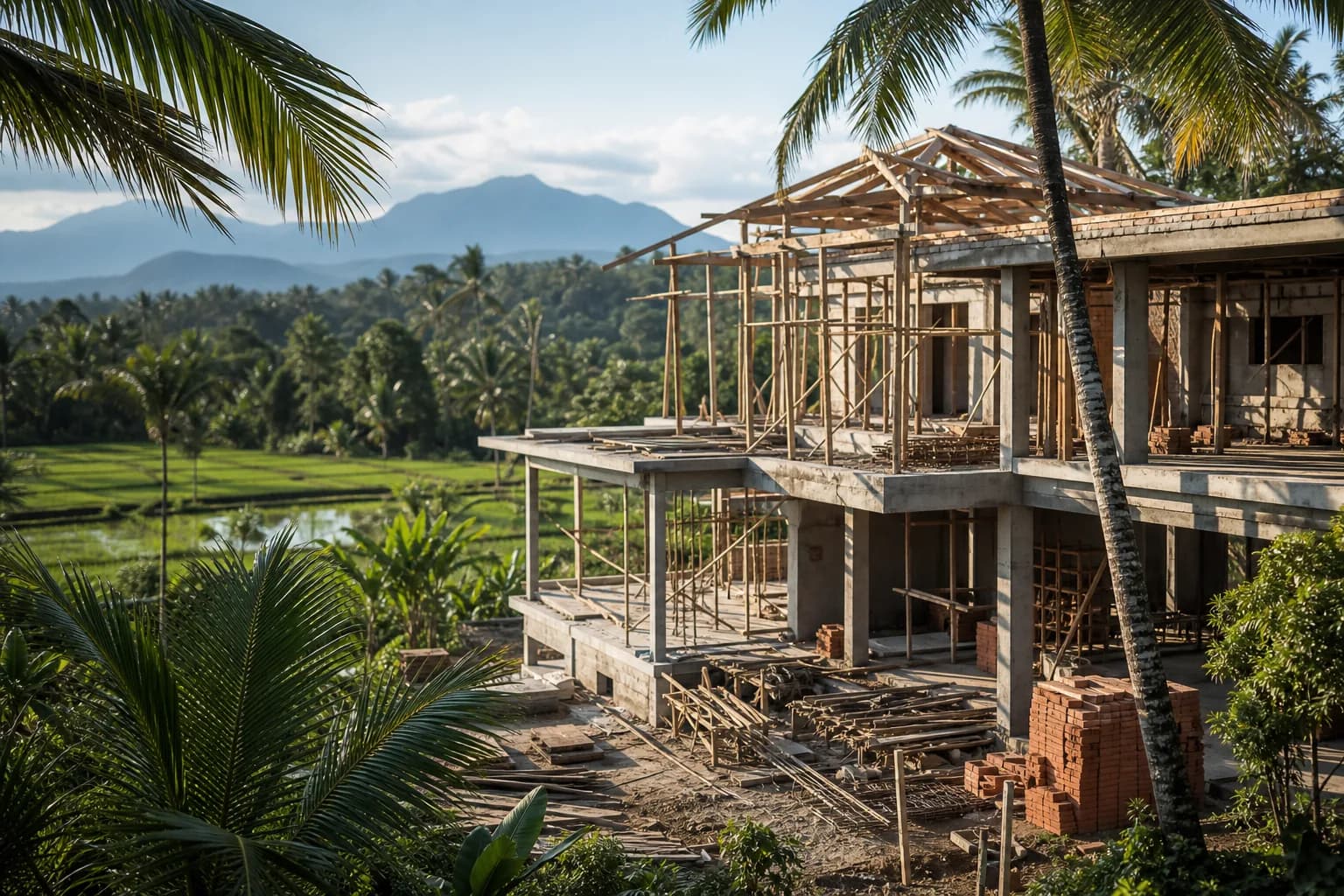
How to Build a Villa in Bali: The Complete Step-by-Step Process (2026)
Every stage of building a villa in Bali as a foreigner — from securing land and permits to handover — with realistic timelines, costs and the mistakes that derail first-time builders.
5 min read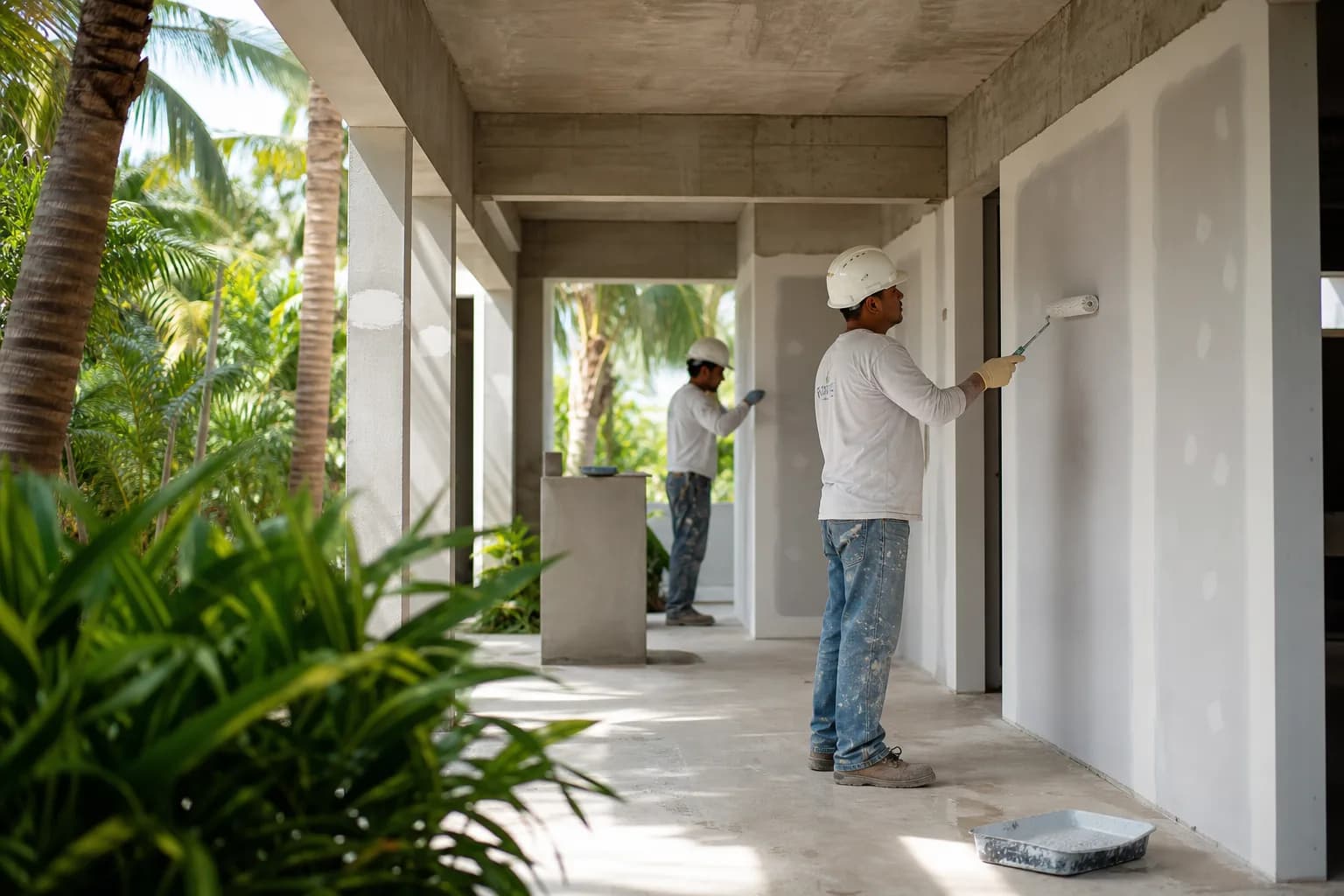
Moisture-Resistant Gypsum Board Finishing with Epoxy Primer Bali
Learn how moisture-resistant gypsum boards with epoxy primer boost durability, finish quality, and mold resistance in Bali projects. Great for Bali homes.
10 min read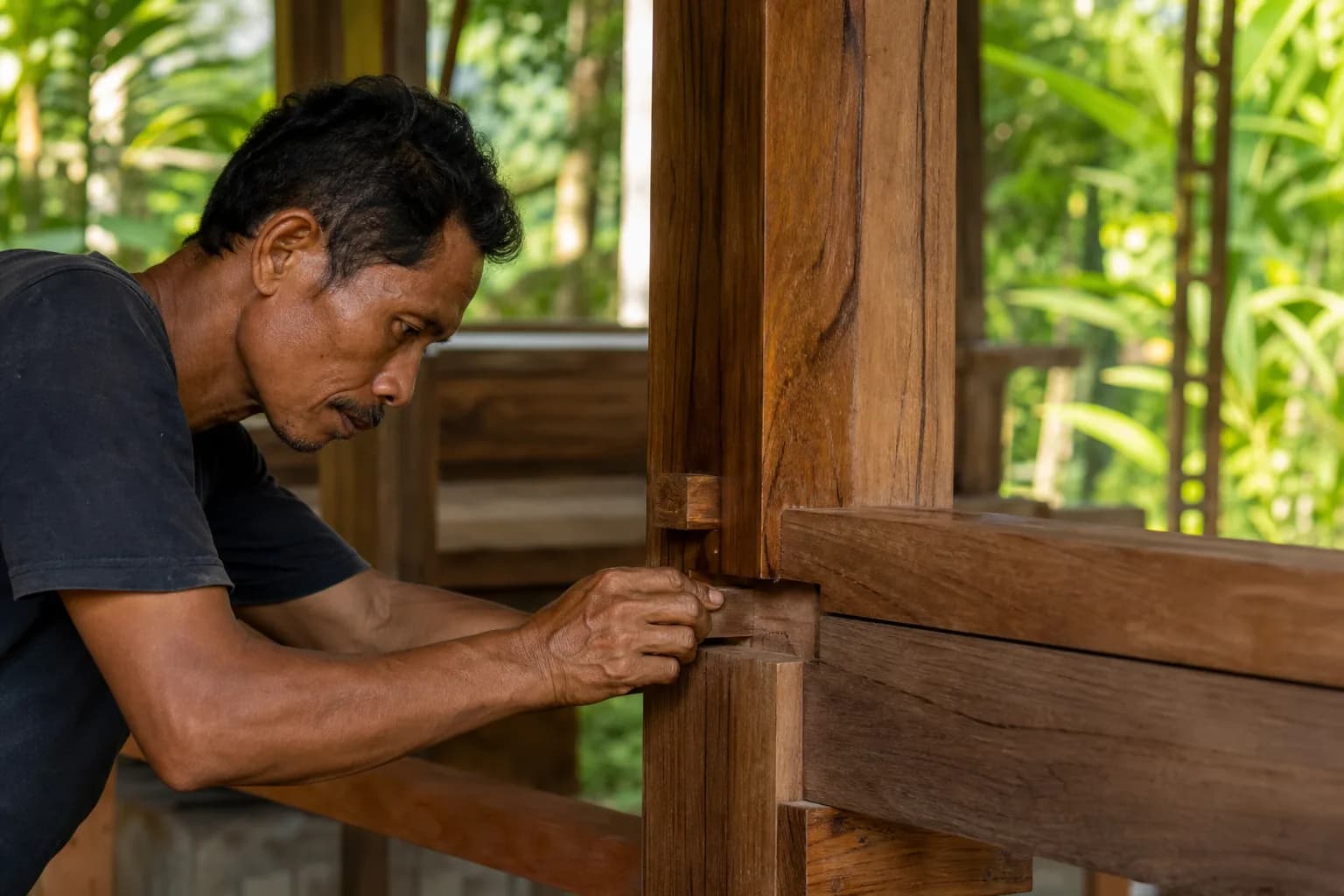
Marine-Grade Timber Joinery Finishing Corrosion Protection Bali
Discover marine-grade timber joinery finishing and corrosion protection in Bali. Durable coastal timber care, coatings, and maintenance for lasting protection.
8 min read