Custom Villa Design Bali | Luxury Homes Built to Order
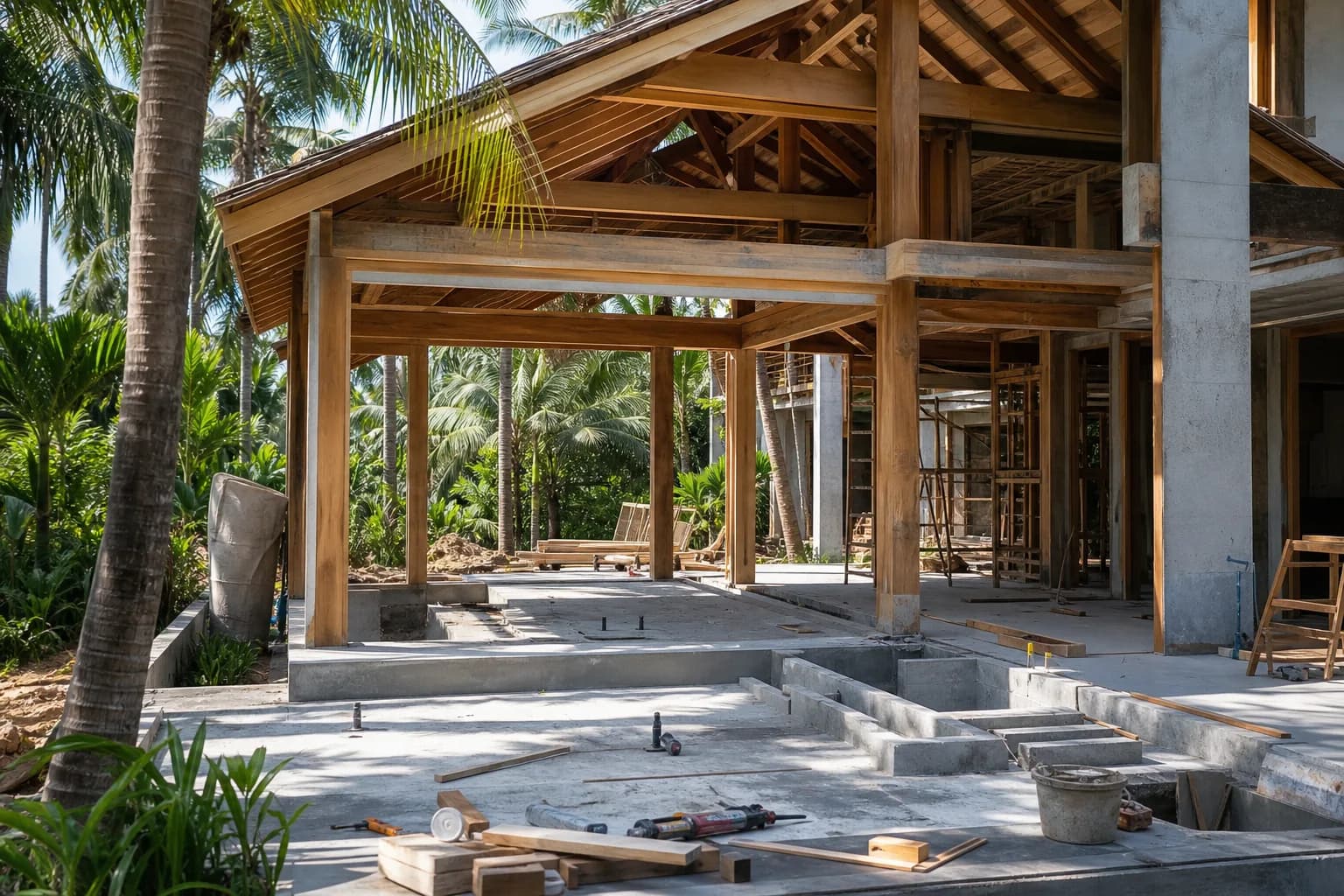
Custom Villa Design Bali: Where Architectural Vision Meets Construction Reality
Bali has become synonymous with exceptional tropical architecture—not by accident, but through decades of designers and builders learning to work with the island’s unique climate, materials, and topography. When you’re considering a custom villa design in Bali, you’re not just commissioning a building; you’re orchestrating a complex interplay between aesthetic ambition, structural engineering, climate response, and construction economics.
The difference between a villa that photographs beautifully and one that functions flawlessly for decades lies in the design process itself. At Teville, we’ve built enough custom villas to know that the most successful projects begin with clients who understand that great design isn’t about copying Instagram trends—it’s about making informed decisions at every stage, from initial concept to final fixture selection.
This article walks through the complete custom villa design process in Bali, explaining what happens behind the scenes, why certain design choices dramatically affect construction costs, and how to navigate the gap between inspiration and implementation.
Why Bali Remains the Perfect Canvas for Custom Tropical Architecture
Bali’s appeal for custom villa design extends far beyond its reputation as a tourist destination. The island offers a rare combination of factors that make ambitious architectural projects not just possible, but practical.
First, the climate. Year-round warmth means you can design spaces that blur indoor and outdoor boundaries—something impossible in temperate climates. This opens up architectural possibilities: open-sided living pavilions, outdoor bathrooms, courtyard circulation systems, and naturally ventilated sleeping areas. The consistent temperature range (24-32°C) means you’re designing for ventilation and shade rather than insulation and heating.
Second, the craft tradition. Bali has a deep pool of skilled artisans—stone carvers, woodworkers, terrazzo specialists, metal fabricators—who can execute complex custom details at costs that would be prohibitive in most developed markets. This makes bespoke elements economically viable. A custom carved stone feature wall or hand-finished terrazzo floor isn’t a luxury line item; it’s a standard option.
Third, the material palette. Local volcanic stone, sustainably harvested tropical hardwoods, bamboo, and traditional terracotta tiles provide a material vocabulary that’s both aesthetically appropriate and climatically sensible. These materials age gracefully in tropical humidity rather than deteriorating.
Fourth, the regulatory environment. While Bali’s building regulations require proper permitting and structural engineering, they allow for architectural experimentation that would face obstacles in more restrictive jurisdictions. Cantilevered structures, extensive glazing, unconventional roof forms—all are achievable with proper engineering.
The result is an environment where custom villa design in Bali can be genuinely custom, not just a selection of pre-approved options from a catalog. You can commission a villa that responds specifically to your site, your program, and your aesthetic preferences.
The Design Process: From Mood Board to Construction Documents
The journey from initial concept to buildable design follows a structured sequence. Understanding this process helps you participate effectively and make decisions at the right moments.
Design Brief and Initial Consultation
Every successful custom villa design begins with a comprehensive brief. This isn’t just a list of room requirements; it’s a detailed exploration of how you’ll actually use the space. We ask questions that might seem excessive: What time of day do you typically use each space? Do you cook elaborate meals or prefer simple preparation? How many guests do you host simultaneously? Do you work from home? What’s your tolerance for maintenance?
These questions aren’t academic. They directly inform design decisions. If you’re an early riser who wants morning sun in the bedroom, that determines orientation. If you host large groups, that affects kitchen layout and service flow. If you’re rarely on-site, that influences material selection toward low-maintenance options.
The brief also includes your reference materials—Pinterest boards, magazine clippings, photos from other villas. These are valuable, but they require interpretation. A photo of a stunning infinity pool doesn’t reveal the structural engineering required, the waterproofing system, or the ongoing maintenance regime. Part of our role is translating visual inspiration into technical requirements.
Site Analysis and Constraints Mapping
Before any design work begins, we conduct a thorough site analysis. This includes topographic survey, soil testing, access evaluation, utility availability, view corridors, solar orientation, prevailing wind patterns, and drainage characteristics.
This analysis often reveals constraints that fundamentally shape the design. A site with poor soil bearing capacity might require deep foundations, affecting budget and design approach. A steep slope might necessitate terracing or stilted construction. Limited access might restrict material delivery, ruling out certain construction methods.
We also evaluate the site’s opportunities. A natural depression might become a sunken garden. A mature tree might anchor the site plan. A distant view might determine the primary orientation. Good design works with the site rather than imposing a predetermined concept.
Concept Design and Spatial Planning
With brief and site analysis complete, we develop initial concept designs. This phase explores spatial organization, massing, circulation, and relationship to landscape. We typically present multiple concepts that represent different approaches to the same program.
One concept might prioritize privacy with inward-facing courtyards. Another might maximize views with outward orientation. A third might emphasize vertical organization with stacked pavilions. Each approach has implications for construction cost, maintenance, and daily experience.
This is the phase where major decisions get locked in. Once you commit to a multi-pavilion layout versus a consolidated structure, that choice cascades through every subsequent decision. Multi-pavilion designs offer spatial variety and natural ventilation but increase roof area, foundation footprint, and circulation distances—all of which affect cost and maintenance.
Schematic Design and Material Selection
Once the concept is approved, we develop schematic designs that add detail to the spatial concept. This includes preliminary floor plans, elevations, sections, and 3D visualizations. We also begin material selection, which has enormous impact on both aesthetics and budget.
Material choices in custom villa design Bali aren’t purely aesthetic. Each material has performance characteristics, maintenance requirements, and cost implications. Natural stone flooring is beautiful and cool underfoot but requires sealing and can be slippery when wet. Timber decking ages gracefully but needs periodic treatment. Polished concrete is low-maintenance and cost-effective but can feel institutional if not detailed carefully.
We guide clients through these trade-offs, explaining not just initial costs but lifecycle implications. A material that saves money upfront but requires intensive maintenance might be more expensive over a decade than a higher-quality alternative.
Design Development and Technical Coordination
Design development is where the villa becomes truly buildable. We coordinate with structural engineers, MEP (mechanical, electrical, plumbing) consultants, and landscape architects to integrate all systems. This phase reveals conflicts and requires problem-solving.
A structural beam might interfere with a desired ceiling height. An air conditioning unit might need space that conflicts with a design feature. A plumbing stack might require rerouting to avoid a visual intrusion. These aren’t failures of design; they’re normal coordination challenges that get resolved through collaboration.
This is also when we refine details that define the villa’s character. How does the roof overhang meet the wall? What’s the reveal between different materials? How are doors and windows detailed? These micro-decisions accumulate into the overall aesthetic quality.
Construction Documents and Specifications
The final design phase produces complete construction documents: detailed floor plans, elevations, sections, details, schedules, and specifications. These documents serve as the contract between design intent and construction execution.
Quality construction documents are exhaustively detailed. They specify not just what materials to use but how to install them. They show waterproofing sequences, flashing details, expansion joints, and connection methods. They include performance specifications for materials and workmanship standards.
This level of detail protects everyone. The builder knows exactly what’s expected. The client knows what they’re paying for. There’s less room for misinterpretation or value engineering that compromises design intent.
You can see examples of how this process translates into completed projects in our projects catalog, which showcases the range of custom villa designs we’ve executed.
Balancing Aesthetics, Ergonomics, Structural Logic, Climate, and Maintenance
The most successful custom villa design in Bali doesn’t prioritize any single factor—it finds equilibrium between competing demands. This balance requires constant negotiation throughout the design process.
Aesthetic Ambition vs. Structural Reality
Many design aspirations have structural implications that aren’t immediately obvious. A floating staircase requires substantial structural support hidden within adjacent walls. A cantilevered pool requires significant engineering and reinforcement. A column-free living space requires transfer beams or trusses that affect ceiling heights and costs.
We don’t discourage ambitious design, but we insist on understanding the structural requirements early. Sometimes the engineering solution is straightforward. Sometimes it requires creative problem-solving. Occasionally, it reveals that a particular design gesture is disproportionately expensive relative to its impact.
The best outcomes occur when structural logic informs aesthetic expression rather than fighting against it. Exposed structural elements can become design features. Necessary columns can define spatial zones. Required beams can articulate ceiling planes.
Climate Response and Comfort
Bali’s tropical climate is generally pleasant, but it requires specific design strategies to maintain comfort without excessive air conditioning. This is where custom villa design in Bali differs fundamentally from temperate-climate architecture.
Orientation matters enormously. East-west oriented glazing receives intense low-angle sun that’s difficult to shade. North-south orientation is easier to control with overhangs. Prevailing breezes (typically from the southeast) should inform window placement for cross-ventilation.
Roof overhangs aren’t decorative; they’re functional. A 1.5-meter overhang can prevent rain from entering open windows and reduce solar gain on walls. Insufficient overhangs mean you’ll rely more heavily on air conditioning and deal with water intrusion during storms.
Ceiling heights affect thermal comfort. Hot air rises, so higher ceilings improve comfort in naturally ventilated spaces. A 3.5-meter ceiling feels dramatically different from a 2.7-meter ceiling in tropical heat. This has cost implications—higher walls mean more material and labor—but the comfort benefit is substantial.
Material thermal mass affects daily temperature swings. Concrete and stone absorb heat during the day and release it at night, moderating temperature fluctuations. Lightweight construction heats up and cools down quickly, which can be uncomfortable without air conditioning.
Ergonomics and Daily Function
A villa that looks stunning in photographs but functions poorly in daily use is a design failure. Ergonomics—the study of how spaces accommodate human activity—should inform every design decision.
Kitchen layouts follow established principles: work triangle efficiency, adequate counter space, proper storage, appropriate lighting. An aesthetically minimal kitchen with insufficient storage becomes cluttered and frustrating. A kitchen with poor ventilation becomes uncomfortable in Bali’s heat.
Bathroom ergonomics include proper fixture spacing, adequate lighting for grooming, slip-resistant flooring, and effective drainage. An outdoor bathroom is romantic until you realize the showerhead is positioned where rain blows in, or the floor doesn’t drain properly.
Circulation paths should be logical and efficient. If you have to walk through the bedroom to reach the bathroom, that’s problematic when hosting guests. If the kitchen is distant from dining areas, service becomes cumbersome. If there’s no covered path between pavilions, you get wet during rain.
Storage is consistently underestimated. Even if you’re building a vacation villa, you need space for linens, cleaning supplies, pool equipment, tools, and seasonal items. Insufficient storage leads to clutter that undermines the aesthetic you invested in creating.
Maintenance Realities
Bali’s climate is beautiful but aggressive. High humidity, intense UV exposure, salt air (in coastal areas), and heavy rainfall all accelerate material degradation. Design choices should account for maintenance realities.
Some materials are inherently low-maintenance in tropical conditions. Concrete, stone, and ceramic tiles are durable and easy to clean. Powder-coated aluminum doesn’t rust. Stainless steel fixtures resist corrosion.
Other materials require ongoing attention. Timber needs periodic treatment to prevent rot and insect damage. Natural fiber textiles are vulnerable to mildew. Untreated steel rusts quickly. Certain paints and finishes degrade rapidly under UV exposure.
Design details affect maintenance burden. Horizontal surfaces accumulate dirt and organic debris. Complex geometries are harder to clean. Inaccessible areas can’t be maintained properly. Good design minimizes maintenance requirements through thoughtful detailing.
Water management is critical. Proper drainage prevents standing water that breeds mosquitoes and accelerates material degradation. Adequate roof overhangs protect walls from water staining. Proper waterproofing prevents moisture intrusion that causes mold and structural damage.
Our How We Build page explains our approach to construction quality, which directly affects long-term maintenance requirements.
Cost Implications: Why Design Choices Push Price Per Square Meter Up or Down
Construction costs in Bali vary enormously based on design decisions. Understanding these cost drivers helps you make informed choices that align design ambition with budget reality.
Complexity and Efficiency
The single biggest cost driver is geometric complexity. A simple rectangular floor plan is dramatically cheaper to build than an irregular shape with multiple angles. Every corner adds formwork, reinforcement, and labor. A villa with ten corners costs significantly more per square meter than one with four corners of the same total area.
Roof complexity has similar impact. A simple gable or hip roof is straightforward to frame and tile. A roof with multiple valleys, dormers, or curved sections requires custom fabrication and skilled labor. The material cost might be similar, but labor costs multiply.
Repetition reduces cost. If you use the same window size throughout, you can order in bulk and streamline installation. If every window is a different size, each becomes a custom fabrication. The same principle applies to doors, fixtures, tiles, and finishes.
Efficiency of layout affects cost. A compact plan with shared walls and centralized plumbing is cheaper than a sprawling layout with long utility runs. A two-story structure is typically more cost-effective per square meter than a single-story structure of the same area because you’re building one foundation and one roof for twice the floor area.
Material Selection and Specification
Material costs in custom villa design Bali span an enormous range. Local volcanic stone might cost $30-50 per square meter installed. Imported Italian marble might cost $300-500 per square meter. Both are stone flooring, but the cost difference is tenfold.
This doesn’t mean expensive materials are unjustified. Sometimes the aesthetic or performance benefit warrants the cost. But it requires conscious decision-making. If you specify premium materials throughout, you’ll exhaust your budget quickly. Strategic use of premium materials in key areas, with cost-effective materials elsewhere, achieves better overall results.
Finish quality affects cost substantially. A basic painted concrete wall is inexpensive. A polished plaster finish costs more. A custom textured finish with multiple layers costs significantly more. The difference might not be obvious in photographs, but it’s substantial in the budget.
Imported versus local materials have different cost structures. Imported materials have higher material costs but similar labor costs. Local materials have lower material costs but might require more skilled labor for proper installation. The total installed cost is what matters, not just the material price.
Site Conditions and Access
Site characteristics dramatically affect construction costs. A flat, easily accessible site with good soil is the baseline. Deviations from this baseline add cost.
Steep slopes require terracing, retaining walls, and possibly stilted construction. These aren’t optional; they’re structural necessities. A sloped site might require 20-30% more foundation and structural work than a flat site.
Poor soil conditions require deeper foundations or soil improvement. If standard shallow foundations are insufficient, you might need piles or caissons, which can double foundation costs.
Access limitations increase costs. If material delivery trucks can’t reach the site, materials must be transported by smaller vehicles or manually, increasing labor and time. Remote sites might require temporary accommodation for workers, adding overhead costs.
Utility availability affects costs. If municipal water and electricity are available at the site boundary, connection is straightforward. If you need to drill a well, install a septic system, or run power lines from a distance, these become significant cost items.
Systems and Technology
Mechanical, electrical, and plumbing systems represent a substantial portion of construction costs, and the level of sophistication varies widely.
A basic electrical system with standard fixtures and switches is relatively inexpensive. Add smart home automation, integrated lighting control, and premium fixtures, and electrical costs can triple.
Air conditioning choices have major cost implications. Split systems are
 164 m²7 month(s)from 79.000 USD
Private: Haridas Villas, Tegallalang
164 m²7 month(s)from 79.000 USDTALA TWO
 1from 198.000 USD
Private: Haridas Villas
 3127 m²9 month(s)from 177.000 USD
Mukunda
 4344 m²16 month(s)from 290.000 USD
Radha
 3173 m²6 month(s)from 125.000 USD
TALA FOUR
 3180 m²7 month(s)from 142.000 USD
Vasudeva
 2144 m²11 month(s)from 104.000 USD
Narayana
 3104 m²11 month(s)from 99.000 USD
TALA 100
 172 m²8 month(s)from 120.000 USD
Keshava

Want to calculate?
 3124 m²6 month(s)from 123.000 USD
TALA 8
Start With Real Numbers, Not Guesses
Before buying land or finalizing a design, check the realistic build cost range for your project in Bali.
Our team reviews your inputs and gives a grounded estimate.
Available lands
 1700 m²10 min$ 632257Bali, Kuta
 750 m²15 min$ 187038Bali, Kerobokan
 550 m²15 min$ 164594Bali, Mengwi
 2000 m²15 min$ 523000Bali, Canggu
 1362 m²15 min$ 335468Bali, Tumbak
 1000 m²5 min$ 350431Bali, Drupadi
 7000 m²36 min$ 284483Bali, Gianyar
 2500 m²5 min$ 609606Bali, Kedungu
 220 m²2 min$ 66565Bali, Cemagi
 1000 m²10 min$ 123154Bali, Jimbaran
 422 m²15 min$ 93547Bali, Kerobokan
 500 m²2 min$ 175862Bali, Cemagi
 3000 m²15 min$ 738916Bali, Cepaka
 500 m²10 min$ 107143Bali, Tabanan
 600 m²10 min$ 206897Bali, Canggu
Essential Bali build & buy guides
- Bali villa construction cost per m² in 2026
- How much will your villa cost? Calculator
- Building a villa in Bali: the complete guide
- Buying land in Bali: step-by-step for foreigners
- Bali villa investment: yields, risks, returns
- Leasehold vs freehold: what foreigners can own
- Construction defect liability & 10-year warranty
- Bali building codes and construction standards
Related guides
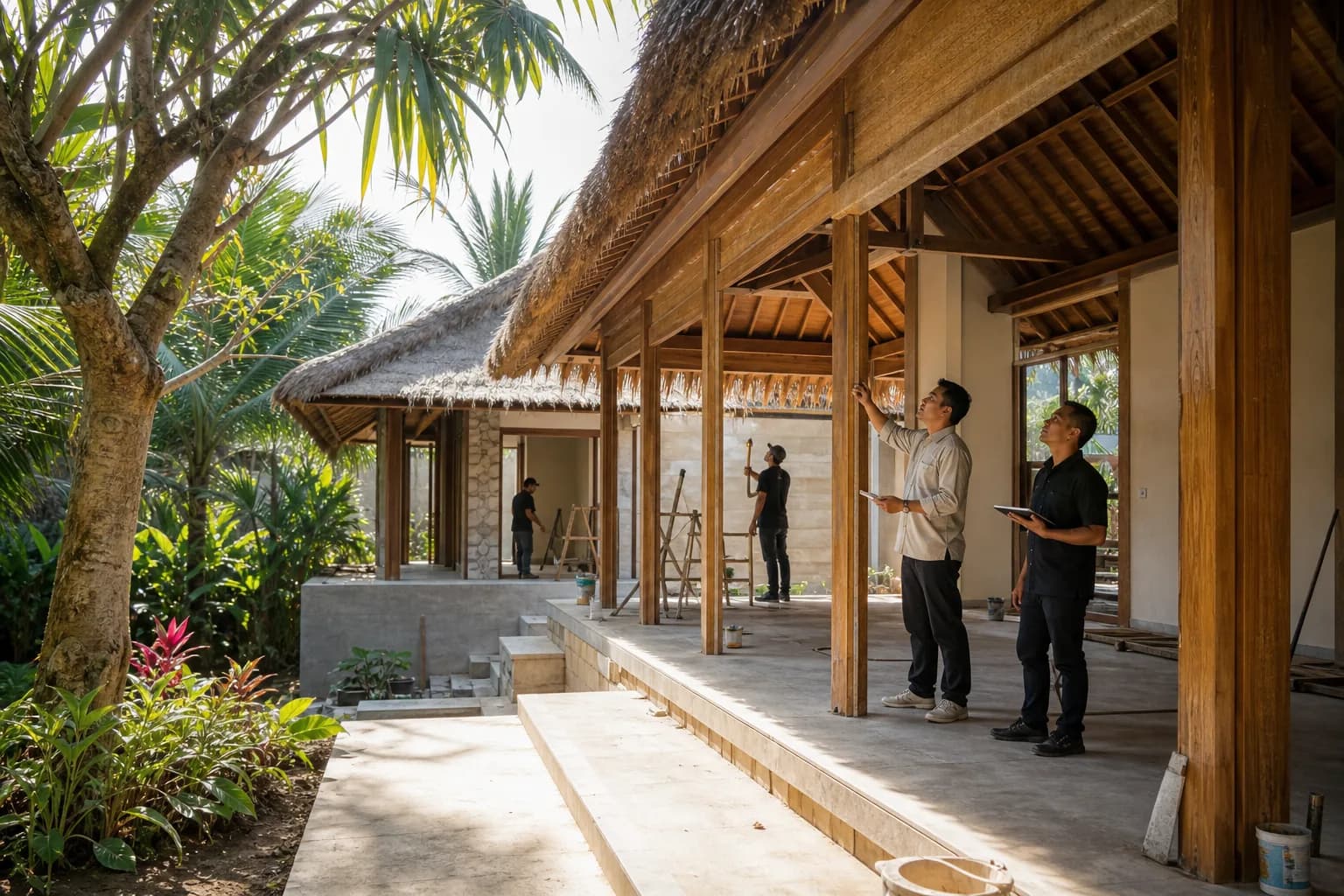
Villa Handover in Bali: Snagging Checklist and What to Test Before Final Payment
A disciplined villa handover in Bali: room-by-room snagging tests, numbered defect documentation, the PBG/SLF and warranty documents to insist on, and payment terms that keep leverage until the list is closed.
7 min read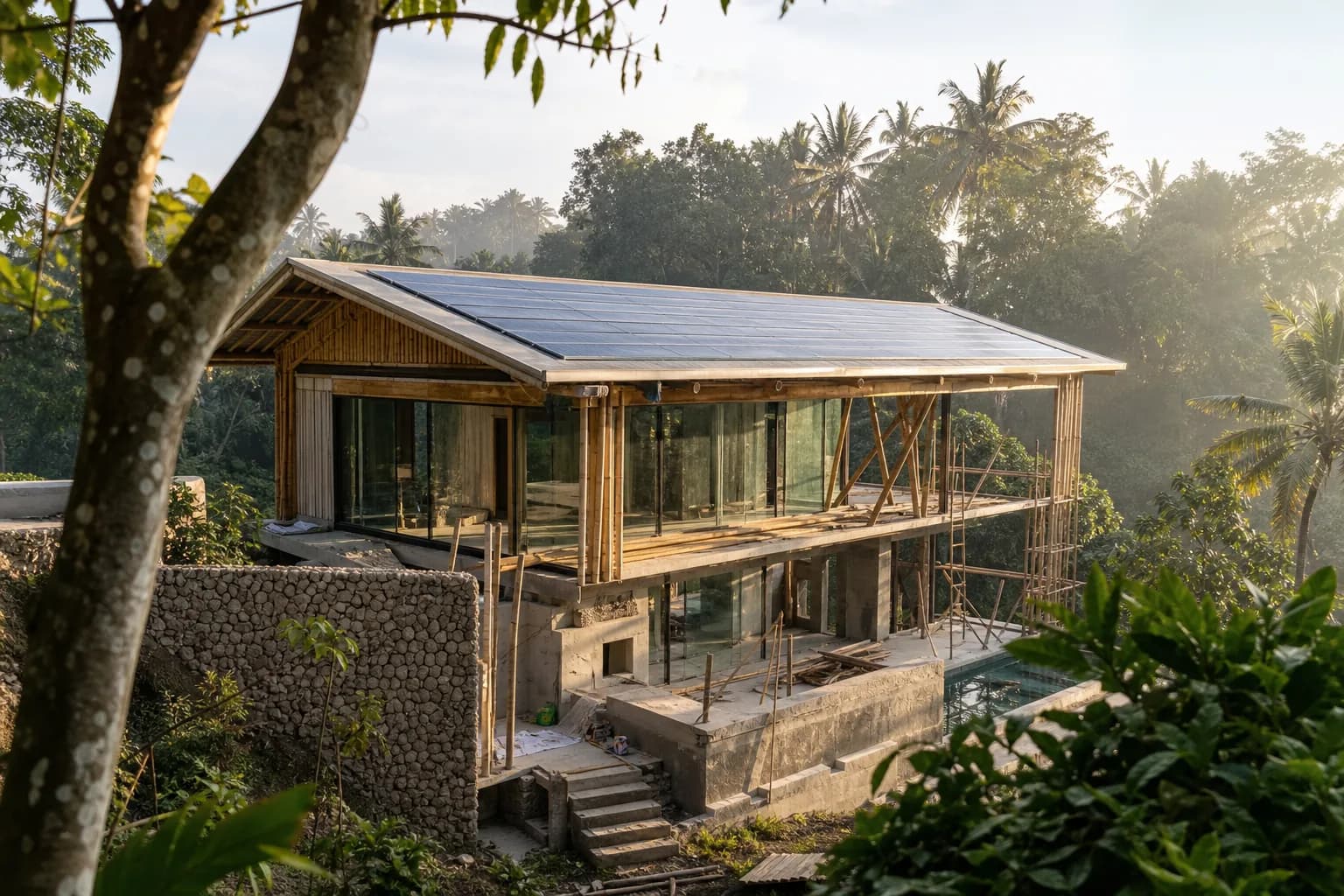
Energy-Efficient Villa in Bali: Solar, Insulation and Passive Cooling That Pay Back
Which energy-efficiency measures actually pay back in Bali's tropical climate — passive design and roof insulation first, efficient equipment second, and self-consumption solar last — with honest 2026 numbers.
7 min read
Choosing a General Contractor in Bali: Red Flags, Questions and Contract Must-Haves
A practical filter for hiring a general contractor in Bali: the red flags that end conversations, the questions professionals answer with documents, and the contract clauses no villa build should start without.
7 min read