Buy Villa in Bali | Luxury Beachfront Properties
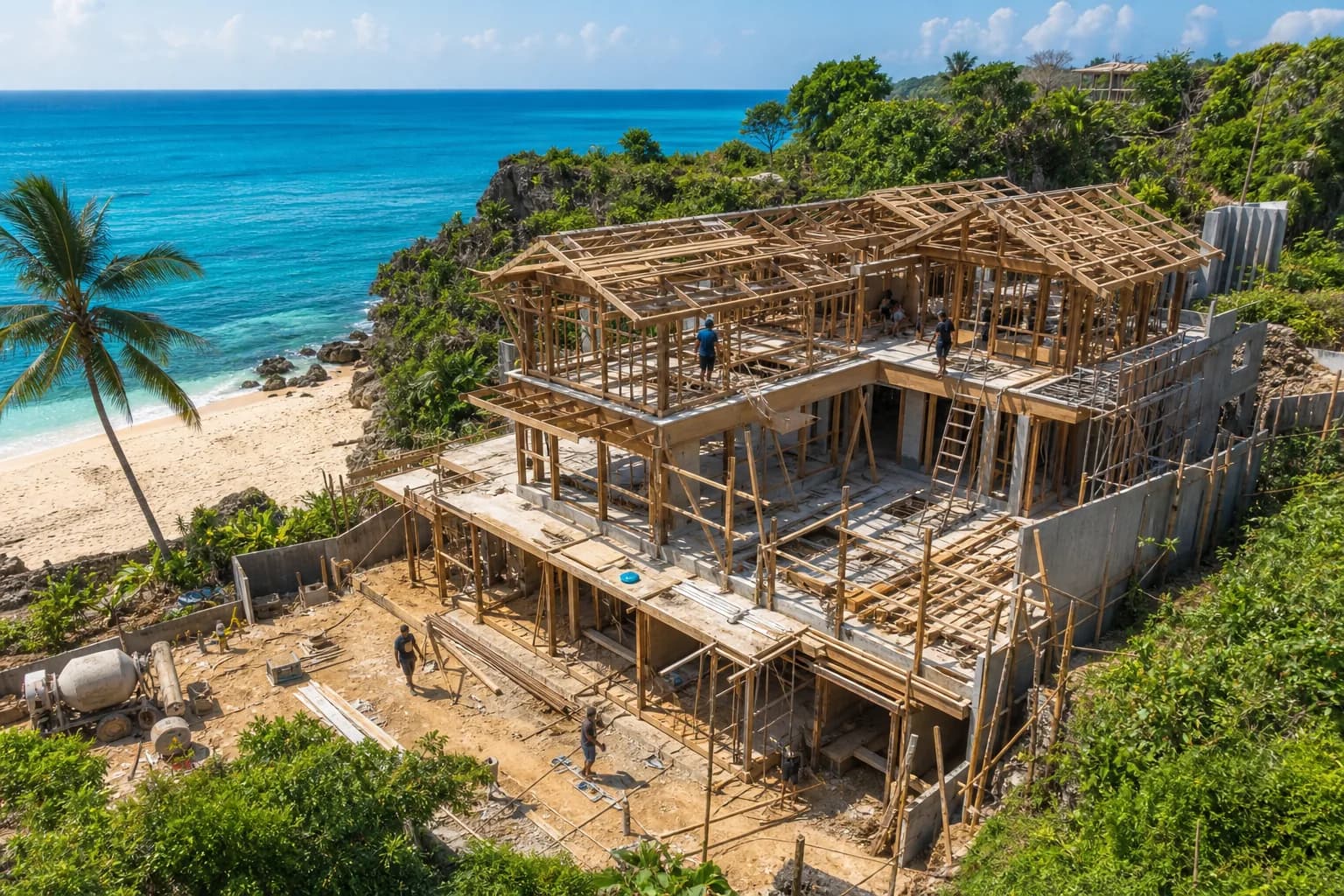
Why Foreign Buyers Choose to Buy Villa in Bali in 2026
Bali has evolved from a backpacker paradise into one of Southeast Asia’s most sophisticated property markets. When you decide to buy villa in Bali, you’re not just purchasing real estate—you’re investing in a lifestyle that combines tropical living with modern infrastructure, a thriving expat community, and genuine rental income potential from the island’s 6+ million annual visitors.
The appeal is straightforward: year-round summer, a cost of living that remains competitive despite recent inflation, and a property market that offers both turnkey villas and custom-build opportunities. Unlike Thailand or the Philippines, Bali’s construction ecosystem has matured significantly over the past decade. You’ll find experienced architects, reliable contractors, and a supply chain that can source both local materials and imported finishes without the delays that plagued projects five years ago.
Foreign buyers typically fall into three categories: digital nomads seeking a permanent base, retirees looking for affordable luxury, and investors building rental portfolios. Each group faces the same fundamental question: should you buy a ready-made villa or build from scratch? The answer depends on your timeline, budget flexibility, and tolerance for the construction process. This guide examines both paths with the technical detail you need to make an informed decision.
Rental demand remains robust in established areas. A well-located three-bedroom villa in Canggu or Seminyak can achieve 60-70% occupancy during high season, though you should never base your purchase decision solely on projected returns. The regulatory environment for short-term rentals continues to evolve, and what works today may require adaptation tomorrow. The smarter approach: buy or build a villa you’d genuinely want to live in, then treat rental income as a bonus rather than the primary justification.
Buy Ready Villa vs Build Your Own: The Real Cost Comparison
When you buy villa in Bali from the existing market, you’re paying for convenience and immediate occupancy. When you build, you’re trading time and involvement for customization and often better value per square meter. Neither option is inherently superior—the right choice depends on your priorities and how much you trust the construction process.
Buying a Ready-Made Villa: What You’re Actually Getting
The ready villa market offers instant gratification. You view properties, negotiate a price, complete due diligence, and potentially move in within 60-90 days. For buyers who need certainty or lack the time to oversee construction, this path makes sense. Current market prices in desirable areas range from $248,000 for a basic two-bedroom villa in less central locations to over $430,000 for a well-finished three-bedroom property in Seminyak or prime Canggu.
However, the listed price rarely tells the complete story. Most resale villas require immediate or near-term renovation work that sellers conveniently omit from marketing materials. Bali’s climate is unforgiving—high humidity, salt air in coastal areas, and intense UV exposure degrade materials faster than in temperate climates. A villa that looks acceptable during a 30-minute viewing often reveals issues upon closer inspection:
- Waterproofing failures: Leaking roofs, compromised bathroom membranes, and rising damp in walls are endemic in properties older than 3-4 years. Proper remediation costs $8,000-$15,000 depending on severity.
- Pool equipment and finishes: Pumps, filters, and tile grout deteriorate quickly. Budget $5,000-$12,000 for pool refurbishment if the system is older than five years.
- Electrical systems: Many older villas were wired to minimal standards. Upgrading to proper earthing, surge protection, and adequate circuit capacity runs $3,000-$7,000.
- Furniture and soft furnishings: Outdoor furniture, mattresses, and upholstery rarely survive Bali’s humidity beyond 3-4 years. Replacement costs add another $8,000-$15,000 for a three-bedroom villa.
- Termite damage: Wooden structures, roof trusses, and decorative elements often harbor termite colonies. Treatment and repairs can exceed $10,000 in severe cases.
Add these hidden costs to your purchase price, and that $350,000 villa realistically costs $380,000-$400,000 to bring to the standard you expected. Sellers price properties based on what buyers will pay, not on the actual condition of the building systems. This information asymmetry favors those who understand construction—or who work with advisors who do.
The other consideration: you’re inheriting someone else’s design decisions and construction quality. That beautiful natural stone cladding may not have proper backing and will delaminate within two years. The impressive double-height ceiling creates cooling costs that weren’t disclosed. The pool positioning means afternoon sun makes it unusable during the hottest part of the day. These aren’t defects you can negotiate away—they’re permanent characteristics of the property.
Building Your Own Villa: Process, Pricing, and Control
Building a custom villa in Bali gives you control over every decision: orientation for natural ventilation, room sizes that match your actual needs, material quality you can verify during installation, and building systems designed for longevity rather than minimum cost. The trade-off is time (typically 8-12 months from land purchase to completion) and the need to manage or oversee the construction process.
Current construction costs for quality work range from $850 to $1,400 per square meter depending on finishes and complexity. A 200-square-meter villa (approximately 2,150 sq ft) with good but not extravagant finishes typically costs $180,000-$240,000 to build, excluding land. Add land costs of $80,000-$150,000 for a decent plot in areas like Umalas, Pererenan, or Sanur, and your total investment sits at $260,000-$390,000 for a brand-new, custom-designed property.
Compare this to buying a ready villa at $350,000 plus $30,000-$50,000 in immediate renovations, and the economics of building become compelling—if you can navigate the process competently. The critical factor is construction quality. Bali has no shortage of contractors who will build cheaply and quickly. The island also has a smaller number of builders who understand proper waterproofing, structural engineering, and the material specifications needed for durability in tropical conditions.
The cost per square meter varies significantly based on specifications:
- Basic construction ($850-$1,000/sqm): Standard Indonesian materials, simple finishes, minimal imported items. Suitable for rental properties where durability matters more than luxury aesthetics.
- Mid-range construction ($1,000-$1,200/sqm): Mix of quality local and imported materials, proper waterproofing systems, decent fixtures and fittings. This range delivers the best value for owner-occupied villas.
- Premium construction ($1,200-$1,400/sqm): High-end finishes, imported sanitaryware and fixtures, sophisticated building systems, architectural features. Appropriate for luxury rentals or personal residences where budget is less constrained.
These figures assume competent project management and realistic timelines. Rush jobs cost more and deliver worse results. The contractors who promise to build your villa in four months are the same ones you’ll be suing for defects eighteen months later. Quality construction in Bali’s climate requires proper curing time for concrete, adequate drying time between waterproofing layers, and careful coordination of trades. You cannot compress these timelines without compromising durability.
When you build with an established construction company like Teville, you gain access to their supplier relationships, their understanding of which materials perform well in Bali’s climate, and their systems for quality control during construction. This isn’t marketing rhetoric—it’s the practical difference between a villa that requires major repairs in year three versus one that remains solid for a decade.
Typical Budgets: What Different Investment Levels Actually Deliver
Budget discussions in Bali property articles often present unrealistic scenarios or omit critical costs. Here’s what different investment levels actually deliver when you buy villa in Bali or build new, including all the expenses that marketing materials conveniently forget.
Entry Level: $250,000-$350,000 Total Investment
This budget delivers a functional two-bedroom villa in secondary locations (Umalas, Sanur, Pererenan, or outer Canggu) or a very basic property in prime areas. If buying ready, expect a 10-15 year old villa requiring immediate renovation work. If building new, you’re looking at 150-180 square meters with mid-range finishes on a modest land plot.
At this level, every decision involves trade-offs. You’ll use quality local materials rather than imported alternatives, standard fixtures rather than designer pieces, and simpler architectural forms that minimize construction complexity. The result can still be attractive and durable if designed and built competently, but you won’t have the luxury finishes that characterize higher-budget projects.
Land costs consume $80,000-$120,000 of your budget in decent areas, leaving $170,000-$230,000 for construction, professional fees, permits, and contingency. This is tight but achievable with disciplined scope management. The villas in Teville’s project catalog at this price point demonstrate what’s possible when construction efficiency and material knowledge compensate for budget constraints.
Mid-Range: $350,000-$550,000 Total Investment
This budget range offers genuine choice. You can buy a well-maintained ready villa in good locations or build a 200-250 square meter custom villa with quality finishes and thoughtful design. Most foreign buyers who plan to spend significant time in their Bali property gravitate to this range—it’s enough to avoid constant compromise but not so much that you’re overpaying for marginal improvements.
When building new at this level, you can afford proper building systems: multi-stage water filtration, adequate electrical capacity for air conditioning in all rooms, quality waterproofing that will last 15+ years, and finishes that won’t look dated in five years. You have budget for architectural features that improve liveability: high ceilings for heat management, large sliding doors that blur indoor-outdoor boundaries, and pool designs that consider both aesthetics and maintenance costs.
Land options expand significantly. You can secure 300-400 square meter plots in desirable areas or larger plots in emerging locations. The extra land area matters more than many buyers realize—it provides space for gardens that improve privacy, room for future additions, and better resale appeal to buyers who want space rather than just a building.
Premium: $550,000+ Total Investment
Above $550,000, you’re building or buying a statement property with minimal compromises. Four-bedroom layouts become feasible, land plots can exceed 500 square meters, and finish quality matches what you’d expect in developed markets. This is where architectural ambition becomes practical—floating staircases, feature walls in natural stone, infinity pools with sophisticated hydraulics, and integrated smart home systems.
At this level, the decision between buying and building tilts heavily toward building. The ready villa market above $550,000 is thin and often overpriced relative to construction cost. Sellers at this price point know they’re targeting buyers with budget flexibility and price accordingly. Building new gives you a property that reflects your specific requirements rather than a developer’s assumptions about what luxury buyers want.
Premium budgets also allow for larger contingencies—essential in Bali where site conditions, permit processes, and material availability can create unexpected costs. A 15-20% contingency is prudent for any construction project; at higher budgets, this buffer prevents the scope reductions that compromise design intent when unexpected issues arise.
Legal Structures: How Foreigners Can Buy Villa in Bali
Foreign property ownership in Indonesia operates within a legal framework that has evolved considerably over the past decade. Understanding these structures is essential before you commit to any purchase or construction project. The two primary options—leasehold and freehold through a PT PMA (foreign-owned company)—each have specific requirements, costs, and limitations that affect your long-term ownership security.
Leasehold: The Practical Standard for Most Foreign Buyers
Leasehold remains the most common structure for foreigners who buy villa in Bali. You lease the land for an initial period (typically 25-30 years) with options to extend, and you own the building constructed on that land. Indonesian law allows lease terms up to 80 years total (initial term plus extensions), providing effective long-term control for most buyers’ planning horizons.
The mechanics are straightforward: you sign a lease agreement with the landowner (who must be an Indonesian citizen or entity), register the lease with the local land office, and obtain an IMB (building permit) in your name for any structures. The lease agreement should specify extension terms, conditions, and pricing to avoid disputes decades later. Well-drafted leases include automatic extension clauses at predetermined rates, removing uncertainty about future negotiations.
Leasehold costs are predictable. Land lease prices in popular areas currently range from $80,000 to $150,000 for a 25-30 year initial term on a 300-400 square meter plot. Extension costs are typically negotiated as a percentage of current market value, often 30-40% of the then-prevailing lease rate for a new term. These figures should be specified in your initial agreement to prevent future disputes.
The primary risk in leasehold structures is landowner reliability. If the landowner dies, the lease passes to their heirs—who may have different attitudes toward foreign lessees. If the landowner faces financial difficulties, creditors may attempt to claim the land despite your registered lease. These scenarios are manageable with proper legal documentation, but they represent real risks that freehold structures avoid.
For buyers planning to use the property for 10-20 years before potentially selling or relocating, leasehold offers the best combination of legal simplicity, lower upfront cost, and adequate security. The lease itself has resale value—you can sell your remaining lease term to another buyer, though you’ll typically receive less than you paid on a time-adjusted basis due to the diminishing term.
Freehold Through PT PMA: Greater Security, Higher Complexity
Freehold ownership through a PT PMA (Penanaman Modal Asing—foreign investment company) provides the strongest legal position for foreign buyers. The PT PMA, which you control as director and shareholder, purchases the land with full freehold title (Hak Milik). This structure eliminates lease expiration concerns and provides ownership security equivalent to what you’d have in Western markets.
The requirements are more demanding than leasehold. Indonesian regulations require minimum investment thresholds for PT PMA property ownership—currently around $300,000 USD for the property value, though this figure varies by region and property type. You’ll need to maintain the PT PMA with annual reporting, tax filings, and compliance with foreign investment regulations. Annual maintenance costs for a PT PMA typically run $2,000-$3,500 including accounting, legal compliance, and tax reporting.
The setup process takes longer than leasehold—typically 2-3 months to establish the PT PMA, obtain necessary licenses, and complete the property transfer. Legal and setup costs add $8,000-$12,000 to your initial investment. For properties above $400,000, these costs become proportionally less significant, making PT PMA structures more economically rational at higher price points.
PT PMA ownership provides flexibility that leasehold cannot match. You can mortgage the property with Indonesian banks (though foreign buyer mortgages remain limited), you can hold the property indefinitely without extension negotiations, and you can transfer ownership by selling company shares rather than executing a new property transfer. For buyers planning long-term ownership or building a rental portfolio, these advantages justify the additional complexity and cost.
The critical consideration: PT PMA structures require ongoing compliance. If you fail to maintain proper corporate records, file annual reports, or meet minimum investment requirements, authorities can revoke your company’s status—potentially affecting your property ownership. This isn’t a theoretical risk; it’s a compliance obligation that requires attention or professional management.
Nominee Structures: Why You Should Avoid Them
Some agents and lawyers still promote nominee structures where an Indonesian citizen holds legal title while you maintain control through side agreements. These arrangements are explicitly illegal under Indonesian law and provide no enforceable protection. When disputes arise—and they frequently do—you have no legal recourse because the underlying structure violates the law it purports to rely on.
Nominee arrangements appear attractive because they’re cheaper and faster than proper legal structures. This is false economy. The Indonesian legal system has become increasingly sophisticated about identifying and invalidating nominee arrangements. Courts consistently rule against foreign buyers in nominee disputes because the structure itself is illegal, regardless of the equities of the specific situation.
If an agent or lawyer suggests a nominee structure, find different advisors. Competent legal professionals understand that proper leasehold or PT PMA structures provide enforceable rights, while nominee arrangements provide only the illusion of ownership until the inevitable dispute reveals their worthlessness.
How Teville Helps Foreign Buyers Navigate the Build Process
Deciding to build rather than buy a ready villa is the easy part. Executing that decision competently—finding suitable land, verifying legal status, designing a villa that works in Bali’s climate, and managing construction to quality standards—requires either significant personal time investment or partnership with a construction company that understands the complete process.
Teville operates as a full-cycle construction company, meaning we handle every phase from land identification through final handover. This integrated approach eliminates the coordination problems that plague projects where buyers assemble separate teams for land search, legal work, design, and construction. When one company manages the entire process, accountability is clear and each phase informs the next.
Land Search and Due Diligence
Finding land in Bali is easy—finding land with clean title, proper zoning, reasonable access, and suitable soil conditions is considerably harder.
 2144 m²11 month(s)from 104.000 USD
Narayana
 164 m²7 month(s)from 79.000 USD
Private: Haridas Villas, Tegallalang

Want to calculate?
 3180 m²7 month(s)from 142.000 USD
Vasudeva
 1from 198.000 USD
Private: Haridas Villas
 172 m²8 month(s)from 120.000 USD
Keshava
164 m²7 month(s)from 79.000 USDTALA TWO
 3124 m²6 month(s)from 123.000 USD
TALA 8
 4344 m²16 month(s)from 290.000 USD
Radha
 3127 m²9 month(s)from 177.000 USD
Mukunda
 3104 m²11 month(s)from 99.000 USD
TALA 100
 3173 m²6 month(s)from 125.000 USD
TALA FOUR
Start With Real Numbers, Not Guesses
Before buying land or finalizing a design, check the realistic build cost range for your project in Bali.
Our team reviews your inputs and gives a grounded estimate.
Available lands
 1350 m²5 min$ 283467Bali, Pecatu
 2115 m²5 min$ 1139547Bali, Pererenan
 7500 m²5 min$ 206281Bali, Kedungu
 700 m²7 min$ 400000Bali, Canggu
 2000 m²5 min$ 1440887Bali, Pecatu
 29000 m²6 min$ 3857143Bali, Tabanan
 3000 m²15 min$ 738916Bali, Cepaka
 1000 m²10 min$ 384852Bali, Canggu
 1375 m²10 min$ 447044Bali, Canggu
 10000 m²19 min$ 232759Bali, Buleleng
 1950 m²7 min$ 150092Bali, Tabanan
 680 m²15 min$ 110751Bali, Pererenan
 18900 m²2 min$ 6912931Bali, Pecatu
 260 m²5 min$ 51872Bali, Kedungu
 6000 m²30 min$ 55419Bali, Tabanan
Essential Bali build & buy guides
- Bali villa construction cost per m² in 2026
- How much will your villa cost? Calculator
- Building a villa in Bali: the complete guide
- Buying land in Bali: step-by-step for foreigners
- Bali villa investment: yields, risks, returns
- Leasehold vs freehold: what foreigners can own
- Construction defect liability & 10-year warranty
- Bali building codes and construction standards
Related guides
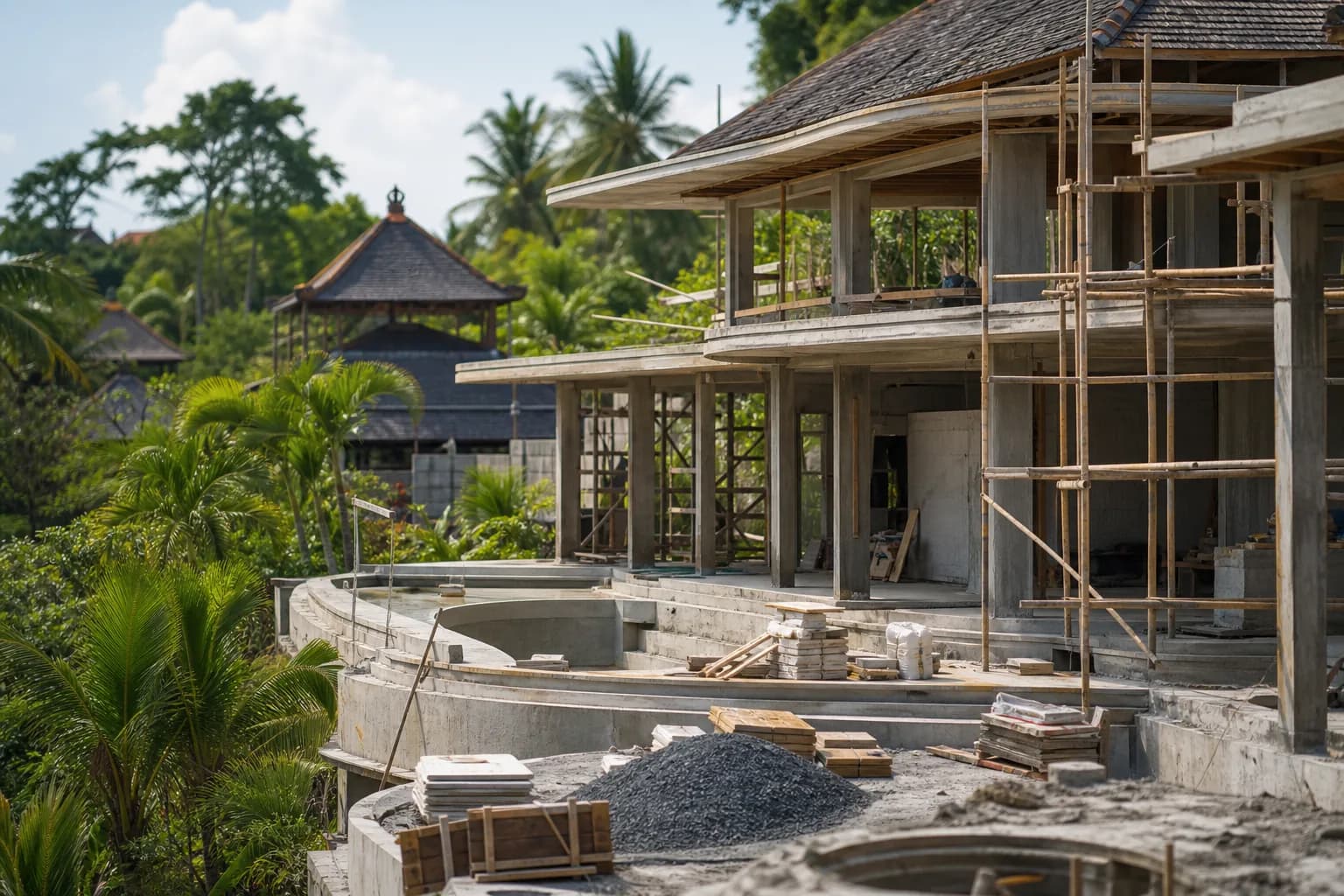
Choosing a General Contractor in Bali: Red Flags, Questions and Contract Must-Haves
A practical filter for hiring a general contractor in Bali: the red flags that end conversations, the questions professionals answer with documents, and the contract clauses no villa build should start without.
7 min read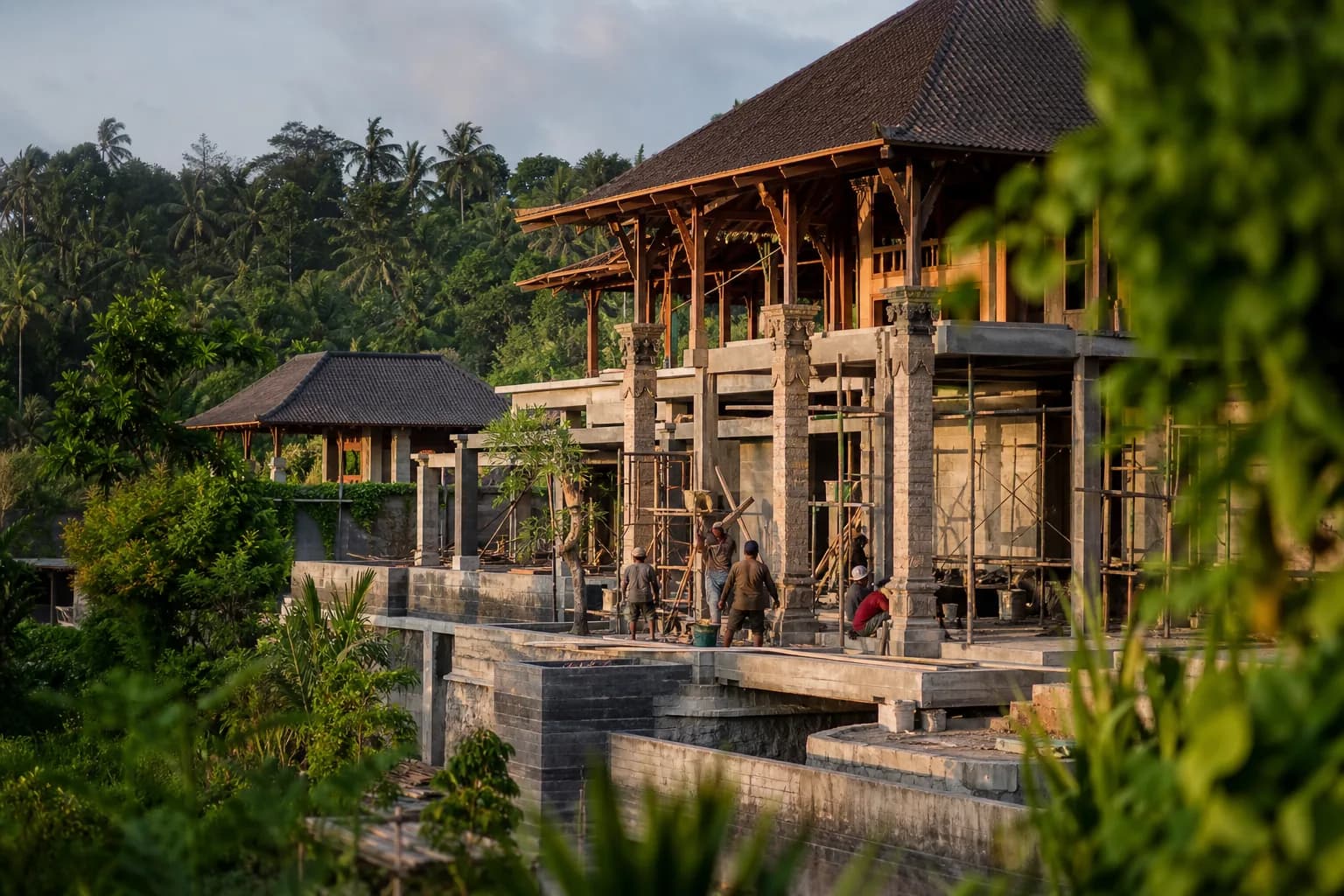
Construction Cost Overruns in Bali: Why Budgets Blow Up — and the Contract Terms That Prevent It
Most Bali construction budgets do not blow up in one disaster — they leak through vague scope, unpriced change orders and open-ended contracts. The real causes of cost overruns, and the specific contract terms, payment structure and contingency planning that prevent them.
8 min read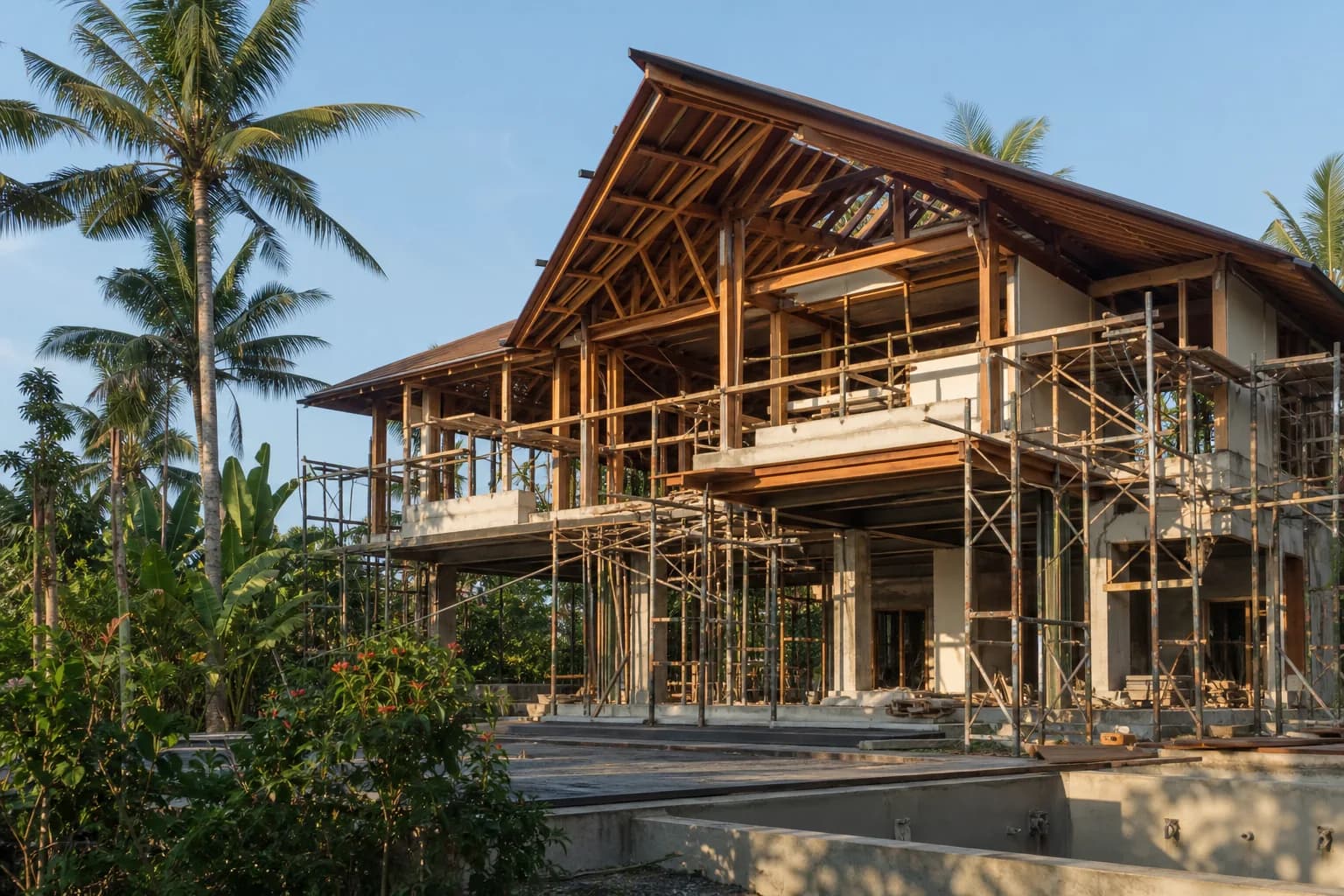
Build vs Buy a Villa in Bali in 2026: The Full Comparison
Building a Bali villa typically costs 20–30% less than buying comparable turnkey stock, but takes 8–16 months and demands more decisions. A full, honest comparison of cost, time, control, risk and resale — plus who should choose which route.
7 min read