Build Your Dream Villa in Bali | Expert Guidance
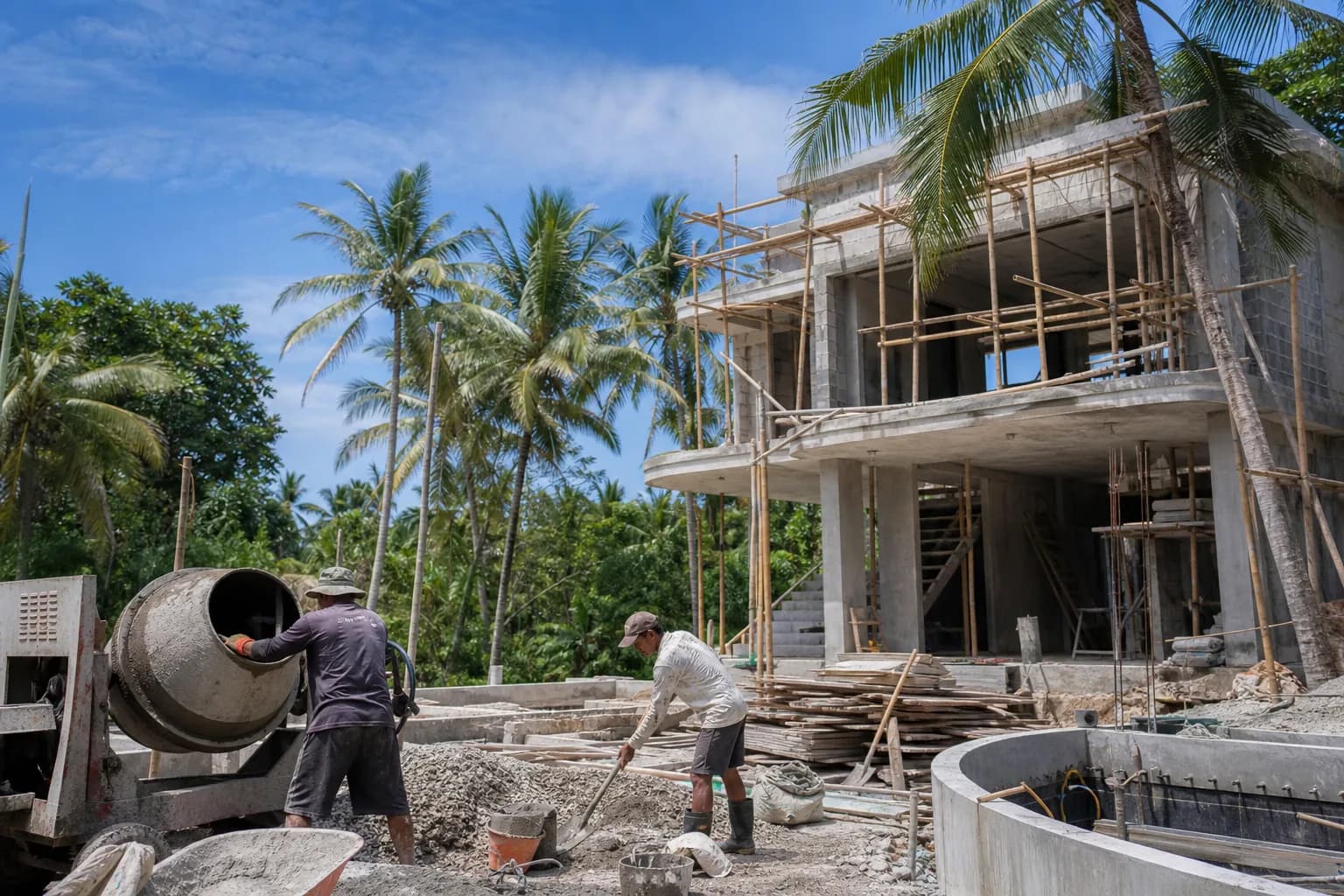
How to Build a Villa in Bali: A Complete Engineering Guide for 2026
Building a villa in Bali offers something that purchasing an existing property never can: complete control over design, materials, location, and long-term structural integrity. When you build a villa in Bali from the ground up, you’re not inheriting someone else’s compromises, hidden defects, or outdated systems. You’re creating a structure engineered specifically for your requirements, whether that’s a private residence designed around your lifestyle, a rental villa optimized for guest experience and operational efficiency, or a mixed-use property that balances both.
The difference between buying and building extends beyond aesthetics. Existing villas in Bali often come with concealed structural issues—inadequate foundations for seismic conditions, improper waterproofing in tropical climates, electrical systems that don’t meet current safety standards, or plumbing installed without proper slope calculations. When you build a villa in Bali with an experienced construction partner, every system is engineered to current standards, documented, and warrantied. You know exactly what’s behind every wall, under every floor, and above every ceiling.
This guide walks through the complete process from initial concept to key handover. It’s written for clients who understand that quality construction requires proper engineering, transparent processes, and realistic timelines. If you’re looking for shortcuts or inflated promises, this isn’t that article. If you want to understand how professional villa construction actually works in Bali, keep reading.
Step 1: Define Your Villa’s Purpose and Functional Requirements
Before discussing design aesthetics or browsing land options, you need absolute clarity on purpose. A villa built for personal use has fundamentally different requirements than one designed for rental income, and a mixed-use property requires careful balance between both. This decision affects everything: spatial planning, material selection, systems redundancy, maintenance accessibility, and budget allocation.
Personal Use Villas
Personal villas prioritize long-term comfort, customization, and operational simplicity. You’re not optimizing for guest turnover or maximizing bedroom count. Instead, focus on spaces that match your actual lifestyle: perhaps a larger kitchen if you cook frequently, a dedicated office with proper acoustics and network infrastructure, or outdoor areas designed for daily use rather than photo opportunities.
Material selection for personal villas can emphasize longevity over initial cost. You’ll live with these finishes for years, so investing in higher-grade stone, properly seasoned timber, and premium fixtures makes sense. Maintenance accessibility matters more than in rental properties—you want systems you can service locally without specialized contractors. Climate control can be tailored to your preferences rather than standardized for unknown guests.
Rental Investment Villas
Rental villas are operational assets, not homes. Design decisions should be driven by guest experience, maintenance efficiency, and operational durability. This means more bedrooms with ensuite bathrooms, larger common areas for group gatherings, commercial-grade kitchen equipment, and finishes that withstand high turnover without showing wear.
When you build a villa in Bali for rental purposes, engineering decisions change significantly. Plumbing systems need more access points for rapid maintenance. Electrical panels should be organized for easy troubleshooting. Air conditioning should be zoned so unoccupied rooms don’t waste energy. Outdoor furniture needs to be secured against wind without looking institutional. Pool systems require automated chemical management and remote monitoring.
Material selection balances appearance with replacement cost. That exotic stone might look stunning, but if a single cracked tile requires importing replacements from Italy, you’ve created an operational liability. Rental villas need materials that are beautiful, durable, and locally serviceable.
Mixed-Use Properties
Mixed-use villas attempt to serve both personal and rental functions, typically with a private owner’s residence and separate guest pavilions. This is the most complex scenario because you’re essentially designing two properties with shared infrastructure. Zoning becomes critical—guests need complete privacy from owner areas, but you can’t duplicate every system inefficiently.
Successful mixed-use design requires careful site planning. Owner and guest areas need separate entrances, distinct outdoor spaces, and independent utility controls. Shared systems like water treatment, backup generators, and internet infrastructure need capacity planning for simultaneous full occupancy. Sound isolation between zones requires proper engineering, not just distance.
The purpose definition phase should result in a clear functional brief: number of bedrooms, bathroom count, required common areas, outdoor space allocation, parking needs, staff facilities, and any specialized requirements like home theaters, gyms, or wine cellars. This brief becomes the foundation for land selection and design development.
Step 2: Land Search, Zoning Audit, and Site Due Diligence
Land selection determines 40% of your project’s success before design even begins. The wrong site can turn an excellent design into a construction nightmare, inflate costs by 30-50%, or create ongoing operational problems that never fully resolve. Professional land evaluation goes far beyond location and views—it requires technical analysis of zoning compliance, infrastructure access, environmental conditions, and constructability.
Zoning and Land Status Verification
Not all land in Bali can legally support villa construction, and zoning violations can result in construction stops, demolition orders, or inability to obtain occupancy certificates. Before committing to any land, verify its official designation and permitted uses. Residential zoning (peruntukan) must explicitly allow the type of structure you’re planning. Some areas restrict building height, footprint coverage, or commercial activity.
Land status matters equally. Freehold (Hak Milik) is only available to Indonesian citizens, so foreign buyers typically use leasehold (Hak Sewa) or Right to Build (Hak Guna Bangunan) structures. Each has different implications for construction financing, permit applications, and long-term property rights. Verify that land certificates are authentic, boundaries are accurately surveyed, and there are no encumbrances or disputes. This requires working with qualified legal counsel, not just the seller’s assurances.
Infrastructure Access Assessment
Infrastructure access directly impacts both construction costs and ongoing operational expenses. When you build a villa in Bali, four infrastructure elements require detailed assessment: road access, electricity supply, water availability, and internet connectivity.
Road access affects everything from material delivery costs to guest experience. Sites requiring concrete pumping because mixer trucks can’t access the property add $8,000-$15,000 to foundation costs. Narrow lanes that can’t accommodate delivery trucks mean manual material handling, increasing labor costs and timelines. Unpaved access roads become impassable during rainy season, potentially stopping construction for weeks.
Electrical supply requires verification of available capacity, not just presence of lines. Many areas in Bali have electrical infrastructure that’s already at capacity. Adding a villa with air conditioning, pool equipment, and modern appliances might require transformer upgrades or new service lines—costs that can reach $15,000-$30,000 and add months to your timeline. Verify available capacity in writing from PLN before purchasing land.
Water supply in Bali comes from three sources: municipal (PDAM), community wells, or private boreholes. PDAM availability is limited and often unreliable. Most villas depend on boreholes, which require geological assessment to verify aquifer depth, water quality, and sustainable yield. Drilling costs range from $3,000-$8,000 depending on depth, but there’s no guarantee of finding adequate water. Some areas require drilling 80-100 meters to reach usable aquifers.
Internet connectivity matters more than many buyers realize, especially for rental villas where guest reviews frequently mention WiFi quality. Fiber optic availability is still limited outside major tourist areas. Sites relying on wireless or satellite connections face bandwidth limitations and weather-related outages. Verify actual available speeds, not theoretical maximums, and factor in backup connectivity costs if the location is remote.
Environmental and Geotechnical Conditions
Bali’s tropical climate and seismic activity create specific engineering challenges that vary significantly by location. Coastal sites face salt air corrosion, requiring upgraded materials and protective coatings that add 15-20% to finishing costs. High water tables in rice field areas require extensive foundation waterproofing and drainage systems. Hillside locations need retaining walls, erosion control, and potentially more complex foundations.
Professional geotechnical investigation should precede land purchase, not follow it. Soil boring tests reveal bearing capacity, which determines foundation design and cost. Some Bali soils require deep pile foundations instead of standard footings, potentially doubling foundation costs. Soil tests also identify groundwater levels, contamination, and expansive clay conditions that affect construction methodology.
Slope analysis matters even on apparently flat sites. Proper drainage requires minimum slopes, and sites that appear level might actually drain toward the building location, requiring expensive regrading or drainage systems. Hillside sites need cut-and-fill calculations to determine if the site has adequate material for terracing or requires importing fill—a cost that can reach $30,000-$50,000 for significant elevation changes.
Teville Land Evaluation Services
Teville provides comprehensive land evaluation services for clients in the site selection phase. Our engineering team conducts technical site assessments covering zoning verification, infrastructure capacity analysis, geotechnical conditions, and constructability review. We provide written reports with cost implications for each site under consideration, allowing informed comparison between options. View available pre-evaluated sites in our Lands section, or engage our team to assess sites you’ve identified independently.
Step 3: Concept Design and Technical Engineering Sessions
Design development for villa construction requires collaboration between architects and engineers from the first sketch. In Bali’s climate and seismic conditions, aesthetic design cannot be separated from structural engineering, environmental systems, and construction methodology. The concept phase establishes spatial organization, structural approach, and systems integration before detailed documentation begins.
Architectural Programming and Spatial Design
Architectural programming translates your functional brief into spatial relationships and preliminary layouts. This phase determines room sizes, circulation patterns, indoor-outdoor connections, and how the building responds to site conditions like views, solar orientation, and prevailing winds. In Bali’s tropical climate, passive design strategies significantly impact long-term comfort and operational costs.
Proper solar orientation reduces cooling loads by 20-30%. East-west building orientation minimizes afternoon sun exposure on main living areas. Roof overhangs calculated for Bali’s latitude (8°S) provide shade during midday while allowing lower-angle morning and evening light. Cross-ventilation design reduces air conditioning dependency, but requires careful window placement based on prevailing wind analysis, not assumptions.
When you build a villa in Bali, indoor-outdoor integration is expected, but it requires engineering, not just removing walls. Open pavilion designs need structural systems that span without intermediate columns. Large sliding door systems require proper header design and weather sealing. Outdoor living areas need drainage planning, electrical systems rated for weather exposure, and furniture layouts that don’t obstruct emergency egress.
Structural Engineering Integration
Structural engineering begins during concept design, not after architectural drawings are complete. Bali’s seismic zone classification requires earthquake-resistant design following SNI (Indonesian National Standard) codes. This affects everything from foundation type to wall construction to roof framing. Attempting to apply structural systems after architectural design is finalized results in compromised aesthetics, inflated costs, or inadequate safety factors.
Foundation design depends on geotechnical data from your site investigation. Standard strip footings work for good bearing capacity soils, but many Bali sites require deeper solutions: pile foundations, grade beams, or mat foundations. Each has different cost implications and affects construction timeline. Foundation design also addresses groundwater management, requiring waterproofing systems, drainage layers, and sump pumps in high water table conditions.
Structural frame selection—reinforced concrete, steel, timber, or hybrid systems—affects both cost and construction timeline. Reinforced concrete is most common in Bali, providing good seismic performance and termite resistance. Steel frames allow larger spans and faster construction but require corrosion protection in tropical conditions. Timber framing is limited to roof structures and requires proper species selection and treatment for durability.
MEP Systems Planning
Mechanical, electrical, and plumbing (MEP) systems require space, access, and integration with structural design. Attempting to add MEP systems after structural design is complete results in exposed conduits, inadequate access for maintenance, and compromised performance. Professional villa construction integrates MEP planning from the concept phase.
Electrical system design starts with load calculation based on your equipment list: air conditioning capacity, kitchen appliances, pool equipment, lighting, and any specialized systems. This determines service size, panel capacity, and circuit distribution. Backup generator sizing and automatic transfer switch specifications depend on which loads you want supported during outages—whole-house backup costs 3-4 times more than supporting critical circuits only.
Plumbing design addresses both supply and drainage. Water supply systems need pressure calculations to ensure adequate flow at all fixtures, especially for multi-story villas or sites with elevation changes. Hot water systems—heat pump, solar, or gas—require capacity sizing and equipment location planning. Drainage systems need proper slope calculations, vent sizing, and grease trap locations for kitchen waste. Pool equipment rooms require dedicated plumbing, electrical, and ventilation design.
HVAC design for tropical climates balances comfort with operational cost. Oversized air conditioning wastes energy and creates humidity problems. Undersized systems run continuously without achieving comfort. Proper design requires room-by-room cooling load calculations considering solar gain, occupancy, equipment heat, and ventilation requirements. Zoning strategies allow independent control of different areas, reducing energy waste when spaces are unoccupied.
Design Review and Value Engineering
Concept design concludes with comprehensive review sessions where architectural, structural, and MEP designs are evaluated together. This is the phase for value engineering—identifying opportunities to reduce cost without compromising quality or functionality. Simple changes like adjusting column spacing, standardizing window sizes, or relocating equipment rooms can reduce costs by 10-15% while improving constructability.
Teville’s design process includes detailed technical sessions where clients review designs with our engineering team, not just architects. We explain structural approaches, systems integration, and construction methodology in clear language. You understand not just what the villa looks like, but how it’s built and why specific approaches were selected. This transparency prevents surprises during construction and ensures designs are optimized for Bali’s specific conditions. Learn more about our collaborative approach on our How We Build page.
Step 4: Permitting—PBG, SLF, and Local Approvals Explained
Construction permits in Bali follow Indonesian national regulations implemented through local government offices. The process involves multiple approvals, technical document submissions, and compliance verification. Understanding permit requirements before construction begins prevents costly delays, rework, or legal complications. When you build a villa in Bali through proper channels, permits provide legal protection and enable future property transactions.
PBG (Persetujuan Bangunan Gedung) – Building Approval
PBG replaced the older IMB (Izin Mendirikan Bangunan) system and serves as the primary construction permit. PBG approval confirms that your design complies with zoning regulations, structural safety standards, and environmental requirements. The application requires complete technical documentation: architectural drawings, structural calculations, MEP system designs, site plans, and environmental impact assessments for larger projects.
PBG processing involves technical review by government engineers who verify compliance with SNI standards for structural design, fire safety, accessibility, and environmental systems. Common rejection reasons include inadequate structural calculations, non-compliant setbacks, insufficient parking allocation, or missing environmental documentation. Resubmissions add 4-8 weeks to timelines, which is why professional preparation of permit documents matters.
PBG costs vary based on building area and complexity. For typical villas (200-400 sqm), expect Rp 15,000,000 to Rp 35,000,000 in permit fees, technical review charges, and administrative costs. Larger or more complex projects can reach Rp 50,000,000. Processing time ranges from 6-12 weeks for straightforward applications to 16-20 weeks for projects requiring additional environmental review or design modifications.
SLF (Sertifikat Laik Fungsi) – Functional Worthiness Certificate
SLF is the occupancy certificate issued after construction completion, confirming that the building was constructed according to approved plans and meets safety standards for occupancy. SLF requires final inspections covering structural integrity, fire safety systems, electrical installation, plumbing functionality, and environmental compliance. Without SLF, the building cannot be legally occupied or connected to municipal utilities where applicable.
SLF application requires comprehensive documentation: as-built drawings showing any approved modifications from original plans, structura
 3104 m²11 month(s)from 99.000 USD
TALA 100
 1from 198.000 USD
Private: Haridas Villas
 3127 m²9 month(s)from 177.000 USD
Mukunda
 164 m²7 month(s)from 79.000 USD
Private: Haridas Villas, Tegallalang
 3173 m²6 month(s)from 125.000 USD
TALA FOUR
 3180 m²7 month(s)from 142.000 USD
Vasudeva
 2144 m²11 month(s)from 104.000 USD
Narayana
 3124 m²6 month(s)from 123.000 USD
TALA 8
164 m²7 month(s)from 79.000 USDTALA TWO

Want to calculate?
 172 m²8 month(s)from 120.000 USD
Keshava
 4344 m²16 month(s)from 290.000 USD
Radha
Start With Real Numbers, Not Guesses
Before buying land or finalizing a design, check the realistic build cost range for your project in Bali.
Our team reviews your inputs and gives a grounded estimate.
Available lands
 200 m²11 min$ 89286Bali, Tabanan
 250 m²15 min$ 40025Bali, Munggu
 6000 m²10 min$ 1330049Bali, Kutuh South Bali
 7000 m²36 min$ 284483Bali, Gianyar
 750 m²15 min$ 187038Bali, Kerobokan
 889 m²15 min$ 145612Bali, Cepaka
 5000 m²8 min$ 424877Bali, Ungasan
 1158 m²12 min$ 291996Bali, Mengwi
 608 m²15 min$ 310377Bali, Seminyak
 2230 m²15 min$ 410573Bali, Padonan
 1410 m²15 min$ 390702Bali, Tabanan
 1533 m²5 min$ 165666Bali, Cepaka
 1000 m²10 min$ 123154Bali, Jimbaran
 7500 m²5 min$ 206281Bali, Kedungu
 680 m²15 min$ 110751Bali, Pererenan
Essential Bali build & buy guides
- Bali villa construction cost per m² in 2026
- How much will your villa cost? Calculator
- Building a villa in Bali: the complete guide
- Buying land in Bali: step-by-step for foreigners
- Bali villa investment: yields, risks, returns
- Leasehold vs freehold: what foreigners can own
- Construction defect liability & 10-year warranty
- Bali building codes and construction standards
Related guides
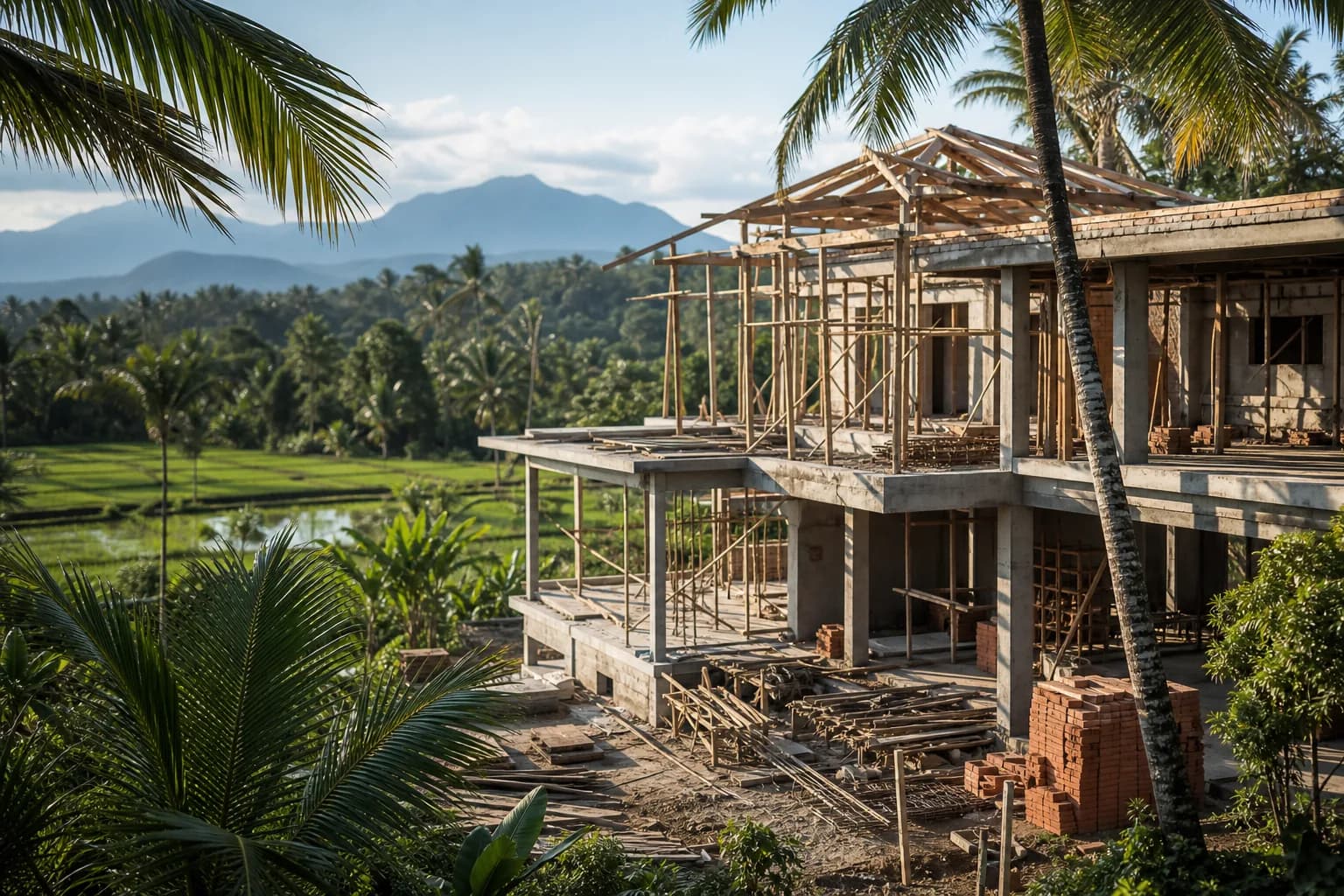
How to Build a Villa in Bali: The Complete Step-by-Step Process (2026)
Every stage of building a villa in Bali as a foreigner — from securing land and permits to handover — with realistic timelines, costs and the mistakes that derail first-time builders.
5 min read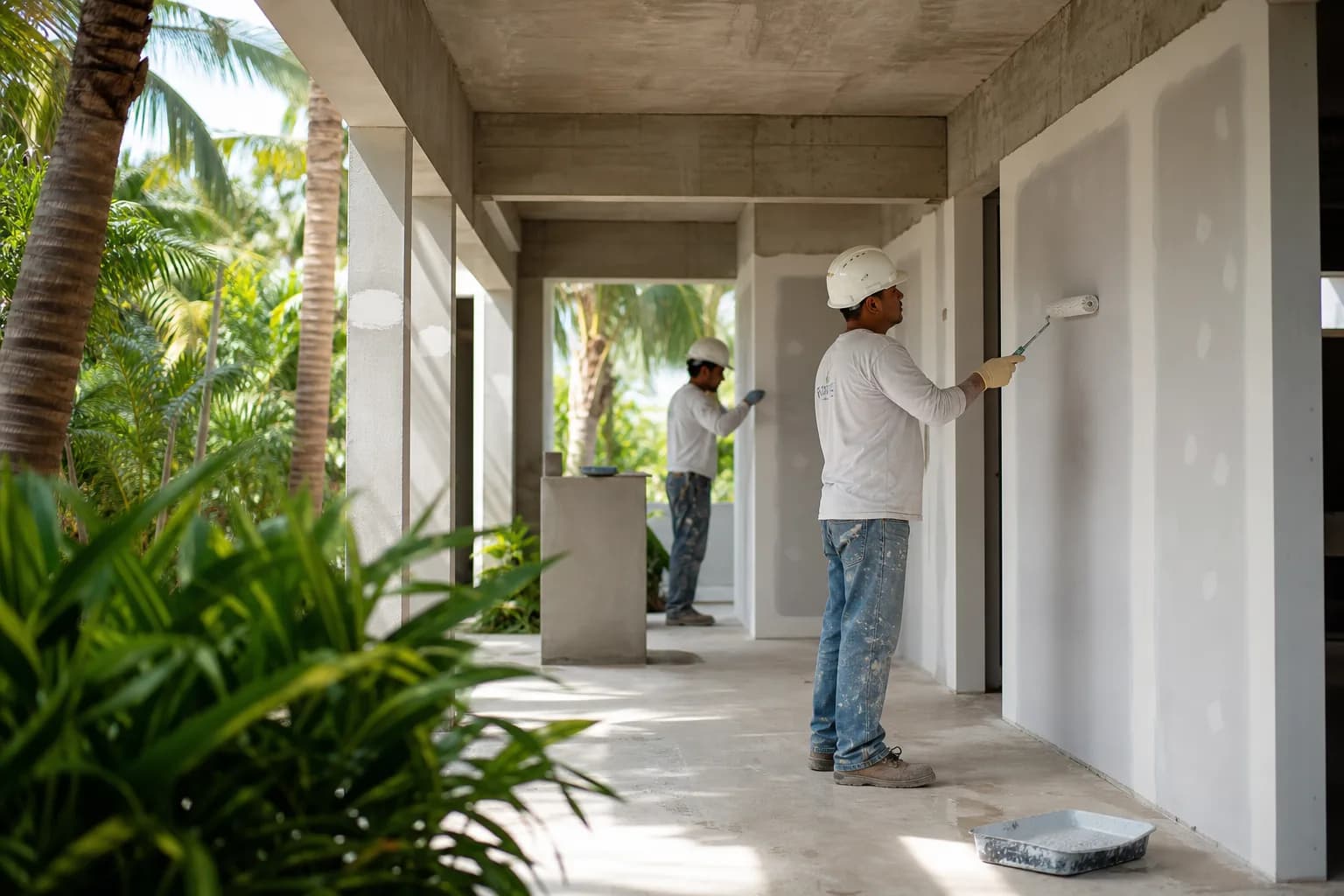
Moisture-Resistant Gypsum Board Finishing with Epoxy Primer Bali
Learn how moisture-resistant gypsum boards with epoxy primer boost durability, finish quality, and mold resistance in Bali projects. Great for Bali homes.
10 min read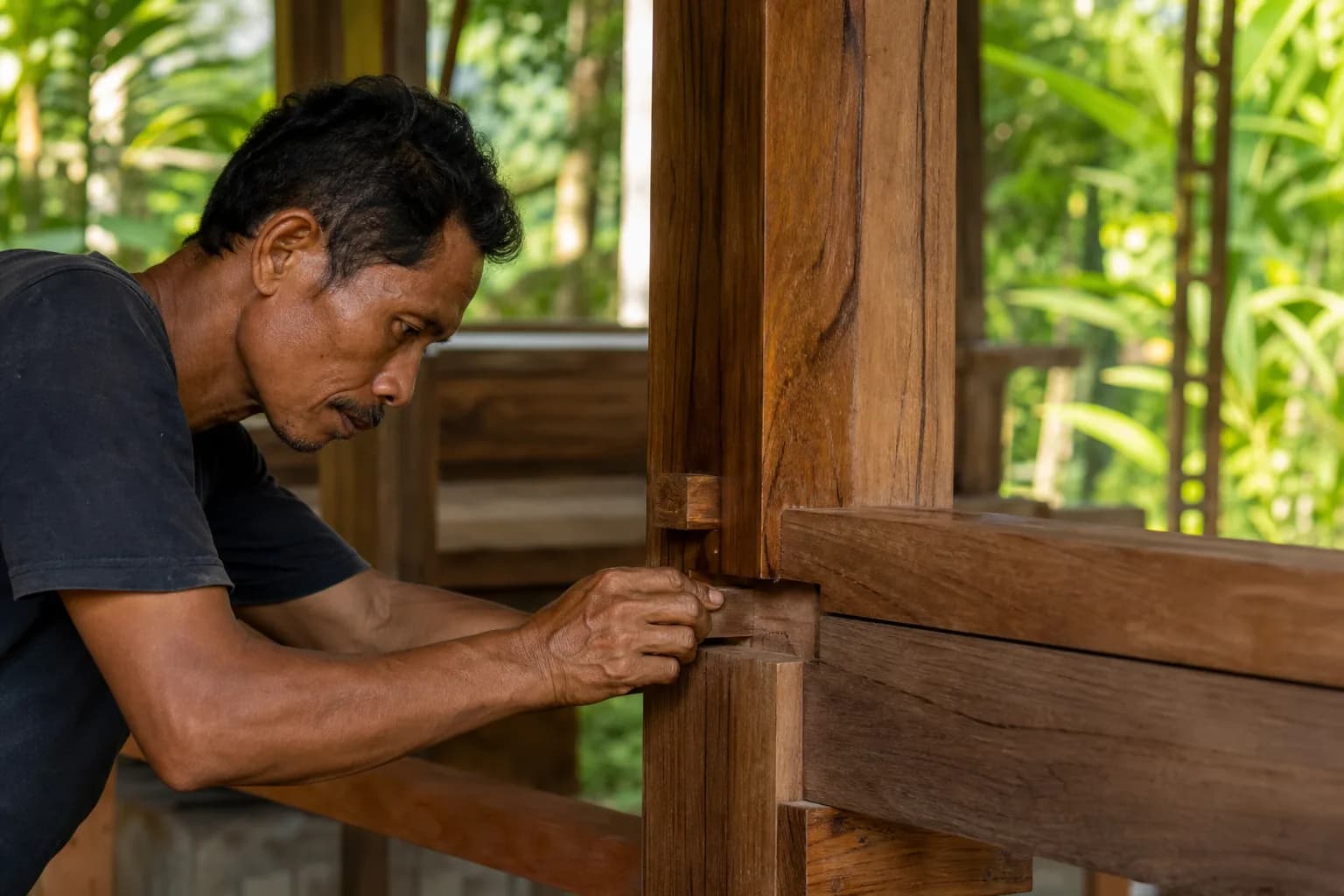
Marine-Grade Timber Joinery Finishing Corrosion Protection Bali
Discover marine-grade timber joinery finishing and corrosion protection in Bali. Durable coastal timber care, coatings, and maintenance for lasting protection.
8 min read