Bamboo Structural Certification Building Code Compliance Bali
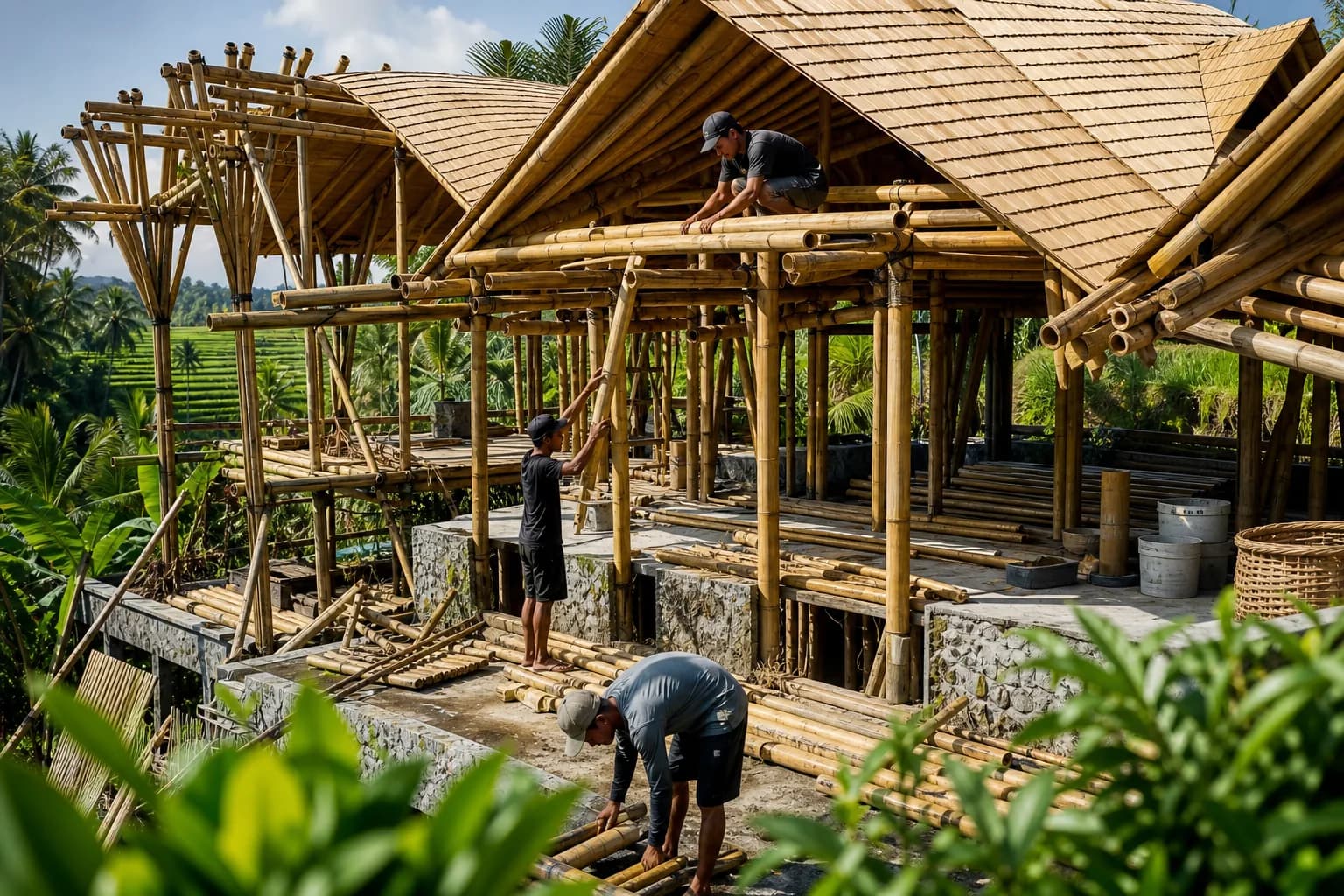
The Structural Load Certification Challenge for Bamboo Buildings in Bali
Bamboo construction in Bali presents a unique regulatory paradox: while the island has become globally recognized for innovative bamboo architecture, Indonesia’s building codes remain fundamentally written for concrete and steel structures. Property developers and villa owners pursuing bamboo construction face a critical technical barrier—obtaining structural load certification and building code compliance for a material that exists outside conventional regulatory frameworks. Without proper load certification, bamboo structures risk permit rejection, insurance denial, and long-term liability exposure, regardless of their actual structural integrity.
Engineering Standards and Regulatory Framework for Bamboo Structural Certification
The structural load certification process for bamboo in Bali operates within a complex intersection of international standards, Indonesian national building codes, and local Balinese permit requirements. Understanding this multi-layered framework is essential for any serious bamboo construction project.
ISO 22156:2021 as the Global Benchmark
The ISO 22156:2021 standard represents the most comprehensive international guideline for bamboo structural design. This standard establishes calculation methods for mechanical resistance, serviceability, and durability of bamboo culms used as structural elements. The standard addresses critical engineering parameters including characteristic strength values, partial safety factors, load duration effects, and moisture content adjustments—all essential for structural load certification.
For Bali projects, ISO 22156:2021 provides the technical foundation that structural engineers use to calculate load-bearing capacity, deflection limits, and connection design. However, this international standard alone does not satisfy Indonesian regulatory requirements. It must be translated into compliance documentation that aligns with SNI (Standar Nasional Indonesia) building codes, which remain predominantly focused on conventional materials.
Indonesian Building Code Adaptation Challenges
Indonesia’s primary building regulations—SNI 1726 for earthquake resistance, SNI 1727 for minimum design loads, and SNI 03-1729 for structural steel—contain no specific provisions for bamboo as a primary structural material. This regulatory gap creates significant certification challenges. Structural engineers must develop equivalency arguments, demonstrating that bamboo designs meet or exceed the safety margins established for conventional materials.
The process typically requires engaging a certified structural engineer (Insinyur Sipil) registered with LPJK (Lembaga Pengembangan Jasa Konstruksi) who can prepare structural calculations and certification documents. These engineers must reference ISO 22156:2021 while demonstrating compliance with SNI safety factors, typically requiring bamboo structures to achieve safety factors of 1.5 to 2.0 for permanent loads and 1.8 to 2.5 for variable loads.
Material Testing and Species-Specific Certification
Unlike standardized steel or concrete with predictable properties, bamboo exhibits significant variation based on species, age, treatment, and growing conditions. Structural load certification requires species-specific testing data. In Bali, the most commonly used structural bamboo species—Dendrocalamus asper (Petung) and Gigantochloa apus (Tali)—must undergo mechanical testing to establish characteristic strength values.
Proper certification requires laboratory testing for compressive strength parallel to fiber, tensile strength, bending strength (modulus of rupture), modulus of elasticity, and shear strength. These tests must follow standardized protocols, typically ISO 22157 series standards, and be conducted by accredited laboratories. Testing results establish the allowable stress values used in structural calculations, accounting for natural variability through statistical analysis of multiple specimens.
Treatment and Durability Certification Requirements
Structural load certification extends beyond immediate strength to long-term durability. Bali’s tropical climate—with high humidity, intense rainfall, and termite pressure—demands rigorous preservation treatment certification. The most effective treatment method, boron diffusion treatment, must be documented with retention level testing showing minimum 4-6 kg/m³ boron compound retention in bamboo tissue.
Certification documentation must demonstrate that treatment processes meet durability requirements equivalent to conventional materials’ expected service life. This typically involves accelerated aging tests, fungal resistance testing per ISO 22156 Annex B, and termite resistance verification—all documented evidence required for building permit approval and insurance underwriting.
Critical Risks and Common Certification Failures
The bamboo structural certification process in Bali contains numerous technical and procedural pitfalls that can derail projects, increase costs, or create long-term liability exposure.
Inadequate Engineering Documentation
The most common failure occurs when developers treat bamboo construction as a vernacular building method rather than an engineered system requiring full structural documentation. Building permit applications without complete structural calculations, connection detail drawings, and load path analysis face immediate rejection. Many projects underestimate the engineering documentation depth required, assuming bamboo’s traditional use exempts it from modern engineering standards.
Connection Design Deficiencies
Bamboo’s hollow, tapered geometry creates unique connection challenges. Structural failures most commonly occur at joints rather than in the bamboo culms themselves. Certification requires detailed connection design showing how loads transfer through bolted, pinned, or lashed connections. Inadequate connection design—particularly failure to account for stress concentrations around bolt holes or splitting forces in compression connections—represents a critical certification risk that structural engineers must explicitly address.
Fire Rating and Insurance Complications
Even with structural load certification, bamboo buildings face additional regulatory barriers. Indonesian fire safety regulations classify bamboo as combustible material, limiting its use in certain building classifications. Projects exceeding single-story residential use or located in dense urban areas may face fire rating requirements that bamboo cannot meet without additional fire-retardant treatment or protective cladding. This regulatory reality often emerges late in the permit process, requiring costly design modifications.
Moisture Content and Dimensional Stability Issues
Bamboo’s hygroscopic nature—absorbing and releasing moisture with environmental changes—creates dimensional stability challenges rarely addressed in initial designs. Structural certification must account for moisture-induced shrinkage, swelling, and potential connection loosening. Projects failing to specify moisture content limits (typically 12-15% for structural bamboo) or lacking moisture monitoring protocols during construction face long-term performance issues that can void structural warranties.
Step-by-Step Bamboo Structural Certification Process
Achieving structural load certification and building code compliance for bamboo construction in Bali requires a systematic approach integrating material testing, engineering analysis, and regulatory coordination.
Phase 1: Pre-Design Material Qualification (4-6 weeks)
Begin by identifying and qualifying bamboo species and suppliers. Collect representative samples of the specific bamboo to be used—minimum 30 culms from the intended harvest area. Submit samples to an accredited testing laboratory for mechanical property testing following ISO 22157 protocols. Testing should establish characteristic values for compression, tension, bending, and shear strength. Simultaneously, verify treatment processes and obtain boron retention test results. This material qualification data forms the foundation for all subsequent structural calculations.
Phase 2: Structural Engineering and Calculation (6-8 weeks)
Engage a licensed structural engineer experienced in bamboo design and familiar with both ISO 22156:2021 and Indonesian SNI codes. The engineer develops complete structural calculations including load analysis (dead loads, live loads, wind loads per SNI 1727, and seismic loads per SNI 1726), member sizing calculations with appropriate safety factors, deflection analysis, and detailed connection design. All calculations must reference the material testing data from Phase 1 and demonstrate equivalency with SNI safety requirements. The engineering package must include stamped calculation sheets, structural drawings showing all member sizes and connections, and a technical specification document.
Phase 3: Regulatory Coordination and Permit Application (8-12 weeks)
Submit the complete engineering package to the local building authority (typically the Dinas Penanaman Modal dan Pelayanan Terpadu Satu Pintu or DPMPTSP) as part of the IMB (Izin Mendirikan Bangunan) application. This submission should include architectural drawings, structural engineering calculations, site plans, and environmental compliance documents. Expect technical review meetings where building officials may request additional documentation or clarification on bamboo-specific design approaches. Having the structural engineer present during these reviews significantly improves approval probability. Budget additional time for revisions and resubmissions—bamboo projects typically require 2-3 review cycles.
Phase 4: Construction Quality Control and As-Built Certification (Throughout Construction)
During construction, implement rigorous quality control protocols. Verify moisture content of all bamboo upon delivery (target 12-15%). Document treatment verification for each batch. Conduct dimensional inspections ensuring culm diameters and wall thicknesses meet design specifications. Photograph all connection assemblies before concealment. Upon completion, the structural engineer must conduct final inspection and issue an as-built certification letter confirming construction matches approved designs. This certification is essential for final building permit sign-off and insurance activation.
Phase 5: Insurance and Long-Term Documentation (Post-Construction)
Compile a comprehensive structural certification package including all testing reports, engineering calculations, approved permits, construction quality control records, and as-built certification. This documentation package is essential for property insurance underwriting. Engage insurance providers early in the process—many standard policies exclude bamboo structures or require specialized coverage. Establish a maintenance and inspection protocol, typically requiring annual structural inspections by a qualified engineer to maintain insurance coverage and verify ongoing structural integrity.
Realistic Cost and Timeline Expectations
Bamboo structural certification involves specific costs and timeframes that developers must budget beyond standard construction expenses.
Material Testing Costs
Comprehensive mechanical testing for bamboo structural qualification typically ranges from $2,500 to $5,000 USD, depending on the number of specimens and test parameters. This includes compression, tension, bending, and shear testing for minimum 30 specimens. Boron retention testing adds approximately $800-1,200 USD. These costs are project-specific, not per-unit, making them more economical for larger projects.
Structural Engineering Fees
Specialized structural engineering for bamboo projects commands premium rates due to limited expertise. Expect engineering fees ranging from $8,000 to $15,000 USD for a typical 200-300 m² villa, representing approximately 3-5% of structural construction costs. This includes calculation development, drawing preparation, permit coordination, and construction phase services. Projects with complex geometries or multi-story designs may exceed this range.
Permit Processing and Regulatory Costs
IMB permit fees in Bali are calculated based on building value and area, typically 0.5-1% of declared construction value. However, bamboo projects often incur additional costs for technical reviews, third-party verification, or special approvals—budget an additional $2,000-4,000 USD for regulatory processing beyond standard permit fees.
Timeline Realities
The complete certification and approval process for bamboo structures typically requires 18-26 weeks from initial material testing to final permit issuance—significantly longer than conventional construction permits. This extended timeline results from additional technical reviews, limited regulatory familiarity with bamboo systems, and potential revision cycles. Projects should incorporate this timeline into overall development schedules, as construction cannot legally commence without approved permits.
Frequently Asked Questions: Bamboo Structural Certification in Bali
Can bamboo structures legally obtain building permits in Bali?
Yes, bamboo structures can obtain legal building permits in Bali, but the process requires comprehensive structural engineering documentation demonstrating compliance with Indonesian building codes through equivalency arguments. The key is engaging qualified structural engineers who can reference ISO 22156:2021 standards while satisfying SNI code safety requirements. Success depends on complete material testing, detailed structural calculations, and thorough regulatory coordination. Projects that treat bamboo as an engineered material system rather than vernacular construction achieve permit approval, though the process takes longer than conventional materials.
What structural load capacities can certified bamboo achieve?
Properly treated and engineered bamboo species like Dendrocalamus asper (Petung) can achieve characteristic compressive strengths of 40-60 MPa parallel to fiber and bending strengths of 60-90 MPa—comparable to many softwood species. However, allowable design stresses after applying safety factors typically range from 8-12 MPa for compression and 12-18 MPa for bending. These values support multi-story structures when properly designed. The critical limitation is not bamboo’s inherent strength but connection design—joi
 4344 m²16 month(s)from 290.000 USD
Radha
 3104 m²11 month(s)from 99.000 USD
TALA 100
 3124 m²6 month(s)from 123.000 USD
TALA 8
 2144 m²11 month(s)from 104.000 USD
Narayana
 172 m²8 month(s)from 120.000 USD
Keshava
 1from 198.000 USD
Private: Haridas Villas

Want to calculate?
 3127 m²9 month(s)from 177.000 USD
Mukunda
 3180 m²7 month(s)from 142.000 USD
Vasudeva
 164 m²7 month(s)from 79.000 USD
TALA TWO
164 m²7 month(s)from 79.000 USDPrivate: Haridas Villas, Tegallalang
 3173 m²6 month(s)from 125.000 USD
TALA FOUR
Start With Real Numbers, Not Guesses
Before buying land or finalizing a design, check the realistic build cost range for your project in Bali.
Our team reviews your inputs and gives a grounded estimate.
Available lands
 700 m²20 min$ 90517Bali, Cepaka
 1362 m²15 min$ 335468Bali, Tumbak
 5815 m²5 min$ 815740Bali, Tabanan
 1533 m²5 min$ 165666Bali, Cepaka
 420 m²15 min$ 41897Bali, Tabanan
 204 m²5 min$ 40899Bali, Kedungu
 2700 m²30 min$ 314224Bali, Sidemen
 7500 m²5 min$ 206281Bali, Kedungu
 2500 m²5 min$ 609606Bali, Kedungu
 1700 m²10 min$ 632257Bali, Kuta
 800 m²5 min$ 295567Bali, Seseh
 1350 m²5 min$ 283467Bali, Pecatu
 200 m²5 min$ 59113Bali, Bukit
 700 m²15 min$ 90517Bali, Central Bali
 1720 m²2 min$ 241478Bali, Tabanan
Essential Bali build & buy guides
- Bali villa construction cost per m² in 2026
- How much will your villa cost? Calculator
- Building a villa in Bali: the complete guide
- Buying land in Bali: step-by-step for foreigners
- Bali villa investment: yields, risks, returns
- Leasehold vs freehold: what foreigners can own
- Construction defect liability & 10-year warranty
- Bali building codes and construction standards
Related guides
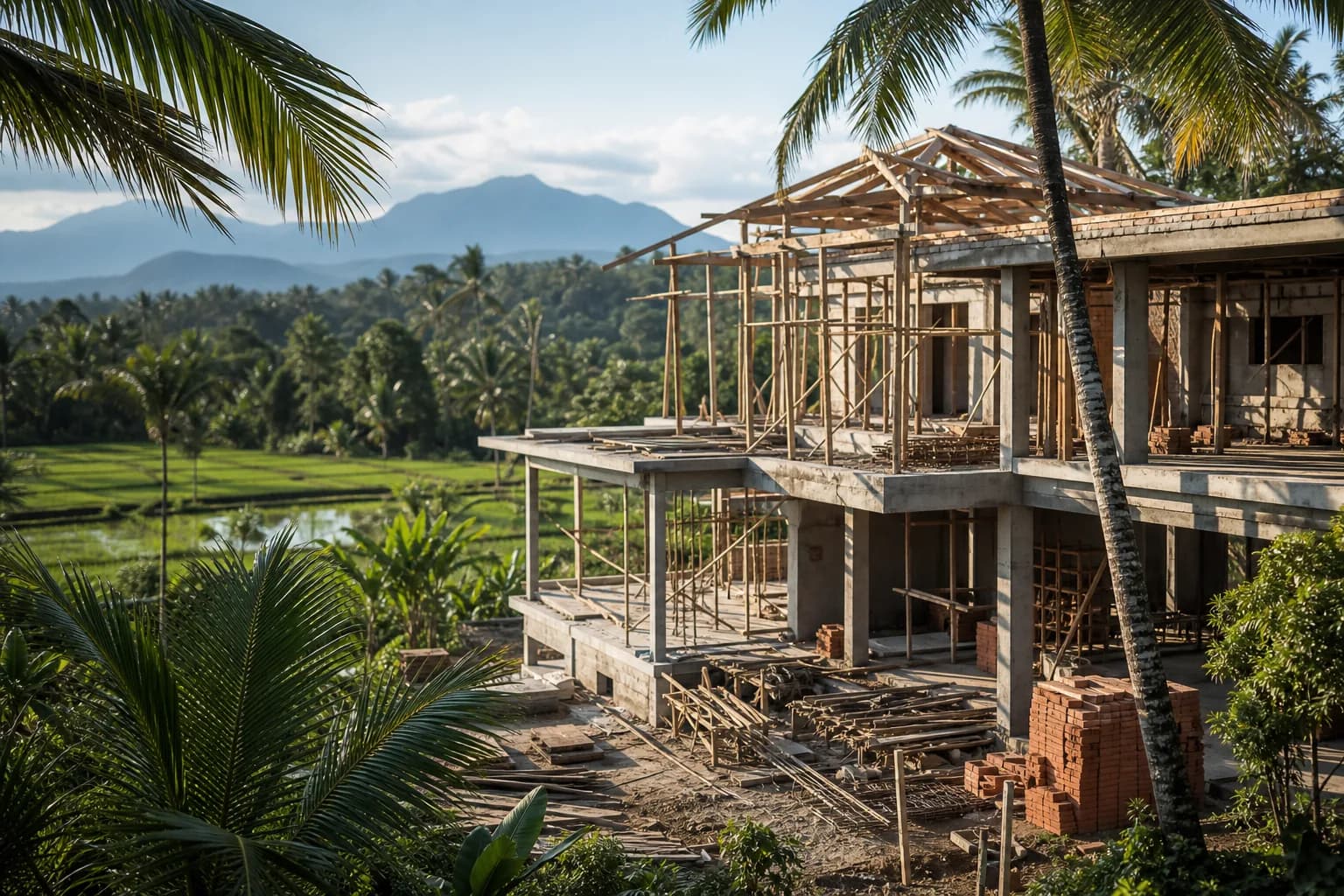
How to Build a Villa in Bali: The Complete Step-by-Step Process (2026)
Every stage of building a villa in Bali as a foreigner — from securing land and permits to handover — with realistic timelines, costs and the mistakes that derail first-time builders.
5 min read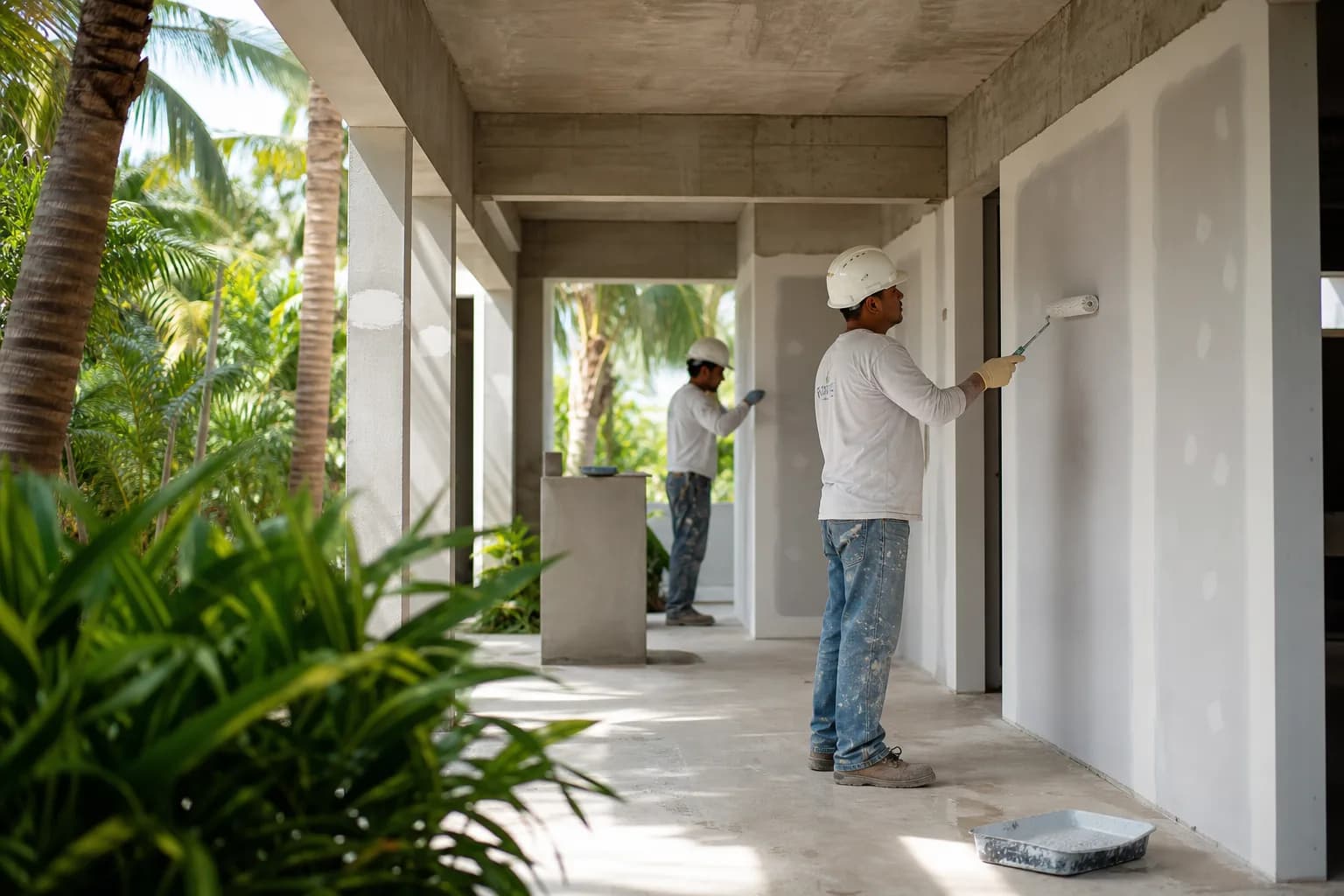
Moisture-Resistant Gypsum Board Finishing with Epoxy Primer Bali
Learn how moisture-resistant gypsum boards with epoxy primer boost durability, finish quality, and mold resistance in Bali projects. Great for Bali homes.
10 min read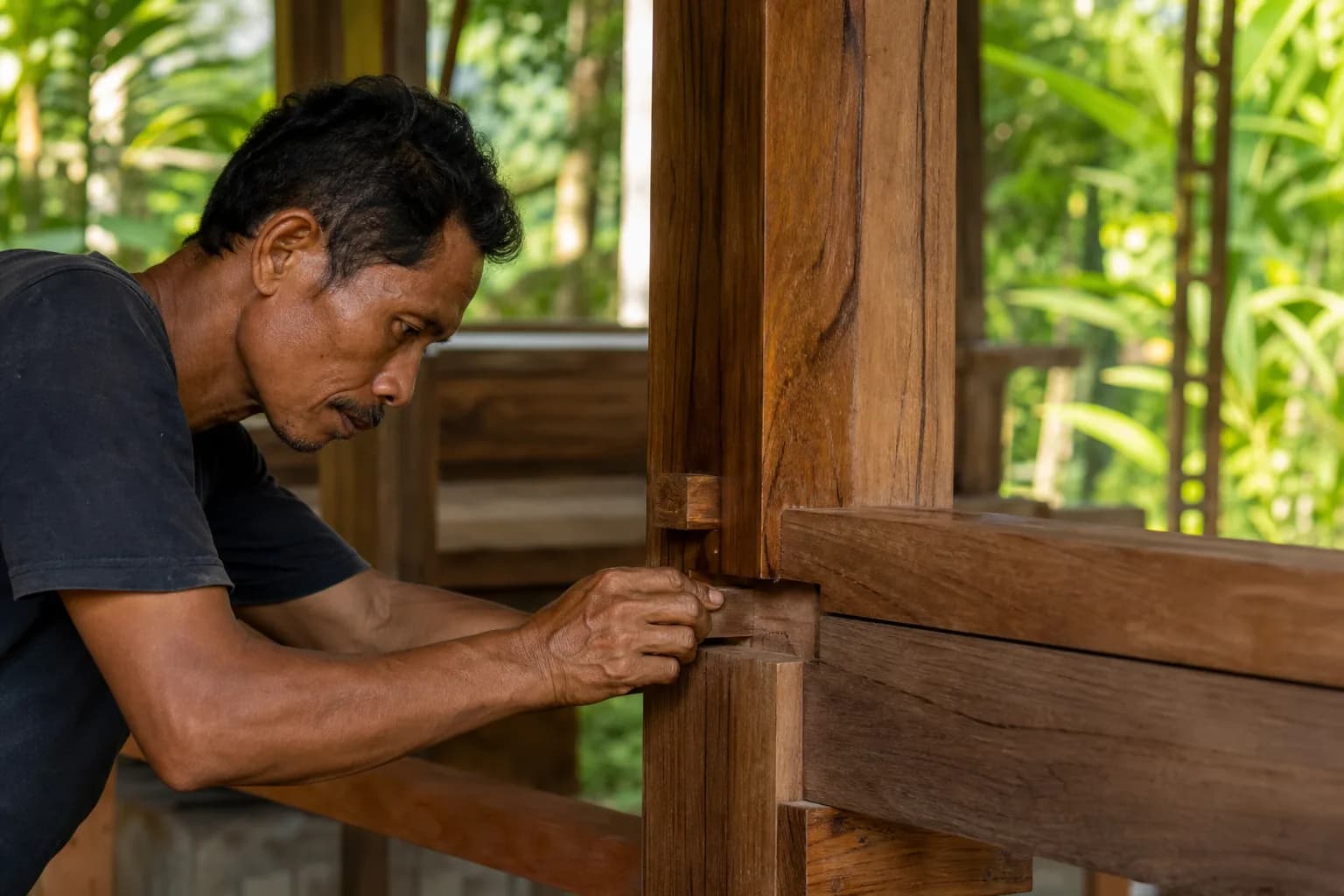
Marine-Grade Timber Joinery Finishing Corrosion Protection Bali
Discover marine-grade timber joinery finishing and corrosion protection in Bali. Durable coastal timber care, coatings, and maintenance for lasting protection.
8 min read