Bali Villa Maintenance Management Services
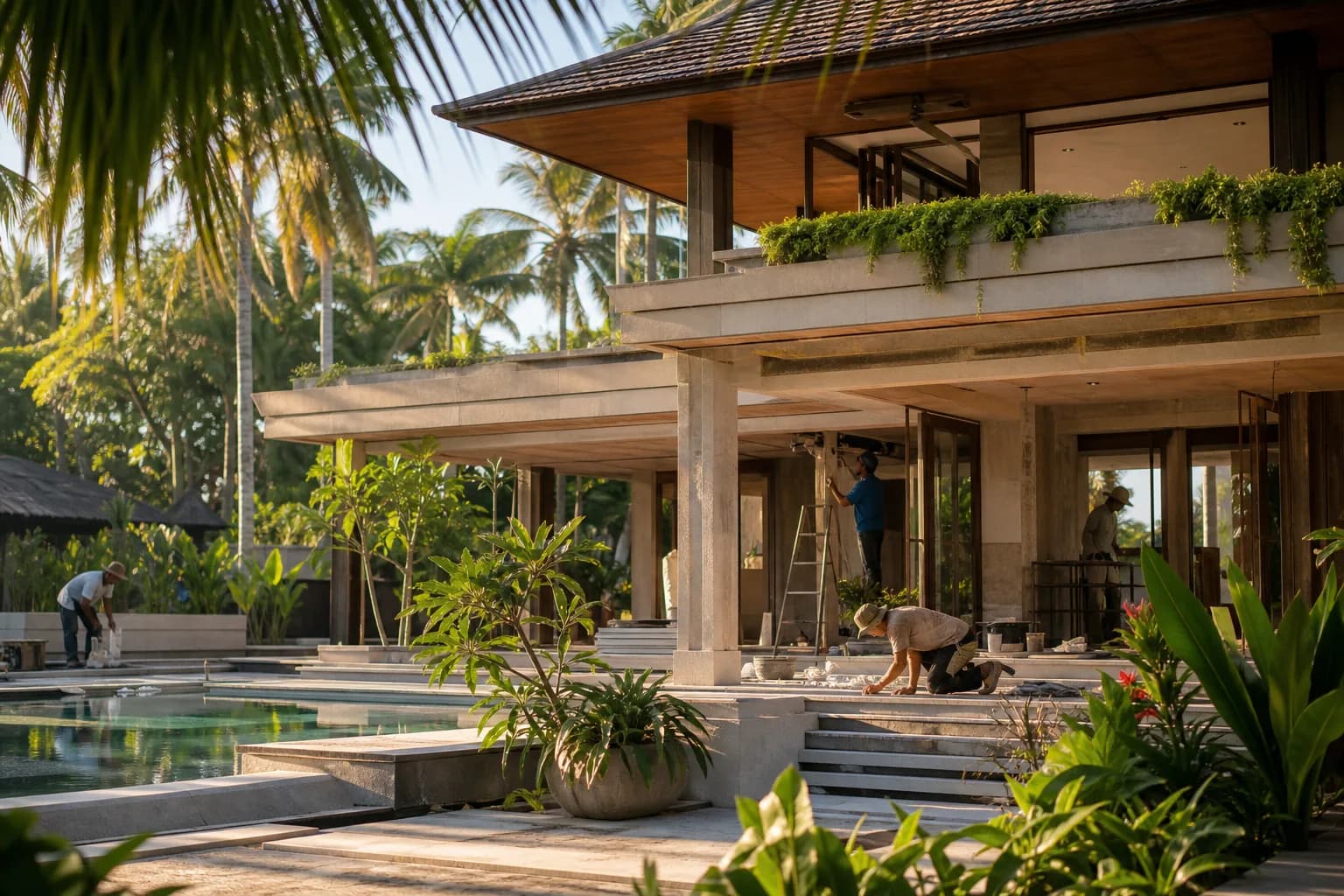
Bali Villa Maintenance and Management: Building for Long-Term Performance
Building a villa in Bali represents a significant investment in both capital and vision. Yet the construction phase, complex as it is, marks only the beginning of your property’s lifecycle. The real test of quality emerges in the years that follow—when tropical humidity tests your waterproofing, when monsoon rains challenge your drainage systems, and when daily operations reveal whether your initial construction decisions were sound or shortsighted.
This article examines Bali villa maintenance and management from a construction-first perspective. We’ll explore the specific environmental challenges that affect properties in Bali, explain how material selection and building methodology directly impact long-term operational costs, and provide a realistic overview of what property management entails for villa owners. Our focus remains on what we know best: how proper construction creates the foundation for sustainable, manageable properties.
At Teville, we’ve spent years observing how villas perform after handover. We’ve seen which construction approaches minimize maintenance burdens and which create ongoing headaches for owners and managers alike. This experience informs every decision we make during the design and construction process.
The Long Game: Why Maintenance Matters from Day One
Most villa owners focus intensely on design aesthetics, layout optimization, and construction timelines. These elements matter, certainly. But the decisions made during construction—material specifications, waterproofing systems, structural detailing, equipment selection—determine your property’s maintenance trajectory for decades.
Consider two hypothetical villas, both completed to similar aesthetic standards. The first used premium waterproofing membranes, marine-grade stainless steel fixtures, properly treated timber, and commercial-grade pool equipment. The second cut costs with standard waterproofing, regular steel hardware, untreated local wood, and residential pool systems. In year one, both villas look comparable. By year three, the differences become apparent. By year five, the cost differential has reversed entirely.
This isn’t theoretical. We regularly consult with owners of existing properties who face expensive remediation work—replacing corroded fixtures, repairing water-damaged structures, upgrading failing mechanical systems. The pattern repeats: initial cost savings during construction become multiplied expenses during operation.
Bali villa maintenance and management begins with construction quality. Everything that follows—cleaning protocols, repair schedules, guest services, revenue optimization—builds on that foundation. A well-constructed villa doesn’t eliminate maintenance requirements, but it fundamentally changes their nature from reactive crisis management to predictable preventive care.
Bali’s Environmental Reality: What Your Villa Faces Daily
Bali’s tropical climate creates specific challenges that don’t exist in temperate regions. Understanding these environmental factors helps explain why certain construction approaches prove essential rather than optional.
Humidity and Moisture Intrusion
Bali maintains relative humidity between 70-85% year-round. This constant moisture affects every material and system in your villa. Untreated wood swells and warps. Metal fixtures corrode rapidly. Electrical connections degrade. Fabric and upholstery develop mildew. Paint adhesion fails. Grout deteriorates.
Proper construction addresses humidity through multiple strategies: vapor barriers in wall assemblies, adequate ventilation systems, moisture-resistant material selection, and protective coatings applied correctly. These measures aren’t visible in finished photos, but their absence becomes painfully obvious within months of occupation.
We specify closed-cell spray foam insulation in roof assemblies not primarily for thermal performance but for moisture control. We detail window and door installations with multiple drainage planes. We select paints and finishes based on their performance in high-humidity environments, not just their appearance when freshly applied.
Mold and Biological Growth
Mold represents one of the most common maintenance issues in Bali villas. It appears on walls, ceilings, furniture, textiles, and inside mechanical systems. Beyond aesthetic concerns, mold creates health issues for guests and staff while indicating underlying moisture problems.
Construction-level mold prevention requires proper building envelope design, adequate ventilation, and appropriate material selection. Air conditioning systems must be sized correctly—not just for cooling capacity but for dehumidification performance. Bathroom and kitchen exhaust systems need proper ducting to exterior spaces, not just decorative fans that recirculate air.
We’ve seen villas where mold remediation becomes a monthly expense because the building envelope allows moisture intrusion or ventilation systems prove inadequate. These aren’t maintenance problems—they’re construction deficiencies that no amount of cleaning can permanently resolve.
Insect and Pest Pressure
Termites, ants, mosquitoes, and other insects present constant challenges in tropical environments. Termites can compromise structural timber within years if proper treatment and barriers aren’t implemented during construction. Ants infiltrate through the smallest gaps in building envelopes. Mosquitoes breed in any standing water, including poorly drained planters and roof valleys.
Effective pest management begins with construction detailing: proper termite barriers during foundation work, sealed penetrations through building envelopes, elimination of moisture accumulation points, and appropriate material selection. We treat all structural timber with boron-based preservatives and install physical termite barriers at foundation level.
Regular pest control services remain necessary, but proper construction dramatically reduces pest pressure and makes control measures more effective. A villa built without attention to pest-resistant detailing requires constant intervention just to maintain baseline conditions.
Pool and Water Feature Maintenance
Pools represent significant ongoing maintenance commitments. In Bali’s climate, pool water chemistry requires constant attention. Algae growth accelerates in warm water and intense sunlight. Equipment runs continuously, creating wear and energy costs. Surface finishes degrade under UV exposure and chemical exposure.
Construction quality directly affects pool maintenance intensity. Proper hydraulic design ensures efficient circulation and filtration. Quality equipment lasts longer and runs more efficiently. Appropriate surface materials resist staining and deterioration. Adequate deck drainage prevents water accumulation and structural issues.
We specify commercial-grade pool equipment even for residential villas because the operational demands in Bali’s climate exceed typical residential use patterns. We design overflow systems that simplify water level management during monsoon rains. We detail pool decks with proper drainage slopes and waterproofing systems that protect underlying structures.
Pool maintenance costs vary dramatically based on construction quality. A well-built pool might require 8-12 hours of maintenance weekly. A poorly constructed pool can demand daily intervention and frequent equipment replacement.
Drainage and Water Management
Bali receives substantial rainfall during monsoon season—often 200-300mm in a single storm event. Proper drainage systems aren’t optional; they’re essential for structural integrity and long-term performance.
Inadequate drainage causes multiple problems: foundation settlement, retaining wall failure, landscape erosion, water intrusion into buildings, and mosquito breeding sites. We’ve consulted on properties where drainage deficiencies created tens of thousands of dollars in remediation costs.
Effective drainage requires integrated design: proper site grading, adequate roof drainage capacity, foundation drainage systems, surface water management, and connection to appropriate discharge points. These systems must be designed for peak rainfall events, not average conditions.
During construction, we implement comprehensive drainage strategies that consider the entire site, not just individual building elements. This includes subsurface drainage around foundations, properly sized roof gutters and downspouts, surface grading that directs water away from structures, and retention or infiltration systems where appropriate.
How Construction Quality Reduces Long-Term Costs
The relationship between construction quality and operational costs isn’t always intuitive. Higher initial construction costs don’t automatically translate to lower maintenance expenses—the correlation depends on where and how additional investment occurs.
Material Selection and Lifecycle Performance
Material specifications represent one of the most significant factors in long-term maintenance costs. The price differential between standard and premium materials often seems substantial during construction but becomes negligible when amortized over a property’s operational life.
Consider stainless steel fixtures. Marine-grade 316 stainless steel costs approximately 40-60% more than standard 304 stainless. In Bali’s coastal environment, 304 stainless shows corrosion within 2-3 years, requiring replacement. Grade 316 maintains appearance and function for decades. The initial premium pays for itself multiple times over.
Similar calculations apply across material categories: exterior paints formulated for tropical climates last 7-10 years versus 2-3 years for standard paints; properly treated timber resists termites and rot for decades versus years for untreated wood; commercial-grade mechanical equipment operates reliably for 15-20 years versus 5-8 years for residential-grade alternatives.
We maintain detailed specifications for materials based on observed long-term performance in Bali’s environment. These specifications reflect real-world experience with what works and what fails. Our portfolio properties demonstrate how proper material selection maintains appearance and function years after completion.
Waterproofing Systems and Building Envelope Integrity
Water intrusion causes more long-term damage than any other factor in tropical construction. Once water penetrates building assemblies, it compromises structural elements, creates mold growth, damages finishes, and corrodes embedded components. Remediation requires invasive work that disrupts operations and costs multiples of what proper initial waterproofing would have required.
Effective waterproofing isn’t a single product—it’s a comprehensive system that includes multiple defense layers: proper flashing details, drainage planes, vapor barriers, sealant joints, and surface membranes. Each component must be specified correctly and installed properly.
We implement waterproofing systems appropriate to each application: hot-applied rubberized asphalt membranes for foundations, multi-layer systems for roof decks, properly detailed flashing at all penetrations and transitions, and high-performance sealants at movement joints. These systems cost more initially but eliminate the catastrophic failures we’ve observed in properties built to minimum standards.
Mechanical and Electrical System Quality
HVAC, plumbing, and electrical systems represent significant portions of operational costs through energy consumption, maintenance requirements, and eventual replacement. System quality and design appropriateness directly affect these costs.
Air conditioning systems must be sized correctly for Bali’s climate—not just for cooling load but for dehumidification capacity and continuous operation patterns. Undersized systems run constantly, fail prematurely, and never achieve comfortable conditions. Oversized systems short-cycle, provide poor dehumidification, and waste energy.
We specify inverter-technology air conditioning systems that modulate capacity to match load, improving efficiency and comfort while extending equipment life. We design ductwork systems with proper sizing and insulation. We locate outdoor units where they receive adequate ventilation and simplified maintenance access.
Plumbing systems require quality fixtures, proper pipe materials, adequate sizing, and appropriate water treatment. We use CPVC or PEX piping that resists corrosion and scaling. We specify pressure regulation to protect fixtures and appliances. We design hot water systems with recirculation where appropriate to improve guest experience while managing energy use.
Electrical systems must accommodate Bali’s power quality challenges: voltage fluctuations, frequency variations, and occasional outages. We specify whole-house surge protection, voltage stabilization where necessary, and properly sized backup power systems. These measures protect expensive equipment and ensure operational continuity.
Accessibility for Maintenance
Maintenance accessibility often receives insufficient attention during design. Equipment located in inaccessible spaces, concealed access panels, inadequate service clearances, and poor coordination between systems all increase maintenance difficulty and cost.
We design with maintenance in mind: mechanical equipment located in dedicated spaces with adequate clearances, access panels at all critical components, coordination between architectural and engineering systems, and consideration for how components will be serviced or replaced.
This approach sometimes conflicts with pure aesthetic optimization—a mechanical room requires space that could otherwise be used for living areas, access panels interrupt clean wall surfaces, equipment locations might not align with ideal architectural arrangements. These compromises prove worthwhile when maintenance requirements emerge.
Property Management Operations: What Happens After Construction
Understanding Bali villa maintenance and management requires familiarity with what property management actually entails. While Teville focuses on construction rather than ongoing management, we recognize that operational requirements should inform construction decisions.
Daily Operations and Housekeeping
Villa management begins with daily operations: housekeeping, grounds maintenance, pool service, and basic upkeep. These activities occur regardless of occupancy and represent baseline operational costs.
Housekeeping standards in Bali’s villa rental market are high. Guests expect immaculate presentation, fresh linens, well-maintained amenities, and immediate response to any issues. Meeting these expectations requires trained staff, proper equipment and supplies, and systematic protocols.
Construction quality affects housekeeping efficiency significantly. Durable, cleanable surfaces reduce labor time. Proper ventilation minimizes mold growth. Quality fixtures require less frequent deep cleaning. Well-designed storage spaces facilitate organization. These factors compound over thousands of cleaning cycles.
Grounds maintenance in tropical environments is intensive. Vegetation grows rapidly, requiring frequent trimming and management. Irrigation systems need regular adjustment and repair. Hardscape surfaces require cleaning to prevent algae and mold growth. Pest control requires ongoing attention.
Pool maintenance demands daily attention: chemical testing and adjustment, skimming and cleaning, equipment monitoring, and water level management. During high-occupancy periods, pools may require multiple daily services. Equipment failures need immediate response to prevent guest dissatisfaction.
Guest Services and Experience Management
For villas operating as rentals, guest services represent a significant management component. This includes pre-arrival communication, check-in coordination, concierge services, issue resolution, and check-out processing.
Guest expectations have increased substantially in recent years. Visitors expect seamless communication, personalized service, immediate problem resolution, and comprehensive local knowledge. Meeting these expectations requires dedicated management attention and trained staff.
Construction quality directly impacts guest experience and, consequently, reviews and repeat bookings. Well-functioning air conditioning, reliable hot water, effective lighting, comfortable beds, and properly maintained pools represent baseline expectations. Failures in these areas generate negative reviews that affect future bookings.
We design villas with guest experience in mind: intuitive lighting controls, adequate power outlets in convenient locations, effective blackout systems for bedrooms, proper acoustic separation between spaces, and amenities that function reliably. These details don’t appear in marketing photos but significantly affect guest satisfaction.
Preventive Maintenance Programs
Effective property management includes systematic preventive maintenance: regular equipment servicing, periodic inspections, scheduled component replacement, and proactive repairs before failures occur.
Preventive maintenance costs money but prevents more expensive reactive repairs and extends equipment life. A well-managed villa maintains detailed maintenance schedules for all systems and components: HVAC filter changes, pool equipment servicing, pump inspections, electrical system checks, plumbing fixture maintenance, and structural inspections.
Construction quality determines preventive maintenance intensity. Quality equipment requires less frequent service. Durable materials need less frequent replacement. Proper installation reduces adjustment and repair requirements. Well-designed systems facilitate inspection and servicing.
We provide owners with recommended maintenance schedules specific to their villa’s systems and components. These schedules reflect manufacturer requirements, local environmental conditions, and our experience with long-term performance.
Financial Management and Reporting
Property management includes financial operations: expense tracking, revenue management, owner reporting, tax compliance, and financial planning. For rental properties, this extends to dynamic pricing, booking management, and revenue optimization.
Operational costs vary significantly based on construction quality and property design. Energy-efficient systems reduce utility costs. Durable materials minimize replacement expenses. Reliable equipment decreases emergency repair costs. These factors directly affect net operating income.
We can’t predict specific financial performance—too many variables affect rental income and operational costs. However, we can design and build villas that minimize controllable operational expenses through quality construction and appropriate system selection.
Legal Compliance and Regulatory Management
Operating a villa in Bali requires compliance with various regulations: business licensing, tax obligations, employment law, building permits, and tourism regulations. Requirements vary based on ow
 2144 m²11 month(s)from 104.000 USD
Narayana
 3104 m²11 month(s)from 99.000 USD
TALA 100
 172 m²8 month(s)from 120.000 USD
Keshava
 3127 m²9 month(s)from 177.000 USD
Mukunda

Want to calculate?
 3180 m²7 month(s)from 142.000 USD
Vasudeva
 3173 m²6 month(s)from 125.000 USD
TALA FOUR
 164 m²7 month(s)from 79.000 USD
TALA TWO
164 m²7 month(s)from 79.000 USDPrivate: Haridas Villas, Tegallalang
 3124 m²6 month(s)from 123.000 USD
TALA 8
 1from 198.000 USD
Private: Haridas Villas
 4344 m²16 month(s)from 290.000 USD
Radha
Start With Real Numbers, Not Guesses
Before buying land or finalizing a design, check the realistic build cost range for your project in Bali.
Our team reviews your inputs and gives a grounded estimate.
Available lands
 1000 m²5 min$ 350431Bali, Drupadi
 2500 m²5 min$ 609606Bali, Kedungu
 700 m²15 min$ 90517Bali, Central Bali
 3000 m²15 min$ 1246921Bali, Tabanan
 3100 m²20 min$ 272968Bali, Tabanan
 250 m²15 min$ 40025Bali, Munggu
 615 m²15 min$ 113608Bali, Tabanan
 1430 m²5 min$ 209862Bali, Klungkung
 585 m²8 min$ 165702Bali, Mengwi
 422 m²15 min$ 93547Bali, Kerobokan
 5000 m²8 min$ 424877Bali, Ungasan
 5028 m²10 min$ 361000Bali, Ubud
 220 m²2 min$ 66565Bali, Cemagi
 7250 m²56 min$ 235714Bali, Tabanan
 1533 m²5 min$ 165666Bali, Cepaka
Essential Bali build & buy guides
- Bali villa construction cost per m² in 2026
- How much will your villa cost? Calculator
- Building a villa in Bali: the complete guide
- Buying land in Bali: step-by-step for foreigners
- Bali villa investment: yields, risks, returns
- Leasehold vs freehold: what foreigners can own
- Construction defect liability & 10-year warranty
- Bali building codes and construction standards
Related guides
Villa Handover in Bali: Snagging Checklist and What to Test Before Final Payment
A disciplined villa handover in Bali: room-by-room snagging tests, numbered defect documentation, the PBG/SLF and warranty documents to insist on, and payment terms that keep leverage until the list is closed.
7 min read
Energy-Efficient Villa in Bali: Solar, Insulation and Passive Cooling That Pay Back
Which energy-efficiency measures actually pay back in Bali's tropical climate — passive design and roof insulation first, efficient equipment second, and self-consumption solar last — with honest 2026 numbers.
7 min read
Choosing a General Contractor in Bali: Red Flags, Questions and Contract Must-Haves
A practical filter for hiring a general contractor in Bali: the red flags that end conversations, the questions professionals answer with documents, and the contract clauses no villa build should start without.
7 min read