Bali Villa Leasehold vs Freehold: Which is Best?
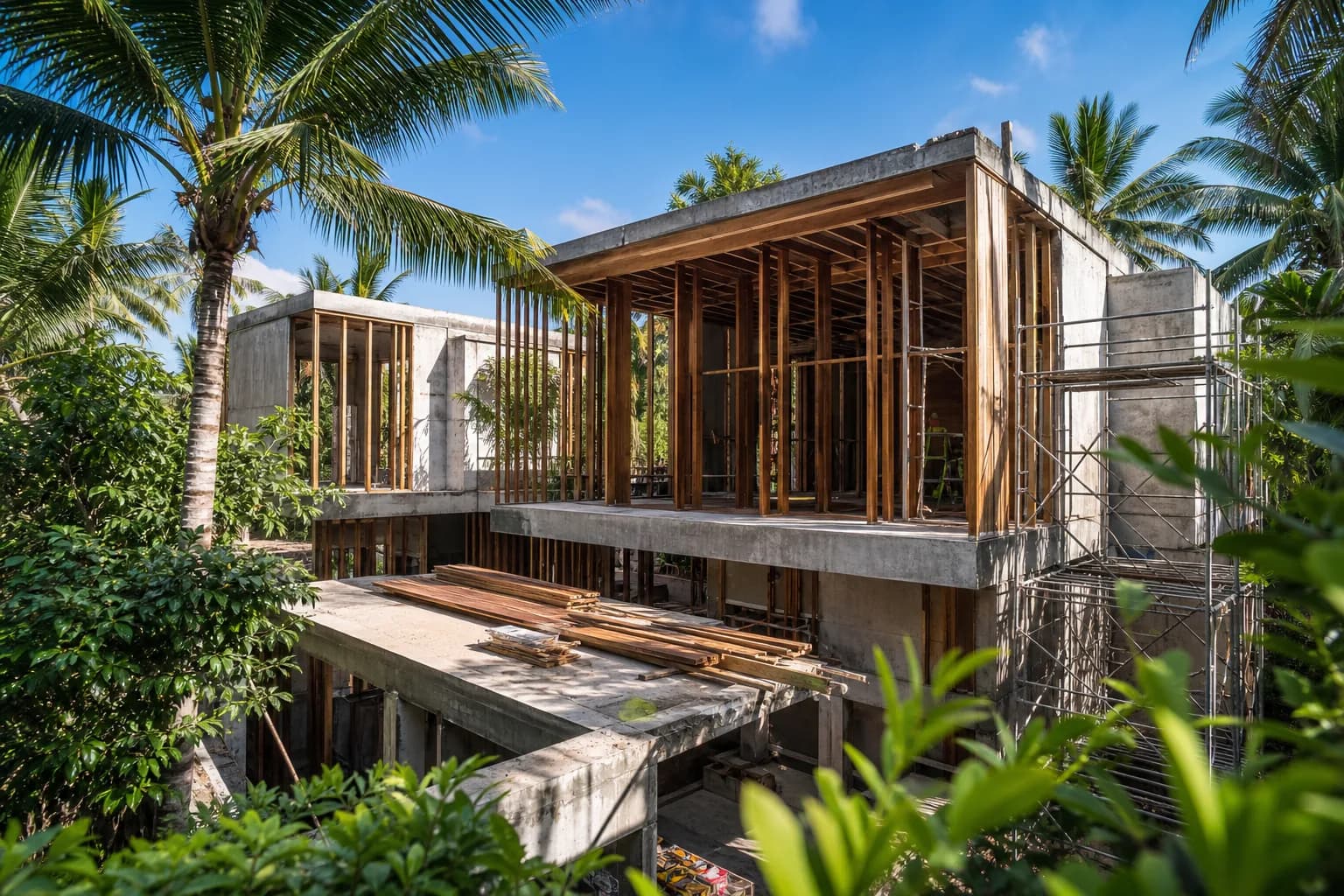
Bali Villa Leasehold vs Freehold: A Construction-Focused Guide to Property Ownership Structures
If you’re planning to build a villa in Bali, understanding the difference between leasehold and freehold ownership isn’t just a legal formality—it’s a fundamental decision that affects everything from your construction timeline to your long-term property rights. At Teville, we’ve guided dozens of clients through the complexities of Bali villa leasehold vs freehold arrangements, and we’ve seen firsthand how the right ownership structure can make or break a construction project.
This article explains both ownership models in plain English, examines their practical implications for villa construction, and helps you determine which structure aligns with your specific situation. We’re not lawyers—we’re builders who work closely with qualified notaries and legal professionals to ensure our clients avoid the most common pitfalls in Bali property development.
Foreigners and Property Ownership in Indonesia: Why Structure Matters
Indonesian property law creates a unique challenge for foreign investors: you cannot directly own land in Indonesia. This isn’t a loophole or a gray area—it’s explicit in the country’s agrarian laws, which reserve freehold land ownership (known as Hak Milik) exclusively for Indonesian citizens and certain Indonesian legal entities.
This restriction doesn’t mean foreigners can’t invest in Bali real estate. It means you need to work within legally recognized structures that provide secure, long-term property rights without violating ownership restrictions. The two most common approaches are leasehold arrangements and ownership through a PT PMA (foreign investment company), each with distinct legal frameworks, costs, and implications for construction.
From a construction perspective, the ownership structure you choose determines several critical factors:
- Who holds the construction permits (IMB) and in whose name they’re issued
- How construction contracts are structured and which parties sign them
- What happens to the building if the land arrangement changes
- How construction financing and payment schedules are managed
- What documentation you need to provide to contractors and suppliers
At Teville, we’ve built villas under both leasehold and freehold structures. The construction quality doesn’t change—our standards remain consistent regardless of ownership model—but the administrative process, documentation requirements, and risk management strategies differ significantly.
Leasehold Ownership: Definition and Legal Framework
Leasehold ownership in Bali means you hold the right to use and occupy land for a specified period through a legally binding lease agreement. You don’t own the land itself—an Indonesian citizen or entity does—but you have exclusive rights to use that land, build on it, and benefit from any structures you construct during the lease term.
The legal basis for leasehold in Indonesia is the lease agreement (Sewa Menyewa) itself, which is a civil contract between the landowner and the lessee. When properly structured and notarized, these agreements provide strong legal protection and are enforceable in Indonesian courts.
A properly constructed leasehold agreement for villa development should specify:
- The exact lease duration and any extension terms
- Your right to construct buildings and make improvements
- Your right to sublease or transfer the lease (if applicable)
- Responsibilities for property taxes and maintenance
- Conditions under which the lease can be terminated
- What happens to structures at the end of the lease term
- Dispute resolution mechanisms
From a construction standpoint, leasehold arrangements require additional documentation. When we begin a project on leased land, we verify that the lease agreement explicitly grants construction rights and that the landowner provides written consent for the specific building plans. This consent becomes part of the permit application process.
Typical Leasehold Terms and Extensions
Standard leasehold terms in Bali typically run 25 to 30 years for the initial period. This isn’t arbitrary—it reflects a balance between providing sufficient time for investors to benefit from their property and maintaining landowner flexibility.
The critical detail that many buyers overlook: extension rights. A well-structured lease agreement includes options to extend for additional periods, potentially reaching 80 to 90 years total when you combine the initial term with multiple extensions. These extension rights should be clearly defined in the original agreement, including:
- The number of extensions available (typically two extensions of 25-30 years each)
- The process for exercising extension rights
- Any fees or conditions associated with extensions
- Whether extensions are automatic or require landowner consent
In our experience at Teville, clients who plan to build substantial villas should secure leases with at least 25 years remaining, preferably with clear extension provisions. Building a high-quality villa takes 8 to 12 months, and you want sufficient time afterward to enjoy the property or generate rental income before dealing with extension negotiations.
One practical consideration: banks and financial institutions in Bali are more willing to provide construction financing when leases have longer remaining terms. If you’re planning to finance your build, a lease with 20+ years remaining and documented extension rights significantly improves your financing options.
Freehold Ownership: Definition and Legal Framework
Freehold ownership in Indonesia, legally termed Hak Milik, represents absolute ownership of land with no time limitations. The owner holds complete rights to use, transfer, mortgage, or bequeath the property. It’s the strongest form of property ownership recognized under Indonesian law.
The challenge: Hak Milik is restricted to Indonesian citizens and certain Indonesian legal entities. Foreigners cannot hold freehold title directly, regardless of marriage status, residency, or investment amount.
This creates a fundamental question for foreign investors interested in Bali villa leasehold vs freehold options: how can you access freehold benefits while complying with Indonesian law?
The PT PMA Structure
The legally compliant path to freehold-like ownership for foreigners involves establishing a PT PMA (Perseroan Terbatas Penanaman Modal Asing)—a foreign investment company. A PT PMA is an Indonesian legal entity that can hold certain land rights, including Hak Guna Bangunan (HGB), which we’ll discuss shortly.
A PT PMA structure involves:
- Establishing an Indonesian company with foreign ownership (up to 100% in most sectors)
- Meeting minimum investment requirements (typically starting at IDR 10 billion for property investment)
- Maintaining ongoing corporate compliance, including annual reporting and tax obligations
- Employing Indonesian staff (requirements vary by business classification)
The company, not you personally, holds the land rights. You control the company, and through that control, you effectively control the property.
Hak Guna Bangunan (HGB): The Right to Build
When a PT PMA acquires property, it typically holds Hak Guna Bangunan (HGB)—the Right to Build. HGB is a strong land right that allows the holder to construct and own buildings on the land for an initial period of 30 years, extendable for another 20 years, and renewable for an additional 30 years—potentially totaling 80 years.
From a construction perspective, HGB provides several advantages:
- The title is registered with the National Land Agency (BPN), providing public record of ownership
- HGB can be used as collateral for bank financing
- Construction permits are issued directly in the company’s name
- There’s no separate landowner to coordinate with during construction
- The structure provides clear ownership of both land rights and buildings
At Teville, we find that PT PMA structures with HGB titles streamline the construction process administratively. Permit applications are more straightforward, there are fewer parties involved in approvals, and the documentation chain is cleaner.
True Freehold for Indonesian Citizens
For completeness, it’s worth noting that Indonesian citizens can hold true freehold (Hak Milik) title. Some foreign investors partner with Indonesian spouses or trusted Indonesian friends to hold freehold title, but this approach carries significant legal risks that we strongly advise discussing with qualified legal counsel before pursuing.
When we work with clients who have property held in an Indonesian spouse’s name, we ensure that construction contracts, payment schedules, and project documentation protect all parties’ interests, but we always recommend that clients seek independent legal advice on the ownership structure itself.
Bali Villa Leasehold vs Freehold: Advantages and Disadvantages
Understanding the practical differences between Bali villa leasehold vs freehold structures requires looking beyond legal definitions to examine real-world implications for villa buyers and builders.
Leasehold Advantages
Lower Initial Investment: Leasehold properties typically require significantly less upfront capital than freehold equivalents. You’re paying for the right to use the land, not the land itself, which can reduce initial acquisition costs by 30% to 50% compared to freehold alternatives.
Simplicity and Speed: Establishing a leasehold arrangement is administratively simpler than setting up a PT PMA. A properly drafted lease agreement can be executed in a matter of weeks, allowing you to begin construction planning immediately.
No Corporate Maintenance: Leasehold doesn’t require maintaining a corporate structure, filing annual reports, or managing ongoing compliance obligations. Your administrative burden is limited to the lease agreement itself and standard property taxes.
Flexibility for Shorter-Term Projects: If you’re building a villa for personal use over a defined period—say, a retirement home you’ll use for 15 to 20 years—leasehold provides exactly what you need without the complexity of corporate ownership.
Access to Prime Locations: Some of Bali’s most desirable land is held by local families who prefer leasing to selling. Leasehold arrangements can provide access to locations that simply aren’t available for freehold purchase.
Leasehold Disadvantages
Time Limitation: The fundamental constraint of leasehold is its finite nature. Even with extensions, you’re working within a defined timeframe, which affects long-term planning and eventual exit strategies.
Extension Uncertainty: While extension rights can be contractually defined, they still depend on the landowner’s cooperation. Changes in landowner circumstances—death, financial difficulties, family disputes—can complicate extensions.
Resale Complexity: Selling a leasehold property becomes progressively more challenging as the remaining lease term decreases. Properties with less than 15 years remaining face significant market resistance.
Financing Limitations: Indonesian banks are generally reluctant to finance construction on leasehold land, particularly for shorter remaining terms. This often means you’ll need to self-finance your construction project.
Landowner Coordination: Any significant property changes—major renovations, permit modifications, property subdivisions—require landowner involvement and consent, adding administrative steps to what would otherwise be straightforward processes.
Freehold (PT PMA/HGB) Advantages
Long-Term Security: HGB rights extending up to 80 years provide a timeframe that effectively functions as permanent ownership for most investment horizons.
Financing Access: Banks readily accept HGB titles as collateral, opening up construction financing options that can preserve your capital for other investments or contingencies.
Resale Marketability: Freehold properties (or PT PMA-held HGB) generally command higher resale values and attract a broader buyer pool, including both foreign investors and Indonesian buyers.
Complete Control: You control all decisions regarding the property without needing to coordinate with or seek consent from a separate landowner.
Asset Appreciation: While we never promise returns, freehold structures allow you to potentially benefit from land value appreciation in addition to building value.
Freehold (PT PMA/HGB) Disadvantages
Higher Initial Costs: Establishing a PT PMA involves legal fees, notary costs, and minimum investment requirements. Setup costs typically range from IDR 50 million to IDR 150 million, plus the higher land acquisition cost.
Ongoing Compliance: PT PMAs require annual tax filings, corporate reporting, and maintenance of minimum investment levels. You’ll need ongoing accounting and legal support, adding to operational costs.
Complexity: Corporate structures involve more moving parts—directors, shareholders, corporate documentation—which require professional management and create additional administrative overhead.
Minimum Investment Thresholds: PT PMA regulations impose minimum investment requirements that may exceed what you planned to spend, forcing you to commit more capital than a leasehold arrangement would require.
Exit Complexity: Selling a property held in a PT PMA means either selling the company shares or liquidating the company and transferring the asset, both of which involve more complex legal and tax considerations than a simple property transfer.
Cost Comparison: Leasehold vs Freehold for Villa Buyers
Let’s examine the financial implications of Bali villa leasehold vs freehold with a practical example. Assume you’re planning to build a 3-bedroom villa in the Canggu area.
Leasehold Cost Structure
For a 500 sqm plot on a 25-year lease with two 25-year extension options:
- Initial lease payment: IDR 1.5 billion to IDR 2.5 billion (depending on location)
- Notary and legal fees: IDR 15 million to IDR 30 million
- Annual property tax (PBB): IDR 3 million to IDR 8 million
- Extension fees (when exercised): typically 30% to 50% of current market lease value
Total initial outlay: approximately IDR 1.5 billion to IDR 2.5 billion, plus construction costs.
Freehold (PT PMA/HGB) Cost Structure
For the same 500 sqm plot held through a PT PMA with HGB title:
- Land purchase price: IDR 3 billion to IDR 5 billion
- PT PMA establishment: IDR 50 million to IDR 100 million
- Notary and land transfer fees: IDR 100 million to IDR 150 million (including BPHTB tax)
- Annual corporate compliance: IDR 20 million to IDR 40 million
- Annual property tax (PBB): IDR 5 million to IDR 12 million
Total initial outlay: approximately IDR 3.2 billion to IDR 5.3 billion, plus construction costs.
The initial cost difference is substantial—roughly IDR 1.7 billion to IDR 2.8 billion more for the freehold structure. However, this comparison doesn’t account for the time value of money, the potential for land appreciation, or the eventual cost of lease extensions.
From a construction perspective, these ownership costs are separate from building costs. Whether you choose leasehold or freehold, the construction budget for a quality villa remains consistent. At Teville, we’ve built identical villa designs on both leasehold and freehold land—the construction process and costs don’t change based on the ownership structure.
For a detailed estimate of construction costs for your specific project, you can use our cost estimator tool, which provides transparent pricing based on your design requirements and specifications.
Where Each Ownership Structure Is Appropriate
Choosing between Bali villa leasehold vs freehold isn’t about which structure is objectively better—it’s about which aligns with your specific circumstances, timeline, and objectives.
Leasehold Makes Sense When:
You Have a Defined Time Horizon: If you’re building a retirement villa you plan to use for 15 to 20 years, or a vacation home for a specific life stage, leasehold provides exactly what you need without unnecessary complexity.
You Want to Minimize Initial Capital Outlay: When preserving capital for the construction itself is a priority, leasehold’s lower land costs allow you to allocate more budget to building quality and finishes.
You’re Building in a Prime Location: Some of Bali’s best locations—beachfront in Seminyak, rice field views in Ubud, clifftop in Uluwatu—are primarily available as leasehold. If location is your top priority, leasehold may be your only option.
You Prefer Simplicity: If you want to avoid corporate structures, ongoing compliance, and administrative complexity, leasehold offers a more straightforward path to property control.
You’re Testing the Market: For first-time investors in Bali who want to understand the market before making a larger commitment, leasehold provides a lower-risk entry point.
Freehold (PT PMA/HGB) Makes Sense When:
You’re Planning Long-Term or Multigenerational Ownership: If you’re building a family compound you intend to pass to children, or a property you’ll hold for 30+ years, the security and duration of freehold structures justify the additional complexity.
You Need Financing: If you plan to finance construction through a bank loan, freehold title significantly improves your financing options and terms.
You’re Building for Investment Returns: While we don’t promise returns, if you’re building with the intention of generating rental income or eventual resale, freehold structures typically offer better marketability and financing options for future buyers.
You Want Complete Control: If the idea of coordinating with a landowner for permits, renovations, or extensions is unappealing, freehold eliminates that dependency.
You’re Making a Substantial Investment: For larger projects—multi-villa compounds, boutique hotels, or high-end estates—the PT PMA structure’s complexity is proportionate to the investment scale, and the benefits of complete control become more significant.
Hybrid Approaches
Some investors use a combination strategy: leasehold for their first property to learn the market, then freehold for subsequent investments. Others maintain a portfolio with both structures, using leasehold for

Want to calculate?
 3124 m²6 month(s)from 123.000 USD
TALA 8
 3104 m²11 month(s)from 99.000 USD
TALA 100
 164 m²7 month(s)from 79.000 USD
TALA TWO
 3173 m²6 month(s)from 125.000 USD
TALA FOUR
 3180 m²7 month(s)from 142.000 USD
Vasudeva
164 m²7 month(s)from 79.000 USDPrivate: Haridas Villas, Tegallalang
 172 m²8 month(s)from 120.000 USD
Keshava
 3127 m²9 month(s)from 177.000 USD
Mukunda
 1from 198.000 USD
Private: Haridas Villas
 4344 m²16 month(s)from 290.000 USD
Radha
 2144 m²11 month(s)from 104.000 USD
Narayana
Start With Real Numbers, Not Guesses
Before buying land or finalizing a design, check the realistic build cost range for your project in Bali.
Our team reviews your inputs and gives a grounded estimate.
Available lands
 1300 m²10 min$ 348214Bali, Tabanan
 1300 m²10 min$ 312192Bali, Kutuh South Bali
 1700 m²10 min$ 392549Bali, Nusadua
 1660 m²10 min$ 343448Bali, Kerobokan
 200 m²5 min$ 59113Bali, Bukit
 1000 m²5 min$ 350431Bali, Drupadi
 889 m²15 min$ 145612Bali, Cepaka
 600 m²10 min$ 206897Bali, Canggu
 400 m²15 min$ 67192Bali, Tabanan
 7250 m²56 min$ 235714Bali, Tabanan
 1000 m²10 min$ 123154Bali, Jimbaran
 3800 m²15 min$ 100616Bali, Pererenan
 5000 m²8 min$ 424877Bali, Ungasan
 444 m²10 min$ 111000Bali, Tabanan
 1000 m²10 min$ 384852Bali, Canggu
Planning a build in Bali?
Get a feasibility view, budget range and timeline from Teville.
Related guides
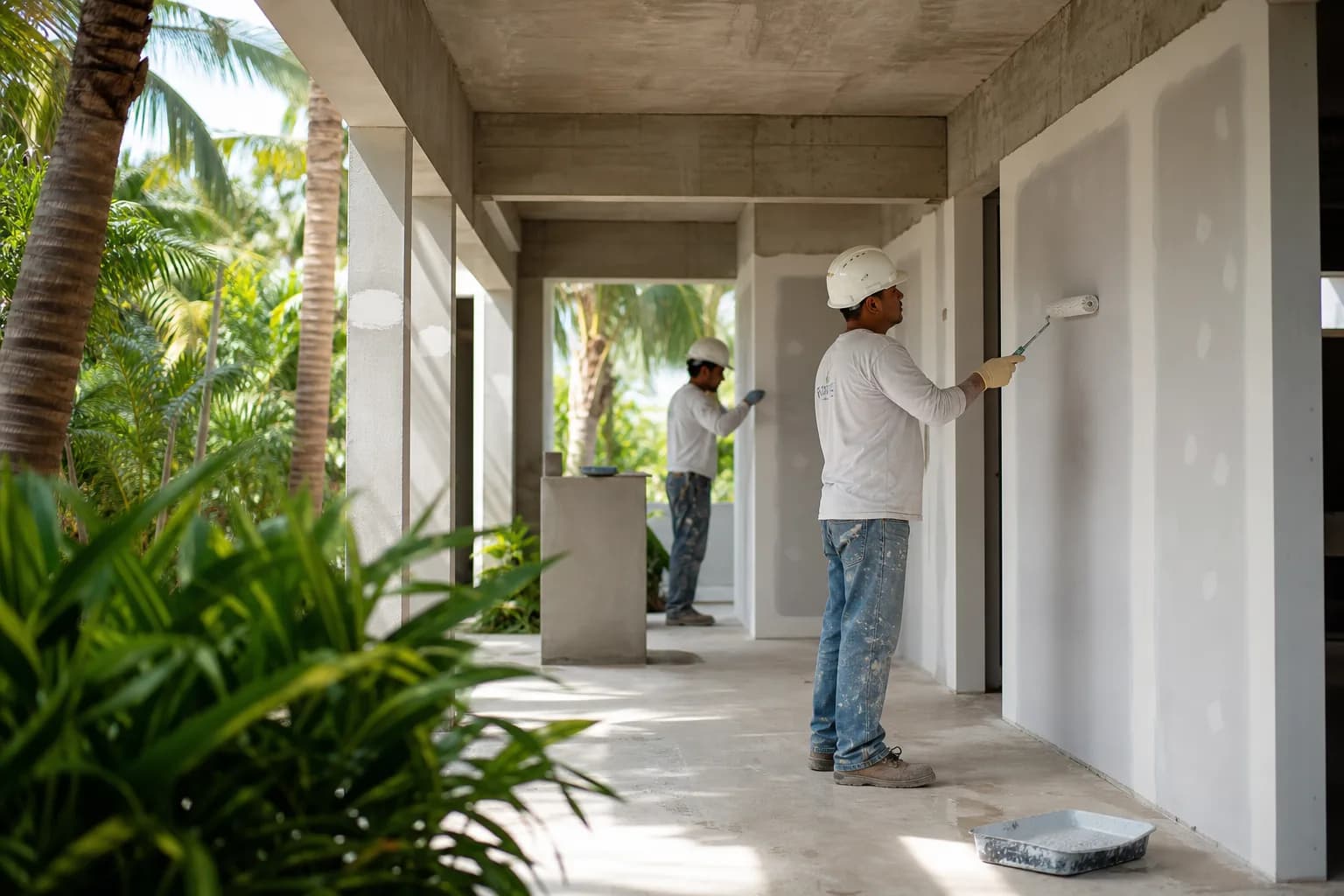
Moisture-Resistant Gypsum Board Finishing with Epoxy Primer Bali
Learn how moisture-resistant gypsum boards with epoxy primer boost durability, finish quality, and mold resistance in Bali projects. Great for Bali homes.
10 min read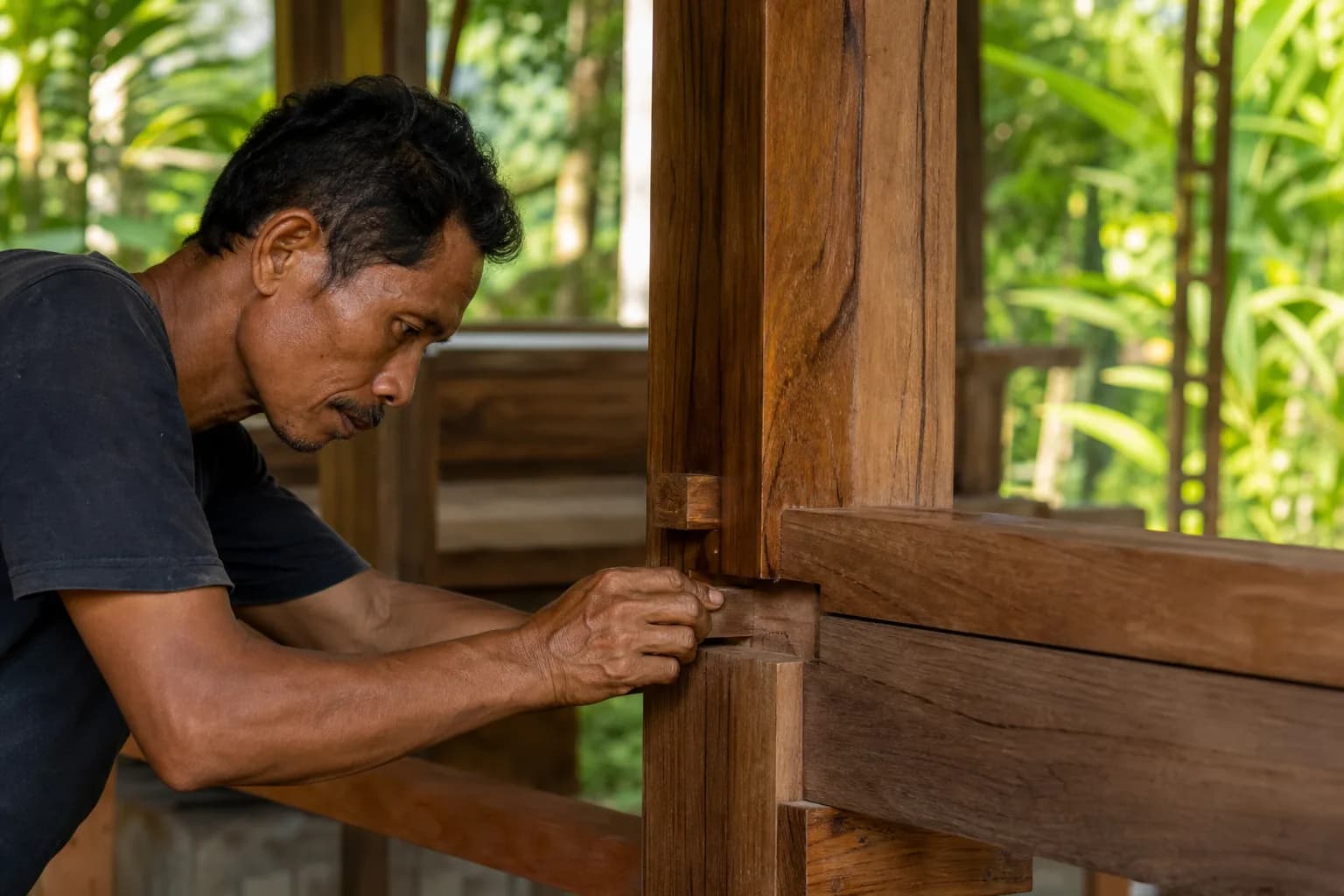
Marine-Grade Timber Joinery Finishing Corrosion Protection Bali
Discover marine-grade timber joinery finishing and corrosion protection in Bali. Durable coastal timber care, coatings, and maintenance for lasting protection.
8 min read
Why Bali Villa Demand Surged in January 2026: Global Market Analysis
Discover why Bali villa demand exploded in January 2026. Explore geopolitical factors, investor demographics from India, UAE, China, and emerging hotspots like Ubud, Tegallalang, and the northern airport corridor.
9 min read