Bali Villa Construction Timeline: Plan Your Dream Home
Understanding Your Bali Villa Construction Timeline: A Realistic Planning Guide
When clients approach us about building a villa in Bali, one of the first questions they ask is: “How long will this take?” It’s a reasonable question, but the honest answer requires more nuance than a single number. The Bali villa construction timeline isn’t a fixed date you can circle on a calendar—it’s a range influenced by design complexity, permitting variables, seasonal weather patterns, and the inevitable adjustments that occur when transforming architectural drawings into physical structures.
At Teville, we’ve managed dozens of villa construction projects across Bali, and we’ve learned that setting realistic expectations from the beginning creates better outcomes than promising aggressive timelines we can’t consistently deliver. This guide breaks down the actual phases of villa construction in Bali, the factors that accelerate or delay progress, and how we structure our process to give you maximum visibility into your project’s status—whether you’re living in Jakarta or managing your investment from Singapore.
Why You Should Think in Ranges, Not Exact Dates
Construction in Bali operates within a different regulatory and environmental context than building in Singapore, Australia, or Western countries. The permitting process involves multiple government agencies with varying processing speeds. Weather patterns directly impact concrete curing, foundation work, and material deliveries. Supply chains for specialized materials can experience delays, particularly for imported fixtures and finishes.
More importantly, most clients make design refinements during construction. You might see the framed structure and realize you want to adjust a window placement for better views. You might select a different stone finish after seeing samples in person. These changes—often improvements to the final product—add time to the schedule.
A construction company that promises you an exact completion date without understanding your specific project is either inexperienced or setting you up for disappointment. The realistic Bali villa construction timeline for a quality build ranges from 12 to 18 months from initial design consultation to handover, with the construction phase itself typically requiring 10 to 14 months once permits are secured and ground is broken.
This doesn’t mean the process is unpredictable. It means we plan for variables, build buffer time into critical phases, and communicate proactively when adjustments are needed. Understanding the phases and their typical durations helps you plan your move, coordinate financing, or schedule rental income more effectively.
The Complete Bali Villa Construction Timeline: Phase by Phase
Design and Planning Phase: 2-3 Months
Before any construction begins, we need to translate your vision into technical drawings that satisfy both your aesthetic goals and Bali’s building regulations. This phase includes site analysis, conceptual design, detailed architectural drawings, structural engineering, and MEP (mechanical, electrical, plumbing) planning.
For a standard two-bedroom villa, this phase typically requires 8 to 10 weeks. Larger properties with complex features—infinity pools with vanishing edges, cantilevered structures, or integrated smart home systems—may extend this to 12 weeks or more.
The design phase involves multiple review cycles. We present initial concepts, incorporate your feedback, refine the drawings, and repeat until you approve the final design. Clients who provide clear, consolidated feedback and make decisions promptly move through this phase faster. Those who are still exploring options or coordinating with multiple family members naturally require more time.
We also conduct soil testing during this phase. Bali’s volcanic soil conditions vary significantly by location, and understanding your site’s bearing capacity determines foundation design. This testing takes approximately one week but must be completed before structural engineering can be finalized.
At Teville, we don’t rush this phase. Design decisions made here affect every subsequent stage of construction. Changing a structural wall location during framing costs exponentially more than adjusting it on paper. Our How We Build process emphasizes thorough planning to minimize expensive mid-construction changes.
Permitting and Approvals: 2-6 Months (Highly Variable)
This is the most unpredictable phase in the Bali villa construction timeline. Securing an IMB (Izin Mendirikan Bangunan, or building permit) requires submitting technical drawings to local government offices, which review them for compliance with zoning regulations, setback requirements, building height limits, and structural safety standards.
Processing times vary by regency and even by specific village (desa). In some areas of Canggu or Seminyak, permits may be issued in 6 to 8 weeks. In other locations, particularly those with more complex administrative structures or during periods of high application volume, the process can extend to 4 or even 6 months.
Several factors influence permitting duration:
- Land status and ownership documentation: Properties with clear, complete land certificates (SHM or Hak Pakai) process faster than those requiring additional documentation verification.
- Design compliance: Drawings that clearly meet all setback, height, and coverage requirements move through review more quickly than those requiring clarification or revision.
- Local relationships: Established construction companies with existing relationships with local building departments often navigate the process more efficiently than newcomers.
- Completeness of submission: Missing documents or incomplete technical drawings restart the review clock.
We cannot control government processing speeds, but we can control the quality and completeness of our submissions. Teville’s team includes specialists who handle permitting documentation, ensuring all required materials are submitted correctly the first time. We also maintain relationships with local building departments across Bali’s major development areas, which helps us understand current processing times and requirements.
For planning purposes, we advise clients to budget 3 to 4 months for permitting. If approvals come faster, construction starts earlier—a welcome surprise. If delays occur, you’re not caught off guard with financing or scheduling conflicts.
Site Preparation and Foundation: 4-6 Weeks
Once permits are secured, physical construction begins with site clearing, excavation, and foundation work. This phase moves relatively quickly but is weather-dependent.
Site preparation includes clearing vegetation, establishing site access, setting up temporary facilities for workers, and marking the building footprint according to architectural drawings. For a typical villa plot, this takes 3 to 5 days.
Excavation depth depends on your foundation design, which is determined by soil conditions and structural requirements. Most Bali villas use either a slab-on-grade foundation with perimeter footings or a raised foundation with tie beams. Excavation and formwork typically require 1 to 2 weeks.
Foundation concrete work is critical and time-sensitive. We pour foundations in sections, allowing proper curing time between pours. Concrete requires 7 days to reach approximately 70% of its design strength and 28 days to reach full strength. We don’t proceed with heavy structural loads until adequate curing has occurred.
Bali’s rainy season (roughly November through March) can extend this phase. Heavy rain delays concrete pours, as wet conditions compromise concrete quality and curing. We monitor weather forecasts closely and schedule pours during dry windows. If your project’s foundation phase falls during peak rainy season, budget an additional 1 to 2 weeks for weather delays.
Structural Construction: 3-5 Months
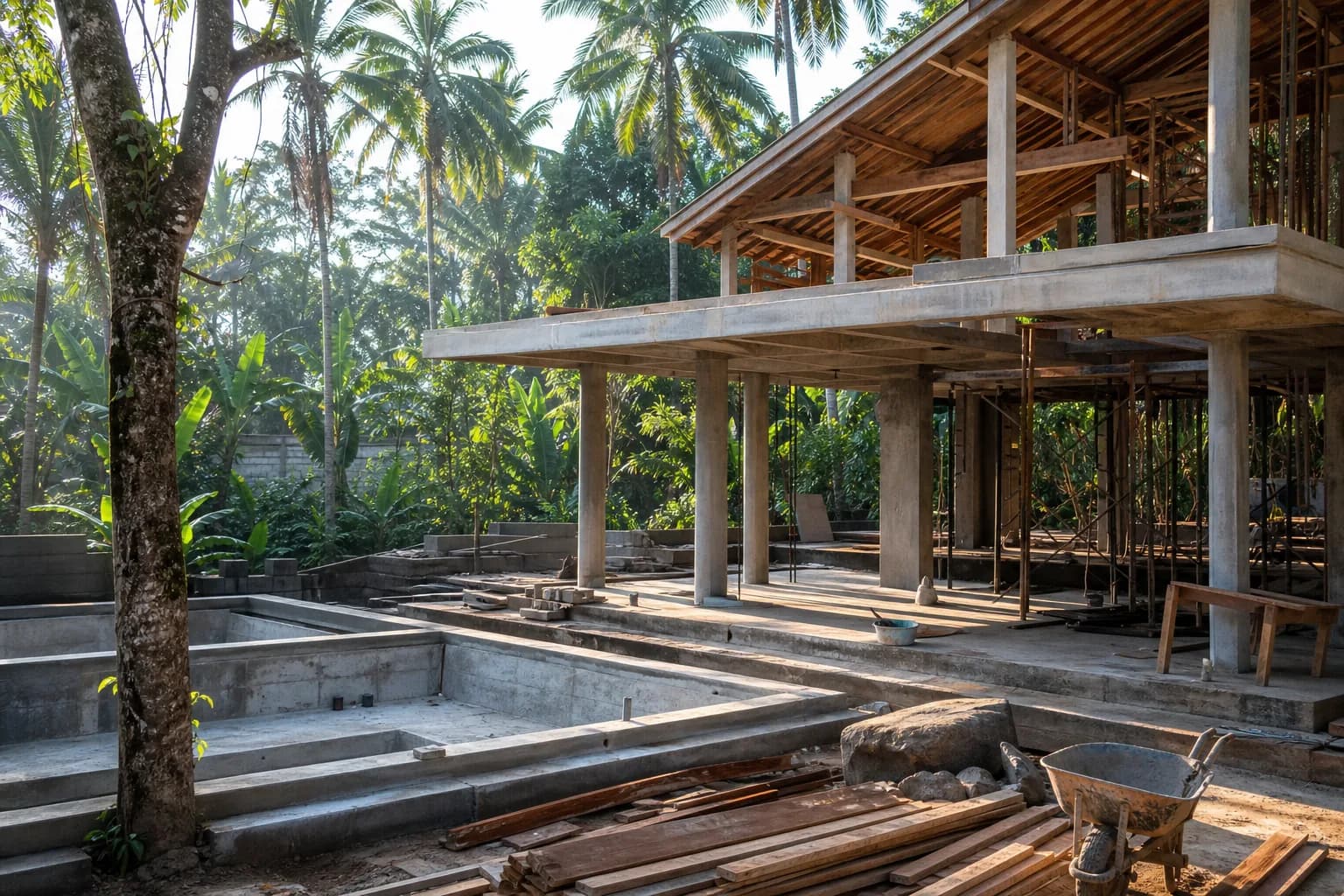
This is the most visible phase of the Bali villa construction timeline, when your villa transforms from foundation to recognizable structure. It includes column and beam construction, floor slabs, roof framing, and the building envelope.
For a standard two-bedroom villa (approximately 150-200 square meters), structural construction typically requires 12 to 16 weeks. Larger villas or those with complex architectural features—multiple levels, large cantilevers, or intricate roof designs—extend this to 18 to 20 weeks.
The sequence generally follows this pattern:
- Weeks 1-3: Column and ground floor beam construction, with proper curing time between concrete pours
- Weeks 4-6: First floor slab (if applicable), additional columns for upper levels
- Weeks 7-9: Upper level beams and slabs, roof structure preparation
- Weeks 10-12: Roof framing and covering, initial wall construction
- Weeks 13-16: Complete wall construction, window and door frame installation, waterproofing
Material availability directly impacts this phase. Standard materials—concrete, rebar, bricks, roof tiles—are readily available in Bali with 1 to 3 day delivery times. Specialized structural elements or imported materials require advance ordering. We maintain relationships with reliable suppliers and order long-lead items during the design phase to prevent delays.
Weather remains a factor during structural work. While we can work through light rain, heavy downpours halt concrete pours and delay roofing work. The structural phase also involves multiple inspections—our internal quality checks and, in some cases, third-party structural engineering reviews. These inspections occasionally identify issues requiring correction before proceeding, which adds time but ensures structural integrity.
MEP Installation: 2-3 Months (Overlaps with Structural Work)
Mechanical, electrical, and plumbing systems are installed progressively throughout construction, not as a separate phase after structural completion. This overlap is crucial for efficiency but requires careful coordination.
Plumbing rough-in occurs during foundation and slab work, with pipes embedded in concrete before pouring. Electrical conduits are installed in walls before plastering. HVAC systems, if included, require coordination between structural, electrical, and finish work.
For a typical villa, MEP installation spans 8 to 12 weeks but occurs concurrently with structural and finishing work. The timeline includes:
- Rough-in phase: Installing pipes, conduits, and infrastructure within walls and slabs
- System installation: Mounting electrical panels, installing water heaters, setting up pump systems
- Fixture installation: Connecting sinks, toilets, light fixtures, outlets (occurs during finishing phase)
- Testing and commissioning: Pressure testing plumbing, electrical system checks, final connections
MEP work requires specialized tradespeople. Bali has skilled electricians and plumbers, but quality varies significantly. Teville employs experienced MEP contractors who understand both local building practices and international standards. This is particularly important for clients expecting Western-standard electrical systems, proper grounding, and reliable plumbing.
Design changes during construction most commonly affect MEP systems. You might decide to add outlets in different locations, relocate a bathroom fixture, or upgrade to a more powerful air conditioning system. These changes are manageable if identified early but become increasingly disruptive and expensive as construction progresses.
Finishing Work: 3-4 Months
Once the structure is complete and weathertight, finishing work begins. This phase transforms the construction site into a livable villa and typically requires the longest duration relative to visible progress. Finishing work is detail-intensive and involves multiple specialized trades working in sequence.
The finishing phase includes:
- Plastering and rendering: Applying cement plaster to walls, creating smooth surfaces for painting (2-3 weeks)
- Flooring installation: Laying tiles, stone, or other flooring materials (2-3 weeks, depending on complexity)
- Painting: Multiple coats of primer and paint on walls and ceilings (2-3 weeks including drying time)
- Carpentry and joinery: Installing kitchen cabinets, wardrobes, doors, window frames (3-4 weeks)
- Bathroom and kitchen fitting: Installing fixtures, countertops, appliances (2 weeks)
- Final electrical and plumbing: Connecting fixtures, installing switches and outlets, final testing (1-2 weeks)
- Exterior work: Landscaping, pool finishing, driveway and pathway completion (2-4 weeks, often concurrent with interior work)
For a standard villa, finishing work requires 12 to 16 weeks. High-end finishes, custom millwork, or imported materials extend this timeline. A villa with custom teak furniture, imported Italian tiles, or complex stone work might require 18 to 20 weeks for finishing.
This phase is where your design choices most directly impact timeline. Standard, locally-available materials keep the project moving. Imported materials require advance ordering and shipping time—typically 4 to 8 weeks from order to delivery in Bali. We provide material selection guidance during design to help you balance aesthetic preferences with timeline considerations.
Finishing work also reveals minor issues that require correction—a wall that needs additional smoothing, a tile cut that doesn’t quite align, a door that needs adjustment. Quality construction companies address these issues systematically. We conduct multiple quality inspections during finishing, creating punch lists of items requiring correction before final handover.
Final Inspections and Handover: 2-3 Weeks
The final phase involves comprehensive inspections, corrections, and preparing the villa for occupancy. This includes our internal quality review, addressing any punch list items, final cleaning, and systems testing.
We conduct a detailed walkthrough with clients (in person or virtually for remote clients), documenting any remaining items requiring attention. Most issues at this stage are minor—touch-up painting, final adjustments to doors or windows, landscaping details.
We also provide systems orientation, explaining how to operate electrical panels, water systems, pool equipment, and any smart home features. For remote clients, we create video documentation of systems and operations.
Final government inspections, if required by your local building department, occur during this phase. These inspections verify that construction matches approved plans and meets safety standards. Processing time for final inspection approval varies by location but typically requires 1 to 2 weeks.
Real Example: A Typical Bali Villa Construction Timeline
To make these phases concrete, consider a recent Teville project: a three-bedroom villa in Canggu with a 12-meter pool, approximately 250 square meters of built area.
Month 1-2: Design and planning phase. Client provided clear initial direction, made decisions promptly, and approved final designs after two revision cycles. Soil testing completed in week 3.
Month 3-5: Permitting phase. Submitted complete documentation to local building department. Received approval in 11 weeks—faster than average due to complete submission and straightforward design compliance.
Month 6: Site preparation and foundation work. Excavation completed in 5 days. Foundation poured in sections over 2 weeks, with proper curing time. No weather delays as work occurred during dry season.
Month 7-10: Structural construction. Column and beam work progressed steadily. Roof structure completed by end of month 9. Wall construction and waterproofing finished in month 10. One minor delay when a specialized steel beam required reordering due to manufacturing defect—added 10 days.
Month 11-14: Finishing work. Plastering and flooring installation proceeded on schedule. Client requested a change to kitchen cabinet design in month 12, which added 2 weeks to carpentry timeline. Pool finishing completed in month 13. Final painting and fixture installation in month 14.
Month 15: Final inspections and handover. Punch list items addressed in first 2 weeks. Final walkthrough conducted via video call (client was in Singapore). Villa handed over in week 3.
Total timeline: 15 months from initial design consultation to handover. The construction phase itself (post-permit) required 10 months. This aligns with the typical Bali villa construction timeline for a project of this scope.
You can see more examples of our completed projects in our Projects section and detailed case studies in our Portfolio.
Key Factors That Affect Your Construction Timeline
Project Size and Complexity
A simple two-bedroom villa with straightforward design requires less time than a multi-level compound with complex architectural features. Each additional bedroom, bathroom, or living space adds construction time. Specialized features—wine cellars, home theaters, elaborate water features—require additional trades and coordination.
As a rough guideline:
- Small villa (100-150 sqm, 2 bedrooms): 10-12 months construction phase
- Medium villa (150-250 sqm, 3-4 bedrooms): 12-14 months construction phase
- Large villa (250-400 sqm, 4+ bedrooms): 14-16 months construction phase
- Compound or estate (400+ sqm, multiple buildings): 16-20+ months construction phase
These ranges assume standard construction quality and finishes. High-end luxury finishes add 2 to 4 months regardless of size.
Seasonal Weather Patterns
Bali’s climate significantly impacts the Bali villa construction timeline. The island experiences distinct dry and rainy seasons, though climate patterns have become less predictable in recent years.
The dry season (roughly April through October) provides optimal construction conditions. Concrete cures properly, exterior work proceeds without interruption, and material deliveries occur on schedule. Projects with foundation and structural phases during dry season typically stay on schedule or even complete ahead of estimates.
The rainy season (roughly November through March) introduces delays. Heavy afternoon rains are common, and occasional multi-day storms halt outdoor work entirely. Concrete pours must be carefully timed around weather windows. Roofing work becomes more challenging. Material deliveries can be delayed by flooded roads.
We don’t stop construction during rainy season—interior work continues regardless of weather—but we build buffer time into schedules for projects with critical phase
 164 m²7 month(s)from 79.000 USD
TALA TWO

Want to calculate?
164 m²7 month(s)from 79.000 USDPrivate: Haridas Villas, Tegallalang
 3124 m²6 month(s)from 123.000 USD
TALA 8
 3104 m²11 month(s)from 99.000 USD
TALA 100
 4344 m²16 month(s)from 290.000 USD
Radha
 3173 m²6 month(s)from 125.000 USD
TALA FOUR
 3180 m²7 month(s)from 142.000 USD
Vasudeva
 172 m²8 month(s)from 120.000 USD
Keshava
 3127 m²9 month(s)from 177.000 USD
Mukunda
 1from 198.000 USD
Private: Haridas Villas
 2144 m²11 month(s)from 104.000 USD
Narayana
Start With Real Numbers, Not Guesses
Before buying land or finalizing a design, check the realistic build cost range for your project in Bali.
Our team reviews your inputs and gives a grounded estimate.
Available lands
 29000 m²6 min$ 3857143Bali, Tabanan
 1375 m²10 min$ 447044Bali, Canggu
 1350 m²5 min$ 283467Bali, Pecatu
 750 m²15 min$ 187038Bali, Kerobokan
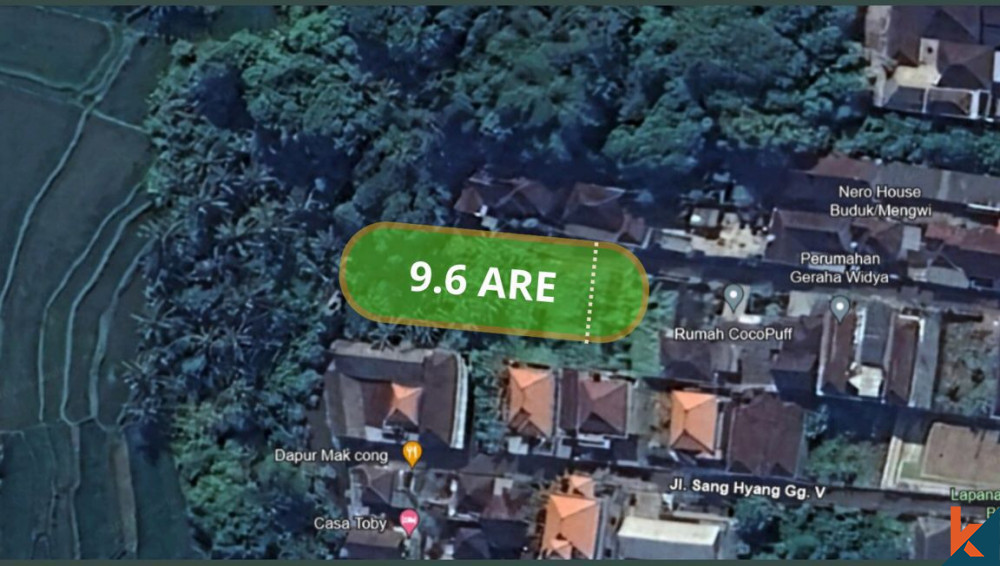 960 m²15 min$ 91034Bali, Mengwi
 6000 m²10 min$ 1330049Bali, Kutuh South Bali
 444 m²10 min$ 111000Bali, Tabanan
 2115 m²5 min$ 1139547Bali, Pererenan
 10000 m²19 min$ 232759Bali, Buleleng
 3900 m²10 min$ 432266Bali, Tabanan
 600 m²12 min$ 101970Bali, Mengwi
 3800 m²15 min$ 100616Bali, Pererenan
 2000 m²15 min$ 261700Bali, Babakan
 4270 m²10 min$ 394397Bali, Ubud
 1430 m²5 min$ 209862Bali, Klungkung
Essential Bali build & buy guides
- Bali villa construction cost per m² in 2026
- How much will your villa cost? Calculator
- Building a villa in Bali: the complete guide
- Buying land in Bali: step-by-step for foreigners
- Bali villa investment: yields, risks, returns
- Leasehold vs freehold: what foreigners can own
- Construction defect liability & 10-year warranty
- Bali building codes and construction standards
Related guides
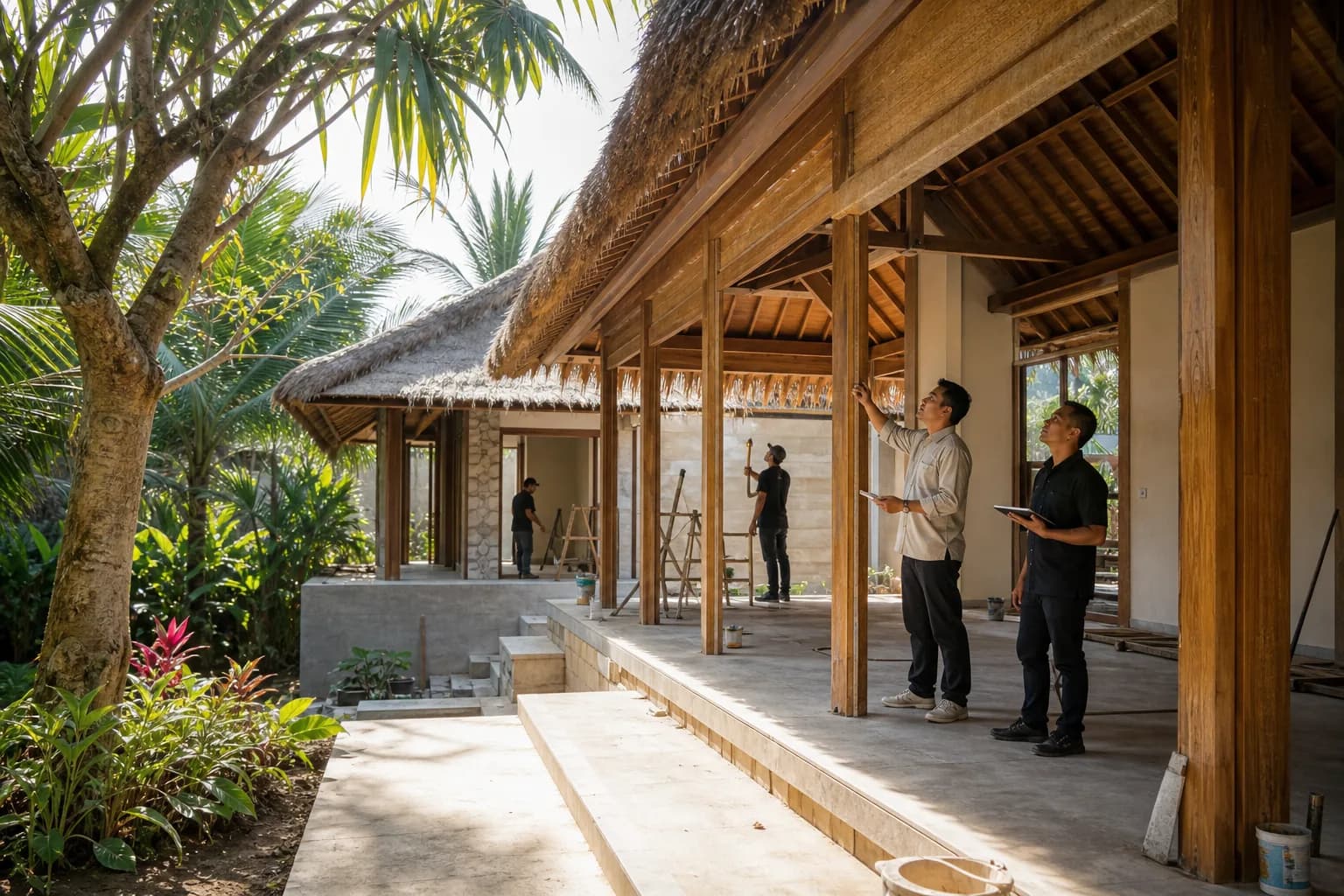
Villa Handover in Bali: Snagging Checklist and What to Test Before Final Payment
A disciplined villa handover in Bali: room-by-room snagging tests, numbered defect documentation, the PBG/SLF and warranty documents to insist on, and payment terms that keep leverage until the list is closed.
7 min read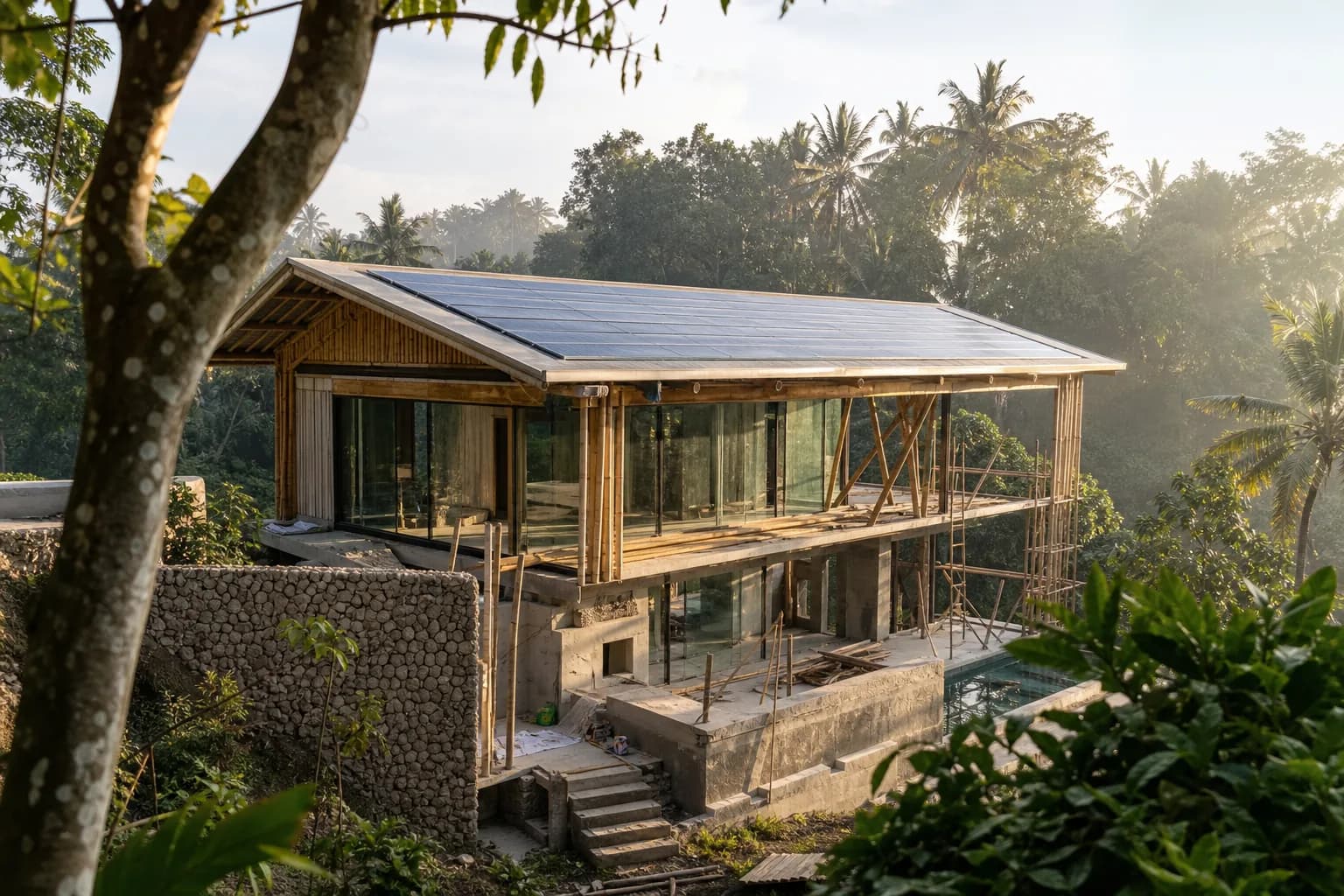
Energy-Efficient Villa in Bali: Solar, Insulation and Passive Cooling That Pay Back
Which energy-efficiency measures actually pay back in Bali's tropical climate — passive design and roof insulation first, efficient equipment second, and self-consumption solar last — with honest 2026 numbers.
7 min read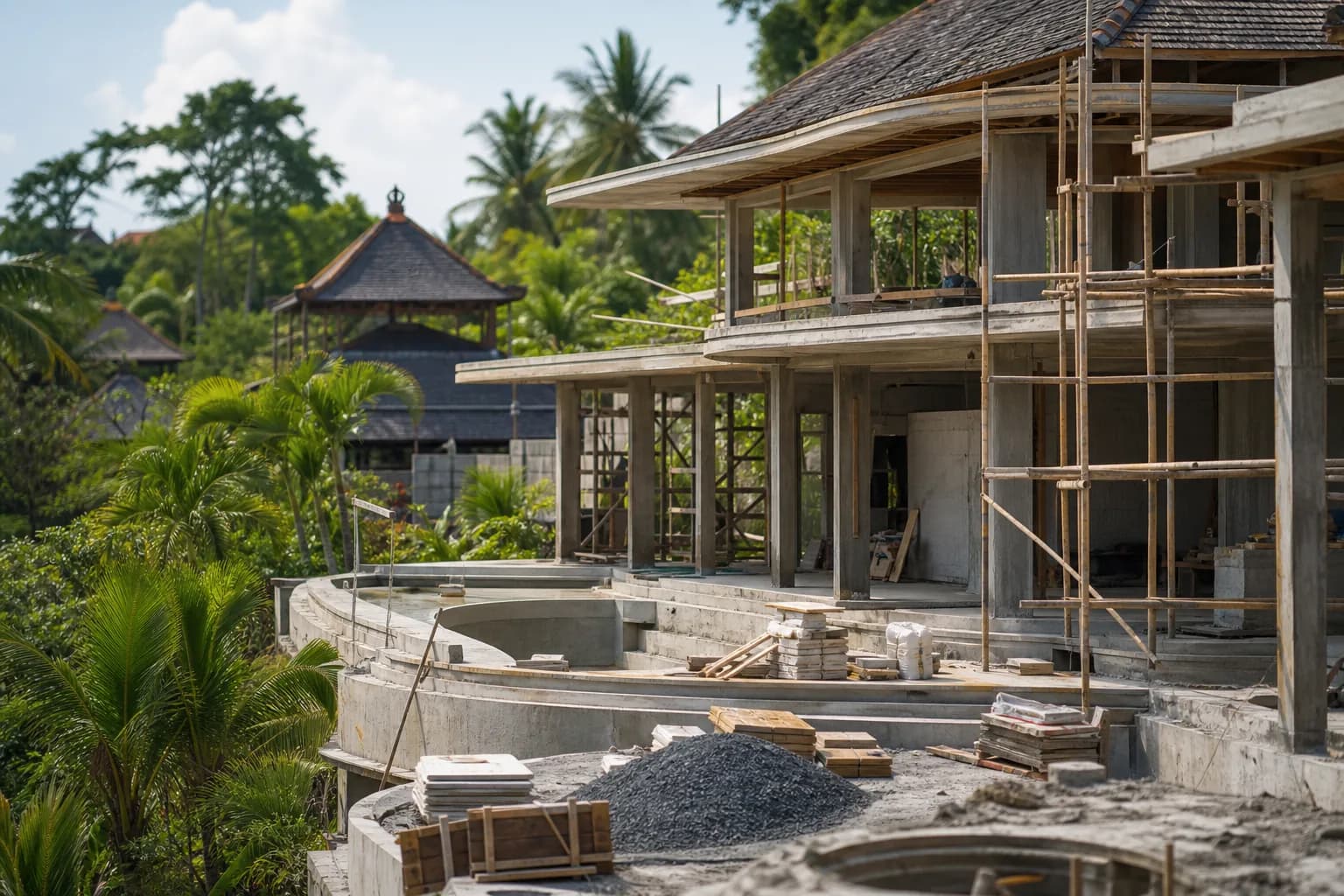
Choosing a General Contractor in Bali: Red Flags, Questions and Contract Must-Haves
A practical filter for hiring a general contractor in Bali: the red flags that end conversations, the questions professionals answer with documents, and the contract clauses no villa build should start without.
7 min read