Terrazzo Floor Polishing Sealing in Bali Villas
# Terrazzo Floor Polishing & Sealing: Restoration Methods Bali Villas
The Critical Challenge of Terrazzo Floor Degradation in Bali’s Tropical Climate
Terrazzo flooring in Bali villas faces unique deterioration challenges that mainland properties rarely encounter. The combination of high humidity, salt-laden coastal air, and intense UV exposure accelerates surface etching, sealant breakdown, and aggregate exposure. Villa owners frequently discover their once-lustrous terrazzo floors have become dull, stained, and porous—absorbing moisture that leads to structural concerns. Professional terrazzo restoration isn’t merely aesthetic maintenance; it’s essential preservation work that protects your flooring investment from tropical climate damage. Understanding the technical restoration process, from diamond grinding to penetrating sealant application, determines whether your terrazzo floors maintain their structural integrity and visual appeal for decades or require premature replacement.
Technical Deep Dive: Terrazzo Restoration Methodology for Bali Villa Environments
Terrazzo floor restoration in Bali villa construction requires fundamentally different approaches than standard maintenance protocols. The porous nature of aged terrazzo, combined with Bali’s 80-95% humidity levels, creates specific technical challenges that demand specialized finishing expertise.
Surface Assessment and Damage Classification
Professional restoration begins with comprehensive surface evaluation. Experienced finishing specialists examine aggregate exposure depth, measuring whether the marble chips sit flush with the cement matrix or have become recessed through wear. We assess crack patterns—distinguishing between superficial crazing and structural fractures that indicate substrate movement. Stain penetration depth determines whether surface cleaning suffices or if grinding becomes necessary. In Bali villa construction, we frequently encounter organic staining from tropical vegetation, rust bleeding from metal furniture, and efflorescence from moisture migration—each requiring distinct treatment protocols.
The assessment phase identifies whether floors require light restoration (surface cleaning and resealing), medium restoration (mechanical polishing with diamond abrasives), or full restoration (grinding to expose fresh aggregate layer). This classification directly impacts project scope, timeline, and material requirements. Teville’s finishing teams document surface hardness using Mohs scale testing, ensuring our restoration approach matches the specific terrazzo composition—whether it’s standard cement-based terrazzo or epoxy-modified variants increasingly common in modern Bali villa construction.
Diamond Grinding and Leveling Systems
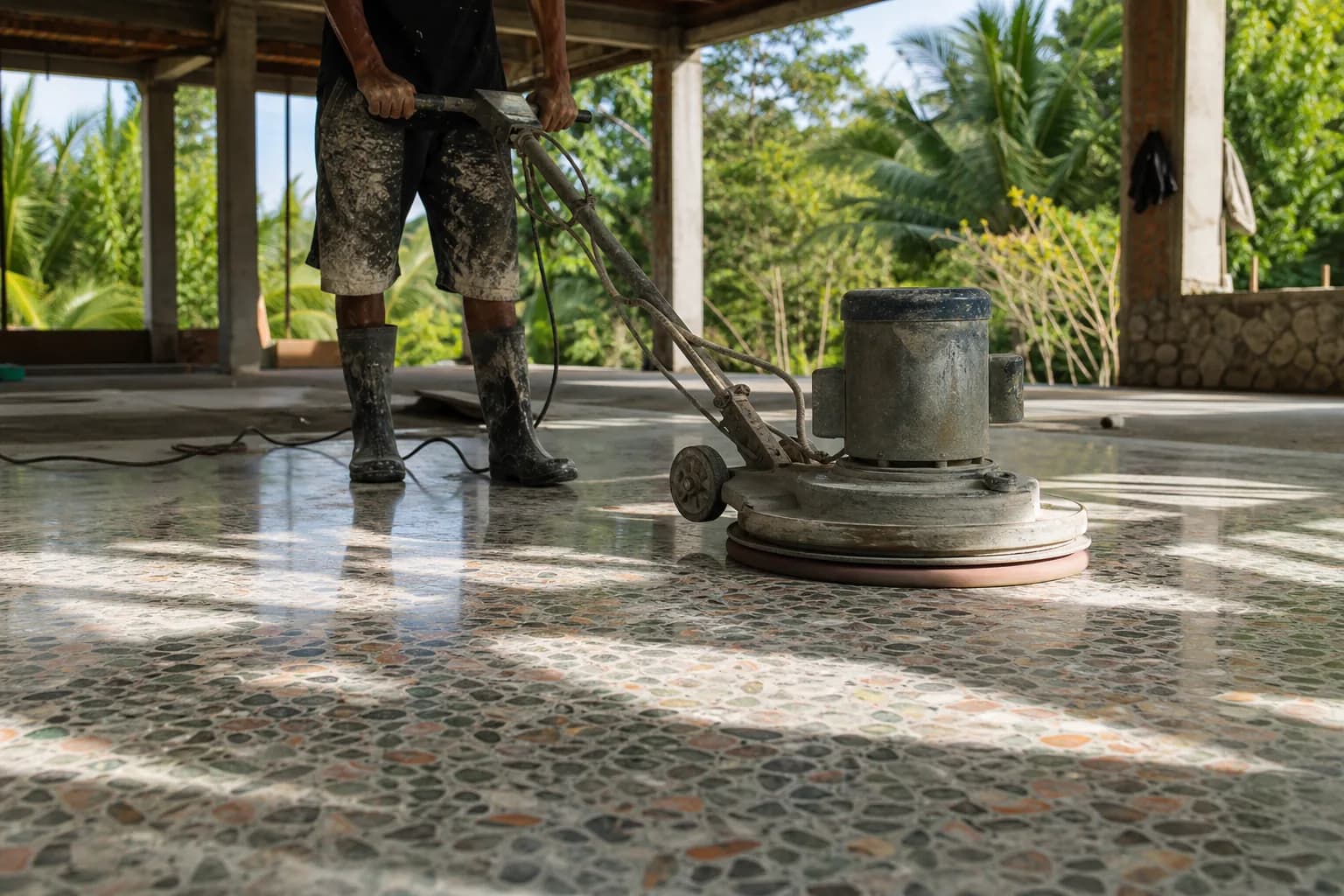
Mechanical restoration employs progressive diamond grinding sequences that remove damaged surface layers while maintaining floor levelness. We utilize planetary grinding machines with weighted heads that ensure consistent material removal across the entire surface. The process begins with coarse-grit metallic diamonds (30-50 grit) to eliminate deep scratches, lippage between tiles, and severely etched areas. Each grinding pass removes approximately 0.5-1mm of material, exposing fresh aggregate and cement matrix.
Progressive refinement follows with transitional grits (100-200), then resin-bonded diamonds (400-800 grit) that begin developing surface clarity. The final polishing stages (1500-3000 grit) create the characteristic terrazzo luster through mechanical densification rather than topical coatings. This multi-stage approach is critical in Bali’s climate because it creates a genuinely hardened surface that resists moisture penetration—unlike simple topical polishing that provides temporary shine but fails within months under tropical conditions.
Tropical Climate Considerations
Bali villa terrazzo restoration must account for environmental factors that mainland projects ignore. High ambient moisture requires extended drying periods between grinding stages—rushing this process traps moisture beneath sealants, causing clouding and delamination. We schedule restoration work during Bali’s dry season (April-October) whenever possible, and utilize industrial dehumidifiers to maintain sub-60% relative humidity during critical sealing phases.
Temperature management proves equally important. Terrazzo surfaces exceeding 30°C during sealant application experience accelerated curing that prevents proper penetration. Morning work schedules and climate-controlled environments ensure optimal application conditions. Salt air exposure in coastal villas necessitates chloride-resistant sealant formulations that standard products cannot provide.
Materials and Standards for Tropical Terrazzo Restoration
Material selection determines restoration longevity in Bali’s aggressive climate. Standard terrazzo products designed for temperate environments consistently fail under tropical exposure, making specification expertise critical.
Diamond Abrasive Selection
Professional restoration requires specific diamond tooling matched to terrazzo hardness and composition. Metallic-bonded diamonds handle initial grinding of cement-based terrazzo, while resin-bonded systems suit epoxy terrazzo common in modern Bali villa construction. We specify diamonds manufactured for wet grinding—essential in tropical environments where dust control and heat management demand continuous water cooling. Tool quality directly impacts surface finish quality; premium European-manufactured diamonds produce superior clarity compared to economy alternatives that leave micro-scratching visible under Bali’s intense natural lighting.
Penetrating Sealant Systems
Terrazzo sealing in Bali villas demands penetrating sealants rather than topical coatings. Penetrating silicate or siliconate sealers chemically react with the cement matrix, creating subsurface protection that cannot delaminate or wear away like surface films. These systems allow moisture vapor transmission—critical in tropical climates where trapped moisture causes catastrophic coating failure.
We specify sealants with proven salt-air resistance for coastal properties, and UV-stable formulations for open-air pavilions common in Bali villa design. Food-safe, low-VOC products meet international standards while protecting indoor air quality. Premium sealants provide 5-7 year protection cycles under Bali conditions, compared to 18-24 months for standard products. The material cost differential—approximately 40% higher for tropical-rated systems—proves economical when lifecycle costs are properly calculated.
Cleaning and Preparation Compounds
Restoration requires pH-neutral cleaning agents that remove contaminants without etching the terrazzo surface. Alkaline cleaners commonly used in general construction damage the cement matrix, while acidic products etch marble aggregates. Professional-grade terrazzo cleaners utilize surfactant technology that lifts organic staining and mineral deposits without chemical attack. Rust stain removal demands specialized chelating agents that dissolve iron oxide without bleaching surrounding material—a common requirement in Bali villas with metal furniture or fixtures.
Step-by-Step Professional Restoration Process
Systematic restoration methodology ensures consistent results across varying terrazzo conditions. Teville’s finishing teams follow proven protocols refined through hundreds of Bali villa projects.
Phase 1: Surface Preparation and Deep Cleaning
Restoration begins with complete furniture removal and perimeter protection. We install dust barriers using zippered containment systems that maintain negative air pressure, preventing construction dust from contaminating adjacent villa spaces. Initial cleaning employs auto-scrubbing machines with pH-neutral detergents, removing surface soiling and loose material. Stubborn stains receive targeted treatment—poultices for organic staining, chelating agents for rust, and enzymatic cleaners for biological growth common in Bali’s humid environment. This phase typically requires 1-2 days for standard villa spaces, with extended periods for severely neglected floors.
Phase 2: Crack Repair and Substrate Stabilization
Structural cracks require epoxy injection or polyurethane grouting before grinding commences. We route crack edges to create mechanical keys, then inject two-part epoxy formulated for tropical curing. Missing aggregate sections receive color-matched terrazzo patching compound, carefully blended to match surrounding material. Substrate evaluation identifies any delamination from the concrete base—a critical check in Bali villa construction where improper initial installation sometimes occurs. Delaminated sections require removal and replacement; grinding over unbonded terrazzo creates catastrophic failure during restoration.
Phase 3: Diamond Grinding Sequence
Mechanical restoration follows a systematic grit progression. Initial grinding with 30-50 grit metallic diamonds removes 1-2mm of damaged surface, exposing fresh aggregate and eliminating deep scratches. We maintain consistent machine speed and overlap patterns, ensuring uniform material removal without creating waves or low spots. Each grinding stage concludes with thorough water extraction and surface inspection before progressing to finer grits.
Transitional grinding (100-200 grit) refines the surface, removing scratches from previous stages while beginning to close the cement matrix porosity. Resin-bonded diamond stages (400-800 grit) develop initial surface clarity, with aggregate edges becoming distinctly defined. Final polishing (1500-3000 grit) creates mirror-like luster through mechanical densification. This complete sequence requires 3-5 days for typical villa floor areas, with extended timelines for heavily damaged surfaces requiring deeper material removal.
Phase 4: Sealing and Protection
After final polishing, floors must achieve complete dryness before sealing—typically 24-48 hours with dehumidification in Bali’s climate. We verify moisture content below 4% using electronic meters; premature sealing traps moisture that causes permanent clouding. Penetrating sealant application employs microfiber applicators that ensure even distribution without puddling. Multiple thin coats prove superior to single heavy applications, allowing proper penetration and chemical reaction with the substrate.
Sealant curing requires 72 hours before furniture replacement and 7 days before wet cleaning. We provide detailed maintenance protocols to villa owners, emphasizing pH-neutral cleaning products and immediate spill cleanup to maximize sealant longevity. Properly sealed terrazzo in Bali villas requires professional resealing every 5-7 years, with routine maintenance extending protection cycles.
Cost Structure and Project Timeline for Bali Villa Terrazzo Restoration
Terrazzo restoration costs in Bali villa construction vary significantly based on surface condition, area size, and accessibility. Understanding cost components helps villa owners budget appropriately for quality finishing work.
Material and Labor Cost Breakdown
Professional terrazzo restoration typically ranges from IDR 250,000-450,000 per square meter for complete grinding, polishing, and sealing. Light restoration (cleaning and resealing only) costs IDR 100,000-150,000 per square meter, while severe damage requiring extensive repair work may reach IDR 600,000 per square meter. These figures include all materials, equipment, labor, and project management—critical for accurate budgeting in Bali villa construction projects.
Material costs represent approximately 30% of total project expense, with premium tropical-rated sealants, diamond tooling, and specialized cleaning compounds comprising the bulk. Labor and equipment account for 50%, reflecting the skilled craftsmanship and specialized machinery required. Project management, waste disposal, and site protection constitute the remaining 20%. Villa owners should budget an additional 15-20% contingency for unforeseen substrate issues discovered during restoration—a common occurrence in older Bali properties.
Project Duration and Scheduling
Standard villa floor restoration (100-150 square meters) requires 7-10 working days from mobilization to final curing. Larger estates or severely damaged floors extend to 14-21 days. The timeline includes surface preparation (1-2 days), grinding and polishing (3-5 days), sealing (1 day), and curing period (3-7 days). Bali’s tropical climate necessitates weather-dependent scheduling; monsoon season work requires covered working areas and extended drying periods that can double project duration.
Occupied villa restoration demands careful scheduling to minimize disruption. We typically work in phases, completing one section while maintaining access to others. This approach extends overall timeline by 30-40% but allows continued villa use—important for rental properties or owner-occupied residences. For comprehensive information on construction timelines and processes, visit Teville’s construction methodology.
Frequently Asked Questions: Terrazzo Restoration in Bali Villas
How long does professionally restored terrazzo flooring last in Bali’s climate?
Properly restored and sealed terrazzo floors in Bali villas maintain their appearance and structural integrity for 15-25 years before requiring complete re-restoration. The cement matrix and marble aggregate composition provides inherent durability that outlasts virtually all alternative flooring materials in tropical environments. However, sealant protection requires renewal every 5-7 years to maintain moisture resistance and stain protection. Regular maintenance—pH-neutral cleaning and immediate spill cleanup—significantly extends the restoration lifecycle. Coastal villas experience slightly accelerated wear from salt air exposure, typically requiring resealing every 4-5 years rather than 7 years for inland properties.
Can terrazzo restoration be performed on occupied villas?
Yes, professional restoration can accommodate occupied villas through phased scheduling and comprehensive dust containment systems. We establish zippered barriers that isolate work areas while maintaining access to other villa sections. However, villa occupants must accept certain limitations: noise from grinding equipment (typically 75-85 decibels), restricted access to work areas for 7-10 days, and chemical odors during sealing phases despite low-VOC products.
 3104 m²11 month(s)from 99.000 USD
TALA 100
 3124 m²6 month(s)from 123.000 USD
TALA 8
 172 m²8 month(s)from 120.000 USD
Keshava
 2144 m²11 month(s)from 104.000 USD
Narayana
 3173 m²6 month(s)from 125.000 USD
TALA FOUR
 4344 m²16 month(s)from 290.000 USD
Radha
 164 m²7 month(s)from 79.000 USD
Private: Haridas Villas, Tegallalang
 1from 198.000 USD
Private: Haridas Villas

Want to calculate?
 3127 m²9 month(s)from 177.000 USD
Mukunda
164 m²7 month(s)from 79.000 USDTALA TWO
 3180 m²7 month(s)from 142.000 USD
Vasudeva
Start With Real Numbers, Not Guesses
Before finalizing your finishing works plan, check realistic cost ranges for your Bali villa project.
Available lands
 2850 m²15 min$ 315887Bali, Tabanan
 2000 m²15 min$ 110837Bali, Karangasem
 2000 m²15 min$ 523000Bali, Canggu
 911 m²15 min$ 248217Bali, Pererenan
 1375 m²10 min$ 447044Bali, Canggu
 615 m²15 min$ 113608Bali, Tabanan
 500 m²10 min$ 107143Bali, Tabanan
 444 m²10 min$ 111000Bali, Tabanan
 800 m²8 min$ 113300Bali, Ungasan
 1410 m²15 min$ 390702Bali, Tabanan
 3000 m²15 min$ 738916Bali, Cepaka
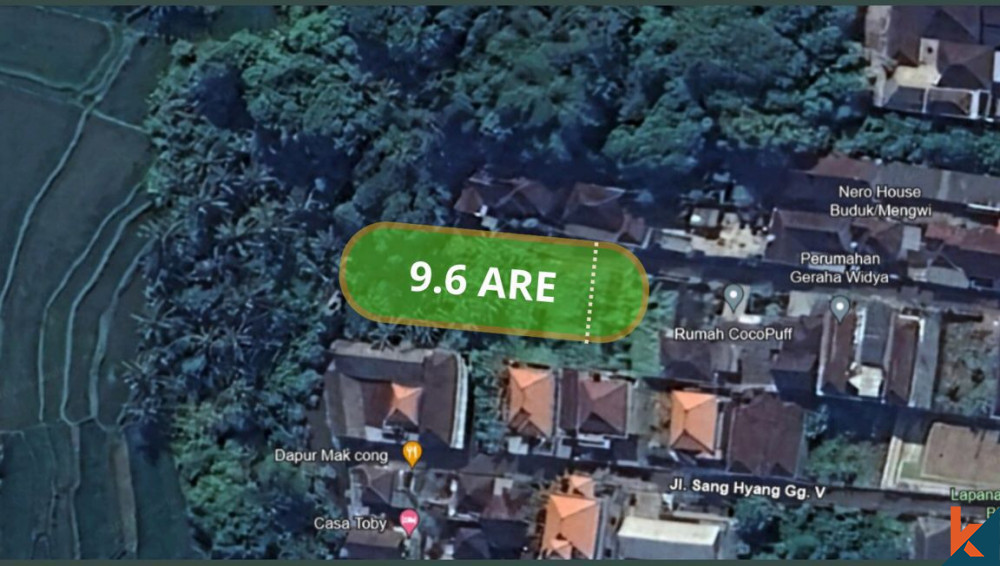 960 m²15 min$ 91034Bali, Mengwi
 2000 m²10 min$ 243842Bali, Mengwi
 889 m²15 min$ 145612Bali, Cepaka
 2000 m²5 min$ 738916Bali, Ungasan
Essential Bali build & buy guides
- Bali villa construction cost per m² in 2026
- How much will your villa cost? Calculator
- Building a villa in Bali: the complete guide
- Buying land in Bali: step-by-step for foreigners
- Bali villa investment: yields, risks, returns
- Leasehold vs freehold: what foreigners can own
- Construction defect liability & 10-year warranty
- Bali building codes and construction standards
Related guides
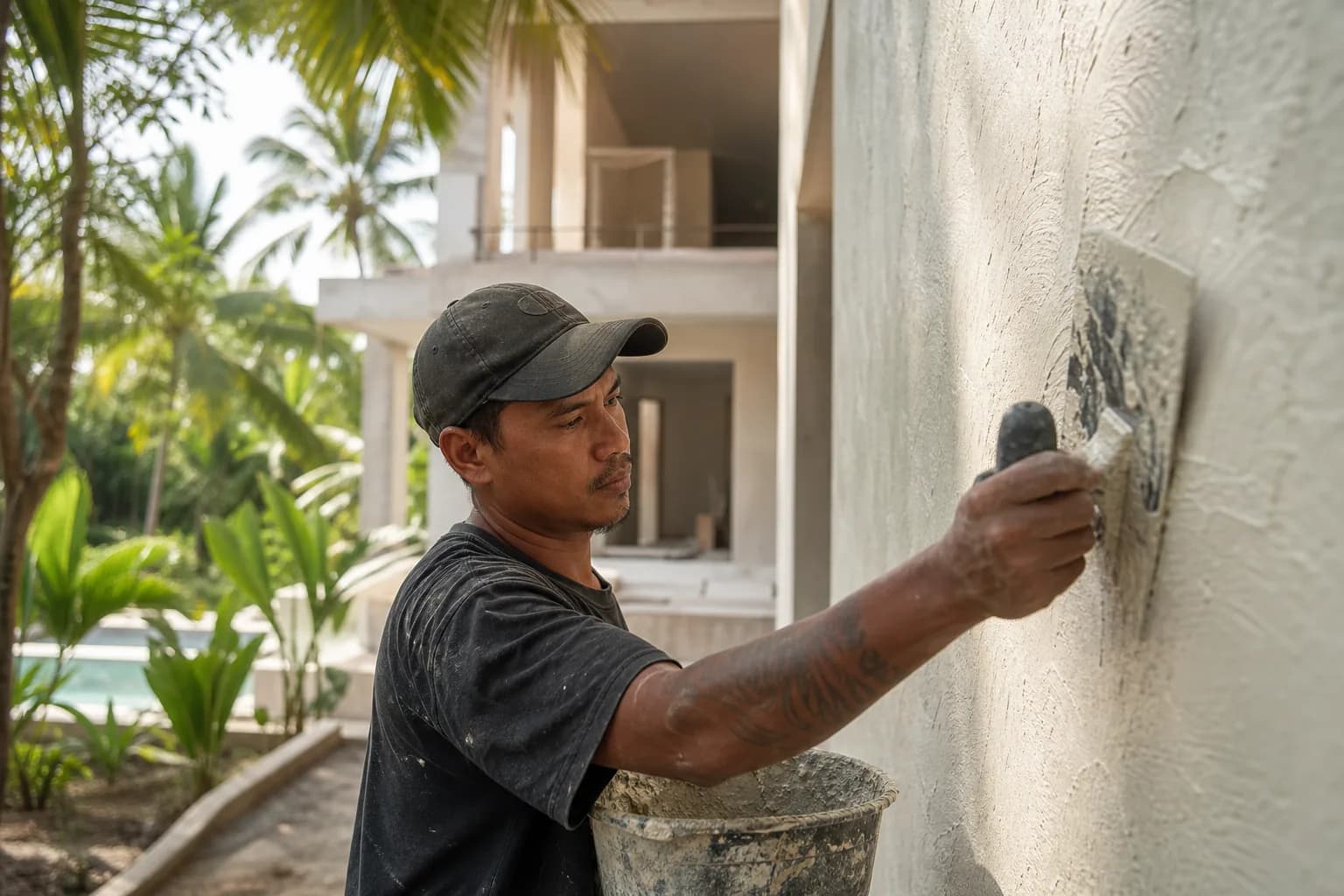
Resin-Infused Plaster Finishes: Anti-Salt Systems Bali
Expert technical guide: Resin-Infused Plaster Finishes: Anti-Salt Systems Bali
8 min read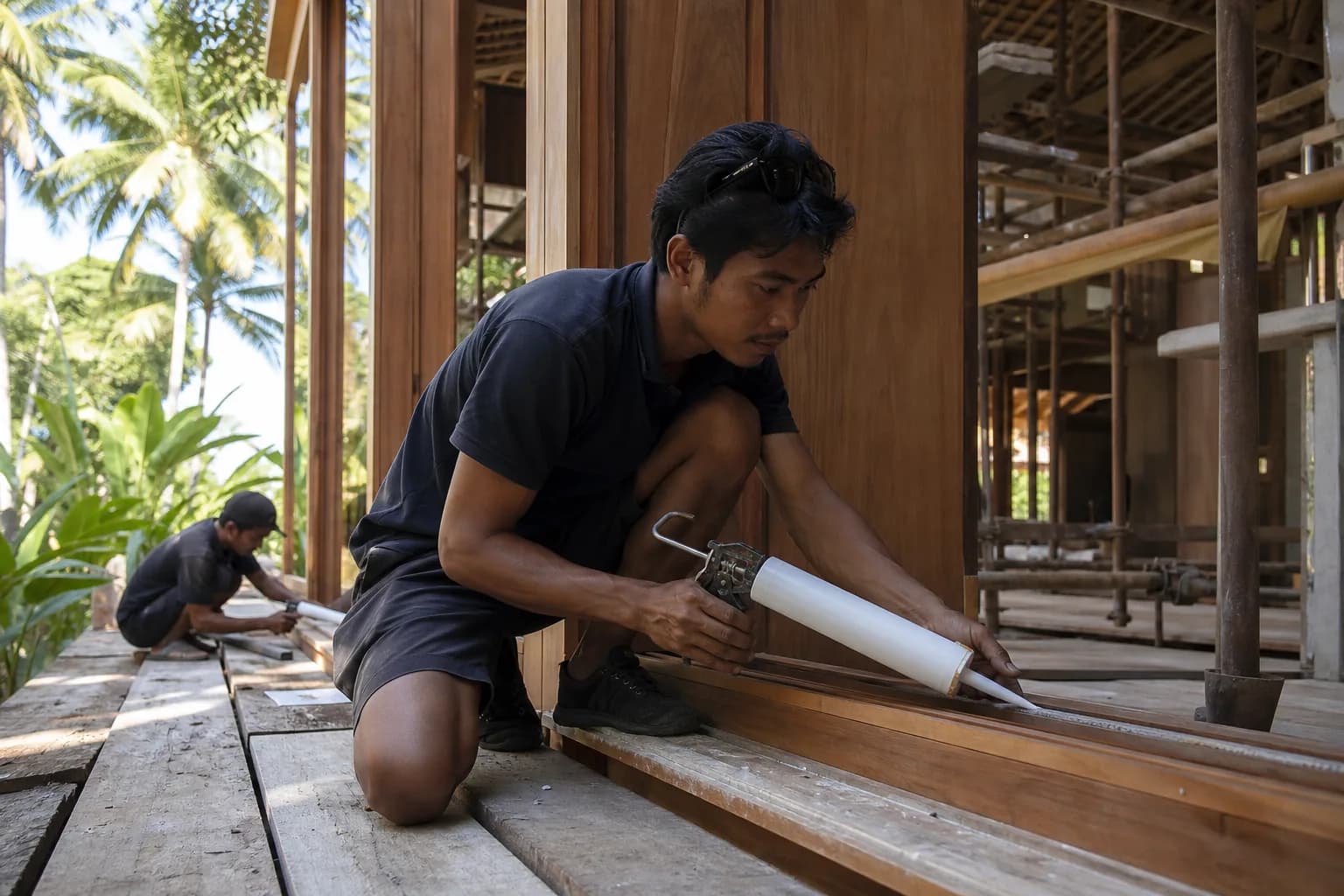
Prefinished Timber Joinery: Silicone Seals Fixings Bali
Professional prefinished timber joinery installation in Bali with silicone seals and fixings for durable weatherproof performance and a premium finish.
10 min read
Polished Concrete Microtopping: Surface Prep Sealants Bali
Discover Bali s polished concrete microtopping: expert surface prep, durable sealants, and a flawless finish for modern floors with minimal maintenance.
9 min read