Nusa Dua Hotel Fire Safety Compliance Costs Bali
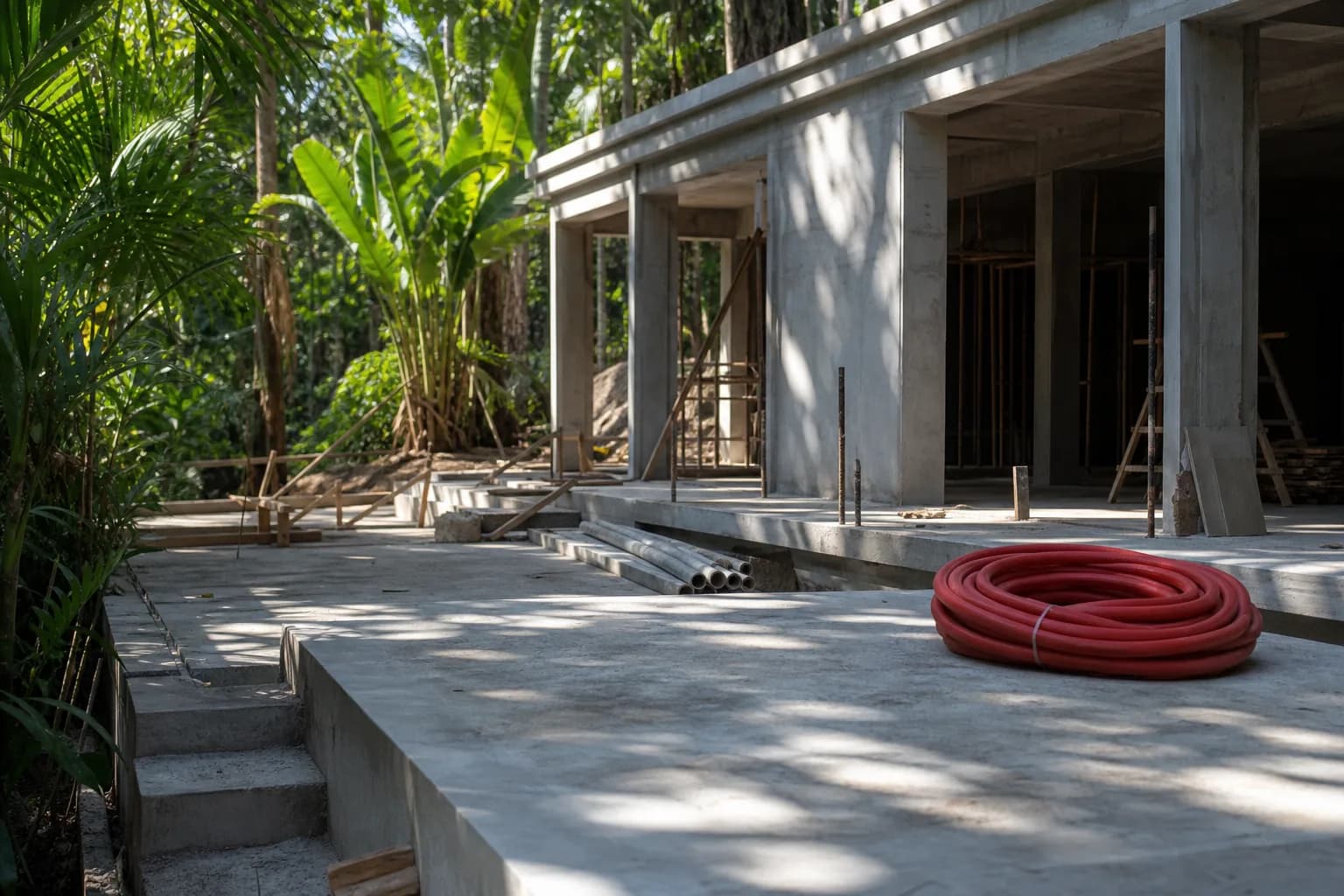
The Hidden Cost Crisis: Fire Safety Compliance in Nusa Dua’s Premium Hotel Zone
Nusa Dua’s hotel zone represents Bali’s most regulated hospitality district, where international safety standards meet Indonesian building codes in a complex compliance framework. Following devastating hotel fires across Bali in 2024, the provincial government mandated comprehensive fire safety reviews for all hospitality properties, with Nusa Dua hotels facing the highest compliance costs due to their scale, multi-story construction, and international brand requirements. Property developers and hotel operators in this zone now confront retrofit expenses ranging from IDR 800 million to IDR 4.5 billion per property, depending on building age, occupancy classification, and existing infrastructure gaps. The three-year Fire Certificate renewal cycle beginning April 2026 adds recurring compliance costs that fundamentally alter operational budgets and construction planning for new developments.
Technical Fire Safety Requirements Specific to Nusa Dua Hotel Developments
Nusa Dua’s hotel zone operates under a dual regulatory framework: Indonesian National Standards (SNI) for fire safety combined with Tourism Ministry hospitality-specific requirements that exceed baseline commercial building codes. Hotels in this zone typically fall under occupancy classification R-1 (residential hotels) or A-2 (assembly spaces with food service), triggering the most stringent fire protection system requirements in Indonesian construction law.
Active Fire Protection Systems: Engineering and Cost Drivers
The core compliance challenge centers on active fire suppression infrastructure. Nusa Dua hotels require fully integrated systems including automatic sprinkler coverage (SNI 03-3989-2000 standard), addressable fire alarm networks with voice evacuation capability, emergency lighting with 90-minute battery backup, and pressurized stairwell systems for buildings exceeding four stories. The sprinkler system alone demands hydraulic calculations accounting for Bali’s variable municipal water pressure, typically requiring dedicated fire pumps with diesel backup generators sized for 60-90 minute runtime.
For a typical 150-room Nusa Dua hotel across five floors, the sprinkler system installation costs IDR 1.2-1.8 billion, including wet-pipe distribution, control valves, flow switches, and rooftop water storage tanks sized for minimum 30-minute supply at design density (0.1 gpm/sq ft for light hazard occupancy). The addressable fire alarm system adds IDR 450-650 million, with costs driven by device count requirements: one smoke detector per 80 square meters in corridors, heat detectors in kitchens and mechanical spaces, manual pull stations at every exit, and audio-visual notification appliances meeting minimum 75 dB sound levels.
Passive Fire Protection: Structural Compliance Gaps
Older Nusa Dua properties face substantial costs addressing passive fire protection deficiencies. Indonesian building codes require two-hour fire-rated separation between occupancy types, one-hour rated corridor walls, and fire-rated door assemblies at all exit enclosures. Many hotels constructed before 2015 lack proper fire-stopping at penetrations, use non-rated doors in critical locations, and have inadequate compartmentation in attic and plenum spaces.
Retrofit work includes installing intumescent fire collars on all plastic pipe penetrations (IDR 850,000-1.2 million per penetration), upgrading to certified fire-rated door assemblies with automatic closers (IDR 12-18 million per door), and applying spray-applied fireproofing to exposed structural steel in parking areas (IDR 285,000-420,000 per square meter). For a mid-sized hotel, passive fire protection upgrades typically cost IDR 600-950 million.
Emergency Egress and Life Safety Systems
Nusa Dua’s high-rise hotel structures must provide two remote exits from every floor, with travel distance to nearest exit not exceeding 45 meters. Exit stairwells require positive pressurization systems maintaining 12.5-25 Pa pressure differential when doors are closed, preventing smoke infiltration during evacuation. These pressurization systems cost IDR 180-280 million per stairwell, including supply fans, pressure relief dampers, and control panels with smoke detector integration.
Emergency lighting systems must illuminate all egress paths to minimum 10 lux, with photoluminescent exit path marking increasingly required for international brand compliance. LED emergency lighting with centralized battery systems costs IDR 320-480 million for typical hotel installations, while photoluminescent marking adds IDR 85-125 per linear meter of corridor.
Critical Compliance Mistakes That Escalate Costs in Nusa Dua Projects
The most expensive error developers make is treating fire safety as a post-construction retrofit rather than integrated design requirement. Nusa Dua’s complex hospitality buildings cannot accommodate major fire protection systems without significant architectural disruption when added after structural completion. Installing sprinkler risers, fire pump rooms, and emergency generator pads requires core drilling through post-tensioned slabs, potentially compromising structural integrity and triggering expensive engineering assessments.
A second critical mistake involves misunderstanding the Fire Certificate (Sertifikat Laik Fungsi Proteksi Kebakaran) renewal requirements. Many operators budget only for initial certification, unaware that the three-year renewal cycle requires full system testing, hydrostatic pressure testing of sprinkler piping, and comprehensive documentation updates. Each renewal cycle costs IDR 85-140 million in testing fees, inspection costs, and minor system repairs, creating recurring operational expenses that impact long-term financial planning.
Developers also underestimate the coordination complexity between Indonesian fire officials and international hotel brand safety auditors. Brands like Marriott, Hyatt, and Accor maintain internal fire safety standards exceeding Indonesian code minimums, requiring additional suppression coverage in back-of-house areas, enhanced detection sensitivity, and redundant emergency power systems. These brand-specific requirements can add 25-40% to baseline compliance costs, yet are non-negotiable for franchise agreements. Failing to identify these requirements during design development leads to expensive change orders during construction or costly post-opening retrofits that disrupt hotel operations.
Step-by-Step Fire Safety Compliance Process for Nusa Dua Hotel Construction
Phase 1: Pre-Design Fire Protection Engineering (Months 1-2)
Engage a certified fire protection engineer (minimum CFPS or equivalent Indonesian certification) before architectural schematic design begins. The engineer conducts occupancy classification analysis, determines applicable code requirements from SNI standards and Tourism Ministry regulations, and establishes design basis for all active and passive systems. For Nusa Dua hotels, this phase must include coordination with the local fire department (Dinas Pemadam Kebakaran) to confirm water supply adequacy and access requirements. Cost: IDR 45-75 million for comprehensive fire protection design basis report.
Phase 2: Integrated System Design (Months 3-5)
The fire protection engineer develops detailed system designs concurrent with architectural and MEP engineering. Critical deliverables include hydraulic calculations for sprinkler systems, fire alarm device layouts with circuit calculations, emergency lighting photometric analysis, and smoke control system CFD modeling for atrium spaces. Nusa Dua projects require special attention to coastal corrosion protection, specifying stainless steel or specially coated components for all exterior fire protection equipment. Design fees: IDR 120-185 million for complete fire protection construction documents.
Phase 3: Permit Submission and Authority Review (Months 6-8)
Submit fire protection plans to Badung Regency building department as part of IMB (Izin Mendirikan Bangunan) application. Nusa Dua hotels require additional review by Tourism Ministry technical team and BTDC (Bali Tourism Development Corporation) for projects within the master-planned zone. Expect 2-3 rounds of review comments requiring design revisions. Permit fees for fire protection systems: IDR 35-60 million depending on project valuation.
Phase 4: Installation and Commissioning (Months 12-18)
Fire protection system installation must follow approved plans exactly, with certified installers for sprinkler work (NFPA 13 trained) and fire alarm systems (manufacturer-certified technicians). Nusa Dua’s high water table requires special attention to underground fire service piping, using fusion-welded HDPE or cement-lined ductile iron to prevent corrosion. Commission all systems with full functional testing: sprinkler flow tests, fire alarm device verification, emergency lighting duration tests, and integrated system response testing. Commissioning costs: IDR 65-95 million.
Phase 5: Final Inspection and Certification (Month 19-20)
Schedule final fire safety inspection with Dinas Pemadam Kebakaran and independent third-party inspector for Fire Certificate issuance. Inspectors verify all installed systems match approved plans, test representative devices, review maintenance documentation, and confirm staff training completion. Address any deficiencies immediately, as certificate issuance is prerequisite for occupancy permit. Inspection and certification fees: IDR 25-40 million.
Realistic Cost Ranges for Nusa Dua Hotel Fire Safety Compliance
Fire safety compliance costs in Nusa Dua’s hotel zone vary significantly based on building scale, construction type, and brand requirements. For new construction projects, budget 8-12% of total building cost for complete fire protection systems when properly integrated during design. A 150-room boutique hotel (total construction cost IDR 85 billion) requires IDR 6.8-10.2 billion for fire safety systems including engineering, equipment, installation, and certification.
Retrofit projects face higher per-square-meter costs due to installation complexity and operational disruption. Existing hotels upgrading to current code compliance should budget IDR 1.8-2.8 million per square meter of building area for comprehensive fire protection system installation. A 4,500 square meter existing hotel requires IDR 8.1-12.6 billion for full compliance retrofit, with work phased over 8-14 months to minimize guest impact.
Recurring compliance costs include three-year Fire Certificate renewal (IDR 85-140 million per cycle), annual fire alarm testing and maintenance (IDR 45-75 million), sprinkler system inspection and valve testing (IDR 35-55 million annually), and emergency lighting battery replacement on five-year cycles (IDR 120-180 million). Total annual fire safety maintenance and compliance costs for a typical Nusa Dua hotel: IDR 180-310 million.
Timeline expectations: new construction fire protection installation requires 6-9 months from permit approval to final commissioning. Retrofit projects in occupied hotels extend to 10-16 months due to phasing requirements and operational constraints. Fire Certificate processing after final inspection: 4-8 weeks for initial issuance, 2-4 weeks for renewals with clean inspection reports.
Frequently Asked Questions: Nusa Dua Hotel Fire Safety Compliance
Do smaller boutique hotels in Nusa Dua face the same fire safety requirements as large resort properties?
Occupancy classification drives requirements, not property size. Any hotel exceeding three stories or 75 occupants requires full automatic sprinkler protection under Indonesian code, regardless of boutique positioning. However, smaller properties under 50 rooms may qualify for simplified fire alarm systems using conventional (non-addressable) panels, reducing costs by 30-40%. The critical threshold is building height: structures exceeding 15 meters trigger high-rise requirements including pressurized stairwells, emergency elevator recall, and enhanced emergency power systems. Most Nusa Dua boutique hotels fall into the 4-6 story range, requiring full active fire protection but avoiding the most expensive high-rise provisions. Consult with fire protection engineers during site selection to understand how building height limits affect compliance costs.
Can we use fire safety equipment purchased internationally to reduce costs in Nusa Dua projects?
Indonesian regulations require fire protection equipment to carry SNI certification or recognized international certifications (UL, FM Global, LPCB) with local distributor support. While international equipment procurement may offer lower unit costs, you’ll face challenges with warranty service, replacement parts availability, and inspector acceptance during certification. Nusa Dua’s coastal environment demands equipment rated for high-humidity, salt-air exposure—specifications that vary significantly from temperate-climate products. More critically, Fire Certificate inspectors require maintenance contracts with locally-based service providers who can respond within 24 hours for system failures. The cost savings from international procurement (typically 15-25%) are offset by service complications and potential certification delays. Teville’s construction process includes pre-qualified fire protection suppliers with proven Bali track records, ensuring both cost efficiency and compliance certainty.
How do fire safety compliance costs differ between leasehold and freehold hotel properties in Nusa Dua?
Fire safety code requirements are identical regardless of land tenure—Indonesian building codes apply uniformly to all structures. However, leasehold properties face unique financial considerations: the lease agreement must clearly allocate responsibility for major fire protection system upgrades required during the lease term. Many Nusa Dua leasehold agreements written before 2020 lack specific provisions for code-mandated retrofits, creating disputes when expensive upgrades become necessary. For leasehold hotel developments, negotiate lease terms that either: (1) allow capital improvement cost recovery through extended lease term, or (2) establish landlord responsibility for structural fire protection upgrades while tenant handles operational systems. The three-year Fire Certificate renewal cycle means you’ll face at least 3-5 renewal cycles during a typical 25-year lease, with cumulative compliance costs of IDR 400-700 million
 2144 m²11 month(s)from 104.000 USD
Narayana
 4344 m²16 month(s)from 290.000 USD
Radha
 164 m²7 month(s)from 79.000 USD
TALA TWO

Want to calculate?
 3104 m²11 month(s)from 99.000 USD
TALA 100
 172 m²8 month(s)from 120.000 USD
Keshava
 1from 198.000 USD
Private: Haridas Villas
 3127 m²9 month(s)from 177.000 USD
Mukunda
 3124 m²6 month(s)from 123.000 USD
TALA 8
 3173 m²6 month(s)from 125.000 USD
TALA FOUR
 3180 m²7 month(s)from 142.000 USD
Vasudeva
164 m²7 month(s)from 79.000 USDPrivate: Haridas Villas, Tegallalang
Start With Real Numbers, Not Guesses
Before buying land or finalizing a design, check the realistic build cost range for your project in Bali.
Our team reviews your inputs and gives a grounded estimate.
Available lands
 2115 m²5 min$ 1139547Bali, Pererenan
 7500 m²5 min$ 206281Bali, Kedungu
 1300 m²10 min$ 348214Bali, Tabanan
 444 m²10 min$ 111000Bali, Tabanan
 3100 m²20 min$ 272968Bali, Tabanan
 1000 m²10 min$ 280788Bali, Pecatu
 325 m²15 min$ 44472Bali, Ungasan
 7900 m²25 min$ 413485Bali, Tabanan
 1950 m²7 min$ 150092Bali, Tabanan
 2200 m²15 min$ 508005Bali, Canggu
 3100 m²15 min$ 257697Bali, Tegallalang
 3300 m²15 min$ 449889Bali, Tabanan
 550 m²5 min$ 217629Bali, Tabanan
 911 m²15 min$ 248217Bali, Pererenan
 1660 m²10 min$ 343448Bali, Kerobokan
Essential Bali build & buy guides
- Bali villa construction cost per m² in 2026
- How much will your villa cost? Calculator
- Building a villa in Bali: the complete guide
- Buying land in Bali: step-by-step for foreigners
- Bali villa investment: yields, risks, returns
- Leasehold vs freehold: what foreigners can own
- Construction defect liability & 10-year warranty
- Bali building codes and construction standards
Related guides
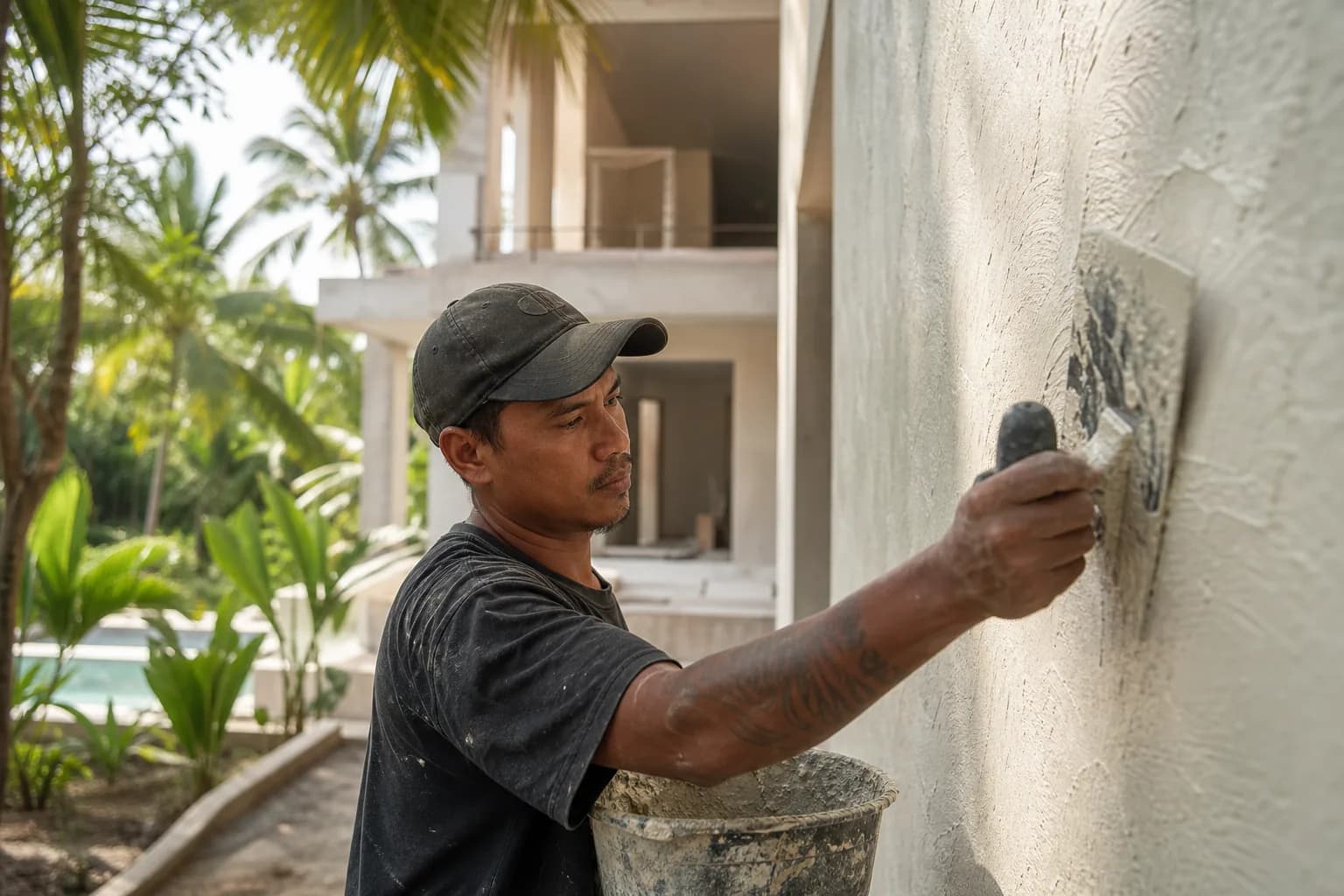
Resin-Infused Plaster Finishes: Anti-Salt Systems Bali
Expert technical guide: Resin-Infused Plaster Finishes: Anti-Salt Systems Bali
8 min read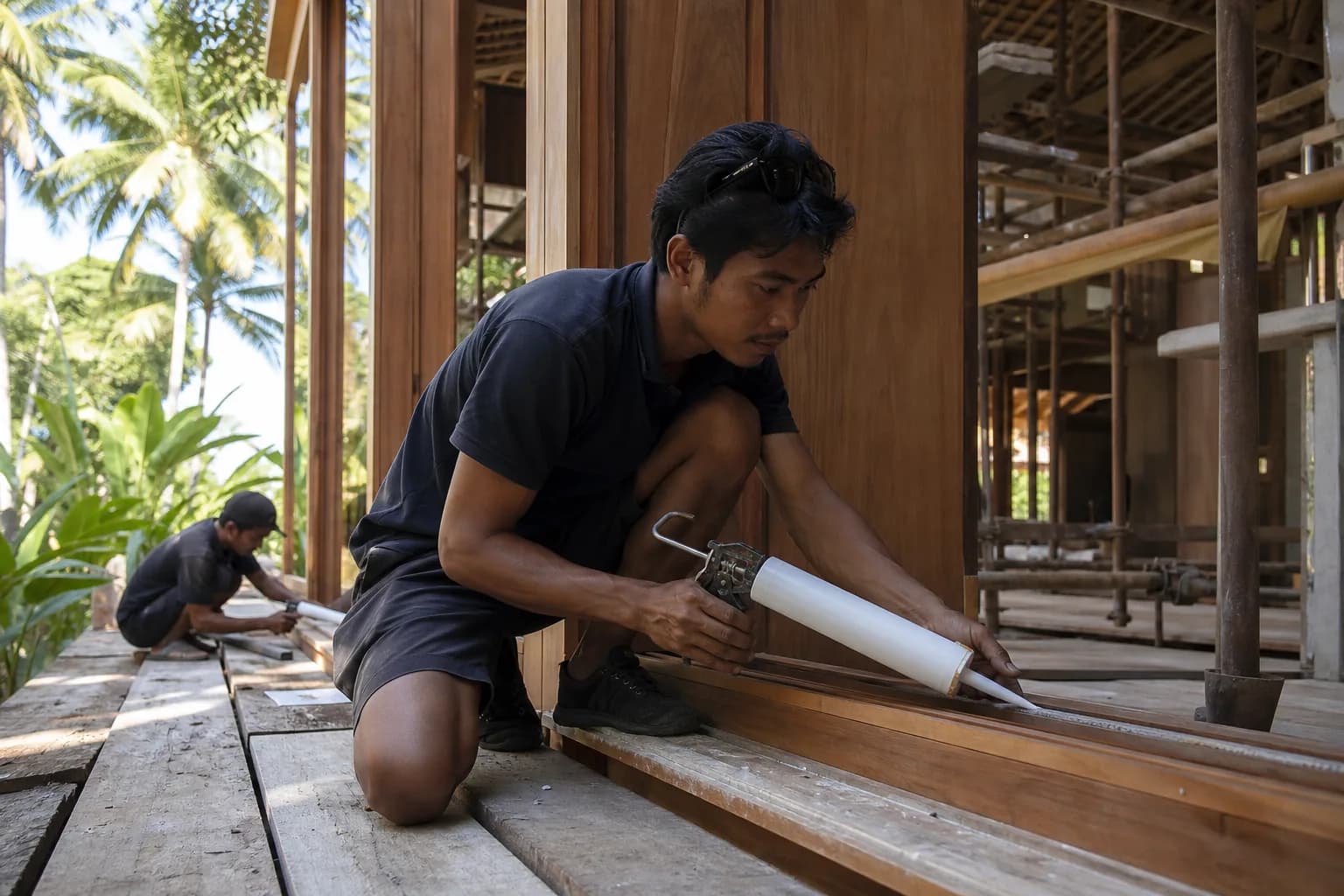
Prefinished Timber Joinery: Silicone Seals Fixings Bali
Professional prefinished timber joinery installation in Bali with silicone seals and fixings for durable weatherproof performance and a premium finish.
10 min read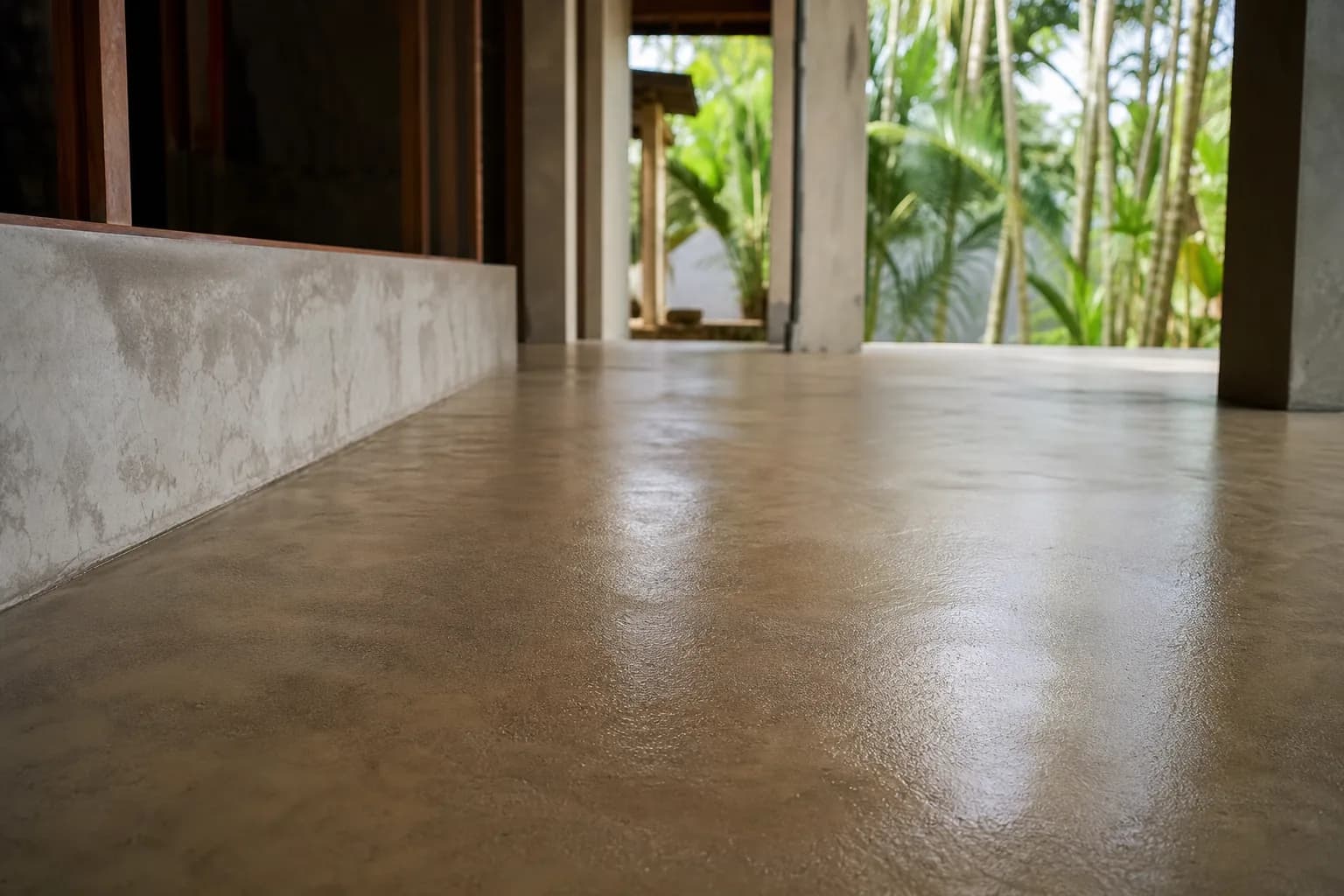
Polished Concrete Microtopping: Surface Prep Sealants Bali
Discover Bali s polished concrete microtopping: expert surface prep, durable sealants, and a flawless finish for modern floors with minimal maintenance.
9 min read