Coral Limestone Cutting Masonry Labor Rates Bali
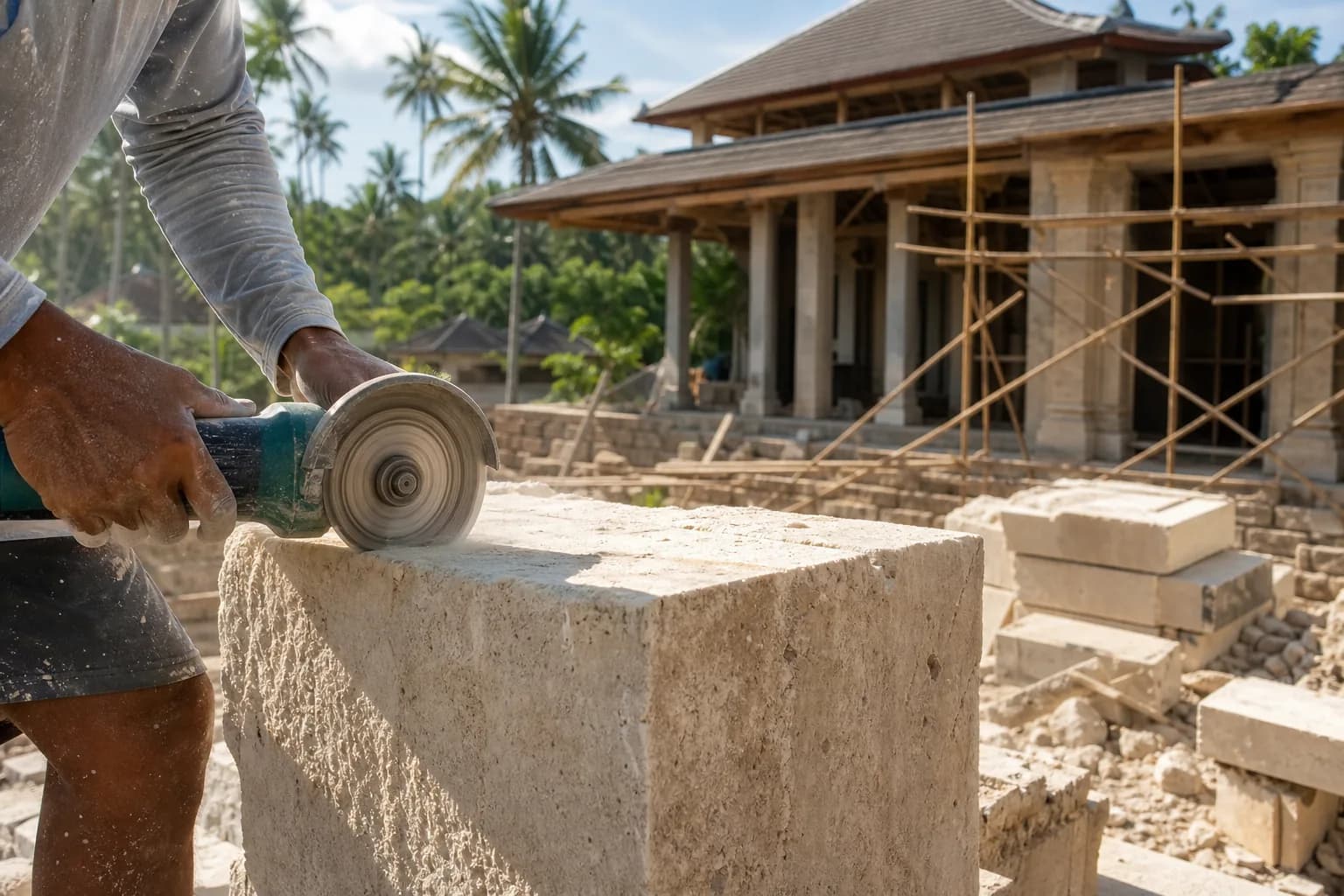
Why Bukit Peninsula Coral Limestone Cutting Costs Determine Your Foundation Budget
The Bukit Peninsula’s geological foundation—dense coral limestone bedrock—creates a unique construction cost variable that foreign buyers consistently underestimate. Unlike the volcanic soil of Ubud or the alluvial plains of Canggu, Bukit’s fossilized coral formations require specialized cutting equipment, extended labor hours, and masonry techniques that can add $15,000–$45,000 to foundation work alone on a standard 300-square-meter villa. When contractors quote “standard excavation rates,” they’re rarely accounting for the reality that cutting through 2–4 meters of coral limestone requires diamond-tipped rock saws, hydraulic breakers, and skilled masons who understand how this brittle, porous stone fractures under tropical humidity. The question isn’t whether you’ll encounter coral limestone on Bukit—you will—but whether your budget includes the actual cutting costs, disposal logistics, and masonry labor rates that reflect Bali’s 2026 skilled labor market realities.
Technical Engineering Reality: Coral Limestone Geology and Cutting Requirements
Bukit Peninsula’s coral limestone (locally called batu karang) formed over millennia as ancient coral reefs uplifted above sea level. This geological history creates construction challenges distinct from other Bali regions. The stone’s compressive strength ranges from 20–60 MPa depending on depth and porosity, requiring engineering assessments before excavation begins. Unlike sedimentary rock that can be excavated with standard backhoes, coral limestone demands specialized approaches.
Equipment Requirements and Operational Costs
Cutting coral limestone for villa foundations requires three primary equipment categories. Hydraulic rock breakers (mounted on 13–20 ton excavators) handle initial breakage, operating at rental rates of $180–$280 per day including operator. Diamond wire saws or rock cutting chainsaws address precision cuts for retaining walls and pool excavations, costing $120–$200 per day. Pneumatic jackhammers manage detail work around utility trenches, renting at $35–$60 daily. The critical cost factor: coral limestone cutting progresses at 3–8 cubic meters per day versus 25–40 cubic meters for standard soil excavation, extending equipment rental periods by 300–500%.
Equipment wear accelerates dramatically in coral limestone. Diamond cutting chains require replacement every 15–25 operating hours at $400–$650 per chain. Hydraulic breaker chisels dull within 40–60 hours, costing $180–$320 for replacement sets. Contractors who don’t account for consumable replacement costs in initial quotes inevitably submit change orders mid-project—a common dispute trigger on Bukit construction sites.
Masonry Labor Specialization and Rate Structures
Coral limestone masonry requires specialized skills beyond standard concrete formwork. Experienced tukang batu (stone masons) who understand coral limestone’s fracture patterns, moisture absorption characteristics, and structural limitations command premium rates. As of February 2026, skilled coral limestone masons on Bukit Peninsula earn Rp 250,000–Rp 400,000 per day ($16–$26 USD), compared to Rp 180,000–Rp 250,000 for general construction labor. Master masons with 15+ years coral limestone experience—essential for structural retaining walls on sloped Bukit lots—command Rp 450,000–Rp 600,000 daily ($29–$39 USD).
Labor productivity varies significantly by task. Cutting and fitting coral limestone blocks for retaining walls averages 2–4 square meters of finished wall per mason per day. Foundation excavation support (removing cut stone, sorting reusable blocks) requires 2–3 laborers per excavator operator. Pool excavation in coral limestone—common for Bukit’s clifftop villas—demands 4–6 weeks for a standard 4×10 meter pool versus 10–14 days in soil-based regions.
Structural Engineering Considerations
Coral limestone’s porosity (15–35% void space) and variable density create foundation engineering challenges. The stone absorbs water rapidly during Bali’s wet season, then contracts during dry months, generating differential settlement pressures. Competent structural engineers specify reinforced concrete grade beams that bridge across coral limestone rather than bearing directly on it—adding $8,000–$15,000 to foundation costs but preventing catastrophic cracking.
Retaining wall design on sloped Bukit lots must account for coral limestone’s tendency to fracture along natural bedding planes. Walls exceeding 2 meters height require geotechnical analysis ($1,200–$2,500) to determine whether coral limestone can serve as stable backfill or must be replaced with engineered fill—a decision that impacts project budgets by $12,000–$35,000 on typical sloped sites.
Hidden Cost Traps: What Contractors Don’t Disclose About Coral Limestone Work
The most expensive surprises in Bukit Peninsula construction stem from incomplete site assessments and vague contractual language around “rock excavation.” Standard construction contracts in Bali often include clauses stating “rock removal charged separately” without defining rates, measurement methods, or disposal costs. This ambiguity creates leverage for mid-project price increases when contractors encounter harder-than-expected coral limestone layers.
Disposal and Haulage Cost Escalation
Coral limestone disposal represents a hidden cost multiplier. Unlike soil that can be redistributed on-site for landscaping, cut coral limestone is rarely reusable for structural purposes due to fracturing. Disposal requires trucking to designated sites, with costs compounding based on Bukit’s narrow access roads and distance from disposal areas. Expect Rp 180,000–Rp 320,000 ($12–$21 USD) per truckload (approximately 5 cubic meters), with typical villa excavations generating 40–80 truckloads. Total disposal costs: $480–$1,680 for projects contractors initially quote as “minimal rock removal.”
Utility Trenching Through Coral Limestone
Electrical conduit, water lines, and drainage systems require trenching through coral limestone—a cost item routinely underestimated. Standard utility trenching in soil costs Rp 45,000–Rp 75,000 per linear meter; coral limestone trenching runs Rp 180,000–Rp 350,000 per meter due to cutting requirements and slower progress. A 150-meter utility run (typical for Bukit lots with road setbacks) costs $1,800–$3,400 versus $450–$750 in soil-based areas—a $1,350–$2,650 differential that appears as “unforeseen site conditions” charges.
Seasonal Labor Rate Volatility
Bukit Peninsula’s construction boom creates seasonal mason shortages, particularly during dry season (April–October) when project activity peaks. Skilled coral limestone masons migrate between projects, and contractors compete for limited specialists. Daily rates can spike 25–40% during peak periods, and projects that fall behind schedule face compounding labor cost increases. Fixed-price contracts without seasonal rate caps expose buyers to these fluctuations.
Step-by-Step Process: Managing Coral Limestone Cutting Costs Effectively
Step 1: Commission Geotechnical Site Assessment (Week 1–2)
Before purchasing land or finalizing construction budgets, engage a qualified geotechnical engineer to conduct test borings. Standard assessment includes 3–5 bore holes to 6-meter depth, laboratory analysis of coral limestone density and compressive strength, and groundwater level determination. Cost: $1,800–$3,200. This investment prevents $20,000–$50,000 in budget overruns by identifying coral limestone depth, hardness variations, and excavation complexity before contracts are signed. Request specific recommendations on foundation type, excavation methodology, and estimated rock cutting volumes.
Step 2: Obtain Detailed Excavation Specifications (Week 3–4)
Work with your structural engineer and contractor to develop excavation specifications that quantify coral limestone cutting. Require line-item breakdowns: cubic meters of coral limestone to be cut, equipment types and rental durations, number of masons and laborers with daily rates, disposal truck quantities and haulage distances. Insist on unit rates (cost per cubic meter of coral limestone cut) rather than lump-sum “excavation” figures. Typical unit rates for coral limestone cutting on Bukit: Rp 850,000–Rp 1,450,000 per cubic meter ($55–$95 USD) all-inclusive.
Step 3: Define Contractual Rock Excavation Terms (Week 4–5)
Construction contracts must explicitly address coral limestone as a measured, priced item. Include: maximum unit rates for rock cutting, disposal, and haulage; measurement methodology (surveyed volumes, not contractor estimates); photographic documentation requirements before, during, and after excavation; payment triggers tied to verified quantities. Specify that “unforeseen rock conditions” clauses apply only to coral limestone exceeding 120% of geotechnical report estimates, with rate caps on additional quantities. This contractual precision prevents the common scenario where contractors claim “unexpected hard rock” to justify 200–300% cost increases.
Step 4: Schedule Excavation During Optimal Conditions (Week 6–10)
Coral limestone cutting efficiency varies by season. Dry season work (April–October) allows continuous operation and faster progress, but labor rates peak. Wet season (November–March) reduces labor costs by 15–25% but increases equipment downtime due to water accumulation in excavations—coral limestone’s porosity creates drainage challenges. For budget-conscious projects, schedule excavation during shoulder periods (late March, early November) to balance labor availability, rates, and weather conditions.
Step 5: Implement Progressive Inspection and Documentation (Weeks 10–16)
Coral limestone excavation requires weekly third-party verification. Engage an independent quantity surveyor to measure cut volumes, verify disposal truck counts, and photograph excavation progress. Cost: $400–$700 per site visit. This oversight prevents disputes over quantities and ensures contractors don’t inflate rock cutting claims. Document coral limestone hardness variations encountered—if conditions differ significantly from geotechnical predictions, this evidence supports legitimate change order negotiations versus contractor opportunism.
Step 6: Salvage and Reuse Assessment (Weeks 12–18)
While fractured coral limestone isn’t suitable for structural use, intact blocks can serve as decorative elements, garden borders, or gabion wall fill—reducing disposal costs. Skilled masons can identify reusable pieces during cutting. Allocate 15–20% of cut coral limestone for on-site reuse, saving $300–$800 in disposal fees on typical projects. Coordinate with landscape designers early to integrate salvaged coral limestone into site plans, transforming a waste cost into a design feature.
Realistic Cost Ranges: 2026 Bukit Peninsula Coral Limestone Budgets
For a representative 300-square-meter villa on a sloped Bukit lot requiring 2.5-meter foundation excavation depth, expect the following coral limestone-specific costs:
- Geotechnical assessment: $1,800–$3,200
- Coral limestone cutting (180–240 cubic meters): $9,900–$22,800
- Specialized equipment rental (6–9 weeks): $7,500–$12,600
- Skilled masonry labor premium (above standard rates): $3,200–$5,800
- Disposal and haulage (45–75 truckloads): $540–$1,575
- Utility trenching through coral limestone (120–180 linear meters): $2,160–$6,300
- Retaining wall construction (coral limestone-specific engineering): $8,500–$18,000
Total coral limestone-specific costs: $33,600–$70,275 for a mid-range villa project. These figures sit atop standard construction costs and represent the Bukit Peninsula geological premium. Projects that fail to budget these items experience 18–35% cost overruns during foundation phases.
Timeline impacts: Coral limestone cutting extends foundation work by 4–7 weeks compared to soil-based sites. Total project duration for Bukit villas: 14–18 months versus 10–14 months in Canggu or Seminyak, affecting financing costs and opportunity costs for buyers on tight schedules.
Frequently Asked Questions: Bukit Coral Limestone Construction
Can I avoid coral limestone cutting costs by choosing a different Bukit location?
No location on Bukit Peninsula entirely avoids coral limestone—it’s the region’s defining geological feature. However, lower-elevation sites near Jimbaran Bay encounter coral limestone at greater depths (3–5 meters) versus clifftop locations in Uluwatu or Pecatu (0.5–2 meters). Flatter lots reduce excavation volumes, lowering cutting costs by 30–50% compared to sloped sites requiring extensive retaining walls. Review geotechnical reports for multiple land options before purchasing; depth-to-coral-limestone is a critical comparison metric. Teville’s verified land listings include geological assessments where available, enabling informed comparisons.
What’s the cost difference between hiring specialized coral limestone contractors versus general builders?
Specialized contractors with coral limestone expertise charge 12–18% higher base rates but complete excavation 35–50% faster with fewer equipment breakdowns and change orders. A $45,000 specialized contractor quote versus a $38,000 general builder quote often results in lower total costs—the general builder’s inexperience leads to $12,000–$22,000 in mid-project adjustments, extended timelines, and disposal inefficiencies. More critically, specialized contractors understand coral limestone’s structural behavior, reducing foundation failure risks that can cost $60,000–$150,000 to remediate post-construction. Teville’s construction process incorporates geological specialists from project inception, preventing costly learning curves on your budget.
How do coral limestone cutting costs affect villa resale value or construction quality?
Coral limestone cutting costs don’t directly enhance resale value—buyers pay for finished villa quality, not geological challenges overcome. However, proper coral limestone management prevents structural issues (foundation settlement, retaining wall failure, drainage problems) that devastate resale value. Villas with documented geotechnical assessments, engineered foundations bridging coral
 4344 m²16 month(s)from 290.000 USD
Radha
 1from 198.000 USD
Private: Haridas Villas
 3180 m²7 month(s)from 142.000 USD
Vasudeva
 164 m²7 month(s)from 79.000 USD
TALA TWO

Want to calculate?
 3127 m²9 month(s)from 177.000 USD
Mukunda
 3124 m²6 month(s)from 123.000 USD
TALA 8
 3173 m²6 month(s)from 125.000 USD
TALA FOUR
 3104 m²11 month(s)from 99.000 USD
TALA 100
164 m²7 month(s)from 79.000 USDPrivate: Haridas Villas, Tegallalang
 2144 m²11 month(s)from 104.000 USD
Narayana
 172 m²8 month(s)from 120.000 USD
Keshava
Start With Real Numbers, Not Guesses
Before buying land or finalizing a design, check the realistic build cost range for your project in Bali.
Our team reviews your inputs and gives a grounded estimate.
Available lands
 700 m²15 min$ 109052Bali, Buduk
 800 m²8 min$ 113300Bali, Ungasan
 1700 m²10 min$ 632257Bali, Kuta
 2400 m²7 min$ 496552Bali, Canggu
 200 m²11 min$ 89286Bali, Tabanan
 1000 m²5 min$ 350431Bali, Drupadi
 1660 m²10 min$ 343448Bali, Kerobokan
 2850 m²15 min$ 315887Bali, Tabanan
 204 m²5 min$ 40899Bali, Kedungu
 2230 m²15 min$ 410573Bali, Padonan
 2680 m²10 min$ 1732759Bali, Pererenan
 1720 m²2 min$ 241478Bali, Tabanan
 1700 m²10 min$ 392549Bali, Nusadua
 260 m²5 min$ 51872Bali, Kedungu
 1158 m²12 min$ 291996Bali, Mengwi
Essential Bali build & buy guides
- Bali villa construction cost per m² in 2026
- How much will your villa cost? Calculator
- Building a villa in Bali: the complete guide
- Buying land in Bali: step-by-step for foreigners
- Bali villa investment: yields, risks, returns
- Leasehold vs freehold: what foreigners can own
- Construction defect liability & 10-year warranty
- Bali building codes and construction standards
Related guides
Sanur and Nusa Dua vs Canggu: Stability Plays vs Hype
Canggu gets the headlines; Sanur and Nusa Dua quietly deliver steadier returns to a different kind of buyer. An honest 2026 comparison of the stability markets against the hype market — prices, demand drivers, oversupply risk, and who should buy where.
7 min read
Ubud and the Wellness Market: Buying or Building for Retreats
Ubud is Bali's wellness capital, and retreat-focused property behaves differently from beach villas: longer stays, group bookings, lower volatility. Here is what the market rewards, what zoning allows, and what it costs to buy or build a retreat property in 2026.
8 min read
Buying and Building on the Bukit: Uluwatu, Bingin and Balangan from a Buyer's Seat
A buyer's-seat 2026 guide to the Bukit peninsula — Uluwatu, Bingin and Balangan land prices, the water problem nobody budgets, cliff setbacks after the 2025 Bingin demolitions, and how to build there properly.
7 min read