Concealed PEX Routing Manifold Mounting in Bali Renovations
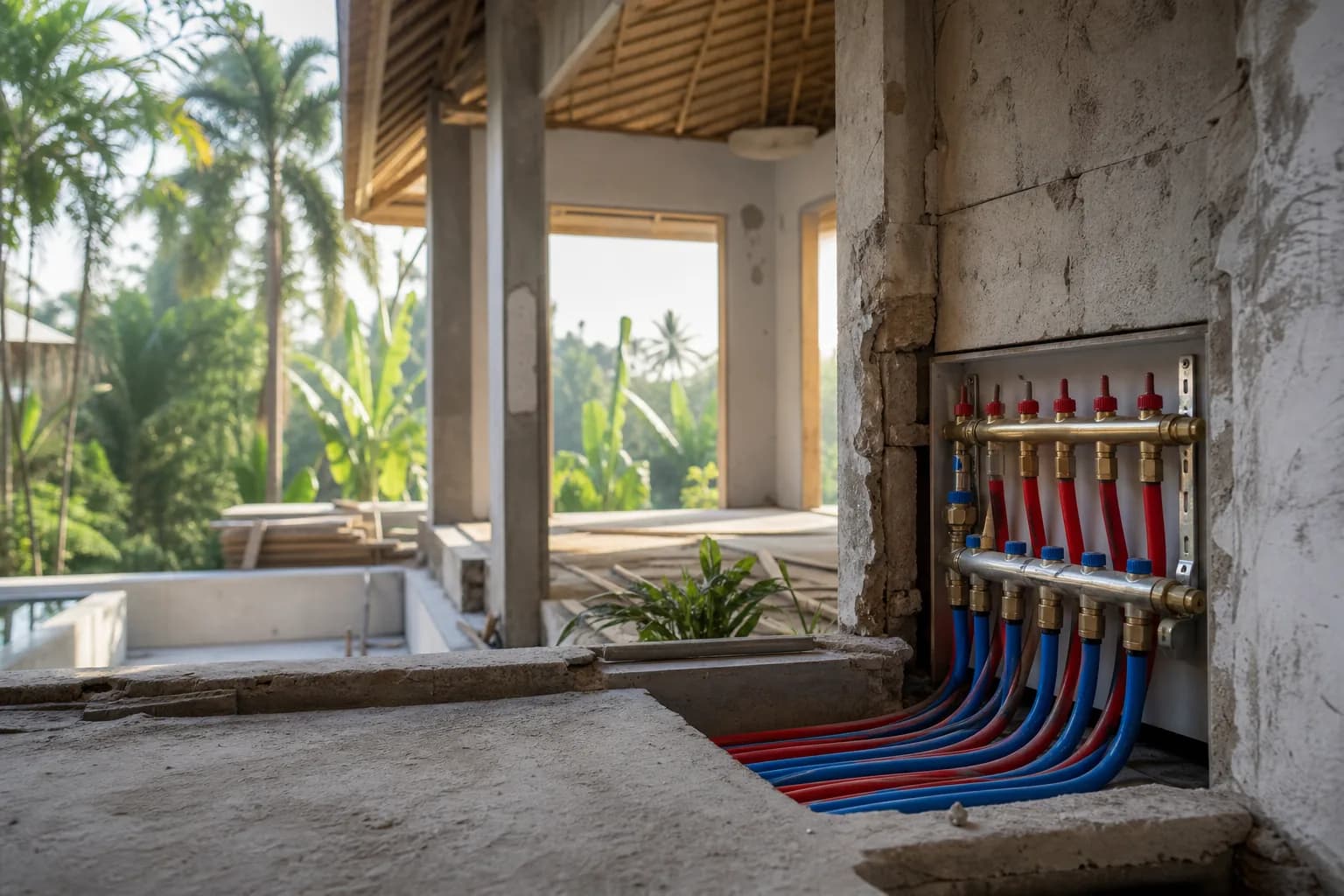
Concealed PEX Routing & Manifold Mounting for Bali Renovations
1) The Specific Problem We Solve
In Bali renovations, owners want clean walls and reliable water delivery without visible pipes or patchy repair lines. But older villas often mix PVC, copper, and haphazard tees buried in plaster—leading to leaks, pressure drop, and messy finishes when something fails. The solution is a concealed PEX system routed from a centralized manifold inside a recessed cabinet: every fixture on its own line, labeled and accessible. This Bali area guide explains the exact finishing and utilities method Teville uses to integrate PEX and manifold cabinets into renovation Bali projects—safely, durably, and invisibly—without compromising interior finishes or furniture installation.
2) Technical Deep Dive: How Concealed PEX + Manifolds Work in Tropical Bali
At the heart of a modern villa utilities upgrade is a manifold—a distribution bar with valves feeding individual PEX lines. Instead of branching tees hidden across walls, each bathroom, kitchen, or outdoor shower gets its own dedicated run. We mount the manifold inside a recessed steel cabinet, typically ~680 mm wide by 690–790 mm high and ~130 mm deep (common sizes available from recognized suppliers). The cabinet is set into a wall or joinery cavity, trimmed flush, and closed with an access door that aligns with the final finish.
Why manifolds are superior for interior finishing Bali:
- Accessibility: All connections remain accessible behind a neat door—no demolition to isolate or service a line.
- Control: Each circuit gets its own valve for isolation, balancing, and labeling. High-flow stainless manifolds with flowmeters are an option where precise balancing is needed (e.g., luxury showers or multiple fixtures drawing simultaneously).
- Clean routing: PEX lines radiate from one point, allowing straight, gentle curves through walls/ceilings without unnecessary joints—ideal for long-term durability in Bali’s humidity and salt-laden air.
Recessed cabinet placement: We favor dry, ventilated areas such as a corridor, linen cabinet back, kitchen pantry side, or the service room. In furniture installation contexts, the cabinet can sit behind wardrobe carcasses or pantry panels with a discreet access hatch. We coordinate early with joinery shop drawings so the door gaps, hinges, and finish (painted, veneered, or powder-coated) align with the interior concept. The goal: the villa’s utilities vanish into the architecture.
Routing PEX in Balinese substrates:
- Masonry walls (brick/AAC): We chase vertical runs with dust-controlled wall chasers, embed sleeves, and maintain minimum plaster cover. For wet walls, we coordinate with waterproofing details to avoid membrane damage and ensure collars are sealed.
- Ceiling voids: In timber or steel-framed ceilings with gypsum board, we route in insulated bundles on cable trays or pipe hangers, then drop down via sleeved penetrations. Ceiling routing helps avoid excessive chasing and speeds finishing.
- Expansion and movement: PEX accommodates thermal expansion, but we still use soft bends, isolation grommets, and expansion loops in long runs to prevent creaking or stress on finishes.
Hot/cold performance for tropical climate:
- Heat/hot water: Solar or gas heaters commonly deliver 55–60°C. We specify PEX certified for potable hot water (up to 95°C rated) and insulate lines to reduce heat loss and protect finishes.
- Condensation: High humidity plus cool incoming water can cause sweating. Closed-cell elastomeric insulation with sealed seams prevents moisture tracking that can stain paint or swell cabinetry.
- Water quality: Mineral content varies by well or PDAM. We add filtration and strainers upstream of the manifold and use dezincification-resistant (DZR) brass or PPSU fittings for longevity.
Testing and finishing: Before any drywall, plaster, or tile closes, we pressure-test the system at 1.5x working pressure for a minimum of 60 minutes, in line with SNI best practice and manufacturer guidance. Only after successful tests do we close chases, restore plaster, align furniture gables, and mount finishes. This sequencing is crucial to Teville’s finishing quality standards as seen in our portfolio and villa projects.
3) Materials & Standards for Bali Conditions
PEX tubing: Use PEX-A or PEX-B certified for potable water, compliant with ISO 15875 and/or ASTM F876/F877. For domestic water, oxygen barrier is not required (that’s for hydronics), but UV exposure must be minimized—store coils out of sunlight and conceal promptly. Choose diameters sized for pressure and flow, typically 16–25 mm for fixtures and 32 mm for main feeds in villas.
Fittings and valves: Choose DZR brass (CW602N) or high-grade PPSU to resist dezincification in mineral-rich water. Stainless steel crimp rings or expansion fittings to manufacturer specification. Isolation valves on each manifold port are standard; consider full-bore ball valves and, where needed, flowmeters for balancing.
Manifolds and cabinets: Stainless steel manifolds (304/316) with shutoff valves are durable in coastal air. Recessed steel cabinets with corrosion-resistant powder coat; allowance for 680–700 mm width and 130 mm depth is common. Include perforations for ventilation and space for labels and a small drip tray or leak sensor.
Insulation: Closed-cell elastomeric (e.g., 9–13 mm wall for 16–25 mm pipe) with UV-resistant jacket if in sun-exposed service zones during construction. All joints sealed with compatible adhesive to prevent condensation ingress.
Fastenings & anchors: Stainless or zinc-flake coated anchors for coastal durability. Use rubber isolation to minimize pipe noise against masonry.
Standards & codes: Design and installation follow SNI 8153 (plumbing systems) and manufacturer instructions. Where villas connect to PDAM or boosted well systems, verify pump pressures and include a pressure-reducing valve if static pressure can exceed PEX/fitting ratings. Always obtain approvals from building management for chases and penetrations; firestop where required.
4) Step-by-Step Process We Use in Teville Renovations
1. Survey & as-built capture
- Scan walls and ceilings, map existing pipes, fixtures, and waterproofing zones.
- Record pressures/flows from source and booster systems; water test for sediment/hardness.
- Coordinate with interior design and furniture installation drawings for cabinet access location.
2. System design & sizing
- Select a manifold size (6–12+ ports) with spare capacity for future fixtures.
- Hydraulically size PEX diameters; plan dedicated runs to each outlet (basin, WC, rain shower, kitchen, outdoor taps).
- Decide on hot water recirculation if distances exceed comfort thresholds; allocate return loop ports.
3. Cabinet & structure preparation
- Confirm cabinet recess: typically ~680 mm W x 690–790 mm H x 130 mm D, framed and braced as needed.
- Coordinate door swing, reveal, and finish with wall or joinery. Plan ventilation slots and a shallow drip tray or sensor space.
4. Clean chasing & penetrations
- Mark vertical/horizontal routes avoiding structural elements and waterproofing membranes.
- Chase with depth control; install protective conduits/sleeves where pipes pass through masonry or edges.
- In wet areas, detail collars and sealants compatible with waterproofing systems.
5. Manifold mounting & main connections
- Mount manifold inside cabinet on anti-vibration brackets.
- Connect filtered cold feed, hot feed from heater/plant, and recirculation as applicable. Install gauges, PRV (if required), and service valves.
- Add labeling rail and number each port for traceability.
6. PEX pulling & protection
- Pull color-coded PEX (red/hot, blue/cold) in gentle radii; avoid kinks and protect with grommets through studs/plates.
- Terminate at fixture points with secure drop-ear elbows or stub-outs mounted on backing plates aligned to tile datum lines.
- Insulate hot and cold (to prevent heat loss and condensation) and seal insulation seams.
7. Pressure testing
- Test at 1.5x working pressure for at least 60 minutes; record results. Cycle pressure to reveal marginal joints.
- Only proceed when fully dry and stable. Where allowed, install temporary leak sensors during commissioning.
8. Finishing & furniture integration
- Reinstate plaster with mesh reinforcement over chases; true walls for flat paint or tile finishes.
- Install cabinet door flush with wall or inside built-in furniture; align reveals, match paint or veneer.
- Fit escutcheons and trims at fixture points precisely aligned to grout lines.
9. Commissioning & handover
- Open each circuit, purge air, check flows, and balance if using flowmeters.
- Label circuits and provide as-built drawings/photo log so future drilling avoids concealed lines.
- Train staff on isolation procedures and provide service schedule. See how we stage this in our construction process.
5) Costs & Timeline (Guidance for Bali Renovations)
Typical scope: 3–5 bathrooms plus kitchen, laundry, and outdoor taps in a 2–4 bedroom villa.
- Materials: PEX coils, stainless/DZR fittings, 6–12+ port manifold, recessed cabinet, valves, gauges, filter/strainer, insulation, sleeves, anchors.
- Labor: Design and coordination, chasing and making-good, manifold fit-out, pulling/terminations, testing, finishing integration, commissioning.
Budget ranges (indicative, excluding VAT and major structural works):
- Compact villa (up to ~8 circuits): IDR 25–45 million.
- Mid-size villa (9–14 circuits): IDR 45–85 million.
- Large or premium (15+ circuits, dual manifolds, recirc, advanced filtration/leak sensors): IDR 85–150+ million.
Timeline: From measured survey to handover typically 5–10 working days once materials and access are confirmed: 1 day survey/design; 1–2 days cabinet recess and rough-in; 1–2 days PEX pulling/terminations; 1 day pressure testing; 1–3 days making-good and finish alignment; 0.5 day commissioning. Add time for bespoke cabinetry or complex waterproofing coordination.
For a detailed estimate tailored to your villa and finish standards, share your layout via Teville’s cost estimation form. We emphasize quality installation and durability—never speculative returns.
6) FAQ: Concealed PEX & Manifolds in Bali Villas
Is PEX suitable for Bali’s hot and humid climate?
Yes—quality PEX is immune to corrosion and scale. Protect from UV during storage/installation, insulate to control condensation, and use DZR/PPSU fittings for mineral-rich water.
PEX-A vs PEX-B—what should I choose?
Both can be excellent when certified. PEX-A often uses expansion fittings; PEX-B often uses crimp. Selection depends on installer tooling, availability, and manufacturer warranties. Teville scopes both, prioritizing proven brands and local support.
Where should the manifold cabinet go?
Place it dry and accessible: corridor niche, pantry side, laundry, or behind built-in wardrobes with a discreet access panel. We coordinate with furniture installation to keep it invisible yet serviceable.
Can I mix copper/PVC with PEX?
Yes, with proper transition fittings and dielectric separation. For consistency, we minimize mixed systems and keep joints accessible at the manifold or service zones.
Will a manifold improve water pressure?
Manifolds reduce pressure losses from hidden tees and long, mixed-diameter runs. True pressure depends on your booster/PDAM feed; we can add PRVs, accumulators, or pump controls as needed.
What about hot water recirculation?
For long runs to master suites, a recirc loop delivers quicker hot water. It needs return piping, a small pump, check valves, and thermostatic control. We insulate thoroughly to minimize energy use.
How do you avoid drilling into concealed pipes later?
We issue as-built drawings, label heights/offsets, and provide a photo log. Where practical, we add tracer tape in chases. We also brief owners and contractors on no-drill zones.
Can PEX run under floors?
Yes, but serviceability is critical. We prefer overhead or vertical wall routing to keep joints accessible. If floors are used, we sleeve and protect thoroughly and document routes.
Do I need leak detection?
Optional but recommended in premium finishes: sensors in the cabinet or high-risk zones can trigger alerts or shutoff valves, protecting timber floors and custom joinery.
How does this affect finishing quality?
Greatly. With straight, planned routes and minimal joints, walls need fewer repairs, tiles align cleanly, and the manifold door can be finished flush—achieving the clean look expected in Bali
 4344 m²16 month(s)from 290.000 USD
Radha
 164 m²7 month(s)from 79.000 USD
TALA TWO
 3127 m²9 month(s)from 177.000 USD
Mukunda
 1from 198.000 USD
Private: Haridas Villas
 3173 m²6 month(s)from 125.000 USD
TALA FOUR
 3124 m²6 month(s)from 123.000 USD
TALA 8

Want to calculate?
 2144 m²11 month(s)from 104.000 USD
Narayana
 3180 m²7 month(s)from 142.000 USD
Vasudeva
 172 m²8 month(s)from 120.000 USD
Keshava
164 m²7 month(s)from 79.000 USDPrivate: Haridas Villas, Tegallalang
 3104 m²11 month(s)from 99.000 USD
TALA 100
Start With Real Numbers, Not Guesses
Before finalizing your finishing works plan, check realistic cost ranges for your Bali villa project.
Available lands
 608 m²15 min$ 310377Bali, Seminyak
 250 m²15 min$ 40025Bali, Munggu
 4270 m²10 min$ 394397Bali, Ubud
 10000 m²19 min$ 232759Bali, Buleleng
 800 m²10 min$ 307882Bali, Tibubeneng
 2200 m²3 min$ 183842Bali, Berawa
 1300 m²10 min$ 348214Bali, Tabanan
 260 m²5 min$ 51872Bali, Kedungu
 420 m²15 min$ 41897Bali, Tabanan
 5000 m²8 min$ 424877Bali, Ungasan
 7250 m²56 min$ 235714Bali, Tabanan
 500 m²10 min$ 107143Bali, Tabanan
 300 m²55 min$ 32475Bali, Tegelalang
 600 m²10 min$ 206897Bali, Canggu
 2800 m²15 min$ 310345Bali, Tabanan
Essential Bali build & buy guides
- Bali villa construction cost per m² in 2026
- How much will your villa cost? Calculator
- Building a villa in Bali: the complete guide
- Buying land in Bali: step-by-step for foreigners
- Bali villa investment: yields, risks, returns
- Leasehold vs freehold: what foreigners can own
- Construction defect liability & 10-year warranty
- Bali building codes and construction standards
Related guides
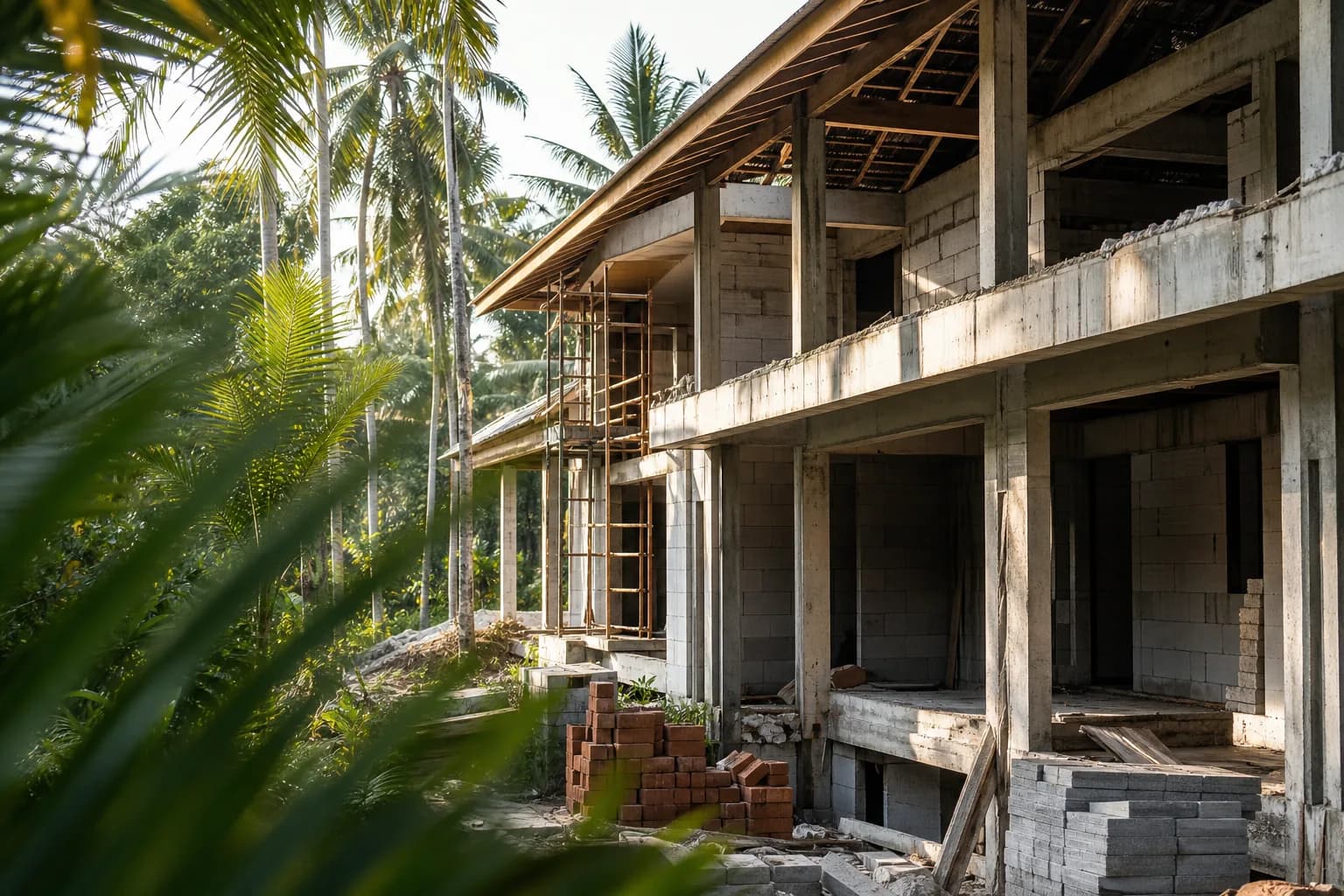
Sanur and Nusa Dua vs Canggu: Stability Plays vs Hype
Canggu gets the headlines; Sanur and Nusa Dua quietly deliver steadier returns to a different kind of buyer. An honest 2026 comparison of the stability markets against the hype market — prices, demand drivers, oversupply risk, and who should buy where.
7 min read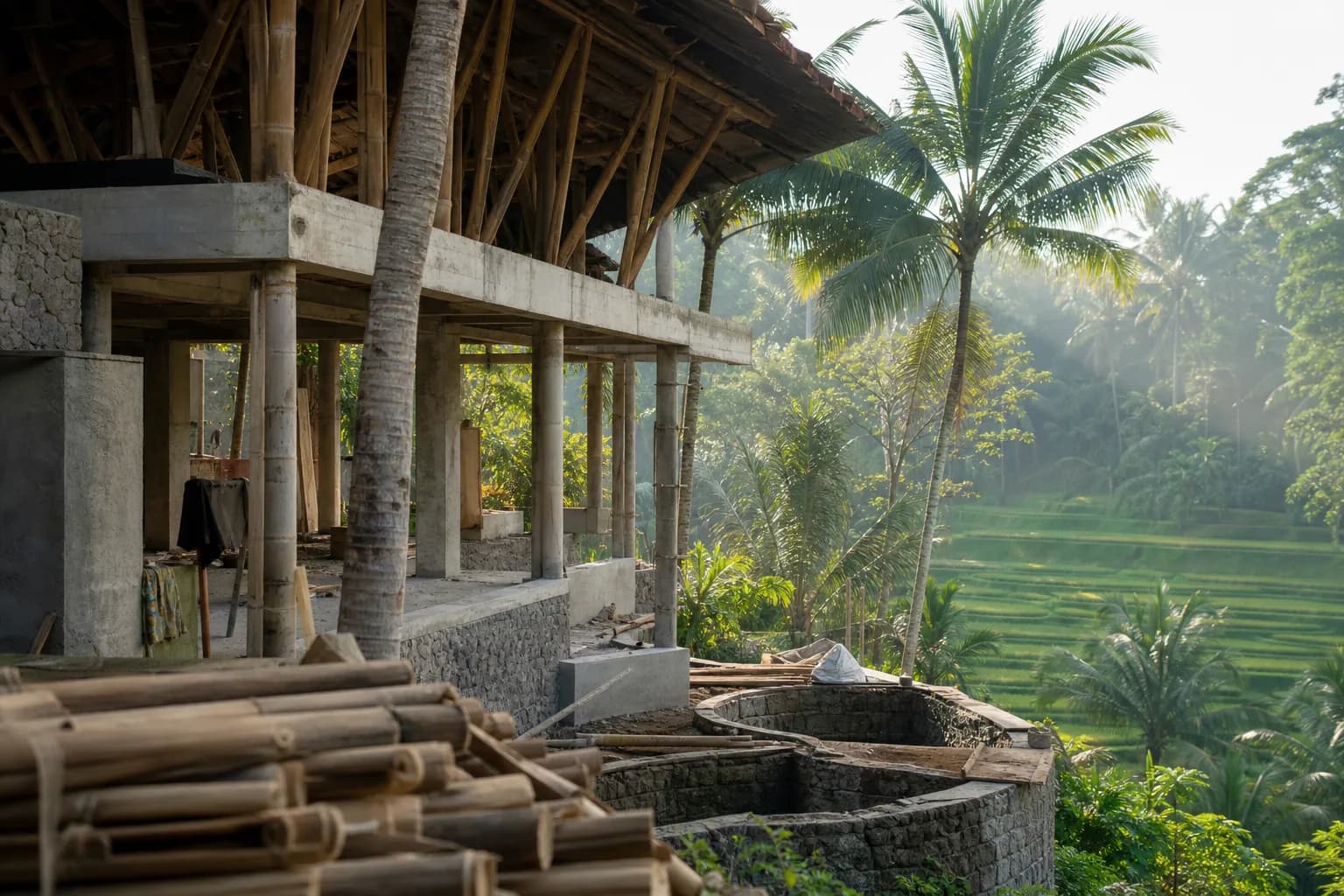
Ubud and the Wellness Market: Buying or Building for Retreats
Ubud is Bali's wellness capital, and retreat-focused property behaves differently from beach villas: longer stays, group bookings, lower volatility. Here is what the market rewards, what zoning allows, and what it costs to buy or build a retreat property in 2026.
8 min read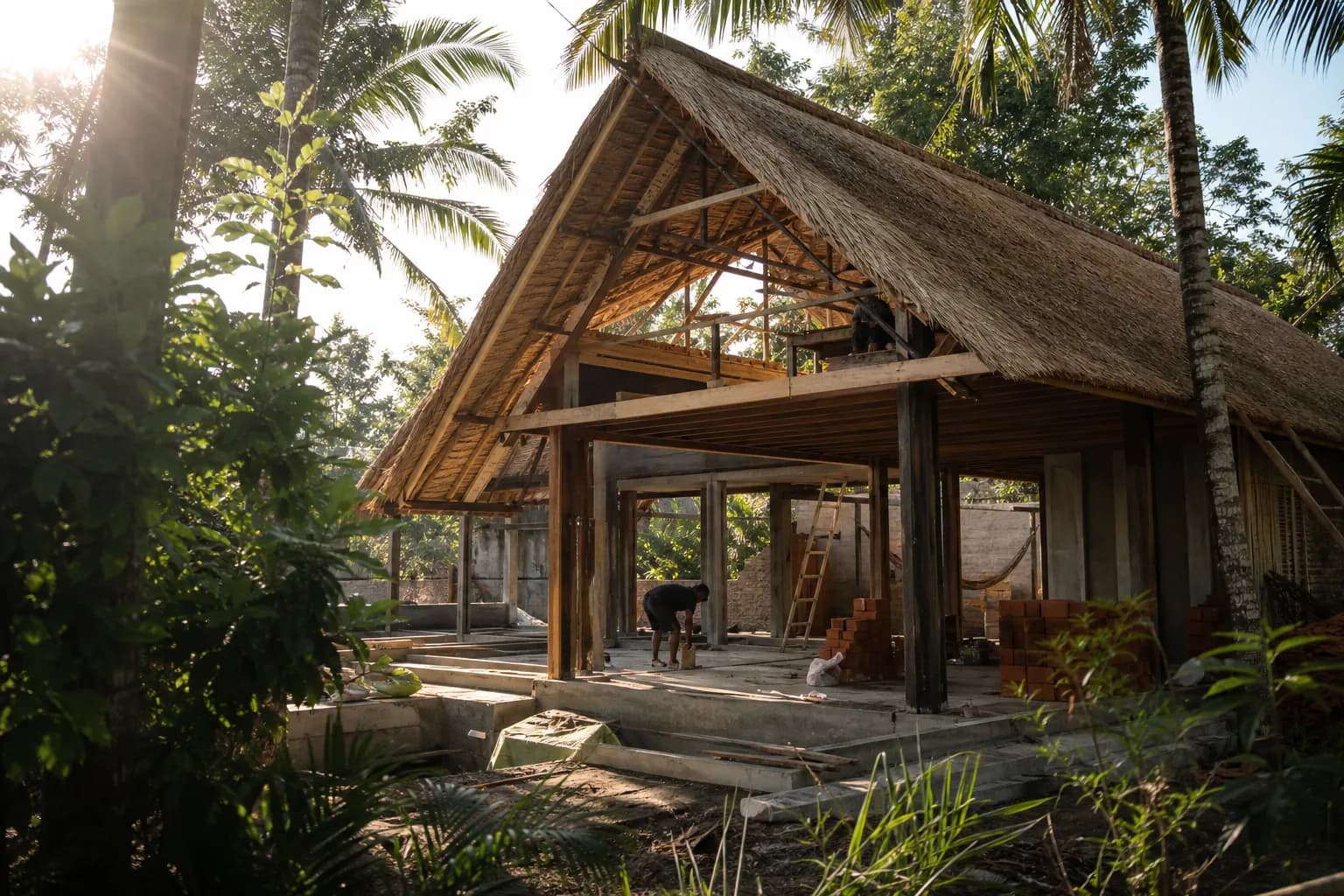
Buying and Building on the Bukit: Uluwatu, Bingin and Balangan from a Buyer's Seat
A buyer's-seat 2026 guide to the Bukit peninsula — Uluwatu, Bingin and Balangan land prices, the water problem nobody budgets, cliff setbacks after the 2025 Bingin demolitions, and how to build there properly.
7 min read