Bathroom Vanity Plumbing in Bali Villas: Drainage Standards
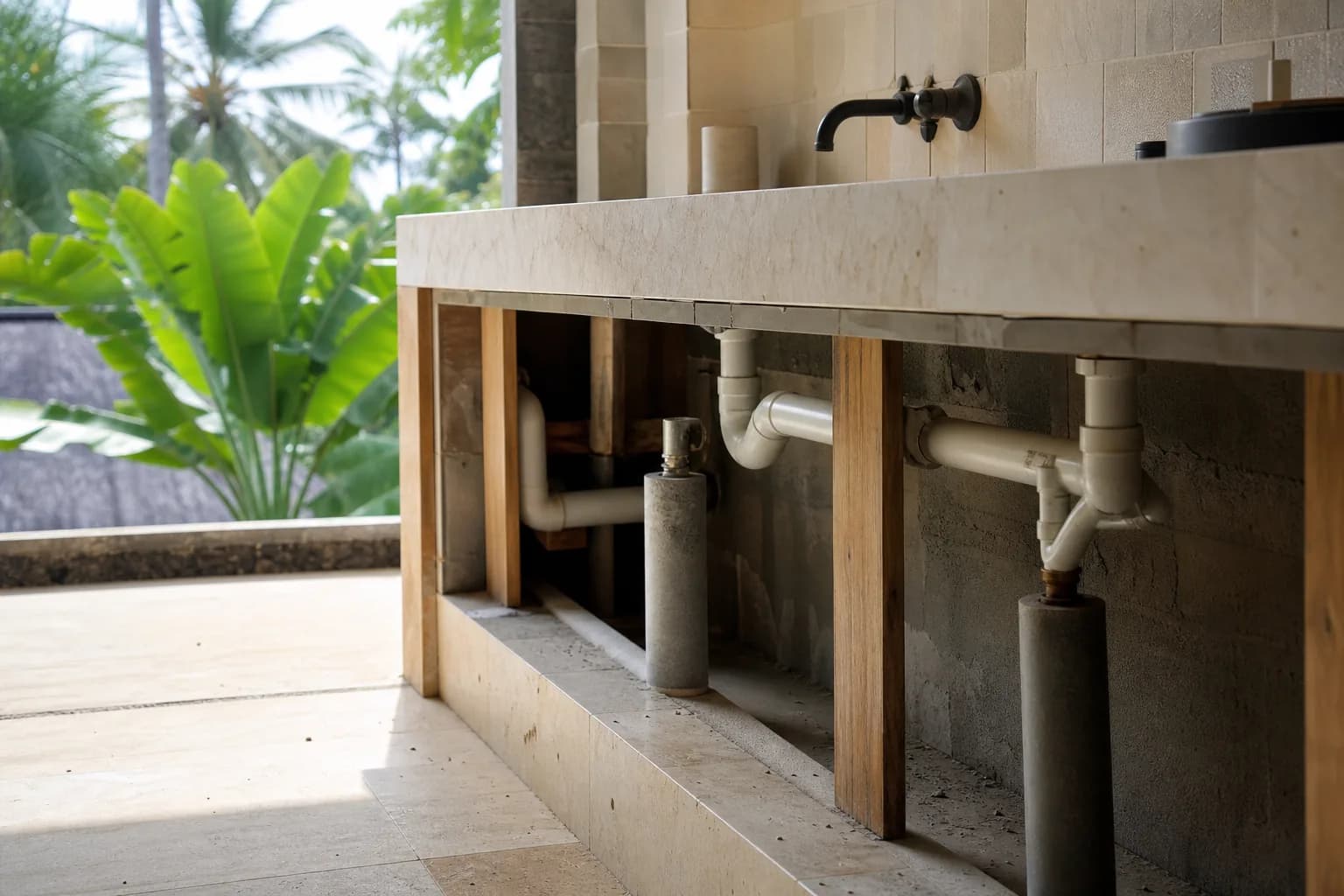
Bathroom Vanity Plumbing Integration: Drainage Standards for Bali Villas
The Specific Problem: Why Bathroom Vanity Drainage Fails in Bali Villa Construction
When we examine bathroom vanity plumbing failures across Bali villa projects, the root cause rarely stems from poor-quality fixtures. Instead, improper drainage integration during the finishing phase creates cascading problems that emerge months after construction completion. Property owners in Bali frequently encounter slow drains, water pooling beneath vanities, and structural damage to cabinetry—all preventable through proper plumbing integration standards. The tropical climate of Bali introduces unique challenges: high humidity accelerates corrosion, seasonal rainfall affects water table levels, and the region’s specific building codes differ from international standards. At Teville, we’ve completed over 150 villa projects across Bali, and bathroom vanity drainage represents one of the most critical finishing details that separates professional construction from amateur work. This article provides the technical framework that ensures your bathroom vanity plumbing integrates seamlessly with Bali’s environmental conditions and local regulatory requirements.
Technical Deep Dive: Bathroom Vanity Drainage Integration in Tropical Climates
Bathroom vanity plumbing integration involves far more than simply connecting a drain pipe to the municipal system. The process encompasses precise height calculations, slope optimization, material selection for tropical conditions, and integration with Bali’s specific drainage infrastructure. The standard drain height for bathroom vanities ranges between 18 to 20 inches from the finished floor—this measurement aligns with international standards while accommodating the typical P-trap configuration beneath most vanity cabinets. However, Bali’s construction environment demands additional considerations that generic guidelines overlook.
Height Calibration for Bali Conditions: The recommended drain height of 18-20 inches assumes standard plumbing infrastructure and moderate climate conditions. In Bali, we adjust this specification based on several factors. First, the finished floor elevation must account for potential water ingress during monsoon seasons. Many Bali villas experience seasonal water table fluctuations of 12-18 inches, which directly impacts drainage efficiency. We typically establish drain heights at the upper range (20 inches) when properties sit in lower-elevation areas prone to water accumulation. Second, Bali’s tropical humidity creates condensation issues that standard specifications don’t address. We incorporate additional ventilation considerations into the rough-in phase, ensuring the drain assembly includes proper air circulation to prevent moisture-related deterioration of cabinet materials.
Slope and Flow Dynamics: Proper drainage requires a consistent slope of 1/4 inch per linear foot—this ensures gravity-driven flow without creating siphoning conditions that damage the P-trap seal. In Bali villas, we measure this slope from the vanity drain outlet to the main stack or septic connection point. The tropical environment introduces complications: high humidity can cause slight structural settling that disrupts carefully calibrated slopes. Our finishing protocol includes post-installation verification using laser levels to confirm slope accuracy, with documentation provided to property owners. Additionally, Bali’s volcanic soil composition and seasonal water movement can shift underground drainage lines. We specify rigid PVC piping for the main drain runs rather than flexible alternatives, providing structural integrity that withstands minor ground movement.
Ventilation Integration: The drain-waste-vent (DWV) system requires proper air circulation to function correctly. In Bali’s humid environment, inadequate ventilation creates negative pressure that breaks the P-trap seal, allowing sewer gases to enter living spaces—a particularly problematic issue in tropical climates where odor problems intensify. We integrate vent stacks that extend above the roofline, with proper screening to prevent insect entry (a significant concern in Bali). The vent sizing follows the 2018 International Plumbing Code standards, adjusted for Bali’s specific requirements. For vanities located far from primary vent stacks, we install individual vent lines with anti-siphon traps, ensuring code compliance while maintaining the aesthetic integrity of finished spaces.
Material Degradation Considerations: Bali’s tropical climate accelerates corrosion of standard plumbing materials. Copper piping, common in international construction, oxidizes rapidly in high-humidity environments. We specify Schedule 40 PVC for all drain lines in Bali villas, with stainless steel P-traps and brass fittings that resist tropical corrosion. The vanity drain assembly itself requires marine-grade materials—standard chrome-plated brass deteriorates within 3-5 years in Bali’s climate. We source vanity drain components specifically rated for tropical environments, with protective coatings that extend service life to 15+ years. This material specification represents a critical finishing detail that prevents premature replacement and maintains plumbing system integrity throughout the villa’s operational life.
Materials and Standards: Bali-Specific Plumbing Specifications
Drain Pipe Materials: The primary drain line from the vanity to the main stack or septic system must withstand Bali’s environmental conditions. We specify Schedule 40 PVC pipe (minimum 1.5 inches diameter for single vanities, 2 inches for double vanities) as the standard for all drain runs. PVC provides superior corrosion resistance compared to cast iron or copper, critical in Bali’s high-humidity environment. All joints utilize solvent-welded connections rather than mechanical fittings, eliminating potential leak points that develop over time. For properties with septic systems (common in Bali), we specify PVC with proper cleanout access points every 50 linear feet, facilitating maintenance in the tropical climate where biological growth accelerates.
P-Trap and Drain Assembly: The P-trap represents the most critical component in vanity drainage, creating the water seal that prevents sewer gas entry. We specify stainless steel P-traps with brass ball valves for shut-off capability—essential for maintenance in Bali villas where plumbing emergencies can occur during monsoon seasons when professional services face delays. The trap arm (horizontal section) must maintain the 1/4-inch-per-foot slope while accommodating the vanity cabinet depth. For Bali installations, we specify adjustable P-traps that allow fine-tuning during final finishing, compensating for minor variations in cabinet installation or floor levelness. The drain tailpiece connecting the sink to the P-trap utilizes stainless steel or marine-grade plastic, never standard chrome-plated brass that corrodes rapidly in tropical conditions.
Vanity Drain Rough-In Standards: The rough-in phase establishes the foundation for successful vanity integration. We position the drain opening at 18-20 inches from the finished floor, centered beneath the sink location. The rough-in includes a cleanout fitting at the P-trap location, providing access for maintenance without requiring cabinet removal. For Bali villas, we install the rough-in with 2-3 inches of vertical adjustment capability, accommodating variations in vanity cabinet height or custom sink installations. The drain opening includes a temporary cap during construction, preventing debris accumulation and maintaining system integrity until final fixture installation. This rough-in specification aligns with the 2018 International Plumbing Code while incorporating Bali-specific environmental considerations.
Compliance with Local Regulations: Bali’s plumbing standards derive from Indonesian national codes, which generally align with international standards but include specific requirements for tropical climates. We ensure all vanity drainage installations comply with local building department requirements, including proper septic system integration for properties not connected to municipal sewage. The drainage system must include proper grading and slope verification, documented through site inspection reports. For villas in Bali’s designated water protection zones, we implement additional filtration and treatment measures to prevent groundwater contamination. Our finishing protocol includes coordination with local plumbing inspectors, ensuring all work meets regional standards before final approval.
Step-by-Step Installation Process: From Rough-In to Final Integration
Phase 1: Rough-In Planning and Layout (Days 1-3)
The installation process begins during the structural phase, before wall finishing and cabinetry installation. We conduct a detailed site survey to establish the vanity location, accounting for plumbing stack proximity, electrical outlet locations, and structural elements. For Bali villas, this survey includes assessment of water table elevation and seasonal water movement patterns—critical information that informs drain height decisions. We create a detailed rough-in drawing showing drain centerline location, height measurements, and slope calculations. This drawing becomes the reference document for all subsequent work, ensuring consistency across the project team. We mark the drain location on the subfloor using permanent markers, creating a visual reference that prevents installation errors during the framing phase.
Next, we establish the main drain line route from the vanity location to the primary stack or septic connection point. In Bali villas, this route must account for structural elements, avoiding interference with beams or load-bearing walls. We specify the pipe diameter (typically 1.5 inches for single vanities) and calculate the total linear footage, including all bends and vertical runs. The slope calculation determines the elevation difference between the vanity drain outlet and the main stack connection point. For a typical 20-foot run with 1/4-inch-per-foot slope, we require 5 inches of elevation drop—a critical measurement that ensures proper drainage without creating siphoning conditions.
Phase 2: Drain Line Installation (Days 4-7)
Once the structural framing is complete, we install the main drain line using Schedule 40 PVC pipe. All connections utilize solvent-welded joints, creating permanent, leak-proof connections that withstand Bali’s environmental conditions. We install the drain line with proper support, using plastic straps every 4 feet for horizontal runs and every 8 feet for vertical runs. In Bali’s tropical environment, we avoid metal straps that corrode, instead specifying plastic or stainless steel supports. The drain line includes cleanout fittings at strategic locations—typically at the base of the main stack and at any significant direction changes. These cleanouts provide access for maintenance, essential in Bali where biological growth and debris accumulation can occur more rapidly than in temperate climates.
We verify slope accuracy using a laser level, measuring the elevation at the vanity drain outlet and at the main stack connection point. The slope must fall within the acceptable range of 1/4 to 1/2 inch per linear foot—too steep creates siphoning issues, while insufficient slope causes drainage problems. For Bali installations, we document this slope verification with photographs and measurements, creating a record that confirms code compliance. We also install the vent line during this phase, running it from the main stack to above the roofline. The vent line diameter matches the drain line size (typically 1.5 inches), ensuring adequate air circulation for proper DWV system function.
Phase 3: Vanity Cabinet and Sink Installation (Days 8-12)
Once the rough-in is complete and verified, we proceed with vanity cabinet installation. The cabinet positioning must align precisely with the drain opening—typically centered within 1/4 inch of the rough-in location. We install the cabinet using shims to ensure level installation, critical for proper drainage function. In Bali’s humid environment, we specify moisture-resistant cabinet materials and ensure adequate ventilation behind the cabinet to prevent mold growth. The cabinet installation includes securing the vanity to wall studs using appropriate fasteners, preventing movement that could stress the drain connection.
The sink installation follows cabinet placement. For vessel sinks or custom installations, we may need to adjust the drain height to accommodate the specific sink design. We verify that the sink drain outlet aligns with the P-trap inlet, typically requiring a 1.5-inch tailpiece connection. The tailpiece must maintain proper slope toward the P-trap, preventing water pooling or siphoning issues. We use stainless steel or marine-grade plastic tailpieces, never standard chrome-plated brass that corrodes in Bali’s climate. The sink installation includes proper caulking around the sink perimeter, preventing water infiltration into the cabinet structure—a critical detail in Bali’s high-humidity environment where moisture damage accelerates.
Phase 4: P-Trap Assembly and Final Connections (Days 13-15)
The P-trap assembly represents the final critical step in vanity drainage integration. We position the P-trap to maintain the required slope from the sink tailpiece to the main drain line. The P-trap includes a cleanout plug at the lowest point, providing access for maintenance without requiring cabinet removal. We hand-tighten all connections, then verify tightness using a basin wrench—over-tightening can crack plastic fittings, while under-tightening creates leak points. For Bali installations, we apply plumber’s tape to all threaded connections, providing additional sealing protection in the tropical climate.
We conduct a pressure test of the entire drain system before final approval. This test involves filling the sink and observing drainage rate and any visible leaks. We verify that water drains completely within 30 seconds for a standard sink, confirming proper slope and P-trap function. We also check for any water pooling beneath the vanity, indicating potential leaks or improper slope. In Bali’s climate, we conduct this test during both dry and humid conditions, ensuring the system performs reliably throughout seasonal variations.
Phase 5: Finishing 164 m²7 month(s)from 79.000 USD
Private: Haridas Villas, Tegallalang

Want to calculate?
164 m²7 month(s)from 79.000 USDTALA TWO
 2144 m²11 month(s)from 104.000 USD
Narayana
 172 m²8 month(s)from 120.000 USD
Keshava
 4344 m²16 month(s)from 290.000 USD
Radha
 3180 m²7 month(s)from 142.000 USD
Vasudeva
 3124 m²6 month(s)from 123.000 USD
TALA 8
 1from 198.000 USD
Private: Haridas Villas
 3127 m²9 month(s)from 177.000 USD
Mukunda
 3104 m²11 month(s)from 99.000 USD
TALA 100
 3173 m²6 month(s)from 125.000 USD
TALA FOUR
Start With Real Numbers, Not Guesses
Before finalizing your finishing works plan, check realistic cost ranges for your Bali villa project.
Available lands
 3900 m²10 min$ 432266Bali, Tabanan
 2700 m²30 min$ 314224Bali, Sidemen
 500 m²10 min$ 107143Bali, Tabanan
 4270 m²10 min$ 394397Bali, Ubud
 1950 m²7 min$ 150092Bali, Tabanan
 2800 m²15 min$ 310345Bali, Tabanan
 1375 m²10 min$ 447044Bali, Canggu
 1000 m²10 min$ 280788Bali, Pecatu
 2000 m²15 min$ 523000Bali, Canggu
 700 m²15 min$ 109052Bali, Buduk
 515 m²7 min$ 570813Bali, Canggu
 5028 m²10 min$ 361000Bali, Ubud
 1362 m²15 min$ 335468Bali, Tumbak
 325 m²15 min$ 44472Bali, Ungasan
 610 m²10 min$ 165271Bali, Seminyak
Essential Bali build & buy guides
- Bali villa construction cost per m² in 2026
- How much will your villa cost? Calculator
- Building a villa in Bali: the complete guide
- Buying land in Bali: step-by-step for foreigners
- Bali villa investment: yields, risks, returns
- Leasehold vs freehold: what foreigners can own
- Construction defect liability & 10-year warranty
- Bali building codes and construction standards
Related guides
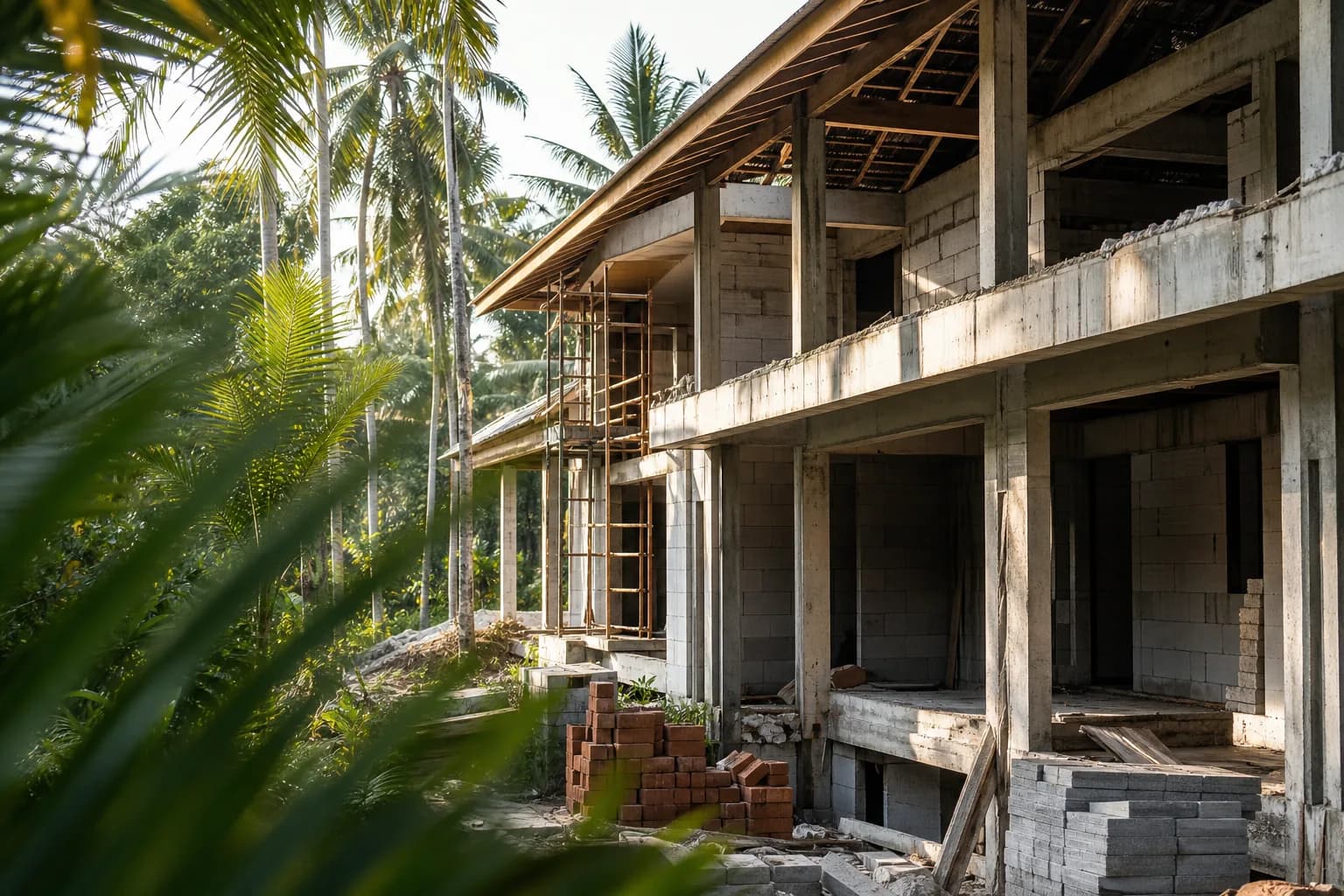
Sanur and Nusa Dua vs Canggu: Stability Plays vs Hype
Canggu gets the headlines; Sanur and Nusa Dua quietly deliver steadier returns to a different kind of buyer. An honest 2026 comparison of the stability markets against the hype market — prices, demand drivers, oversupply risk, and who should buy where.
7 min read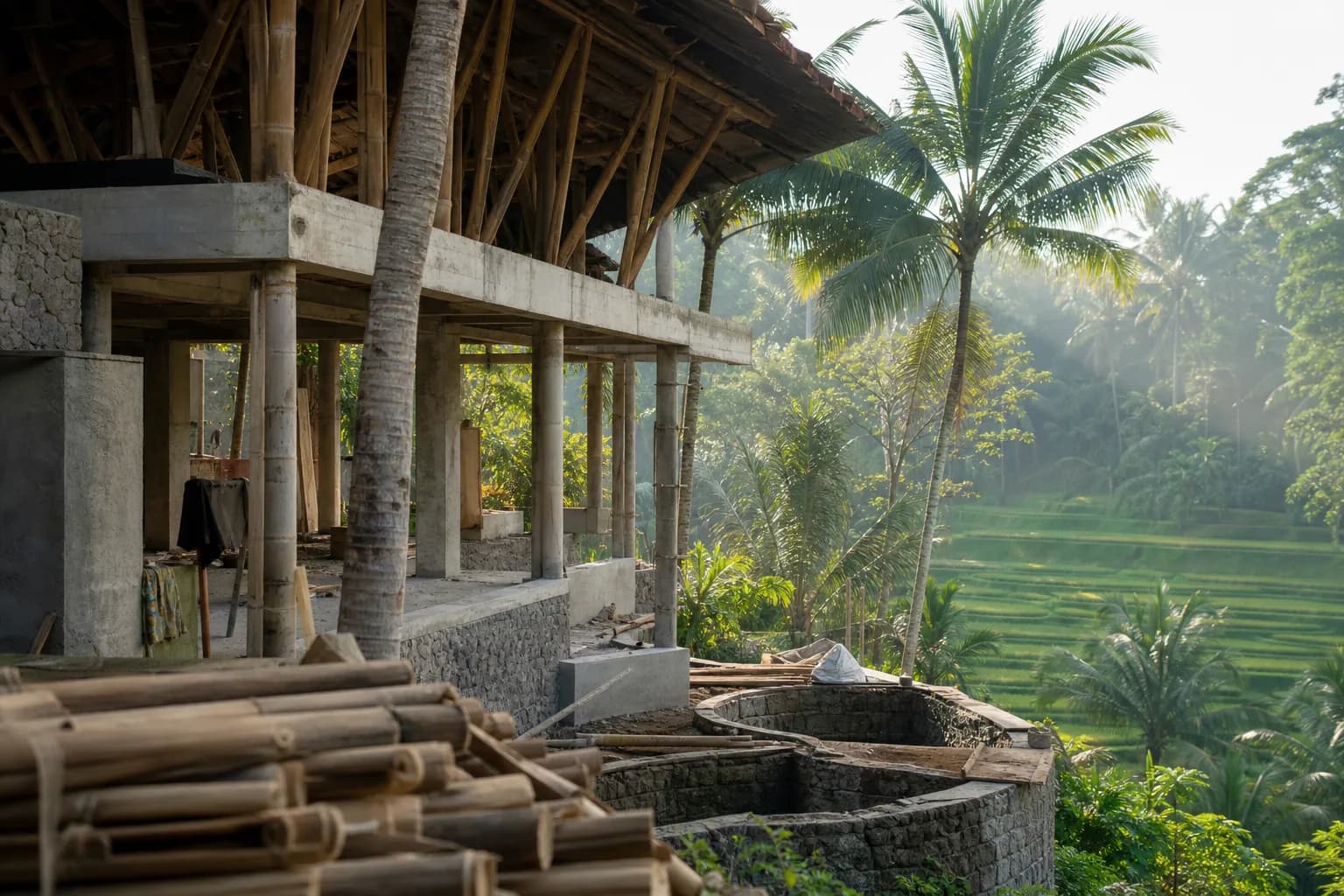
Ubud and the Wellness Market: Buying or Building for Retreats
Ubud is Bali's wellness capital, and retreat-focused property behaves differently from beach villas: longer stays, group bookings, lower volatility. Here is what the market rewards, what zoning allows, and what it costs to buy or build a retreat property in 2026.
8 min read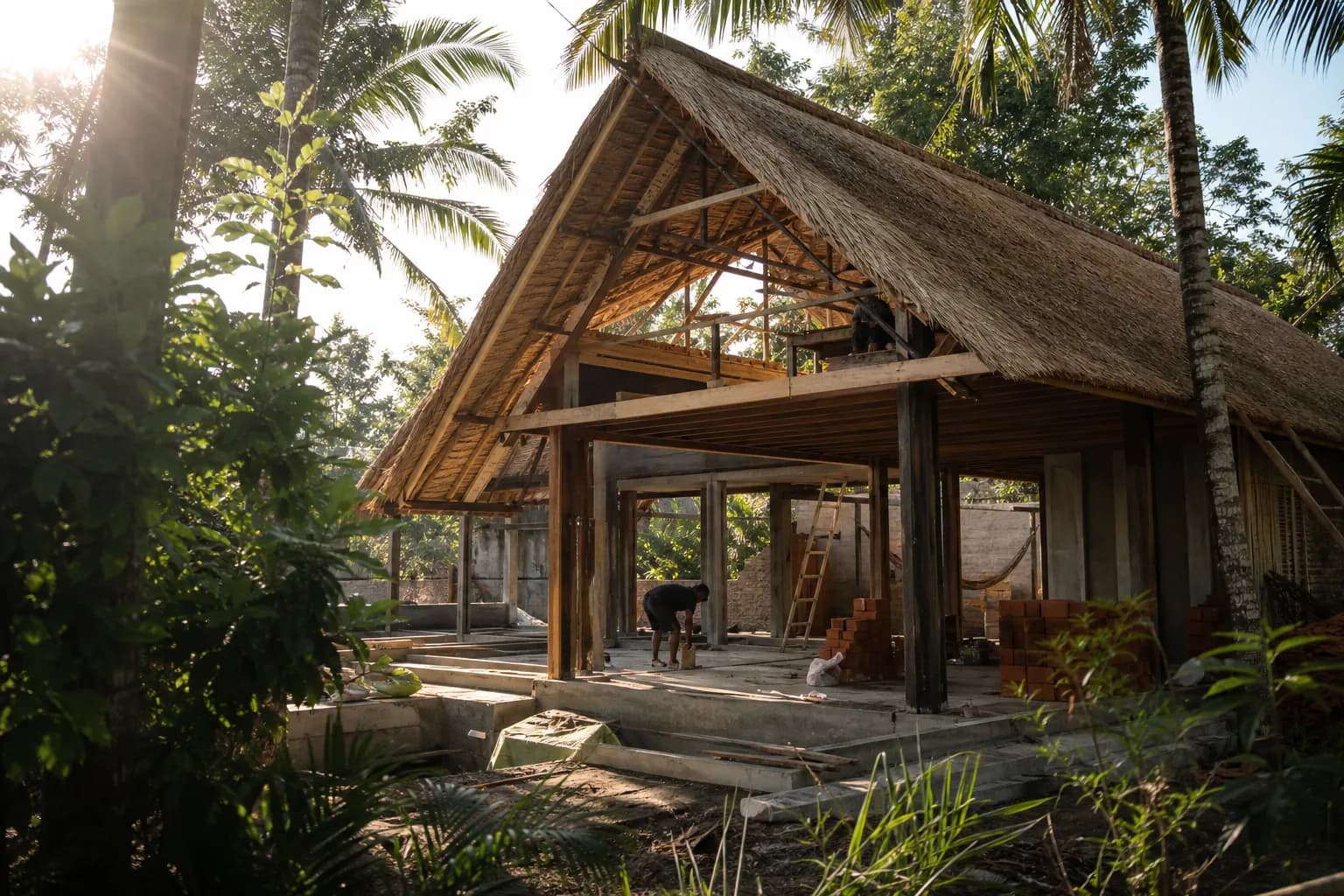
Buying and Building on the Bukit: Uluwatu, Bingin and Balangan from a Buyer's Seat
A buyer's-seat 2026 guide to the Bukit peninsula — Uluwatu, Bingin and Balangan land prices, the water problem nobody budgets, cliff setbacks after the 2025 Bingin demolitions, and how to build there properly.
7 min read