Acoustic Insulation for Bali Villa Partition Walls
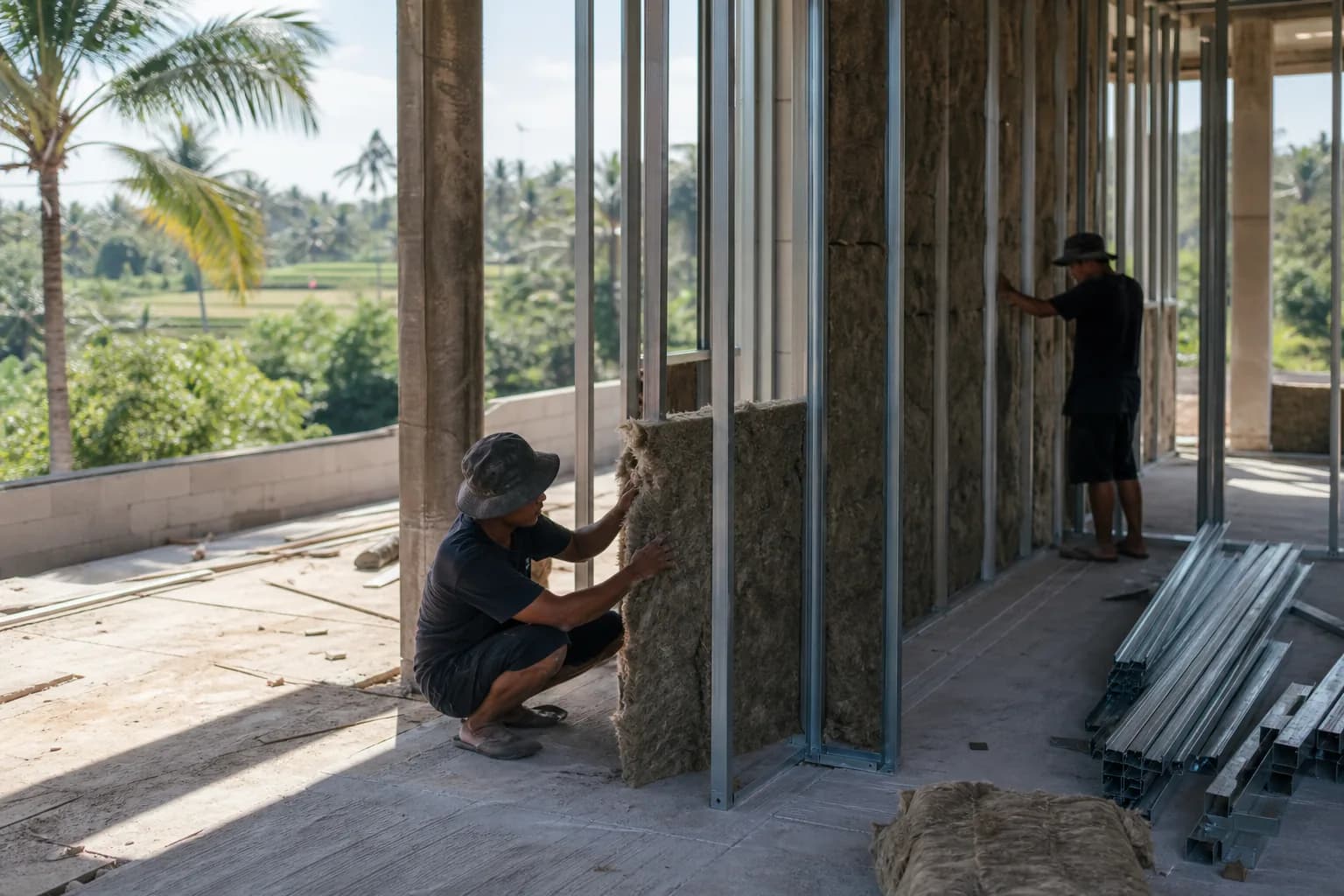
Why Acoustic Privacy Fails in Most Bali Villa Partition Walls
The most common complaint from villa guests in Bali isn’t about design or amenities—it’s about noise bleeding through partition walls. Standard gypsum board partitions installed without proper acoustic insulation create embarrassing situations where conversations, television audio, and private activities become audible in adjacent rooms. This problem intensifies in Bali’s tropical climate where lightweight construction methods dominate to combat humidity, but at the cost of sound transmission control. For villa owners undertaking interior finishing Bali projects or renovation Bali upgrades, understanding acoustic insulation material specifications isn’t optional—it’s essential for guest satisfaction and property reputation.
Technical Deep Dive: How Sound Transmission Occurs in Bali Villa Partition Walls
Sound transmission through partition walls follows two distinct pathways that must be addressed during villa construction and interior finishing work. Airborne sound travels through air cavities within wall assemblies, while structure-borne sound vibrates through solid materials. In typical Bali villa construction, partition walls consist of metal or wooden studs with single-layer gypsum board on each side—a configuration that provides minimal acoustic resistance.
The Sound Transmission Class (STC) rating measures a wall assembly’s ability to block airborne sound, with higher numbers indicating better performance. A standard single-layer gypsum partition achieves only STC 33-35, meaning normal speech is clearly audible through the wall. For acceptable acoustic privacy in villa bedrooms, you need minimum STC 45; for bathrooms adjacent to living spaces, STC 50 is preferable; and for home theaters or music rooms, STC 55+ becomes necessary.
Bali’s tropical humidity introduces additional complexity to acoustic insulation selection. Materials must resist moisture absorption that degrades acoustic performance and promotes mold growth. Temperature fluctuations between air-conditioned interiors and humid exteriors create condensation risks within wall cavities, making vapor permeability a critical specification consideration.
The mass-spring-mass principle governs effective acoustic wall design. Two rigid layers (gypsum boards) separated by a resilient layer (acoustic insulation) create a system where sound energy dissipates rather than transmits. The insulation material’s density, thickness, and fiber structure determine absorption efficiency. Low-density materials like standard fiberglass batts (11-14 kg/m³) provide minimal acoustic benefit, while high-density mineral wool (60-100 kg/m³) significantly improves sound absorption.
Installation quality dramatically affects acoustic performance—gaps around electrical boxes, unsealed penetrations, and compressed insulation create acoustic flanking paths that undermine even premium materials. During renovation Bali projects, existing walls often reveal installation defects: insulation compressed by electrical conduits, gaps at top and bottom plates, and missing acoustic sealant at perimeter joints. These defects can reduce a wall’s STC rating by 5-10 points, effectively negating the acoustic insulation investment.
For villa projects requiring acoustic upgrades, the wall cavity depth determines material options. Standard 75mm metal stud partitions accommodate most acoustic insulation products, while 100mm cavities allow for higher-performance configurations. Staggered stud or double-stud wall systems provide superior acoustic isolation (STC 60+) but consume additional floor space—a trade-off that must be evaluated during design phases.
Materials & Standards for Tropical Climate Acoustic Insulation
High-density mineral wool remains the gold standard for acoustic insulation in Bali villa partition walls, offering density ranges of 60-100 kg/m³ with excellent moisture resistance. Products like Rockwool Safe’n’Sound or equivalent specifications provide NRC (Noise Reduction Coefficient) ratings of 0.95-1.05, meaning they absorb 95-105% of sound energy at optimal frequencies. The non-combustible nature (melting point above 1000°C) adds fire safety benefits critical for villa construction compliance.
Acoustic fiberglass batts designed specifically for sound control (not thermal insulation) offer density of 24-48 kg/m³—double that of standard thermal batts. These products feature tighter fiber packing and resin treatments that maintain loft in humid conditions. Brands meeting ASTM C665 Type I specifications ensure consistent acoustic performance, though availability in Bali requires advance ordering through specialized suppliers.
Aircrete panels, increasingly popular in Bali area guide recommendations, provide moderate acoustic benefits (STC improvement of 3-5 points) when used as cavity fill in 50mm thickness. Their lightweight nature (density 400-600 kg/m³) and moisture resistance suit tropical applications, though acoustic performance remains inferior to dedicated mineral wool products. Aircrete works best as supplementary mass rather than primary acoustic insulation.
Acoustic underlays and barrier membranes—dense rubber composites or mass-loaded vinyl (MLV) at 5-10 kg/m²—add transmission loss when laminated to gypsum boards. These materials block sound through mass rather than absorption, complementing fibrous insulation in high-performance wall assemblies. MLV products meeting ASTM E90 standards provide STC improvements of 5-8 points when properly installed with acoustic sealant at all seams.
Step-by-Step Installation Process for Acoustic Partition Walls
Phase 1: Preparation and Framing (Days 1-2)
Install metal studs at 600mm centers using acoustic isolation clips at floor and ceiling tracks to decouple the wall assembly from structural elements. This decoupling prevents structure-borne sound transmission—a detail often omitted in standard villa construction but critical for acoustic performance. Apply acoustic sealant (not standard silicone) at all track-to-structure interfaces before fastening. Route electrical conduits and boxes carefully, maintaining minimum 300mm horizontal separation between back-to-back boxes on opposite wall faces to prevent acoustic short-circuits.
Phase 2: First Gypsum Layer Installation (Day 3)
Install 12.5mm gypsum board on one side using 25mm drywall screws at 300mm centers on studs, 200mm on perimeters. Stagger board joints from floor to ceiling to eliminate continuous seams that compromise acoustic performance. Leave 3mm gaps at floor and ceiling perimeters—these will be sealed with acoustic caulk, not filled with joint compound. This first layer creates a working surface for insulation installation and protects materials during subsequent construction phases.
Phase 3: Acoustic Insulation Installation (Day 4)
Friction-fit high-density mineral wool batts (60+ kg/m³) into stud cavities, cutting pieces 10mm oversized to ensure complete cavity fill without compression. Split batts around electrical boxes rather than compressing insulation behind them—compressed insulation loses acoustic effectiveness. For 75mm cavities, use single 75mm batts; for 100mm cavities, use 50mm + 50mm layers with staggered joints. Fill all cavities completely—even small gaps significantly degrade acoustic performance. In humid coastal areas, verify insulation products include anti-fungal treatments suitable for tropical climates.
Phase 4: Optional Acoustic Barrier Layer (Day 5)
For high-performance applications (STC 50+), install mass-loaded vinyl or acoustic barrier membrane over the insulation before closing the wall. Cut MLV sheets to full stud bay height, overlapping horizontal seams by 50mm and sealing with acoustic tape. Staple MLV to stud faces at 150mm centers, ensuring material remains flat without wrinkles that create air gaps. This step adds significant acoustic mass while maintaining wall thickness—particularly valuable in renovation Bali projects with space constraints.
Phase 5: Second Gypsum Layer and Sealing (Days 6-7)
Install second-side 12.5mm gypsum board with joints offset from first-side joints by minimum 600mm. For premium acoustic performance, consider 15mm boards or double-layer 12.5mm boards with staggered seams and Green Glue acoustic compound between layers. Before installing final board layer, apply acoustic sealant around all perimeter edges, electrical box penetrations, and any wall penetrations. This airtight seal is non-negotiable—even 1% open area can reduce STC rating by 5-10 points. Complete joint finishing using standard techniques, as joint compound contributes additional acoustic mass.
Costs & Timeline for Acoustic Insulation Installation
Material costs for acoustic insulation in Bali villa partition walls vary significantly based on performance targets and product availability. High-density mineral wool (60-80 kg/m³) costs IDR 180,000-280,000 per square meter of wall area for 75mm thickness, while premium 100 kg/m³ products reach IDR 350,000-450,000/m². Acoustic fiberglass batts range IDR 120,000-200,000/m² depending on density specifications. Mass-loaded vinyl barriers add IDR 250,000-400,000/m² for 5kg/m² products, with higher-mass options proportionally more expensive.
Complete wall assembly costs including framing, insulation, double-layer gypsum, and acoustic sealants typically range IDR 650,000-950,000 per square meter for STC 45-50 performance, compared to IDR 350,000-450,000/m² for standard non-acoustic partitions. Premium configurations achieving STC 55+ with staggered studs or double-wall systems cost IDR 1,200,000-1,800,000/m². These figures include materials and skilled labor but exclude finishing (paint, wallpaper) and furniture installation costs.
Installation timelines depend on project scale and access. A typical bedroom partition wall (12m² area) requires 5-7 working days from framing through final finishing when acoustic insulation is included, versus 3-4 days for standard construction. Larger renovation Bali projects involving multiple rooms benefit from parallel installation across zones, with experienced crews completing 40-60m² of acoustic partition walls weekly. Material procurement adds 1-2 weeks for specialized acoustic products not stocked locally, making advance planning essential for project scheduling.
For detailed cost estimation specific to your villa project scope, Teville provides comprehensive assessment through our cost estimation service, accounting for site-specific factors affecting acoustic insulation requirements and installation complexity.
Frequently Asked Questions About Acoustic Insulation in Bali Villas
Can acoustic insulation be added to existing partition walls without complete reconstruction?
Retrofit acoustic improvements are possible but limited compared to new construction. The most effective retrofit method involves removing gypsum board from one wall side, installing high-density mineral wool insulation in cavities, adding mass-loaded vinyl barrier, then reinstalling gypsum (preferably double-layer with acoustic compound). This achieves STC improvements of 8-12 points over original construction. Less invasive options include surface-mounted acoustic panels or additional gypsum layers with resilient channels, providing 3-5 point STC improvements. Complete assessment of existing wall construction determines optimal retrofit approach—contact Teville’s team to evaluate your specific renovation Bali requirements.
How does Bali’s humidity affect acoustic insulation material performance over time?
Moisture absorption degrades acoustic performance in hygroscopic materials like standard fiberglass, causing fiber clumping and reduced sound absorption. High-density mineral wool resists moisture absorption due to hydrophobic treatments and maintains acoustic properties in tropical humidity. Proper wall assembly design includes vapor management—avoiding vapor barriers that trap moisture within cavities, instead allowing controlled vapor permeability. In coastal Bali locations with extreme humidity, specify mineral wool products with anti-fungal treatments and ensure adequate ventilation in wall cavities through proper detailing at top and bottom plates. Properly specified and installed acoustic insulation maintains performance indefinitely in Bali’s climate.
What STC rating should I target for different villa room types?
Bedroom-to-bedroom partitions require minimum STC 45 for acceptable privacy, with STC 50 preferred for luxury villas. Bedroom-to-bathroom walls need STC 50 to block plumbing noise and ventilation fan sound. Living areas to bedrooms should achieve STC 48-52 depending on entertainment system usage. Home theaters, music rooms, or spa treatment rooms demand STC 55+ to prevent sound transmission affecting other spaces. Kitchen-to-bedroom partitions benefit from STC 50+ due to appliance noise. Standard STC 35-40 suffices for living-to-dining or office-to-hallway partitions where privacy is less critical. Our construction process includes acoustic planning to optimize specifications for each space type.
Is aircrete alone sufficient for acoustic insulation in villa partition walls?
Aircrete provides moderate acoustic benefits through mass but lacks the sound absorption properties of fibrous insulation materials. A 50mm aircrete panel in a partition cavity improves STC by approximately 3-5 points—helpful but insufficient for meaningful acoustic privacy. Optimal performance combines aircrete’s mass with high-density mineral wool’s absorption properties. For budget-conscious projects, 50mm aircrete plus 25mm mineral wool outperforms 75mm of either material alone. Aircrete’s advantages include moisture resistance, fire safety, and local availability in Bali, making it valuable as part of a complete acoustic wall assembly rather than sole insulation material.
How do electrical outlets and switches affect acoustic wall performance?
Electrical boxes create significant acoustic weak points, potentially reducing wall STC by 5-10 points if improperly detailed. Back-to-back boxes on opposite wall faces create direct sound transmission paths—maintain minimum 300mm horizontal offset between opposing boxes. Use acoustic-rated electrical boxes with built-in sound damping, or wrap standard boxes with acoustic putty pads before gypsum installation. Seal all conduit penetrations int
 164 m²7 month(s)from 79.000 USD
Private: Haridas Villas, Tegallalang
164 m²7 month(s)from 79.000 USDTALA TWO

Want to calculate?
 3127 m²9 month(s)from 177.000 USD
Mukunda
 3173 m²6 month(s)from 125.000 USD
TALA FOUR
 172 m²8 month(s)from 120.000 USD
Keshava
 4344 m²16 month(s)from 290.000 USD
Radha
 3104 m²11 month(s)from 99.000 USD
TALA 100
 1from 198.000 USD
Private: Haridas Villas
 2144 m²11 month(s)from 104.000 USD
Narayana
 3180 m²7 month(s)from 142.000 USD
Vasudeva
 3124 m²6 month(s)from 123.000 USD
TALA 8
Start With Real Numbers, Not Guesses
Before finalizing your finishing works plan, check realistic cost ranges for your Bali villa project.
Available lands
 422 m²15 min$ 93547Bali, Kerobokan
 1600 m²32 min$ 266010Bali, Tabanan
 2800 m²2 min$ 713793Bali, Kedungu
 1410 m²15 min$ 390702Bali, Tabanan
 610 m²10 min$ 165271Bali, Seminyak
 2130 m²10 min$ 495776Bali, Pecatu
 2500 m²5 min$ 609606Bali, Kedungu
 1533 m²5 min$ 165666Bali, Cepaka
 500 m²2 min$ 175862Bali, Cemagi
 2000 m²15 min$ 110837Bali, Karangasem
 2700 m²30 min$ 314224Bali, Sidemen
 3900 m²10 min$ 432266Bali, Tabanan
 700 m²8 min$ 165517Bali, Umalas
 2000 m²15 min$ 523000Bali, Canggu
 420 m²15 min$ 41897Bali, Tabanan
Essential Bali build & buy guides
- Bali villa construction cost per m² in 2026
- How much will your villa cost? Calculator
- Building a villa in Bali: the complete guide
- Buying land in Bali: step-by-step for foreigners
- Bali villa investment: yields, risks, returns
- Leasehold vs freehold: what foreigners can own
- Construction defect liability & 10-year warranty
- Bali building codes and construction standards
Related guides
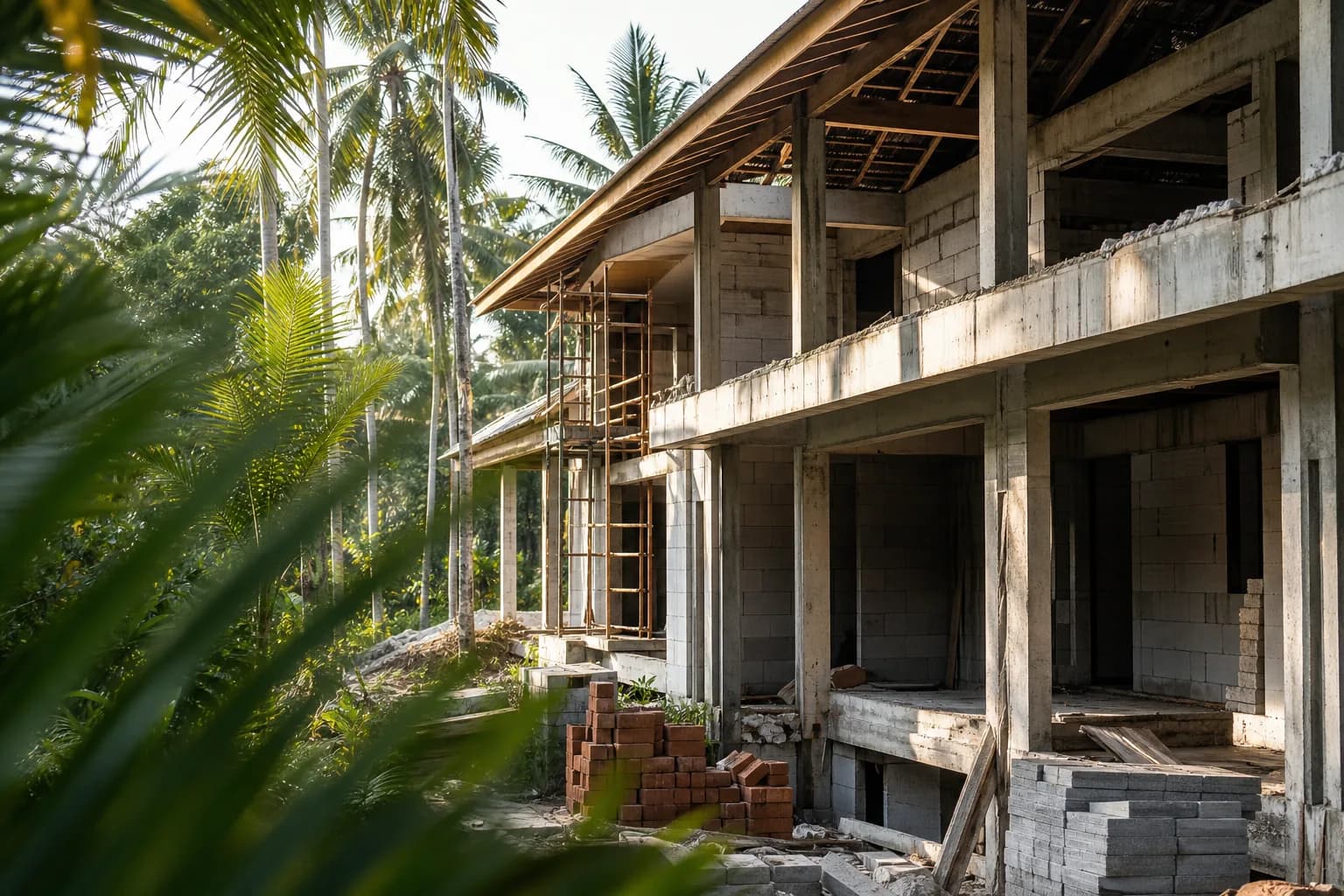
Sanur and Nusa Dua vs Canggu: Stability Plays vs Hype
Canggu gets the headlines; Sanur and Nusa Dua quietly deliver steadier returns to a different kind of buyer. An honest 2026 comparison of the stability markets against the hype market — prices, demand drivers, oversupply risk, and who should buy where.
7 min read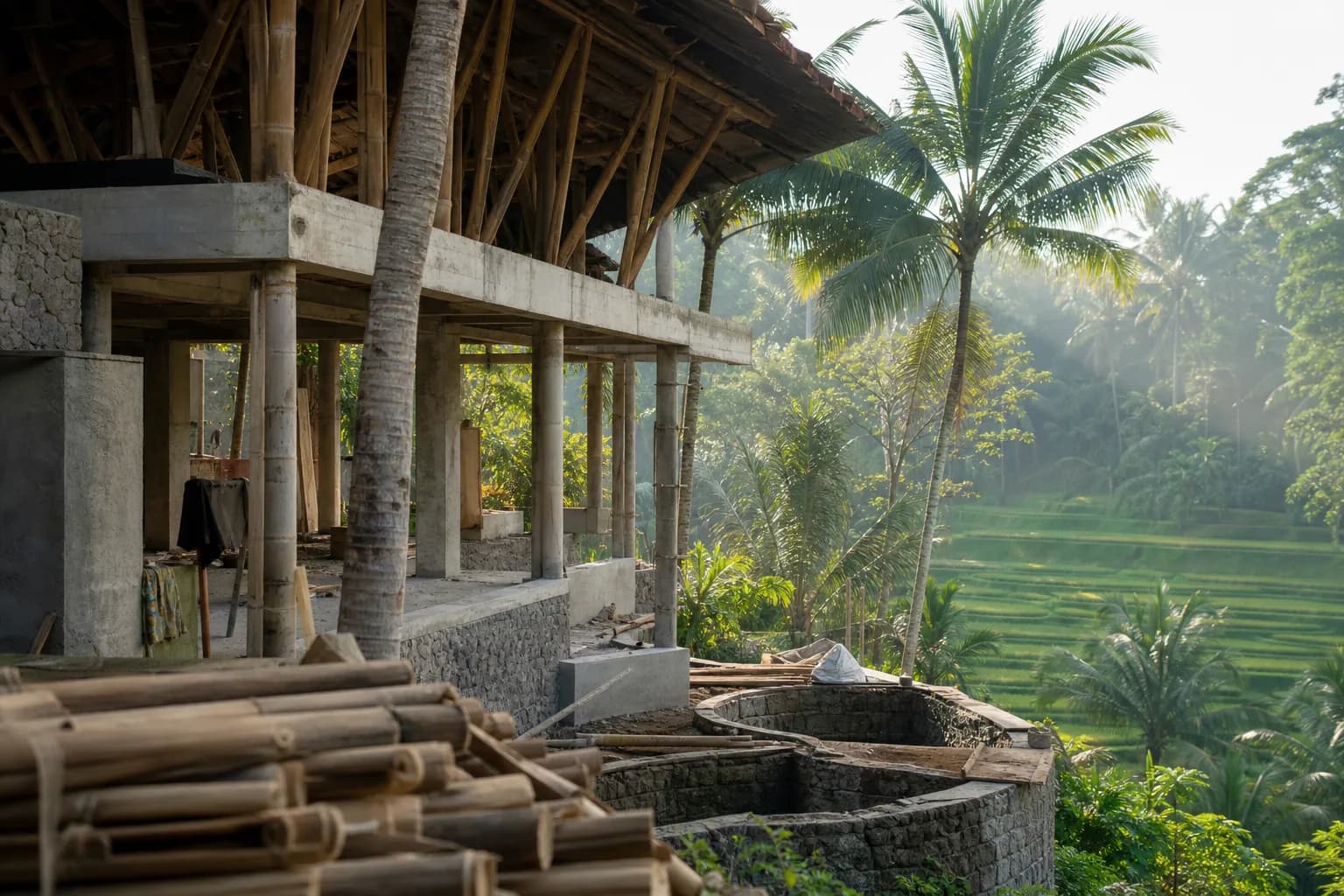
Ubud and the Wellness Market: Buying or Building for Retreats
Ubud is Bali's wellness capital, and retreat-focused property behaves differently from beach villas: longer stays, group bookings, lower volatility. Here is what the market rewards, what zoning allows, and what it costs to buy or build a retreat property in 2026.
8 min read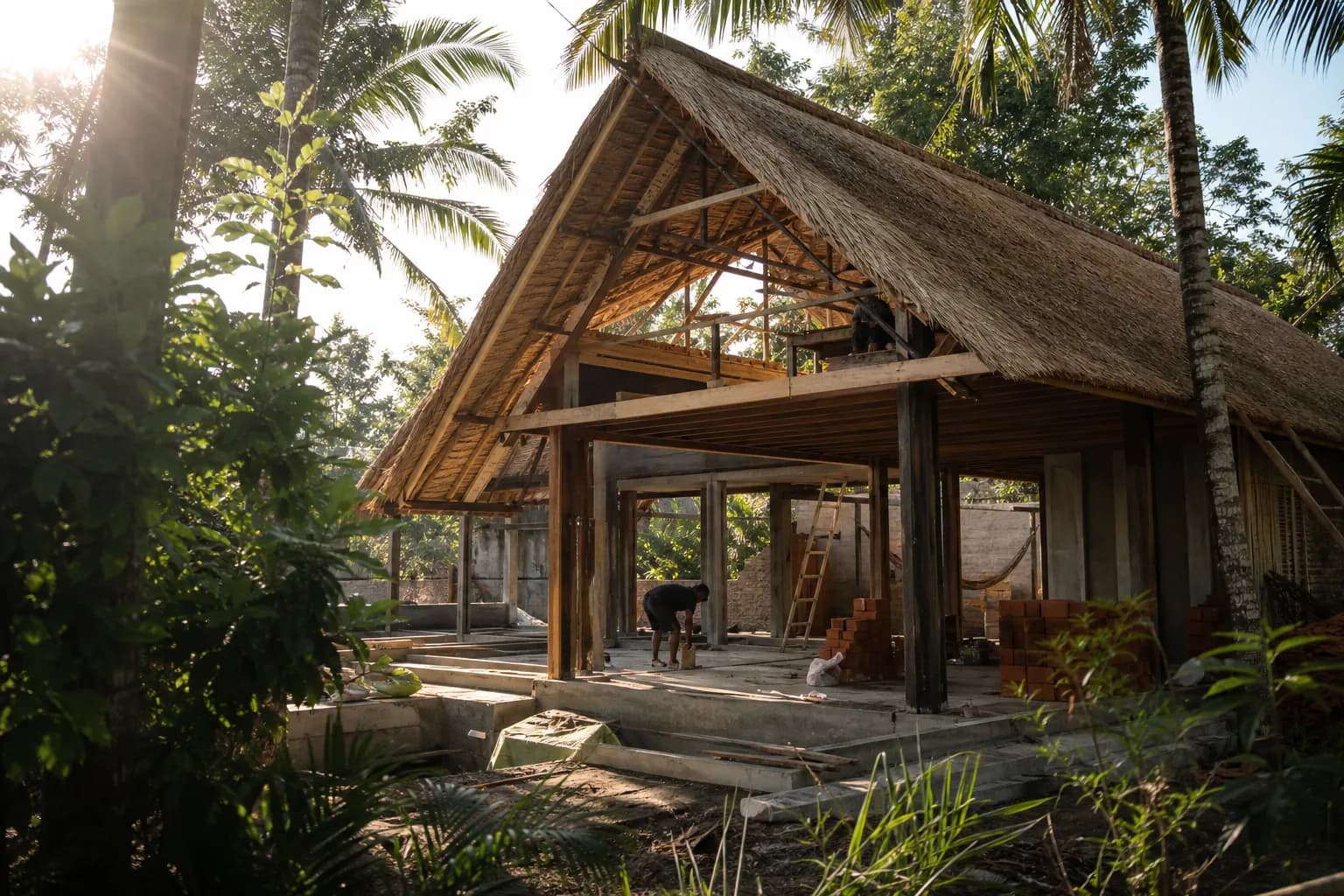
Buying and Building on the Bukit: Uluwatu, Bingin and Balangan from a Buyer's Seat
A buyer's-seat 2026 guide to the Bukit peninsula — Uluwatu, Bingin and Balangan land prices, the water problem nobody budgets, cliff setbacks after the 2025 Bingin demolitions, and how to build there properly.
7 min read