Land Purchase Legal Compliance in Bali: Technical Guide
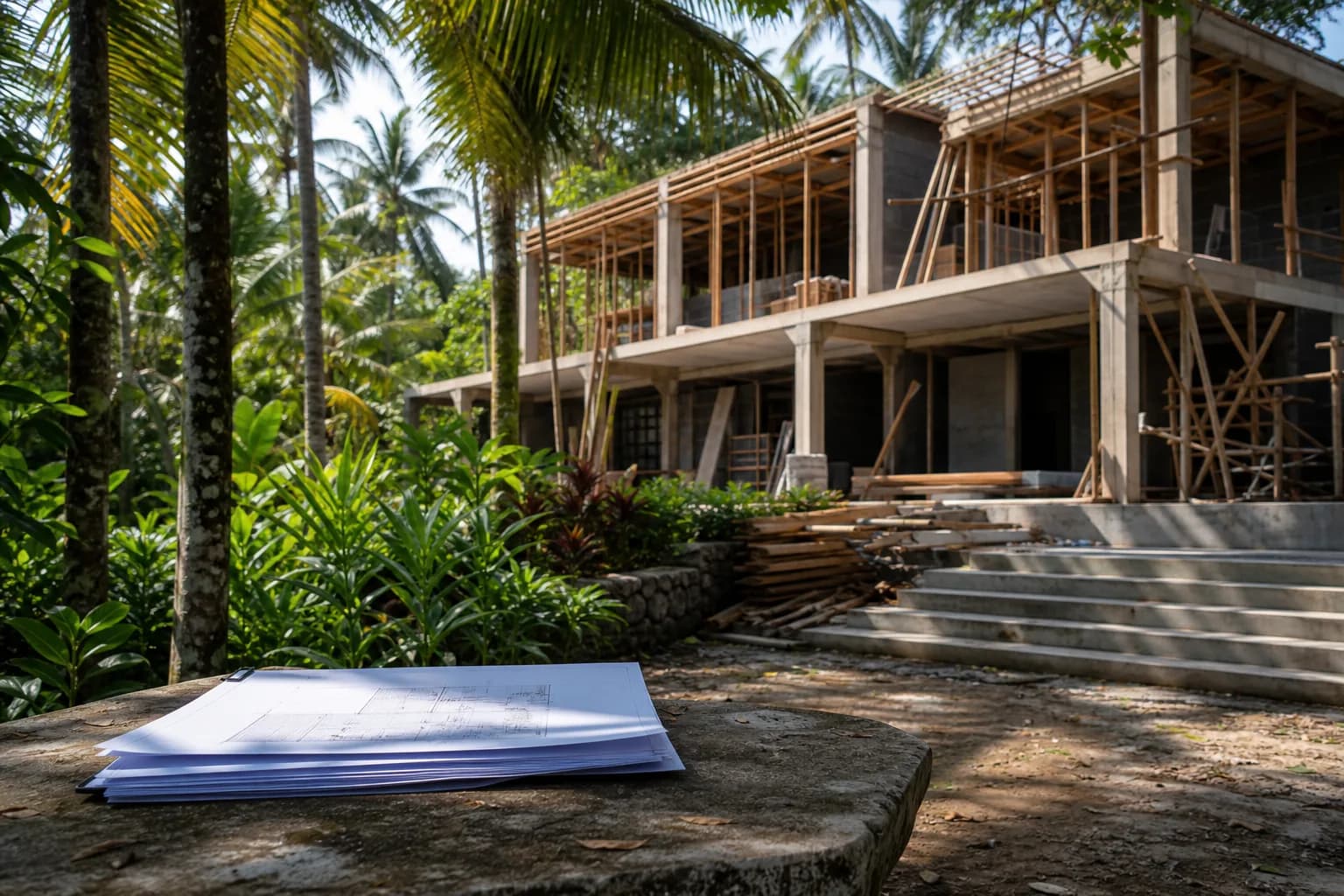
Land Purchase and Legal Compliance in Bali: A Technical Guide for Construction Projects
Bali’s construction landscape in 2026 represents a fundamental shift from the permissive building environment of previous decades. Foreign investors and developers now face a complex matrix of land ownership restrictions, zoning regulations, and legal compliance requirements that directly impact construction feasibility. This technical guide examines the structural realities of land acquisition in Bali, focusing on how ownership models affect construction planning, permitting, and long-term project viability.
The Indonesian legal framework governing land purchase in Bali creates distinct pathways for foreign involvement, each with specific implications for construction projects. Understanding these mechanisms is not merely a legal formality—it fundamentally determines what you can build, how you can finance it, and whether your construction investment remains secure over decades.
The Foreign Ownership Restriction: Engineering Around Legal Constraints
Indonesian constitutional law prohibits foreign nationals from holding freehold title (Hak Milik) to land. This restriction is absolute and non-negotiable, creating the primary constraint around which all foreign construction projects in Bali must be engineered. The practical implications extend far beyond simple ownership—they affect financing structures, construction timelines, material procurement strategies, and even architectural design decisions.
Available Legal Structures for Foreign Land Control
Foreign entities and individuals can legally control land in Bali through three primary mechanisms, each with distinct construction implications:
- Leasehold (Hak Sewa): Long-term lease agreements, typically 25-30 years with extension options
- Right to Use (Hak Pakai): Usage rights for up to 80 years, available to foreign individuals meeting specific criteria
- Indonesian Entity Ownership: PT PMA (foreign investment company) structure allowing controlled land ownership
Each structure creates different risk profiles for construction investment. A leasehold arrangement, for instance, requires careful consideration of asset depreciation against lease term—constructing a building designed for 50-year lifespan on a 25-year lease creates obvious financial and technical complications.
Leasehold Bali: Construction Considerations
Leasehold represents the most common mechanism for foreign-controlled construction projects in Bali. From a construction management perspective, leasehold introduces several technical considerations that don’t exist in freehold scenarios:
Lease Term vs. Building Lifespan: Standard construction practices in tropical environments assume minimum 30-year building lifespans for quality construction. When your legal right to occupy land expires before your building reaches end-of-life, you face structural decisions about construction quality, material selection, and maintenance investment. Over-engineering a structure on a short lease term represents capital inefficiency; under-engineering creates premature failure risks.
Extension Clauses and Construction Phasing: Lease agreements with clear extension mechanisms allow for phased construction approaches. Initial phases can be designed for the guaranteed lease period, with expansion provisions triggered only after extension confirmation. This requires modular design thinking and careful site planning to accommodate future construction without demolishing existing structures.
Landowner Consent Requirements: Most leasehold agreements require landowner approval for major construction activities. This introduces a third-party approval layer beyond standard permitting. Technical specifications, building footprints, and even material choices may require landowner sign-off, creating potential delays in construction schedules.
In 2026, Bali’s regulatory environment emphasizes legal compliance and sustainable construction practices. Projects that attempt to circumvent land ownership restrictions through nominee arrangements or inadequate legal structures face increasing scrutiny and potential enforcement action.
The Nominee Structure Problem: Why It Fails Construction Projects
The “nominee” arrangement—where Indonesian citizens hold freehold title on behalf of foreign beneficiaries—remains common despite its legal ambiguity and practical risks. From a construction project management perspective, nominee structures create multiple failure points that can compromise projects worth hundreds of thousands or millions of dollars.
Technical Risks in Nominee-Based Construction
Permitting Authority Conflicts: Building permits (IMB) are issued to the legal landowner. In nominee structures, the Indonesian titleholder becomes the permit holder of record. This creates complications when construction decisions, contractor payments, or design modifications require permit holder authorization. The foreign investor funding construction lacks legal standing in permit-related disputes.
Contractor and Supplier Liability: Construction contracts, material supply agreements, and subcontractor arrangements require clear legal authority. When the funding party (foreign investor) differs from the legal owner (nominee), contractual disputes become complex. Suppliers and contractors may refuse to recognize instructions from parties without legal title, creating project delays and cost overruns.
Construction Financing Barriers: Banks and financial institutions will not provide construction financing against nominee-held property. This forces foreign investors into cash-only construction funding, eliminating leverage opportunities and concentrating risk. Large-scale construction projects requiring staged financing become practically impossible.
Insurance and Liability Issues: Construction insurance, professional indemnity coverage, and completed building insurance require clear ownership documentation. Nominee structures create ambiguity about insurable interest, potentially leaving expensive construction projects uninsured or under-insured during critical construction phases.
The 2026 Enforcement Environment
Bali’s regulatory authorities have intensified scrutiny of land ownership structures, particularly in high-development areas. Construction projects on nominee-held land face increased risks of:
- Construction stop-work orders pending ownership verification
- Permit revocation if nominee arrangements are discovered during inspection
- Inability to obtain occupancy certificates (SLF) due to ownership documentation issues
- Complications in utility connections (PLN electricity, PDAM water) requiring clear ownership proof
These enforcement actions can occur mid-construction, creating scenarios where partially completed buildings cannot be legally finished or occupied—a catastrophic outcome for construction investment.
Right to Use (Hak Pakai): The Engineered Middle Ground
Hak Pakai represents a legally robust alternative to both leasehold and nominee structures for qualifying foreign individuals. This title type provides up to 80 years of land use rights (initial 30 years, extendable twice for 25 years each), creating a timeframe compatible with quality construction investment.
Construction Advantages of Hak Pakai
Direct Title Holding: The foreign individual holds title directly, eliminating third-party dependencies in construction decision-making. Building permits, contractor agreements, and supplier contracts can be executed directly by the party funding construction, streamlining project management.
Financing Potential: While Indonesian banks remain cautious about lending against foreign-held Hak Pakai, the clear legal structure makes international financing more feasible. Some foreign banks will provide construction financing against Hak Pakai title when combined with appropriate guarantees.
Extended Planning Horizon: The 80-year potential term allows for construction planning that matches building lifespan expectations. High-quality tropical construction designed for 50+ year lifespans becomes economically rational, as the legal right to occupy extends beyond the building’s useful life.
Hak Pakai Eligibility and Limitations
Hak Pakai availability for foreigners requires meeting specific criteria:
- Physical presence in Indonesia (residence permit holder)
- Property must serve residential purposes (not commercial development)
- Compliance with foreign ownership quotas in specific developments
- Land must not be designated for Indonesian-only ownership (certain agricultural or cultural zones)
These restrictions mean Hak Pakai works well for individual residential construction projects but cannot support commercial construction, multi-unit developments, or projects by foreign entities rather than individuals.
PT PMA Structure: Corporate Land Ownership for Construction Projects
Foreign investment companies (PT PMA – Penanaman Modal Asing) can hold specific land title types, creating a corporate structure for construction projects. This mechanism suits larger developments, commercial construction, or situations where individual ownership is impractical.
Land Title Types Available to PT PMA
A properly structured PT PMA can hold:
- Hak Guna Bangunan (HGB): Building rights title, up to 80 years total (30+20+30 year structure)
- Hak Pakai: Right to use, similar terms to individual Hak Pakai
HGB specifically authorizes building construction, making it the natural choice for development projects. The title explicitly grants rights to construct and own buildings on the land, providing clear legal foundation for construction activities.
PT PMA Construction Project Advantages
Corporate Continuity: Unlike individual ownership, corporate structures provide continuity beyond individual lifespans. Construction projects with multi-decade operational horizons benefit from ownership structures that don’t depend on individual health, residency status, or family succession issues.
Professional Management Structure: PT PMA allows for formal corporate governance, professional management appointments, and clear decision-making hierarchies—all beneficial for complex construction projects requiring multiple stakeholder coordination.
Commercial Activity Authorization: PT PMA structures can engage in commercial activities, making them suitable for villa rental operations, hospitality construction, or mixed-use developments where residential construction includes commercial components.
PT PMA Complexity and Costs
The PT PMA route introduces significant administrative overhead:
- Minimum investment requirements (currently IDR 10 billion for most sectors, though residential property development may have different thresholds)
- Ongoing corporate compliance: annual reporting, tax filings, audit requirements
- Mandatory Indonesian director or commissioner appointments
- Corporate establishment costs: USD 5,000-15,000 depending on complexity
- Annual maintenance costs: USD 3,000-8,000 for accounting, legal, and compliance services
These costs make PT PMA structures economically viable primarily for construction projects exceeding USD 500,000 in value, where the corporate overhead represents a manageable percentage of total project cost.
Zoning and Land Classification: Construction Feasibility Analysis
Beyond ownership structure, land classification and zoning designations determine what construction is legally permissible. Bali’s 2026 regulatory environment enforces zoning compliance more strictly than in previous years, making pre-acquisition zoning analysis critical.
RDTR (Detailed Spatial Planning) Compliance
Each regency in Bali maintains RDTR (Rencana Detail Tata Ruang) documents specifying permitted uses, building densities, height restrictions, and setback requirements for every land parcel. These regulations directly constrain construction design:
Building Coverage Ratio (KDB): Specifies maximum percentage of land that can be covered by buildings. Common ratios range from 40% in residential zones to 60% in commercial areas. A 1,000 m² plot with 40% KDB allows maximum 400 m² building footprint—a hard constraint on construction design.
Floor Area Ratio (KLB): Defines total buildable floor area relative to land area. KLB of 1.5 on a 1,000 m² plot allows 1,500 m² total construction across all floors. This ratio, combined with KDB, determines whether multi-story construction is feasible or required.
Height Restrictions: Many Bali zones limit building height to 15 meters (approximately 3-4 stories) or specify height relative to road width. These restrictions affect architectural design, particularly for hillside sites where natural topography might otherwise allow taller structures.
Setback Requirements: Minimum distances from property boundaries, roads, rivers, and coastlines are legally mandated. Coastal setbacks in Bali typically require 100 meters from high tide line for new construction—a critical constraint for beachfront projects.
Land Classification Categories
Indonesian land classification system divides land into categories affecting construction permissibility:
- Residential (Perumahan): Permits residential construction, typically with restrictions on commercial activity
- Commercial (Komersial): Allows commercial construction, often with different building standards and permit requirements
- Agricultural (Pertanian): Restricts construction to agricultural support buildings; residential construction may be prohibited or severely limited
- Green Belt (Jalur Hijau): Prohibits or severely restricts construction to preserve environmental corridors
- Cultural/Religious (Budaya): Special restrictions near temples, cultural sites, or sacred areas
Attempting construction inconsistent with land classification results in permit denial or, if constructed without permits, demolition orders. The 2026 enforcement environment shows increasing willingness to demolish non-compliant structures, even after substantial construction investment.
Due Diligence Process: Technical Land Verification
Proper land acquisition for construction projects requires systematic technical and legal verification. This process should occur before any purchase commitment, as discovered issues may render land unsuitable for intended construction.
Title Verification and Ownership Chain
Certificate Authenticity: Land certificates (Sertifikat) must be verified directly with the local Land Office (BPN – Badan Pertanahan Nasional). Physical certificate inspection is insufficient—fraudulent certificates exist, and only BPN database verification confirms authenticity.
Ownership History: Request complete ownership history from BPN. Gaps in ownership chain, frequent transfers, or ownership disputes in history indicate potential legal complications that could affect construction permitting or future title security.
Encumbrance Check: Verify the land is free from mortgages, liens, legal disputes, or other encumbrances. Encumbered land cannot be legally transferred, and attempting construction on disputed land creates obvious risks.
Physical Site Verification
Boundary Survey: Engage licensed surveyor to verify physical boundaries match certificate description. Boundary disputes are common in Bali, and construction on disputed boundary areas can result in partial demolition orders.
Access Rights: Confirm legal access to public roads. Land without legal access rights (landlocked parcels) creates construction logistics problems and may be unbuildable under local regulations requiring road access for permitting.
Topographic Survey: Detailed topographic survey reveals slope conditions, drainage patterns, and elevation changes affecting construction feasibility and cost. Steep slopes may require extensive retaining walls or foundation engineering, dramatically increasing construction costs.
Geotechnical Assessment: Soil boring and geotechnical analysis determines foundation requirements. Bali’s volcanic soils vary significantly in bearing capacity. Poor soil conditions may require deep foundations or soil improvement, adding 15-30% to structural costs.
Regulatory Compliance Verification
Zoning Confirmation: Obtain written zoning confirmation from local planning office (Dinas PUPR or Dinas Penataan Ruang). Verbal assurances are insufficient—written documentation specifying permitted uses, building ratios, and height limits is essential.
Environmental Restrictions: Check for environmental protection designations, watershed areas, or ecological preservation zones. These designations can prohibit construction or require expensive environmental impact assessments (AMDAL) before permitting.
Infrastructure Availability: Verify availability of electricity (PLN), water (PDAM or well permits), and waste disposal. Construction on land lacking infrastructure access requires expensive utility extensions, sometimes costing USD 20,000-50,000 or more.
Customary Rights (Adat) Verification: In some Bali areas, customary village rights (hak adat) overlay formal land title. Construction may require village approval beyond government permits. Failure to obtain adat approval can result in community opposition, work stoppages, or social complications affecting project completion.
The Land Purchase Process: Technical Timeline
Understanding the procedural timeline for land acquisition helps construction project planning, as land purchase duration affects overall project schedules.
Standard Purchase Timeline for Foreign-Controlled Acquisition
Phase 1: Due Diligence (4-8 weeks)
- Title verification at BPN: 1-2 weeks
- Physical surveys and geotechnical assessment: 2-3 weeks
- Zoning and regulatory verification: 1-2 weeks
- Legal structure setup (if required): 2-4 weeks for PT PMA, 1-2 weeks for lease agreement preparation
Phase 2: Agreement and Payment (2-4 weeks)
- Purchase agreement or lease agreement negotiation and execution: 1-2 weeks
- Payment processing and escrow arrangements: 1-2 weeks
- BPHTB tax payment (land transfer tax, 5% of transaction value): immediate upon agreement
Phase 3: Title Transfer or Lease Registration (4-8 weeks)
- Document preparation and notary processing: 1-2 weeks
- BPN title transfer processing: 2-4 weeks (can extend to 8-12 weeks in busy periods)
- New certificate issuance: 1-2 weeks
Total timeline: 10-20 weeks (2.5-5 months) for straightforward transactions. Complex structures, disputed boundaries, or regulatory complications can extend timelines to 6-12 months.
Critical Path Considerations for Construction Planning
Construction planning must account for land acquisition timeline uncertainty. Best practice involves:
- Initiating design development only after title verification confirms buildability
- Scheduling permit applications only after ownership transfer completes
- Planning construction mobilization 3-4 months after land acquisition initiation
- Building timeline contingency of 25-30% for land acquisition delays
Attempting to compress land acquisition timelines through informal channels or incomplete due diligence creates downstream construction risks far exceeding any time savings.
Cost Structure: Land Acquisition Financial Planning
Beyond land purchase price, acquisition involves multiple cost components affecting total project budgets.
Direct Land Acquisition Costs
- Land Purchase Price: Varies dramatically by location, from USD 100-300/m² in rural areas to USD 1,000-3,000/m² in prime locations like Canggu, Seminyak, or Ubud
- BPHTB (Land Transfer Tax): 5% of transaction value (some exemptions for first-time Indonesian buyers, not applicable to foreign structures)
- Notary Fees: 1-2% of transaction value for deed preparation and execution
- BPN Processing Fees: Approximately 0.5-1% of land value for title transfer processing
Legal Structure and Due Diligence Costs
 172 m²8 month(s)from 120.000 USD
Keshava
 4344 m²16 month(s)from 290.000 USD
Radha
 2144 m²11 month(s)from 104.000 USD
Narayana

Want to calculate?
 3127 m²9 month(s)from 177.000 USD
Mukunda
 3180 m²7 month(s)from 142.000 USD
Vasudeva
 3124 m²6 month(s)from 123.000 USD
TALA 8
 3104 m²11 month(s)from 99.000 USD
TALA 100
 3173 m²6 month(s)from 125.000 USD
TALA FOUR
 164 m²7 month(s)from 79.000 USD
TALA TWO
 1from 198.000 USD
Private: Haridas Villas
164 m²7 month(s)from 79.000 USDPrivate: Haridas Villas, Tegallalang
Available lands
 6000 m²30 min$ 55419Bali, Tabanan
 325 m²15 min$ 44472Bali, Ungasan
 1350 m²5 min$ 283467Bali, Pecatu
 200 m²5 min$ 59113Bali, Bukit
 1362 m²15 min$ 335468Bali, Tumbak
 13000 m²1 min$ 920567Bali, Pekutatan
 400 m²15 min$ 67192Bali, Tabanan
 770 m²5 min$ 163578Bali, Kedungu
 300 m²55 min$ 32475Bali, Tegelalang
 1410 m²15 min$ 390702Bali, Tabanan
 1600 m²32 min$ 266010Bali, Tabanan
 3000 m²15 min$ 1246921Bali, Tabanan
 2500 m²5 min$ 609606Bali, Kedungu
 200 m²11 min$ 89286Bali, Tabanan
 1430 m²5 min$ 209862Bali, Klungkung
Planning a build in Bali?
Get a feasibility view, budget range and timeline from Teville.
Related guides
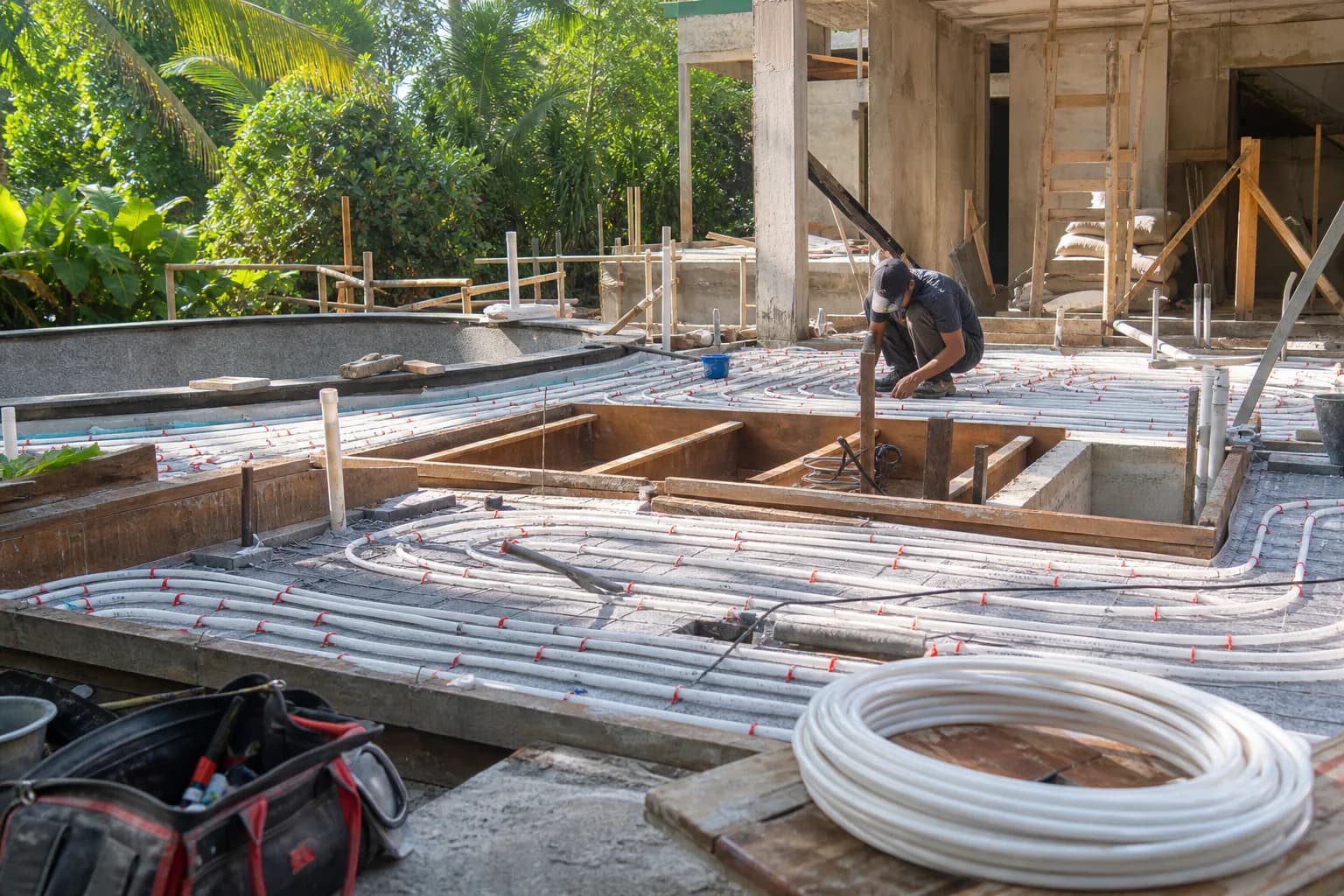
Underfloor Heating: Tile vs Concrete Subfloors in Bali
Compare underfloor heating options for tile and concrete subfloors in Bali. Learn viability, costs, and best practices for tropical climates.
10 min read
IMB Building Permit Timeline: Foundation to CO in Bali
Complete IMB building permit timeline from foundation to Certificate of Occupancy in Bali regencies. Expert guide on approval stages and requirements.
10 min read
IMB Permit Processing Times: Denpasar vs Gianyar Bali
Compare IMB permit processing times between Denpasar and Gianyar regency in Bali. Expert guide to building permit timelines and requirements.
11 min read