Professional Plumbing Installation for Bali Villas
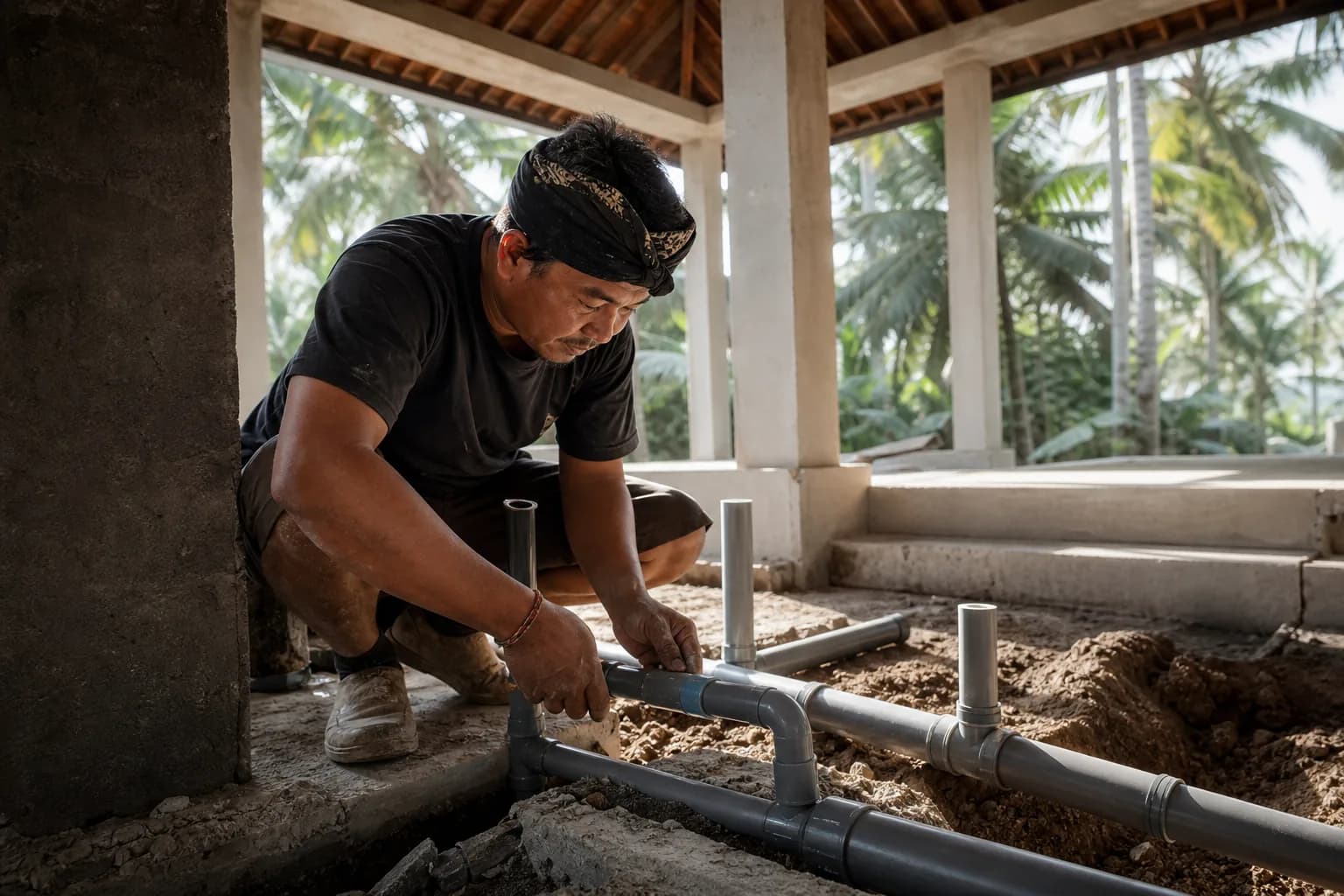
# Complete Guide to Plumbing Installation for Bali Villas: Technical Standards and Best Practices
Understanding Plumbing Installation Requirements for Bali Villas
Plumbing installation in Bali villas represents one of the most critical yet frequently underestimated aspects of villa construction. The island’s unique environmental conditions—high humidity, elevated water acidity levels, and specific geological characteristics—create distinct challenges that require specialized knowledge and careful planning. At Teville, we’ve developed comprehensive plumbing installation protocols through years of experience constructing high-quality villas across Bali’s diverse regions.
The complexity of plumbing installation Bali villas extends beyond simply connecting pipes and fixtures. It encompasses water source evaluation, pressure management, material selection resistant to local conditions, proper drainage design, and compliance with both international standards and local regulations. A well-designed plumbing system operates invisibly, providing reliable service for decades, while a poorly executed installation creates ongoing maintenance burdens and potential structural damage.
This technical guide examines every aspect of villa plumbing installation, from initial water source assessment through final fixture installation, providing the detailed information necessary for informed decision-making during your villa construction project.
Water Supply Options: Well Systems vs PDAM Connections
The foundation of any plumbing installation Bali villas project begins with securing a reliable water source. Bali offers two primary options: private well systems and PDAM (Perusahaan Daerah Air Minum) municipal water connections. Each presents distinct advantages, limitations, and technical requirements.
Private Well Systems
Private wells remain the most common water source for villas in Bali, particularly in areas where PDAM infrastructure is limited or unreliable. Well depth varies significantly by location—coastal areas typically require drilling to 40-80 meters, while inland regions may find adequate water at 15-30 meters. Volcanic rock formations in certain areas can complicate drilling and increase costs.
Well water quality in Bali varies considerably based on geological conditions and proximity to the ocean. Coastal wells frequently exhibit elevated salinity and mineral content, while wells in agricultural areas may contain fertilizer residues or pesticides. We conduct comprehensive water testing before finalizing plumbing designs, as water chemistry directly influences material selection and filtration requirements.
A properly designed well system includes the borehole itself, submersible pump, pressure tank, control system, and preliminary filtration. Pump capacity should be calculated based on peak demand scenarios—typically 2,000-4,000 liters per hour for a standard three-bedroom villa. Pressure tanks maintain consistent water pressure and reduce pump cycling, extending equipment lifespan.
PDAM Municipal Water
PDAM connections offer advantages in areas with established infrastructure: no drilling costs, no pump maintenance, and generally consistent supply. However, PDAM availability remains limited in many villa development areas, and supply reliability varies by region. Water pressure from PDAM connections often proves insufficient for multi-story villas, requiring booster pump installation.
PDAM water quality typically meets basic potability standards, though additional filtration is advisable for drinking water. Connection costs include application fees, meter installation, and infrastructure extension charges if the property lies beyond existing service areas. Monthly costs operate on tiered pricing based on consumption volume.
Water Quality Testing Protocols
Regardless of source, comprehensive water testing forms an essential component of plumbing installation Bali villas planning. We conduct multi-parameter testing examining pH levels, total dissolved solids (TDS), hardness, iron content, manganese, salinity, bacterial contamination, and heavy metals. Bali’s volcanic geology often produces water with pH levels between 5.5-6.5, significantly more acidic than the neutral 7.0 standard.
This acidity accelerates corrosion in certain pipe materials and affects fixture longevity. High iron content, common in many areas, causes staining and requires specific filtration approaches. Testing results directly inform material selection, filtration system design, and maintenance protocols. We recommend retesting annually, as water chemistry can shift due to seasonal variations, nearby construction, or changes in the water table.
Plumbing System Design: Pressure, Hot Water, and Drainage
Effective plumbing design integrates water supply, hot water generation, and drainage into a cohesive system optimized for Bali’s climate and typical villa usage patterns. Design decisions made during this phase significantly impact long-term performance and maintenance requirements.
Water Pressure Management
Consistent water pressure throughout the villa requires careful calculation and appropriate equipment selection. Standard residential pressure ranges from 2.0-4.0 bar (30-60 PSI). Insufficient pressure results in weak shower flow and slow-filling toilets, while excessive pressure stresses fixtures and increases leak risk.
Multi-story villas require pressure compensation—approximately 0.3 bar per meter of elevation. A villa with bathrooms on the second floor needs additional pressure to overcome this height differential. We typically install variable-speed pressure pumps that automatically adjust output based on demand and maintain consistent pressure regardless of simultaneous fixture usage.
Pressure regulation also protects the system during low-demand periods. Without proper regulation, pressure can spike when only one fixture operates, potentially damaging seals and connections. Pressure-reducing valves installed at strategic points maintain safe operating pressures throughout the distribution network.
Hot Water System Options
Bali’s tropical climate influences hot water system selection. Unlike temperate climates requiring substantial heating capacity, Bali villas need only raise water temperature 15-20°C above ambient. This creates opportunities for energy-efficient solutions.
Electric instant water heaters (flow-through systems) provide hot water on demand without storage tanks. These compact units install near point-of-use, eliminating heat loss in distribution pipes. Power requirements range from 3.5kW for hand-washing to 6.5kW for comfortable showers. Multiple units serve different zones independently, providing flexibility and redundancy.
Solar water heating systems offer excellent performance in Bali’s consistent sunshine. A properly sized solar system (typically 200-300 liters storage with 2-3 square meters of collector area) can provide 70-90% of hot water needs, with electric backup for cloudy periods. Initial costs exceed electric systems, but operating costs remain minimal.
Central storage water heaters suit larger villas with high simultaneous demand. These systems heat and store water in insulated tanks, distributing through dedicated hot water lines. Heat pump water heaters extract ambient heat, providing efficiency superior to resistance heating elements, though initial costs and maintenance requirements exceed simpler systems.
Drainage System Design
Proper drainage design prevents the most common and problematic plumbing failures. Bali’s high rainfall intensity—often exceeding 50mm per hour during storms—demands robust drainage capacity. The drainage system must handle both wastewater from fixtures and rainwater from roofs and paved areas.
Wastewater drainage follows gravity, requiring minimum pipe slopes: 2% (2cm drop per meter) for 100mm pipes, 1% for larger diameters. Insufficient slope causes slow drainage and potential blockages, while excessive slope can create siphoning effects that compromise trap seals, allowing sewer gases to enter living spaces.
Vent pipes maintain atmospheric pressure in drainage lines, preventing trap seal loss and enabling proper flow. Every fixture requires venting, either through individual vent pipes or shared vent stacks. Vent terminals must extend above the roof line and locate away from windows and air intakes to prevent odor infiltration.
Rainwater drainage requires separate systems—never combined with wastewater. Roof drainage capacity calculations consider roof area, rainfall intensity, and gutter/downpipe sizing. We typically design for 100mm/hour rainfall intensity, providing safety margin above typical storm conditions. Proper rainwater management protects foundations and prevents site erosion.
Pipe Materials: PVC, Copper, and Stainless Steel Considerations
Material selection represents a critical decision in plumbing installation Bali villas, directly impacting system longevity, maintenance requirements, and water quality. Bali’s environmental conditions—particularly water acidity and humidity—significantly influence material performance.
PVC and CPVC Piping
Polyvinyl chloride (PVC) piping dominates cold water applications in Bali villa construction due to cost-effectiveness, corrosion resistance, and ease of installation. PVC remains unaffected by water acidity and provides decades of reliable service when properly installed. We specify Schedule 40 PVC for pressurized applications, with solvent-welded joints creating permanent, leak-resistant connections.
Chlorinated polyvinyl chloride (CPVC) extends PVC’s temperature tolerance, making it suitable for hot water distribution. CPVC withstands temperatures to 93°C, adequate for residential hot water systems. However, CPVC requires careful installation—improper solvent application or insufficient cure time before pressurization causes joint failures.
PVC limitations include UV sensitivity (requiring protection from direct sunlight), thermal expansion (requiring expansion loops or flexible connections on long runs), and potential for impact damage during construction. Quality varies significantly between manufacturers—we specify only certified products meeting international standards.
Copper Piping
Copper piping offers superior durability and temperature tolerance, with proven performance exceeding 50 years in properly designed systems. Copper’s antimicrobial properties inhibit bacterial growth, and the material tolerates both hot and cold applications without degradation.
However, copper faces challenges in Bali’s conditions. Acidic water (pH below 6.5) accelerates copper corrosion, particularly in hot water systems. High chloride content in coastal areas further increases corrosion risk. These factors can lead to pinhole leaks and premature failure if water chemistry isn’t properly managed.
When specifying copper, we conduct thorough water analysis and implement appropriate treatment. pH adjustment to neutral or slightly alkaline levels significantly extends copper system life. Type L copper (thicker walls than Type M) provides additional corrosion resistance. All joints require proper flux application and complete flux removal after soldering to prevent localized corrosion.
Stainless Steel Systems
Stainless steel piping represents the premium option for plumbing installation Bali villas, offering exceptional corrosion resistance, longevity, and hygiene. Marine-grade stainless steel (316L) withstands even highly corrosive water conditions without degradation. Press-fit connection systems enable rapid, reliable installation without hot work.
Stainless steel’s primary limitation is cost—typically 3-4 times PVC pricing for materials alone. However, this cost differential narrows when considering long-term maintenance and replacement costs. For high-end villas or locations with particularly challenging water chemistry, stainless steel provides the most reliable long-term solution.
Material Selection Strategy
Our typical approach combines materials strategically: PVC for cold water distribution and drainage, CPVC or copper for hot water (based on water chemistry), and stainless steel for critical applications or corrosive conditions. This balanced approach optimizes both performance and cost-effectiveness.
Installation Standards: Waterproofing and Leak Prevention
Proper installation technique separates reliable plumbing systems from problematic ones. Plumbing installation Bali villas requires meticulous attention to detail, adherence to established standards, and implementation of multiple leak prevention strategies.
Pressure Testing Protocols
Every pressurized plumbing system undergoes comprehensive testing before concealment. We conduct hydrostatic pressure testing at 1.5 times the system’s maximum operating pressure, maintaining test pressure for minimum 2 hours. Any pressure drop indicates leakage requiring identification and correction.
Testing occurs in phases: rough-in testing before wall closure, and final testing after fixture installation. This staged approach identifies issues when correction remains straightforward, avoiding costly demolition and reconstruction. We document all testing with timestamped pressure gauge photographs, providing verification of system integrity.
Waterproofing Integration
Bathrooms and wet areas require comprehensive waterproofing that integrates with plumbing penetrations. We apply liquid membrane waterproofing systems that create continuous barriers across floors and walls, with special attention to pipe penetrations, corners, and transitions.
Pipe penetrations through waterproof membranes represent potential failure points. We install waterproof collars or boots at each penetration, creating sealed transitions between pipes and membranes. Floor drains receive particular attention—the drain assembly must integrate with waterproofing to prevent water migration beneath finishes.
Shower areas receive enhanced waterproofing: membranes extend minimum 1.8 meters up walls, with complete coverage in enclosed shower spaces. We install waterproofing beneath tile installations, not relying on grout or tile as waterproof barriers. This approach prevents water damage even if surface finishes develop cracks or grout deteriorates.
Pipe Support and Protection
Proper pipe support prevents stress on joints and maintains correct slope in drainage lines. We install supports at maximum 1.2-meter intervals for horizontal runs, with additional support at direction changes and heavy fixtures. Pipe hangers and brackets must accommodate thermal expansion without restricting movement.
Pipes embedded in concrete slabs require protection from construction damage and chemical attack. We sleeve pipes passing through concrete, providing space for thermal movement and simplifying future replacement if necessary. Pipes must not contact rebar or other metallic elements that could cause galvanic corrosion.
Exposed pipes in service areas receive UV-resistant paint or insulation. Hot water pipes benefit from insulation regardless of location—reducing heat loss, improving efficiency, and preventing condensation in humid conditions.
Septic Systems, Biodigesters, and Wastewater Regulations
Wastewater treatment represents a critical component of plumbing installation Bali villas, with environmental and regulatory implications. Most villa locations in Bali lack municipal sewerage, requiring on-site treatment systems.
Traditional Septic Systems
Conventional septic systems consist of a septic tank for primary treatment and a drainage field for soil absorption. The septic tank separates solids from liquids through settling and anaerobic digestion. Liquid effluent flows to the drainage field, where soil microorganisms provide final treatment.
Septic tank sizing follows occupancy calculations: minimum 3,000 liters for a three-bedroom villa, with 1,000-liter increments for additional bedrooms. Tanks require multi-chamber design—typically two or three chambers—to improve separation efficiency. We specify reinforced concrete construction or high-quality fiberglass tanks with minimum 20-year design life.
Drainage field design depends on soil percolation rates, determined through on-site testing. Sandy soils with rapid percolation require smaller drainage areas, while clay soils need extensive fields. Minimum setbacks apply: 5 meters from buildings, 10 meters from water sources. Drainage fields must remain accessible for future maintenance or replacement.
Biodigester Systems
Biodigester technology offers advantages over conventional septic systems: smaller footprint, superior treatment efficiency, and reduced maintenance. These systems use aerobic bacterial digestion, producing cleaner effluent suitable for irrigation or infiltration.
Modern biodigesters incorporate multiple treatment stages: primary settling, aeration chamber with bacterial media, clarification, and disinfection. Properly sized and maintained biodigesters produce effluent meeting environmental discharge standards. System sizing follows similar occupancy calculations as septic tanks, with manufacturers providing specific capacity recommendations.
Biodigesters require electrical power for aeration pumps—typically 50-100 watts continuous operation. This energy requirement is offset by reduced pumping frequency (every 3-5 years versus annually for septic tanks) and smaller land requirements. We install backup power or battery systems to maintain operation during outages.
Greywater Separation
Separating greywater (from showers, sinks, and laundry) from blackwater (toilets) enables water reuse and reduces treatment system load. Greywater undergoes simpler treatment—filtration and disinfection—before reuse for irrigation. This approach conserves water and reduces environmental impact.
Greywater systems require separate drainage piping from bathrooms and laundry areas. We design these systems during initial planning, as retrofitting separate drainage proves difficult and expensive. Greywater storage tanks include overflow connections to the primary wastewater system, ensuring system functionality even when irrigation demand is low.
Regulatory Compliance
Wastewater system design must comply with local environmental regulations and building codes. Permit applications require system drawings, capacity calculations, and site plans showing setback distances. Environmental impact assessments may be required for larger developments or sensitive locations.
We maintain current knowledge of evolving regulations and incorporate compliance into every design. Proper documentation and permitting protect property owners from future liability and ensure systems meet environmental protection standards.
Fixture Selection: Quality Standards and Brand Considerations
Plumbing fixtures represent the visible interface between users and the plumbing system. Fixture selection for plumbing installation Bali villas balances aesthetic preferences, functional requirements, durability, and maintenance considerations.
Quality Tiers and Performance
Plumbing fixtures span wide quality ranges. Entry-level fixtures may

Want to calculate?
 172 m²8 month(s)from 120.000 USD
Keshava
 3127 m²9 month(s)from 177.000 USD
Mukunda
 3173 m²6 month(s)from 125.000 USD
TALA FOUR
 4344 m²16 month(s)from 290.000 USD
Radha
 3104 m²11 month(s)from 99.000 USD
TALA 100
 2144 m²11 month(s)from 104.000 USD
Narayana
 1from 198.000 USD
Private: Haridas Villas
 3124 m²6 month(s)from 123.000 USD
TALA 8
 3180 m²7 month(s)from 142.000 USD
Vasudeva
 164 m²7 month(s)from 79.000 USD
Private: Haridas Villas, Tegallalang
164 m²7 month(s)from 79.000 USDTALA TWO
Start With Real Numbers, Not Guesses
Check realistic build cost range for your Bali project.
Available lands
 2000 m²15 min$ 523000Bali, Canggu
 585 m²8 min$ 165702Bali, Mengwi
 2800 m²2 min$ 713793Bali, Kedungu
 2400 m²7 min$ 496552Bali, Canggu
 3800 m²15 min$ 100616Bali, Pererenan
 1533 m²5 min$ 165666Bali, Cepaka
 1000 m²10 min$ 303571Bali, Tabanan
 700 m²20 min$ 90517Bali, Cepaka
 800 m²8 min$ 113300Bali, Ungasan
 3100 m²15 min$ 257697Bali, Tegallalang
 2000 m²5 min$ 1440887Bali, Pecatu
 1300 m²10 min$ 312192Bali, Kutuh South Bali
 1000 m²10 min$ 123154Bali, Jimbaran
 8313 m²15 min$ 716670Bali, Buduk
 2700 m²30 min$ 314224Bali, Sidemen
Essential Bali build & buy guides
- Bali villa construction cost per m² in 2026
- How much will your villa cost? Calculator
- Building a villa in Bali: the complete guide
- Buying land in Bali: step-by-step for foreigners
- Bali villa investment: yields, risks, returns
- Leasehold vs freehold: what foreigners can own
- Construction defect liability & 10-year warranty
- Bali building codes and construction standards
Related guides
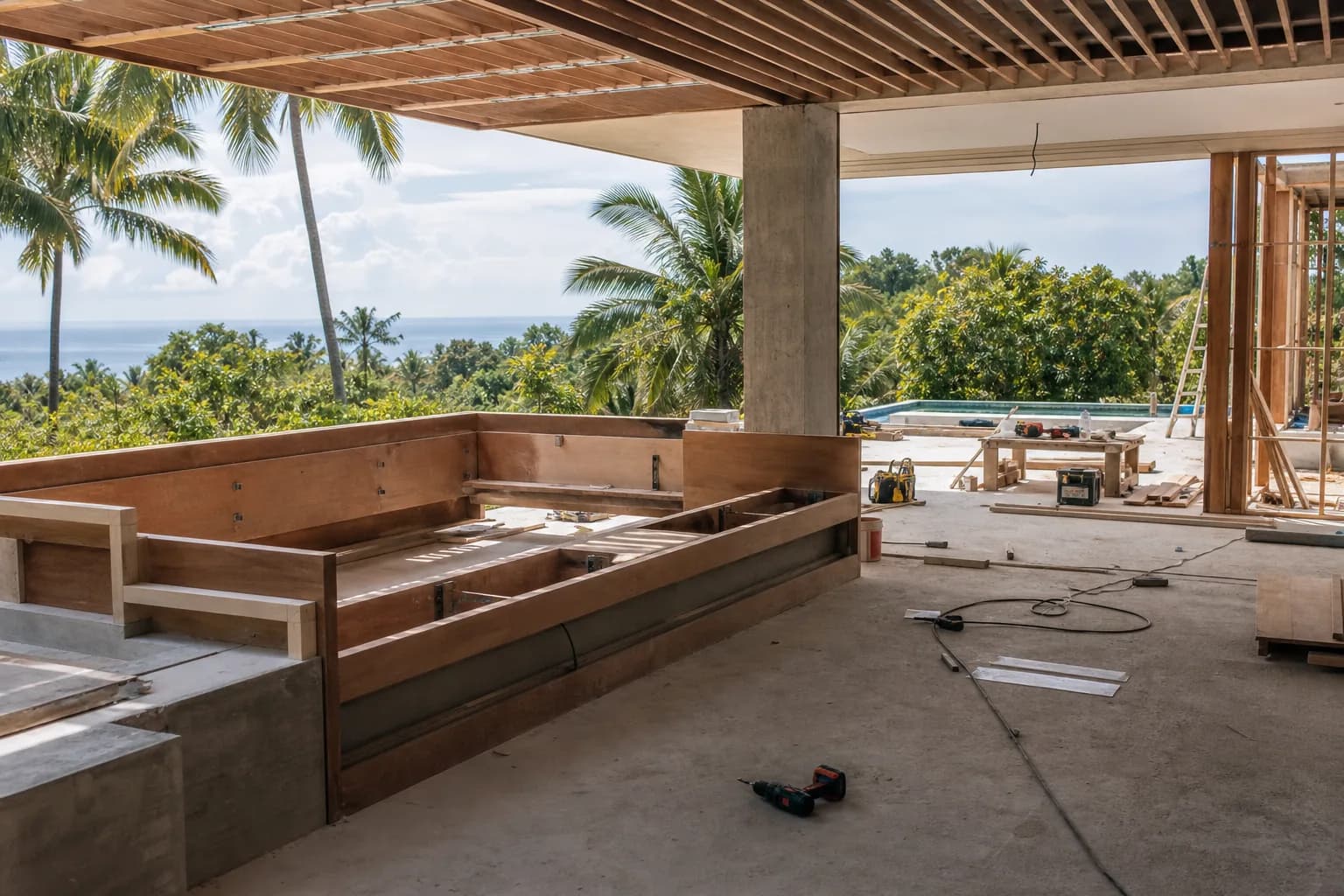
Integrated Furniture Fixings Hidden Brackets MEP Clearance Bali
Explore integrated furniture fixings with hidden brackets and MEP clearance in Bali. Learn installation tips, load guidance, and clean, accessible finishes.
8 min read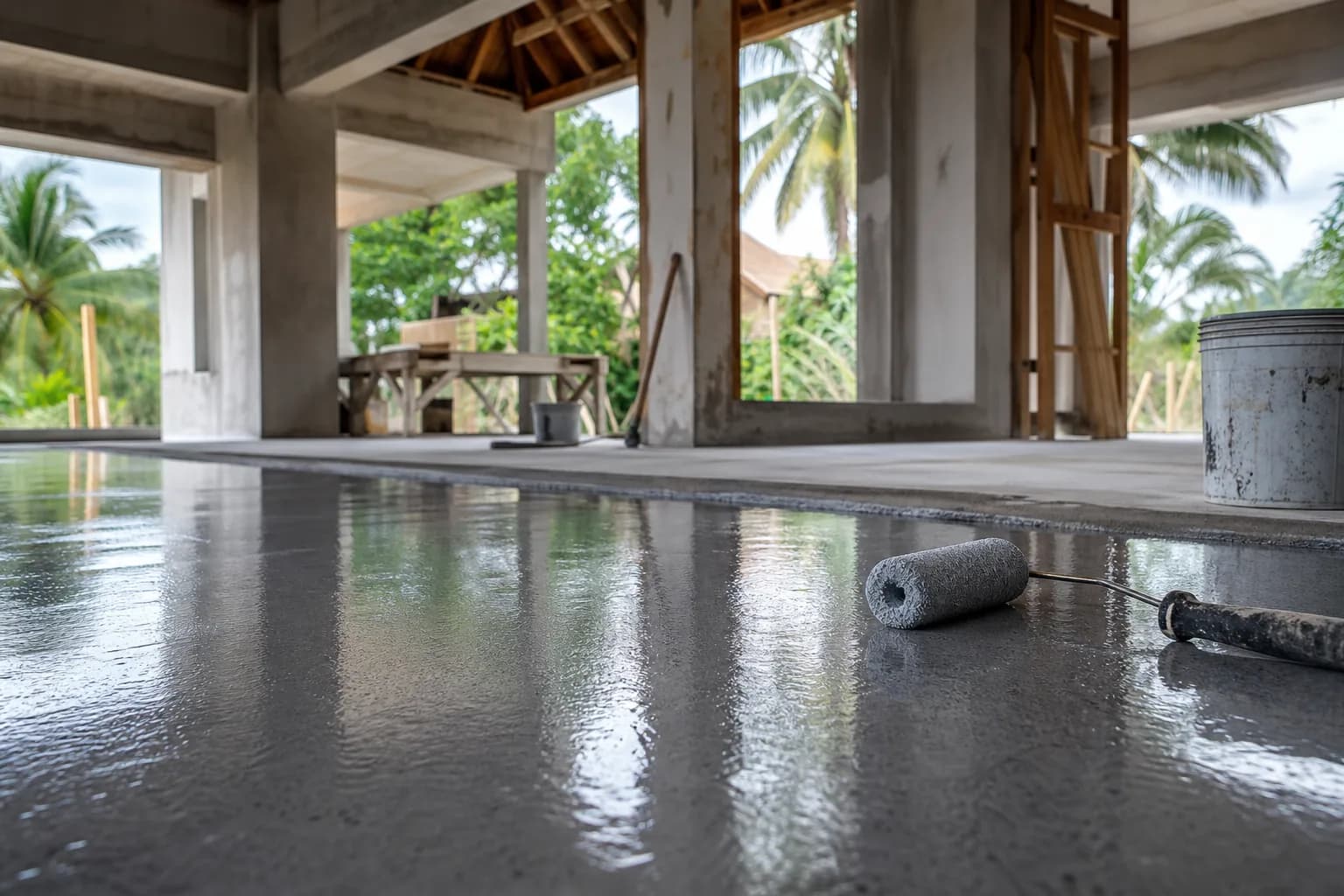
Epoxy Primer Moisture Barrier for Bali Interior Renovations
Explore epoxy primer and moisture barrier solutions for Bali interior renovations, delivering durable adhesion, moisture protection, and long-lasting finishes.
8 min read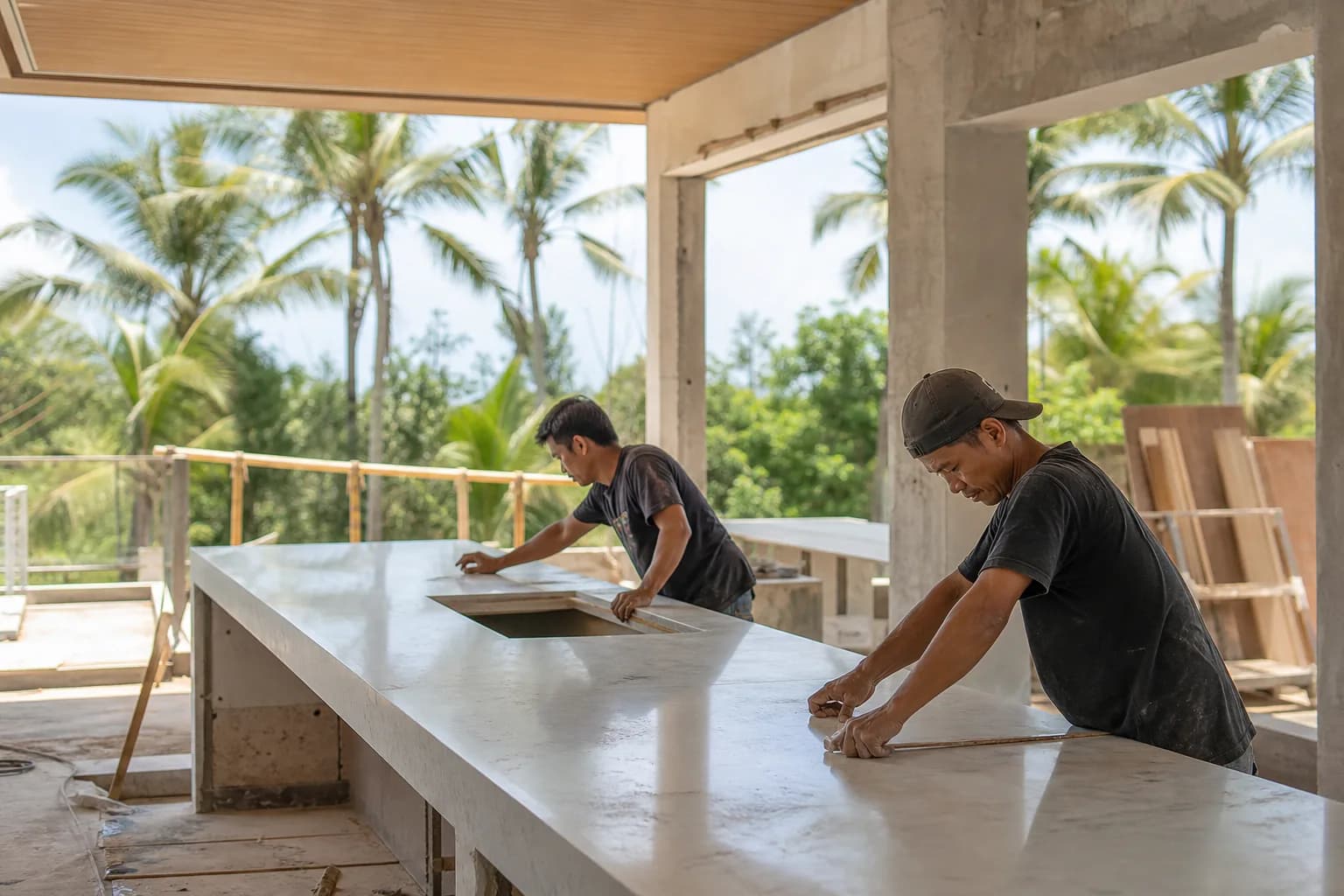
Engineered Stone Countertop Fixing Support Standards Bali
Explore Bali s engineered stone countertop fixing and support standards. Installation tips, durability guidance, and compliance for lasting quality surfaces.
10 min read