Nusa Dua Coral Stone Masonry Standards Mortar Costs Bali
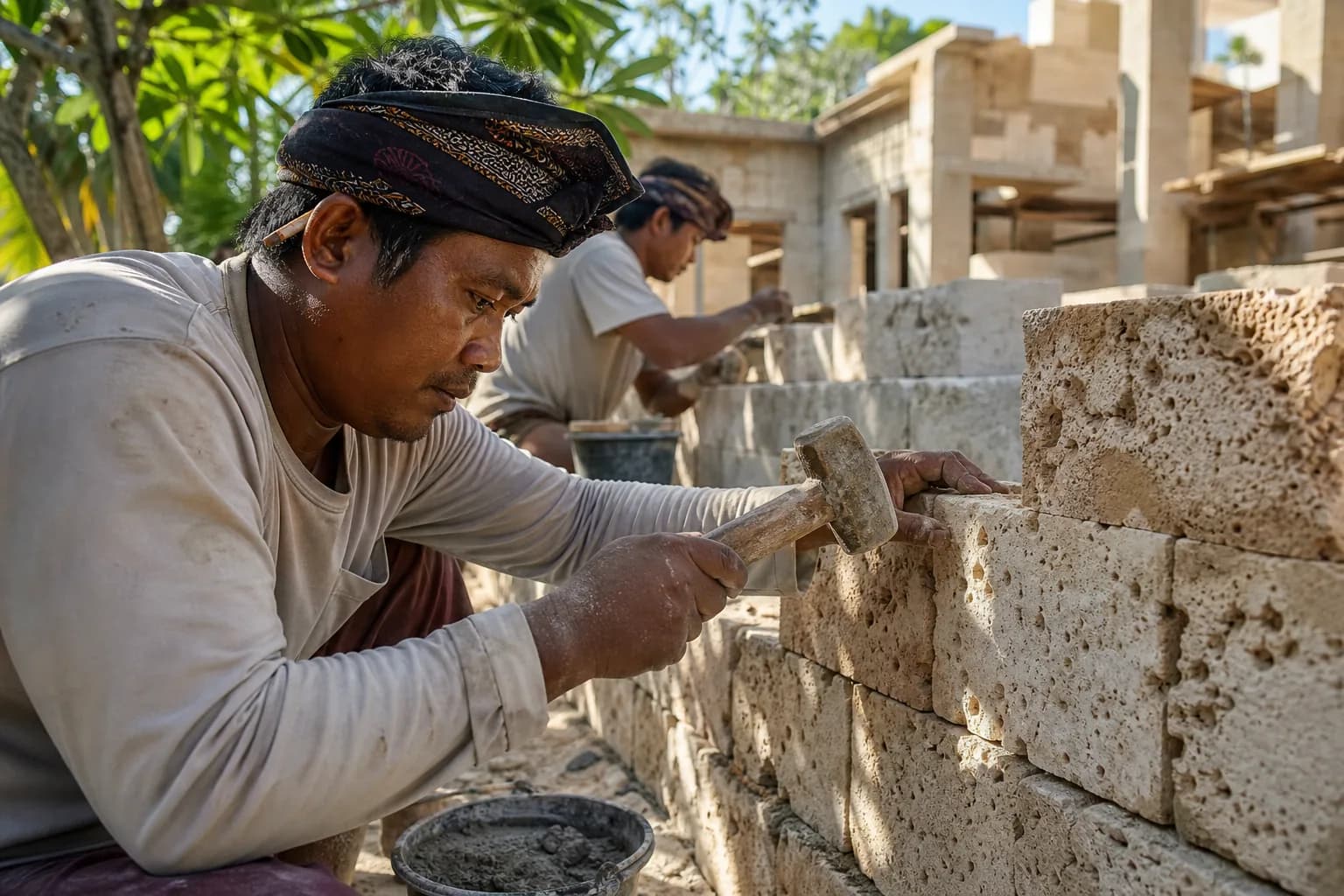
Why Coral Stone Masonry Standards in Nusa Dua Demand Engineering-Grade Mortar Mix Specifications
Coral stone masonry in Nusa Dua presents a unique construction challenge that most villa developers underestimate until structural issues emerge. The region’s proximity to coastal salt exposure, combined with Bali’s intense tropical humidity and seismic activity, creates a demanding environment where standard mortar mix ratios fail within 3-5 years. Property owners frequently discover efflorescence, structural cracking, and accelerated deterioration because contractors applied generic cement-sand ratios without accounting for coral stone’s porous calcium carbonate composition and the microclimate conditions specific to Nusa Dua’s peninsula geography.
Engineering Analysis: Coral Stone Material Properties and Mortar Compatibility in Coastal Nusa Dua
Coral stone (batu karang) used in Nusa Dua construction originates from fossilized coral formations with porosity rates between 18-35%, significantly higher than standard volcanic stone. This porous structure creates capillary action that draws moisture and dissolved salts deep into the masonry system. When paired with incompatible mortar mixes, the differential expansion rates between coral stone and cement-based mortar generate internal stress fractures invisible during initial construction but catastrophic within 24-36 months.
The technical challenge intensifies in Nusa Dua due to three environmental factors: (1) atmospheric chloride concentration averaging 180-240 mg/m²/day within 500 meters of coastline, (2) relative humidity consistently above 75% year-round, and (3) ground-level salt intrusion through capillary rise in areas with water tables 2-4 meters below surface. These conditions demand mortar specifications that address both mechanical bonding and chemical resistance.
Engineering-grade mortar for coral stone masonry in Nusa Dua requires Type II Portland cement with C3A content below 8% to resist sulfate attack from marine aerosols. The standard 1:5 cement-to-sand ratio used in inland Bali construction proves inadequate—optimal performance requires 1:4 ratio with hydrated lime addition at 10-15% of cement weight. This lime component provides three critical functions: improved workability for bonding with irregular coral surfaces, enhanced flexibility to accommodate differential movement, and alkaline buffering against carbonation from atmospheric CO2.
Sand selection critically impacts long-term performance. River sand from Bali’s volcanic watersheds contains angular particles ideal for mechanical interlock, but requires washing to remove organic content and clay fines below 3% by weight. Unwashed sand introduces contaminants that compromise cement hydration and create weak interfacial zones. Particle gradation should follow ASTM C144 specifications with 100% passing 9.5mm sieve and 95-100% passing 4.75mm sieve, ensuring adequate surface area for cement paste coating without excessive void space.
Water-cement ratio becomes the determining factor for durability in Nusa Dua’s aggressive environment. While contractors typically add water until achieving workable consistency (often 0.65-0.75 w/c ratio), engineering standards require maximum 0.50 w/c ratio for coastal exposure. This lower ratio produces denser mortar with reduced permeability, limiting chloride penetration rates to below 0.8 x 10⁻¹² m²/s. Achieving proper workability at low w/c ratios necessitates plasticizer admixtures at 0.2-0.4% by cement weight.
Compressive strength targets for coral stone mortar in Nusa Dua should reach minimum 12.5 MPa at 28 days, classified as M12.5 grade. This strength level provides adequate bonding without creating excessive rigidity that transfers stress concentrations to the softer coral stone substrate. Higher strength mortars (M15 or above) often cause spalling at the stone-mortar interface due to thermal expansion mismatches during Bali’s daily temperature cycles of 8-12°C variation.
The curing protocol directly determines whether specified mortar properties materialize in actual construction. Nusa Dua’s combination of high temperatures (28-33°C) and wind exposure accelerates surface evaporation, causing plastic shrinkage cracking within 2-4 hours of placement. Proper curing requires continuous moisture retention for minimum 7 days through wet burlap covering or curing compound application. Projects that skip this step experience 30-40% reduction in ultimate strength and 200-300% increase in permeability.
Critical Mistakes: What Villa Developers Miss in Coral Stone Masonry Specifications
The most expensive error occurs when developers approve coral stone masonry without verifying the stone source and quality grading. Nusa Dua contractors often mix high-grade coral stone (density 1,600-1,800 kg/m³) with lower-grade porous variants (1,200-1,400 kg/m³) within the same wall section. This inconsistency creates differential moisture absorption rates and unpredictable structural behavior. Quality control requires rejecting stones with visible voids exceeding 15mm diameter or showing friable surfaces that crumble under thumb pressure.
Mortar batching represents another failure point where cost-cutting undermines durability. Site-mixed mortar using volume measurements (shovel counts) rather than weight-based batching produces mix variations of ±25% in cement content between batches. A wall section with inconsistent mortar strength develops weak planes where moisture penetration accelerates. Professional specifications mandate weight batching with calibrated scales and batch documentation for quality assurance tracking.
Joint thickness and tooling technique significantly impact water intrusion resistance, yet most contractors apply mortar joints ranging 12-20mm thickness based on stone irregularity rather than engineering requirements. Optimal joint thickness for coral stone masonry should maintain 10-12mm consistency, achieved through proper stone selection and cutting. Joints exceeding 15mm create excessive mortar volume prone to shrinkage cracking, while joints below 8mm lack sufficient mortar coverage for complete bonding. Tooling should produce concave profiles that shed water rather than flat or recessed profiles that collect moisture.
The integration of coral stone masonry with reinforced concrete structural elements requires specific detailing that standard construction practices overlook. Without proper movement joints at 3-4 meter intervals and flexible sealant backing, differential thermal expansion between concrete frames and coral stone infill generates diagonal cracking at corners. Engineering details must include stainless steel wall ties (minimum 4mm diameter) at 600mm vertical and horizontal spacing to anchor masonry to structural elements while permitting minor differential movement.
Implementation Process: Engineering-Compliant Coral Stone Masonry for Nusa Dua Projects
Phase 1: Material Qualification and Testing (Week 1-2)
Begin with coral stone source verification through quarry inspection and material sampling. Extract minimum 10 representative samples for laboratory testing of compressive strength (target: 8-12 MPa), water absorption (maximum 12% by weight), and density classification. Reject sources showing salt efflorescence or biological growth indicating excessive moisture retention. Simultaneously test proposed sand sources for silt content (maximum 3%), organic impurities (colorimetric test), and particle size distribution. This qualification phase prevents material-related failures that emerge months after construction completion.
Phase 2: Mortar Mix Design and Trial Batching (Week 2-3)
Develop project-specific mortar mix design based on qualified materials and Nusa Dua exposure conditions. Standard specification: Type II Portland cement, washed river sand, hydrated lime at 12% cement weight, plasticizer at 0.3% cement weight, water-cement ratio 0.48. Prepare trial batches using calibrated weight measurements and test for: flow consistency (110-120mm flow table spread), compressive strength at 7 and 28 days, and water retention (minimum 75%). Document approved mix design with weight proportions per cubic meter: 380kg cement, 45kg hydrated lime, 1,520kg sand, 182kg water, 1.14kg plasticizer.
Phase 3: Site Preparation and Quality Control Setup (Week 3-4)
Establish dedicated mortar batching area with covered storage for cement and lime, calibrated platform scale (±0.5kg accuracy), mechanical mixer (minimum 100L capacity), and water measurement system. Train masonry crew on batching procedures, joint thickness control using 10mm gauge rods, and tooling techniques. Implement three-level inspection protocol: batch verification before mixing, in-progress joint inspection at 2-meter height intervals, and final surface inspection before curing application. Create sample panel (1m x 1m) demonstrating approved stone selection, joint thickness, and tooling profile for reference throughout construction.
Phase 4: Construction Execution with Environmental Controls (Week 4-12)
Execute masonry construction in maximum 1.2-meter daily lifts to prevent mortar squeeze-out from weight of upper courses. Apply mortar in full bed joints with complete coverage—no furrow application that creates voids. Butter head joints on both stone edges before placement. Tool joints to concave profile within 30-45 minutes of placement when mortar reaches thumbprint-firm consistency. In Nusa Dua’s coastal wind conditions, erect temporary windbreaks around active work areas and avoid construction during midday peak temperatures (11:00-14:00). Begin wet curing within 2 hours of joint tooling using continuous misting or wet burlap coverage maintained for 7 days minimum.
Phase 5: Protection and Sealing (Week 12-13)
After 28-day curing completion, apply breathable silane-based water repellent penetrating sealer to all exposed coral stone surfaces. This treatment reduces water absorption by 85-90% while permitting vapor transmission to prevent moisture entrapment. Avoid film-forming sealers that trap moisture and cause subsurface deterioration. Install proper flashing at wall tops and penetrations using stainless steel or lead-coated copper. Verify weep hole placement at 1,200mm horizontal spacing in cavity walls to drain entrapped moisture.
Cost Analysis: Realistic Budget Ranges for Engineering-Grade Coral Stone Masonry in Nusa Dua
Engineering-compliant coral stone masonry in Nusa Dua ranges between Rp 1,850,000-2,400,000 per cubic meter of completed wall (approximately $115-150 USD per m³ at February 2026 exchange rates), significantly higher than standard masonry at Rp 1,200,000-1,500,000 per m³. This premium reflects quality-controlled materials, proper mix design, skilled labor, and adequate curing protocols.
Material cost breakdown per cubic meter: coral stone Rp 450,000-600,000 (grade-dependent), Type II cement Rp 280,000-320,000, washed sand Rp 180,000-220,000, hydrated lime Rp 85,000-110,000, admixtures Rp 45,000-60,000, water repellent sealer Rp 120,000-160,000. Labor costs for skilled masonry crews in Nusa Dua range Rp 550,000-750,000 per cubic meter including batching, placement, tooling, and curing. Quality control testing and engineering supervision adds Rp 140,000-180,000 per cubic meter.
For typical villa boundary wall (200mm thickness, 2.5m height, 40m length = 20m³ volume), total engineering-grade coral stone masonry investment reaches Rp 37,000,000-48,000,000 ($2,300-3,000 USD). Standard construction might quote Rp 24,000,000-30,000,000, but the Rp 13,000,000-18,000,000 savings evaporates within 3-5 years when repairs, repointing, and remedial waterproofing become necessary at costs exceeding original construction.
Timeline expectations for quality-controlled coral stone masonry: 40 linear meters of 2.5m height wall requires 8-10 weeks including material qualification, mix design, construction at proper daily lift limits, and full curing protocol. Contractors promising 4-6 week completion sacrifice quality control steps that determine long-term performance.
Frequently Asked Questions: Nusa Dua Coral Stone Masonry Standards
What makes Nusa Dua coral stone masonry different from other Bali regions?
Nusa Dua’s peninsula location creates extreme coastal exposure with atmospheric chloride levels 60-80% higher than inland areas like Ubud or Canggu. The combination of direct salt spray, high humidity, and coral stone’s porous nature demands mortar specifications with enhanced sulfate resistance and reduced permeability. Standard mortar mixes used successfully in Seminyak or Sanur fail in Nusa Dua within 24-36 months due to accelerated chloride penetration and carbonation. Engineering-grade specifications with Type II cement, lime addition, and maximum 0.50 w/c ratio become mandatory rather than optional for structures within 1km of coastline.
Can I use pre-mixed mortar bags instead of site-batched mortar for coral stone masonry?
Pre-mixed mortar products available in Bali typically contain Type I Portland cement and generic sand blends optimized for standard brick or concrete block masonry, not coral stone’s specific requirements. These products lack the hydrated lime component essential for flexibility and workability with irregular coral surfaces. Additionally, pre-mixed products cannot accommodate project-specific adjustments for local sand characteristics or exposure conditions. For small repair projects under 2m³, quality pre-mixed products may suffice, but new construction in Nusa Dua requires engineered site-batched mortar with documented mix design and quality control testing. The cost difference between pre-mixed and properly batched mortar represents less than 8% of total masonry cost while determining 70-80% of long-term durability.
How do I verify my contractor is using correct mortar mix ratios during construction?
Implement three verification methods: (1) Require weight-based batching with calibrated scales and demand batch tickets documenting cement, sand, lime, and water weights for each mix—volume-based batching (shovel counts) produces unacceptable variations. (2) Conduct field consistency testing using flow table or slump cone to verify water-cement ratio remains within specification—mortar should achieve 110-120mm flow without segregation. (3) Extract mortar samples during construction for laboratory compressive strength testing at 7 and 28 days—minimum three samples per 50m³ of masonry. Contractors resisting documentation and testing typically cut cement content by 15-2
 3124 m²6 month(s)from 123.000 USD
TALA 8
 2144 m²11 month(s)from 104.000 USD
Narayana
 3127 m²9 month(s)from 177.000 USD
Mukunda
 3104 m²11 month(s)from 99.000 USD
TALA 100
 3180 m²7 month(s)from 142.000 USD
Vasudeva
 164 m²7 month(s)from 79.000 USD
Private: Haridas Villas, Tegallalang
 4344 m²16 month(s)from 290.000 USD
Radha
 172 m²8 month(s)from 120.000 USD
Keshava
 3173 m²6 month(s)from 125.000 USD
TALA FOUR
 1from 198.000 USD
Private: Haridas Villas
164 m²7 month(s)from 79.000 USDTALA TWO

Want to calculate?
Start With Real Numbers, Not Guesses
Before buying land or finalizing a design, check the realistic build cost range for your project in Bali.
Our team reviews your inputs and gives a grounded estimate.
Available lands
 1600 m²32 min$ 266010Bali, Tabanan
 300 m²55 min$ 32475Bali, Tegelalang
 200 m²11 min$ 89286Bali, Tabanan
 1950 m²7 min$ 150092Bali, Tabanan
 2700 m²30 min$ 314224Bali, Sidemen
 2000 m²5 min$ 1440887Bali, Pecatu
 7500 m²5 min$ 206281Bali, Kedungu
 1410 m²15 min$ 390702Bali, Tabanan
 2200 m²15 min$ 508005Bali, Canggu
 550 m²5 min$ 217629Bali, Tabanan
 1375 m²10 min$ 447044Bali, Canggu
 800 m²5 min$ 295567Bali, Seseh
 3800 m²15 min$ 100616Bali, Pererenan
 800 m²8 min$ 113300Bali, Ungasan
 2400 m²7 min$ 496552Bali, Canggu
Essential Bali build & buy guides
- Bali villa construction cost per m² in 2026
- How much will your villa cost? Calculator
- Building a villa in Bali: the complete guide
- Buying land in Bali: step-by-step for foreigners
- Bali villa investment: yields, risks, returns
- Leasehold vs freehold: what foreigners can own
- Construction defect liability & 10-year warranty
- Bali building codes and construction standards
Related guides
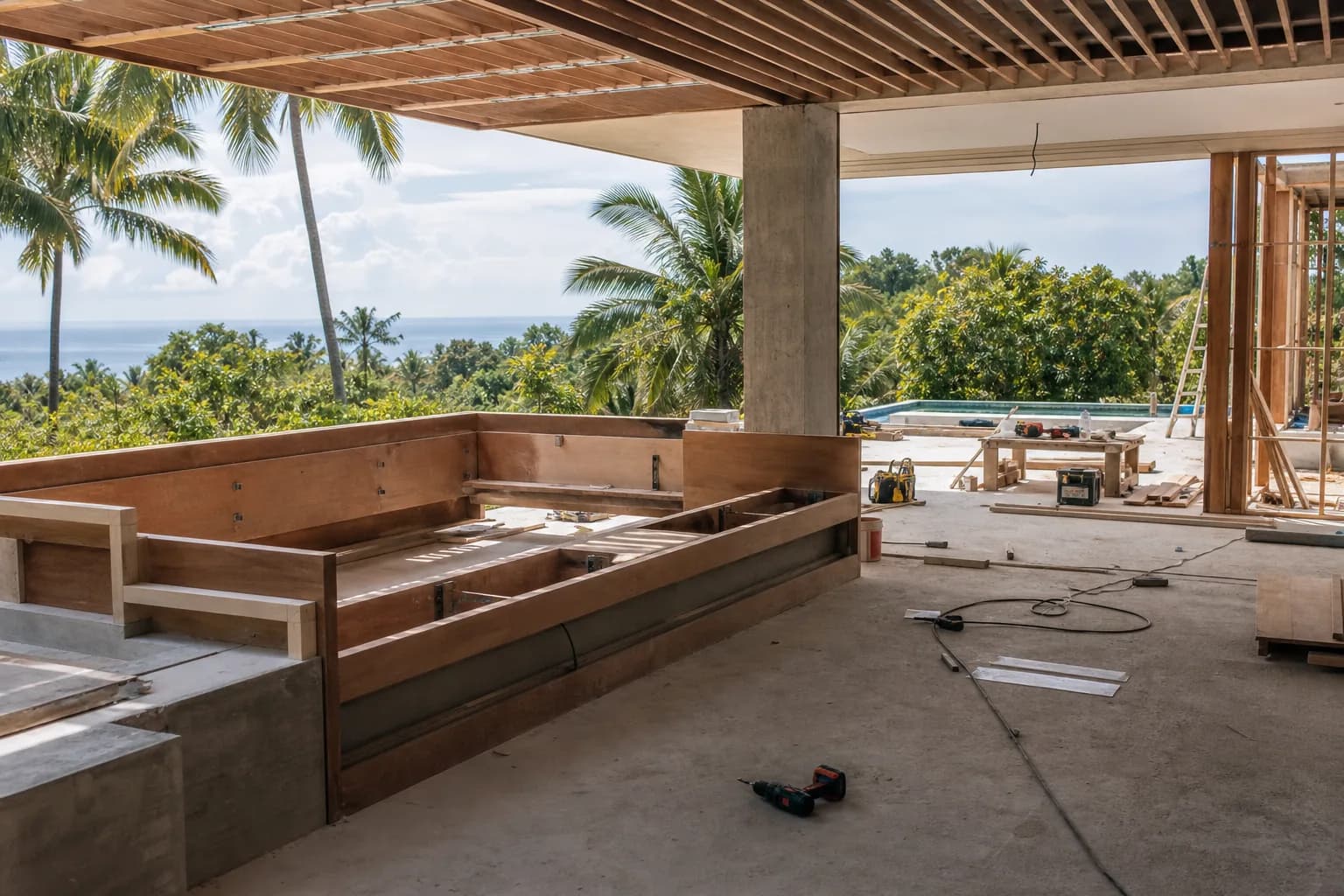
Integrated Furniture Fixings Hidden Brackets MEP Clearance Bali
Explore integrated furniture fixings with hidden brackets and MEP clearance in Bali. Learn installation tips, load guidance, and clean, accessible finishes.
8 min read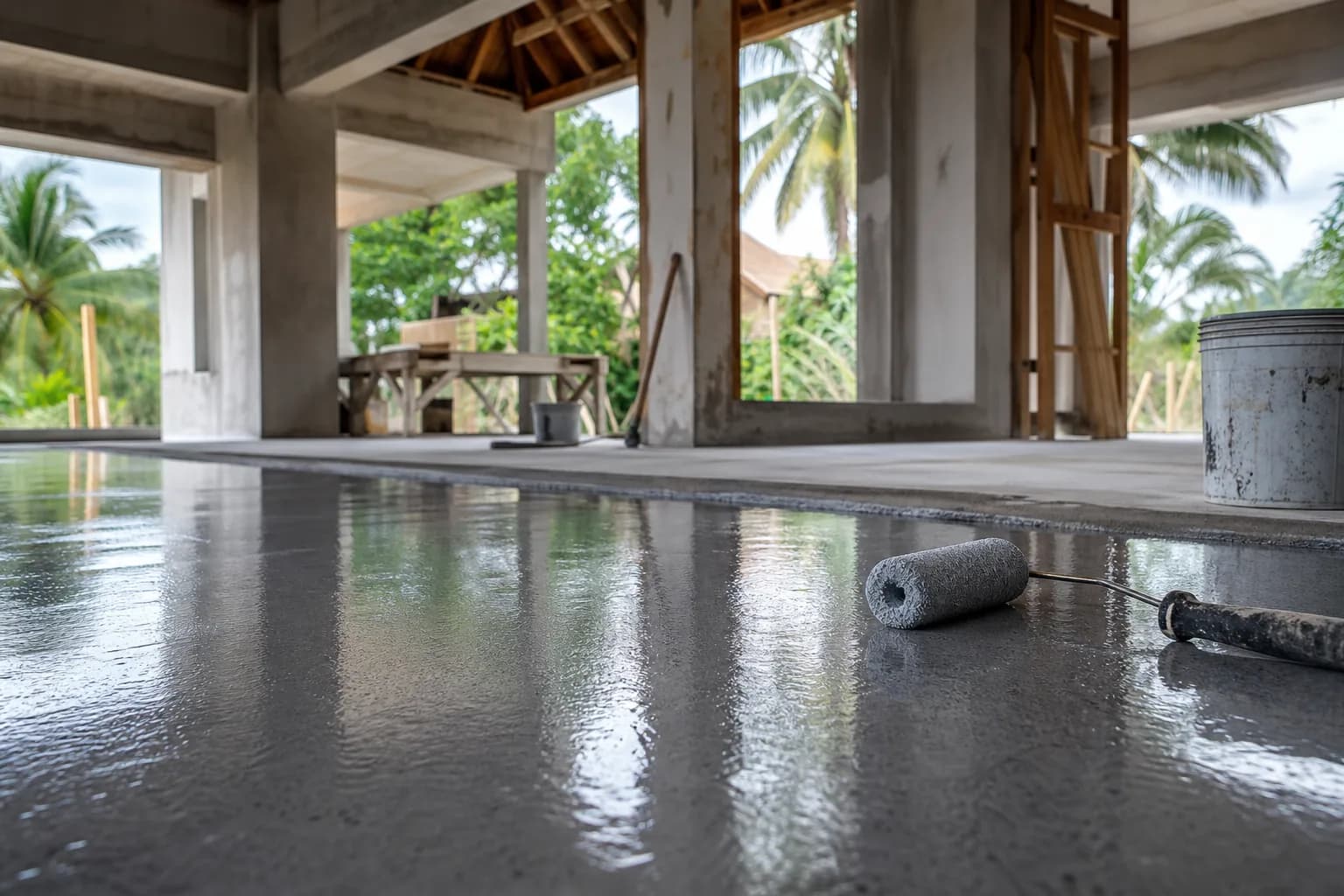
Epoxy Primer Moisture Barrier for Bali Interior Renovations
Explore epoxy primer and moisture barrier solutions for Bali interior renovations, delivering durable adhesion, moisture protection, and long-lasting finishes.
8 min read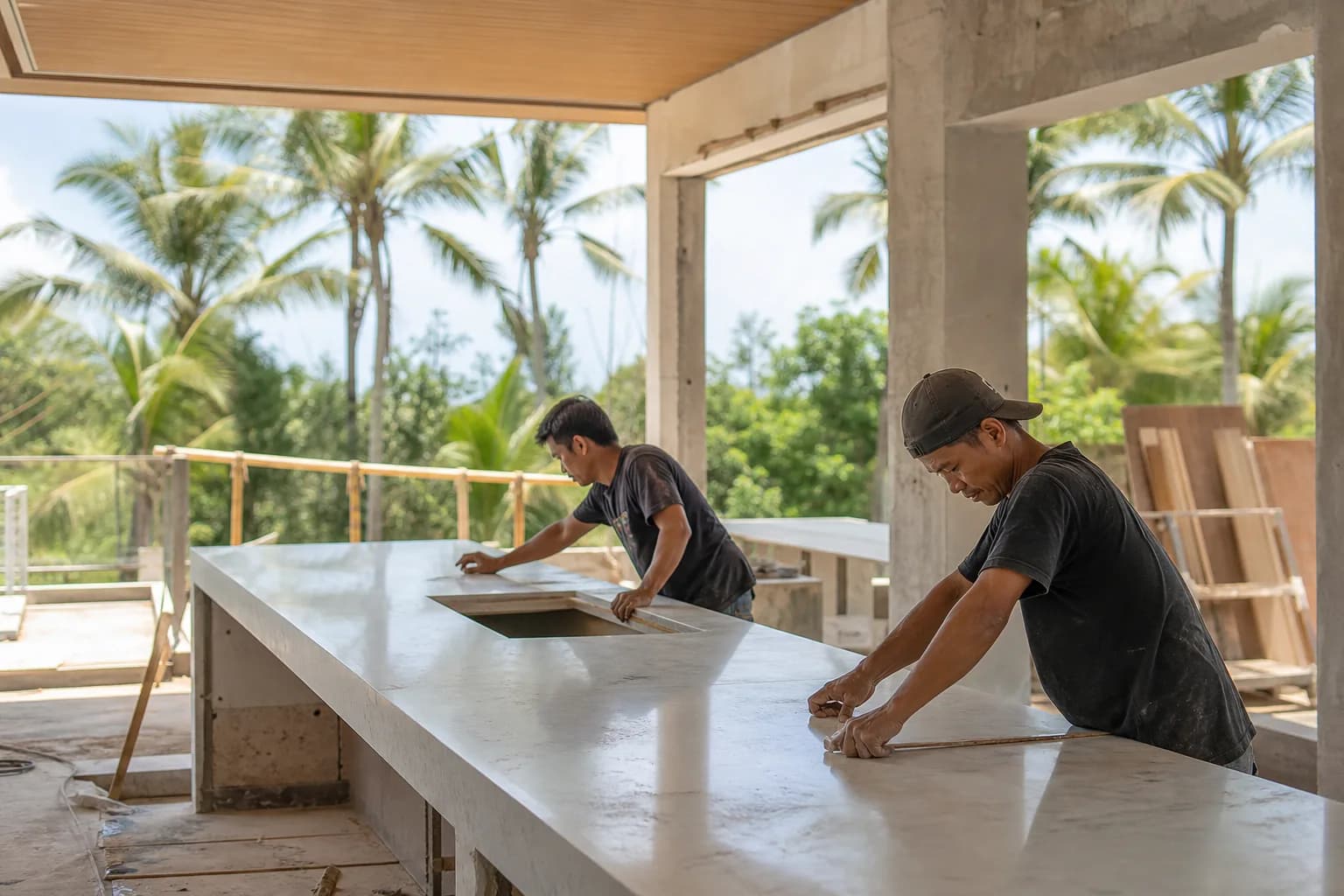
Engineered Stone Countertop Fixing Support Standards Bali
Explore Bali s engineered stone countertop fixing and support standards. Installation tips, durability guidance, and compliance for lasting quality surfaces.
10 min read