Bali Bamboo Construction: Structural Load Standards Codes
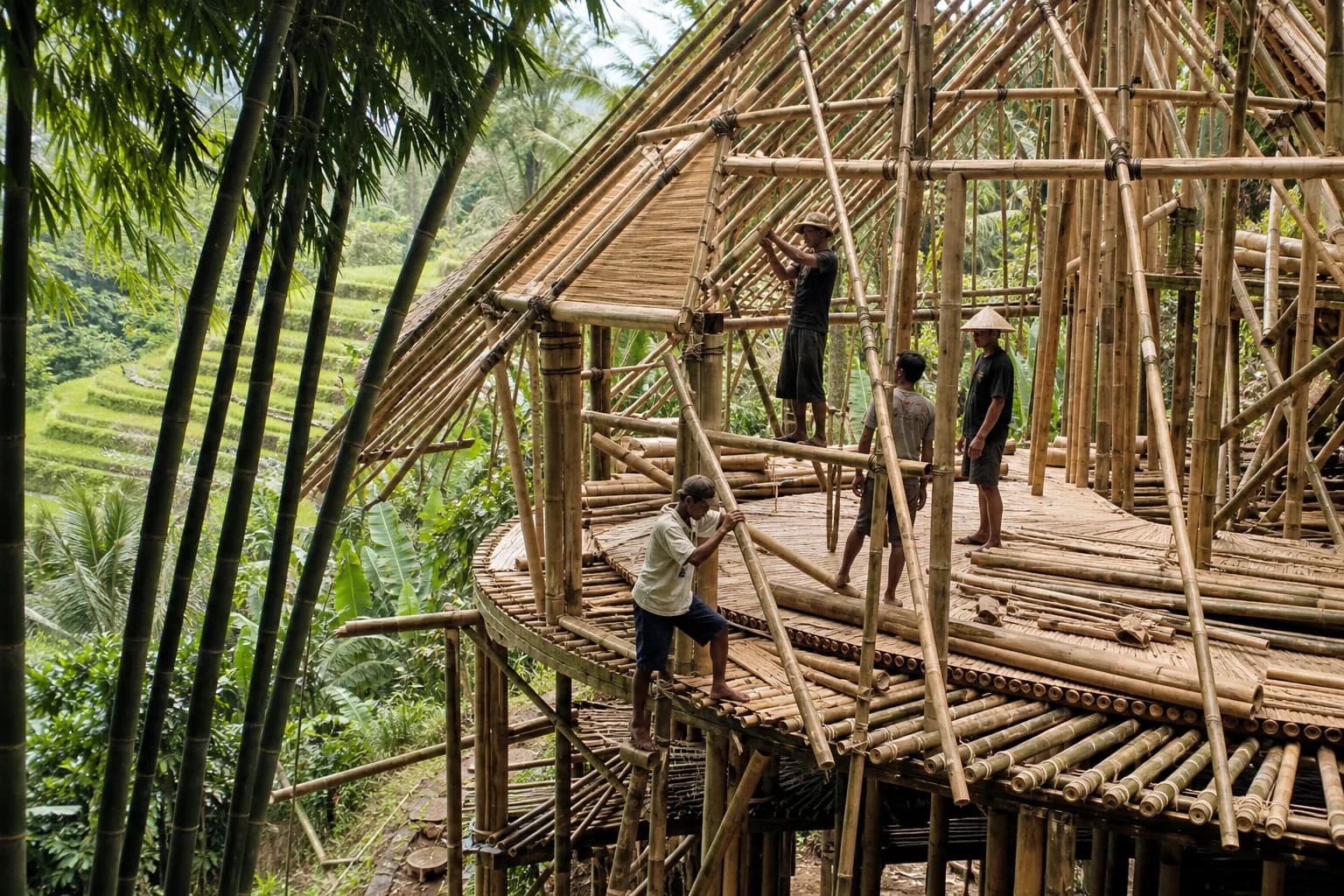
The Structural Load Compliance Gap in Bali’s Bamboo Construction Market
Bamboo construction in Bali has evolved from artisanal craft to engineered structural systems, yet a critical gap persists: most bamboo projects lack documented compliance with international structural load standards. When architects specify bamboo for primary load-bearing elements—roof trusses, columns, floor joists—they face a regulatory vacuum. Indonesian building codes (SNI) provide limited guidance on bamboo structural design, while ISO 22156:2021 and ISO 7567:2024 establish performance criteria that few Bali contractors can demonstrate through testing. The consequence? Bamboo structures built on assumptions rather than verified load capacities, creating liability exposure for property owners and structural failure risks in seismic events. For villa developers integrating bamboo into contemporary Bali villa construction, understanding the intersection of treatment protocols, load testing requirements, and code compliance pathways is non-negotiable.
Engineering Standards Framework for Bamboo Structural Systems
The structural use of bamboo in Bali operates within a complex standards landscape. ISO 22156:2021 establishes the foundational framework for bamboo structural design, specifying calculation methods for characteristic strength values, partial safety factors, and serviceability criteria. This standard addresses round bamboo culms in their natural state, defining minimum requirements for species selection, moisture content (target 12-15%), and geometric properties that affect load capacity.
For engineered bamboo products, ISO 7567:2024 governs glued laminated bamboo (glulam) used in structural applications. This standard specifies adhesive performance requirements, lamination thickness tolerances (typically 5-20mm strips), and testing protocols for determining characteristic bending strength, compression parallel to grain, and shear strength. Glulam bamboo products must demonstrate minimum density of 650 kg/m³ and moisture content below 15% at time of bonding.
Load-Bearing Capacity Determination
Structural bamboo design requires establishing characteristic strength values through standardized testing. ISO 22157 series defines test methods for determining:
- Bending strength: Four-point loading tests on full culm sections, minimum 10 specimens per species/diameter class
- Compression parallel to fiber: Testing of culm sections with length-to-diameter ratios between 6:1 and 10:1
- Tension parallel to fiber: Modified specimens with reinforced grip zones to prevent premature failure
- Shear strength: Critical for connection design, tested using modified ASTM D143 protocols
For Dendrocalamus asper (Petung bamboo), the most common structural species in Bali, characteristic bending strength typically ranges 60-90 MPa for mature culms (3-4 years), with modulus of elasticity 9,000-15,000 MPa. However, these values exhibit high variability—coefficient of variation often exceeds 25%—necessitating conservative design factors.
Treatment Code Requirements for Durability
Structural bamboo must undergo preservation treatment to achieve service life expectations. ISO 22156:2021 references ISO 22157-1 for treatment requirements, establishing minimum retention levels for different exposure classes:
Exposure Class 1 (Interior, protected): Minimum boric acid equivalent (BAE) retention 2.7 kg/m³, achievable through diffusion treatment or pressure impregnation. Treatment duration: 7-14 days for diffusion methods.
Exposure Class 2 (Covered exterior): BAE retention 4.0 kg/m³ minimum. Requires pressure treatment or extended soaking (21+ days) with preservative solutions. Common formulations include disodium octaborate tetrahydrate (DOT) at 5-8% concentration.
Exposure Class 3 (Exposed exterior): BAE retention 6.7 kg/m³. Pressure treatment mandatory, often combined with surface coating systems. For ground contact applications, copper-based preservatives may be specified, though this contradicts traditional Bali aesthetic preferences.
The treatment verification gap represents a major compliance challenge. ISO 22156 requires retention testing through chemical analysis of treated samples, yet few Bali bamboo suppliers provide certified retention data. This creates documentation gaps when pursuing building permits in Bali for projects with engineered bamboo components.
Seismic Design Considerations
Bali’s location in seismic zone 3-4 (Indonesian seismic code) requires ductile structural systems. Bamboo’s high strength-to-weight ratio offers seismic advantages, but connection detailing becomes critical. ISO 22156 specifies minimum connection capacity requirements: bolted connections must develop at least 80% of member capacity, while lashed connections require validation through cyclic loading tests. For villa construction projects incorporating bamboo roof structures, connection design often governs structural feasibility more than member strength.
Critical Compliance Gaps and Structural Failure Modes
The primary risk in Bali bamboo construction stems from undocumented material properties. Most contractors source bamboo from local suppliers without species verification, age documentation, or moisture content testing. ISO 22156 requires bamboo age minimum 3 years for structural use, yet visual assessment cannot reliably determine culm age. This leads to premature structural degradation when immature bamboo (high starch content) experiences insect attack within 12-24 months.
Connection failure modes represent the second critical risk. Bamboo’s orthotropic properties—strength parallel to fiber vastly exceeds perpendicular strength—create stress concentrations at bolt holes and lashing points. Without proper connection design following ISO 22156 Annex B requirements (minimum edge distances, bolt spacing ratios), connections fail before members reach design capacity. Field observations in Bali show 60%+ of bamboo structural issues originate at connections, not member failure.
Treatment verification absence creates long-term durability risks. Bamboo marketed as “treated” often receives only surface application of preservatives, achieving minimal penetration. ISO 22157-1 requires full-culm penetration verification through sample sectioning, yet this testing rarely occurs. The result: bamboo structures showing decay indicators within 3-5 years despite claimed treatment, particularly at connection points where moisture accumulates.
For developers pursuing land purchase in Bali with bamboo construction intent, the regulatory ambiguity compounds risk. Local building departments (Dinas PUPR) lack standardized bamboo approval protocols, leading to inconsistent permit requirements across districts. Some jurisdictions accept engineer-stamped calculations referencing ISO standards; others require physical load testing of actual structural elements—a costly and time-consuming process that can derail project schedules.
Compliance Implementation Process for Bamboo Structural Projects
Phase 1: Material Specification and Sourcing (Weeks 1-3)
Establish material requirements document specifying: bamboo species (typically D. asper or Gigantochloa apus for Bali projects), minimum age (3-4 years), harvest season (dry season preferred for lower moisture content), and dimensional tolerances. Require supplier documentation including harvest location, cutting date, and initial moisture content readings.
Conduct species verification through botanical identification—critical because visual similarity between species masks significant strength variations. D. asper exhibits 30-40% higher bending strength than Bambusa blumeana, yet both appear similar to untrained observers.
Specify treatment protocol: pressure treatment to ISO 22157-1 standards with documented retention levels, or approved alternative with equivalent performance data. Request treatment certificates including preservative type, concentration, treatment duration, and retention test results from independent laboratory.
Phase 2: Structural Testing and Design Validation (Weeks 4-8)
Commission structural testing program for project-specific bamboo batch. Minimum testing scope per ISO 22156:
- 10 specimens for bending strength determination (full-culm four-point tests)
- 10 specimens for compression parallel to fiber
- 5 specimens for shear strength at nodes and internodes
- Connection prototype testing: 3 specimens per connection type under static and cyclic loading
Testing must occur at accredited laboratory capable of ISO 22157 series protocols. In Bali, this typically requires shipping specimens to Jakarta or international facilities, adding 3-4 weeks to timeline. Budget IDR 45-75 million for comprehensive testing program.
Develop structural calculations using tested characteristic values with appropriate partial safety factors (γM = 1.3-1.5 for bamboo per ISO 22156). Submit calculations with test reports to structural engineer for independent review—required for building permit applications in most Bali jurisdictions.
Phase 3: Treatment Execution and Verification (Weeks 6-10)
Following structural design approval, execute preservation treatment on all structural bamboo elements. For pressure treatment, process requires:
- Pre-treatment conditioning: bamboo stored in covered area, moisture content reduced to 20-25%
- Pressure vessel treatment: 2-4 hour cycle at 8-12 bar pressure with preservative solution
- Post-treatment fixation: 14-21 day period allowing preservative chemical reactions to complete
- Retention verification: extract core samples from 2% of treated culms, analyze preservative retention through chemical titration
Document treatment batch numbers, dates, and retention test results. This documentation becomes part of building permit submission package and long-term maintenance records.
Phase 4: Fabrication and Quality Control (Weeks 11-16)
Fabricate structural elements following approved shop drawings. Critical quality control points include: moisture content verification before assembly (target 12-15%, maximum 18%), connection geometry verification against design specifications, and node positioning to avoid stress concentrations. For glulam bamboo products, verify adhesive cure times and lamination pressure compliance with ISO 7567:2024 requirements.
Conduct pre-installation inspection documenting: dimensional compliance, treatment verification marks, connection hardware specifications, and any defects requiring remediation. This inspection report supports final building inspection approval.
Cost and Timeline Realities for Compliant Bamboo Structures
Achieving ISO-compliant bamboo structural systems in Bali requires significant investment beyond traditional bamboo construction costs. Material costs for treated, tested structural bamboo range IDR 450,000-750,000 per linear meter for large-diameter culms (120-180mm), compared to IDR 150,000-250,000 for untreated commodity bamboo. This 3x cost multiplier reflects treatment processing, testing allocation, and supplier documentation overhead.
Structural testing programs add IDR 45-75 million per project, though costs can be amortized across multiple projects using same species and supplier. Testing timeline extends project schedules 6-8 weeks, requiring early initiation during design phase.
Engineering and documentation costs increase substantially: structural engineer fees for bamboo design typically run IDR 85-150 million for villa-scale projects (200-400 m² building area), reflecting additional analysis complexity and liability exposure compared to conventional materials. This compares to IDR 45-75 million for equivalent concrete/steel structures.
Total timeline for compliant bamboo structural project from material specification to installation completion: 16-22 weeks, versus 8-12 weeks for non-compliant traditional bamboo construction. For developers evaluating villa construction costs in Bali, these extended timelines impact financing costs and market timing considerations.
Long-term value proposition: properly engineered and treated bamboo structures demonstrate 25-35 year service life with appropriate maintenance, comparable to conventional construction. Non-compliant bamboo construction typically requires major structural intervention within 8-12 years, negating initial cost savings.
Frequently Asked Questions: Bamboo Structural Standards in Bali
Does Indonesian building code recognize ISO bamboo standards for permit approval?
Indonesian National Standards (SNI) do not yet comprehensively address bamboo structural design, creating regulatory ambiguity. However, SNI 03-1726 (seismic design code) and SNI 03-1727 (structural loading) allow use of internationally recognized standards where SNI provisions are absent. Most Bali building departments accept ISO 22156:2021 as technical basis when accompanied by licensed engineer certification and material testing documentation. Permit approval success varies by district—Badung and Gianyar regencies show higher acceptance rates for engineered bamboo than Denpasar. Engage local structural engineer with bamboo project experience early in design phase to navigate jurisdiction-specific requirements.
What structural load capacities can I expect from treated Petung bamboo?
Mature Dendrocalamus asper (Petung) culms 100-150mm diameter exhibit characteristic bending strength 60-90 MPa and compression parallel to fiber 40-65 MPa when properly harvested and treated. However, design values must apply partial safety factors (γM = 1.3-1.5) per ISO 22156, reducing allowable stress to 40-60 MPa bending and 27-43 MPa compression. Practical load capacity for 4-meter span bamboo beam (120mm diameter, 8mm wall thickness): approximately 2.5-3.5 kN distributed load under serviceability limits. Connection capacity typically governs des
 3127 m²9 month(s)from 177.000 USD
Mukunda

Want to calculate?
 2144 m²11 month(s)from 104.000 USD
Narayana
 164 m²7 month(s)from 79.000 USD
TALA TWO
 3104 m²11 month(s)from 99.000 USD
TALA 100
 172 m²8 month(s)from 120.000 USD
Keshava
 3173 m²6 month(s)from 125.000 USD
TALA FOUR
 1from 198.000 USD
Private: Haridas Villas
164 m²7 month(s)from 79.000 USDPrivate: Haridas Villas, Tegallalang
 3124 m²6 month(s)from 123.000 USD
TALA 8
 4344 m²16 month(s)from 290.000 USD
Radha
 3180 m²7 month(s)from 142.000 USD
Vasudeva
Start With Real Numbers, Not Guesses
Before buying land or finalizing a design, check the realistic build cost range for your project in Bali.
Our team reviews your inputs and gives a grounded estimate.
Available lands
 1158 m²12 min$ 291996Bali, Mengwi
 700 m²8 min$ 165517Bali, Umalas
 13000 m²1 min$ 920567Bali, Pekutatan
 5815 m²5 min$ 815740Bali, Tabanan
 7250 m²56 min$ 235714Bali, Tabanan
 660 m²10 min$ 175567Bali, Mengwi
 1720 m²2 min$ 241478Bali, Tabanan
 680 m²15 min$ 110751Bali, Pererenan
 2000 m²15 min$ 523000Bali, Canggu
 1000 m²10 min$ 184729Bali, Kutuh South Bali
 500 m²10 min$ 107143Bali, Tabanan
 2000 m²5 min$ 1440887Bali, Pecatu
 750 m²15 min$ 187038Bali, Kerobokan
 1230 m²15 min$ 132543Bali, Tegallalang
 3000 m²15 min$ 738916Bali, Cepaka
Essential Bali build & buy guides
- Bali villa construction cost per m² in 2026
- How much will your villa cost? Calculator
- Building a villa in Bali: the complete guide
- Buying land in Bali: step-by-step for foreigners
- Bali villa investment: yields, risks, returns
- Leasehold vs freehold: what foreigners can own
- Construction defect liability & 10-year warranty
- Bali building codes and construction standards
Related guides
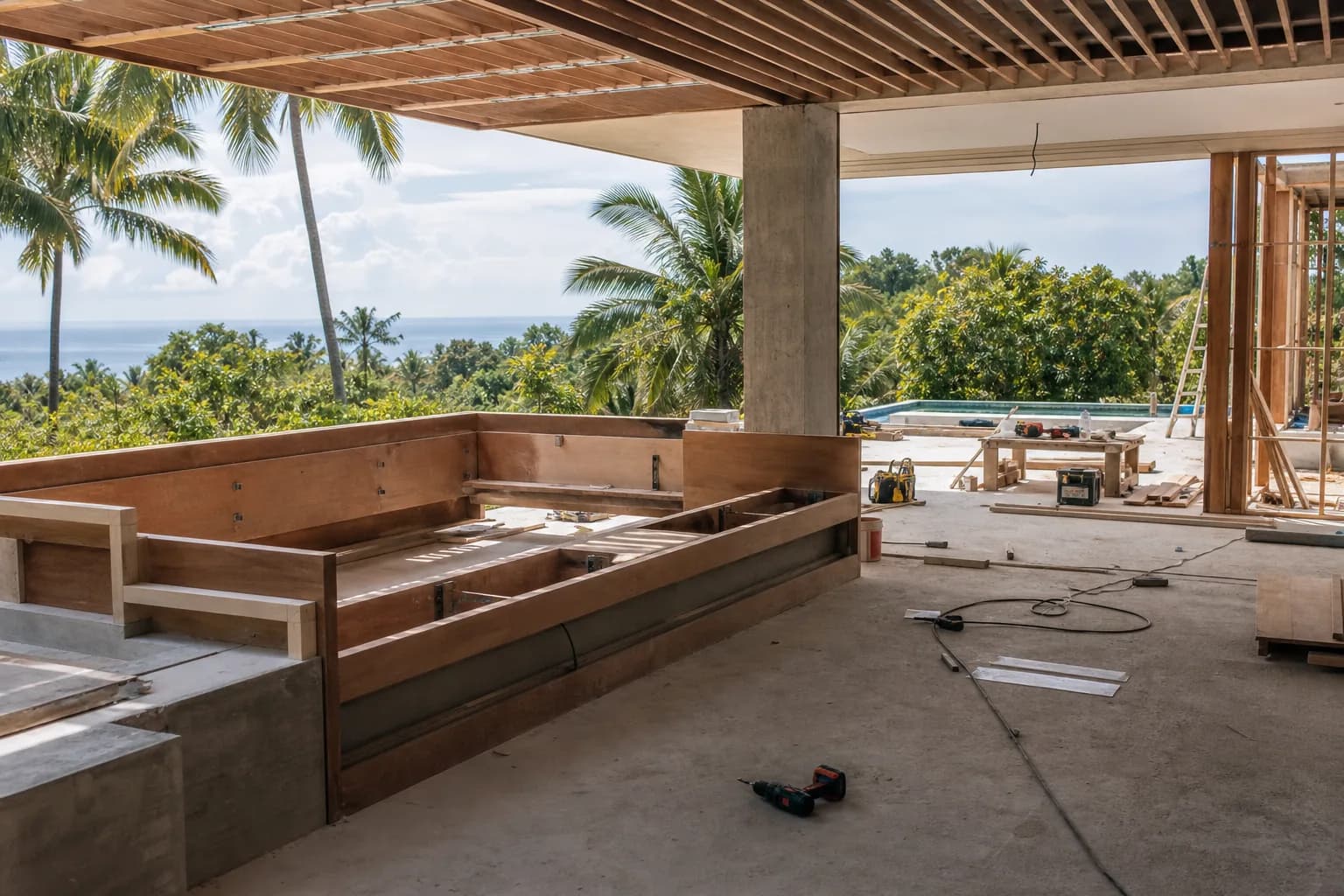
Integrated Furniture Fixings Hidden Brackets MEP Clearance Bali
Explore integrated furniture fixings with hidden brackets and MEP clearance in Bali. Learn installation tips, load guidance, and clean, accessible finishes.
8 min read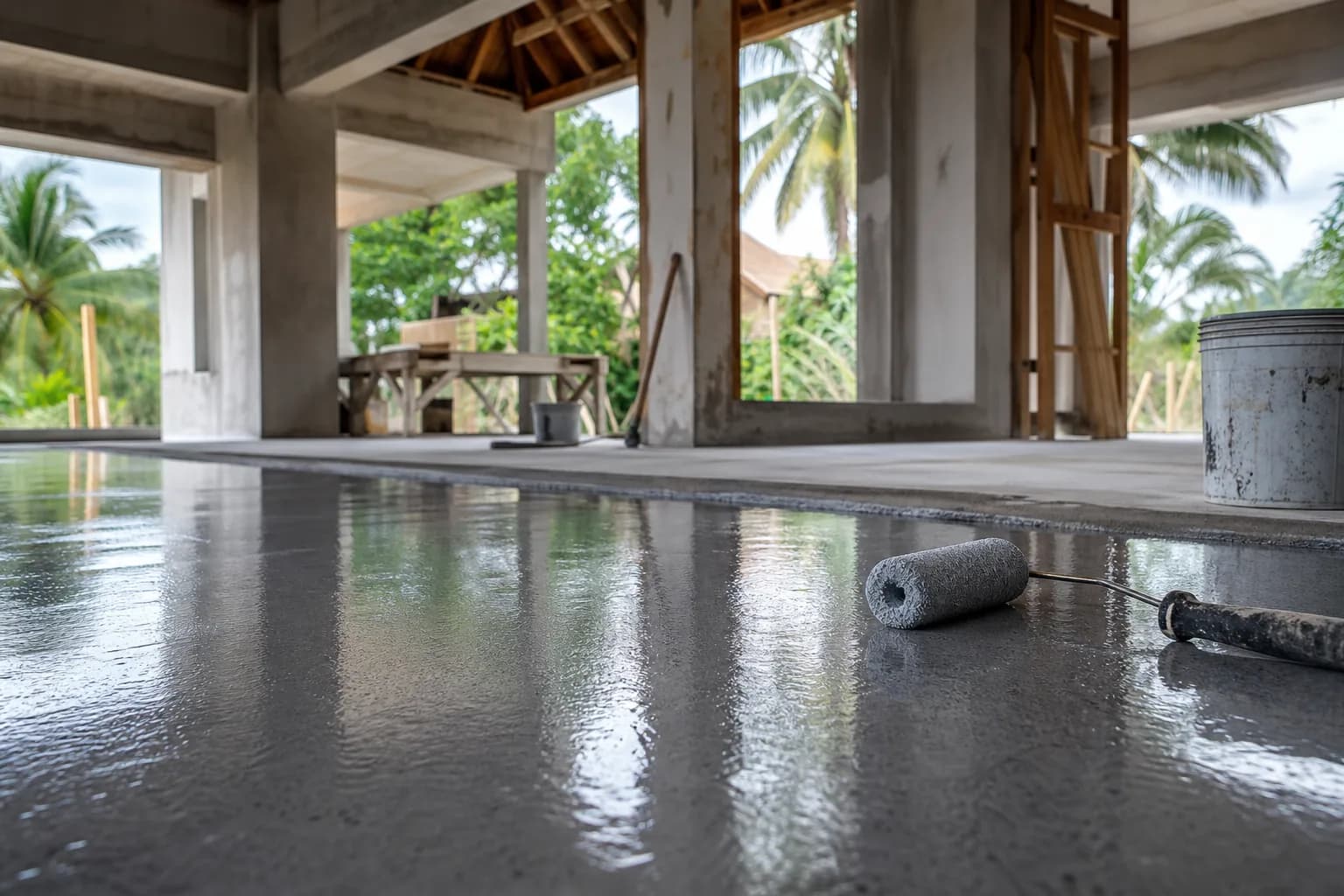
Epoxy Primer Moisture Barrier for Bali Interior Renovations
Explore epoxy primer and moisture barrier solutions for Bali interior renovations, delivering durable adhesion, moisture protection, and long-lasting finishes.
8 min read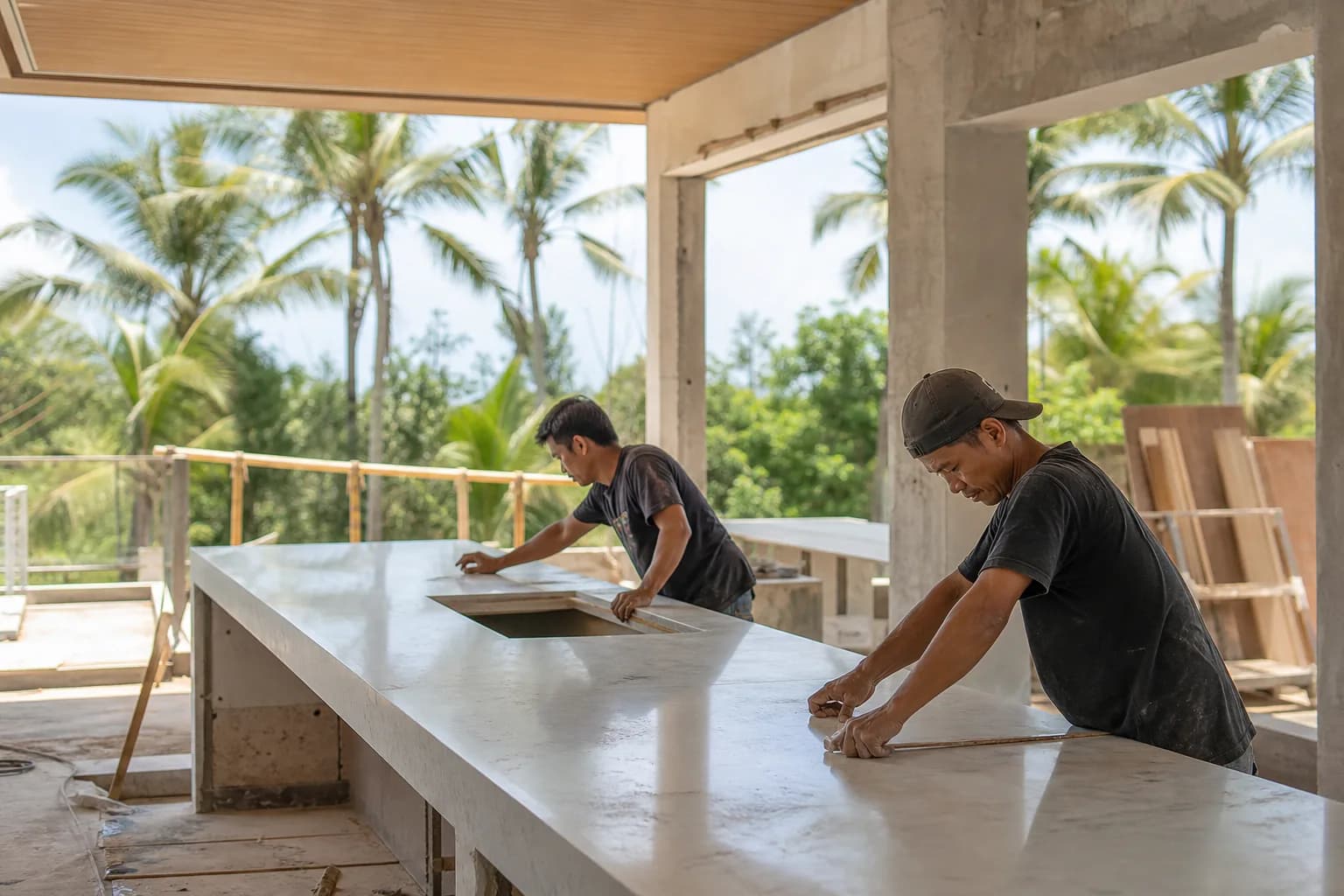
Engineered Stone Countertop Fixing Support Standards Bali
Explore Bali s engineered stone countertop fixing and support standards. Installation tips, durability guidance, and compliance for lasting quality surfaces.
10 min read