Venetian Plaster in Bali: Application Techniques for Humid Climat
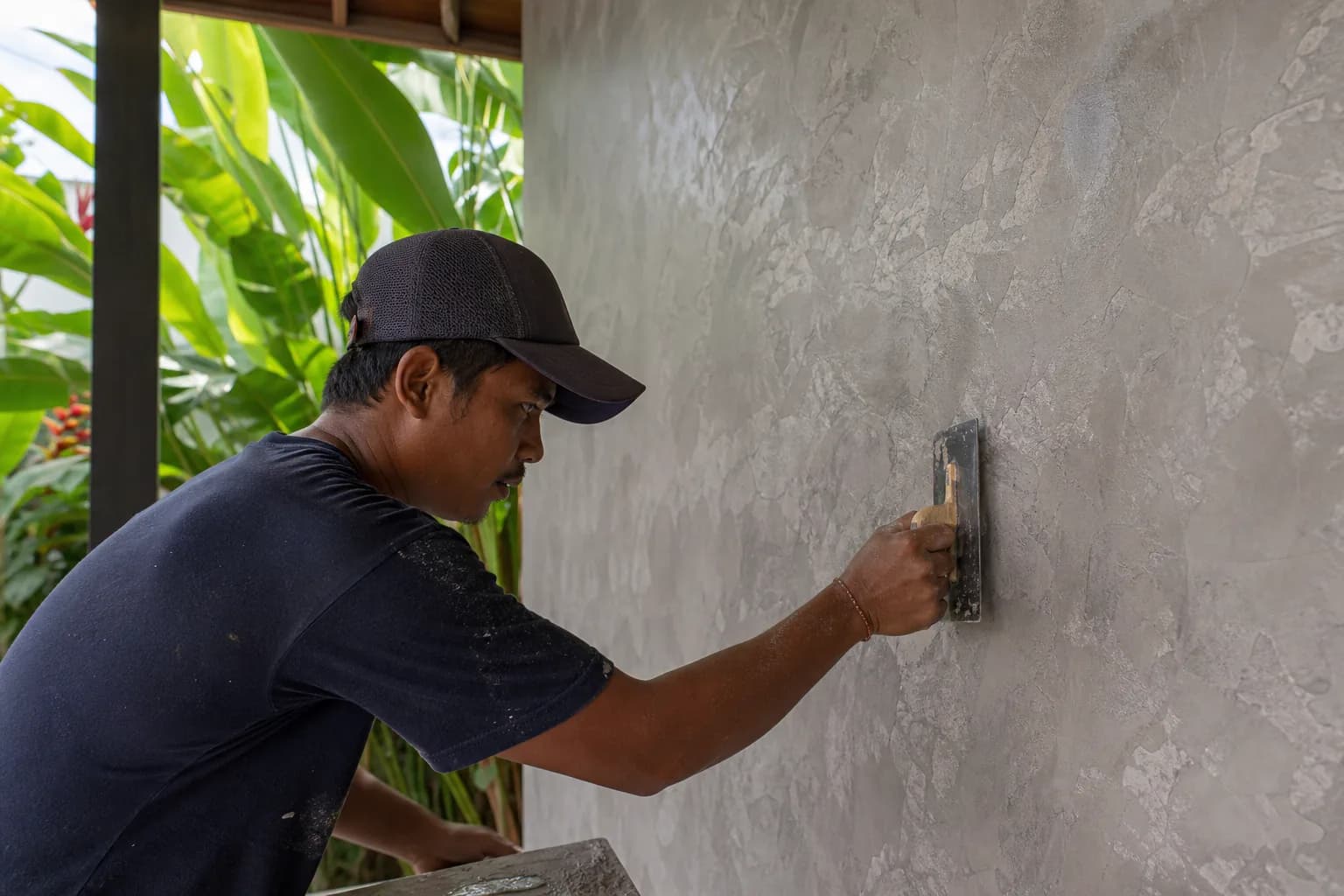
# Venetian Plaster Application Techniques for Humid Bali Climates
The Challenge of Venetian Plaster in Tropical Humidity
Venetian plaster represents one of the most sophisticated interior finishing Bali techniques, yet its application in tropical climates demands specialized knowledge. Many Bali villa construction projects fail when contractors apply European techniques without accounting for 80-90% humidity levels, monsoon seasons, and constant temperature fluctuations. The result? Cracking, delamination, and moisture trapped beneath beautiful surfaces. At Teville, we’ve refined application protocols specifically for Bali’s microclimate, ensuring this timeless finish performs as beautifully as it appears in your renovation Bali project.
Understanding Venetian Plaster Performance in Tropical Environments
Venetian plaster, or stucco veneziano, is a lime-based finishing material that has adorned Mediterranean architecture for centuries. Its composition—slaked lime, marble dust, and natural pigments—creates a breathable surface that theoretically manages moisture well. However, Bali’s climate presents unique challenges that standard application methods cannot address.
The fundamental issue lies in the curing chemistry. Lime plaster hardens through carbonation, absorbing carbon dioxide from the air while releasing moisture. In Bali’s saturated atmosphere, this exchange occurs at dramatically reduced rates. Where European climates might see complete carbonation in 28 days, Bali’s humidity can extend this to 45-60 days. During this extended vulnerable period, improper technique leads to incomplete curing, soft spots, and eventual failure.
Temperature stability matters equally. Bali’s daily temperature swings of 8-12°C, combined with direct tropical sun exposure, create expansion-contraction cycles that stress uncured plaster. Coastal properties face additional salt air exposure, which can react with lime if protective measures aren’t implemented during application.
The breathability that makes Venetian plaster attractive for humid climates becomes a liability when applied incorrectly. Each layer must cure sufficiently to develop its crystalline structure before the next application. Rush the process, and you create a moisture sandwich—wet plaster trapped between layers that appears dry on the surface but remains soft underneath. Within six months, you’ll see bubbling, flaking, or the distinctive map-cracking pattern that signals trapped moisture.
Successful interior finishing Bali with Venetian plaster requires understanding substrate preparation in tropical conditions. Concrete and cement board—common in Bali villa construction—retain moisture differently than European masonry. Bali’s construction materials often contain higher residual moisture from manufacturing and storage in open-air conditions. Applying plaster to substrates that haven’t fully dried creates a moisture source beneath your finish that will eventually migrate outward.
At Teville, our construction process accounts for these variables from the structural phase forward, ensuring substrates are properly prepared months before finishing work begins. This forward planning, visible in our completed projects, prevents the moisture-related failures common in rushed tropical construction.
Materials Selection and Quality Standards for Tropical Application
Material selection determines 60% of your Venetian plaster success in Bali’s climate. Not all lime plasters perform equally in tropical humidity, and the temptation to use standard European products without modification leads to predictable failure.
Premium lime putty forms the foundation. Aged lime putty—matured minimum 12 months—develops finer particle structure and superior workability. For Bali applications, we specify lime putty with 18-24 month aging, which provides enhanced carbonation capacity in humid conditions. The extended aging creates smaller calcium hydroxide crystals that carbonate more efficiently even when atmospheric CO2 exchange is limited by moisture saturation.
Marble dust gradation requires careful specification. Standard Venetian plaster uses 100-400 micron marble powder. For Bali’s climate, we adjust the ratio toward finer particles (150-250 micron dominant), which pack more densely and reduce the microporosity that can trap moisture during extended curing periods. This modification maintains breathability while improving moisture resistance during the vulnerable curing phase.
Pigment selection impacts more than aesthetics in tropical applications. Natural earth pigments—iron oxides, ochres, umbers—don’t just color the plaster; they subtly alter curing characteristics. Darker pigments absorb more heat, accelerating surface drying but potentially creating differential curing rates between surface and depth. For Bali projects, we typically recommend lighter to mid-tone palettes that cure more uniformly in tropical conditions.
Primer systems designed for tropical climates are non-negotiable. Standard acrylic primers trap moisture; we specify breathable mineral primers that allow substrate moisture to escape while providing the alkaline-resistant barrier necessary for lime plaster adhesion. This primer layer acts as a moisture buffer, managing the substrate’s moisture release during the plaster’s critical curing period.
Sealers require equal attention. Many contractors apply non-breathable acrylic or polyurethane sealers that defeat Venetian plaster’s natural moisture management. We use micro-porous wax-based or specialized breathable sealers that protect the surface while maintaining vapor permeability—essential for long-term performance in humid climates.
Step-by-Step Application Protocol for Bali Conditions
Our refined application process for renovation Bali projects addresses every tropical climate variable through systematic technique modification.
Phase 1: Substrate Preparation and Moisture Management
Begin substrate assessment 4-6 weeks before plaster application. Use a moisture meter to verify concrete or cement board substrates read below 4% moisture content. In Bali’s climate, this often requires active dehumidification of the space for 2-3 weeks prior to finishing work. We install temporary dehumidifiers running continuously, targeting 60-65% relative humidity in the application space—significantly lower than Bali’s typical 75-85%.
Surface preparation involves mechanical cleaning to remove all dust, oils, and loose material. Wire brushing or light sandblasting creates the mechanical key necessary for primer adhesion. Any cracks wider than 0.5mm require filling with lime-based repair mortar, allowed to cure fully (minimum 14 days in Bali conditions) before proceeding.
Apply breathable mineral primer in two thin coats, 24 hours apart. Each coat should be worked into the substrate with a stiff brush to ensure penetration. The primer must cure 72 hours minimum before plaster application—double the European standard—to develop full alkaline resistance in humid conditions.
Phase 2: Base Coat Application
The first plaster coat establishes your foundation. Mix plaster to a consistency slightly stiffer than European applications—the higher humidity will soften the material during application. Apply with a stainless steel trowel in 1.5-2mm thickness, working in 2-square-meter sections to maintain a wet edge.
Trowel technique matters critically in humid climates. Use firm, overlapping strokes at 15-20 degree angles, compressing the material against the substrate. This compression reduces porosity and improves moisture resistance. Avoid overworking, which can bring excess moisture to the surface and create weak spots.
Environmental control during curing is essential. Maintain dehumidification for 5-7 days post-application, keeping relative humidity below 65%. Provide air circulation with fans, but avoid direct airflow on the plaster surface, which can cause surface drying while the interior remains wet—a recipe for delamination. The base coat requires 10-14 days full cure in Bali conditions before proceeding.
Phase 3: Intermediate and Finish Coats
Apply the second coat at 1-1.5mm thickness using the same environmental controls. This layer begins developing the depth and luminosity characteristic of Venetian plaster. Trowel application should create subtle directional texture—the foundation for the final burnishing.
After 7-10 days curing, apply the final coat at 0.8-1mm thickness. This thin layer requires expert trowel work, applied in small sections with immediate burnishing. The burnishing process—applying significant pressure with a clean steel trowel at acute angles—compresses the surface, closing pores and developing the characteristic polished appearance.
In Bali’s humidity, burnishing timing is critical. The plaster must be firm enough to polish without tearing, but retain enough moisture for the trowel to compress and seal the surface. This window typically occurs 4-6 hours after application in controlled conditions—monitor by touch, looking for a leather-hard consistency.
Phase 4: Sealing and Protection
After 14-21 days final cure, apply breathable sealer in two thin coats. Natural wax-based sealers provide excellent protection while maintaining breathability. Apply with soft cloth in circular motions, allow 24 hours between coats, and buff to desired sheen after final cure. This sealing system protects against Bali’s humidity while allowing the plaster to continue its long-term carbonation process, which continues for years.
Cost Considerations and Project Timeline
Venetian plaster represents a premium interior finishing Bali investment, with costs reflecting the specialized materials and extended labor requirements for tropical application. Material costs for quality lime putty, marble dust, and breathable primers typically range 450,000-750,000 IDR per square meter, depending on pigment selection and finish complexity.
Labor costs for expert application in Bali conditions run 800,000-1,400,000 IDR per square meter. This premium over standard plastering reflects the specialized skill required and the extended timeline necessary for proper tropical application. Total installed costs typically range 1,250,000-2,150,000 IDR per square meter for quality work that will perform long-term.
Timeline expectations differ significantly from temperate climate applications. Where European projects might complete Venetian plaster in 2-3 weeks, Bali’s climate demands 6-8 weeks for proper execution. This includes substrate preparation (2 weeks), base coat application and cure (2 weeks), intermediate coat (1.5 weeks), final coat and burnishing (1 week), and final curing before sealing (1.5 weeks).
Attempting to compress this timeline inevitably compromises quality. At Teville, our villa projects schedule Venetian plaster work during Bali’s dry season (April-October) when possible, and always maintain environmental controls regardless of season. For detailed project planning and cost estimation specific to your renovation Bali needs, our cost estimation process accounts for all tropical climate requirements.
Frequently Asked Questions
Can Venetian plaster withstand Bali’s monsoon season humidity?
Properly applied Venetian plaster performs excellently in Bali’s monsoon conditions, but only when application follows tropical-specific protocols. The plaster must fully cure before monsoon exposure—this means completing application during dry season or maintaining strict environmental controls throughout curing. Once fully carbonated and properly sealed, the breathable nature of lime plaster actually helps regulate interior humidity, making it superior to non-breathable finishes that trap moisture and promote mold growth.
How does Venetian plaster compare to other premium finishes for Bali villas?
Venetian plaster offers unique advantages for Bali villa construction: superior breathability compared to paint or wallpaper, natural antimicrobial properties from lime’s high pH, and timeless aesthetic appeal. However, it requires higher initial investment and longer installation timeline than alternatives like premium paint (300,000-500,000 IDR/sqm) or textured wallcoverings (600,000-900,000 IDR/sqm). The durability advantage becomes apparent over 10-15 years, as properly applied Venetian plaster requires only periodic wax renewal rather than complete refinishing.
What maintenance does Venetian plaster require in tropical climates?
Maintenance remains minimal but essential. Annual inspection for any surface damage, gentle cleaning with pH-neutral solutions (never acidic cleaners that attack lime), and wax renewal every 2-3 years maintains protection and appearance. High-traffic areas may require more frequent wax application. Avoid hanging heavy items without proper anchoring, as the plaster surface, while hard, can chip if impacted. Any repairs should be performed by experienced applicators using matching materials to ensure invisible integration.
Can existing walls be finished with Venetian plaster, or does it require new construction?
Venetian plaster works excellently for renovation Bali projects on existing walls, provided proper substrate preparation. Existing painted walls require paint removal or application of specialized bonding primers. Textured walls need smoothing to provide the flat substrate Venetian plaster requires. Moisture testing is critical—existing walls may harbor moisture issues that must be resolved before plaster application. At Teville, we assess existing conditions thoroughly, sometimes recommending substrate replacement if moisture problems are severe, ensuring long-term success rather than cosmetic solutions that fail within years.
Does Venetian plaster work in bathrooms and other high-moisture areas?
Venetian plaster can be applied in bathrooms and wet areas with additional precautions. Use specialized tadelakt techniques (a Moroccan variation of lime plaster) or apply additional waterproofing layers beneath the plaster in direct water exposure zones. Ensure exceptional ventilation—mechanical exhaust fans are essential. Apply multiple sealer coats with particular attention to corners and edges. For shower enclosures, w
 3104 m²11 month(s)from 99.000 USD
TALA 100
 164 m²7 month(s)from 79.000 USD
TALA TWO
 172 m²8 month(s)from 120.000 USD
Keshava
 3124 m²6 month(s)from 123.000 USD
TALA 8
 4344 m²16 month(s)from 290.000 USD
Radha
164 m²7 month(s)from 79.000 USDPrivate: Haridas Villas, Tegallalang
 3127 m²9 month(s)from 177.000 USD
Mukunda
 3173 m²6 month(s)from 125.000 USD
TALA FOUR

Want to calculate?
 1from 198.000 USD
Private: Haridas Villas
 2144 m²11 month(s)from 104.000 USD
Narayana
 3180 m²7 month(s)from 142.000 USD
Vasudeva
Start With Real Numbers, Not Guesses
Before finalizing your finishing works plan, check realistic cost ranges for your Bali villa project.
Available lands
 1300 m²10 min$ 312192Bali, Kutuh South Bali
 29000 m²6 min$ 3857143Bali, Tabanan
 800 m²5 min$ 295567Bali, Seseh
 4270 m²10 min$ 394397Bali, Ubud
 2800 m²2 min$ 713793Bali, Kedungu
 608 m²15 min$ 310377Bali, Seminyak
 5028 m²10 min$ 361000Bali, Ubud
 770 m²5 min$ 163578Bali, Kedungu
 3000 m²15 min$ 1246921Bali, Tabanan
 1600 m²32 min$ 266010Bali, Tabanan
 600 m²10 min$ 206897Bali, Canggu
 660 m²10 min$ 175567Bali, Mengwi
 3900 m²10 min$ 432266Bali, Tabanan
 2000 m²15 min$ 261700Bali, Babakan
 1410 m²15 min$ 390702Bali, Tabanan
Essential Bali build & buy guides
- Bali villa construction cost per m² in 2026
- How much will your villa cost? Calculator
- Building a villa in Bali: the complete guide
- Buying land in Bali: step-by-step for foreigners
- Bali villa investment: yields, risks, returns
- Leasehold vs freehold: what foreigners can own
- Construction defect liability & 10-year warranty
- Bali building codes and construction standards
Related guides
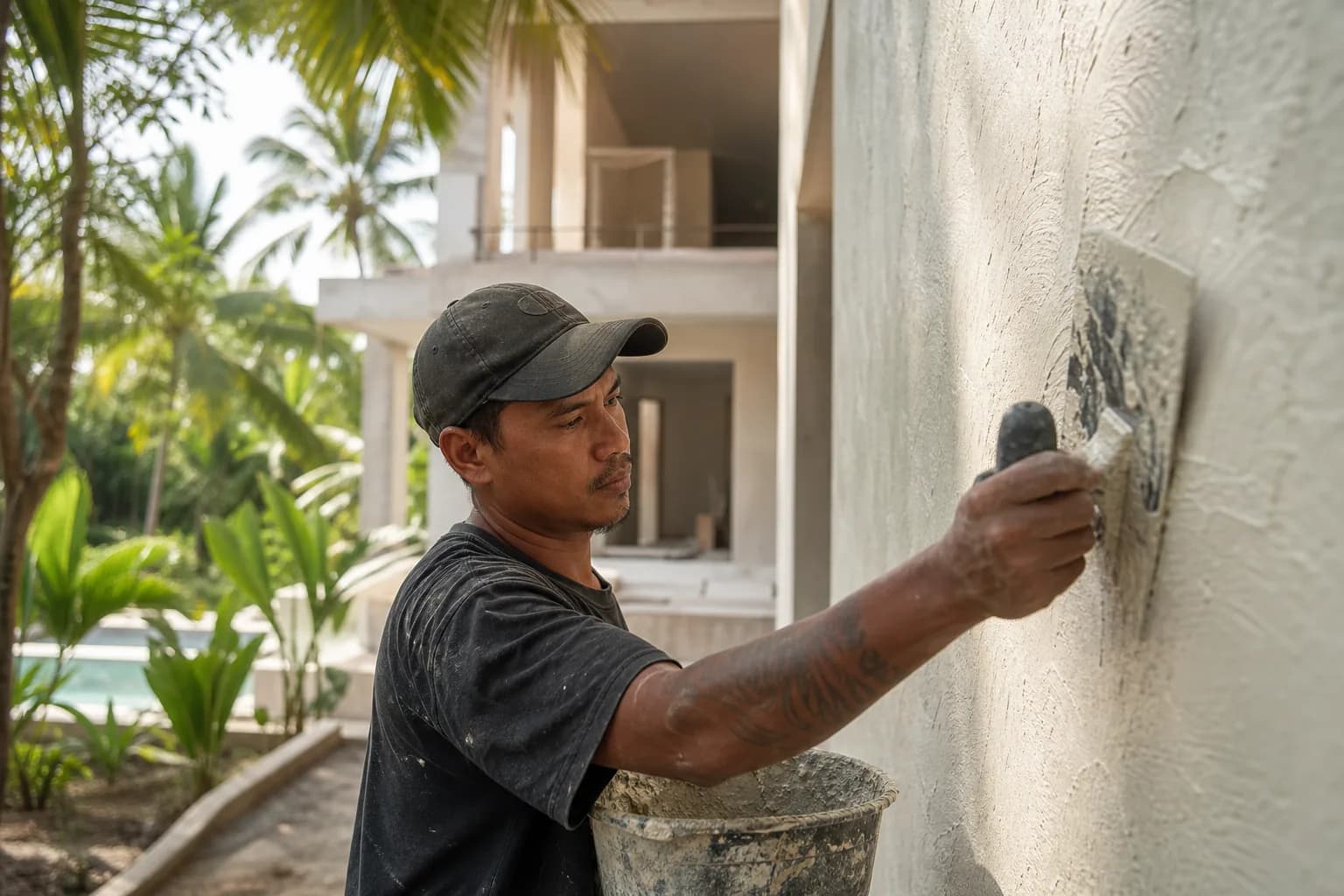
Resin-Infused Plaster Finishes: Anti-Salt Systems Bali
Expert technical guide: Resin-Infused Plaster Finishes: Anti-Salt Systems Bali
8 min read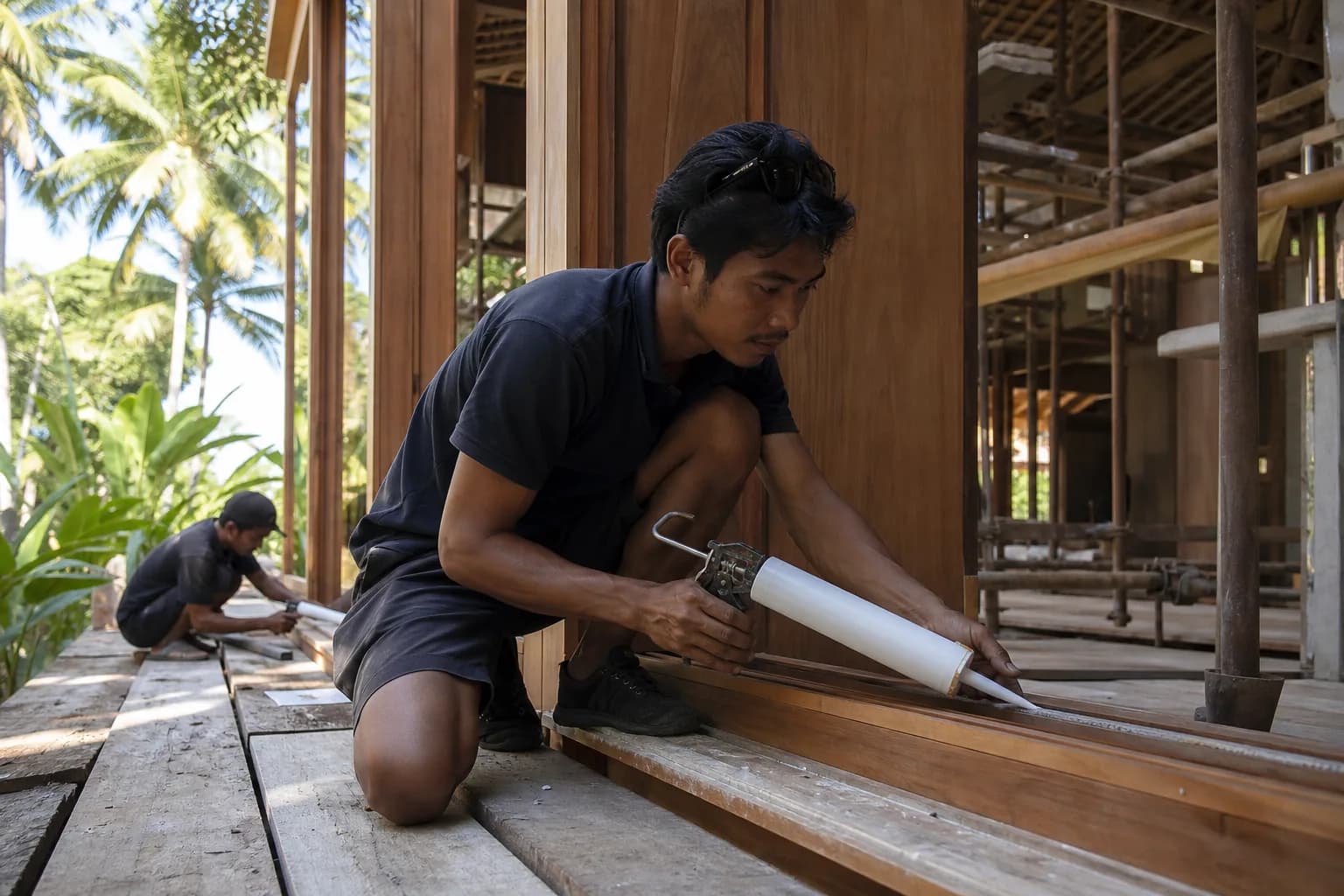
Prefinished Timber Joinery: Silicone Seals Fixings Bali
Professional prefinished timber joinery installation in Bali with silicone seals and fixings for durable weatherproof performance and a premium finish.
10 min read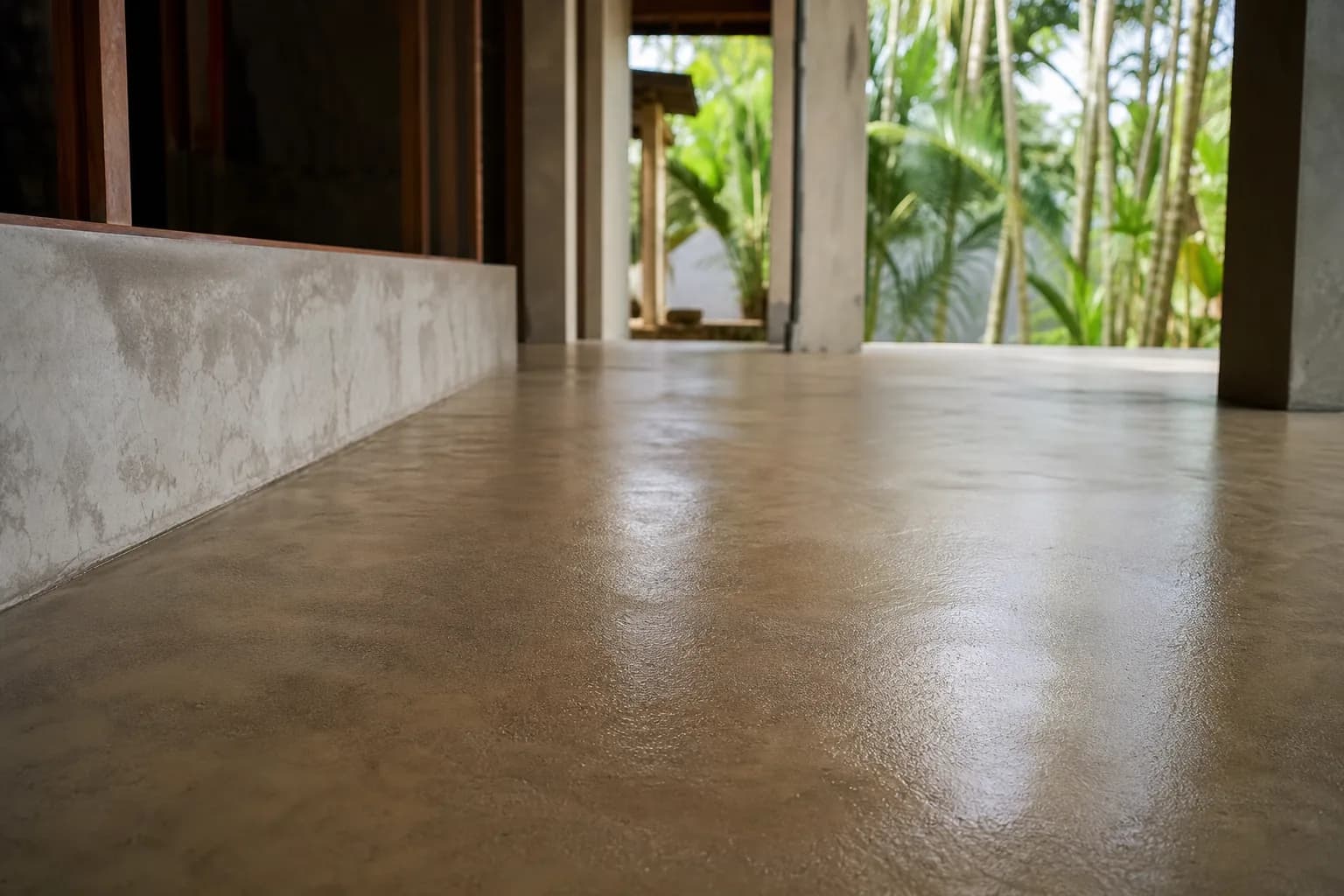
Polished Concrete Microtopping: Surface Prep Sealants Bali
Discover Bali s polished concrete microtopping: expert surface prep, durable sealants, and a flawless finish for modern floors with minimal maintenance.
9 min read