Ubud Rice Fields Bali: Foundation Soil Bearing Guide
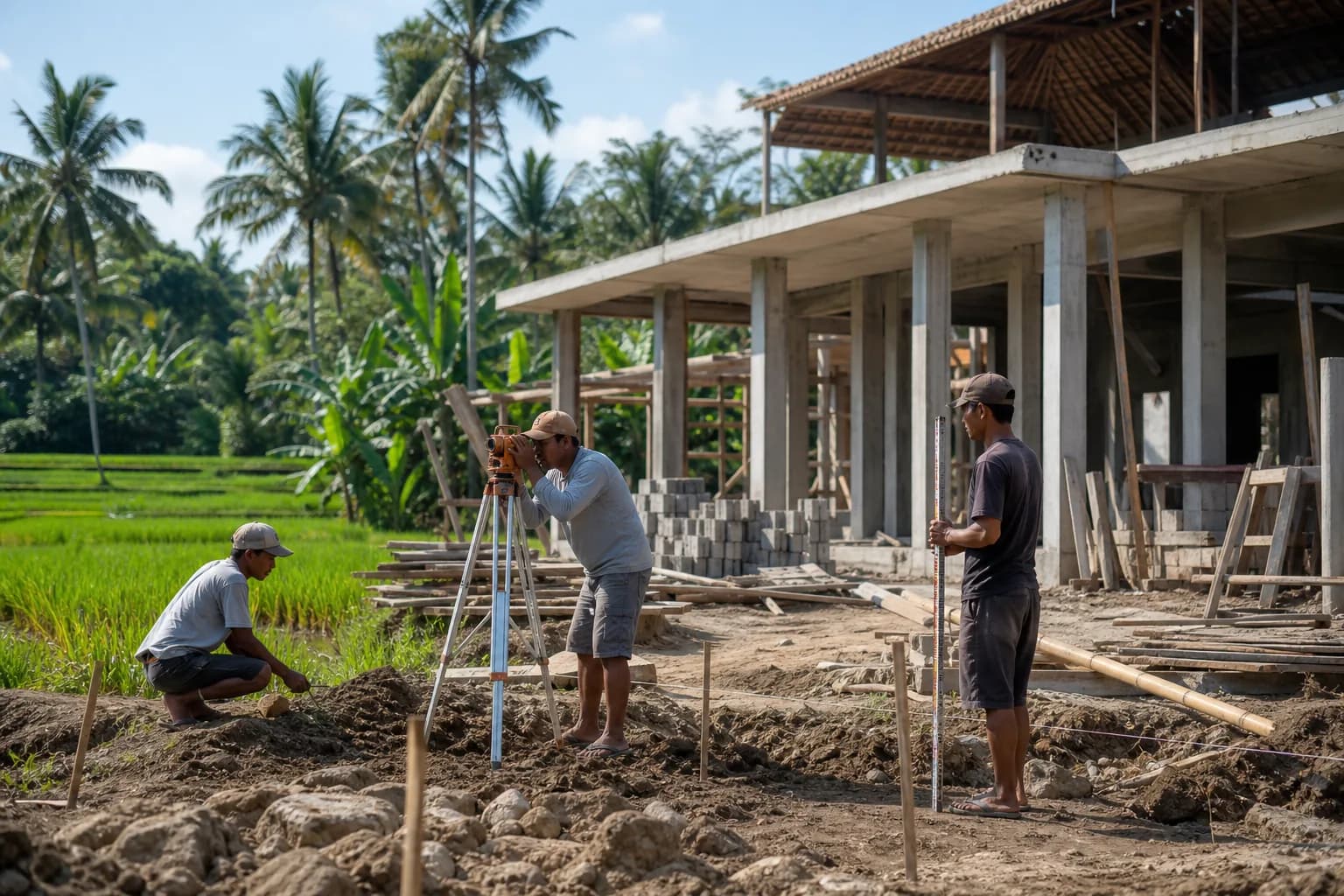
{
“article”: {
“title”: “Ubud Rice Field Foundation Systems: Piling Depths & Soil Bearing Capacity”,
“content”: “
The Critical Challenge of Building on Ubud’s Rice Field Terrain
\n\n
Constructing a villa on Ubud’s picturesque rice terraces presents one of Bali’s most complex foundation engineering challenges. Unlike consolidated urban plots, rice field soils are saturated, organically rich, and structurally unstable—often exhibiting bearing capacities below 50 kPa in the upper 3-4 meters. The romantic vision of waking to emerald paddies collides with harsh geotechnical reality: without proper piling systems reaching stable volcanic substrata, structures experience differential settlement, cracking, and structural failure within 18-36 months. Ubud’s unique geology—layered volcanic ash deposits interspersed with clay lenses and seasonal water tables fluctuating 2-5 meters—demands foundation solutions fundamentally different from coastal or hillside construction approaches.
\n\n
Geotechnical Profile of Ubud Rice Field Substrata
\n\n
Ubud’s rice field foundation challenges stem from a distinct geological sequence created by millennia of volcanic activity and agricultural modification. Understanding this layered profile is essential for engineering appropriate piling systems.
\n\n
Soil Stratification and Bearing Characteristics
\n\n
The typical Ubud rice field profile consists of four distinct layers. The topsoil layer (0-1.2m depth) comprises organic-rich clay with 40-60% moisture content, exhibiting bearing capacities of 20-35 kPa—completely inadequate for structural loads. This layer has been deliberately maintained as impermeable to retain irrigation water, creating permanently saturated conditions that eliminate any load-bearing potential.
\n\n
Below this, the alluvial clay layer (1.2-4.5m depth) contains decomposed volcanic material mixed with agricultural sediments. Bearing capacity ranges from 45-80 kPa, but high plasticity indices (PI 30-50) mean this layer experiences significant volume changes with moisture fluctuation. During Ubud’s dry season (April-September), clay shrinkage can create 15-25mm vertical movement; wet season expansion reverses this, creating cyclical stress on any foundation system terminating in this zone.
\n\n
The weathered volcanic tuff layer (4.5-8.5m depth) marks the transition to competent bearing strata. This decomposed volcanic ash exhibits bearing capacities of 120-200 kPa when properly consolidated, but remains vulnerable to water infiltration through fissures and voids. Geotechnical investigations frequently reveal inconsistent density within this layer—pockets of soft material interspersed with harder volcanic fragments create unpredictable bearing conditions.
\n\n
The competent volcanic bedrock (8.5m+ depth) provides the target bearing stratum for most Ubud rice field foundations. Consisting of consolidated andesitic tuff and volcanic breccia, this layer offers bearing capacities exceeding 300 kPa and minimal settlement characteristics. However, depth to this layer varies significantly—from 7 meters in elevated terrace edges to 12+ meters in valley bottom locations.
\n\n
Hydrogeological Considerations
\n\n
Water management dominates Ubud rice field foundation design. The traditional subak irrigation system maintains controlled flooding cycles, but construction disrupts established drainage patterns. Perched water tables exist within the upper clay layers year-round, while the regional water table fluctuates seasonally between 3-6 meters depth. Pile installation must account for hydrostatic pressures, potential artesian conditions during wet season, and the risk of preferential water flow along pile shafts creating erosion channels in surrounding soil.
\n\n
Hidden Risks and Common Foundation Mistakes
\n\n
Inadequate Geotechnical Investigation
\n\n
The most critical error in Ubud rice field construction is relying on visual assessment or neighboring property data rather than site-specific soil testing. Rice field geology varies dramatically over distances of 20-30 meters due to ancient terrace construction, buried irrigation channels, and localized volcanic deposits. We’ve encountered projects where developers assumed uniform conditions across a 500m² plot, only to discover 4-meter variations in bedrock depth during pile installation—requiring emergency redesign and 30-40% budget increases.
\n\n
Proper investigation requires minimum three boreholes to 12-meter depth for typical villa plots, with Standard Penetration Tests (SPT) at 1.5-meter intervals. Cone Penetration Testing (CPT) provides superior continuous profiling but requires specialized equipment rarely available in Ubud. Budget 15-25 million IDR for comprehensive geotechnical investigation—a fraction of the cost compared to foundation failure remediation.
\n\n
Insufficient Pile Depth and Capacity
\n\n
Cost-cutting through reduced pile depth represents false economy. Piles terminating in the weathered tuff layer (6-8m depth) rather than competent bedrock (9-12m) may initially appear stable but experience progressive settlement as cyclical loading and moisture changes degrade bearing capacity. We’ve documented cases where 8-meter piles settled 45-70mm over three years, creating structural distress requiring underpinning—at costs exceeding 400 million IDR for a 300m² villa.
\n\n
Equally problematic is underestimating required pile capacity. Rice field construction requires accounting for negative skin friction—the upper saturated clay layers actually pull downward on pile shafts during consolidation, adding 15-25% to design loads. Ignoring this phenomenon results in overstressed piles and excessive settlement.
\n\n
Neglecting Lateral Stability
\n\n
Ubud’s sloping rice terraces create lateral earth pressures that many foundation designs ignore. The soft upper soil layers provide negligible lateral restraint, meaning pile caps and grade beams must be engineered as structural elements resisting horizontal forces, not merely load distribution platforms. Inadequate lateral bracing has caused pile cap rotation and differential movement in multiple projects we’ve been called to remediate.
\n\n
Engineering Process for Rice Field Foundation Systems
\n\n
Phase 1: Site Investigation and Geotechnical Analysis
\n\n
Foundation engineering begins with comprehensive site assessment before any design work. Engage a qualified geotechnical engineer to conduct minimum three boreholes distributed across the building footprint, extending to 12-meter depth or 3 meters into competent bearing stratum, whichever is deeper. Each borehole should include SPT testing at 1.5-meter intervals, laboratory analysis of soil samples for moisture content, plasticity indices, and grain size distribution, plus groundwater level monitoring over minimum 2-week period spanning different tidal and irrigation cycles.
\n\n
The geotechnical report must provide specific recommendations including allowable bearing capacity at various depths, pile type and diameter specifications, minimum pile depth to competent stratum, skin friction values for pile capacity calculations, and lateral earth pressure coefficients. This report becomes the foundation for all subsequent engineering—never proceed without it. Timeline: 3-4 weeks; cost: 15-25 million IDR for typical villa plot.
\n\n
Phase 2: Foundation System Design
\n\n
Based on geotechnical data, structural engineers design the pile foundation system. For Ubud rice fields, this typically involves bored cast-in-place concrete piles, 300-400mm diameter, extending 9-12 meters to competent volcanic bedrock. Pile spacing ranges from 2.0-3.5 meters depending on structural loads, with pile caps connecting pile groups and grade beams forming an integrated foundation grid.
\n\n
Critical design considerations include: calculating pile capacity using both end bearing and skin friction (discounting upper 4 meters due to negative friction), designing for 2.5-3.0 safety factor given soil variability, incorporating tie beams at pile cap level for lateral stability, and specifying pile reinforcement adequate for handling loads during installation through soft upper layers. The design must also address construction methodology—temporary casing requirements, concrete placement procedures for underwater conditions, and quality control testing protocols.
\n\n
Phase 3: Pile Installation and Testing
\n\n
Pile installation in saturated rice field soils requires specialized equipment and procedures. Bored piles are excavated using rotary drilling rigs with temporary steel casing to prevent borehole collapse in soft upper layers. Drilling continues to specified depth in competent stratum, verified by SPT testing of borehole bottom. The borehole is cleaned of loose material using airlift or bailer, then inspected to confirm diameter and depth before reinforcement cage installation.
\n\n
Concrete placement uses tremie method—a continuous pour through a pipe extending to borehole bottom, displacing water upward as concrete fills from bottom up. This prevents concrete segregation and ensures pile integrity. Minimum concrete grade is K-300 (25 MPa) with appropriate workability for tremie placement. Each pile requires 0.8-1.5 m³ concrete depending on diameter and depth.
\n\n
Quality verification includes Pile Integrity Testing (PIT) using sonic methods on minimum 20% of installed piles, plus load testing on sacrificial test piles for projects exceeding 400m² building area. Load tests verify actual pile capacity matches design assumptions—essential given soil variability. Budget 8-12 million IDR per load test.
\n\n
Phase 4: Pile Cap and Grade Beam Construction
\n\n
After pile concrete cures (minimum 7 days), pile heads are exposed and prepared for pile cap construction. Pile caps are heavily reinforced concrete elements connecting pile groups, typically 800-1200mm deep with reinforcement designed for punching shear and moment transfer. Grade beams span between pile caps, forming an integrated foundation grid that distributes loads and provides lateral stability.
\n\n
Critical detail: pile caps and grade beams must be isolated from underlying soft soil using 100-150mm compacted gravel layer and polyethylene slip sheet. This prevents the foundation system from picking up loads from soil settlement or expansion—the structure must be supported entirely by piles, not bearing on surface soils. This detail is frequently omitted, causing foundation distress as soft soils consolidate or swell.
\n\n
Realistic Cost and Performance Parameters
\n\n
Foundation System Costs
\n\n
Ubud rice field foundation systems represent 18-25% of total villa construction costs—significantly higher than conventional pad footing foundations on competent soil. For a typical 300m² two-story villa, expect foundation costs of 450-650 million IDR, broken down as: geotechnical investigation (15-25 million IDR), foundation engineering design (25-35 million IDR), pile installation including materials and labor (320-450 million IDR for 25-35 piles at 9-12m depth), pile testing and quality control (20-30 million IDR), and pile caps, grade beams, and floor slab (70-110 million IDR).
\n\n
Cost variables include pile depth (each additional meter adds 8-12 million IDR per pile), site accessibility (limited access requiring smaller equipment increases costs 15-20%), and soil conditions (encountering boulders or very soft zones requiring casing extension adds 10-15% contingency). These figures reflect 2026 Bali construction costs and assume competent contractor with appropriate equipment—budget 20-30% additional if using inexperienced pile contractors.
\n\n
Performance Expectations
\n\n
Properly engineered pile foundations on Ubud rice fields should exhibit total settlement below 15mm over the structure’s lifetime, with differential settlement between pile groups under 10mm. Initial settlement occurs during first 6-12 months as pile-soil interaction stabilizes; subsequent movement should be negligible. Any settlement exceeding 20mm total or 15mm differential indicates foundation inadequacy requiring investigation and potential remediation.
\n\n
Foundation construction timeline spans 6-8 weeks for typical villa: 1 week for site preparation and mobilization, 2-3 weeks for pile installation (weather dependent), 1 week for pile testing and verification, 2-3 weeks for pile cap and grade beam construction including concrete curing. Wet season construction adds 1-2 weeks due to site access and concrete curing challenges.
\n\n
Frequently Asked Questions
\n\n
Can I use shallow foundations instead of piles on Ubud rice fields?
\n\n
Shallow foundations (pad footings or raft slabs) are structurally inadequate for Ubud rice field construction. The upper 4-5 meters of soil exhibit bearing capacities of 20-80 kPa—far below the 150-200 kPa minimum required for residential structures. Attempting shallow foundations results in immediate settlement of 50-150mm, progressive tilting, and structural cracking within the first year. We’ve remediated multiple projects where developers attempted this approach, requiring complete underpinning with piles at costs exceeding 500 million IDR for 250m² villas—triple the cost of proper initial pile foundation. The only viable foundation system for Ubud rice fields is deep piling to competent volcanic bedrock at 9-12 meter depth.
\n\n
How do I know if my geotechnical investigation is adequate?
\n\n
A comprehensive geotechnical report for Ubud rice field construction must include: minimum three boreholes to 12m depth with SPT testing every 1.5m, laboratory testing of soil samples including moisture content, Atterberg limits, grain size distribution, and shear strength parameters, groundwater level measurements and seasonal variation assessment, specific pile design recommendations including diameter, depth, and capacity, and bearing capacity values at various depths with safety factors. The report should be prepared by a qualified geotechnical engineer, not a general contractor. Red flags indicating inadequate investigation include: single borehole for plots over 300m², boreholes less than 10m deep, no laboratory testing of soil samples, generic recommendations not specific to your site, or reports prepared by non-engineers. Inadequate investigation is the primary cause of foundation failures—invest 15-25 million IDR in proper geotechnical work rather than risk 400+ million IDR remediation costs.
\n\n
What pile diameter and depth should I specify for my Ubud rice field villa?
\n\n
Pile specifications must be determined by structural engineers based on site-specific geotechnical data and building loads—no generic answer applies to all projects. However, typical parameters for Ubud rice field villas are: pile diameter 300-400mm (larger diameters for heavier structures or poorer soil conditions), pile depth 9-12 meters to competent volcanic bedrock (verified by SPT values exceeding N=30), pile spacing 2.0-3.5 meters depending on structural grid, and pile capacity 40-80 tons per pile accounting for negative skin friction in upper layers. A 300m² two-story villa typically requires 25-35 piles. Attempting to reduce pile depth below competent stratum or increase spacing beyond structural requirements creates unacceptable settlement risk. Your structural engineer should provide calculations demonstrating adequate safety factors—typically 2.5-3.0 for pile foundations given soil variability in Ubud rice fields.
\n\n
How does the subak irrigation system affect my foundation design?
\n\n
The traditional subak irrigation system creates cyclical flooding that significantly impacts foundation performance. Rice field water levels fluctuate 200-400mm during irrigation cycles, creating corresponding changes in soil moisture content and bearing capacity in upper layers. This is precisely why piles must extend through these affected zones to stable bedrock—foundations bearing on upper soils experience cyclical settlement and heave. Additionally, construction must not disrupt subak water flow to neighboring fields, requiring careful planning of site drainage and potential construction of replacement irrigation channels. Obtain subak approval before construction begins—this community organization has legal authority over water management and can halt construction violating irrigation agreements. Your foundation design should include perimeter drainage systems preventing irrigation water from ponding against pile caps or infiltrating under floor slabs, plus provisions for maintaining or redirecting existing water channels crossing your property.
\n\n
What are the signs of foundation problems in rice field construction?
\n\n
Foundation distress manifests through specific warning signs requiring immediate investigation. Structural indicators include: cracks wider than 3mm in walls or floor slabs, especially diagonal cracks at wall corners indicating differential settlement, doors or windows binding in frames due to structural distortion, visible tilting or out-of-plumb walls (use level to check), separation between walls and ceiling or floor, and cracking in tile or stone flooring following regular patterns. Site indicators include: water ponding against foundation perimeter indicating drainage failure, soil settlement or voids appearing adjacent to pile caps, visible pile cap exposure due to soil erosion, and moisture infiltration or dampness in ground floor areas. Any of these signs within the first 2-3 years indicates probable foundation inadequacy. Early intervention is critical—settlement problems worsen progressively and become exponentially more expensive to remediate. Engage a structural engineer immediately for assessment; remediation typically involves underpinning with additional piles, structural reinforcement, or in severe cases, partial demolition and reconstruction.
\n\n
Should I build on rice fields or choose alternative Ubud locations?
\n\n
Rice field construction is technically feasible but requires significantly higher foundation investment and carries inherent risks compared to elevated or consolidated sites. Consider rice field construction when: the specific location provides unique value (views, privacy, cultural setting) justifying 20-30% higher foundation costs, you’re working with experienced contractors capable of proper pile installation and quality control, your budget accommodates 450-650 million IDR foundation costs for typical villas, and you accept 6-8 week foundation construction timeline. Consider alternative locations when: budget is constrained (elevated sites with competent soil reduce foundation costs 40-60%), construction timeline is critical (conventional foundations save 4-6 weeks), or you’re working with less experienced contractors. Teville’s verified land portfolio includes both rice field and elevated Ubud locations—we provide geotechnical assessment and foundation cost comparison for each property, enabling informed decisions based on engineering reality rather than romantic assumptions. The right choice depends on your specific priorities, budget, and risk tolerance, evaluated through proper technical analysis rather than aesthetic preference alone.
\n\n
Expert Summary: Engineering Reality of Ubud Rice Field Foundations
\n\n
Constructing on Ubud’s rice terraces demands foundation engineering fundamentally different from conventional Bali construction. The saturated, organically rich soils provide negligible bearing capacity in the upper 4-5 meters, requiring d
 3180 m²7 month(s)from 142.000 USD
Vasudeva
 1from 198.000 USD
Private: Haridas Villas
 4344 m²16 month(s)from 290.000 USD
Radha
 3173 m²6 month(s)from 125.000 USD
TALA FOUR
 172 m²8 month(s)from 120.000 USD
Keshava
 3127 m²9 month(s)from 177.000 USD
Mukunda
 2144 m²11 month(s)from 104.000 USD
Narayana
 3104 m²11 month(s)from 99.000 USD
TALA 100

Want to calculate?
 164 m²7 month(s)from 79.000 USD
TALA TWO
 3124 m²6 month(s)from 123.000 USD
TALA 8
164 m²7 month(s)from 79.000 USDPrivate: Haridas Villas, Tegallalang
Start With Real Numbers, Not Guesses
Before buying land or finalizing a design, check the realistic build cost range for your project in Bali.
Our team reviews your inputs and gives a grounded estimate.
Available lands
 2200 m²15 min$ 508005Bali, Canggu
 889 m²15 min$ 145612Bali, Cepaka
 1000 m²5 min$ 350431Bali, Drupadi
 911 m²15 min$ 248217Bali, Pererenan
 1000 m²10 min$ 303571Bali, Tabanan
 608 m²15 min$ 310377Bali, Seminyak
 3254 m²5 min$ 631800Bali, All
 1600 m²32 min$ 266010Bali, Tabanan
 1000 m²10 min$ 184729Bali, Kutuh South Bali
 2500 m²5 min$ 609606Bali, Kedungu
 220 m²2 min$ 66565Bali, Cemagi
 700 m²15 min$ 162500Bali, Tabanan
 2400 m²7 min$ 496552Bali, Canggu
 260 m²5 min$ 51872Bali, Kedungu
 6000 m²30 min$ 55419Bali, Tabanan
Essential Bali build & buy guides
- Bali villa construction cost per m² in 2026
- How much will your villa cost? Calculator
- Building a villa in Bali: the complete guide
- Buying land in Bali: step-by-step for foreigners
- Bali villa investment: yields, risks, returns
- Leasehold vs freehold: what foreigners can own
- Construction defect liability & 10-year warranty
- Bali building codes and construction standards
Related guides
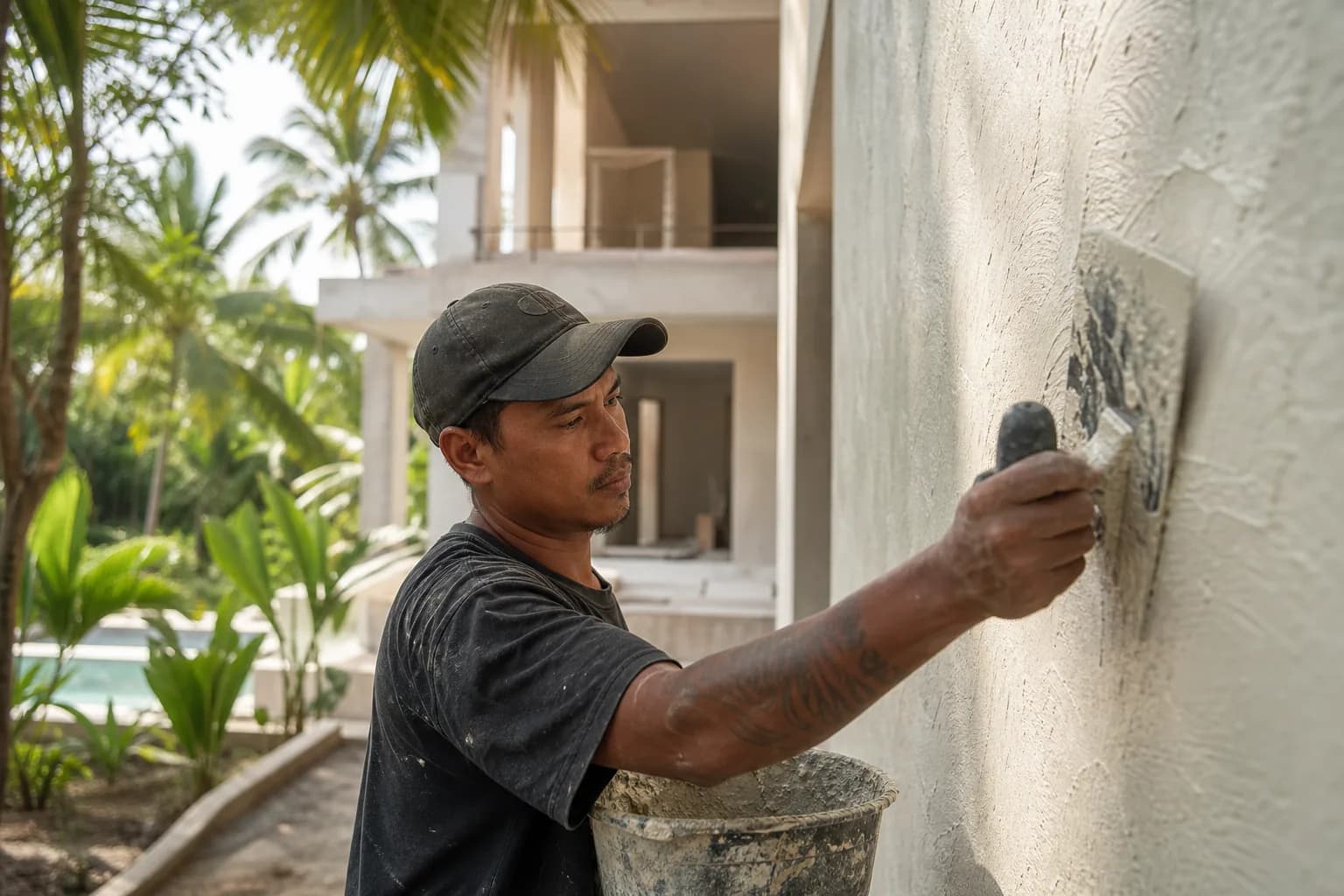
Resin-Infused Plaster Finishes: Anti-Salt Systems Bali
Expert technical guide: Resin-Infused Plaster Finishes: Anti-Salt Systems Bali
8 min read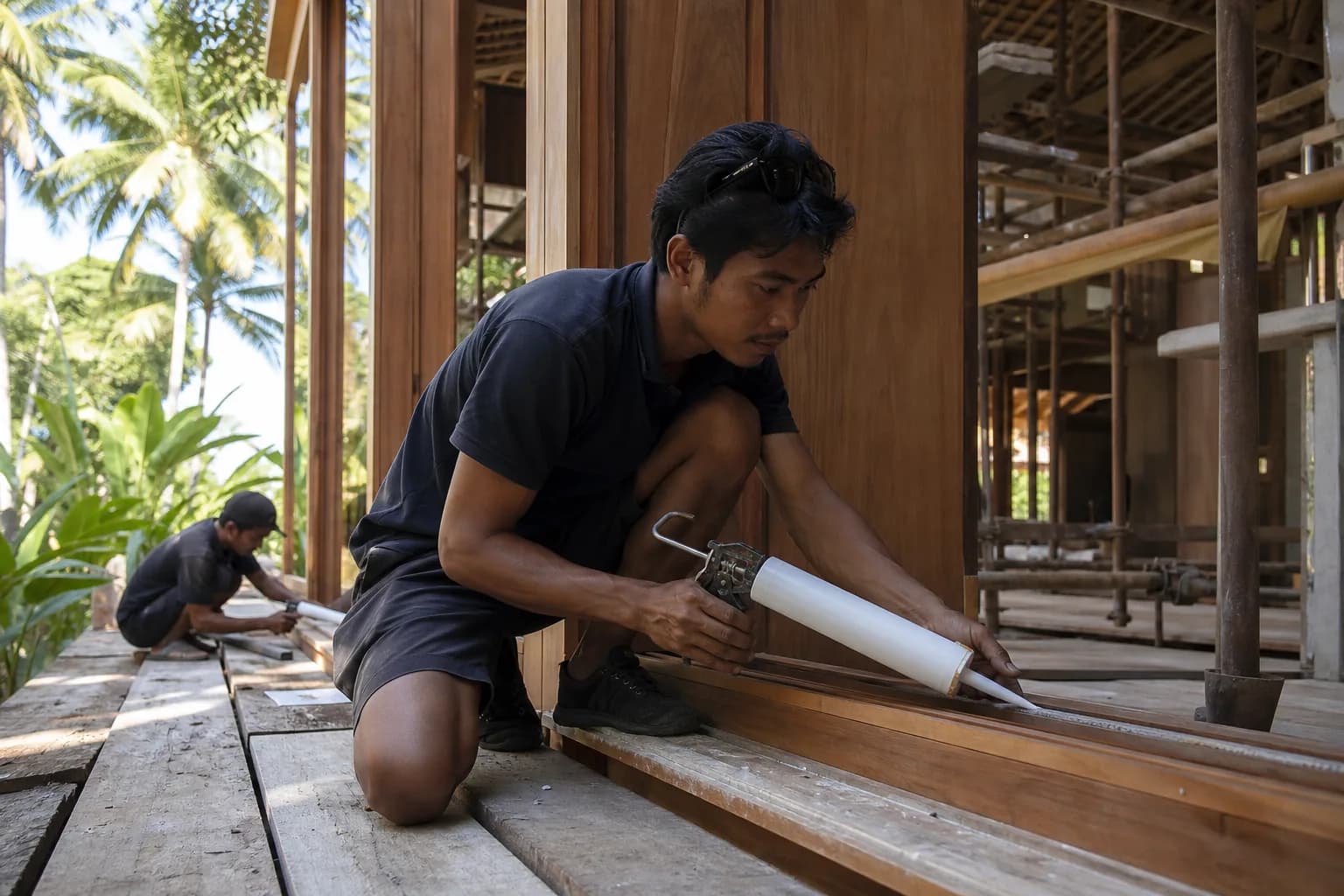
Prefinished Timber Joinery: Silicone Seals Fixings Bali
Professional prefinished timber joinery installation in Bali with silicone seals and fixings for durable weatherproof performance and a premium finish.
10 min read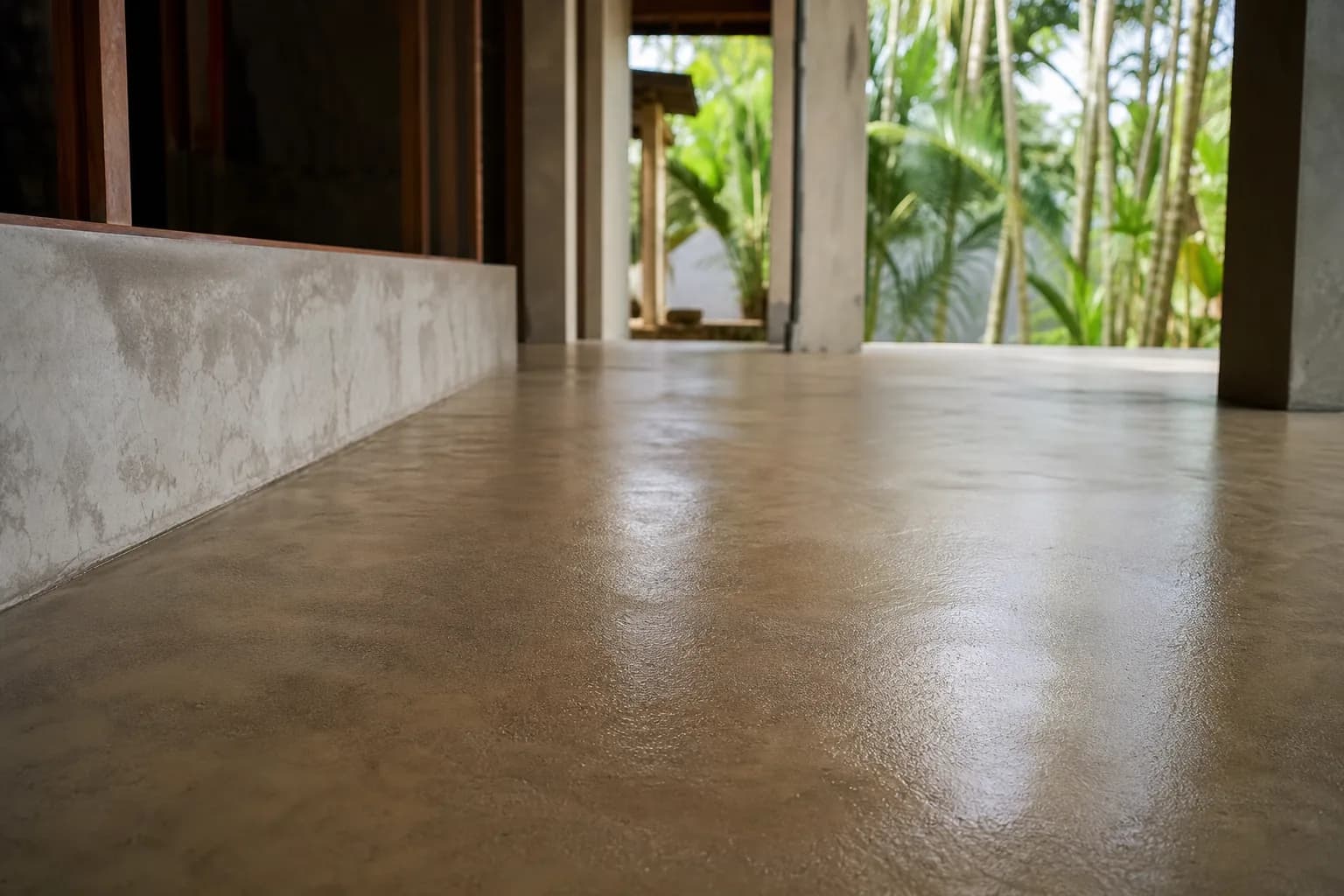
Polished Concrete Microtopping: Surface Prep Sealants Bali
Discover Bali s polished concrete microtopping: expert surface prep, durable sealants, and a flawless finish for modern floors with minimal maintenance.
9 min read