Tongue and Groove Ceilings in Bali: Ventilation Gaps
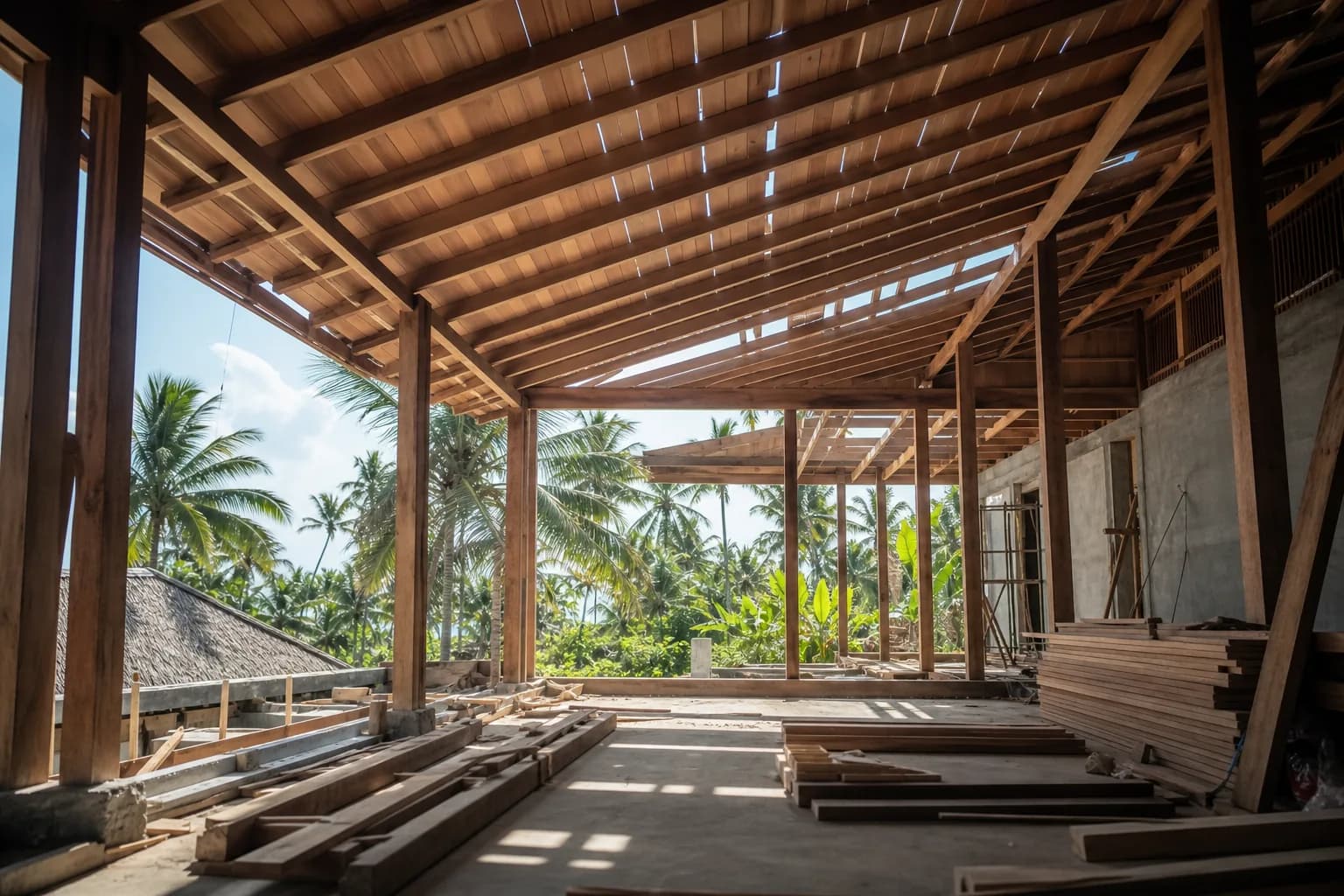
# Tongue and Groove Ceiling Installation: Ventilation Gaps for Bali Humidity
The Hidden Threat to Your Bali Villa’s Ceiling Finish
Tongue and groove ceiling installations in Bali face a critical challenge that many villa owners discover too late: inadequate ventilation gaps leading to moisture accumulation, wood warping, and premature finish failure. With Bali’s consistent 70-85% humidity levels and year-round tropical temperatures, even premium hardwood ceiling panels will buckle, sweat, or develop mold without properly engineered ventilation systems. The difference between a ceiling that lasts 15 years versus one requiring replacement within 3 years often comes down to millimeter-precise ventilation gaps and strategic airflow design during the interior finishing Bali phase.
Understanding Moisture Dynamics in Bali Ceiling Installations
The physics of moisture behavior in tropical ceiling systems differs fundamentally from temperate climate installations. In Bali villa construction, warm, moisture-laden air rises and becomes trapped against ceiling surfaces, creating a microclimate where relative humidity can exceed 90% even when room conditions feel comfortable. This trapped moisture penetrates wood grain through capillary action, causing dimensional changes that manifest as cupping, crowning, or complete board separation.
Tongue and groove ceiling panels, while aesthetically superior to standard ceiling finishes, create continuous sealed surfaces that prevent natural moisture escape. Without engineered ventilation gaps, condensation forms on the concealed upper surface of boards—invisible to occupants but devastating to wood integrity. During Bali’s wet season (November through March), a single square meter of improperly ventilated ceiling can accumulate 200-300ml of condensed moisture weekly, saturating wood fibers and compromising structural adhesion.
The thermal stack effect in Bali villas amplifies this problem. As interior spaces are cooled by air conditioning, temperature differentials between conditioned spaces and roof cavities can reach 15-20°C. This creates powerful convection currents that drive moisture-laden air into any available gap, where it condenses on cooler ceiling surfaces. Traditional Western installation methods that rely on passive attic ventilation fail completely in Bali’s climate, where external air is often more humid than interior spaces.
Professional renovation Bali specialists recognize that ventilation gap design must account for three distinct moisture pathways: direct vapor transmission through wood grain, condensation from temperature differentials, and capillary moisture wicking from adjacent building elements. Each pathway requires specific countermeasures integrated during the finishing installation phase. Ridge vents alone provide insufficient protection—comprehensive ventilation systems must incorporate intake vents, exhaust pathways, and strategic air gaps that maintain continuous airflow without compromising aesthetic finish quality.
The wood species selection interacts critically with ventilation design. Dense tropical hardwoods like merbau or bangkirai, while naturally moisture-resistant, expand and contract more dramatically than softer species when humidity fluctuates. Cedar and treated pine, popular for their workability, require more aggressive ventilation strategies due to higher moisture absorption rates. Understanding these material-specific behaviors allows Teville’s finishing teams to calibrate ventilation gap dimensions precisely for each project’s wood selection and exposure conditions.
Material Selection and Performance Standards for Humid Climates
Successful tongue and groove ceiling installations in Bali demand materials engineered specifically for tropical humidity exposure. Standard kiln-dried lumber at 12-15% moisture content will immediately begin absorbing atmospheric moisture, reaching equilibrium moisture content of 18-22% within weeks of installation. This dimensional change can cause 3-5mm expansion per meter of board width—enough to buckle entire ceiling sections if ventilation gaps aren’t properly sized.
Premium installations utilize acclimatized hardwoods stored in Bali for minimum 60 days before milling, allowing moisture content to stabilize at local equilibrium levels. Species selection prioritizes dimensional stability over pure hardness: teak, ironwood (ulin), and specially treated meranti demonstrate superior performance in high-humidity applications. For furniture installation and ceiling work, Teville sources materials with certified moisture content testing, ensuring boards arrive at jobsites within 2% of target equilibrium levels.
Vapor barrier materials require equal attention. Standard polyethylene sheeting degrades rapidly under Bali’s UV exposure and temperature cycling. Professional installations employ cross-laminated vapor barriers with minimum 6-mil thickness, featuring aluminum-reinforced layers that reflect radiant heat while preventing moisture transmission. These barriers must be installed with sealed seams and proper overlap specifications—typically 150mm minimum with acoustical sealant application at all joints.
Fastener selection directly impacts long-term performance. Stainless steel or hot-dipped galvanized screws resist corrosion in humid environments, while standard zinc-plated fasteners will rust within 18-24 months, creating staining and structural weakness. Ring-shank or spiral-shank fasteners provide superior holding power as wood expands and contracts through seasonal humidity cycles. Teville’s villa utilities integration ensures fastener placement avoids concealed electrical conduits and plumbing penetrations that could compromise ceiling integrity.
Step-by-Step Ventilation Gap Installation Process
The installation sequence for properly ventilated tongue and groove ceilings begins weeks before the first board is positioned. Initial site assessment identifies roof cavity dimensions, existing ventilation infrastructure, and potential moisture sources from adjacent spaces. Teville’s technical teams map airflow patterns using computational fluid dynamics modeling, determining optimal vent placement for maximum moisture evacuation efficiency.
Phase 1: Structural Preparation and Vapor Barrier Installation
Ceiling joists or battens receive thorough inspection for levelness and structural integrity. Any deviation exceeding 3mm per meter requires correction through shimming or planing. Vapor barrier installation proceeds with meticulous attention to continuity—every penetration for lighting fixtures, ceiling fans, or structural elements receives sealed boots or gaskets. The barrier extends 200mm beyond ceiling perimeter boundaries, creating positive moisture isolation from wall cavities.
Phase 2: Ridge Vent and Intake System Installation
Ridge vents are positioned at the ceiling’s highest point, typically running the full length of the primary roof ridge. Professional installations use continuous ridge vent systems with minimum 50mm effective ventilation area per linear meter. Intake vents install at ceiling perimeters or soffits, sized to provide 1.5x the exhaust vent area—this differential creates positive airflow that prevents backdraft and ensures consistent moisture evacuation. Vent positioning accounts for prevailing wind patterns in Bali, typically southwest during dry season and northwest during wet season.
Phase 3: Tongue and Groove Board Installation with Expansion Gaps
Board installation begins from the most visible ceiling area, ensuring premium-grade boards occupy high-visibility zones. Each board receives blind-nailing through the tongue at 400mm intervals, with fasteners angled 45 degrees to maximize holding power while remaining concealed. Critical expansion gaps of 8-12mm are maintained at all perimeter edges, accommodating seasonal dimensional changes without buckling. These gaps receive trim coverage that allows movement while maintaining aesthetic continuity.
Between-board gaps require precise calibration based on wood species and current moisture content. Installations during Bali’s dry season (April-October) use tighter initial spacing (0.5-1mm), anticipating expansion during wet season. Wet season installations require 1.5-2mm gaps to prevent compression buckling as boards dry during subsequent dry periods. Teville’s finishing specialists measure ambient humidity and wood moisture content daily during installation, adjusting gap specifications in real-time.
Phase 4: Ventilation Channel Integration
Above the tongue and groove surface, 25-40mm ventilation channels run perpendicular to board direction, creating continuous airflow pathways from intake to exhaust vents. These channels utilize furring strips or specialized ventilation battens that maintain consistent air gap dimensions even under roof loading. Channel spacing of 600-800mm provides adequate airflow without requiring excessive structural modifications.
Phase 5: Finishing and Sealing
Surface finishing applies moisture-resistant sealants that allow vapor transmission while protecting against liquid water. Two-part polyurethane systems or specialized tropical wood oils penetrate grain structure, providing protection without creating impermeable films that trap subsurface moisture. Perimeter trim installation uses flexible sealants that accommodate wood movement, preventing gap formation that could admit moisture or pests.
Cost Analysis and Project Timeline for Bali Installations
Tongue and groove ceiling installations with proper ventilation systems represent significant investments in long-term interior finishing Bali quality. Material costs for premium tropical hardwoods range from IDR 450,000-850,000 per square meter, depending on species selection and grade. Ventilation system components add IDR 75,000-125,000 per square meter, including ridge vents, intake vents, vapor barriers, and ventilation channel materials.
Labor costs for professional installation by experienced finishing teams typically equal 60-80% of material costs. A standard 40-square-meter ceiling installation requires 8-12 working days, including structural preparation, vapor barrier installation, ventilation system integration, board installation, and finishing work. Complex ceiling geometries with multiple elevation changes or integrated lighting systems extend timelines by 30-40%.
Project timelines must account for material acclimatization periods. Imported hardwoods require 45-60 days of local storage before installation, while locally sourced materials need 14-21 days minimum. Rushing this acclimatization phase guarantees dimensional instability and premature failure regardless of ventilation system quality.
For comprehensive project planning and detailed cost estimation specific to your villa’s requirements, Teville provides professional assessment services through our cost estimation platform. Our technical teams evaluate site-specific conditions, recommend optimal material specifications, and provide transparent pricing that reflects true tropical climate installation requirements. View completed ceiling installations in our portfolio gallery to understand the quality standards we maintain across all finishing projects.
Frequently Asked Questions: Ventilation Gaps and Humidity Management
How large should ventilation gaps be for Bali’s humidity levels?
Perimeter expansion gaps should measure 8-12mm minimum, while between-board gaps vary from 0.5-2mm depending on installation season and wood moisture content. Ridge vent systems require 50mm effective ventilation area per linear meter, with intake vents sized at 1.5x exhaust capacity. These specifications differ significantly from temperate climate standards due to Bali’s consistent high humidity and minimal seasonal temperature variation.
Can existing tongue and groove ceilings be retrofitted with ventilation systems?
Retrofit ventilation is possible but technically challenging. It requires creating ridge vent openings without disturbing existing board installation, installing intake vents at ceiling perimeters, and potentially adding ventilation channels through selective board removal. Retrofit projects typically cost 40-60% of new installation pricing and may not achieve the same performance levels as purpose-designed systems. Teville’s renovation Bali specialists assess retrofit feasibility during initial site inspections, providing honest recommendations about cost-effectiveness versus complete replacement.
What maintenance do ventilated ceiling systems require?
Quarterly inspections should verify vent screens remain clear of debris, check for pest intrusion, and confirm no moisture staining on visible surfaces. Annual professional inspections examine concealed spaces above boards, verify vapor barrier integrity, and assess wood condition. Vent cleaning every 6 months prevents blockages that compromise airflow efficiency. Well-maintained systems require no major interventions for 12-15 years, while neglected installations may need board replacement within 5-7 years.
How do ceiling fans and air conditioning affect ventilation requirements?
Mechanical air movement reduces moisture accumulation on ceiling surfaces but doesn’t eliminate the need for proper ventilation gaps. Air conditioning actually increases condensation risk by creating larger temperature differentials between conditioned spaces and roof cavities. Installations in air-conditioned villas require more aggressive ventilation strategies, including enhanced vapor barrier specifications and potentially active ventilation fans in ridge vent systems. Teville’s construction process integrates HVAC planning with ceiling finishing design to optimize both comfort and durability.
Which wood species perform best in Bali’s humid climate?
Teak demonstrates superior dimensional stability and natural moisture resistance, making it the premium choice for high-visibility installations. Ironwood (ulin) offers exceptional durability but requires specialized installation techniques due to extreme density. Treated meranti provides excellent cost-performance balance for larger ceiling areas. Cedar, while popular internationally, requires more frequent maintenance in Bali’s climate. S
 3180 m²7 month(s)from 142.000 USD
Vasudeva
 3124 m²6 month(s)from 123.000 USD
TALA 8
 3127 m²9 month(s)from 177.000 USD
Mukunda
 3104 m²11 month(s)from 99.000 USD
TALA 100
 4344 m²16 month(s)from 290.000 USD
Radha
 172 m²8 month(s)from 120.000 USD
Keshava
 2144 m²11 month(s)from 104.000 USD
Narayana

Want to calculate?
 3173 m²6 month(s)from 125.000 USD
TALA FOUR
 164 m²7 month(s)from 79.000 USD
TALA TWO
164 m²7 month(s)from 79.000 USDPrivate: Haridas Villas, Tegallalang
 1from 198.000 USD
Private: Haridas Villas
Start With Real Numbers, Not Guesses
Before finalizing your finishing works plan, check realistic cost ranges for your Bali villa project.
Available lands
 1230 m²15 min$ 132543Bali, Tegallalang
 585 m²8 min$ 165702Bali, Mengwi
 1720 m²2 min$ 241478Bali, Tabanan
 600 m²10 min$ 206897Bali, Canggu
 260 m²5 min$ 51872Bali, Kedungu
 3100 m²20 min$ 272968Bali, Tabanan
 1158 m²12 min$ 291996Bali, Mengwi
 550 m²5 min$ 217629Bali, Tabanan
 8313 m²15 min$ 716670Bali, Buduk
 7250 m²56 min$ 235714Bali, Tabanan
 1350 m²5 min$ 283467Bali, Pecatu
 1000 m²10 min$ 280788Bali, Pecatu
 700 m²8 min$ 165517Bali, Umalas
 4270 m²10 min$ 394397Bali, Ubud
 5000 m²8 min$ 424877Bali, Ungasan
Essential Bali build & buy guides
- Bali villa construction cost per m² in 2026
- How much will your villa cost? Calculator
- Building a villa in Bali: the complete guide
- Buying land in Bali: step-by-step for foreigners
- Bali villa investment: yields, risks, returns
- Leasehold vs freehold: what foreigners can own
- Construction defect liability & 10-year warranty
- Bali building codes and construction standards
Related guides
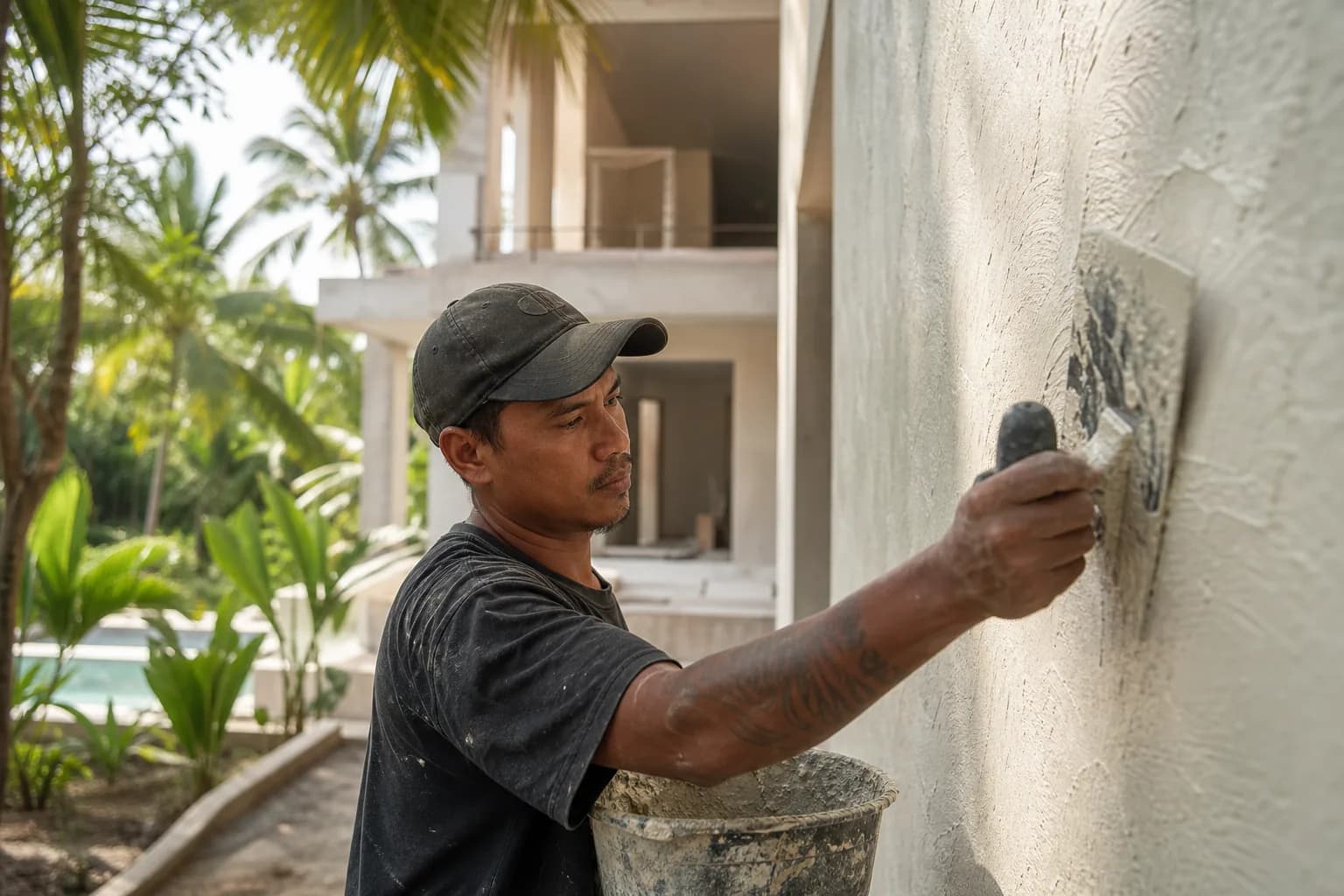
Resin-Infused Plaster Finishes: Anti-Salt Systems Bali
Expert technical guide: Resin-Infused Plaster Finishes: Anti-Salt Systems Bali
8 min read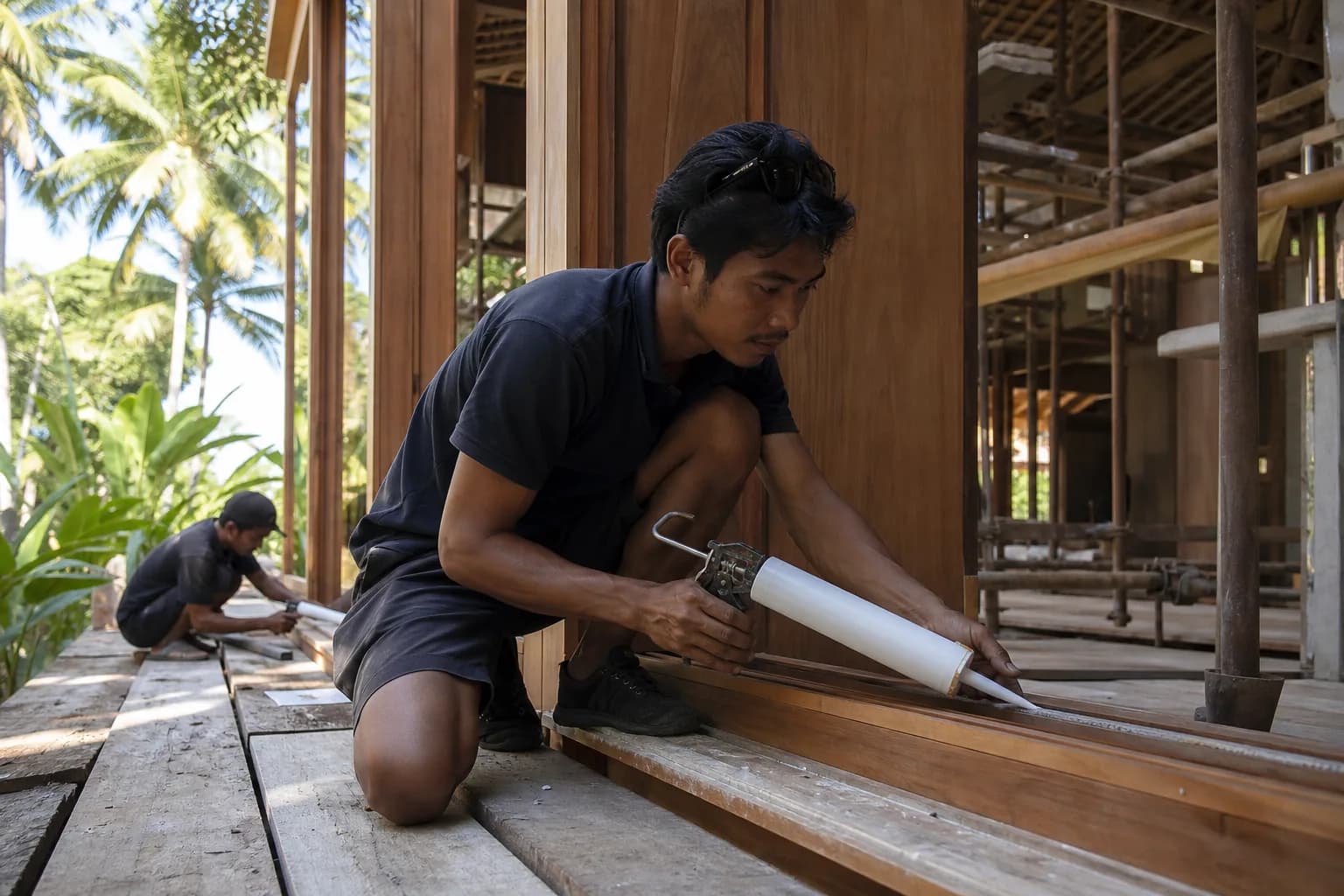
Prefinished Timber Joinery: Silicone Seals Fixings Bali
Professional prefinished timber joinery installation in Bali with silicone seals and fixings for durable weatherproof performance and a premium finish.
10 min read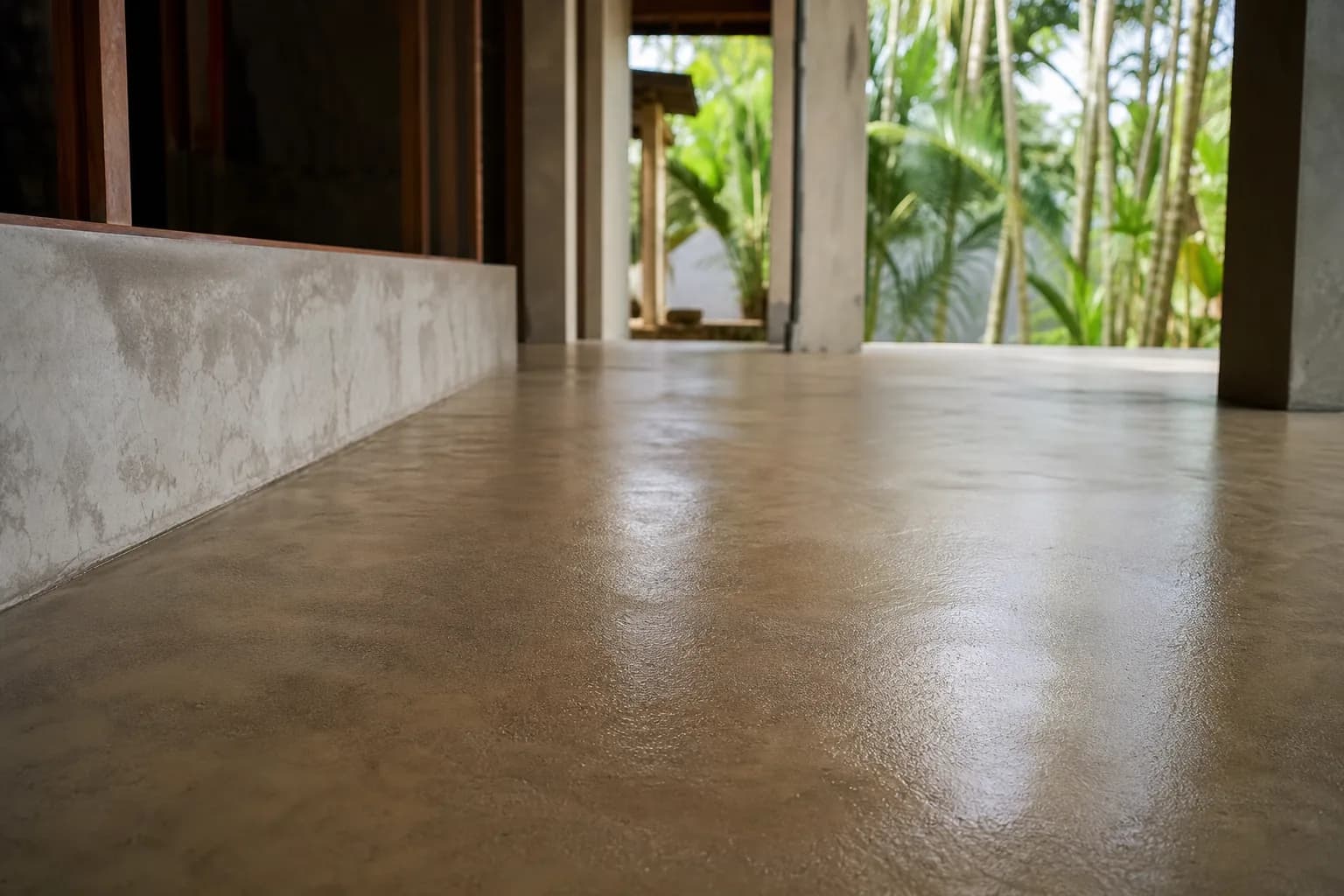
Polished Concrete Microtopping: Surface Prep Sealants Bali
Discover Bali s polished concrete microtopping: expert surface prep, durable sealants, and a flawless finish for modern floors with minimal maintenance.
9 min read