Timber Staircase Balustrade Installation Termite Treatment Bali
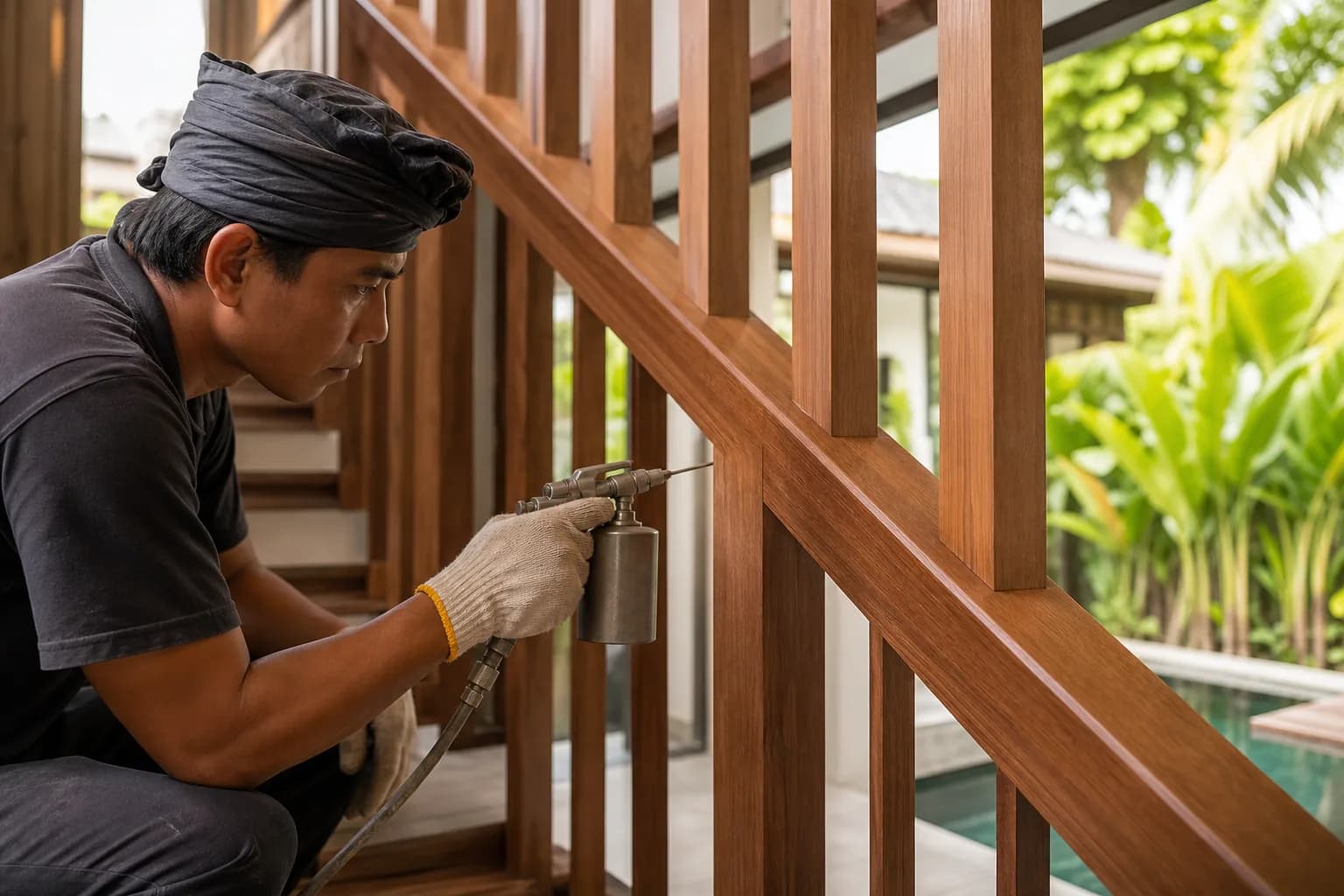
# Timber Staircase Balustrade Installation: Termite Treatment in Bali
The Hidden Threat to Your Bali Villa’s Timber Staircase Investment
Installing a timber staircase balustrade in your Bali villa represents a significant investment in both aesthetics and safety, but without proper termite treatment, this beautiful architectural feature can become structurally compromised within months. Bali’s tropical climate—with humidity levels consistently above 70% and year-round warmth—creates ideal conditions for subterranean and drywood termite colonies that can silently destroy untreated timber installations. The challenge isn’t simply applying generic pest control; it requires integrating specialized termite prevention protocols directly into the balustrade installation process, from timber selection and pre-treatment to post-installation monitoring systems that protect your finishing works investment for decades.
Understanding Termite Vulnerability in Timber Balustrade Systems
Timber staircase balustrades present unique termite vulnerability compared to other villa construction elements due to their structural configuration and environmental exposure. Unlike enclosed timber framing, balustrades feature exposed vertical balusters, handrails, and newel posts with multiple grain-end exposures where termites preferentially enter. The connection points between balusters and handrails create moisture traps in Bali’s humid climate, softening wood fibers and releasing cellulose signals that attract foraging termite scouts from colonies that can contain over one million individuals.
Bali hosts several destructive termite species that specifically target timber finishing works. Coptotermes curvignathus, the most aggressive subterranean species in Indonesia, builds underground colonies and constructs mud tubes up masonry walls to reach timber balustrades on upper floors. Cryptotermes cynocephalus, a drywood termite, infests timber directly without soil contact, making second-floor balustrades equally vulnerable. These species can consume 400-500 grams of wood per colony daily, with damage often remaining invisible until structural failure occurs.
The termite treatment approach for balustrade installation differs fundamentally from general villa pest control. While perimeter soil treatments protect structural framing, balustrades require direct timber treatment, barrier systems at connection points, and species-specific protocols. Subterranean termites require soil-to-timber pathway interruption, while drywood termites demand surface treatments and wood boring prevention. Professional Bali villa construction teams integrate these treatments during installation rather than as afterthoughts, ensuring chemical penetration reaches critical vulnerability points before assembly.
Moisture management intersects critically with termite prevention in balustrade systems. Bali’s monsoon season (November-March) can elevate timber moisture content above 20%, the threshold where fungal decay begins and termite attraction intensifies. Balustrades installed near open-air sections, pool areas, or bathroom adjacencies face elevated risk. Effective termite treatment protocols must address both the insects and the environmental conditions that make timber vulnerable, incorporating moisture barriers, ventilation considerations, and drainage details into the installation specification.
The economic implications of inadequate termite treatment extend beyond replacement costs. A compromised balustrade represents a safety liability, particularly in multi-story villas where structural failure could cause serious injury. Insurance considerations in Bali increasingly require documented termite prevention protocols for timber installations. Professional treatment during initial installation costs approximately 15-20% of the balustrade material expense but prevents replacement costs that can exceed 300% of the original investment when factoring in removal, disposal, and reinstallation labor.
Material Selection and Treatment Standards for Termite Resistance
Timber species selection forms the first defense layer against termite damage in balustrade installations. Ironwood (Ulin/Eusideroxylon zwageri) represents the premium choice for Bali applications, with natural density (1,040 kg/m³) and silica content that termites find extremely difficult to penetrate. Ulin’s natural durability rating of Class 1 (very durable) provides 25+ years of termite resistance even without chemical treatment. However, Ulin’s endangered status and premium pricing (Rp 18-25 million per cubic meter) often necessitates alternatives.
Merbau (Intsia bijuga) offers excellent termite resistance at moderate cost (Rp 8-12 million per cubic meter), with Class 2 durability and natural extractives that repel termites. Bengkirai (Yellow Balau) provides similar performance with slightly lower density. For budget-conscious projects, properly treated plantation teak or mahogany can perform adequately when combined with comprehensive chemical treatment protocols. The critical factor isn’t avoiding softer woods entirely but matching timber selection to treatment intensity and maintenance commitment.
Chemical treatment standards for balustrade timber must meet Indonesian National Standard (SNI) 03-5010.1-1999 for wood preservation. Professional treatments utilize bifenthrin-based termiticides (0.05-0.1% concentration) or imidacloprid formulations that provide 10-15 year protection when properly applied. Pressure treatment, where chemical solution is forced into timber under 8-12 bar pressure, achieves 12-15mm penetration depth—essential for baluster cross-sections. Surface treatments alone penetrate only 2-3mm and fail at cut ends or joints where fresh wood becomes exposed during installation.
Treatment certification and documentation prove critical for warranty protection and future property transactions. Reputable treatment facilities provide retention level certificates confirming chemical concentration (typically 4-6 kg/m³ for above-ground applications). Teville’s construction process includes third-party verification of treatment certificates before timber acceptance, ensuring materials meet specification before installation begins. This verification prevents the common issue of suppliers claiming treatment without documentation, leaving homeowners with unprotected installations.
Comprehensive Installation Process with Integrated Termite Prevention
Phase 1: Pre-Installation Site Assessment and Preparation (Days 1-2)
Professional installation begins with termite risk assessment of the staircase location. Technicians inspect adjacent walls for existing termite mud tubes, check subfloor areas for colony indicators, and evaluate moisture conditions using calibrated meters. Any active infestations require eradication before balustrade installation proceeds—installing new timber near active colonies guarantees rapid infestation. Soil treatment around staircase footings involves trenching 150mm wide by 300mm deep, applying termiticide at 5 liters per linear meter, creating a chemical barrier that remains effective for 5-7 years.
Substrate preparation includes installing physical termite barriers at timber-to-masonry connection points. Stainless steel mesh (0.66mm aperture) or graded stone particles (2-2.8mm) create barriers termites cannot penetrate or tunnel through. These barriers install at newel post bases, handrail wall brackets, and any point where timber contacts masonry. The barrier extends 50mm beyond timber footprints in all directions, forcing termites to expose themselves when attempting to bridge the gap—a behavior they instinctively avoid.
Phase 2: Timber Component Treatment and Preparation (Days 3-4)
Even pre-treated timber requires additional protection at cut ends and joinery locations where fresh wood becomes exposed. All cuts receive immediate field treatment using brush-applied termiticide concentrate (2-3% solution), with particular attention to grain-end surfaces where termite entry occurs most readily. Mortise and tenon joints, dowel holes, and bracket recesses receive injected treatment using pressure applicators that force chemical 20-30mm into surrounding wood fibers. This field treatment must occur within 2 hours of cutting to prevent moisture absorption that dilutes subsequent chemical application.
Baluster components undergo individual inspection and treatment verification. Each piece is checked for pre-existing termite damage indicators: small exit holes (1-2mm diameter), frass (termite droppings), or hollow sounds when tapped. Rejected pieces are replaced before installation. Accepted components receive identification marking correlating to installation position, ensuring treated surfaces orient correctly during assembly. Handrails and newel posts, being larger cross-sections, receive supplementary borate rod insertion—solid borate rods inserted into drilled holes that slowly diffuse through timber, providing long-term internal protection.
Phase 3: Balustrade Assembly with Treatment Integration (Days 5-7)
Installation sequencing integrates termite prevention at each stage. Newel posts install first, with bases set into termite-treated pockets or onto physical barrier systems. The post-to-floor connection uses stainless steel brackets rather than direct timber contact, eliminating moisture wicking and termite pathways. Bracket bolt holes receive termiticide injection before fastener installation. A 3-5mm gap maintained between timber and masonry surfaces prevents moisture bridging while allowing air circulation that keeps timber dry.
Baluster installation incorporates treatment at top and bottom connections. Each baluster base receives termiticide application before insertion into handrail mortises or base rail grooves. Adhesives used in joinery contain borate additives that provide additional termite deterrence at glue lines—common termite entry points in traditional installations. Spacing between balusters maintains 100mm maximum gaps (building code requirement) while ensuring adequate air circulation that prevents moisture accumulation between components.
Handrail installation includes comprehensive end-grain treatment and moisture barrier integration. Wall-mounted handrail brackets install over termite barrier membranes, with bracket penetrations sealed using termiticide-impregnated caulk. The handrail underside, which faces downward and can trap moisture, receives additional surface treatment with micro-encapsulated termiticide that provides 3-5 year residual protection. All visible fastener holes are filled with tinted wood filler containing termiticide, preventing these small openings from becoming termite entry points.
Phase 4: Finishing and Post-Installation Protection (Days 8-10)
Surface finishing serves dual purposes: aesthetic enhancement and termite barrier reinforcement. Professional interior finishing in Bali utilizes penetrating oil finishes or exterior-grade polyurethane that seals wood surfaces against moisture while maintaining vapor permeability. Three-coat systems (primer, sealer, topcoat) provide optimal protection, with each coat sanded to 220-grit before subsequent application. The finish must fully seal end-grain surfaces where termite entry risk is highest, requiring additional coats at these locations.
Final treatment involves perimeter application of non-repellent termiticide around the staircase footprint. Unlike repellent chemicals that termites detect and avoid, non-repellent formulations (fipronil or imidacloprid-based) allow termites to contact treated zones unknowingly, transferring lethal doses back to colonies through grooming behavior. This creates a protective envelope around the installation that eliminates approaching termites before they reach timber components. Application occurs at floor-wall junctions, under staircase soffits, and around newel post bases.
Documentation completion includes photographing all treatment applications, recording chemical batch numbers and application rates, and providing homeowners with maintenance schedules and warranty information. Professional installations include 12-month and 24-month inspection appointments where technicians check for termite activity indicators, moisture level changes, and finish integrity. This ongoing monitoring catches potential issues before damage occurs, extending balustrade lifespan significantly beyond untreated installations.
Investment Analysis: Costs and Project Timeline
Timber balustrade installation with comprehensive termite treatment in Bali involves several cost components that vary based on timber species, treatment intensity, and project complexity. Material costs for pressure-treated Merbau balusters, handrails, and newel posts range from Rp 3.5-6.5 million per linear meter of balustrade, including all structural components. Ironwood (Ulin) installations increase material costs to Rp 8-12 million per linear meter but reduce long-term treatment requirements. These figures include factory pressure treatment but not field application or finishing.
Termite treatment costs add approximately Rp 850,000-1,500,000 per linear meter, covering soil treatment, physical barriers, field chemical application, and borate rod insertion. Professional pest control services charge Rp 450,000-750,000 for initial perimeter treatment and colony eradication if existing infestations are discovered. Annual maintenance treatments cost Rp 250,000-400,000 per linear meter, providing ongoing protection through surface reapplication and monitoring inspections.
Labor costs for professional installation with integrated termite protocols range from Rp 2,200,000-3,800,000 per linear meter, depending on design complexity, site access, and finishing requirements. This includes carpentry, treatment application, finishing, and cleanup. Total project investment for a typical two-story villa staircase (8-10 linear meters of balustrade) ranges from Rp 52-85 million for Merbau with comprehensive treatment, or Rp 85-135 million for Ulin premium installations.
Project timelines for proper termite-protected installation span 10-14 working days for standard residential staircases. This includes 2 days site preparation and soil treatment, 2 days timber preparation and field treatment, 3-4 days installation with integrated protection, a
 164 m²7 month(s)from 79.000 USD
TALA TWO
 3127 m²9 month(s)from 177.000 USD
Mukunda
 2144 m²11 month(s)from 104.000 USD
Narayana
 1from 198.000 USD
Private: Haridas Villas
 4344 m²16 month(s)from 290.000 USD
Radha
 3180 m²7 month(s)from 142.000 USD
Vasudeva
 3104 m²11 month(s)from 99.000 USD
TALA 100
 172 m²8 month(s)from 120.000 USD
Keshava
 3173 m²6 month(s)from 125.000 USD
TALA FOUR

Want to calculate?
 3124 m²6 month(s)from 123.000 USD
TALA 8
164 m²7 month(s)from 79.000 USDPrivate: Haridas Villas, Tegallalang
Start With Real Numbers, Not Guesses
Before finalizing your finishing works plan, check realistic cost ranges for your Bali villa project.
Available lands
 3000 m²15 min$ 738916Bali, Cepaka
 2200 m²15 min$ 508005Bali, Canggu
 800 m²8 min$ 113300Bali, Ungasan
 1000 m²10 min$ 303571Bali, Tabanan
 29000 m²6 min$ 3857143Bali, Tabanan
 2700 m²30 min$ 314224Bali, Sidemen
 550 m²5 min$ 217629Bali, Tabanan
 1533 m²5 min$ 165666Bali, Cepaka
 2500 m²5 min$ 609606Bali, Kedungu
 2000 m²15 min$ 110837Bali, Karangasem
 2000 m²10 min$ 243842Bali, Mengwi
 680 m²15 min$ 110751Bali, Pererenan
 1000 m²5 min$ 350431Bali, Drupadi
 1158 m²12 min$ 291996Bali, Mengwi
 7500 m²5 min$ 206281Bali, Kedungu
Essential Bali build & buy guides
- Bali villa construction cost per m² in 2026
- How much will your villa cost? Calculator
- Building a villa in Bali: the complete guide
- Buying land in Bali: step-by-step for foreigners
- Bali villa investment: yields, risks, returns
- Leasehold vs freehold: what foreigners can own
- Construction defect liability & 10-year warranty
- Bali building codes and construction standards
Related guides
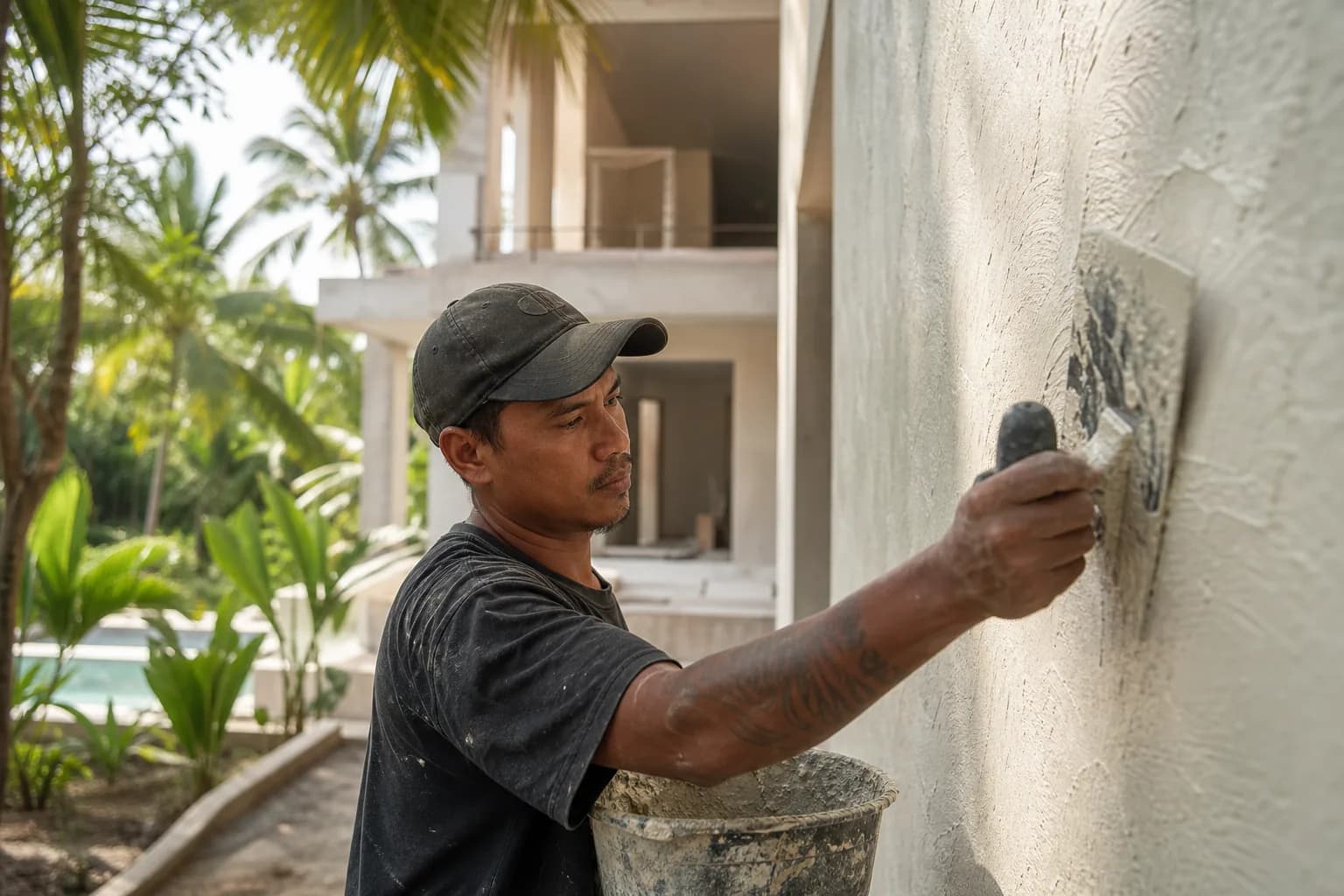
Resin-Infused Plaster Finishes: Anti-Salt Systems Bali
Expert technical guide: Resin-Infused Plaster Finishes: Anti-Salt Systems Bali
8 min read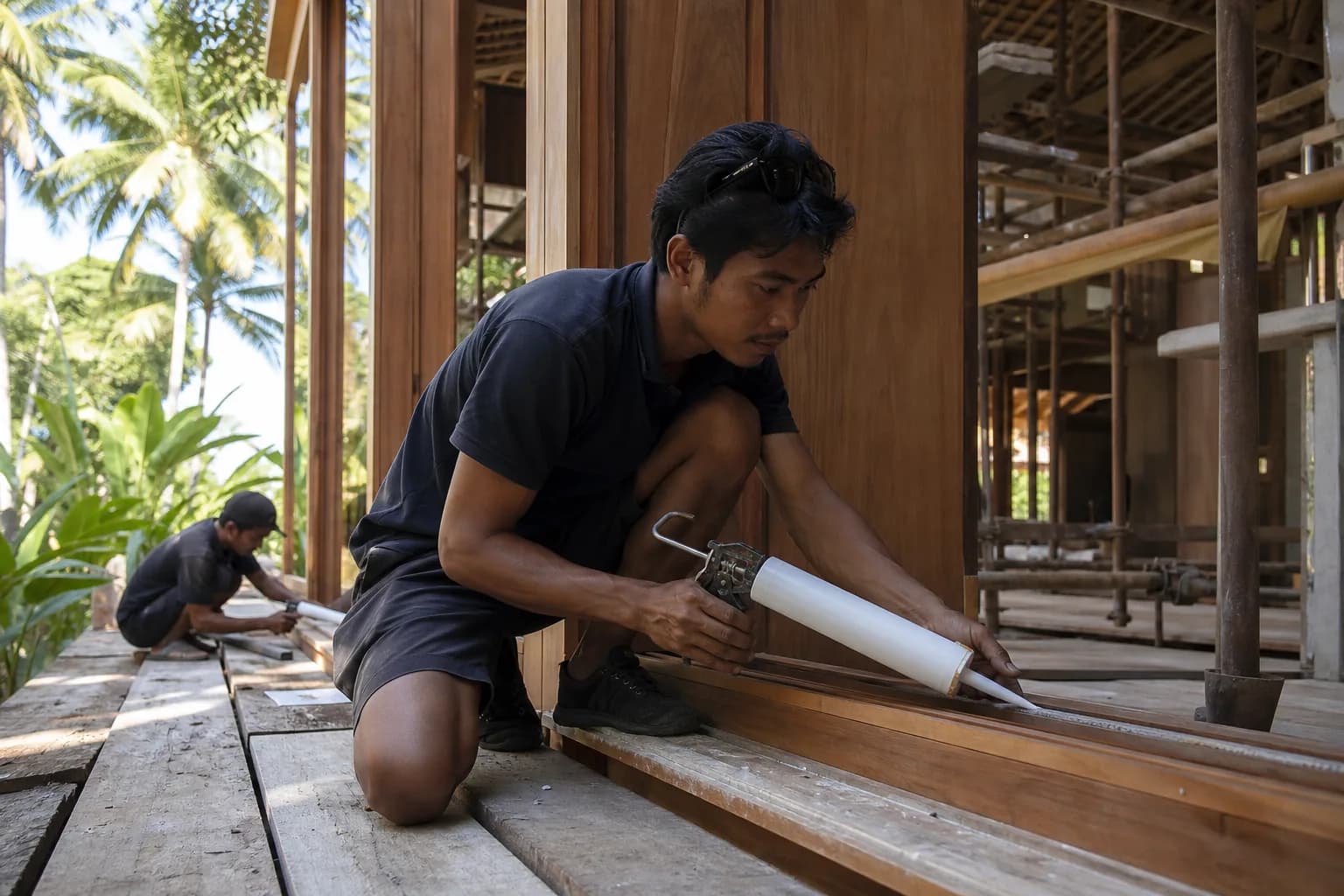
Prefinished Timber Joinery: Silicone Seals Fixings Bali
Professional prefinished timber joinery installation in Bali with silicone seals and fixings for durable weatherproof performance and a premium finish.
10 min read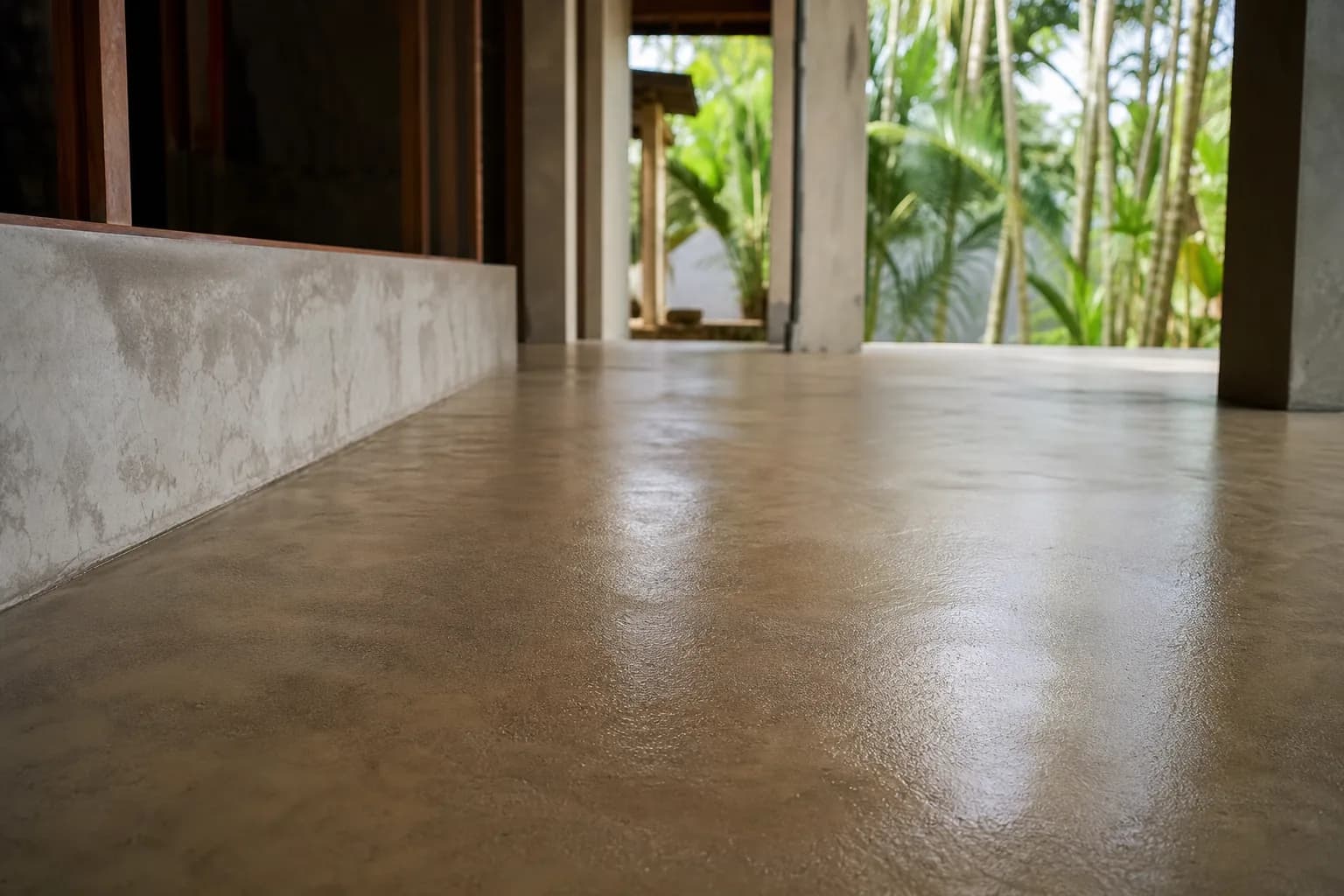
Polished Concrete Microtopping: Surface Prep Sealants Bali
Discover Bali s polished concrete microtopping: expert surface prep, durable sealants, and a flawless finish for modern floors with minimal maintenance.
9 min read