Termite-Resistant Built-in Wardrobes Bali | Expert Installation
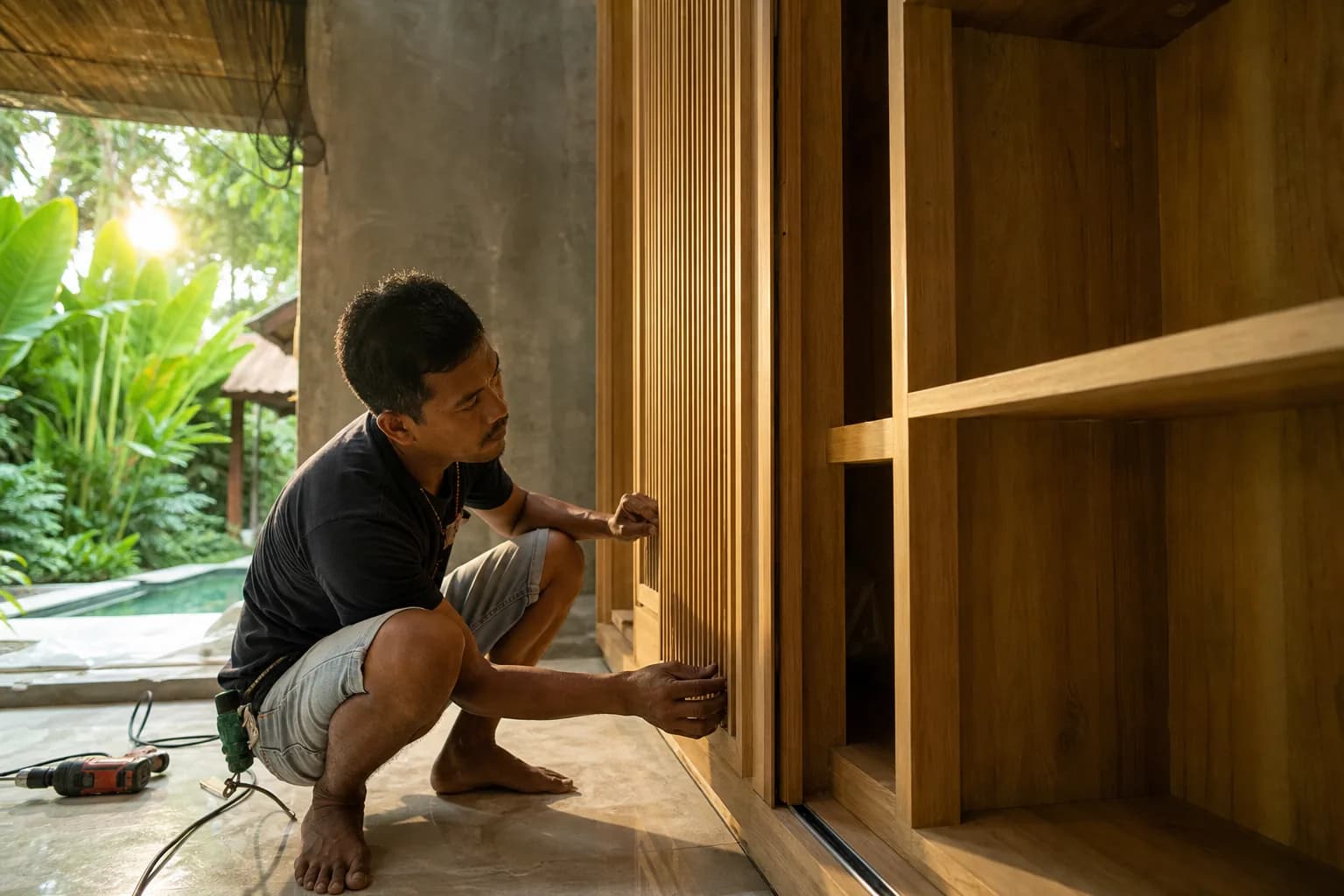
# Built-in Wardrobe Installation: Termite-Resistant Materials Bali
The Critical Challenge of Wardrobe Longevity in Bali’s Tropical Climate
Built-in wardrobe installation in Bali presents a unique challenge that many property owners discover too late: termite infestation. Within 18-24 months of installation, untreated or poorly selected wardrobe materials can show signs of structural compromise, with termites silently consuming the framework from within. The island’s consistent humidity levels of 75-85% combined with year-round warmth create ideal conditions for subterranean and drywood termite colonies. For villa construction and renovation projects, selecting termite-resistant materials isn’t merely a preference—it’s an essential investment in long-term durability and finishing quality that protects both the wardrobe structure and the valuable contents within.
Understanding Termite Behavior and Material Vulnerability in Bali
Bali’s tropical environment hosts several aggressive termite species, with subterranean termites (Coptotermes curvignathus) and drywood termites (Cryptotermes cynocephalus) being the most destructive to interior finishing works. These colonies can number in the millions, with workers capable of consuming up to 5-7 grams of wood daily per colony. The challenge intensifies during Bali’s wet season (November-March) when moisture levels peak, accelerating termite activity and wood degradation.
Traditional softwoods and untreated materials commonly used in budget furniture installation projects—such as pine, standard plywood, and particleboard—contain cellulose that termites find irresistible. The microscopic tunnels termites create compromise structural integrity long before visible damage appears on surfaces. In built-in wardrobe applications, this hidden deterioration affects load-bearing capacity, shelf stability, and door alignment, ultimately requiring complete replacement rather than simple repairs.
The technical reality of termite-resistant wardrobe construction requires understanding material density, natural chemical compounds, and treatment processes. Hardwoods with Janka hardness ratings above 1,000 lbf and natural silica content provide mechanical resistance—termites literally cannot chew through dense cellular structures efficiently. Woods containing natural oils, resins, and toxic compounds (quinones, terpenes) actively repel or poison termite colonies, creating a chemical barrier that persists for decades.
For villa construction projects in areas like Canggu, Seminyak, and Ubud, the termite pressure varies based on proximity to rice fields, gardens, and natural vegetation. Properties within 500 meters of active agricultural land face 3-4 times higher termite exposure than urban locations. This geographical factor directly influences material selection and treatment intensity for interior finishing Bali projects.
Professional wardrobe installation must account for termite entry points: wall penetrations, floor junctions, and gaps between built-in units and structural elements. Termites require only 1.5mm gaps to establish access routes. The installation methodology—including vapor barriers, treated base plates, and sealed joints—becomes as critical as the material selection itself. Quality finishing standards demand comprehensive termite management integrated into every construction phase, not applied as an afterthought.
Premium Termite-Resistant Materials for Built-in Wardrobes
Teak (Tectona grandis) remains the gold standard for termite-resistant wardrobe construction in Bali, with natural tectoquinone compounds that actively repel insects. Plantation teak offers Janka hardness of 1,155 lbf and exceptional dimensional stability in humid conditions. The material’s natural oil content (5-7%) prevents moisture absorption that would otherwise attract termites. For structural frames, shelving, and door panels, teak provides 40-50 year durability with minimal maintenance requirements.
Merbau (Intsia bijuga) delivers superior termite resistance through high density (880 kg/m³) and natural tannin content. This hardwood’s deep reddish-brown color adds aesthetic value while providing mechanical resistance that termites cannot penetrate. Merbau’s stability coefficient makes it ideal for large wardrobe panels and sliding door systems where warping would compromise functionality.
Bangkirai (Yellow Balau) offers the highest density option at 930-1,050 kg/m³, creating a physical barrier termites avoid. While harder to work with during fabrication, Bangkirai’s extreme durability suits high-humidity areas like beachfront villas where termite pressure intensifies. The material requires specialized cutting tools and experienced craftsmen for precise joinery.
Marine plywood represents the engineered alternative, constructed with phenolic resin adhesives that termites find toxic. BWP (Boiling Water Proof) grade marine plywood with 11-13 cross-laminated layers provides structural stability for wardrobe backs, drawer bottoms, and partition walls. The material must meet IS:710 standards with moisture content below 12% for Bali’s climate.
HDHMR (High Density High Moisture Resistant) boards combine wood fibers with synthetic resins and chemical termite inhibitors. With density exceeding 750 kg/m³, these engineered boards suit internal wardrobe components where solid hardwood becomes cost-prohibitive. The material’s uniform composition eliminates natural wood defects while maintaining screw-holding capacity for hardware installation.
Professional Installation Process for Termite-Resistant Wardrobes
Phase 1: Site Assessment and Preparation (Days 1-2)
The installation begins with comprehensive moisture testing using pin-type and pinless meters to map wall humidity levels. Readings above 18% require remediation before wardrobe installation proceeds. Structural assessment identifies load-bearing walls versus partition walls, determining anchor point locations and weight distribution strategies. The installation team inspects for existing termite activity using acoustic sensors and visual examination of baseboards, examining a 2-meter radius around the planned wardrobe location.
Surface preparation includes treating wall contact areas with borate-based termiticides (disodium octaborate tetrahydrate) at 15% concentration. This creates a chemical barrier extending 30cm beyond the wardrobe footprint. Floor-level vapor barriers using 6-mil polyethylene sheeting prevent ground moisture migration that attracts termites. All electrical outlets and cable penetrations within the wardrobe zone receive sealed conduit installations to eliminate termite entry routes.
Phase 2: Framework Construction and Installation (Days 3-5)
Precision-cut hardwood frames arrive pre-treated with additional borate solutions, with moisture content verified at 10-12% for dimensional stability. The base frame installation uses stainless steel L-brackets and concrete anchors rated for 150kg per fixing point, ensuring the structure remains elevated 5-8mm above floor level. This air gap prevents capillary moisture transfer while allowing inspection access for future termite monitoring.
Vertical support posts connect to ceiling joists or concrete beams using adjustable steel brackets that accommodate building settlement. The framework receives spirit level verification at multiple points, with tolerance maintained within 2mm over 2-meter spans. Cross-bracing elements use mortise-and-tenon joinery reinforced with marine-grade adhesives, creating rigid structures that resist racking forces. All wood-to-wood joints receive additional borate treatment before assembly, ensuring complete protection of vulnerable connection points.
Phase 3: Panel Installation and Finishing (Days 6-8)
Back panels, shelving, and partition walls install using concealed fasteners that maintain clean aesthetic lines while allowing future disassembly for maintenance. Marine plywood components receive edge sealing with epoxy-based sealants that prevent moisture ingress through exposed laminations. Adjustable shelf systems use brass or stainless steel pins in pre-drilled holes spaced at 32mm intervals, following European cabinet standards for maximum flexibility.
Door installation varies by system type: hinged doors require 3D-adjustable concealed hinges rated for 40kg per door, while sliding systems need aluminum tracks with sealed ball-bearing rollers. All hardware receives corrosion-resistant coating suitable for tropical humidity. Interior finishing includes natural oil treatments for hardwood surfaces (tung oil or Danish oil) that enhance termite resistance while allowing wood to breathe. Engineered materials receive melamine or laminate facing that provides additional moisture and pest barriers.
Phase 4: Integration and Quality Control (Days 9-10)
Lighting integration uses LED strip systems with IP44-rated transformers mounted outside the wardrobe cavity to minimize heat buildup. Ventilation considerations include 40mm diameter holes drilled at top and bottom panels to promote air circulation, fitted with stainless steel mesh screens that prevent insect entry. The final inspection verifies door alignment within 1mm tolerance, drawer operation smoothness, and shelf load capacity testing at 25kg per linear meter.
Cost Structure and Project Timeline for Bali Installations
Built-in wardrobe installation costs in Bali vary significantly based on material selection and complexity. Premium teak wardrobes range from IDR 8,500,000-15,000,000 per linear meter for complete installations including hardware and finishing. Merbau alternatives reduce costs to IDR 6,500,000-10,000,000 per linear meter while maintaining excellent termite resistance. Marine plywood systems with hardwood facing offer budget-conscious options at IDR 4,500,000-7,000,000 per linear meter.
Standard 3-meter wardrobe installations (floor-to-ceiling, 2.4m height, 600mm depth) typically require 10-12 working days from site preparation through final finishing. Complex designs incorporating drawer systems, internal lighting, and specialized storage solutions extend timelines to 15-18 days. Material procurement adds 7-14 days for custom hardwood orders, though established construction companies maintain inventory of common specifications.
The investment in termite-resistant materials delivers measurable value through extended service life. Standard softwood wardrobes in Bali require replacement every 5-7 years, while properly installed hardwood systems maintain structural integrity for 30-40 years. When calculating total cost of ownership, the premium for termite-resistant materials amortizes to 15-20% additional annual cost over the wardrobe’s lifespan—a modest investment for eliminating replacement expenses and protecting stored valuables.
For comprehensive cost estimation specific to your project requirements, professional assessment considers room dimensions, material preferences, hardware specifications, and site-specific termite pressure factors.
Frequently Asked Questions About Termite-Resistant Wardrobes
How do I verify if my existing wardrobe has termite damage?
Termite detection requires systematic inspection of several indicators. Tap wardrobe panels and frames with a screwdriver handle—hollow sounds indicate internal tunneling. Examine joints and corners for mud tubes (1-2mm diameter tunnels) that termites construct for protected travel routes. Check for fine sawdust accumulation below shelves or inside corners, which indicates active drywood termite feeding. Press firmly on shelf edges and door frames; compromised wood yields or feels spongy rather than solid. Professional inspection using acoustic emission detectors can identify active colonies before visible damage appears, recommended annually for properties in high-risk areas.
Can existing wardrobes be treated instead of replaced?
Treatment viability depends on infestation extent and material type. Early-stage infestations in solid hardwood frames can receive injection treatments using borates or fipronil-based termiticides through drilled access holes. The treatment requires 8-12mm holes drilled at 300mm intervals along all structural members, followed by pressure injection and sealing. However, particleboard or softwood wardrobes with established colonies typically require complete replacement—the structural compromise cannot be reversed, and treatment effectiveness in porous materials remains limited. Marine plywood components with surface damage but intact cores may qualify for partial replacement strategies. Professional assessment determines treatment feasibility versus replacement economics, considering that treatment costs often reach 40-60% of new installation expenses.
What maintenance schedule ensures long-term termite protection?
Effective maintenance combines regular inspection with environmental control. Quarterly visual inspections check for mud tubes, wood damage, and moisture accumulation. Annual professional inspections using moisture meters and acoustic sensors detect problems before visible damage occurs. Maintain room humidity below 70% using dehumidifiers or air conditioning—termites require moisture levels above 75% for colony survival. Clean wardrobe interiors every 6 months, removing organic debris that attracts pests. Reapply natural oil finishes to hardwood surfaces every 18-24 months to maintain moisture barriers. Inspect and maintain the 5-8mm air gap beneath wardrobe bases, ensuring it remains clear for ventilation and inspection access. Address any plumbing leaks or roof leaks within 48 hours—moisture problems dramatically accelerate termite attraction.
Are chemical treatments safe for wardrobes storing clothing and personal items?
Modern borate-based treatments (disodium octaborate tetrahydrate) used in professional wardrobe installation present minimal health risks when properly applied. Borates have low mammalian toxicity, with safety profiles similar to table salt, while remaining highly toxic to insects. The treatment penetrates wood cellular structure and doesn’t off-gas volatile organic compounds after curing. Application occurs during construction before finishing, with 7-day curing periods before wardrobe use. Natural termite-resistant hardwoods like teak require no chemical treatment, relying on inherent compounds that don’t transfer to stored items. Avoid wardrobes treated with older organophosphate or chlorinated pes

Want to calculate?
 3127 m²9 month(s)from 177.000 USD
Mukunda
 172 m²8 month(s)from 120.000 USD
Keshava
 3180 m²7 month(s)from 142.000 USD
Vasudeva
 3104 m²11 month(s)from 99.000 USD
TALA 100
 2144 m²11 month(s)from 104.000 USD
Narayana
 164 m²7 month(s)from 79.000 USD
Private: Haridas Villas, Tegallalang
 3124 m²6 month(s)from 123.000 USD
TALA 8
 4344 m²16 month(s)from 290.000 USD
Radha
 1from 198.000 USD
Private: Haridas Villas
164 m²7 month(s)from 79.000 USDTALA TWO
 3173 m²6 month(s)from 125.000 USD
TALA FOUR
Start With Real Numbers, Not Guesses
Before finalizing your finishing works plan, check realistic cost ranges for your Bali villa project.
Available lands
 5028 m²10 min$ 361000Bali, Ubud
 500 m²2 min$ 175862Bali, Cemagi
 220 m²2 min$ 66565Bali, Cemagi
 500 m²15 min$ 124692Bali, Kaba Kaba
 2000 m²10 min$ 243842Bali, Mengwi
 4270 m²10 min$ 394397Bali, Ubud
 1230 m²15 min$ 132543Bali, Tegallalang
 2200 m²15 min$ 508005Bali, Canggu
 3254 m²5 min$ 631800Bali, All
 300 m²55 min$ 32475Bali, Tegelalang
 2200 m²3 min$ 183842Bali, Berawa
 1000 m²10 min$ 123154Bali, Jimbaran
 700 m²20 min$ 90517Bali, Cepaka
 5815 m²5 min$ 815740Bali, Tabanan
 2800 m²15 min$ 310345Bali, Tabanan
Essential Bali build & buy guides
- Bali villa construction cost per m² in 2026
- How much will your villa cost? Calculator
- Building a villa in Bali: the complete guide
- Buying land in Bali: step-by-step for foreigners
- Bali villa investment: yields, risks, returns
- Leasehold vs freehold: what foreigners can own
- Construction defect liability & 10-year warranty
- Bali building codes and construction standards
Related guides
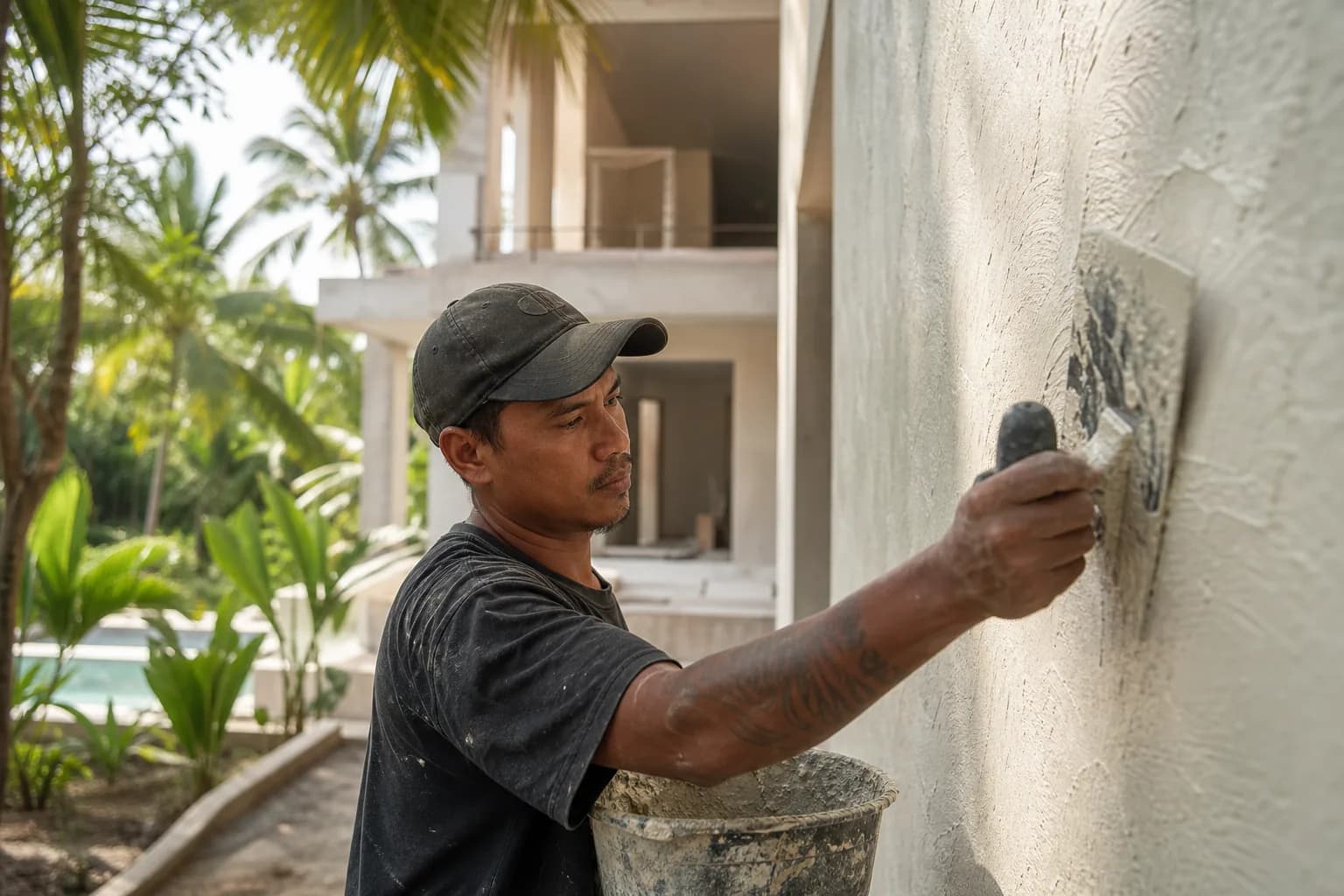
Resin-Infused Plaster Finishes: Anti-Salt Systems Bali
Expert technical guide: Resin-Infused Plaster Finishes: Anti-Salt Systems Bali
8 min read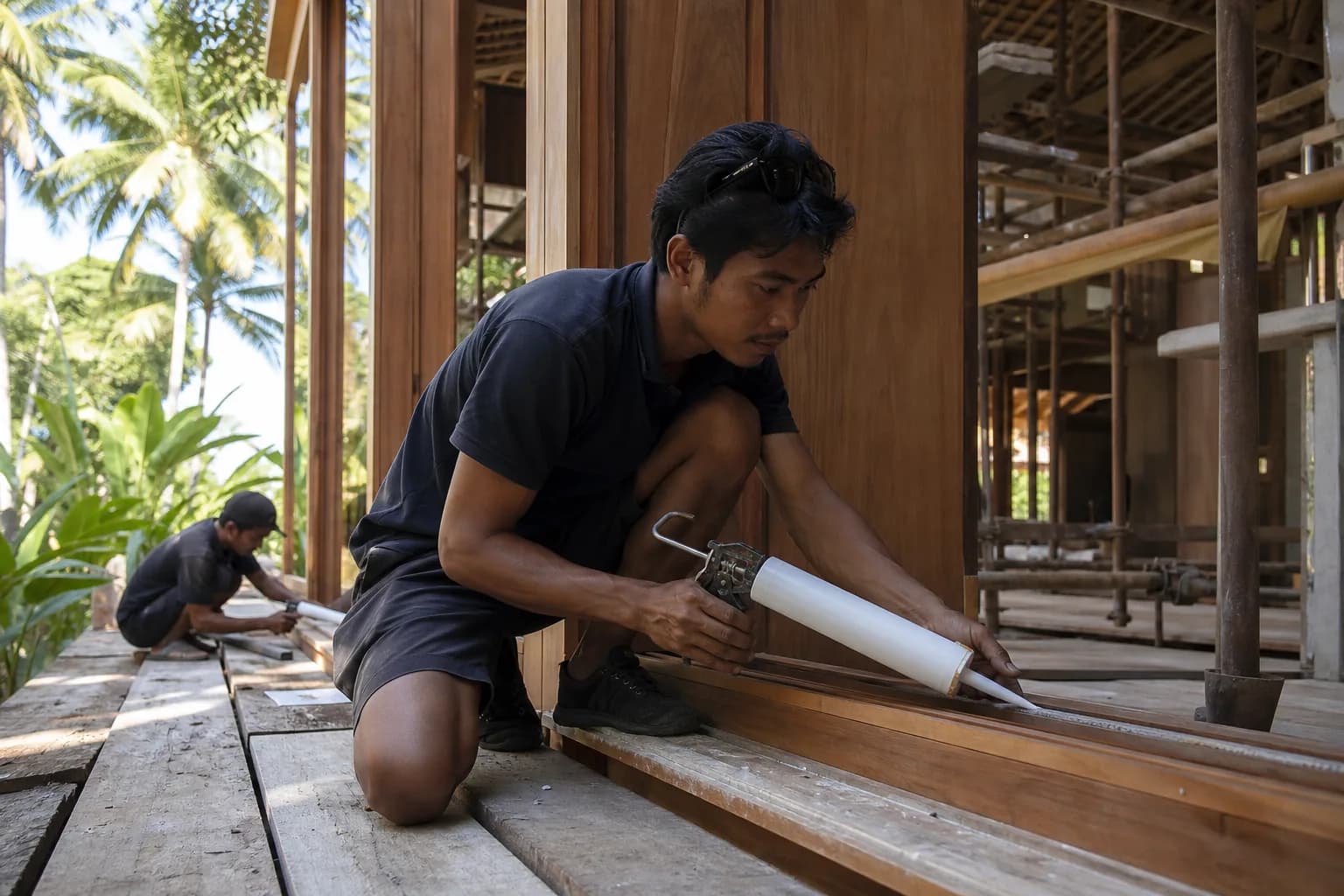
Prefinished Timber Joinery: Silicone Seals Fixings Bali
Professional prefinished timber joinery installation in Bali with silicone seals and fixings for durable weatherproof performance and a premium finish.
10 min read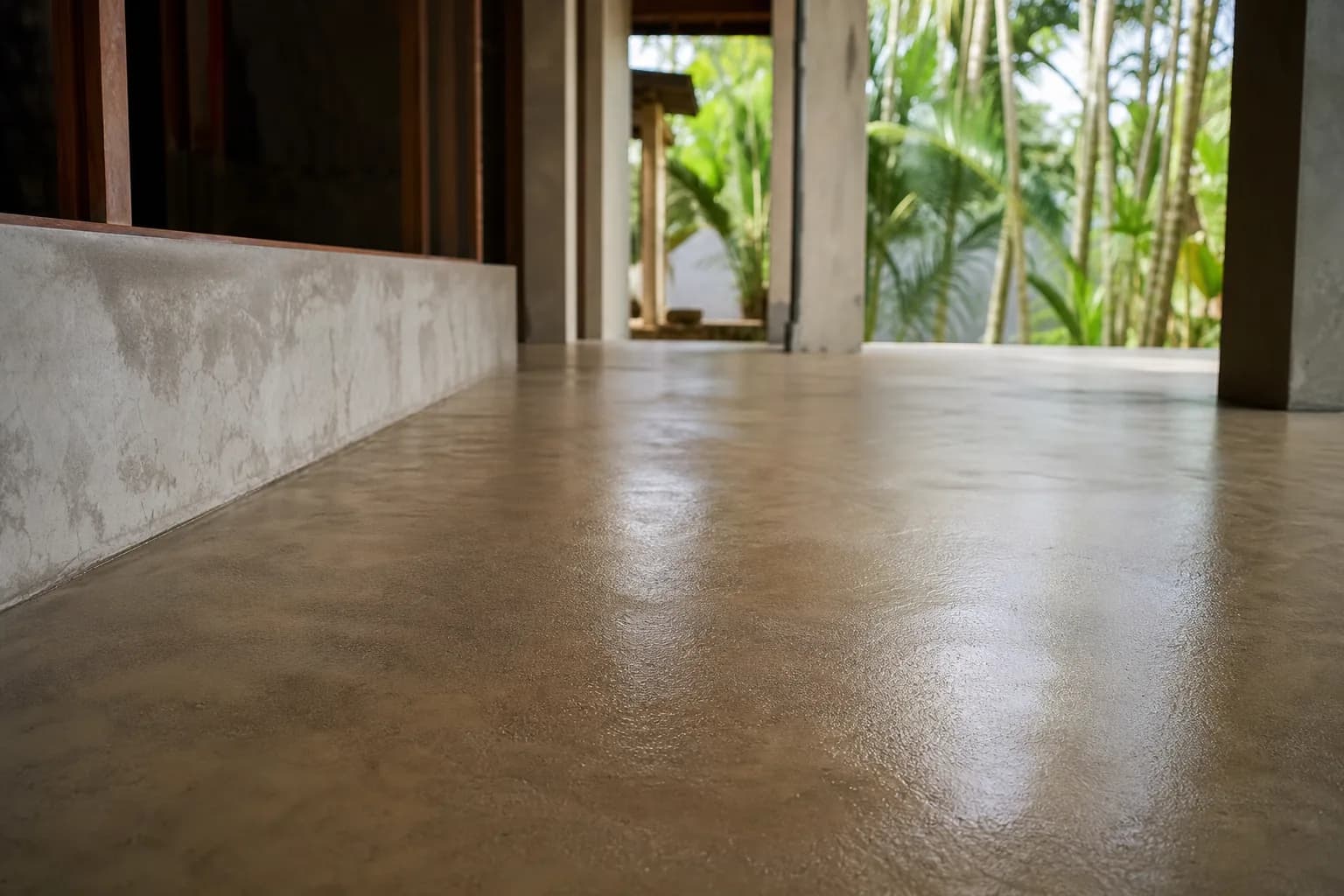
Polished Concrete Microtopping: Surface Prep Sealants Bali
Discover Bali s polished concrete microtopping: expert surface prep, durable sealants, and a flawless finish for modern floors with minimal maintenance.
9 min read