Termite Barriers Seminyak Bali: Chemical vs Physical Systems
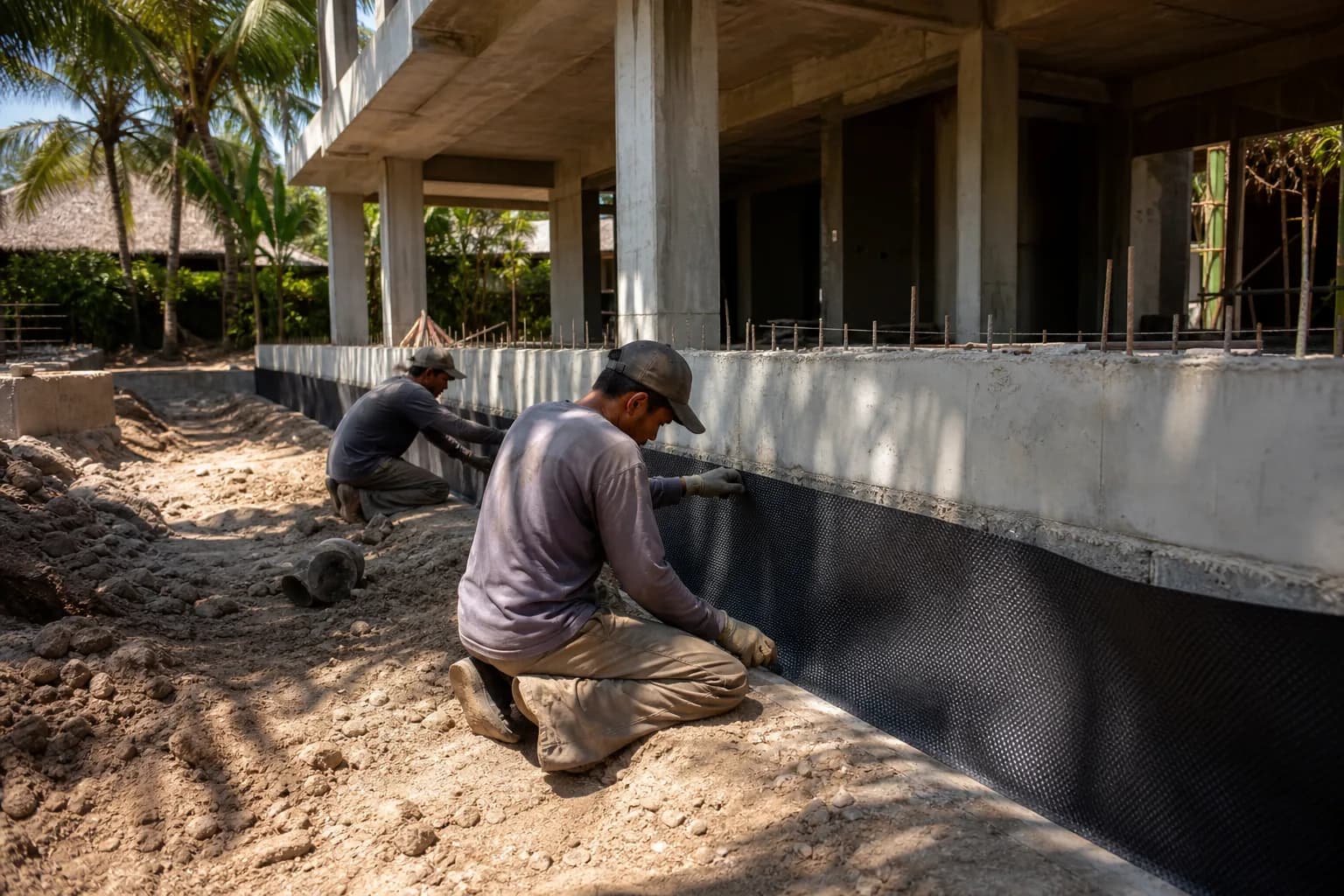
The Seminyak Soil Challenge: Why Standard Termite Barriers Fail in Coastal Sand
Seminyak’s coastal soil composition presents a unique engineering challenge for termite barrier installation that most villa construction projects underestimate. The area’s predominantly sandy, porous substrate with high water tables and salt content creates conditions where conventional chemical termiticides leach rapidly, while physical barriers face corrosion and settlement issues. Property developers frequently discover barrier failures 18-24 months post-construction when termite galleries breach foundations, requiring expensive remediation that could exceed IDR 150 million. The question isn’t whether to install barriers, but which system can withstand Seminyak’s specific geotechnical conditions: chemical treatments requiring frequent reapplication in fast-draining sand, or physical systems engineered to resist coastal corrosion and ground movement.
Engineering Analysis: Chemical vs Physical Systems in Seminyak’s Geotechnical Context
Seminyak’s soil profile typically consists of 0.5-2 meters of loose coastal sand (SPT N-values 4-8) overlying clay or limestone bedrock, with groundwater tables fluctuating between 1.5-3 meters depth depending on proximity to the beach. This geological reality fundamentally affects termite barrier performance in ways that differ dramatically from inland Bali locations like Ubud or Canggu.
Chemical Barrier Systems in Sandy Coastal Substrates
Chemical termiticides in Seminyak face accelerated degradation due to three primary factors. First, the high permeability of sandy soils (hydraulic conductivity 10⁻³ to 10⁻² cm/sec) causes rapid vertical and lateral migration of liquid treatments, diluting the protective zone within 12-18 months rather than the manufacturer-claimed 5-8 years. Laboratory testing shows that bifenthrin and fipronil concentrations in Seminyak sand samples drop below effective thresholds (0.1 ppm) at rates 3-4 times faster than in clay-rich soils.
Second, the saline groundwater environment (TDS levels 800-2,400 ppm in coastal Seminyak) chemically degrades organophosphate and pyrethroid compounds through hydrolysis reactions. Field studies from our completed villa projects in Seminyak show that chemical barriers installed within 500 meters of the coastline require retreatment every 18-24 months to maintain efficacy, compared to 36-48 months in inland locations.
Third, Seminyak’s intensive irrigation practices for landscaping create preferential flow paths that channel water—and dissolved termiticides—away from foundation perimeters. The common practice of installing automated irrigation systems without proper drainage design results in localized soil saturation that accelerates chemical leaching. During Bali’s wet season (November-March), rainfall exceeding 300mm monthly further compounds this dilution effect.
Application methodology becomes critical in sandy substrates. Standard trench-and-treat methods (150mm wide trenches at 300mm depth) prove inadequate because the chemical solution percolates vertically before establishing a continuous horizontal barrier. Effective chemical installation in Seminyak requires modified techniques: pre-wetting the trench to reduce percolation rates, using emulsifiable concentrate formulations with soil-binding adjuvants, and applying at higher concentrations (1.5-2x standard rates) to compensate for rapid dilution. Treatment volumes must increase from the typical 5 liters per linear meter to 8-10 liters to achieve adequate soil saturation in sandy conditions.
Physical Barrier Engineering for Coastal Construction
Physical termite barriers in Seminyak must address both termite penetration and coastal corrosion. The most reliable systems use marine-grade stainless steel mesh (316L specification, 0.66mm aperture) that resists the chloride-rich environment while preventing termite passage. Standard galvanized steel mesh corrodes within 3-5 years in Seminyak’s saline conditions, creating gaps that subterranean termites (primarily Coptotermes curvignathus in Bali) exploit.
Installation requires continuous coverage from below-slab to above-grade termination, with particular attention to penetration points for plumbing, electrical conduits, and structural columns. The critical vulnerability occurs at construction joints where mesh sections overlap—these require minimum 100mm overlaps with mechanical fastening, not just adhesive bonding that fails in humid tropical conditions.
Seminyak’s sandy substrate presents settlement challenges for physical barriers. Differential settlement of 15-25mm is common in the first 12 months post-construction as sand consolidates under building loads. Physical barriers must accommodate this movement without tearing or creating gaps. This requires flexible termination details at the slab edge, using compressible foam strips that maintain contact as the structure settles while preventing termite entry through the compression joint.
The integration of physical barriers with Seminyak’s typical raft foundation systems (required due to low bearing capacity of sand, typically 80-120 kPa) demands careful detailing. The mesh must extend beneath the entire raft, turned up at edges and mechanically fixed to formwork before concrete placement. Post-pour inspection becomes impossible, making pre-pour documentation critical—a requirement we enforce rigorously in our construction process for all Seminyak projects.
Hybrid System Considerations
Engineering best practice for Seminyak villa construction increasingly favors hybrid approaches: physical barriers at critical penetration points (pipe entries, expansion joints) combined with perimeter chemical treatments. This redundancy addresses the reality that no single system provides absolute protection in coastal sandy soils. The physical component prevents catastrophic breaches at vulnerable points, while the chemical zone provides detection and elimination of foraging termites before they locate physical barrier weaknesses.
Hidden Risks in Seminyak Termite Barrier Installations
The most dangerous assumption in Seminyak construction is that termite barriers installed during building will provide permanent protection. Three critical failure modes occur repeatedly in coastal Bali projects, often undetected until significant structural damage appears.
Landscaping Disruption: Post-construction landscaping frequently breaches chemical barriers. Excavation for swimming pools, garden features, or drainage systems installed 6-12 months after villa completion creates gaps in the treated zone. Contractors unaware of barrier locations dig through the protective perimeter, establishing direct termite pathways to foundations. This risk intensifies in Seminyak where elaborate landscaping is standard, and multiple contractors work sequentially without coordination. Proper practice requires permanent marking of barrier locations and mandatory consultation before any excavation within 3 meters of structures.
Groundwater Contamination Liability: Seminyak’s shallow water tables (1.5-3m depth) create legal exposure for chemical barrier installations. Termiticides applied at standard depths (300-450mm) sit within the seasonal groundwater fluctuation zone. During wet season water table rise, chemicals can migrate into aquifers that supply neighboring wells—a violation of Indonesian environmental regulations (PP No. 22/2021) that carries penalties up to IDR 500 million and potential project suspension. Physical barriers eliminate this liability entirely, a consideration that should influence system selection for properties near existing wells or in areas with communal water sources.
Inspection Access Failures: Both barrier types require ongoing inspection, but Seminyak’s dense villa developments often eliminate access after construction. Chemical barriers need annual inspection of treatment zones, yet landscaping, paving, and boundary walls frequently cover these areas completely. Physical barriers require visual verification of above-grade termination points and penetration seals, but architectural finishes conceal these details. Projects that don’t incorporate permanent inspection ports and maintain as-built documentation of barrier locations face expensive demolition work when termite activity is eventually detected.
Step-by-Step Implementation Process for Seminyak Conditions
Phase 1: Site-Specific Assessment (Week 1-2)
Begin with geotechnical investigation focused on termite barrier performance, not just bearing capacity. Soil sampling at 500mm intervals to 2-meter depth establishes permeability, moisture content, and salinity profiles. Laboratory percolation testing determines chemical retention characteristics. Groundwater monitoring during both wet and dry seasons identifies seasonal fluctuation ranges—critical for determining safe chemical application depths. Survey existing termite activity within 50-meter radius; active colonies nearby indicate high infestation pressure requiring more robust barrier systems.
Concurrent with soil analysis, conduct regulatory review. Verify that proposed chemical treatments comply with Indonesian pesticide regulations (Permentan No. 39/2015) and obtain necessary environmental clearances if groundwater depth is less than 2 meters. For properties in Seminyak’s designated tourism zones, additional permits from BKPRD may be required for chemical applications.
Phase 2: System Design and Material Procurement (Week 3-4)
Based on assessment results, engineer the barrier system. For chemical barriers in sandy Seminyak soil, specify emulsifiable concentrate formulations with soil-binding polymers, application rates 1.5-2x manufacturer standards, and retreatment schedules of 18-24 months. Design includes permanent inspection ports at 5-meter intervals and detailed application maps showing treatment zones relative to permanent site features.
For physical barriers, detail continuous mesh installation from 300mm below slab base to 75mm above finished floor level. Specify marine-grade 316L stainless steel mesh with independent laboratory certification. Design penetration seals for all services, expansion joint details, and termination methods that accommodate 25mm differential settlement. Critical: ensure mesh supplier provides material certificates and installation training for construction crews—improper installation negates physical barrier effectiveness entirely.
Phase 3: Pre-Construction Installation (Week 5-6)
For new construction, physical barrier installation occurs during foundation preparation. After excavation and before any concrete work, install mesh across entire building footprint with 100mm overlaps mechanically fastened. Turn mesh up at perimeter and fix to formwork. Install service penetration collars before plumbing/electrical rough-in. Document installation with georeferenced photography—minimum 20 images per 100m² showing overlaps, penetrations, and terminations. This documentation becomes critical for future maintenance and any warranty claims.
Chemical barriers for new construction apply after slab curing but before backfilling. Treat soil against external foundation walls and beneath slab perimeter (if accessible). In Seminyak’s sandy soil, pre-wet trenches 24 hours before treatment to reduce percolation. Apply chemical at 8-10 liters per linear meter, ensuring complete soil saturation to 450mm depth. Install permanent marker posts indicating barrier location and treatment date.
Phase 4: Post-Construction Integration (Week 7-8)
After structural completion, establish inspection and maintenance protocols. For chemical barriers, schedule first inspection at 12 months, then annually. Inspections include soil sampling at treatment zones to verify chemical concentration remains above 0.1 ppm threshold. For physical barriers, inspect all above-grade terminations and service penetrations for gaps or damage. Document findings in permanent building logbook.
Critical final step: integrate barrier locations into landscape and hardscape plans. Mark no-excavation zones on site plans provided to landscapers. Install permanent subsurface markers at barrier boundaries. For villa projects we manage, this coordination between structural and landscape contractors prevents the post-construction barrier breaches that plague Seminyak developments.
Cost and Timeline Realities for Seminyak Installations
Chemical barrier systems for typical Seminyak villa construction (200-300m² footprint) range from IDR 15-25 million for initial installation, including materials, labor, and site-specific application adjustments for sandy soil. This cost increases 40-60% compared to inland Bali locations due to higher application volumes and specialized formulations required for coastal conditions. Annual inspection and testing adds IDR 3-5 million, with retreatment every 18-24 months costing IDR 12-18 million. Over a 10-year period, total chemical barrier costs reach IDR 85-120 million when accounting for all maintenance and retreatments.
Physical barrier systems using marine-grade stainless steel mesh cost IDR 45-75 million for the same villa footprint, with 80% of cost in materials (316L mesh at IDR 450,000-650,000 per m²) and 20% in specialized installation labor. While initial investment is 2-3x higher than chemical systems, physical barriers require minimal ongoing costs—only annual visual inspections at IDR 2-3 million. Ten-year total cost: IDR 65-95 million, making physical barriers more economical long-term despite higher upfront expense.
Hybrid systems combining physical barriers at critical points with perimeter chemical treatment cost IDR 55-85 million initially, with ongoing maintenance of IDR 4-6 million annually. This approach provides optimal protection for high-value Seminyak villas where termite damage risk justifies premium investment.
Installation timelines vary significantly. Chemical barriers add 3-5 days to construction schedules, primarily for soil treatment and curing periods before backfilling. Physical barriers extend timelines 7-10 days due to meticulous mesh installation and inspection requirements before concrete placement. For projects on tight schedules, this difference influences system selection, though we consistently advise clients that rushing termite protection to save a week proves catastrophically expensive when barriers fail. Realistic
 3173 m²6 month(s)from 125.000 USD
TALA FOUR
 1from 198.000 USD
Private: Haridas Villas
 164 m²7 month(s)from 79.000 USD
TALA TWO
 3180 m²7 month(s)from 142.000 USD
Vasudeva
 2144 m²11 month(s)from 104.000 USD
Narayana
 3124 m²6 month(s)from 123.000 USD
TALA 8
 172 m²8 month(s)from 120.000 USD
Keshava
 4344 m²16 month(s)from 290.000 USD
Radha

Want to calculate?
 3104 m²11 month(s)from 99.000 USD
TALA 100
164 m²7 month(s)from 79.000 USDPrivate: Haridas Villas, Tegallalang
 3127 m²9 month(s)from 177.000 USD
Mukunda
Start With Real Numbers, Not Guesses
Before buying land or finalizing a design, check the realistic build cost range for your project in Bali.
Our team reviews your inputs and gives a grounded estimate.
Available lands
 2700 m²30 min$ 314224Bali, Sidemen
 700 m²7 min$ 400000Bali, Canggu
 1362 m²15 min$ 335468Bali, Tumbak
 3300 m²15 min$ 449889Bali, Tabanan
 1000 m²10 min$ 184729Bali, Kutuh South Bali
 1533 m²5 min$ 165666Bali, Cepaka
 2000 m²15 min$ 261700Bali, Babakan
 2000 m²5 min$ 1440887Bali, Pecatu
 2230 m²15 min$ 410573Bali, Padonan
 1230 m²15 min$ 132543Bali, Tegallalang
 1000 m²10 min$ 230911Bali, Kerobokan
 420 m²15 min$ 41897Bali, Tabanan
 3100 m²15 min$ 257697Bali, Tegallalang
 1350 m²5 min$ 283467Bali, Pecatu
 911 m²15 min$ 248217Bali, Pererenan
Essential Bali build & buy guides
- Bali villa construction cost per m² in 2026
- How much will your villa cost? Calculator
- Building a villa in Bali: the complete guide
- Buying land in Bali: step-by-step for foreigners
- Bali villa investment: yields, risks, returns
- Leasehold vs freehold: what foreigners can own
- Construction defect liability & 10-year warranty
- Bali building codes and construction standards
Related guides
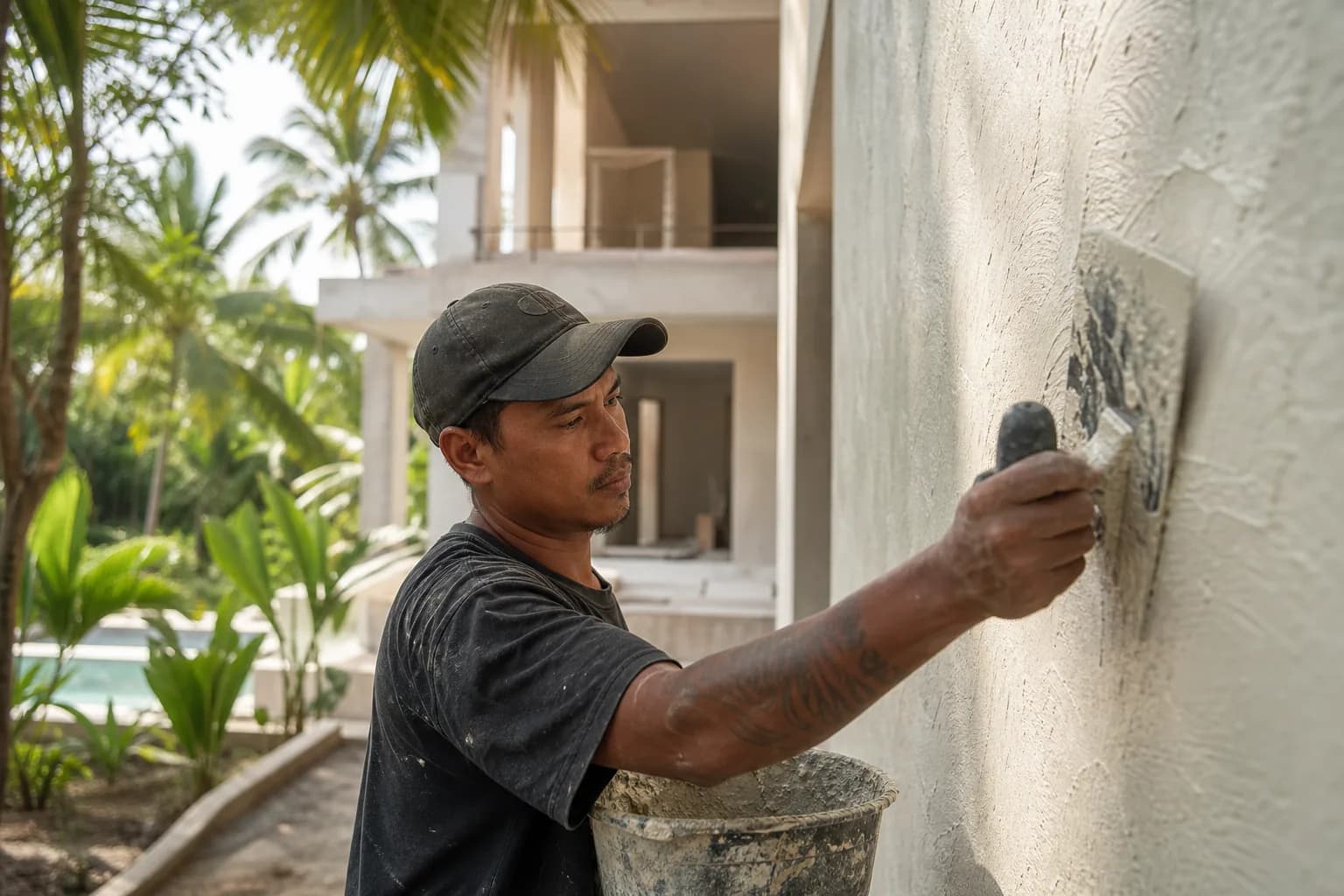
Resin-Infused Plaster Finishes: Anti-Salt Systems Bali
Expert technical guide: Resin-Infused Plaster Finishes: Anti-Salt Systems Bali
8 min read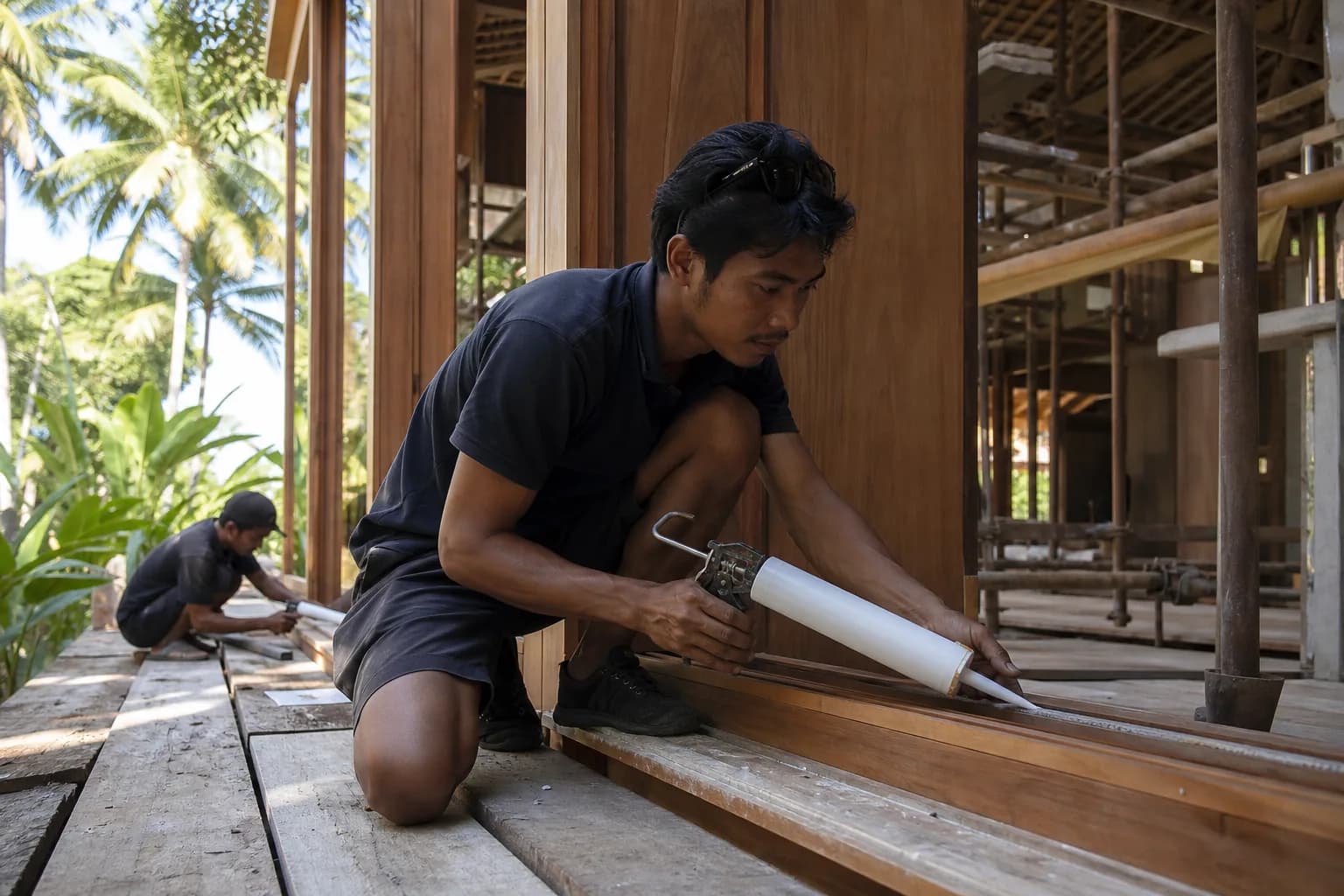
Prefinished Timber Joinery: Silicone Seals Fixings Bali
Professional prefinished timber joinery installation in Bali with silicone seals and fixings for durable weatherproof performance and a premium finish.
10 min read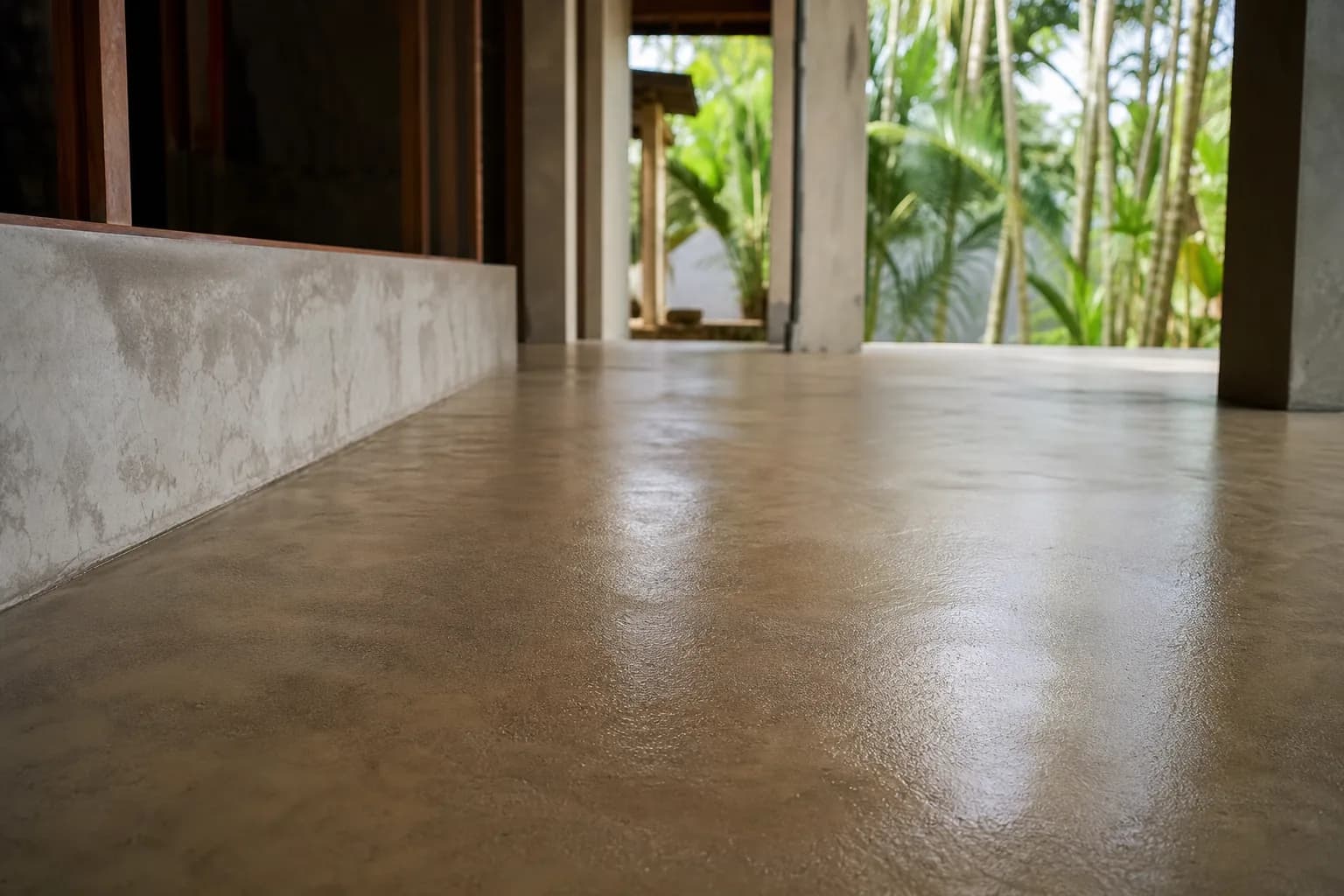
Polished Concrete Microtopping: Surface Prep Sealants Bali
Discover Bali s polished concrete microtopping: expert surface prep, durable sealants, and a flawless finish for modern floors with minimal maintenance.
9 min read