Built-In Wardrobe: Teak vs MDF for Bali s Humid Climate

# Custom Built-In Wardrobe Installation: Teak vs MDF in Bali Humidity
The Critical Material Decision for Bali’s Tropical Climate
When planning interior finishing Bali projects, particularly custom built-in wardrobes, property owners face a fundamental material choice that will determine the longevity and performance of their investment. Bali’s consistent 70-90% humidity levels create an aggressive environment where standard furniture materials rapidly deteriorate. The decision between Indonesian teak and MDF (Medium Density Fiberboard) isn’t merely aesthetic—it’s a technical calculation involving moisture resistance, structural integrity, installation methodology, and long-term maintenance requirements. As specialists in Bali villa construction and finishing works, we’ve witnessed countless wardrobe failures resulting from inappropriate material selection, making this one of the most consequential decisions in tropical renovation Bali projects.
Technical Performance Analysis: Material Behavior in Tropical Humidity
Understanding material performance at the molecular level is essential for proper furniture installation in Bali’s climate. Teak (Tectona grandis) possesses a natural oil content of 1.3-1.5% and silica deposits within its cellular structure, creating inherent water repellency. The wood’s tight grain pattern—typically 4-7 growth rings per inch in Grade A Indonesian teak—prevents moisture penetration that causes dimensional instability. When properly kiln-dried to 8-12% moisture content before installation, teak maintains structural stability even when ambient humidity fluctuates dramatically between Bali’s dry and wet seasons.
The technical superiority of teak in humid environments stems from its density (approximately 630-720 kg/m³ when dried) and natural preservatives that resist fungal growth and insect infestation. During our villa construction projects documented at Teville’s project portfolio, we’ve measured dimensional change in teak built-ins at less than 0.3% across seasonal humidity variations, compared to 3-8% in untreated MDF installations.
MDF, conversely, is an engineered composite of wood fibers bonded with synthetic resin under heat and pressure. Standard MDF has a density of 600-800 kg/m³ but lacks the cellular structure that provides natural moisture resistance. The material’s homogeneous composition makes it dimensionally stable in controlled environments, but Bali’s humidity causes the wood fibers to absorb moisture, leading to irreversible swelling. Standard MDF can expand up to 15% in thickness when exposed to sustained high humidity, causing joint failure, surface delamination, and structural compromise.
However, moisture-resistant MDF (MR-MDF) and marine-grade variants incorporate water-repellent additives and modified resin systems. These treated versions show significantly improved performance, with moisture absorption rates reduced by 60-70% compared to standard MDF. For interior finishing Bali applications, only these specialized MDF grades warrant consideration, and even then, they require comprehensive sealing protocols.
The installation methodology differs substantially between materials. Teak’s natural stability allows for traditional joinery techniques—mortise and tenon, dovetail joints, and mechanical fastening—that maintain integrity through humidity cycles. MDF installations require adhesive-based assembly with moisture-resistant PVA or polyurethane glues, edge banding to seal exposed fiber surfaces, and strategic placement of expansion gaps that accommodate dimensional changes without visible distortion.
From a finishing perspective, teak accepts oil-based treatments that penetrate the wood structure, enhancing its natural moisture resistance while allowing the material to breathe. MDF requires complete surface encapsulation with moisture-barrier primers followed by multiple topcoat layers—any unsealed edge or penetration becomes a moisture ingress point that compromises the entire installation. This fundamental difference impacts both initial installation complexity and long-term maintenance requirements in renovation Bali projects.
Material Standards and Quality Specifications for Tropical Applications
Indonesian teak grading follows established standards that directly impact wardrobe performance. Grade A teak, sourced from 40-60 year old trees, exhibits consistent golden-brown coloration, minimal knots (less than 3 per square meter), and straight grain patterns. This premium grade, commonly specified in our completed villa projects, provides optimal moisture resistance and structural stability for built-in applications.
Grade B teak includes more color variation and small knots but maintains adequate density and oil content for wardrobe construction when properly treated. Grade C, with significant color inconsistency and larger knots, is unsuitable for visible wardrobe components but may serve for internal structural elements. For furniture installation in Bali’s climate, we specify minimum Grade B for all visible surfaces and structural components.
MDF specifications for tropical applications require careful attention to density classification and moisture resistance ratings. Standard MDF (density 600-800 kg/m³) is inappropriate for Bali installations. Moisture-resistant MDF must meet minimum standards: water absorption less than 15% after 24-hour immersion testing, thickness swelling below 8%, and internal bond strength exceeding 0.65 N/mm². Marine-grade MDF, with phenolic resin systems, offers superior performance but at costs approaching lower-grade teak.
Hardware specifications are equally critical. Stainless steel (grade 304 minimum) or brass fittings prevent corrosion in humid conditions. Soft-close mechanisms must feature sealed bearing systems to prevent moisture-induced failure. Adjustable shelf pins should be zinc-plated or powder-coated steel rather than plastic, which degrades under UV exposure common in Bali’s naturally-lit interiors.
Finishing materials for MDF installations must include moisture-barrier primers (typically epoxy or shellac-based) and high-build polyurethane topcoats with minimum 40% solids content. Edge banding requires PVC or ABS materials with minimum 2mm thickness, applied with hot-melt adhesives specifically formulated for tropical climates. These specifications, standard in our Bali villa construction methodology detailed at Teville’s construction process, ensure installation longevity regardless of material choice.
Professional Installation Process: From Site Assessment to Final Finishing
The installation process for custom built-in wardrobes in Bali’s climate begins with comprehensive site assessment, typically 2-3 weeks before fabrication. We measure ambient humidity levels using calibrated hygrometers, assess wall moisture content with pin-type meters (acceptable readings below 15%), and evaluate structural conditions. Wall straightness, plumb verification, and floor level measurements determine whether shimming or structural preparation is required before wardrobe installation.
For teak installations, material acclimatization is critical. Kiln-dried teak boards must equilibrate to site conditions for 7-10 days before fabrication, allowing moisture content to stabilize at ambient levels. This prevents post-installation movement that could compromise joinery. During this period, materials are stored horizontally with spacers ensuring air circulation, protected from direct rain but exposed to ambient humidity.
Fabrication follows traditional joinery principles adapted for built-in applications. Carcass construction uses 18-20mm teak boards for sides and top, with dados or biscuit joints reinforced with moisture-resistant adhesive. Back panels, typically 12mm teak plywood, are set into rabbeted grooves allowing slight movement without visible gaps. Shelving uses 20-25mm solid teak with front edge profiling, supported on adjustable pins at maximum 800mm spans to prevent sagging.
MDF installations require different protocols. Marine-grade or MR-MDF sheets (18-25mm for structural components) are cut with carbide-tipped blades to minimize fiber tearing. All cut edges receive immediate sealing with moisture-barrier primer before assembly—any delay allows moisture absorption that causes edge swelling. Assembly uses moisture-resistant adhesives with mechanical reinforcement via confirmat screws or minifix cam systems. Edge banding application requires precise temperature control (180-200°C) to ensure proper adhesion without scorching.
Wall mounting methodology differs significantly between materials. Teak’s structural integrity allows direct fastening to wall studs using heavy-duty brackets or French cleat systems. The wardrobe’s weight (typically 80-120kg for a 2.4m wide unit) distributes across multiple attachment points, with stainless steel fasteners penetrating minimum 40mm into structural members. MDF installations require more extensive backing support—continuous horizontal rails or plywood backing panels—to distribute loads and prevent fastener pull-through in the less dense material.
Door installation represents a critical phase where material properties directly impact functionality. Teak doors, typically 20-25mm thick, hang on heavy-duty brass or stainless steel hinges (minimum 3 per door for heights exceeding 1.8m). The wood’s stability allows tight tolerances—2-3mm gaps—without binding risk. MDF doors require 4-5mm clearances to accommodate potential expansion, with soft-close hinges featuring integrated damping to prevent impact damage to the more fragile material.
Interior fitting installation—hanging rails, pull-out drawers, accessory organizers—follows material-specific protocols. Teak accepts direct screw fastening with pilot holes preventing splitting. MDF requires specialized fasteners (confirmat screws or threaded inserts) that engage the material’s compressed fibers without causing delamination. All internal components receive the same moisture-protection treatment as external surfaces, as Bali’s humidity penetrates even closed storage spaces.
Final finishing for teak involves surface preparation with 180-220 grit sanding, followed by application of penetrating teak oil or hard-wax oil finishes. These treatments enhance the wood’s natural moisture resistance while maintaining its breathability—critical for long-term stability. MDF finishing requires complete surface encapsulation: moisture-barrier primer, light sanding, two coats of high-build polyurethane with intermediate sanding, creating an impermeable barrier against humidity ingress.
Cost Analysis and Project Timeline for Bali Installations
Material costs for custom built-in wardrobes in Bali vary significantly based on specification. Grade A Indonesian teak ranges from IDR 12-18 million per cubic meter, with a standard 2.4m wide × 2.4m high × 0.6m deep wardrobe requiring approximately 0.4-0.5 cubic meters, yielding material costs of IDR 5-9 million. Hardware, finishing materials, and installation labor add IDR 3-5 million, bringing total teak wardrobe costs to IDR 8-14 million depending on complexity and hardware specifications.
Marine-grade MDF installations cost substantially less for materials—IDR 800,000-1,200,000 per sheet (2440×1220×18mm)—with a comparable wardrobe requiring 4-5 sheets (IDR 3.2-6 million). However, the extensive finishing requirements, specialized edge banding, and moisture-protection treatments add IDR 2-3 million in materials and labor. Total MDF wardrobe costs typically range IDR 6-10 million, representing 25-30% savings compared to teak but requiring more intensive maintenance protocols.
Project timelines differ based on material choice and fabrication complexity. Teak installations require 3-4 weeks total: 1 week for material acclimatization, 1-1.5 weeks for fabrication, and 3-5 days for installation and finishing. MDF projects compress to 2-3 weeks: minimal acclimatization (2-3 days), faster fabrication (5-7 days due to easier machining), but extended finishing time (4-6 days for proper sealing and coating cure times).
For detailed cost estimation specific to your project requirements, Teville provides comprehensive assessment through our project estimation process, accounting for site-specific conditions, material specifications, and installation complexity factors unique to each renovation Bali project.
Frequently Asked Questions: Material Selection and Installation
How long do teak versus MDF wardrobes last in Bali’s climate?
Properly installed Grade A teak wardrobes typically maintain structural integrity and appearance for 20-30+ years in Bali’s humidity, requiring only periodic oil treatment every 2-3 years. Marine-grade MDF installations with comprehensive moisture protection last 8-12 years before requiring significant refinishing or replacement, assuming proper maintenance. Standard MDF without moisture treatment fails within 2-4 years, exhibiting swelling, delamination, and structural compromise—making it unsuitable for tropical furniture installation applications.
Can MDF be successfully used in Bali if properly treated?
Marine-grade or moisture-resistant MDF can perform adequately in Bali when installation follows strict protocols: complete edge sealing before assembly, moisture-barrier primer on all surfaces, multiple polyurethane topcoats, and strategic placement away from direct moisture sources. However, even treated MDF remains more vulnerable than teak to humidity-induced failure. We recommend MDF only for budget-conscious projects where owners understand the reduced lifespan and increased maintenance requirements compared to solid wood alternatives in interior finishing Bali applications.
What maintenance do these materials require in tropical conditions?
Teak wardrobes require minimal maintenance: annual inspection for hardware tightness, reapplication of teak oil every 2-3 years to maintain moisture resistance and appearance, and immediate attention to any water exposure from leaks or spills. MDF installations demand more intensive care: quarterly inspection of edge banding and surface coating integrity, immediate repair of any chips or scratches that expose raw material, annual recoating of high-wear areas, and strict humid
 3127 m²9 month(s)from 177.000 USD
Mukunda
 3173 m²6 month(s)from 125.000 USD
TALA FOUR
 3180 m²7 month(s)from 142.000 USD
Vasudeva
 4344 m²16 month(s)from 290.000 USD
Radha
 172 m²8 month(s)from 120.000 USD
Keshava
 3124 m²6 month(s)from 123.000 USD
TALA 8
 3104 m²11 month(s)from 99.000 USD
TALA 100
 2144 m²11 month(s)from 104.000 USD
Narayana
 1from 198.000 USD
Private: Haridas Villas
 164 m²7 month(s)from 79.000 USD
TALA TWO

Want to calculate?
164 m²7 month(s)from 79.000 USDPrivate: Haridas Villas, Tegallalang
Start With Real Numbers, Not Guesses
Before finalizing your finishing works plan, check realistic cost ranges for your Bali villa project.
Available lands
 5028 m²10 min$ 361000Bali, Ubud
 550 m²5 min$ 217629Bali, Tabanan
 3800 m²15 min$ 100616Bali, Pererenan
 1100 m²8 min$ 280419Bali, Ungasan
 600 m²12 min$ 101970Bali, Mengwi
 1362 m²15 min$ 335468Bali, Tumbak
 200 m²5 min$ 59113Bali, Bukit
 2000 m²15 min$ 110837Bali, Karangasem
 1410 m²15 min$ 390702Bali, Tabanan
 800 m²8 min$ 113300Bali, Ungasan
 10000 m²19 min$ 232759Bali, Buleleng
 2115 m²5 min$ 1139547Bali, Pererenan
 444 m²10 min$ 111000Bali, Tabanan
 1000 m²10 min$ 184729Bali, Kutuh South Bali
 608 m²15 min$ 310377Bali, Seminyak
Essential Bali build & buy guides
- Bali villa construction cost per m² in 2026
- How much will your villa cost? Calculator
- Building a villa in Bali: the complete guide
- Buying land in Bali: step-by-step for foreigners
- Bali villa investment: yields, risks, returns
- Leasehold vs freehold: what foreigners can own
- Construction defect liability & 10-year warranty
- Bali building codes and construction standards
Related guides
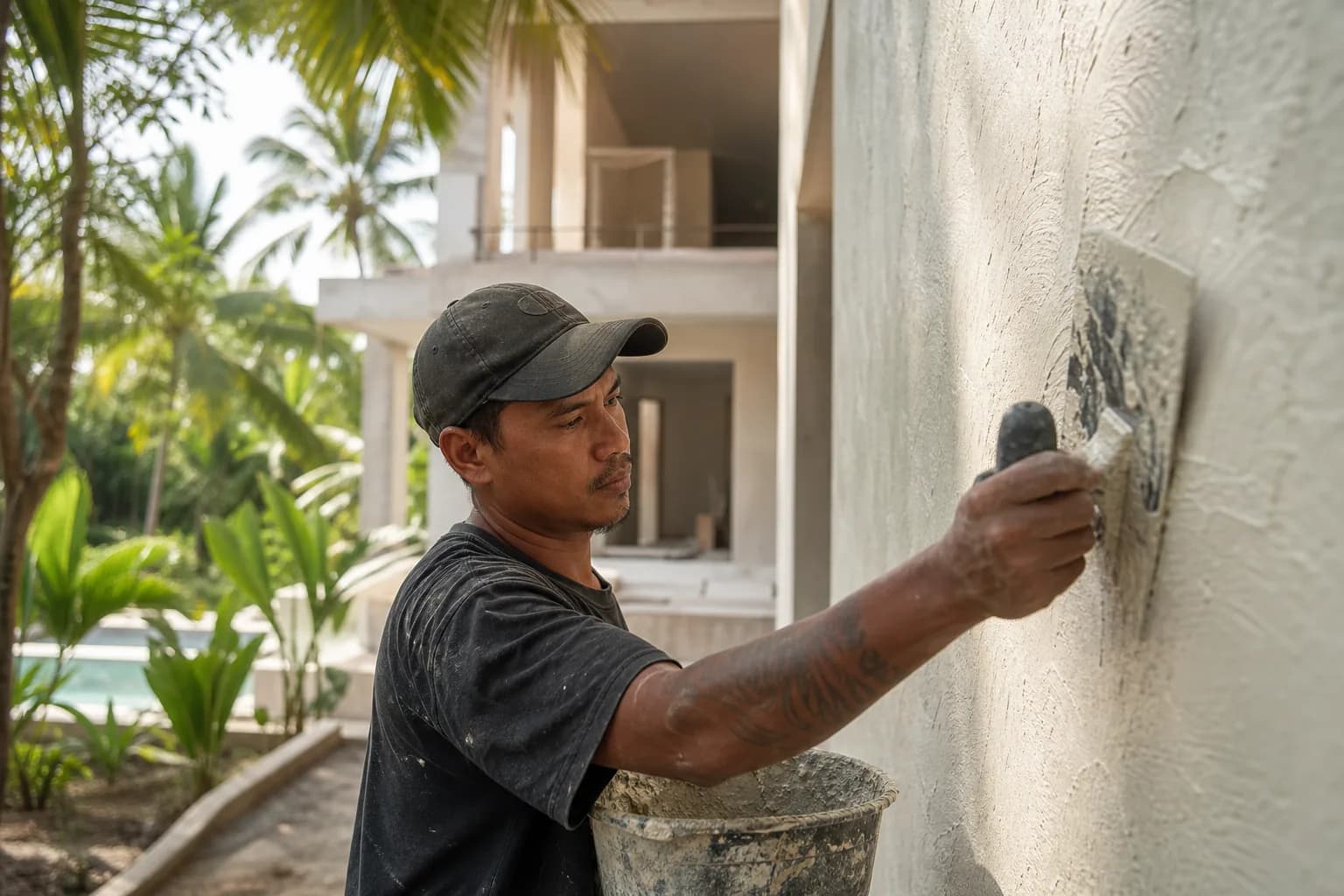
Resin-Infused Plaster Finishes: Anti-Salt Systems Bali
Expert technical guide: Resin-Infused Plaster Finishes: Anti-Salt Systems Bali
8 min read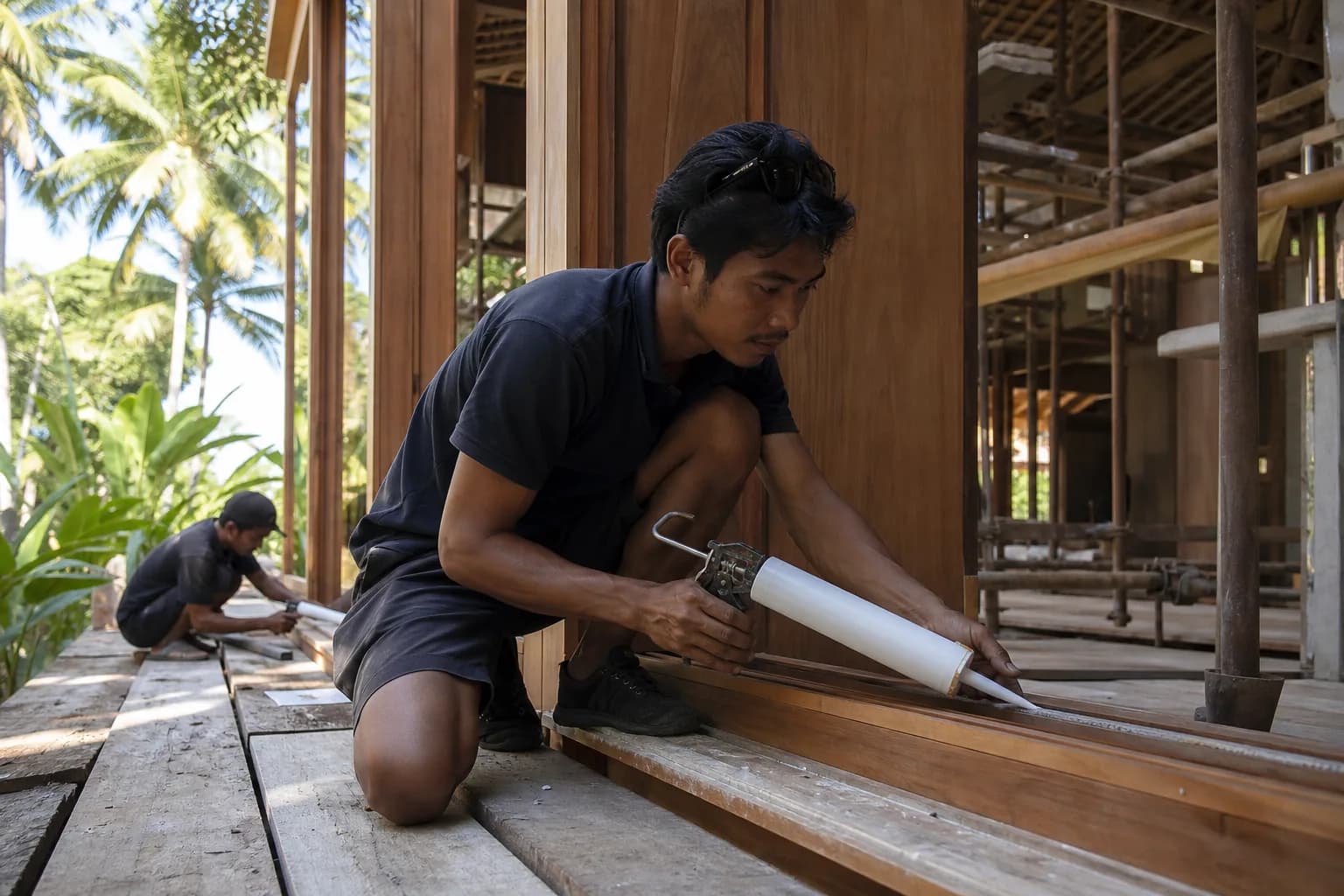
Prefinished Timber Joinery: Silicone Seals Fixings Bali
Professional prefinished timber joinery installation in Bali with silicone seals and fixings for durable weatherproof performance and a premium finish.
10 min read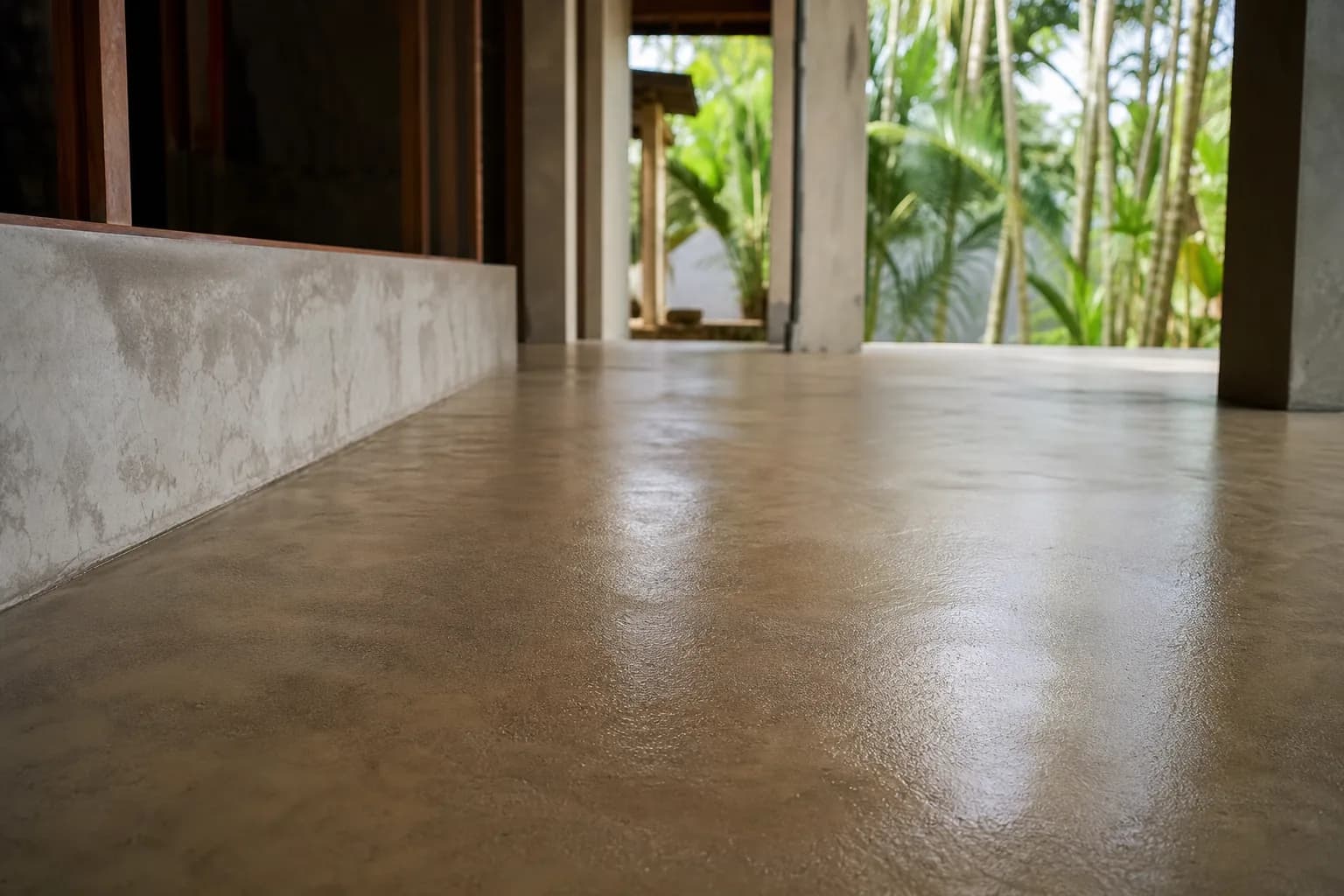
Polished Concrete Microtopping: Surface Prep Sealants Bali
Discover Bali s polished concrete microtopping: expert surface prep, durable sealants, and a flawless finish for modern floors with minimal maintenance.
9 min read