Sump Pump Sizing for Bali Basement Bathrooms: Clay Soil
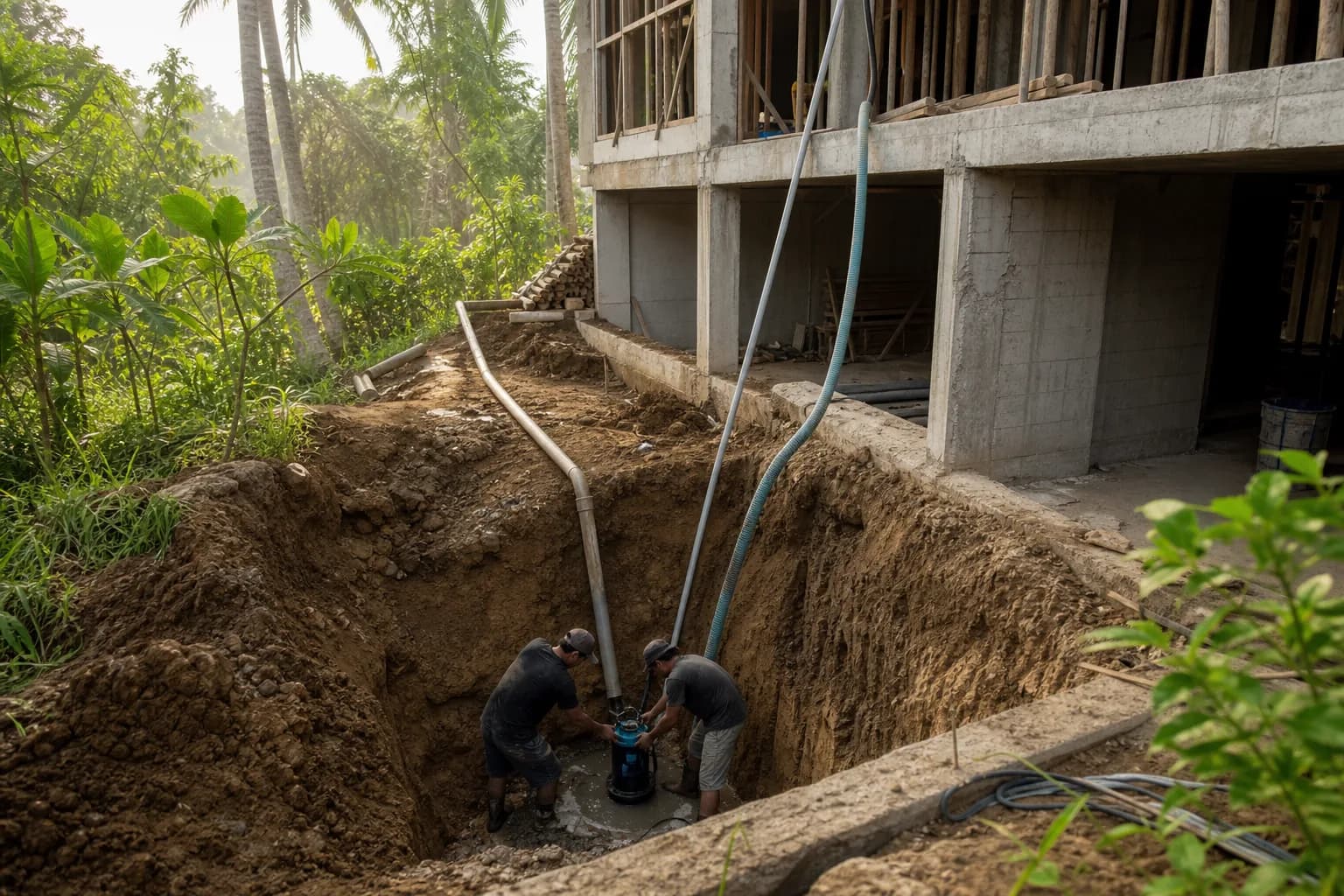
# Sump Pump Sizing for Bali Basement Bathrooms: Clay Soil Drainage
The Critical Challenge of Basement Bathroom Drainage in Bali’s Clay Soil
Installing a basement bathroom in Bali presents a unique technical challenge that many villa construction projects underestimate: proper sump pump sizing for clay soil conditions. Unlike sandy coastal areas, many Bali regions—particularly Ubud, Canggu’s inland sections, and Sanur’s elevated zones—feature dense clay soil with infiltration rates as low as 0.1-0.5 inches per hour. When you’re finishing a basement bathroom in these conditions, undersized sump pumps lead to flooding, sewage backup, and catastrophic damage to interior finishes. The question isn’t whether you need a sump pump—it’s how to size it correctly for Bali’s specific soil drainage characteristics and tropical rainfall patterns that can exceed 400mm in a single monsoon event.
Technical Deep Dive: Understanding Clay Soil Drainage Dynamics in Bali Basement Applications
Clay soil drainage calculations for basement bathroom sump pumps require a fundamentally different approach than standard residential applications. Bali’s volcanic clay soils contain high percentages of montmorillonite and kaolinite minerals, which create extremely low permeability conditions—typically 1×10⁻⁷ to 1×10⁻⁶ cm/sec. This means water doesn’t drain away naturally; it accumulates around your basement perimeter and requires mechanical removal.
The sizing calculation begins with determining your total inflow rate, which combines three critical factors: groundwater seepage through basement walls, fixture discharge from bathroom utilities, and surface water infiltration during heavy rain. For clay soil conditions in Bali, groundwater seepage rates typically range from 0.5 to 2.0 GPM per 100 square feet of basement wall area below the water table. A standard 4m x 5m basement bathroom with 2.5m ceiling height presents approximately 215 square feet of below-grade wall surface, generating 1.1-4.3 GPM of seepage alone.
Fixture discharge adds another layer of complexity. A basement bathroom typically includes a toilet (3-5 GPM peak discharge), shower (2.5 GPM continuous), and sink (1.5 GPM). However, these aren’t simultaneous continuous flows—you must calculate based on fixture units and probability of concurrent use. For a single bathroom, the realistic peak discharge rarely exceeds 8 GPM, but your sump pump must handle this combined with seepage.
The third factor—surface water infiltration—becomes critical during Bali’s monsoon season. Even with proper exterior waterproofing, clay soil’s poor drainage means water pools around foundations. During intense rainfall events (50-80mm/hour), surface water can add 2-5 GPM to your sump basin inflow, depending on site grading and drainage systems.
Calculating total dynamic head (TDH) is equally crucial for proper pump sizing. TDH includes vertical lift height (typically 3-4 meters from basement sump to discharge point), friction losses in piping (approximately 1 meter of head per 30 meters of horizontal run for 1.5-inch pipe), and discharge pressure requirements. For Bali basement bathrooms, TDH commonly ranges from 4-7 meters. A pump rated at 15 GPM at zero head might only deliver 8 GPM at 6 meters TDH—this performance curve relationship is critical for proper sizing.
The safety factor for clay soil applications should be 1.5-2.0 times your calculated minimum flow rate. If your combined seepage, fixture discharge, and surface infiltration totals 12 GPM, specify a pump capable of 18-24 GPM at your required TDH. This prevents pump failure during peak demand and extends equipment lifespan by reducing cycling frequency.
Basin sizing directly impacts pump performance and longevity. For clay soil conditions with continuous seepage, your sump basin must provide adequate storage volume between pump activation levels. A minimum 24-inch diameter, 36-inch deep basin provides approximately 70 gallons of working storage. This allows 4-6 minute pump cycles at typical flow rates, preventing the short-cycling that destroys pump motors. In high-seepage conditions, consider 30-inch diameter basins with 42-inch depth for 120+ gallons working capacity.
Materials and Standards for Tropical Climate Sump Pump Installations
Material selection for Bali basement bathroom sump pump systems must address both clay soil chemistry and tropical humidity. The sump basin itself should be high-density polyethylene (HDPE) or fiberglass-reinforced plastic, never concrete, which can crack under clay soil expansion-contraction cycles. Specify basins with ribbed construction for structural integrity and pre-molded pump stands to prevent sediment intake.
Pump selection requires stainless steel or thermoplastic construction—cast iron pumps corrode rapidly in Bali’s humid conditions. For basement bathrooms, submersible sewage pumps with 2-inch solids-handling capability are essential, as these handle both gray water and sewage. Specify pumps with sealed, oil-filled motors rated for continuous duty, not intermittent residential service. Quality manufacturers like Grundfos, Tsurumi, or Ebara offer models specifically designed for tropical climates with enhanced seal protection.
Discharge piping must be Schedule 40 PVC minimum, with solvent-welded joints—no threaded connections that can leak under pressure cycling. Size discharge pipes at 1.5-2 inches diameter for flows up to 25 GPM. Include a check valve within 12 inches of pump discharge to prevent backflow, and a ball valve for service isolation. The check valve should be spring-loaded, silent-type to prevent water hammer that can damage finished bathroom walls.
Electrical specifications require dedicated 20-amp circuits with GFCI protection, installed per Indonesian SNI 0225:2011 electrical standards. Control systems should include both mechanical float switches (primary) and electronic backup switches. For critical applications, specify duplex pump systems with alternating lead-lag control and high-water alarm integration into the villa’s building management system.
Step-by-Step Installation Process for Clay Soil Conditions
Phase 1: Site Assessment and Basin Placement (Days 1-2)
Begin with soil percolation testing at the exact basement location. Dig test pits to basement depth, fill with water, and measure drainage rates over 24 hours. Clay soil typically shows less than 2 inches of water level drop per hour. This data confirms your sizing calculations and identifies if soil stabilization is needed before basin installation.
Position the sump basin at the lowest point of the basement bathroom floor, typically in a rear corner away from the main entrance. The basin location must allow gravity drainage from all bathroom fixtures while maintaining minimum 600mm clearance from structural walls for maintenance access. Mark the basin outline, adding 150mm perimeter for gravel pack installation.
Phase 2: Excavation and Basin Installation (Days 3-4)
Excavate the sump pit 200mm deeper and 300mm wider than basin dimensions. In clay soil, excavation walls may require temporary shoring to prevent collapse. Install a 150mm layer of 20-40mm crushed stone at pit bottom for drainage and basin stability. This gravel layer is critical in clay soil—it provides the only permeable zone for water collection.
Set the basin level and plumb, backfilling the perimeter with additional crushed stone to within 100mm of finished floor level. Wrap the stone layer with geotextile fabric to prevent clay soil migration into the drainage layer. This fabric barrier extends basin lifespan by preventing sediment accumulation that reduces effective volume.
Phase 3: Pump and Piping Installation (Days 5-6)
Install the pump on the basin’s molded stand or a separate concrete paver to elevate intake above sediment level. Connect discharge piping with flexible PVC coupling at pump outlet to absorb vibration and allow pump removal without cutting pipes. Route discharge piping with minimum 1:50 slope toward exterior discharge point, supporting every 1.5 meters to prevent sagging.
Install the check valve in vertical orientation 300mm above pump discharge, followed by the isolation ball valve. Penetrate the basement wall with proper waterproof sleeve and seal, maintaining minimum 150mm clearance above exterior grade. Terminate discharge at least 3 meters from building foundation, directing flow toward site drainage systems or retention areas.
Phase 4: Electrical and Control Integration (Day 7)
Run dedicated electrical circuit from distribution panel to pump location, using waterproof junction boxes rated IP67 minimum. Mount control panel on basement wall at 1.5m height, housing float switch connections, circuit protection, and alarm contacts. Install primary float switch at desired pump activation level (typically 250mm below finished floor) and high-water alarm float 100mm above activation level.
Test the complete system by filling the basin and verifying pump activation, flow rate, and automatic shutoff. Measure actual discharge flow and compare to specifications—variations exceeding 15% indicate sizing errors or piping restrictions requiring correction before finishing work proceeds.
Phase 5: Basin Cover and Floor Finishing Integration (Days 8-9)
Install a sealed, load-rated basin cover that integrates with your bathroom floor finishing system. For tile installations, use aluminum or stainless steel recessed covers that accept tile inserts, creating an invisible access point. Ensure the cover provides airtight seal to prevent sewer gas escape while allowing emergency access. Complete floor finishing around the basin, maintaining proper drainage slopes toward the sump location.
Costs and Timeline for Professional Installation
Professional sump pump system installation for Bali basement bathrooms in clay soil conditions typically requires 9-12 working days and ranges from IDR 25,000,000 to IDR 45,000,000 (approximately $1,600-$2,900 USD), depending on system complexity and site conditions. This investment breaks down into distinct cost categories that reflect the technical requirements of clay soil applications.
Equipment costs represent 40-50% of total investment: quality sewage pumps suitable for tropical climates range from IDR 8,000,000-IDR 15,000,000, while HDPE sump basins cost IDR 2,500,000-IDR 4,500,000 depending on size. Piping, valves, and fittings add IDR 3,000,000-IDR 5,000,000, with electrical components and controls contributing another IDR 2,500,000-IDR 4,000,000.
Labor and installation services account for the remaining 50-60%, reflecting the specialized expertise required for clay soil conditions. Excavation in dense clay requires more time and equipment than sandy soils, while proper basin installation with drainage layers and waterproofing integration demands experienced technicians. At Teville, our construction process includes comprehensive site assessment and soil testing as standard practice, ensuring accurate sizing from project inception.
Timeline variables include soil conditions (dense clay may require mechanical excavation, adding 1-2 days), coordination with other basement finishing trades, and electrical service availability. Monsoon season installations may extend timelines by 20-30% due to groundwater management requirements. For accurate project scheduling and cost estimation specific to your villa construction or renovation, Teville provides detailed assessments through our cost estimation service.
Frequently Asked Questions About Basement Bathroom Sump Pumps in Bali
How do I know if my Bali property has clay soil that requires special sump pump sizing?
Clay soil identification requires professional soil testing, but preliminary indicators include poor surface drainage after rain, soil that forms sticky balls when wet, and cracking patterns during dry season. Most inland Bali areas—Ubud, Kerobokan, northern Canggu, and elevated Sanur zones—feature clay-dominant soils. Coastal areas typically have sandier conditions requiring different calculations. Teville conducts comprehensive soil analysis during initial site assessment for all villa projects, providing definitive soil classification and drainage characteristics that inform all utility system designs.
Can I use a standard hardware store sump pump for my basement bathroom?
Standard residential sump pumps designed for clear water applications will fail rapidly in basement bathroom service. Bathroom applications require sewage pumps with solids-handling capability, sealed motors, and materials resistant to corrosive waste. Additionally, hardware store pumps are typically sized for temperate climates with different soil conditions. Clay soil applications in Bali require higher capacity pumps with greater head pressure capability than standard residential units. Proper specification requires calculating actual site conditions—inflow rates, discharge height, and pipe friction losses—then selecting commercial-grade equipment that meets or exceeds these requirements with appropriate safety factors.
What maintenance does a basement bathroom sump pump require in Bali’s climate?
Quarterly inspection and annual servicing maintain reliable operation in tropical conditions. Every three months, test pump activation by filling the basin, verify float switch operation, and inspect discharge piping for leaks or blockages. Check the basin for sediment accumulation—clay soil particles can migrate through drainage layers over time, requiring periodic removal. Annual professional service should include pump removal, seal inspection, impeller cleaning, and motor testing. In clay soil conditions with high sediment loads, consider six-month service intervals. Replace check valves every 3-4 years as seals degrade in tropical humidity. Proper maintenance prevents the catastrophic failures that damage finished bathroom interiors and require expensive emergency repairs.
Should I install a backup pump system for my basement bathroom?
Duplex pump systems with automatic alternating control provide essential redundancy for basement bathrooms in clay soil conditions. When primary pumps fail during monsoon season, backup systems prevent flooding that destroys tile work, cabinetry, and electrical fixtures. Battery backup systems offer protection during power outages, which occur regularly in some Bali
 164 m²7 month(s)from 79.000 USD
Private: Haridas Villas, Tegallalang
 2144 m²11 month(s)from 104.000 USD
Narayana
 172 m²8 month(s)from 120.000 USD
Keshava
 3180 m²7 month(s)from 142.000 USD
Vasudeva
 1from 198.000 USD
Private: Haridas Villas
 3173 m²6 month(s)from 125.000 USD
TALA FOUR
 3104 m²11 month(s)from 99.000 USD
TALA 100
 4344 m²16 month(s)from 290.000 USD
Radha

Want to calculate?
164 m²7 month(s)from 79.000 USDTALA TWO
 3127 m²9 month(s)from 177.000 USD
Mukunda
 3124 m²6 month(s)from 123.000 USD
TALA 8
Start With Real Numbers, Not Guesses
Before finalizing your finishing works plan, check realistic cost ranges for your Bali villa project.
Available lands
 1362 m²15 min$ 335468Bali, Tumbak
 2850 m²15 min$ 315887Bali, Tabanan
 29000 m²6 min$ 3857143Bali, Tabanan
 7000 m²36 min$ 284483Bali, Gianyar
 500 m²2 min$ 175862Bali, Cemagi
 608 m²15 min$ 310377Bali, Seminyak
 2115 m²5 min$ 1139547Bali, Pererenan
 3800 m²15 min$ 100616Bali, Pererenan
 2800 m²15 min$ 310345Bali, Tabanan
 6000 m²10 min$ 1330049Bali, Kutuh South Bali
 3100 m²15 min$ 257697Bali, Tegallalang
 600 m²12 min$ 101970Bali, Mengwi
 610 m²10 min$ 165271Bali, Seminyak
 444 m²10 min$ 111000Bali, Tabanan
 200 m²5 min$ 59113Bali, Bukit
Essential Bali build & buy guides
- Bali villa construction cost per m² in 2026
- How much will your villa cost? Calculator
- Building a villa in Bali: the complete guide
- Buying land in Bali: step-by-step for foreigners
- Bali villa investment: yields, risks, returns
- Leasehold vs freehold: what foreigners can own
- Construction defect liability & 10-year warranty
- Bali building codes and construction standards
Related guides
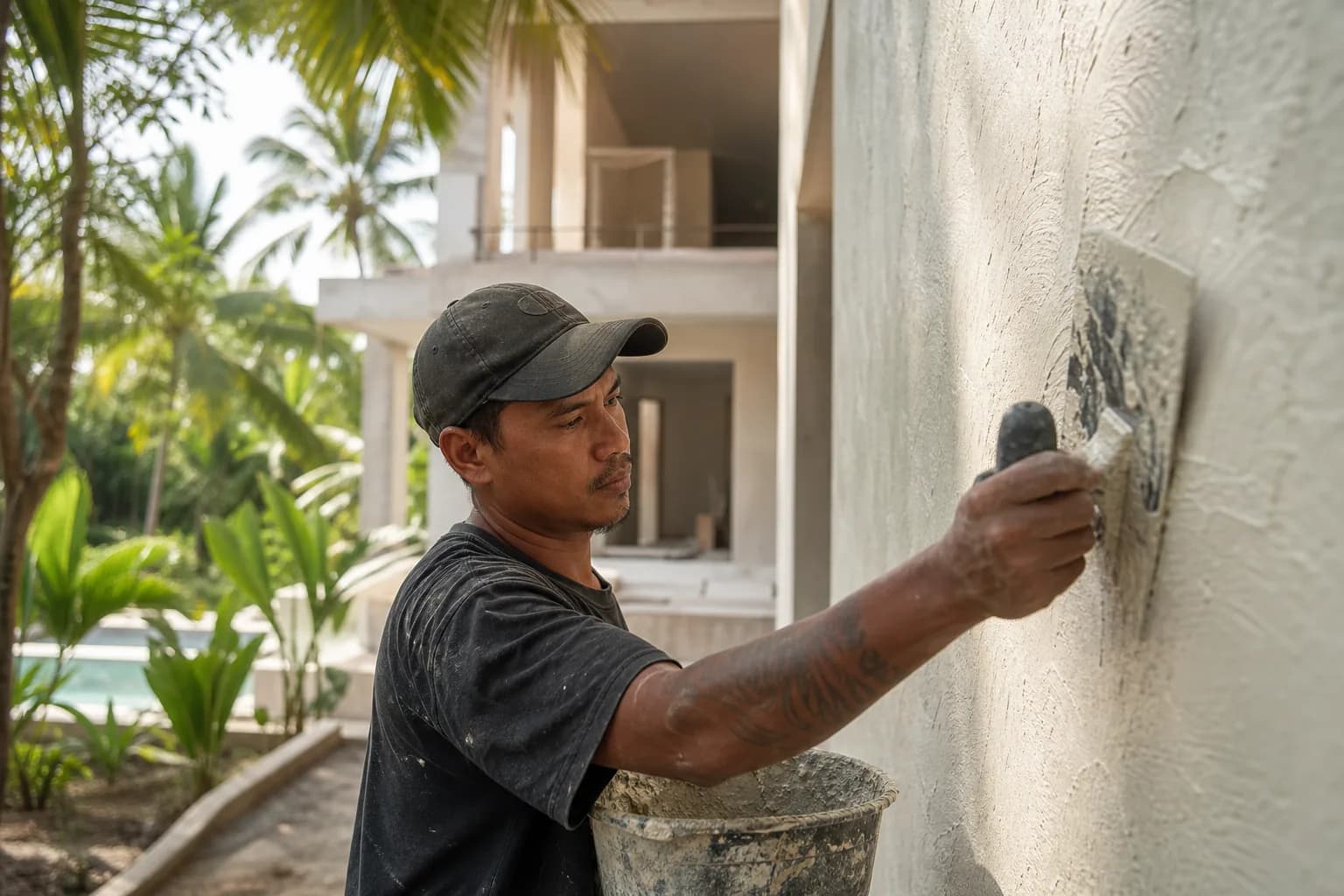
Resin-Infused Plaster Finishes: Anti-Salt Systems Bali
Expert technical guide: Resin-Infused Plaster Finishes: Anti-Salt Systems Bali
8 min read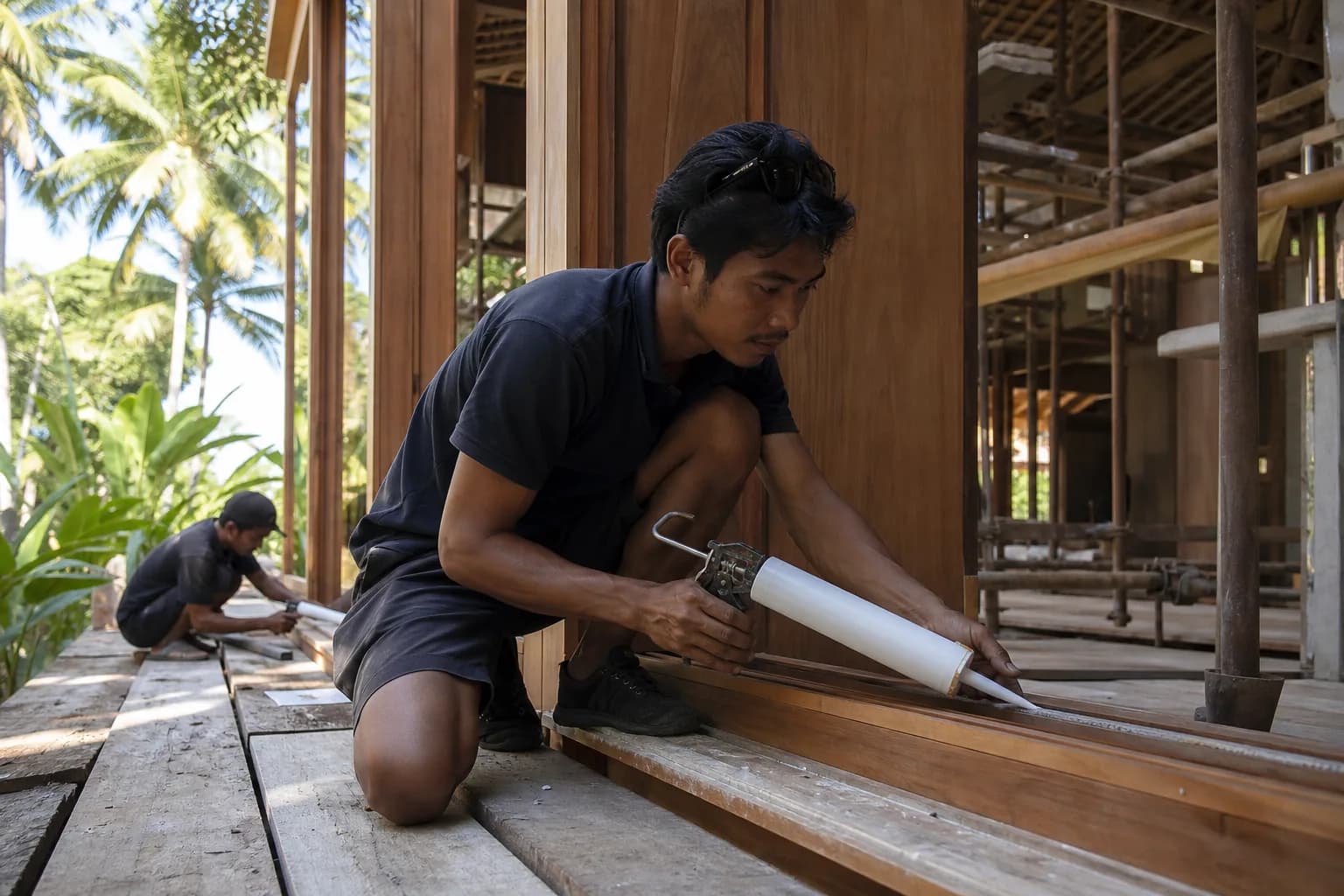
Prefinished Timber Joinery: Silicone Seals Fixings Bali
Professional prefinished timber joinery installation in Bali with silicone seals and fixings for durable weatherproof performance and a premium finish.
10 min read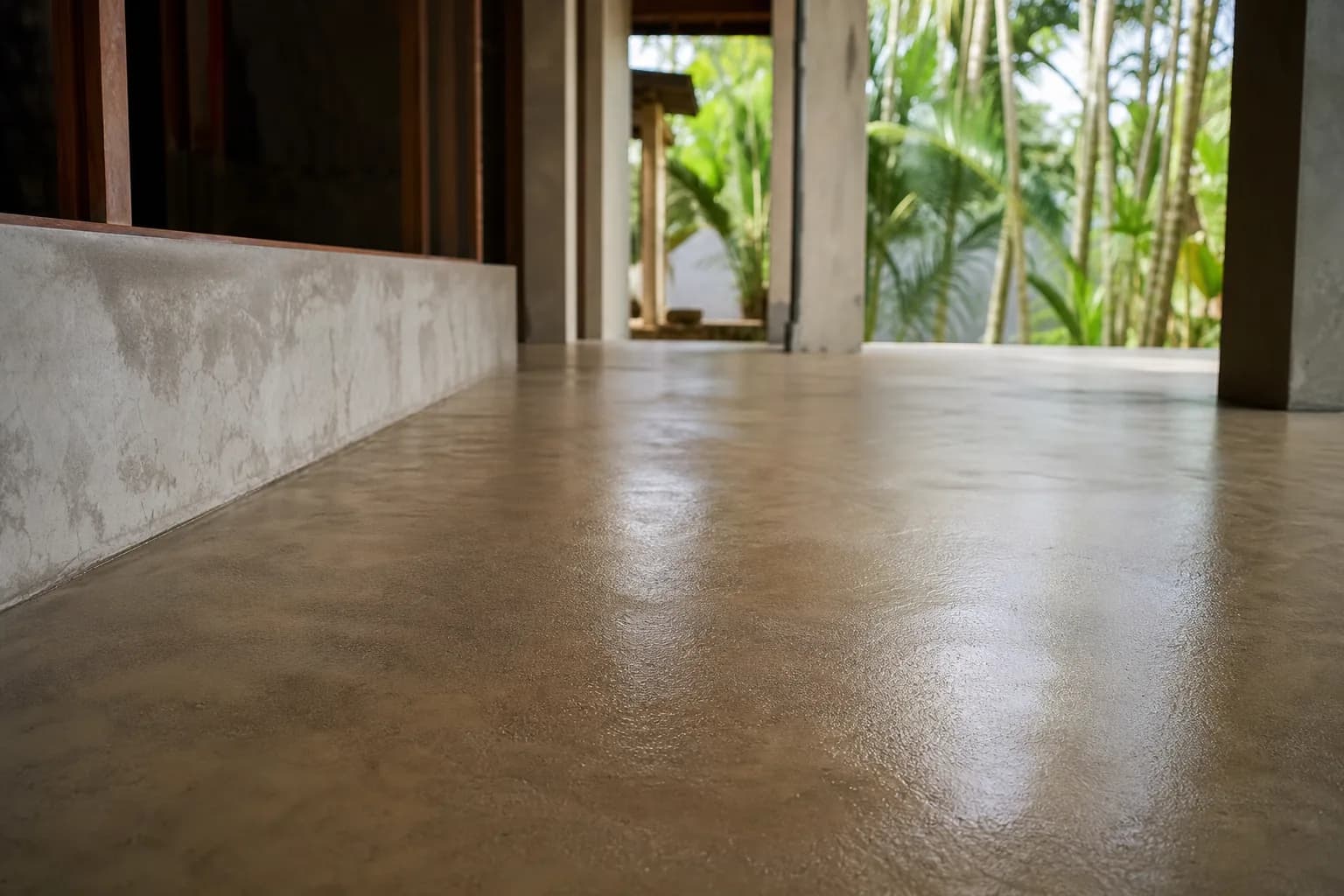
Polished Concrete Microtopping: Surface Prep Sealants Bali
Discover Bali s polished concrete microtopping: expert surface prep, durable sealants, and a flawless finish for modern floors with minimal maintenance.
9 min read