Sliding Pocket Door Installation: Wall Thickness Requirements Bal
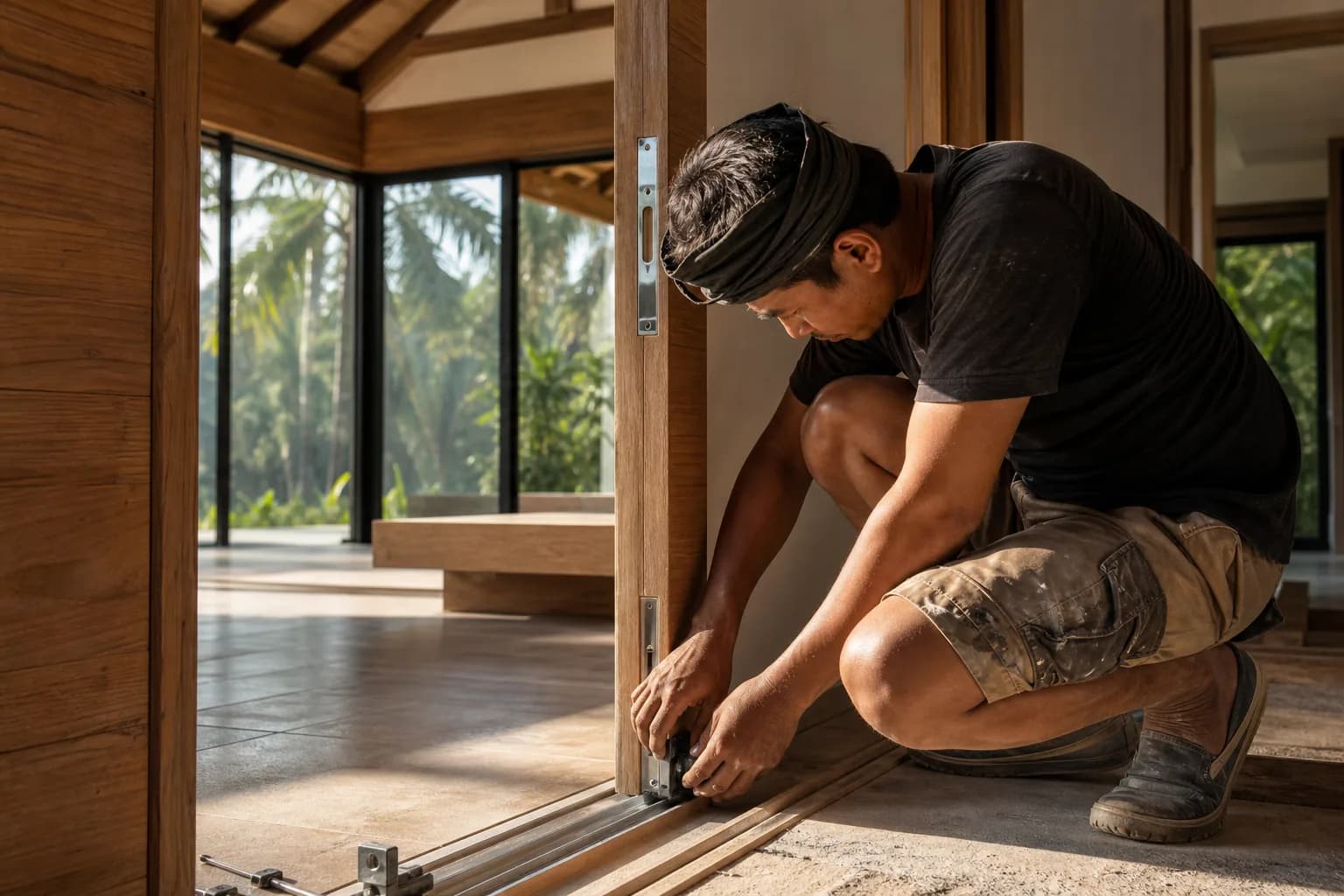
# Sliding Pocket Door Installation: Wall Thickness Requirements Bali
The Critical Wall Thickness Challenge in Bali Pocket Door Installations
Installing sliding pocket doors in Bali villas presents a unique technical challenge that many homeowners and contractors underestimate: achieving the correct wall thickness for proper hardware accommodation. Unlike standard hinged doors, pocket doors require precise cavity dimensions to function smoothly within the wall structure. In Bali’s construction landscape, where traditional building methods often clash with modern finishing requirements, determining adequate wall thickness becomes critical for long-term functionality. The tropical climate adds another layer of complexity—humidity-induced material expansion can compromise installations where wall cavities are inadequately sized. Whether you’re renovating an existing villa or planning new interior finishing work, understanding these wall thickness requirements prevents costly reinstallation and ensures your pocket doors operate flawlessly for decades in Bali’s demanding environment.
Technical Requirements: Wall Thickness Specifications for Bali Climate Conditions
The fundamental wall thickness requirement for sliding pocket door installation begins with understanding the complete assembly dimensions. Standard pocket door hardware systems require a minimum finished wall thickness of 100-115mm (approximately 4-4.5 inches) to accommodate the door panel, track mechanism, and finishing materials without compromising structural integrity or operational smoothness.
In Bali villa construction, wall framing typically utilizes either traditional timber studs or modern metal framing systems. For timber-framed walls using standard 90mm x 45mm (approximately 3.5″ x 1.75″) studs—the Bali equivalent of 2×4 framing—the base cavity depth measures 90mm. Adding 12mm cement board or gypsum board on each side creates a finished wall thickness of 114mm, which meets minimum requirements for most pocket door kits designed for residential applications.
However, Bali’s tropical humidity introduces critical considerations that mainland construction guides often overlook. Timber framing in humid environments experiences seasonal expansion and contraction cycles. This movement, typically 2-4mm across a 90mm stud width, must be factored into your wall cavity calculations. Teville’s construction methodology accounts for these climate-specific tolerances by recommending 120-130mm finished wall thickness for optimal pocket door performance in Bali conditions.
For renovation projects involving existing masonry walls—common in older Bali properties—the approach differs significantly. Traditional bata merah (red brick) walls typically measure 110-150mm thick, but these solid walls require complete cavity creation through either wall removal or building out a false wall system. The false wall method, while adding 150-180mm to room dimensions, provides superior moisture control and easier hardware installation compared to attempting cavity creation within existing masonry.
Wall thickness calculations must also accommodate the specific pocket door hardware selected. Premium European hardware systems often require 120-125mm minimum cavity depth, while more compact Asian-manufactured systems can function within 100-110mm cavities. The hardware’s roller mechanism, track mounting brackets, and door stop assemblies all consume space within the wall cavity. In Bali’s market, where hardware quality varies dramatically, selecting systems specifically rated for tropical humidity ensures longevity—stainless steel or powder-coated aluminum components resist the corrosion that plagues standard steel hardware in coastal areas.
The door panel thickness itself directly impacts wall cavity requirements. Standard hollow-core doors measure 35-40mm thick, while solid timber doors popular in luxury Bali villas range from 40-50mm. Adding the required 10-15mm clearance on each side of the door panel for smooth operation, plus the 20-25mm track and roller assembly depth, establishes your minimum cavity requirement. For a 45mm solid teak door—a common choice in high-end interior finishing Bali projects—the calculation becomes: 45mm (door) + 30mm (clearance) + 25mm (hardware) = 100mm minimum cavity depth, before considering wall finishing materials.
Thermal and acoustic insulation requirements, increasingly important in modern Bali villa construction, further influence wall thickness decisions. While Bali’s climate doesn’t demand thermal insulation, acoustic privacy between bedroom suites justifies 50mm rockwool or glasswool installation within wall cavities. This insulation occupies space that must be calculated separately from the pocket door cavity, often necessitating 150mm+ total wall thickness for installations prioritizing sound dampening.
Materials and Standards for Tropical Climate Installations
Material selection for pocket door wall construction in Bali requires balancing international standards with local availability and climate appropriateness. The framing material forms your installation’s foundation—choose between kiln-dried hardwood timber, galvanized steel studs, or aluminum framing systems based on your specific project requirements and budget constraints.
Kiln-dried meranti or kamper timber, processed to 12-15% moisture content, provides excellent dimensional stability for Bali’s 70-85% ambient humidity levels. These hardwoods resist warping better than imported softwoods, though they require pre-drilling for all fastener installations. Steel framing, increasingly popular in contemporary villa projects, eliminates wood movement concerns entirely while providing consistent cavity dimensions. Premium galvanized or powder-coated steel studs rated for coastal environments prevent rust-through that compromises installations within 3-5 years when using standard steel.
Wall sheathing materials must resist moisture penetration while providing adequate structural support for pocket door hardware mounting. Cement board (12-15mm thickness) outperforms standard gypsum board in Bali applications, offering superior moisture resistance and screw-holding capacity for track mounting brackets. Green-board or moisture-resistant gypsum board serves as an acceptable alternative for interior walls away from wet areas, though cement board remains the professional standard for renovation Bali projects prioritizing longevity.
Pocket door hardware quality varies enormously in Bali’s market. Professional-grade systems feature stainless steel tracks, sealed bearing roller assemblies, and adjustable mounting brackets that accommodate minor installation variations. These systems, while costing 3-5x more than basic hardware, provide smooth operation and 20+ year service life in tropical conditions. The track itself should be continuous aluminum or stainless steel extrusion—avoid segmented tracks that create operational bumps and wear points. Door roller assemblies must feature sealed bearings; exposed ball bearings accumulate dust and moisture, leading to operational failure within 2-3 years in Bali’s environment.
Step-by-Step Installation Process for Optimal Wall Thickness
Phase 1: Cavity Assessment and Preparation (Days 1-2)
Begin by verifying existing wall conditions and confirming adequate space for pocket door cavity creation. Measure the door opening width and multiply by 2.1 to determine required wall length—a 900mm door requires approximately 1,890mm of clear wall space for the pocket cavity. Check for electrical conduits, plumbing lines, or structural elements within the proposed cavity zone using a stud finder and thermal imaging camera. In Bali villa construction, hidden concrete columns or tie beams often occupy wall spaces, requiring design modifications before proceeding.
Mark the pocket door frame location on floor and ceiling, ensuring perfect plumb alignment using a laser level. Bali’s concrete floors often have 5-10mm elevation variations across 3-meter spans—identify and correct these discrepancies before framing begins, as even minor floor slopes cause pocket doors to swing open or closed unintentionally.
Phase 2: Frame Construction (Days 2-4)
Construct the pocket door frame using your selected stud material at precisely measured intervals. For timber framing, install studs at 400mm centers for adequate wall rigidity, increasing to 300mm centers around the pocket cavity opening where structural loads concentrate. The pocket cavity itself requires double studs on each side to support the track mounting and door weight—a solid teak door weighing 25-35kg demands robust framing that single studs cannot provide.
Install the pocket door frame kit according to manufacturer specifications, ensuring the track sits perfectly level (maximum 1mm deviation across track length). In Bali’s climate, use stainless steel fasteners exclusively—standard zinc-plated screws corrode within months when exposed to humidity during wall cavity ventilation. The frame kit’s split studs must align precisely with your wall thickness calculation; adjustable frames accommodate 100-150mm finished wall thickness variations, providing flexibility for different sheathing material combinations.
Phase 3: Hardware Installation and Door Hanging (Days 4-5)
Mount the track system to the frame header using the provided brackets, spacing fasteners every 200-250mm for weight distribution. Premium hardware systems include rubber isolation pads between track and frame—these pads dampen operational noise and prevent the metal-on-wood contact that accelerates wear in high-use installations. Verify track alignment using a precision level; 2mm deviation causes door binding and premature roller wear.
Hang the door panel on roller assemblies, adjusting roller height to achieve 10-12mm floor clearance. This clearance prevents door bottom contact with floor irregularities while maintaining acceptable visual gaps. In furniture installation projects where floor finishes change between rooms, adjustable rollers accommodate 5-8mm height variations without reinstallation. Test door operation through 20-30 complete cycles, listening for scraping sounds or resistance points that indicate alignment issues requiring correction before wall closure.
Phase 4: Wall Finishing (Days 5-7)
Install cement board or gypsum board sheathing, cutting precise openings around the pocket door frame. Leave 3-5mm expansion gaps between sheathing panels—Bali’s humidity causes even cement board to expand slightly, and tight-fitted panels buckle over time. Apply joint compound and fiberglass mesh tape to all seams, building up 3-4 thin coats rather than single thick applications that crack as they cure in tropical humidity.
The pocket door’s edge trim requires special attention in high-end interior finishing work. Split jamb systems accommodate varying wall thicknesses while providing clean visual transitions. Install door edge pulls or flush handles before final wall finishing—retrofitting hardware after painting risks finish damage and misalignment. Apply final paint or wall covering only after confirming perfect door operation; wall finishing materials add friction that can reveal previously unnoticed alignment issues.
Cost Analysis and Project Timeline for Bali Installations
Pocket door installation costs in Bali vary significantly based on materials quality, wall construction requirements, and hardware selection. For a standard 800-900mm single door installation in new construction with timber framing, expect costs ranging from Rp 8,500,000 to Rp 15,000,000 including materials and professional installation labor.
Material costs break down approximately as follows: pocket door hardware kit (Rp 2,500,000-6,000,000 depending on quality grade), timber framing materials (Rp 800,000-1,200,000 for kiln-dried hardwood), cement board sheathing (Rp 400,000-600,000), door panel (Rp 2,000,000-5,000,000 for solid timber), and finishing materials including joint compound, fasteners, and paint (Rp 500,000-800,000). Premium European hardware systems can exceed Rp 10,000,000 for single door installations, though their superior performance justifies the investment in luxury villa projects.
Renovation projects involving existing wall modification add 40-60% to base costs due to demolition requirements, structural assessment, and dust containment measures. Creating pocket cavities in masonry walls requires specialized cutting equipment and structural engineering consultation, potentially adding Rp 5,000,000-8,000,000 to project costs depending on wall thickness and material composition.
Installation timelines for new construction average 5-7 working days from frame construction through final finishing, assuming materials are pre-ordered and site-ready. Renovation Bali projects extend to 8-12 days when including demolition, structural modifications, and extended drying times for joint compound in humid conditions. Professional installation teams complete work more efficiently than DIY attempts—pocket door alignment requires precision that inexperienced installers rarely achieve, often necessitating costly reinstallation when doors bind or operate roughly.
For comprehensive project planning and cost estimation specific to your villa’s requirements, Teville’s cost estimation service provides detailed breakdowns accounting for site-specific factors affecting installation complexity and material requirements.
Frequently Asked Questions: Pocket Door Wall Thickness in Bali
Can I install a pocket door in an existing 100mm brick wall without increasing wall thickness?
Installing a pocket door in a standard 100mm brick wall requires creating a cavity system, as solid masonry cannot accommodate the door panel and hardware. The most practical approach involves building a false wall on one side, adding 120-150mm to the wall’s total thickness. This method provides proper cavity depth while allowing insulation and wiring installation. Attempting to cut a cavity into existing masonry compromises structural integrity and rarely achieves the dimensional precision pocket door hardware requires. In villa utilities planning, consider this thickness addition when calculating room dimensions and furniture placement.
What wall thickness do I need for double pocket doors in Bali villas?
Double pocket doors, where two panel

Want to calculate?
 3180 m²7 month(s)from 142.000 USD
Vasudeva
 164 m²7 month(s)from 79.000 USD
Private: Haridas Villas, Tegallalang
 3104 m²11 month(s)from 99.000 USD
TALA 100
 4344 m²16 month(s)from 290.000 USD
Radha
 3173 m²6 month(s)from 125.000 USD
TALA FOUR
 2144 m²11 month(s)from 104.000 USD
Narayana
164 m²7 month(s)from 79.000 USDTALA TWO
 172 m²8 month(s)from 120.000 USD
Keshava
 3127 m²9 month(s)from 177.000 USD
Mukunda
 1from 198.000 USD
Private: Haridas Villas
 3124 m²6 month(s)from 123.000 USD
TALA 8
Start With Real Numbers, Not Guesses
Before finalizing your finishing works plan, check realistic cost ranges for your Bali villa project.
Available lands
 250 m²15 min$ 40025Bali, Munggu
 3300 m²15 min$ 449889Bali, Tabanan
 700 m²15 min$ 90517Bali, Central Bali
 800 m²8 min$ 113300Bali, Ungasan
 2500 m²5 min$ 609606Bali, Kedungu
 500 m²10 min$ 107143Bali, Tabanan
 5815 m²5 min$ 815740Bali, Tabanan
 3900 m²10 min$ 432266Bali, Tabanan
 800 m²10 min$ 307882Bali, Tibubeneng
 1430 m²5 min$ 209862Bali, Klungkung
 500 m²15 min$ 124692Bali, Kaba Kaba
 300 m²55 min$ 32475Bali, Tegelalang
 550 m²15 min$ 164594Bali, Mengwi
 1660 m²10 min$ 343448Bali, Kerobokan
 2200 m²3 min$ 183842Bali, Berawa
Essential Bali build & buy guides
- Bali villa construction cost per m² in 2026
- How much will your villa cost? Calculator
- Building a villa in Bali: the complete guide
- Buying land in Bali: step-by-step for foreigners
- Bali villa investment: yields, risks, returns
- Leasehold vs freehold: what foreigners can own
- Construction defect liability & 10-year warranty
- Bali building codes and construction standards
Related guides
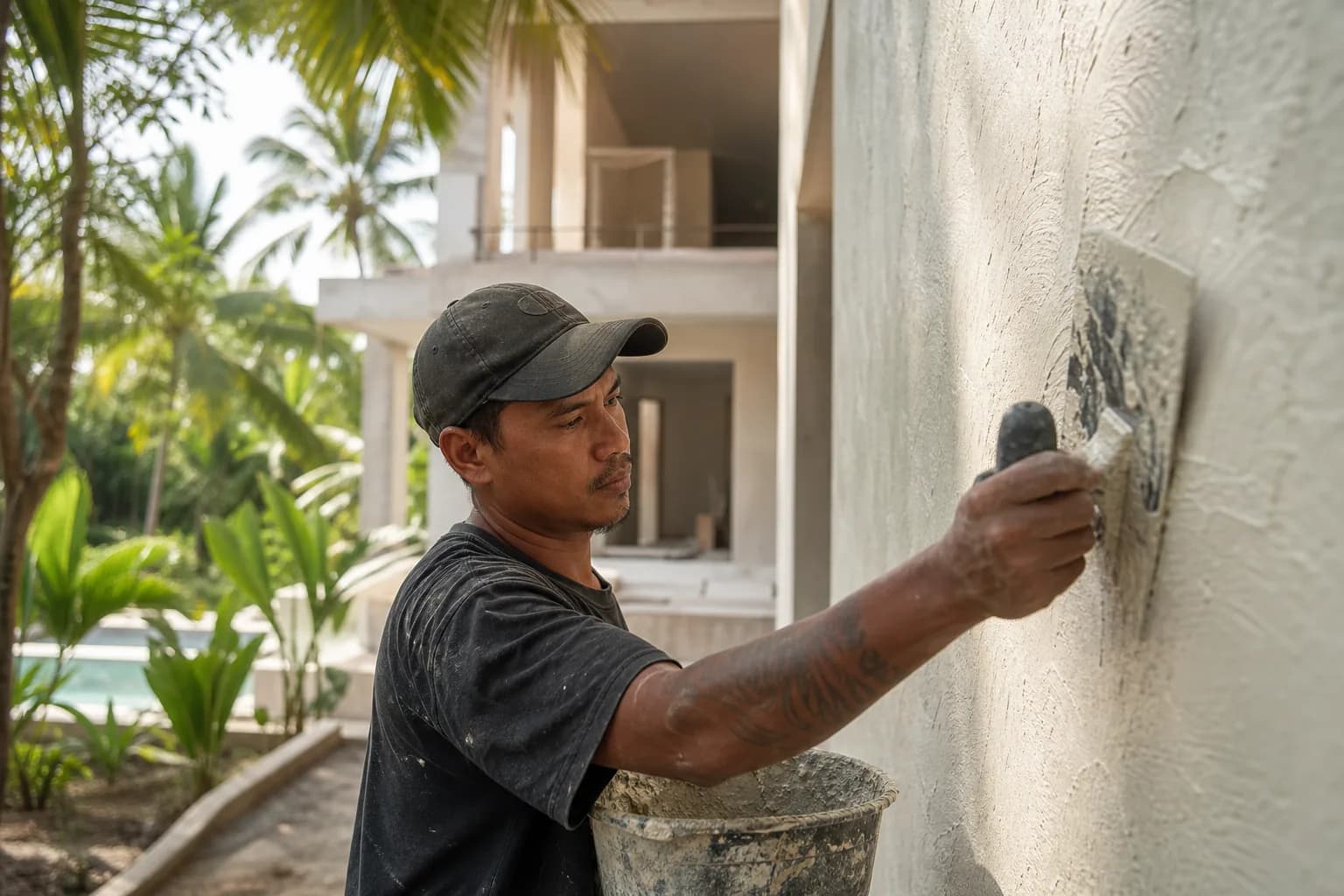
Resin-Infused Plaster Finishes: Anti-Salt Systems Bali
Expert technical guide: Resin-Infused Plaster Finishes: Anti-Salt Systems Bali
8 min read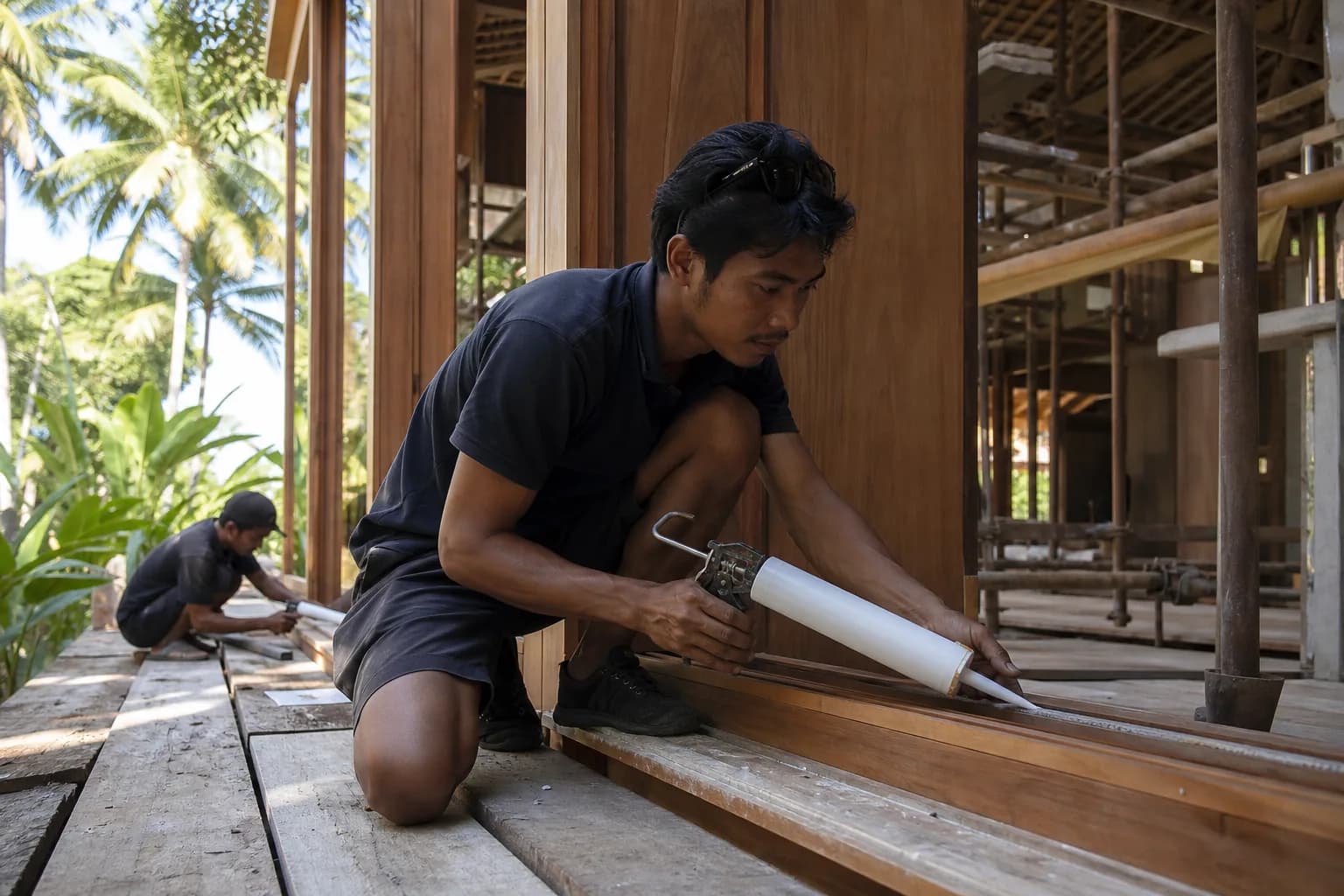
Prefinished Timber Joinery: Silicone Seals Fixings Bali
Professional prefinished timber joinery installation in Bali with silicone seals and fixings for durable weatherproof performance and a premium finish.
10 min read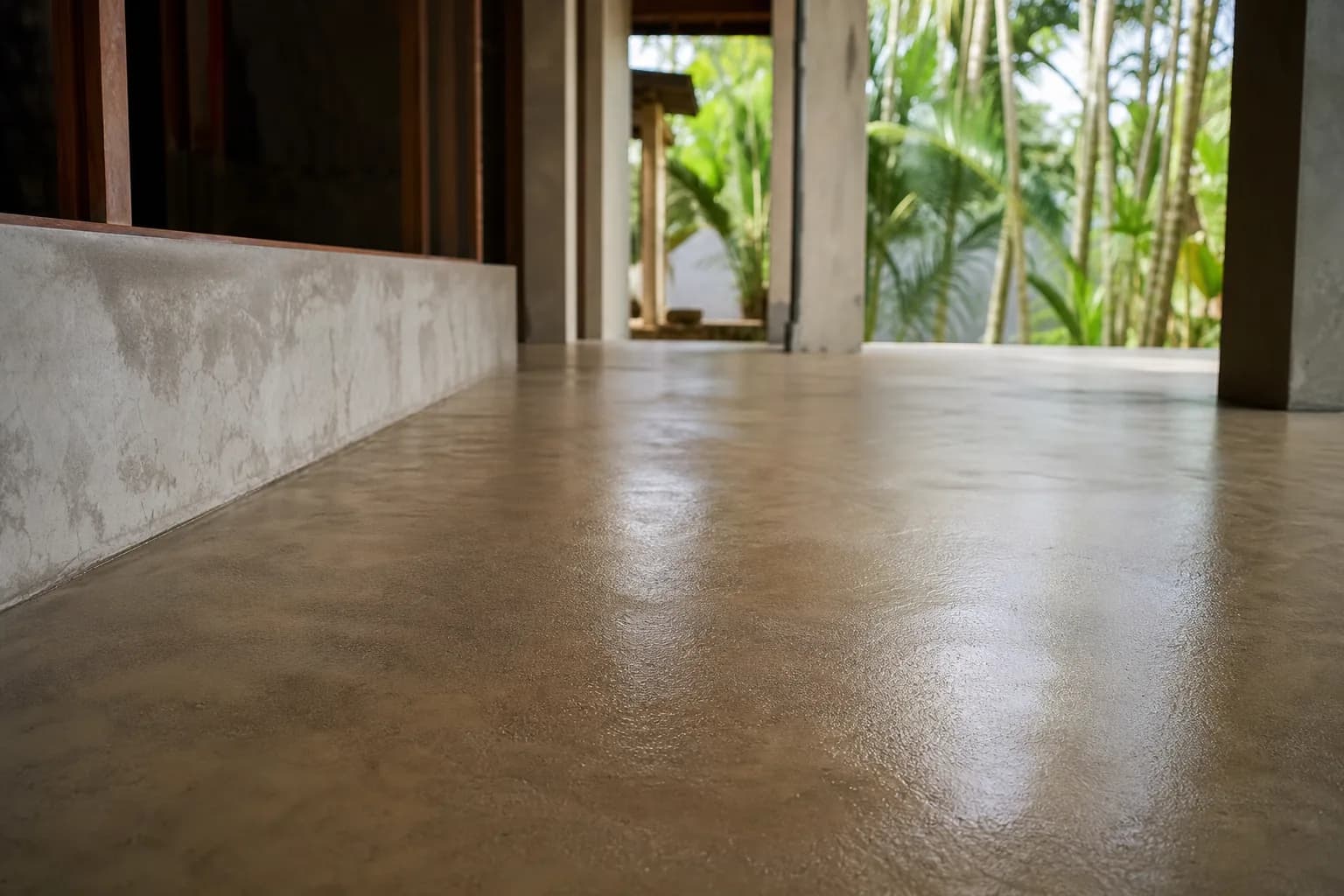
Polished Concrete Microtopping: Surface Prep Sealants Bali
Discover Bali s polished concrete microtopping: expert surface prep, durable sealants, and a flawless finish for modern floors with minimal maintenance.
9 min read