Steel Beam Import Duties Shipping Costs at Singaraja Port Bali
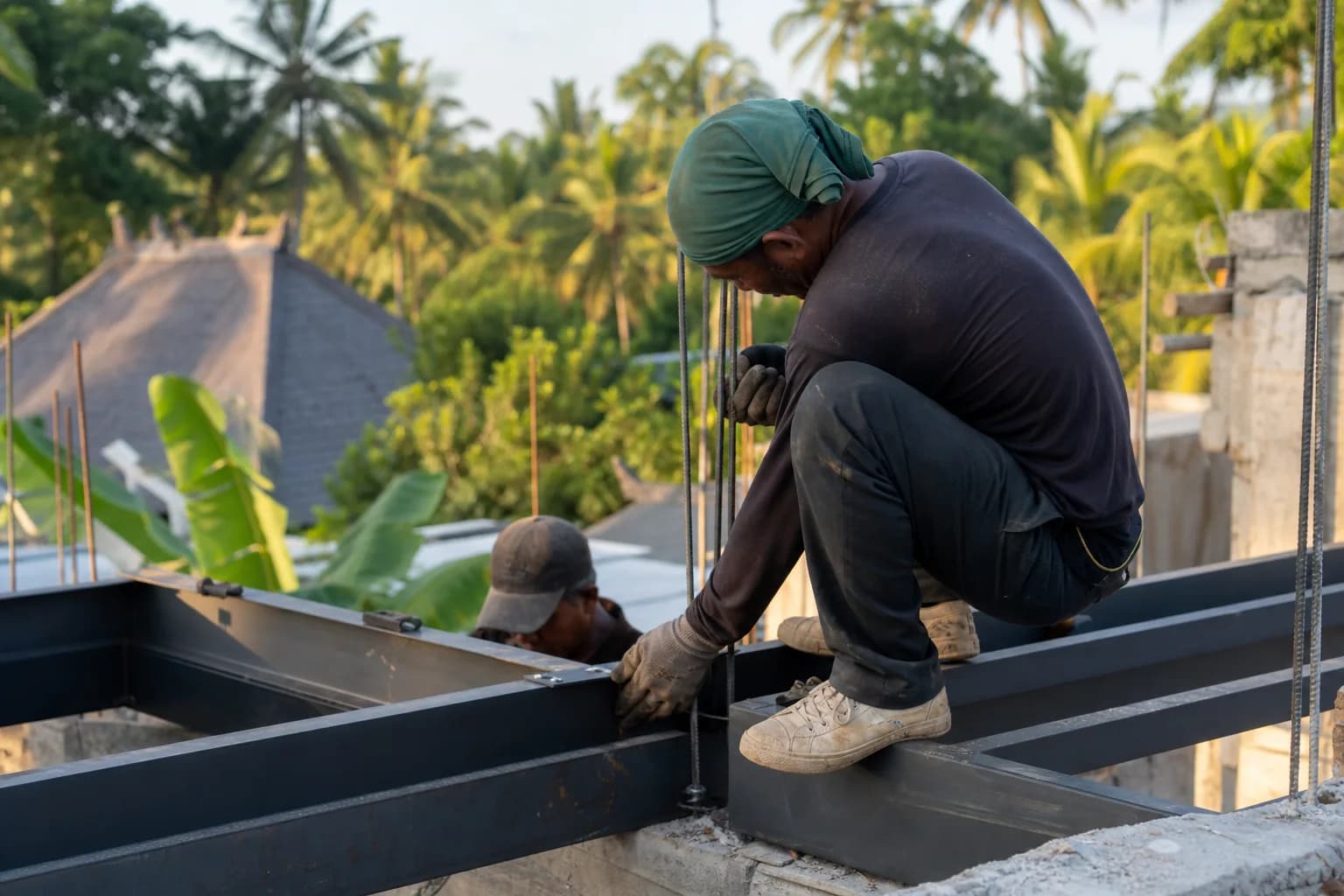
Why Singaraja Port Steel Beam Import Duties Matter for North Bali Construction Projects
When planning villa construction in North Bali—particularly in Lovina, Pemuteran, or the emerging development zones near Singaraja—the decision to import structural steel through Singaraja Port versus trucking materials from South Bali ports creates a 23-37% cost differential in your steel procurement budget. The engineering reality: steel beam imports through Singaraja Port involve layered duty structures including 10% import duty on hot-rolled steel sections (HS Code 7216), 11% VAT, income tax withholding, and port-specific handling tariffs that many developers discover only after containers arrive. For projects requiring 15+ tons of structural steel—common in two-story villas with cantilever pools or large-span roof structures—understanding Singaraja’s import duty framework prevents budget overruns that can delay construction 4-8 weeks while securing additional capital.
Technical Framework: Steel Beam Import Duty Structure at Singaraja Port
Indonesia’s steel import tariff architecture operates through the Harmonized System (HS) classification, with structural steel beams falling primarily under HS Code 7216 (angles, shapes, and sections of iron or non-alloy steel). As of the 2025 ASEAN Trade in Goods Agreement updates, the base import duty for hot-rolled steel sections stands at 10% CIF (Cost, Insurance, Freight) value for non-ASEAN origin materials, reduced to 0-5% for ASEAN-origin steel under preferential trade agreements.
The complete duty calculation for steel beams through Singaraja Port includes:
- Base Import Duty: 10% of CIF value (non-ASEAN) or 0-5% (ASEAN Certificate of Origin)
- Value Added Tax (PPN): 11% of (CIF + Import Duty + Insurance)
- Income Tax Article 22: 2.5% for importers with API (Importer Identification Number), 7.5% without API, 10% for non-NPWP holders
- Port Handling Charges: Singaraja’s MMT terminal applies container handling fees of USD 85-120 per TEU depending on dwell time
- Customs Clearance Fees: PPJK (customs broker) services range IDR 3.5-6.5 million per container
Critical engineering consideration: Singaraja Port’s draft limitation of 9 meters restricts vessel size, meaning steel shipments often arrive via feeder vessels from Tanjung Perak (Surabaya) or transshipment from Singapore, adding 3-7 days transit time versus direct container shipping to Benoa Port. This affects project scheduling for time-sensitive structural phases.
The Indonesian Ministry of Trade’s 2024 steel import regulations (Permendag 36/2024) require Surveyor Reports (LS – Laporan Surveyor) for all steel imports exceeding 50 tons aggregate annual volume per importer. For villa construction projects requiring H-beams, I-beams, or wide-flange sections, this documentation adds 5-8 business days to clearance timelines and IDR 8-15 million in surveyor fees depending on shipment value.
Singaraja Port’s operational advantage lies in proximity: for North Bali construction sites, trucking steel from Singaraja reduces inland transport costs by 60-75% compared to Benoa Port deliveries. A 40-foot container of steel beams costs IDR 4.2-5.8 million to truck from Singaraja to Lovina (18 km), versus IDR 18-24 million from Benoa to the same destination (92 km through mountain roads with grade restrictions for heavy loads).
However, Singaraja’s limited customs infrastructure means only 2-3 licensed PPJK brokers operate regularly at the port, compared to 40+ at Benoa. This creates clearance bottlenecks during peak import periods (typically October-March construction season), extending container dwell time from the standard 3-4 days to 7-12 days, incurring demurrage charges of USD 75-150 per container per day after the free period.
The duty calculation example for a typical villa project importing 18 tons of structural steel (H-beams 200x200mm and 300x150mm sections) from Malaysia with ASEAN Certificate of Origin:
- CIF Value: USD 16,200 (steel cost USD 14,400 + freight USD 1,200 + insurance USD 600)
- Import Duty (5% ASEAN rate): USD 810
- Nilai Impor (Import Value): USD 17,010
- VAT 11%: USD 1,871
- PPh 22 (2.5% with API): USD 425
- Total Duties: USD 3,106 (IDR 49.7 million at 16,000 exchange rate)
- Port & Clearance: USD 950 (IDR 15.2 million)
- Total Import Cost: USD 20,256 (IDR 324 million)
This represents 19.2% overhead on the base steel cost—a figure that rises to 28-32% for non-ASEAN origin steel without proper trade documentation.
Hidden Risks: What Villa Developers Miss in Singaraja Steel Imports
The most expensive mistake in North Bali steel procurement occurs when developers assume Singaraja Port operates with the same customs efficiency as Benoa. Three critical oversights create cascading delays:
Incomplete HS Code Classification: Steel beams with specific alloy content (chromium, nickel, molybdenum for corrosion resistance in tropical environments) may fall under HS 7228 (alloy steel bars) rather than 7216, triggering 15% import duty instead of 10%. Customs reclassification during inspection adds 8-15 days to clearance while duty differences are resolved. For engineering-grade construction requiring marine-grade steel near coastal sites, this classification ambiguity creates budget exposure of 5-8% of steel procurement costs.
Certificate of Origin Timing: ASEAN preferential tariffs require original Form D certificates issued by exporting country authorities, submitted during customs declaration. Developers who ship steel before securing Form D cannot retroactively claim preferential rates—the 5-10% duty difference on a USD 15,000 steel shipment equals IDR 12-25 million in unnecessary costs. Malaysian and Thai steel suppliers typically require 7-10 business days to process Form D after order confirmation.
Singaraja Port Storage Limitations: Unlike Benoa’s extensive container yards, Singaraja’s MMT terminal has limited free storage (typically 3 days for import containers). Projects without immediate site delivery capability face rapid demurrage accumulation. A two-week delay in site preparation—common when land clearing encounters unexpected groundwater or access road issues—generates USD 1,050-2,100 in container storage fees, eroding the transport cost savings that justified using Singaraja Port initially.
The structural engineering risk: steel beams stored in tropical port environments without proper corrosion protection deteriorate rapidly. Singaraja’s coastal humidity (78-92% year-round) causes surface oxidation within 10-14 days on uncoated steel. Developers who experience customs delays often receive steel requiring additional surface preparation, adding IDR 850-1,200 per linear meter in sandblasting and primer costs before fabrication.
Step-by-Step Process: Importing Structural Steel Through Singaraja Port
Phase 1: Pre-Import Documentation (3-4 Weeks Before Shipment)
Secure API (Angka Pengenal Importir) through OSS system if importing directly rather than through a construction supplier. API registration requires NIB (business identification number), NPWP (tax ID), and company deed—processing takes 5-8 business days. Without API, income tax withholding increases from 2.5% to 7.5%, adding USD 750-1,200 to duty costs on typical villa steel orders.
Engage licensed PPJK customs broker in Singaraja minimum 3 weeks before shipment. Recommended brokers: PT Bali Lintas Nusa (operates both Benoa and Singaraja) or PT Samudera Buana Logistik. Broker fees are negotiable but typically IDR 4.5-6.5 million per container including customs processing, document preparation, and coordination with port authorities.
Coordinate with steel supplier to ensure proper HS Code declaration on commercial invoice and packing list. Request detailed mill test certificates (MTCs) showing steel grade, chemical composition, and mechanical properties—Indonesian customs increasingly requires MTCs for structural steel to verify compliance with SNI (Indonesian National Standard) equivalency.
Phase 2: Shipment and Documentation (2-3 Weeks Transit)
Steel shipments to Singaraja typically route through Tanjung Perak (Surabaya) with feeder vessel service, or direct from Malaysian ports (Port Klang, Penang) with 4-7 day transit. Request supplier provide original Bill of Lading, commercial invoice, packing list, Certificate of Origin (Form D for ASEAN), and mill test certificates via courier to your PPJK broker before vessel arrival.
Monitor vessel schedule through Singaraja Port’s online system or MMT terminal updates. Vessel delays of 2-5 days are common during monsoon season (December-February) when sea conditions affect feeder vessel operations. Build 7-10 day buffer into construction schedules between expected steel arrival and structural phase commencement.
Phase 3: Customs Clearance (4-8 Days After Arrival)
PPJK broker submits electronic customs declaration (PIB – Pemberitahuan Impor Barang) through Indonesia National Single Window system within 24 hours of vessel berthing. Customs assigns risk profile (green channel for low-risk shipments, yellow for document verification, red for physical inspection). Steel imports typically receive yellow or red channel designation, requiring 3-6 days clearance versus 1-2 days for green channel.
Physical inspection involves container unstuffing at port examination area—customs verifies steel dimensions, quantities, and grades match declaration. Discrepancies trigger duty recalculation and potential penalties of 25-100% of duty shortfall. Ensure supplier packing lists accurately reflect actual shipment contents including piece counts and weights.
Pay calculated duties, taxes, and port charges through customs broker. Bank transfers typically process same-day, but budget 24-48 hours for payment confirmation and release order (SPPB – Surat Persetujuan Pengeluaran Barang) issuance.
Phase 4: Port Release and Delivery (1-2 Days)
Coordinate trucking from Singaraja Port to construction site. Steel beam transport requires flatbed trucks with proper load securing—40-foot containers of structural steel weigh 22-28 tons loaded, requiring trucks with minimum 30-ton capacity. Local Singaraja trucking companies: CV Bali Cargo Sejahtera (IDR 4.5-6 million to Lovina/Pemuteran) or PT Bali Dwipa Logistics (IDR 5-7 million with crane offloading included).
Schedule delivery during dry weather—North Bali’s rural access roads become impassable for heavy trucks during heavy rain, particularly in Pemuteran and western coastal areas. Monsoon season deliveries may require 4WD escort vehicles and road condition assessment, adding IDR 1.5-2.5 million to transport costs.
Realistic Cost Ranges: Singaraja Port Steel Import Budget Planning
For a typical two-story villa project in North Bali requiring 15-20 tons of structural steel (H-beams, I-beams, channels), the complete Singaraja Port import cost structure:
Steel Material Costs (FOB): USD 800-950 per ton for standard hot-rolled sections from Malaysian mills, USD 1,100-1,350 per ton for marine-grade or high-strength steel. Total material: USD 12,000-27,000 depending on specifications and project complexity.
Freight to Singaraja: USD 850-1,400 per 40-foot container (18-22 tons capacity) from Malaysian ports, USD 1,200-1,800 from Singapore. Container consolidation possible for smaller orders but adds 5-8 days transit time.
Import Duties and Taxes: 18-22% of CIF value with ASEAN Certificate of Origin and API registration, 28-35% without preferential documentation. Budget USD 3,000-8,500 for typical villa steel orders.
Customs Clearance and Port Fees: IDR 8-12 million (USD 500-750) including PPJK broker, port handling, documentation, and administrative fees.
Inland Transport: IDR 4-7 million (USD 250-440) Singaraja to Lovina/Pemuteran, IDR 8-12 million to eastern Singaraja regency sites.
Total Landed Cost: USD 1,050-1,450 per ton delivered to North Bali construction site via Singaraja Port, compared to USD 1,200-1,650 per ton for Benoa Port import with North Bali delivery. The 12-15% cost advantage justifies Singaraja routing for projects using 12+ tons of structural steel, but diminishes for smaller orders due to fixed clearance costs.
Timeline Expectations: 28-42 days from steel order placement to site delivery (3-4 weeks manufacturing and transit, 4-8 days customs clearance, 1-2 days delivery). Compare to 18-25 days for domestic steel procurement from Surabaya suppliers, though domestic prices typically run 15-25% higher than imported steel even after duty costs.
Frequently Asked Questions: Singaraja Port Steel Beam Imports
Can small villa projects import steel directly through Singaraja Port, or is it only viable for large developments?
Individual villa projects using 8-12 tons of structural steel can economically import through Singaraja Port, but the fixed costs (customs clearance IDR 8-12 million, minimum container freight charges) create a break-even threshold around 10-12 tons. Below this volume, the per-ton cost advantage disappears compared to purchasing from Bali-based steel distributors who import in bulk. Consider container consolidation with other North Bali projects—several villa developers coordinate shipments through construction management companies to share clearance costs. Projects under 8 tons of steel requirements typically achieve better economics purchasing from Denpasar distributors despite 8-12% price premiums, as this eliminates import documentation burden and customs delay risks.
What happens if customs reclassifies my steel beams to a higher duty rate during inspection?
Customs reclassification occurs in 15-25% of steel imports when declared HS codes don’t match physical inspection findings—particularly for specialty steel grades or fabricated sections. If reclassified from HS 7216 (10% duty) to HS 7228 (15% duty), you’ll receive duty assessment notice requiring payment of the difference plus potential penalties of 25-100% of the shortfall before container release. This adds 5-12 days to clearance while resolving the discrepancy. Prevention strategy: provide detailed mill test certifica
 2144 m²11 month(s)from 104.000 USD
Narayana
 4344 m²16 month(s)from 290.000 USD
Radha
 3104 m²11 month(s)from 99.000 USD
TALA 100
 3180 m²7 month(s)from 142.000 USD
Vasudeva
 3124 m²6 month(s)from 123.000 USD
TALA 8
 164 m²7 month(s)from 79.000 USD
TALA TWO
 172 m²8 month(s)from 120.000 USD
Keshava
164 m²7 month(s)from 79.000 USDPrivate: Haridas Villas, Tegallalang
 3173 m²6 month(s)from 125.000 USD
TALA FOUR
 1from 198.000 USD
Private: Haridas Villas
 3127 m²9 month(s)from 177.000 USD
Mukunda

Want to calculate?
Start With Real Numbers, Not Guesses
Before buying land or finalizing a design, check the realistic build cost range for your project in Bali.
Our team reviews your inputs and gives a grounded estimate.
Available lands
 700 m²15 min$ 162500Bali, Tabanan
 1700 m²10 min$ 392549Bali, Nusadua
 6000 m²10 min$ 1330049Bali, Kutuh South Bali
 2850 m²15 min$ 315887Bali, Tabanan
 13000 m²1 min$ 920567Bali, Pekutatan
 2500 m²5 min$ 609606Bali, Kedungu
 700 m²20 min$ 90517Bali, Cepaka
 700 m²8 min$ 165517Bali, Umalas
 2800 m²2 min$ 713793Bali, Kedungu
 1200 m²2 min$ 155172Bali, Klungkung
 4270 m²10 min$ 394397Bali, Ubud
 3300 m²15 min$ 449889Bali, Tabanan
 515 m²7 min$ 570813Bali, Canggu
 1000 m²10 min$ 184729Bali, Kutuh South Bali
 1362 m²15 min$ 335468Bali, Tumbak
Essential Bali build & buy guides
- Bali villa construction cost per m² in 2026
- How much will your villa cost? Calculator
- Building a villa in Bali: the complete guide
- Buying land in Bali: step-by-step for foreigners
- Bali villa investment: yields, risks, returns
- Leasehold vs freehold: what foreigners can own
- Construction defect liability & 10-year warranty
- Bali building codes and construction standards
Related guides
Sanur and Nusa Dua vs Canggu: Stability Plays vs Hype
Canggu gets the headlines; Sanur and Nusa Dua quietly deliver steadier returns to a different kind of buyer. An honest 2026 comparison of the stability markets against the hype market — prices, demand drivers, oversupply risk, and who should buy where.
7 min read
Ubud and the Wellness Market: Buying or Building for Retreats
Ubud is Bali's wellness capital, and retreat-focused property behaves differently from beach villas: longer stays, group bookings, lower volatility. Here is what the market rewards, what zoning allows, and what it costs to buy or build a retreat property in 2026.
8 min read
Buying and Building on the Bukit: Uluwatu, Bingin and Balangan from a Buyer's Seat
A buyer's-seat 2026 guide to the Bukit peninsula — Uluwatu, Bingin and Balangan land prices, the water problem nobody budgets, cliff setbacks after the 2025 Bingin demolitions, and how to build there properly.
7 min read