Seminyak Beach Erosion Coastal Foundation Costs Bali
Seminyak Beach Erosion Setbacks & Coastal Foundation Costs Bali
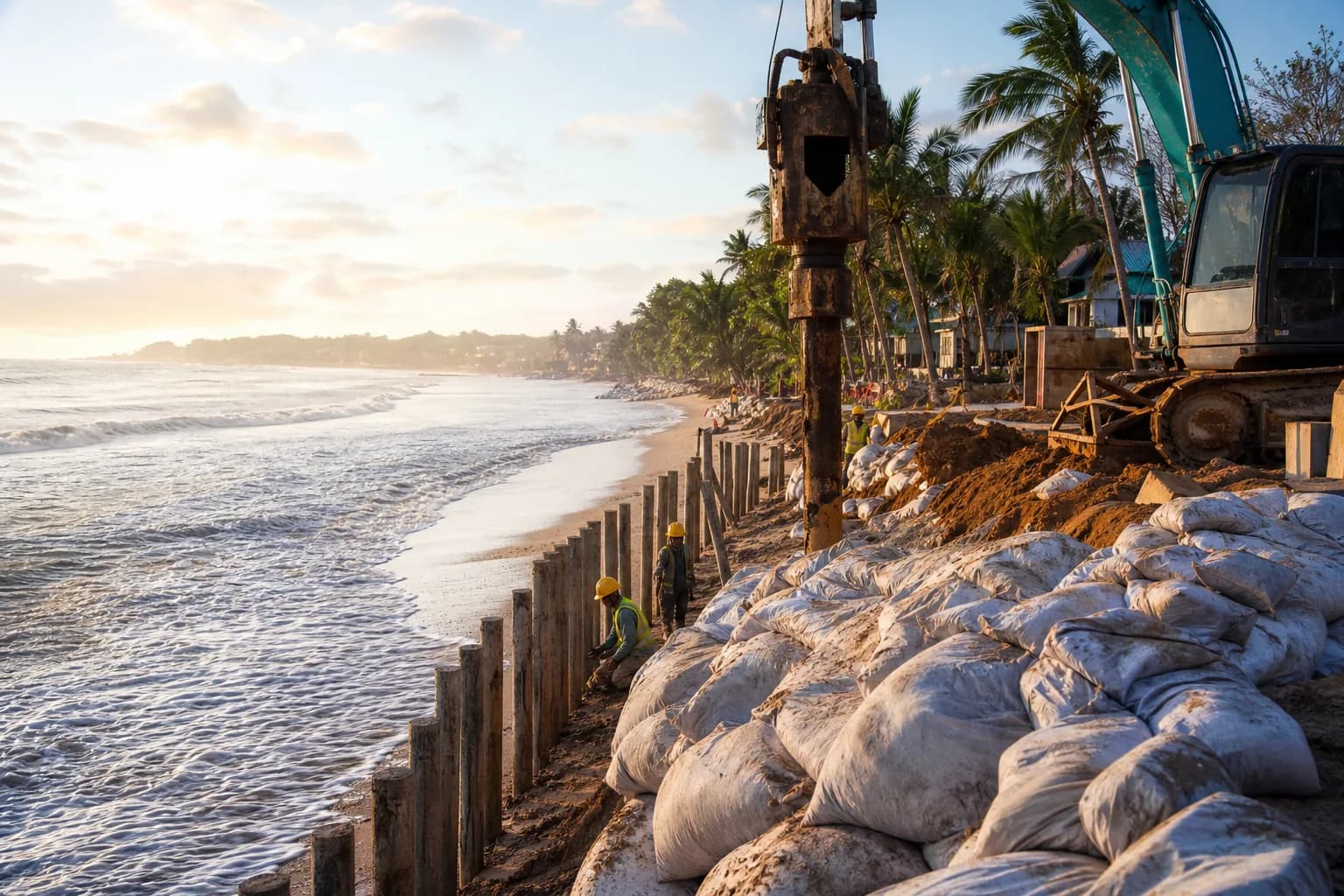
Seminyak’s beachfront has lost 15-30 meters of shoreline over the past decade, forcing property owners to confront a harsh reality: coastal erosion doesn’t just threaten existing structures—it fundamentally changes construction feasibility, legal setback compliance, and foundation engineering requirements. With Indonesia investing IDR 260 billion in breakwater systems along Kuta-Seminyak beaches by late 2026, developers face a critical question: how do you engineer foundations for coastal properties when the shoreline itself is unstable, setback regulations are tightening, and soil conditions deteriorate with saltwater intrusion?
Engineering Realities of Coastal Foundation Design in Active Erosion Zones
Seminyak’s coastal erosion creates a cascading series of structural challenges that standard inland foundation systems cannot address. The technical complexity begins with understanding that erosion isn’t merely aesthetic—it actively degrades soil bearing capacity, increases groundwater salinity, and shifts the legal baseline from which setback measurements originate.
Soil Bearing Capacity Degradation in Erosion-Affected Areas
Coastal erosion in Seminyak exposes previously stable soil layers to wave action and saltwater saturation. Standard soil investigations conducted 3-5 years ago may no longer reflect current conditions. We’ve documented cases where bearing capacity dropped from 150 kN/m² to 85 kN/m² within 200 meters of the active erosion zone as saltwater intrusion dissolved calcium carbonate bonds in coral sand substrates.
Foundation engineering for erosion-affected coastal sites requires geotechnical investigations that extend deeper than standard protocols. Where inland Seminyak properties might use shallow foundations at 1.5-2 meters depth, coastal properties within 100 meters of the high-tide line now require deep foundation systems—typically bored piles extending 8-12 meters to reach stable strata below the saltwater-affected zone. This isn’t precautionary engineering; it’s structural necessity when surface soils lose cohesion.
Legal Setback Complications from Moving Shorelines
Indonesian coastal regulations mandate minimum setbacks from the “highest tide line”—but when that line retreats 2-3 meters annually, the legal baseline becomes a moving target. Seminyak properties that received building permits (IMB) in 2018-2020 based on surveyed shoreline positions may now find themselves non-compliant as erosion has shifted the measurement reference point landward.
The 2026 breakwater construction adds another layer: if coastal protection successfully restores 10-15 meters of beach (the engineering goal), does the setback baseline shift seaward again? Current regulatory interpretation suggests setbacks will be measured from post-restoration shorelines, but this remains legally ambiguous. Properties designed to minimum setback distances face potential non-compliance regardless of whether erosion continues or reverses.
Foundation Cost Multipliers for Coastal Erosion Zones
Standard villa construction cost Bali estimates don’t account for erosion-specific foundation requirements. A typical 300m² villa on stable inland Seminyak land might allocate IDR 180-220 million for foundation work (12-15% of structural budget). The same villa within 150 meters of eroding coastline requires:
- Deep bored pile foundations: 16-24 piles at 10-meter depth, IDR 420-580 million
- Corrosion-resistant reinforcement: Epoxy-coated rebar and marine-grade concrete additives, adding 18-25% to material costs
- Enhanced drainage systems: Subsurface drainage to manage saltwater table fluctuations, IDR 85-120 million
- Structural monitoring provisions: Settlement monitoring points and inspection access, IDR 35-50 million
Total foundation costs for coastal erosion-affected sites typically reach IDR 540-750 million—2.5-3.4 times the inland equivalent. This doesn’t include ongoing maintenance costs for corrosion inspection and drainage system management, which add IDR 15-25 million annually.
Breakwater Impact on Foundation Design Decisions
The IDR 260 billion breakwater project introduces timing uncertainty. Properties beginning construction in 2026 must decide: engineer for current eroded conditions, or anticipate post-breakwater stabilization? The conservative engineering approach assumes breakwaters may fail or require decades to restore beaches fully. Teville’s position on tropical construction engineering prioritizes designing for worst-case scenarios—in this context, that means engineering foundations as if erosion will continue, treating any beach restoration as a beneficial bonus rather than a design assumption.
Hidden Risks Buyers Overlook in Coastal Erosion Zones
Property transactions in Seminyak’s coastal areas often focus on location premium and ocean views while underestimating three critical risk categories that emerge only during construction planning.
Insurance and Financing Complications
Indonesian banks increasingly classify properties within 100 meters of active erosion zones as “high-risk coastal assets,” triggering higher interest rates (typically 1.2-1.8% above standard rates) or outright financing rejection. International property insurance providers either exclude erosion-related damage or impose premiums 3-5 times higher than inland properties. We’ve seen cases where insurance costs alone add IDR 45-70 million annually to operational budgets—a figure rarely disclosed during land purchase Bali negotiations.
Setback Measurement Disputes
The “highest tide line” used for setback calculations isn’t consistently surveyed. Different government agencies may use tide data from different years, creating 3-8 meter discrepancies in where the legal baseline falls. Properties that appear compliant based on one survey method may face stop-work orders when inspectors apply different measurement standards. This ambiguity is particularly acute for leasehold Bali properties, where lease agreements may reference outdated shoreline surveys that no longer reflect physical or legal reality.
Utility Infrastructure Vulnerability
Coastal erosion doesn’t just threaten buildings—it exposes underground utilities. Seminyak’s beachfront areas have experienced sewage system failures, freshwater pipe saltwater contamination, and electrical conduit exposure as erosion undermines infrastructure trenches. Replacing compromised utility connections can cost IDR 120-180 million, and some eroded areas now lack viable utility routing paths, forcing properties onto expensive independent systems (desalination, septic with enhanced leach fields, solar-battery power).
Step-by-Step Process for Coastal Construction in Erosion-Affected Areas
Step 1: Commission Erosion-Specific Site Assessment (Weeks 1-3)
Standard due diligence is insufficient. Engage a geotechnical firm experienced in coastal dynamics to conduct:
- Soil boring to 15-meter depth with saltwater intrusion analysis
- Historical shoreline position mapping using satellite imagery (10-year minimum)
- Groundwater salinity testing at multiple depths
- Survey of current high-tide line position with photographic documentation
This assessment costs IDR 45-75 million but prevents far costlier mid-construction discoveries. Teville’s verified land consultation process includes erosion risk screening for coastal properties, identifying sites where standard construction approaches won’t suffice.
Step 2: Obtain Multi-Agency Setback Confirmation (Weeks 4-8)
Don’t rely on single-source setback information. Secure written confirmation from:
- Local village (desa) land office
- Badung Regency spatial planning department (DPMPTSP)
- Ministry of Marine Affairs and Fisheries coastal zone management office
Discrepancies between agencies must be resolved before design begins. This process typically requires a licensed land consultant and costs IDR 25-40 million, but it’s essential for building permits Bali that won’t face future challenges.
Step 3: Design Foundation System for Erosion Scenario (Weeks 9-14)
Work with structural engineers who specify:
- Deep pile foundations extending below saltwater-affected soil layers
- Marine-grade concrete (minimum C30 with silica fume and corrosion inhibitors)
- Epoxy-coated or stainless steel reinforcement in all below-grade elements
- Subsurface drainage systems with non-corrosive materials
- Structural monitoring provisions for long-term settlement tracking
Foundation design for coastal erosion sites requires 40-60% more engineering hours than standard projects. Teville’s approach to villa construction in challenging sites integrates erosion-resistant detailing from initial concept through construction documentation.
Step 4: Secure Enhanced Building Permits with Coastal Annotations (Weeks 15-24)
Standard IMB applications may be insufficient. Coastal properties often require additional approvals:
- Coastal construction permit (Izin Konstruksi Pesisir) from marine affairs office
- Environmental impact assessment for properties within 50 meters of shoreline
- Structural engineering certification specifically addressing erosion and saltwater exposure
This extended permitting process adds 8-16 weeks to standard timelines and costs an additional IDR 35-60 million in fees and consultant expenses.
Step 5: Implement Phased Construction with Monitoring (Months 6-14)
Coastal construction requires adaptive management. After foundation installation, implement a 4-6 week monitoring period to verify pile performance and settlement behavior before proceeding with superstructure. This phased approach adds time but prevents catastrophic failures. Include provisions for mid-construction design adjustments if monitoring reveals unexpected soil behavior—a contingency budget of 8-12% of foundation costs is prudent.
Realistic Cost Ranges for Coastal Erosion-Affected Construction
Coastal construction in Seminyak’s erosion zones carries significant cost premiums across all project phases:
Pre-Construction Costs
- Erosion-specific site assessment: IDR 45-75 million
- Multi-agency setback verification: IDR 25-40 million
- Enhanced permitting and coastal approvals: IDR 35-60 million
- Specialized engineering design: IDR 80-120 million (vs. IDR 50-70 million inland)
Foundation Construction Premiums
- Deep pile foundation system (300m² villa): IDR 540-750 million (vs. IDR 180-220 million inland)
- Marine-grade materials upgrade: +18-25% on concrete and reinforcement costs
- Enhanced drainage and waterproofing: IDR 85-120 million
- Foundation monitoring and testing: IDR 35-50 million
Timeline Extensions
Coastal erosion-affected projects require 6-9 months additional time compared to inland equivalents: 3-4 months for enhanced due diligence and permitting, 2-3 months for specialized foundation work, 1-2 months for monitoring and adaptive construction management. For developers accustomed to 12-14 month villa construction timelines, coastal projects realistically require 18-23 months from land acquisition to completion.
Ongoing Operational Costs
- Enhanced property insurance: IDR 45-70 million annually
- Corrosion inspection and maintenance: IDR 15-25 million annually
- Drainage system maintenance: IDR 8-12 million annually
These figures reflect current market conditions for villa construction cost Bali in coastal erosion zones. Costs may decrease if the 2026 breakwater project successfully stabilizes shorelines, but prudent planning assumes current conditions will persist.
Frequently Asked Questions: Seminyak Coastal Construction
Will the new breakwaters eliminate the need for enhanced coastal foundations?
No. Even if breakwaters successfully slow erosion, existing soil degradation from saltwater intrusion remains. Properties within 150 meters of the shoreline will still require deep foundations and corrosion-resistant materials. Breakwaters address future erosion but don’t reverse existing geotechnical damage. Conservative engineering assumes breakwaters may take 5-10 years to demonstrate effectiveness, and foundation design shouldn’t depend on their success.
How do setback regulations apply if the shoreline position changes after permit approval?
Indonesian coastal regulations measure setbacks from the shoreline position at the time of permit issuance, but enforcement agencies may reassess compliance if erosion significantly alters site conditions. Properties designed to minimum setback distances face higher risk of future non-compliance disputes. Teville recommends designing to setbacks 20-30% greater than regulatory minimums in active erosion zones, providing buffer against shoreline movement and regulatory interpretation changes.
Can I use standard construction contracts for coastal erosion-affected sites?
Standard contracts are inadequate. Coastal construction requires specific provisions for: unforeseen geotechnical conditions, saltwater-related material degradation, extended foundation work timelines, and adaptive design modifications. Contracts should include contingency budgets (12-18% of foundation costs) and define responsibility for erosion-related delays. Fixed-price contracts are particularly risky for coastal sites where subsurface conditions may differ significantly from initial assessments.
What happens to property value if erosion continues despite breakwaters?
Properties engineered with proper coastal foundations maintain structural integrity regardless of erosion trends, but market value correlates strongly with beach access and view preservation. If erosion continues, properties may face 15-30% value depreciation even with sound structures. This is a market risk distinct from structural ris
 3127 m²9 month(s)from 177.000 USD
Mukunda

Want to calculate?
 3180 m²7 month(s)from 142.000 USD
Vasudeva
 164 m²7 month(s)from 79.000 USD
TALA TWO
 3173 m²6 month(s)from 125.000 USD
TALA FOUR
164 m²7 month(s)from 79.000 USDPrivate: Haridas Villas, Tegallalang
 1from 198.000 USD
Private: Haridas Villas
 3124 m²6 month(s)from 123.000 USD
TALA 8
 4344 m²16 month(s)from 290.000 USD
Radha
 172 m²8 month(s)from 120.000 USD
Keshava
 2144 m²11 month(s)from 104.000 USD
Narayana
 3104 m²11 month(s)from 99.000 USD
TALA 100
Start With Real Numbers, Not Guesses
Before buying land or finalizing a design, check the realistic build cost range for your project in Bali.
Our team reviews your inputs and gives a grounded estimate.
Available lands
 4270 m²10 min$ 394397Bali, Ubud
 3100 m²15 min$ 257697Bali, Tegallalang
 500 m²15 min$ 124692Bali, Kaba Kaba
 1000 m²5 min$ 350431Bali, Drupadi
 660 m²10 min$ 175567Bali, Mengwi
 610 m²10 min$ 165271Bali, Seminyak
 3254 m²5 min$ 631800Bali, All
 680 m²15 min$ 110751Bali, Pererenan
 800 m²10 min$ 307882Bali, Tibubeneng
 1300 m²10 min$ 348214Bali, Tabanan
 1158 m²12 min$ 291996Bali, Mengwi
 911 m²15 min$ 248217Bali, Pererenan
 6000 m²30 min$ 55419Bali, Tabanan
 8313 m²15 min$ 716670Bali, Buduk
 889 m²15 min$ 145612Bali, Cepaka
Essential Bali build & buy guides
- Bali villa construction cost per m² in 2026
- How much will your villa cost? Calculator
- Building a villa in Bali: the complete guide
- Buying land in Bali: step-by-step for foreigners
- Bali villa investment: yields, risks, returns
- Leasehold vs freehold: what foreigners can own
- Construction defect liability & 10-year warranty
- Bali building codes and construction standards
Related guides
Sanur and Nusa Dua vs Canggu: Stability Plays vs Hype
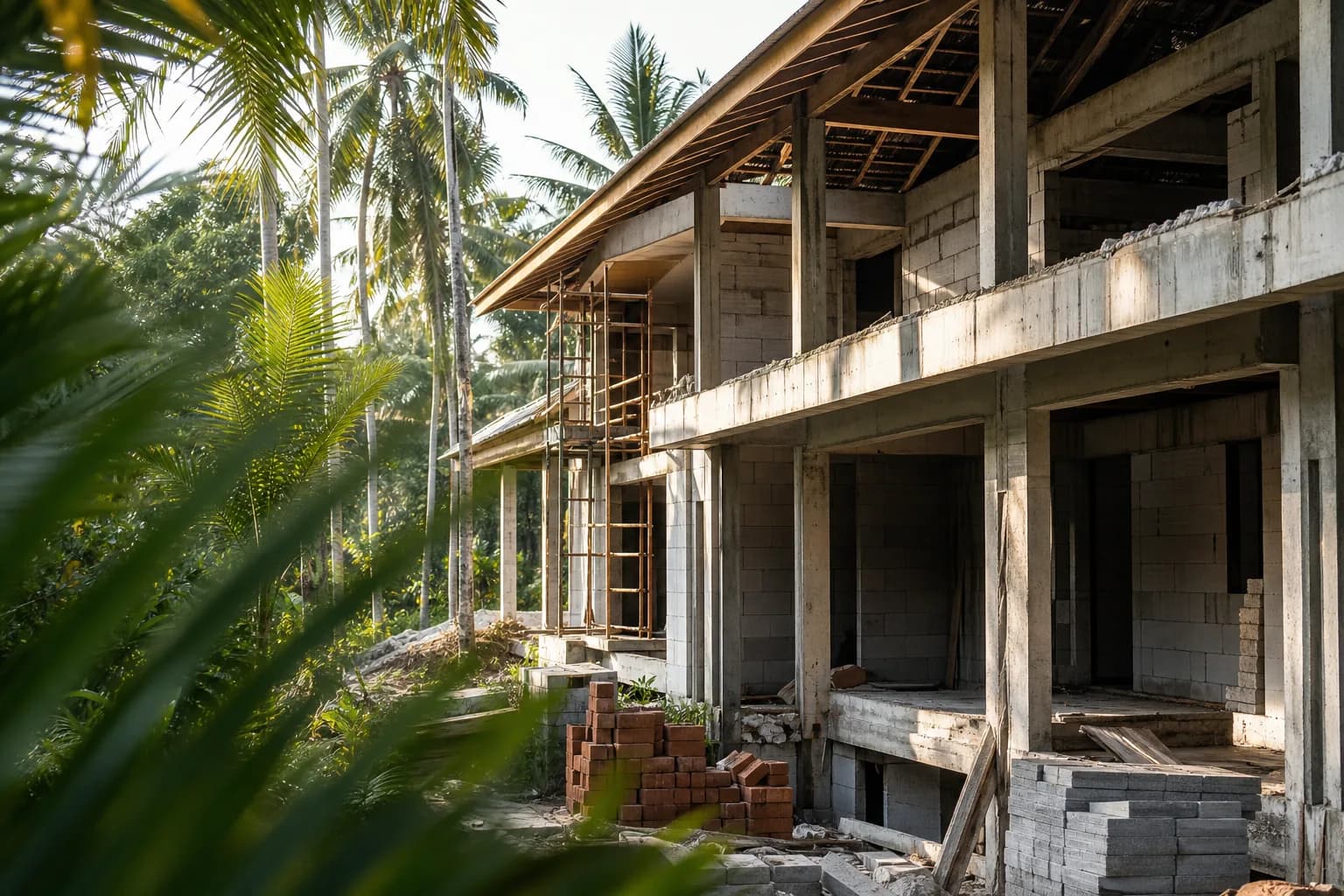
Canggu gets the headlines; Sanur and Nusa Dua quietly deliver steadier returns to a different kind of buyer. An honest 2026 comparison of the stability markets against the hype market — prices, demand drivers, oversupply risk, and who should buy where.
7 min read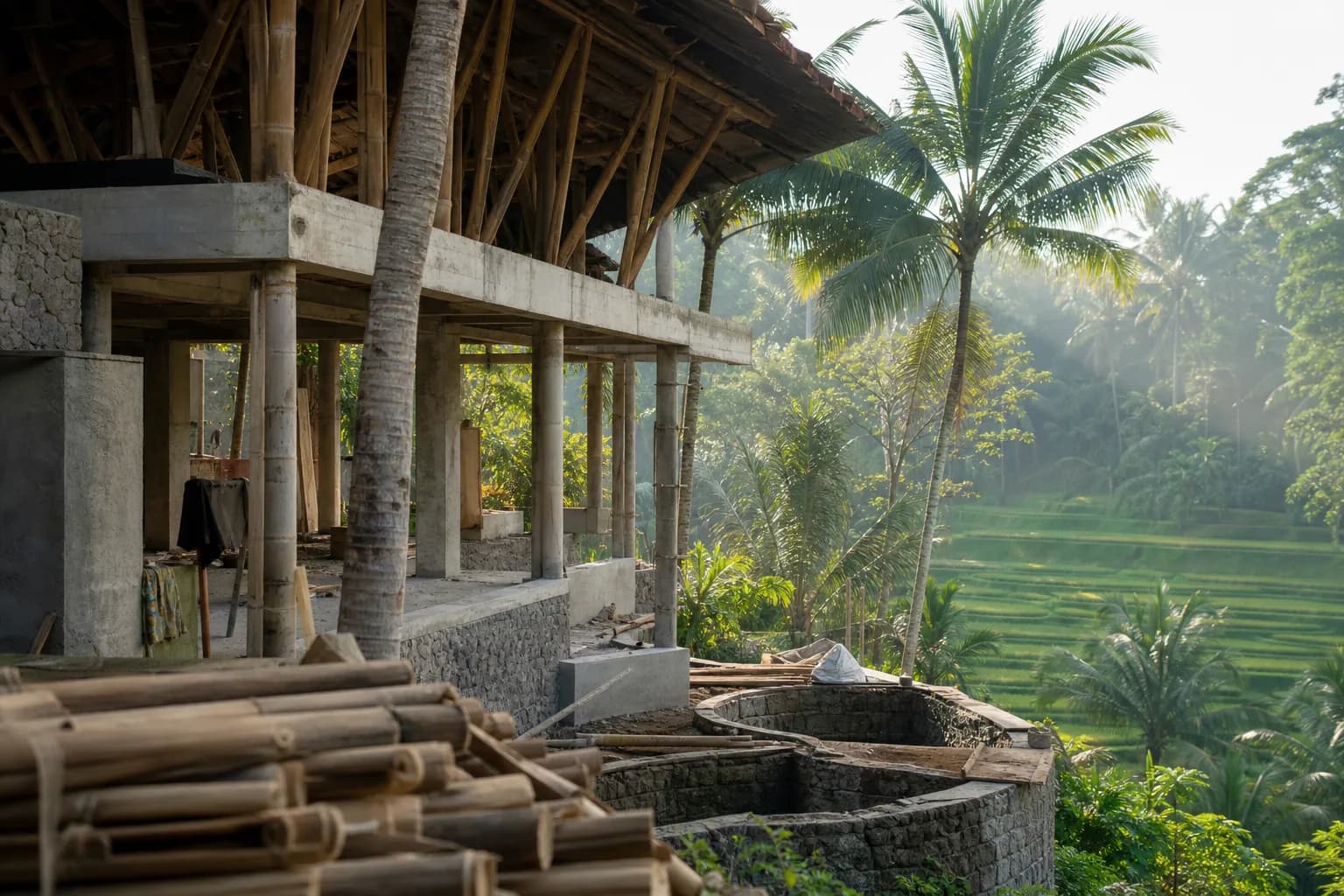
Ubud and the Wellness Market: Buying or Building for Retreats
Ubud is Bali's wellness capital, and retreat-focused property behaves differently from beach villas: longer stays, group bookings, lower volatility. Here is what the market rewards, what zoning allows, and what it costs to buy or build a retreat property in 2026.
8 min read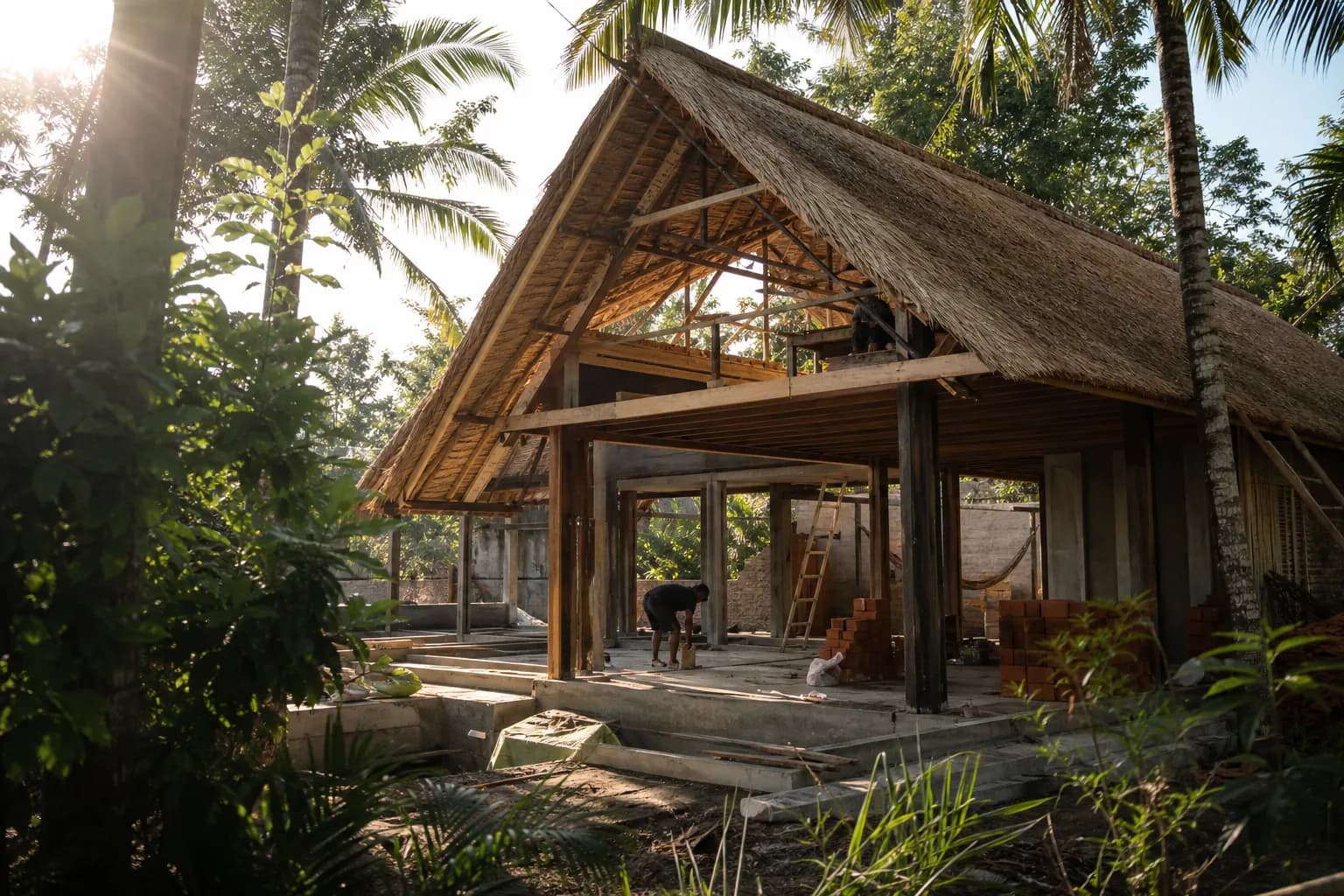
Buying and Building on the Bukit: Uluwatu, Bingin and Balangan from a Buyer's Seat
A buyer's-seat 2026 guide to the Bukit peninsula — Uluwatu, Bingin and Balangan land prices, the water problem nobody budgets, cliff setbacks after the 2025 Bingin demolitions, and how to build there properly.
7 min read