Sanur Groundwater Depth Basement Construction Costs Bali
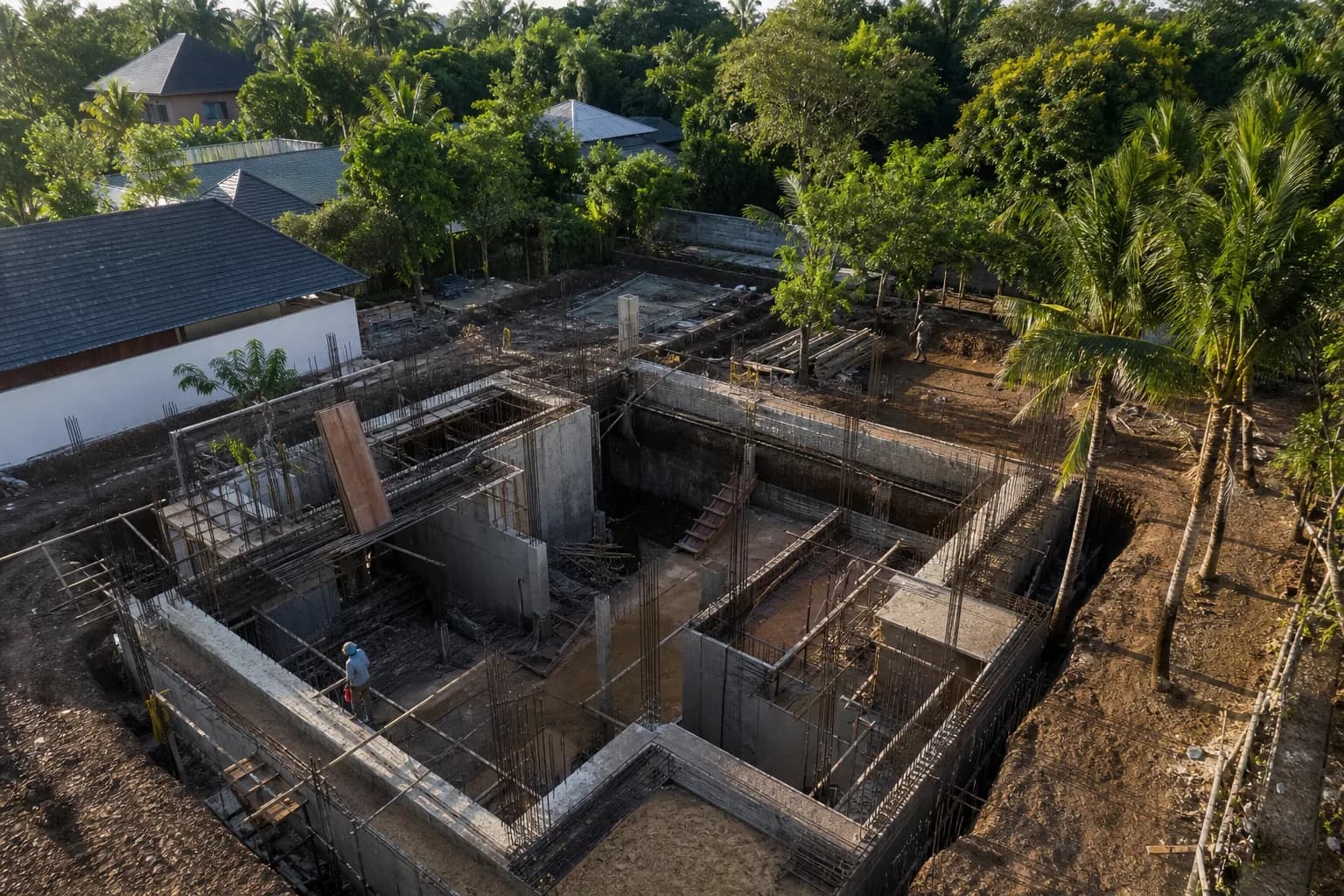
The Sanur Basement Dilemma: Why Groundwater Depth Determines Your Construction Budget
Sanur’s coastal proximity creates a unique engineering challenge that many villa developers discover too late: groundwater tables sitting between 1.5 to 3 meters below ground level make basement construction exponentially more complex and costly than inland Bali locations. Unlike Canggu or Ubud where water tables may sit 8-12 meters deep, Sanur’s saturated soil conditions require specialized dewatering systems, waterproofing protocols, and structural engineering that can add $80,000-$150,000 USD to standard basement construction costs. This isn’t a minor budget adjustment—it’s a fundamental feasibility question that determines whether basement construction makes technical and financial sense for your Sanur property.
Sanur’s Hydrogeological Reality: Understanding Coastal Water Table Dynamics
Sanur sits on Bali’s southeastern coastal plain, where the groundwater table fluctuates with tidal cycles and seasonal rainfall patterns. During the wet season (November-March), water tables can rise to within 1.2 meters of the surface, while dry season levels may drop to 2.5-3.5 meters depth. This dynamic range creates engineering complications that static inland conditions don’t present.
The geological profile typically consists of three distinct layers: surface topsoil (0.3-0.8m), followed by sandy clay or silty sand (1.5-4m), then coral limestone bedrock. The permeable nature of these coastal sediments means groundwater doesn’t simply sit static—it moves laterally with tidal influence, creating hydrostatic pressure against any below-grade structure. When you excavate below the water table, you’re essentially creating a void that groundwater actively tries to fill, requiring continuous management throughout construction and the building’s operational life.
Soil bearing capacity in Sanur typically ranges from 1.5 to 2.5 kg/cm² in upper layers, improving to 3.5-5 kg/cm² at coral limestone depth. This relatively soft upper profile means basement structures require deeper foundation systems that penetrate to competent bearing strata—often requiring piles that extend 8-12 meters below finished basement floor level. The combination of high water table and moderate bearing capacity creates a dual engineering challenge that significantly impacts construction methodology and cost.
The chloride content in Sanur’s groundwater presents another critical factor. Coastal groundwater typically contains 3,000-8,000 ppm chlorides (compared to 200-500 ppm inland), which accelerates concrete degradation and steel reinforcement corrosion. This necessitates specialized concrete mixes with higher cement content, corrosion-resistant reinforcement, and comprehensive waterproofing systems that go far beyond standard construction specifications. Standard K-300 concrete becomes inadequate; you need K-350 or K-400 mixes with waterproofing admixtures and potentially stainless steel or epoxy-coated reinforcement.
Dewatering requirements dominate the construction phase. For a typical 100m² basement excavated to 3 meters depth in Sanur, you’ll need continuous wellpoint or deep well dewatering systems operating 24/7 for 3-6 months during construction. This isn’t occasional pumping—it’s industrial-scale water management with multiple pumps, backup systems, and discharge management that complies with environmental regulations. The electrical cost alone for continuous dewatering can reach $3,000-$5,000 monthly, before considering equipment rental and monitoring.
Structural waterproofing in high water table conditions requires multi-layer redundancy. The typical specification includes: crystalline waterproofing admixtures in the concrete itself, external bentonite or HDPE membrane systems, internal cementitious waterproofing coatings, and a permanent drainage system with sump pumps. This isn’t waterproofing against occasional moisture—it’s creating a watertight vessel that resists continuous hydrostatic pressure equivalent to 0.3-0.5 bar, requiring engineering calculations and quality control that exceed standard construction practices.
Hidden Risks: What Sanur Property Buyers Miss About Basement Feasibility
The most expensive mistake is assuming basement construction costs mirror above-ground construction. Developers budget $800-$1,200 per m² for standard villa construction, then apply the same rate to basement spaces. In Sanur’s high water table conditions, actual basement construction costs range from $1,800-$2,800 per m², with waterproofing and dewatering adding another $400-$700 per m². A 100m² basement that should cost $120,000 in normal conditions can easily reach $250,000-$300,000 in Sanur.
Ongoing operational costs rarely appear in initial feasibility studies. That basement requires permanent dehumidification systems (adding $150-$300 monthly to electricity), regular sump pump maintenance, annual waterproofing inspections, and potential remediation work. Over a 20-year period, operational costs can add another $60,000-$100,000 to the total basement investment—costs that above-ground spaces don’t incur.
Permit complexity increases substantially for below-grade construction in coastal zones. Sanur falls under coastal protection regulations (sempadan pantai) that scrutinize groundwater impact and drainage systems. Environmental impact assessments (UKL-UPL or AMDAL) may be required for significant dewatering operations, adding 2-4 months to permit timelines and $8,000-$15,000 in consulting fees. Many developers discover these requirements after purchasing land, when design is already finalized.
Resale and rental market realities in Sanur don’t necessarily reward basement investment. Unlike temperate climates where basements add significant property value, Bali’s tropical market shows limited premium for below-grade spaces. A $250,000 basement investment might add only $150,000-$180,000 to property value, creating negative ROI purely from construction perspective. The market prefers tropical indoor-outdoor living, not enclosed underground spaces.
Engineering-First Approach: Basement Feasibility Assessment Process
Phase 1: Hydrogeological Investigation (3-4 weeks, $3,500-$6,000)
Before any design work, commission a site-specific geotechnical investigation with groundwater monitoring. This requires minimum three boreholes to 10-12 meter depth, with standpipe piezometers installed to monitor water table fluctuations over 2-4 weeks covering different tidal cycles. The investigation must include permeability testing (to calculate dewatering requirements), soil chemistry analysis (chloride and sulfate content), and bearing capacity determination at proposed foundation depths.
Request specific data: seasonal high water table elevation, hydraulic conductivity (K-value), soil stratification profile, and corrosion risk assessment. This data determines whether basement construction is technically feasible and provides the foundation for accurate cost estimation. Teville’s construction process includes this investigation as standard practice for any below-grade construction consideration.
Phase 2: Structural Engineering Design (4-6 weeks, $8,000-$15,000)
With geotechnical data, structural engineers design the basement as a buoyant structure resisting uplift forces. In Sanur’s conditions, this typically requires: reinforced concrete raft foundation 400-600mm thick, perimeter walls 300-400mm thick with increased reinforcement density, pile foundations extending to coral limestone (8-12m depth), and integrated drainage systems. The design must calculate hydrostatic pressure, buoyancy forces, and long-term settlement.
The engineering deliverables should include: structural calculations stamped by Indonesian-licensed engineers (SIPIL), waterproofing specifications with redundancy systems, dewatering strategy for construction phase, and permanent drainage system design. This documentation is required for building permits (IMB) and provides the basis for contractor tendering.
Phase 3: Dewatering System Design and Permitting (6-8 weeks, $5,000-$12,000)
Dewatering in Sanur requires environmental compliance. Design a wellpoint or deep well system that lowers the water table 1-1.5 meters below excavation depth, with discharge management that doesn’t impact neighboring properties or violate environmental regulations. This may require discharge permits, water quality monitoring, and coordination with local water management authorities (PDAM or subak systems in some areas).
The dewatering plan must address: pump capacity and redundancy, power supply requirements (often requiring temporary generator systems), discharge routing and treatment, monitoring protocols, and emergency response procedures. Inadequate dewatering is the primary cause of basement construction failures in coastal Bali.
Phase 4: Waterproofing Specification and Contractor Selection (3-4 weeks)
Specify multi-layer waterproofing appropriate for continuous hydrostatic pressure: crystalline admixtures in concrete (Xypex, Penetron, or equivalent), external membrane system (bentonite panels or HDPE with protection board), drainage composite layer, and internal cementitious coating. Each layer serves a specific function in the redundancy system.
Contractor selection is critical—this isn’t standard villa construction. Review previous basement projects in similar conditions, verify access to specialized equipment (dewatering pumps, tremie concrete placement systems), and confirm insurance coverage for groundwater-related risks. Teville’s portfolio includes coastal construction projects where groundwater management was successfully executed, providing reference points for capability assessment.
Phase 5: Construction Monitoring and Quality Control (4-8 months)
Basement construction in high water table conditions requires continuous engineering supervision. Critical control points include: dewatering system performance (water table must remain below excavation throughout construction), concrete placement (no cold joints in waterproofing-critical elements), waterproofing membrane installation (no penetrations or damage), and drainage system installation before backfilling.
Third-party waterproofing inspection before backfilling is non-negotiable. Once the basement is backfilled, remediation becomes exponentially more difficult and expensive. Budget $3,000-$5,000 for independent waterproofing certification, which also provides documentation for warranty claims if issues emerge later.
Sanur Basement Construction: Realistic Cost Breakdown
For a 100m² basement in typical Sanur conditions (2-3m water table depth, 3m excavation depth), expect the following cost structure:
- Geotechnical investigation and engineering: $12,000-$21,000
- Dewatering system (rental and operation, 5-6 months): $25,000-$35,000
- Excavation and shoring: $18,000-$28,000
- Structural concrete and reinforcement: $65,000-$95,000
- Waterproofing systems (multi-layer): $28,000-$42,000
- Permanent drainage and sump systems: $8,000-$12,000
- Mechanical ventilation and dehumidification: $12,000-$18,000
- Finishes and fit-out: $35,000-$55,000
Total basement construction cost: $203,000-$306,000 USD for 100m² finished space, or approximately $2,030-$3,060 per m². This compares to $800-$1,200 per m² for equivalent above-ground construction in Sanur.
Timeline expectations: 12-16 months from geotechnical investigation to completed basement, compared to 8-10 months for above-ground villa construction. The extended timeline reflects dewatering requirements, specialized construction sequencing, and waterproofing curing periods that cannot be compressed without compromising quality.
For accurate cost estimation specific to your Sanur property conditions, Teville provides detailed feasibility assessments through our cost estimation service, incorporating site-specific geotechnical data and current material costs.
Frequently Asked Questions: Sanur Basement Construction
Can I build a basement in Sanur if my land is within 100 meters of the beach?
Technically possible but significantly more complex. Properties within coastal setback zones (sempadan pantai, typically 100m from high tide line) face additional regulatory scrutiny and may require full environmental impact assessment (AMDAL) rather than simplified UKL-UPL. Water tables are typically higher (1-2m depth), and tidal influence is more pronounced, increasing dewatering costs by 30-50%. Permit timelines extend to 8-12 months versus 4-6 months for properties further inland. Many coastal Sanur properties find that the regulatory and engineering challenges make basement construction economically unviable compared to alternative designs using elevated structures or above-ground solutions.
What’s the minimum land size that makes basement construction economically sensible in Sanur?
The fixed costs of geotechnical investigation, dewatering systems, and engineering design mean basement construction shows better economics at larger scales. For land parcels under 300m², the $200,000+ basement investment often exceeds the cost of purchasing additional land and building above-ground. The economic threshold typically sits around 400-500m² land area, where a 120-150m² basement provides functional space that would otherwise require expanding the building footprint beyond optimal site coverage ratios. On smaller plots, creative above-ground design solutions typically deliver better value than basement construction.
How long will a properly constructed basement last in Sanur’s groundwater conditions?
With appropriate engineering and maintenance, 40-60 years before major waterproofing remediation is required. This assumes: K-350 or higher concrete with waterproofing admixtures, corrosion-resistant reinforcement, multi-layer waterproofing systems, functioning permanent drainage, and annual maintenance including sump pump servicing and dehumidification system upkeep. Basements constructed without proper waterproofing specifications typically show water infiltration within 5-10 years, requiring expensive remediation. The quality of initial construction and ongoing maintenance determines longevity more than any other factor—this isn’t a build-and-forget structure in c
 164 m²7 month(s)from 79.000 USD
TALA TWO
 3124 m²6 month(s)from 123.000 USD
TALA 8
 4344 m²16 month(s)from 290.000 USD
Radha

Want to calculate?
 2144 m²11 month(s)from 104.000 USD
Narayana
 1from 198.000 USD
Private: Haridas Villas
 3104 m²11 month(s)from 99.000 USD
TALA 100
 3127 m²9 month(s)from 177.000 USD
Mukunda
164 m²7 month(s)from 79.000 USDPrivate: Haridas Villas, Tegallalang
 172 m²8 month(s)from 120.000 USD
Keshava
 3180 m²7 month(s)from 142.000 USD
Vasudeva
 3173 m²6 month(s)from 125.000 USD
TALA FOUR
Start With Real Numbers, Not Guesses
Before buying land or finalizing a design, check the realistic build cost range for your project in Bali.
Our team reviews your inputs and gives a grounded estimate.
Available lands
 422 m²15 min$ 93547Bali, Kerobokan
 928 m²15 min$ 910123Bali, Pererenan
 700 m²8 min$ 165517Bali, Umalas
 550 m²15 min$ 164594Bali, Mengwi
 7500 m²5 min$ 206281Bali, Kedungu
 13000 m²1 min$ 920567Bali, Pekutatan
 5815 m²5 min$ 815740Bali, Tabanan
 10000 m²19 min$ 232759Bali, Buleleng
 1533 m²5 min$ 165666Bali, Cepaka
 750 m²15 min$ 187038Bali, Kerobokan
 2230 m²15 min$ 410573Bali, Padonan
 7250 m²56 min$ 235714Bali, Tabanan
 2130 m²10 min$ 495776Bali, Pecatu
 660 m²10 min$ 175567Bali, Mengwi
 1100 m²8 min$ 280419Bali, Ungasan
Essential Bali build & buy guides
- Bali villa construction cost per m² in 2026
- How much will your villa cost? Calculator
- Building a villa in Bali: the complete guide
- Buying land in Bali: step-by-step for foreigners
- Bali villa investment: yields, risks, returns
- Leasehold vs freehold: what foreigners can own
- Construction defect liability & 10-year warranty
- Bali building codes and construction standards
Related guides
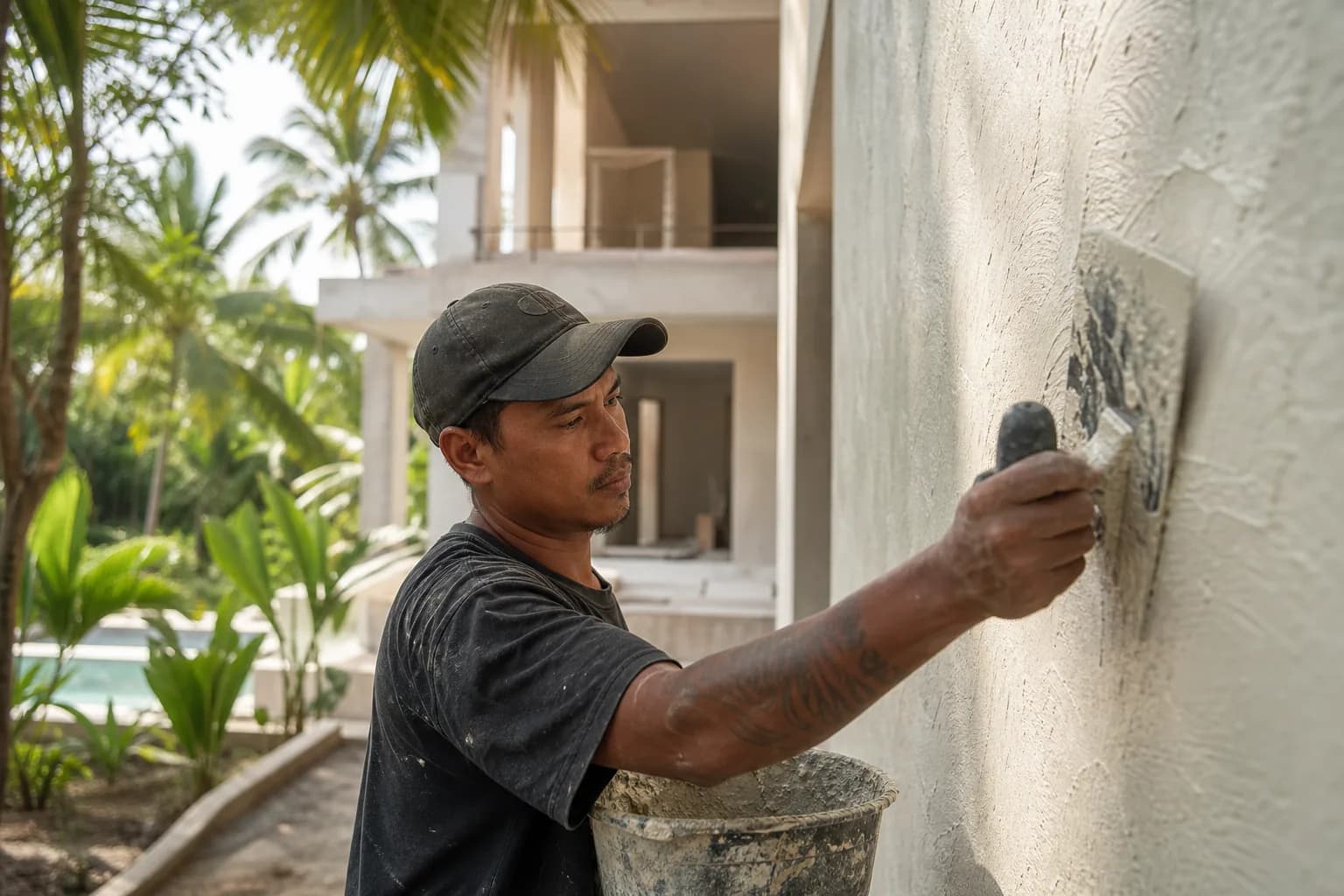
Resin-Infused Plaster Finishes: Anti-Salt Systems Bali
Expert technical guide: Resin-Infused Plaster Finishes: Anti-Salt Systems Bali
8 min read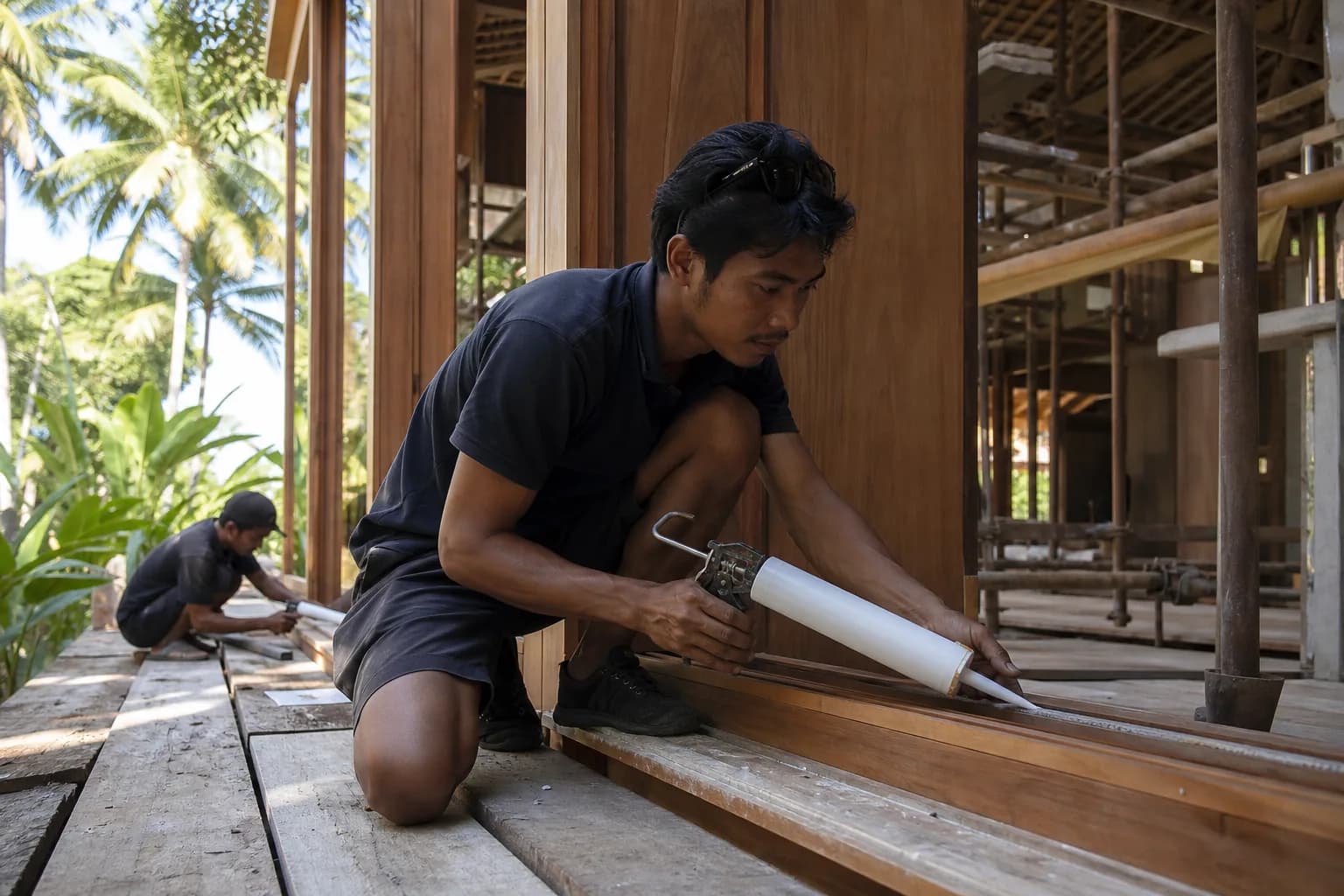
Prefinished Timber Joinery: Silicone Seals Fixings Bali
Professional prefinished timber joinery installation in Bali with silicone seals and fixings for durable weatherproof performance and a premium finish.
10 min read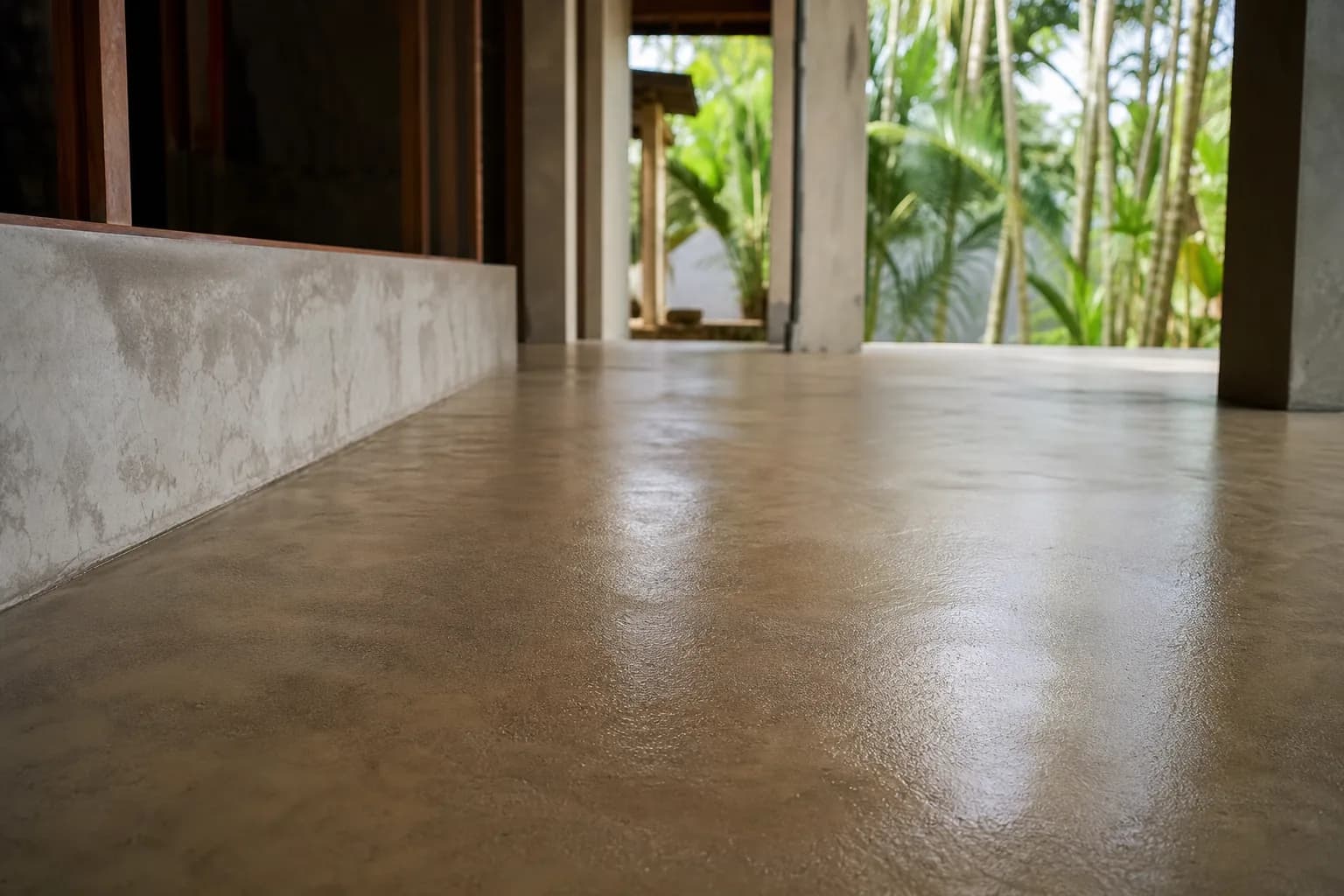
Polished Concrete Microtopping: Surface Prep Sealants Bali
Discover Bali s polished concrete microtopping: expert surface prep, durable sealants, and a flawless finish for modern floors with minimal maintenance.
9 min read