Retrofit Concealed Conduit: PVC Ducting, Seals Fixings Bali
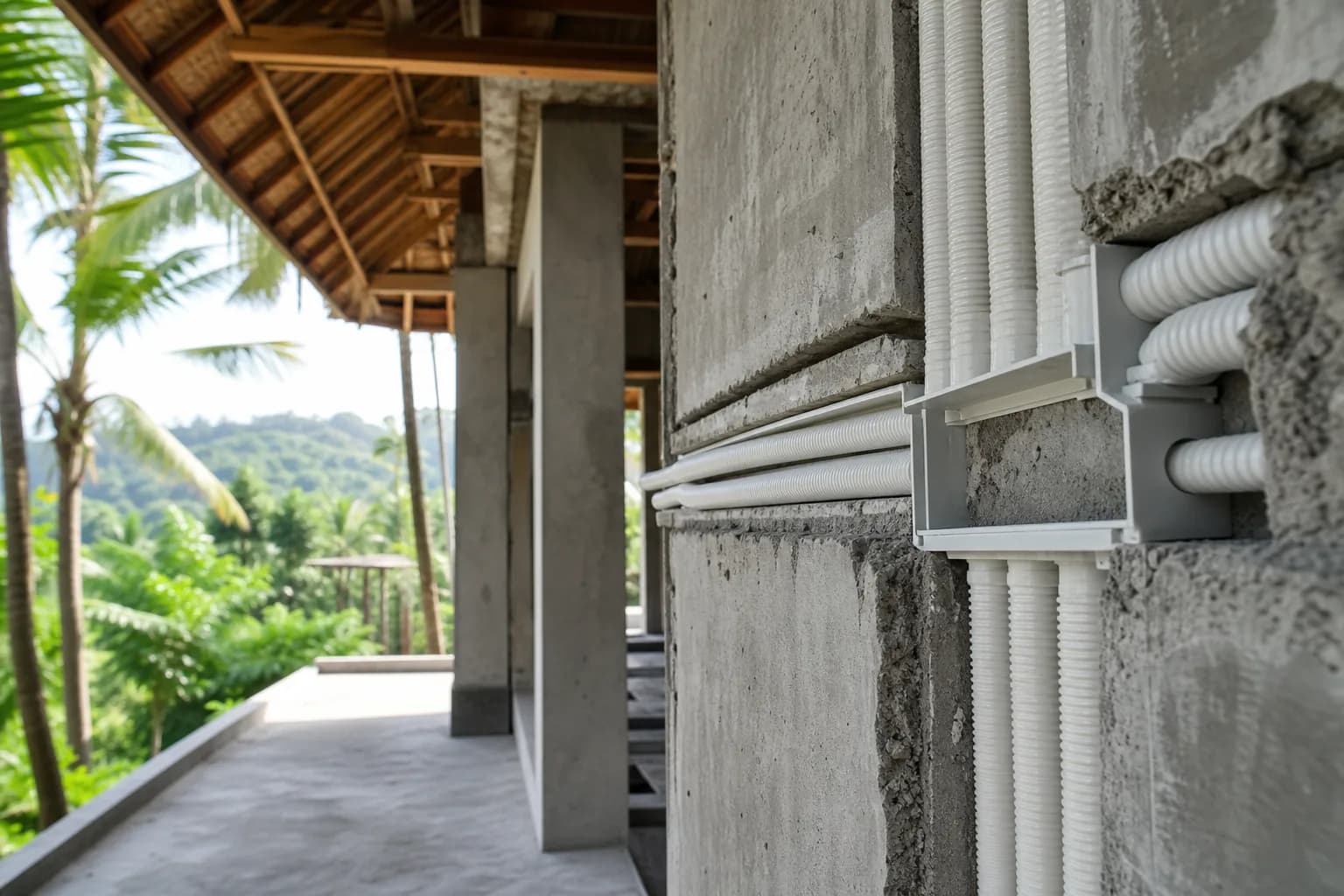
Retrofit Concealed Conduit: PVC Ducting, Seals & Fixings in Bali Villas
1) The Specific Problem/Question
Renovating a Bali villa often means adding outlets for new furniture arrangements, upgrading data lines for streaming, or splitting power for air-con and smart lighting. But how do you insert new concealed wiring without tearing up finished render and stone, inviting moisture into chases, or leaving hairline cracks that telegraph through paint? The core question: what is the correct retrofit method—using PVC ducting, seals, and fixings—to protect wiring in Bali’s tropical, salt-laden climate while preserving high-end finishing and ensuring long-term durability and safety?
2) Technical Deep Dive: What “Right” Looks Like in Bali
At Teville (PT. The Haridas Villas), we treat retrofit concealed conduit as a precision finishing operation, not just electrical rough-in. In Bali villa construction and renovation Bali projects, the environment dictates the detail: high humidity, wind-driven rain, coastal salt air, and temperature swings in sun-exposed areas all stress conduit systems and the finishes covering them.
Why PVC for retrofit? Unplasticized PVC (uPVC) conduit is light, non-corrosive, non-hygroscopic, and solvent-weldable—ideal for clean, fast joints within tight chases. Compared with steel in coastal zones (Canggu, Sanur, Nusa Dua) or alkaline limestone substrates (Bukit/Uluwatu), quality uPVC reduces corrosion risk and is more forgiving when we reopen walls during furniture installation changes. For low-voltage/data, multi-cell innerducts such as Multi-Gard by Prime Conduit allow parallel pulls (data, CCTV, intercom) without cross-talk or repeated wall works—valuable in premium interior finishing Bali settings.
Key constraints in retrofit concealed works:
- Substrate variability: Existing walls may be dense brick, lightweight AAC, or rendered concrete. Each requires controlled chase geometry and clip spacing to avoid vibration cracks and hollow patches.
- Moisture and salt: Any chase is a moisture pathway if left unsealed. Penetrations between AC rooms and exteriors need gasketed terminations, neutral-cure sealants, and, in wet zones, IP-rated boxes to prevent condensation-driven corrosion of terminations.
- Thermal movement: Long runs, sun-to-shade transitions, or attic spaces can drive PVC expansion. Proper expansion couplings and anchored fixings limit stress that otherwise telegraphs through plaster.
- Serviceability: Retrofits must enable future pulls. That means straight-as-practicable runs, generous sweep radii, draw-strings, and mandrel testing before close-up.
- Finish integrity: Reinstatement using compatible mortars and fiberglass mesh over chases reduces hairline cracking along conduit centerlines.
Routing principles for Bali villas:
- Separate power and data: Use dedicated conduits with 50 mm minimum separation in chase or use multi-cell innerduct for LV. Cross at 90° only. This avoids interference and overheating.
- Gentle geometry: Maintain minimum bend radius of 6× conduit diameter; use formed sweeps over short elbows. Each 90° adds pull friction; design in pull boxes instead.
- Anchorage and spacing: Clip spacing approx. 600 mm (20 mm conduit), 800 mm (25 mm), 1,000 mm (≥32 mm). Stainless or polymer-coated fixings in coastal zones; avoid mixed metals that corrode under salt spray.
- Penetrations: Sleeve through slabs and beams using short sections with firestop (for vertical risers) or moisture seal at bathrooms/kitchens. Keep conduits above flood and splash lines.
- Smart expansion: Use expansion couplings where runs exceed ~10 m, at sun-exposed/roof spaces, and at dissimilar materials interfaces.
Joints and sealing details:
- Solvent welding: Dry-fit, mark insertion depth, apply primer (if specified) and solvent cement to both spigot and socket, quarter-turn, hold 30 seconds, and respect cure times (handling ~15 minutes, full cure ~24 hours), especially before backfill.
- Transitions: To metal boxes, use male/female threaded adapters with locknuts and insulating bushings; to flexible drops (e.g., inside cabinetry), use PVC-to-flex couplings with strain relief.
- Ingress protection: Use grommets at box entries, compressible seals at slab sleeves, and neutral-cure silicone in wet zones. For vertical service shafts, apply tested firestop systems as required by building class and PUIL guidance.
Finishing above all: We grind chase shoulders for a dovetail profile, dampen substrate, pack with polymer-modified repair mortar, embed mesh at the skim, and respect cure cycles before repaint. For natural stone or microcement, we coordinate with finish applicators to achieve seamless tone and texture. The result is concealed utilities that disappear—yet remain accessible for maintenance.
As of 2026, industry guidance remains consistent: choose high-quality conduit and fittings, use proper seals and fixings, and follow disciplined installation practices. See also this practical PVC electrical conduit installation guide for fundamentals that we adapt to Bali’s climate and substrates.
3) Materials & Standards for Bali Conditions
Core materials we specify for retrofit concealed conduit:
- uPVC rigid conduit: Common diameters 20/25/32/40 mm; compliant with IEC/EN 61386 series. For tougher routes, schedule 40/80 PVC as needed.
- Multi-cell innerduct: For telecom/LV bundles, e.g., Multi-Gard, enabling separate channels in one chase—ideal behind media walls and home office retrofits.
- Solvent cement and primer: Manufacturer-matched, tropical-rated. Low-viscosity cement for small diameters; medium/heavy-body for ≥32 mm.
- Couplings & adapters: Rigid couplings, threaded male/female adapters, box adapters, reducers, expansion couplings, transition pieces to flexible corrugated PVC.
- Seals & grommets: IP-rated cable glands, box gaskets, neutral-cure silicone, compressible foam sleeves for slab/wall penetrations.
- Fixings: UV-stable saddles/clips, stainless-steel screws and anchors in coastal zones; polymer anchors in AAC to avoid over-expansion cracks.
- Pulling aids: Draw wire, fish tape, non-staining pulling lubricant, mandrels and swabs.
- Boxes & accessories: Flush boxes with adjustable depth rings, IP65/IP67 enclosures in wet areas, insulating bushings, copper earth lugs.
- Repair mortars & meshes: Polymer-modified patching mortars, fiberglass mesh tape, compatible primers and finishing coats.
Standards and practices we align with:
- PUIL (Peraturan Umum Instalasi Listrik): Indonesian electrical installation requirements—governing conductor fill, separation of services, protection, and testing.
- SNI/IEC 61386 series: Conduit system performance (mechanical strength, impact, temperature rating).
- Utility coordination: PLN for supply interfacing; telecom providers for data cable specs and demarcation.
- Earthing and protection: RCD/ELCB provision, surge protection for coastal lightning exposure, and earthing resistance typically targeted ≤5 Ω (soil treatment as required).
- Firestopping: Intumescent or elastomeric systems at risers/compartment lines, selected per substrate and rating needs.
All selections are cross-checked against the villa’s finish schedule and environment: for example, stainless fixings and gasketed boxes in breezy oceanfront Seminyak, or expansion couplings and ventilated attic runs in sun-exposed Umalas roofs. This is a bali area guide lens applied to concealed utilities—local context informing every technical choice.
4) Step-by-Step Retrofit Process We Use
Stage 1: Survey and Non-Destructive Mapping
- Interview the owner/designer about new furniture installation, media walls, and appliance positions to define outlet/data points and load paths.
- Use scanners and borescopes to locate existing conduits, rebar, water lines, and voids. Mark safe corridors and no-go zones on walls/floors.
- Draft an annotated plan showing conduit sizes, pull boxes, and penetrations; confirm box heights with furniture shop drawings.
Stage 2: Mock-up and Material Prep
- Build a small sample chase to validate mortar compatibility and crack control over the conduit centerline.
- Pre-bend large-radius sweeps where space allows, and pre-assemble complex manifolds with solvent-welded joints on the bench.
- Label components and prepare seals, grommets, and adapters for fast, clean installation.
Stage 3: Controlled Chase Cutting
- Edge-score with vacuum-assisted saws, then chip within scored lines to the required depth. Keep chases as narrow and shallow as code allows.
- Form subtle dovetail shoulders to key repair mortar. In AAC, use dedicated grooving tools to avoid over-fracturing blocks.
- Manage dust with extraction and protection of adjacent finishes; isolate rooms when possible.
Stage 4: Conduit Placement and Jointing
- Dry-fit full runs first; check pull path straightness and box alignment. Maintain segregation between power and low-voltage.
- Solvent-weld joints: clean, prime (if specified), apply cement, quarter-turn, and hold. Wipe squeeze-out clean to avoid plaster adhesion issues.
- Install expansion couplings at long runs/sun transitions. Align couplings per manufacturer’s gap marks for ambient temperature.
- Use threaded adapters and insulating bushings into metal boxes; fit grommets at all entries to protect insulation.
Stage 5: Fixings and Seals
 3180 m²7 month(s)from 142.000 USD
Vasudeva
 3124 m²6 month(s)from 123.000 USD
TALA 8
 3127 m²9 month(s)from 177.000 USD
Mukunda
 3104 m²11 month(s)from 99.000 USD
TALA 100
 172 m²8 month(s)from 120.000 USD
Keshava
 164 m²7 month(s)from 79.000 USD
TALA TWO
 3173 m²6 month(s)from 125.000 USD
TALA FOUR

Want to calculate?
 1from 198.000 USD
Private: Haridas Villas
 2144 m²11 month(s)from 104.000 USD
Narayana
 4344 m²16 month(s)from 290.000 USD
Radha
164 m²7 month(s)from 79.000 USDPrivate: Haridas Villas, Tegallalang
Start With Real Numbers, Not Guesses
Before finalizing your finishing works plan, check realistic cost ranges for your Bali villa project.
Available lands
 1660 m²10 min$ 343448Bali, Kerobokan
 400 m²15 min$ 67192Bali, Tabanan
 6000 m²30 min$ 55419Bali, Tabanan
 550 m²5 min$ 217629Bali, Tabanan
 2700 m²30 min$ 314224Bali, Sidemen
 1350 m²5 min$ 283467Bali, Pecatu
 3000 m²15 min$ 738916Bali, Cepaka
 1950 m²7 min$ 150092Bali, Tabanan
 1533 m²5 min$ 165666Bali, Cepaka
 1000 m²5 min$ 350431Bali, Drupadi
 7250 m²56 min$ 235714Bali, Tabanan
 2130 m²10 min$ 495776Bali, Pecatu
 29000 m²6 min$ 3857143Bali, Tabanan
 2000 m²10 min$ 243842Bali, Mengwi
 1000 m²10 min$ 230911Bali, Kerobokan
Essential Bali build & buy guides
- Bali villa construction cost per m² in 2026
- How much will your villa cost? Calculator
- Building a villa in Bali: the complete guide
- Buying land in Bali: step-by-step for foreigners
- Bali villa investment: yields, risks, returns
- Leasehold vs freehold: what foreigners can own
- Construction defect liability & 10-year warranty
- Bali building codes and construction standards
Related guides
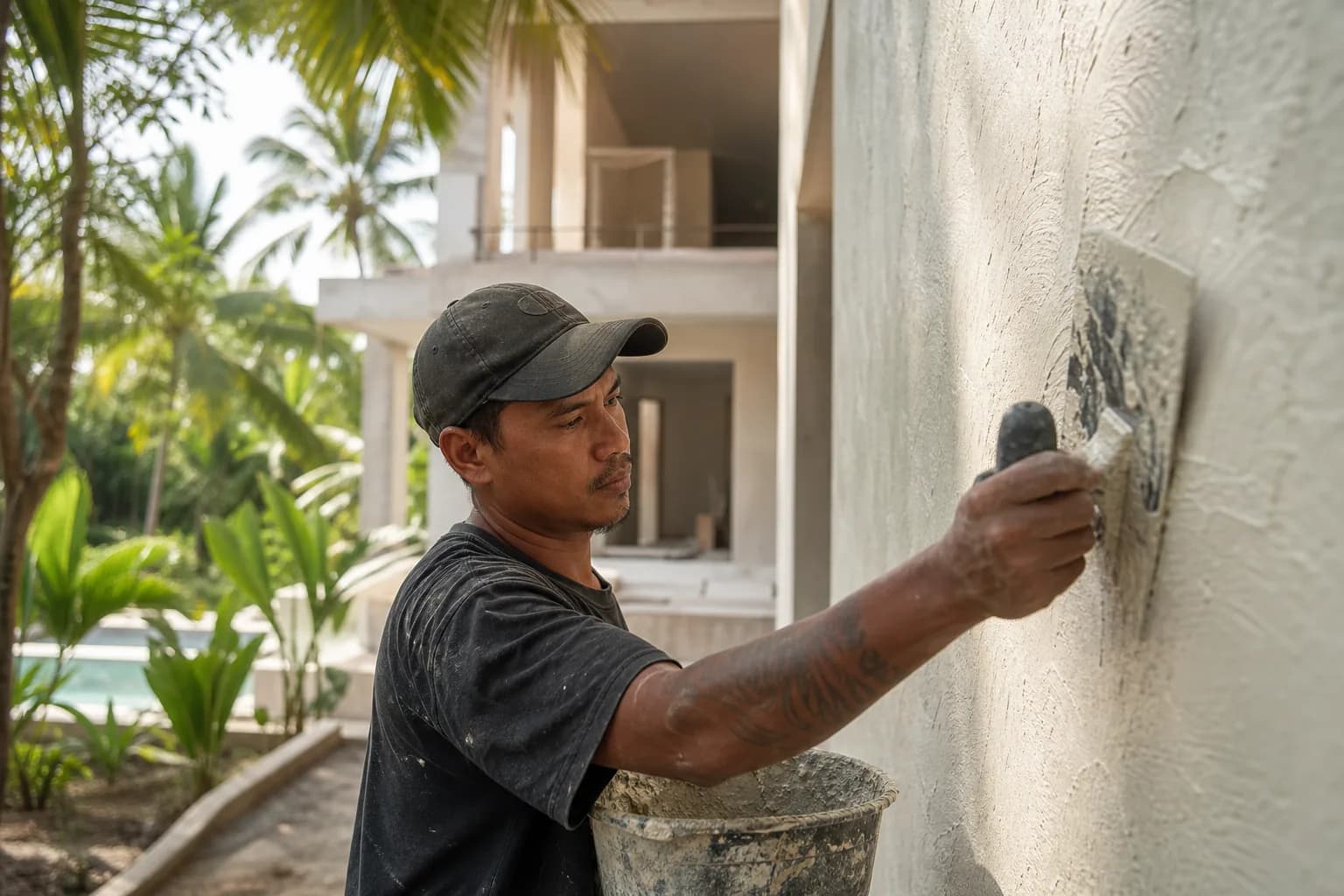
Resin-Infused Plaster Finishes: Anti-Salt Systems Bali
Expert technical guide: Resin-Infused Plaster Finishes: Anti-Salt Systems Bali
8 min read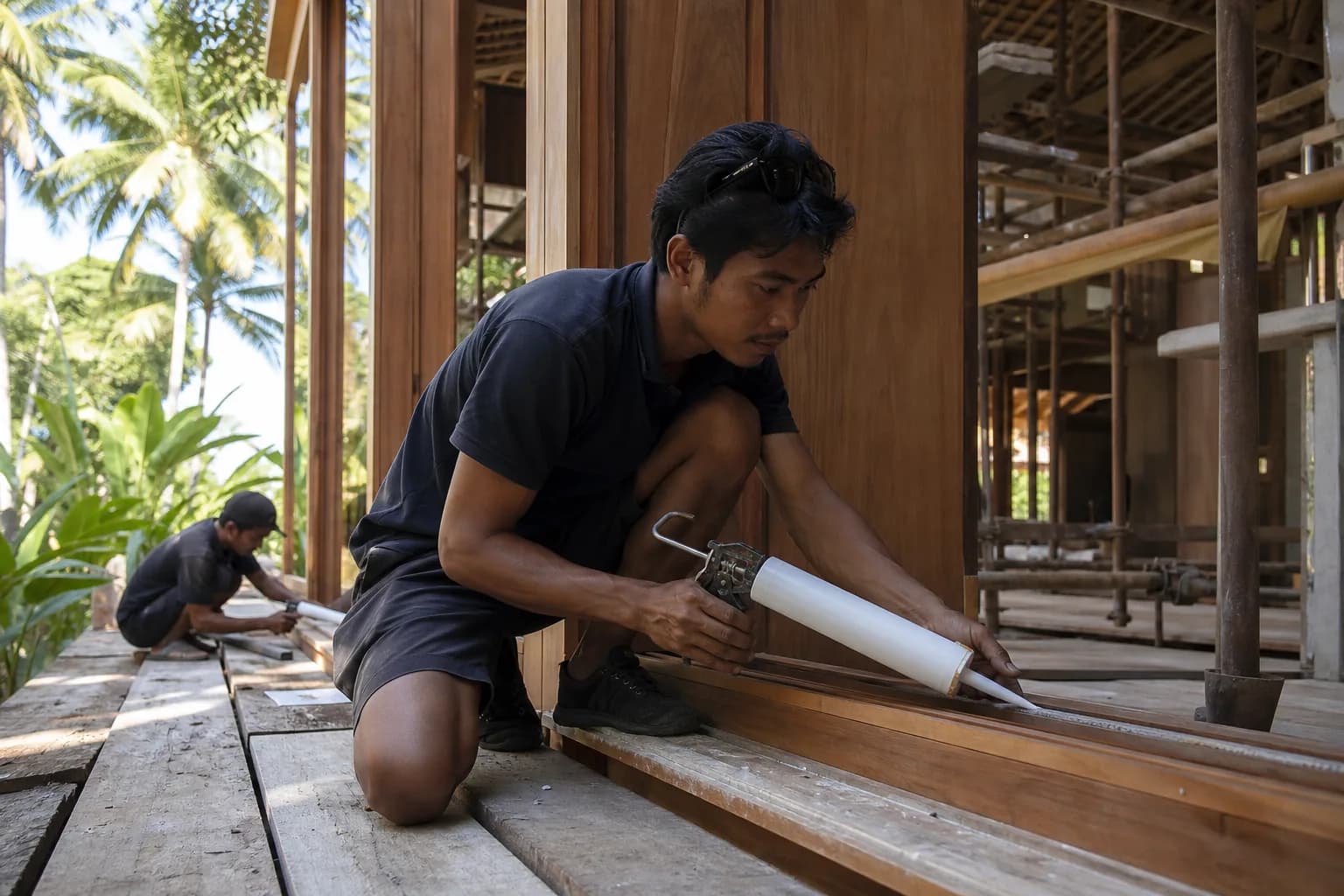
Prefinished Timber Joinery: Silicone Seals Fixings Bali
Professional prefinished timber joinery installation in Bali with silicone seals and fixings for durable weatherproof performance and a premium finish.
10 min read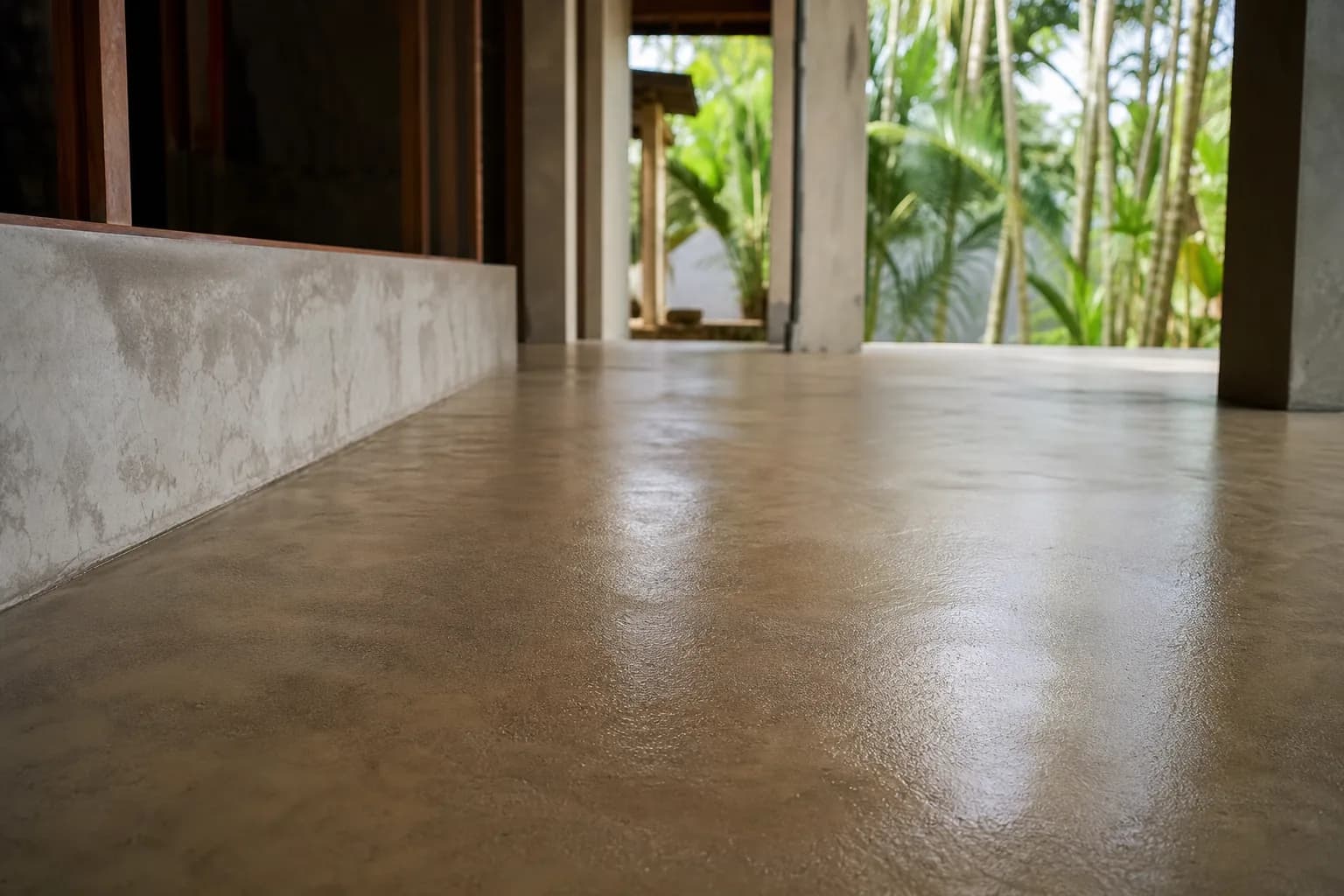
Polished Concrete Microtopping: Surface Prep Sealants Bali
Discover Bali s polished concrete microtopping: expert surface prep, durable sealants, and a flawless finish for modern floors with minimal maintenance.
9 min read