Rebar Corrosion Protection in Bali: Epoxy vs Galvanized
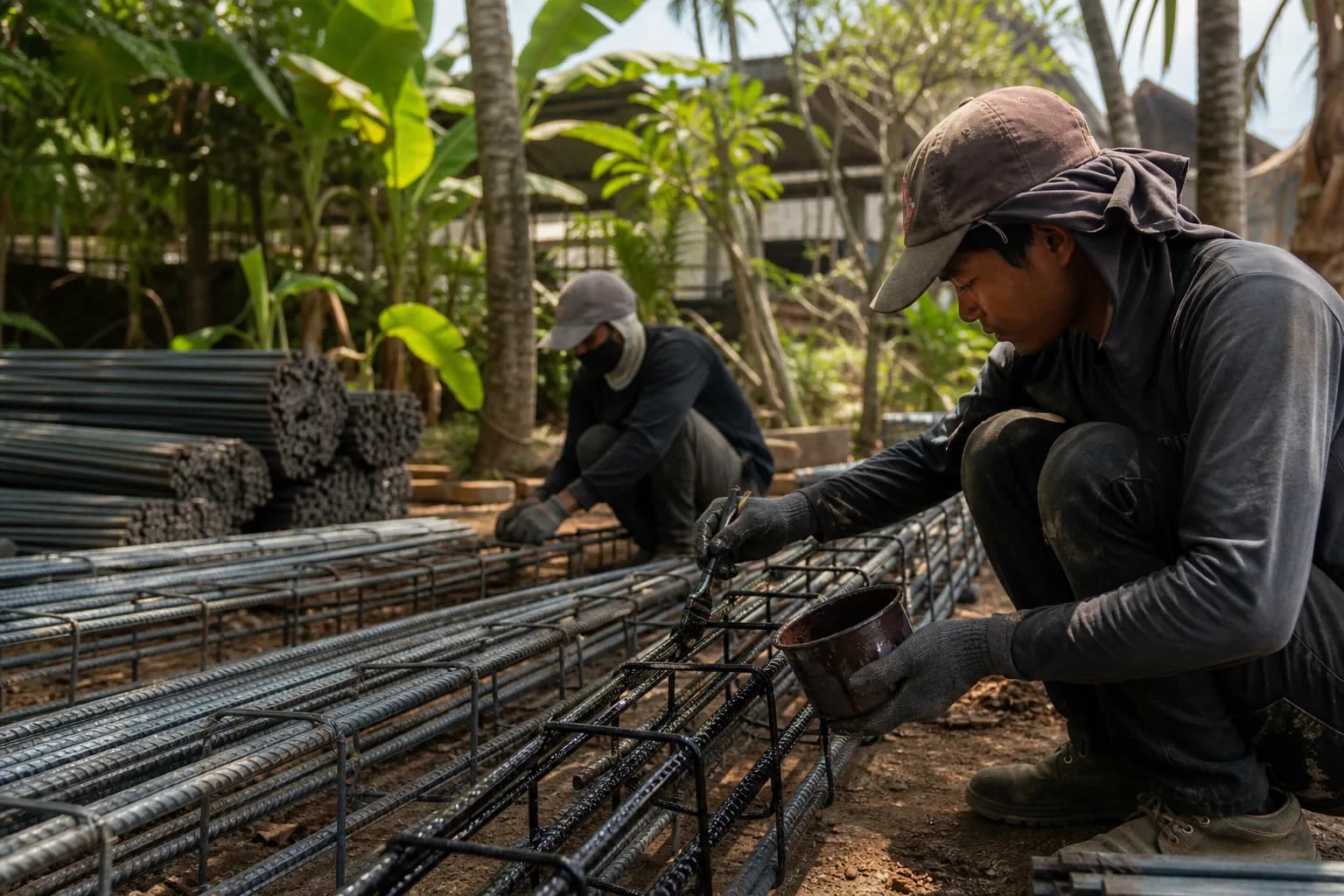
The Critical Choice: Protecting Your Bali Villa’s Structural Skeleton from Tropical Corrosion
When designing a villa in Bali’s coastal zones or high-humidity inland areas, one engineering decision will determine whether your concrete structure lasts 20 years or 50+ years: the corrosion protection system for your reinforcing steel. The island’s combination of salt-laden air, high humidity (averaging 75-85%), and seasonal monsoon exposure creates an aggressively corrosive environment that attacks unprotected rebar relentlessly. The choice between epoxy-coated and hot-dip galvanized rebar isn’t merely a specification line item—it’s a fundamental structural longevity decision that affects everything from foundation integrity to long-term maintenance costs. Most developers focus on visible finishes while overlooking this hidden but critical system, only to face expensive remediation when corrosion-induced concrete spalling appears years later.
Engineering Analysis: How Epoxy and Galvanized Coatings Protect Steel in Bali’s Aggressive Environment
Understanding corrosion protection requires examining how each system responds to Bali’s specific environmental stressors. Reinforcing steel corrodes when moisture and oxygen penetrate concrete, creating an electrochemical reaction that produces iron oxide (rust). This rust occupies 2-4 times the volume of the original steel, generating internal pressure that cracks and spalls the concrete cover.
Epoxy-Coated Rebar: Barrier Protection Mechanism
Epoxy-coated rebar (ECR) employs a fusion-bonded epoxy polymer layer, typically 175-300 microns thick, applied electrostatically to cleaned steel at 200-250°C. This coating creates a physical barrier preventing moisture and chloride ion contact with the steel substrate. In laboratory conditions and undamaged installations, epoxy coatings demonstrate exceptional corrosion resistance—studies show corrosion rates 10-100 times lower than bare steel in chloride environments.
However, the critical vulnerability lies in coating integrity. Recent research from 2024 demonstrates that when epoxy coatings sustain damage—whether from handling, cutting, bending, or tie-wire installation—corrosion tends to concentrate at these breach points. The intact coating surrounding the damage prevents the corrosion products from dispersing, creating localized corrosion cells with accelerated attack rates. In Bali’s high-chloride coastal environment, even minor coating holidays (defects) can become corrosion initiation sites.
The coating’s effectiveness depends entirely on maintaining continuity throughout fabrication, transport, and installation. Field repairs using patching compounds rarely achieve the same protection level as factory-applied coatings. Additionally, epoxy coatings can be damaged during concrete placement if aggregate impacts the bars or vibrators contact the reinforcement directly.
Hot-Dip Galvanized Rebar: Sacrificial Protection System
Galvanized rebar receives a metallurgically-bonded zinc coating (typically 610-915 g/m² or 85-127 microns) through immersion in molten zinc at 450°C. This creates a multi-layer zinc-iron alloy structure that provides two distinct protection mechanisms: barrier protection (like epoxy) and cathodic (sacrificial) protection.
The sacrificial protection is crucial for Bali applications. When the zinc coating is damaged or when concrete carbonation reaches the steel, zinc corrodes preferentially to steel, protecting exposed steel areas up to 5mm away from the coating breach. Zinc corrosion products (primarily zinc hydroxide and zinc carbonate) are less voluminous than iron rust—occupying only 1.5 times the original zinc volume—and tend to migrate away from the steel surface through the concrete pore structure rather than building internal pressure.
Field studies demonstrate that galvanized rebar maintains consistent performance even with surface damage. The zinc coating tolerates handling, cutting, and installation stresses better than epoxy, with the zinc-iron alloy layers providing robust adhesion. In tropical marine environments similar to Bali’s coastal zones, galvanized rebar has shown service lives exceeding 60 years in properly designed concrete mixes.
Concrete Alkalinity Considerations
A critical factor often overlooked: fresh concrete’s high pH (12.5-13.5) affects these coatings differently. Zinc reacts with fresh concrete alkalinity, generating hydrogen gas and forming a calcium hydroxyzincate passive layer. This initial reaction consumes 3-8 microns of zinc coating but then stabilizes, with the passive layer protecting the remaining zinc. Modern galvanizing specifications account for this initial loss.
Epoxy coatings are inert to concrete alkalinity but provide no protection if damaged. In Bali’s environment, where concrete carbonation rates are accelerated by humidity cycling and coastal CO₂ exposure, the sacrificial protection of galvanized rebar offers advantages as the concrete ages and pH drops.
Hidden Risks: What Most Bali Villa Developers Miss About Rebar Corrosion Protection
The most dangerous assumption is treating corrosion protection as a simple material substitution rather than a comprehensive system requiring specific handling protocols and quality control measures.
Epoxy Coating Damage During Construction
Bali construction sites rarely implement the careful handling procedures epoxy-coated rebar demands. Workers drag bars across rough surfaces, drop bundles from trucks, and use steel tie wires that scratch coatings. Each scratch, gouge, or chip becomes a potential corrosion initiation point. Studies indicate that typical construction handling damages 1-5% of epoxy coating surface area—seemingly minor, but critical in chloride-rich environments. Most contractors lack proper field repair procedures, and patching compounds applied on dusty, humid job sites rarely achieve adequate adhesion.
Concrete Cover Thickness Compromises
Corrosion protection systems only function when adequate concrete cover protects the reinforcement. Bali’s building code requires minimum 40mm cover for beams/columns and 50mm for foundations in aggressive environments, yet site measurements frequently reveal 25-35mm actual cover due to poor spacer placement or inadequate quality control. Reduced cover accelerates chloride penetration and carbonation, overwhelming even premium corrosion protection systems within 10-15 years rather than the designed 50+ year service life.
Mixing Dissimilar Metals
A critical error: combining galvanized rebar with uncoated steel reinforcement or aluminum conduits in the same concrete element. This creates galvanic cells where the zinc coating corrodes rapidly to protect the uncoated steel, depleting the protective layer prematurely. Similarly, using stainless steel tie wires with galvanized rebar accelerates localized zinc corrosion. Material compatibility must be specified and enforced throughout the project.
Inadequate Concrete Quality
Premium rebar protection cannot compensate for porous, low-quality concrete. Bali projects often use excessive water-cement ratios (>0.55) for workability in hot conditions, creating permeable concrete that allows rapid chloride and moisture ingress. The corrosion protection system must be matched with appropriate concrete specifications: maximum 0.45 w/c ratio, minimum 350 kg/m³ cement content, and proper curing for at least 7 days—requirements frequently compromised on fast-track projects.
Implementation Protocol: Specifying and Installing Corrosion-Protected Rebar in Bali Projects
Step 1: Environmental Exposure Assessment (Week 1-2)
Conduct site-specific corrosion risk analysis before selecting protection systems. Coastal sites within 1km of ocean require maximum protection; inland sites above 200m elevation face lower chloride exposure but high humidity. Test soil for chloride content and pH—some Bali locations have naturally aggressive soils. Document prevailing wind patterns that carry salt spray. For verified land parcels, Teville provides environmental exposure classifications based on location-specific data.
Step 2: Protection System Selection and Specification (Week 2-3)
For coastal zones (<1km from ocean) and high-exposure areas: specify hot-dip galvanized rebar conforming to ASTM A767 Grade 60, Class II coating (86 g/m² minimum). The sacrificial protection and damage tolerance justify the premium in aggressive environments. For moderate inland locations: epoxy-coated rebar per ASTM A775 may suffice if strict handling protocols are enforceable. Specify concrete requirements simultaneously: minimum 350 kg/m³ cement, maximum 0.45 w/c ratio, 50mm minimum cover for foundations/slabs, 40mm for elevated elements. Include specific prohibitions against mixing coated and uncoated steel.
Step 3: Procurement and Quality Verification (Week 4-6)
Source materials from certified suppliers with test certificates. For galvanized rebar, verify coating weight through weigh-strip-weigh testing of samples. For epoxy-coated bars, inspect for coating continuity, thickness (minimum 175 microns), and adhesion. Reject materials with visible coating damage exceeding specification limits (typically <2% surface area). Store materials elevated off ground on timber supports, separated by type, protected from mechanical damage and direct weather exposure.
Step 4: Installation Protocol Implementation (Construction Phase)
Implement mandatory handling procedures: lift bundles with nylon slings (never chains), place bars rather than dragging, use plastic-coated tie wires for epoxy rebar or galvanized tie wire for galvanized rebar. Train workers on damage prevention—this is critical and often neglected. Install bar supports (chairs/spacers) at specified intervals to maintain concrete cover: maximum 1m spacing for horizontal bars, 1.5m for vertical. Use plastic or mortar spacers, never steel. Inspect and document actual cover thickness before concrete placement using cover meters or physical measurement.
Step 5: Concrete Placement and Curing (Construction Phase)
Place concrete carefully to avoid impacting reinforcement. Use appropriate aggregate size (maximum 20mm for typical cover thicknesses) to ensure proper consolidation around bars without coating damage. Vibrate concrete away from reinforcement, not directly against bars. Implement rigorous curing: continuous water curing for minimum 7 days or membrane-forming curing compounds for vertical surfaces. Proper curing is essential—it reduces concrete permeability more than any other single factor, directly affecting corrosion protection system longevity.
Step 6: Quality Documentation and Long-Term Monitoring
Document coating type, supplier certifications, installation photos showing cover thickness, and concrete test results. For high-value projects, consider installing corrosion monitoring sensors (reference electrodes) in critical elements to track protection system performance over time. Establish inspection protocols for visible concrete surfaces, checking for rust staining or spalling that indicates corrosion initiation.
Cost Analysis: Investment Requirements for Corrosion Protection Systems in Bali
Material costs for corrosion-protected rebar in Bali (2026 pricing) reflect both the coating premium and import/logistics factors. Standard uncoated rebar (ASTM A615 Grade 60) costs approximately IDR 13,000-15,000/kg delivered to Bali sites. Hot-dip galvanized rebar adds 45-65% premium, ranging IDR 19,000-24,000/kg depending on diameter and order volume. Epoxy-coated rebar typically costs 35-50% above standard rebar, approximately IDR 18,000-22,000/kg.
For a typical 250m² two-story villa requiring approximately 8-10 tons of reinforcing steel, the corrosion protection premium represents IDR 48-90 million (USD 3,000-5,600) for galvanized rebar or IDR 40-70 million (USD 2,500-4,400) for epoxy-coated rebar compared to uncoated steel. This represents 1.5-2.5% of total villa construction cost, yet determines structural longevity for decades.
However, total system costs extend beyond material premiums. Epoxy-coated rebar requires careful handling protocols, field repair materials, and potentially higher labor costs—add 10-15% to installation costs. Galvanized rebar installs similarly to standard rebar with minimal additional labor. Concrete specification upgrades (lower w/c ratio, higher cement content) add approximately IDR 150,000-250,000/m³, representing IDR 25-40 million for typical villa foundations and structural elements.
The economic comparison becomes clear when considering lifecycle costs. Corrosion remediation—removing spalled concrete, cleaning corroded steel, applying protective coatings, and restoring concrete cover—costs IDR 2-4 million/m² of affected area. A single corroded column requiring remediation can cost IDR 15-30 million. Widespread corrosion damage requiring structural rehabilitation can reach 30-50% of original construction cost. The corrosion protection investment provides 20-40x return through avoided remediation over a 50-year building life.
Frequently Asked Questions: Rebar Corrosion Protection in Bali Construction
Should I use galvanized or epoxy-coated rebar for my coastal Bali villa project?
For coastal locations within 1-2km of ocean, hot-dip galvanized rebar provides superior long-term protection due to its sacrificial protection mechanism and damage tolerance during construction. Bali’s construction practices rarely achieve the careful handling epoxy coatings require, and the coastal chloride environment aggressively attacks any coating breaches. Galvanized rebar’s consistent performance with surface damage and proven 60+ year service life in tropical marine environments make it the engineering-recommended choice for high-exposure Bali sites. Epoxy coatings may be appropriate for inland locations above 200m elevation where chloride exposure is minimal and strict quality control is enforceable.
Can I mix galvanized rebar with standard uncoated steel to reduce costs?
Never mix galvanized and uncoated steel reinforcement in the same concrete element—this creates galvanic corrosion cells that rapidly deplete the zinc coating while providing minimal protection to the uncoated steel. The galvanized bars essentially sacrifice themselves to protect the uncoated steel, defeating the purpose of the protection system. If budget constraints require selective protection, use galvanized rebar in highest-exposure elements
 3127 m²9 month(s)from 177.000 USD
Mukunda
 3173 m²6 month(s)from 125.000 USD
TALA FOUR
 2144 m²11 month(s)from 104.000 USD
Narayana
 1from 198.000 USD
Private: Haridas Villas
 3104 m²11 month(s)from 99.000 USD
TALA 100
 172 m²8 month(s)from 120.000 USD
Keshava
 3180 m²7 month(s)from 142.000 USD
Vasudeva
 4344 m²16 month(s)from 290.000 USD
Radha
 164 m²7 month(s)from 79.000 USD
TALA TWO
 3124 m²6 month(s)from 123.000 USD
TALA 8

Want to calculate?
164 m²7 month(s)from 79.000 USDPrivate: Haridas Villas, Tegallalang
Start With Real Numbers, Not Guesses
Before buying land or finalizing a design, check the realistic build cost range for your project in Bali.
Our team reviews your inputs and gives a grounded estimate.
Available lands
 204 m²5 min$ 40899Bali, Kedungu
 422 m²15 min$ 93547Bali, Kerobokan
 1700 m²10 min$ 632257Bali, Kuta
 2850 m²15 min$ 315887Bali, Tabanan
 2200 m²15 min$ 508005Bali, Canggu
 5815 m²5 min$ 815740Bali, Tabanan
 260 m²5 min$ 51872Bali, Kedungu
 1375 m²10 min$ 447044Bali, Canggu
 6000 m²30 min$ 55419Bali, Tabanan
 250 m²15 min$ 40025Bali, Munggu
 2000 m²10 min$ 243842Bali, Mengwi
 220 m²2 min$ 66565Bali, Cemagi
 700 m²8 min$ 165517Bali, Umalas
 3100 m²20 min$ 272968Bali, Tabanan
 700 m²7 min$ 400000Bali, Canggu
Essential Bali build & buy guides
- Bali villa construction cost per m² in 2026
- How much will your villa cost? Calculator
- Building a villa in Bali: the complete guide
- Buying land in Bali: step-by-step for foreigners
- Bali villa investment: yields, risks, returns
- Leasehold vs freehold: what foreigners can own
- Construction defect liability & 10-year warranty
- Bali building codes and construction standards
Related guides
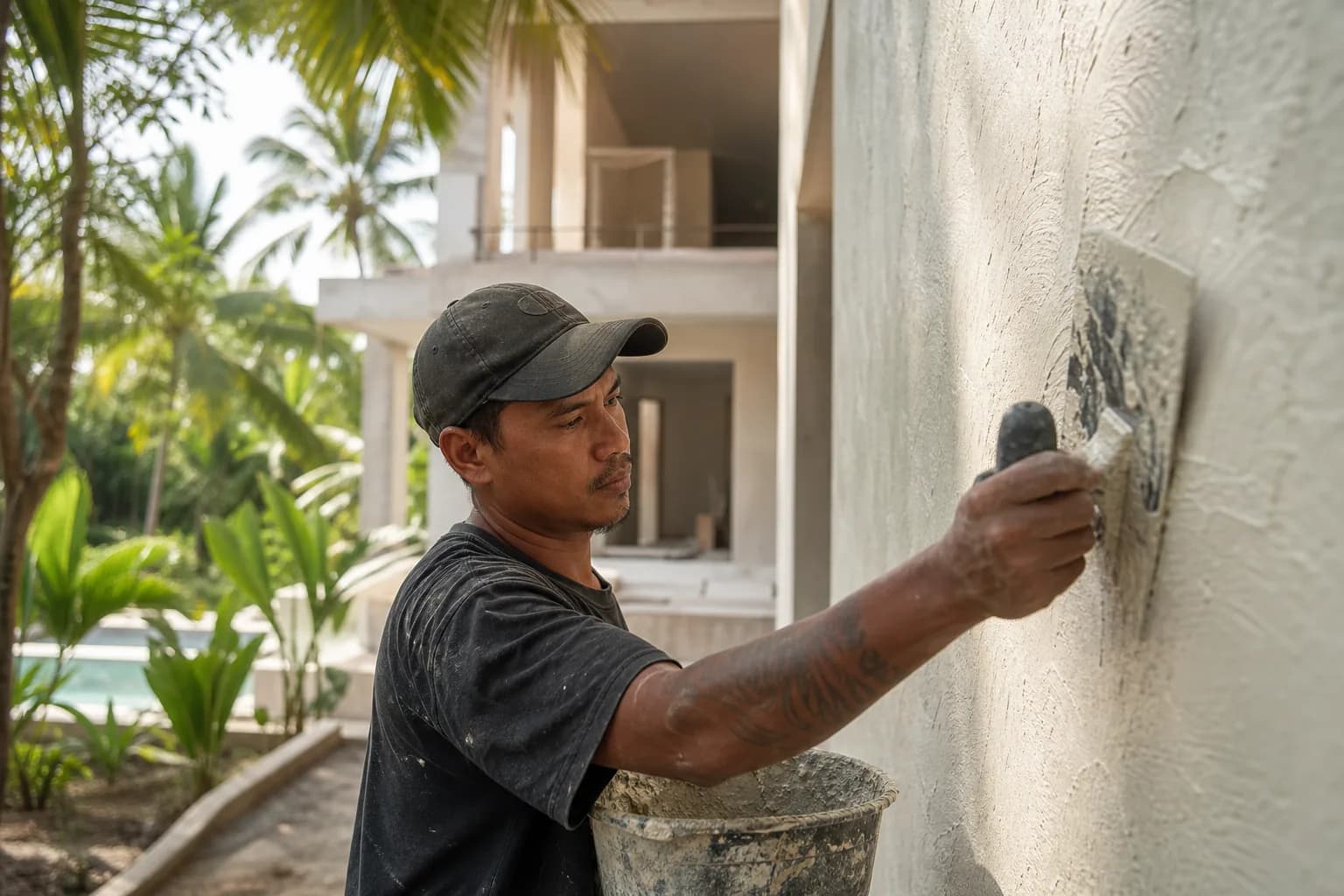
Resin-Infused Plaster Finishes: Anti-Salt Systems Bali
Expert technical guide: Resin-Infused Plaster Finishes: Anti-Salt Systems Bali
8 min read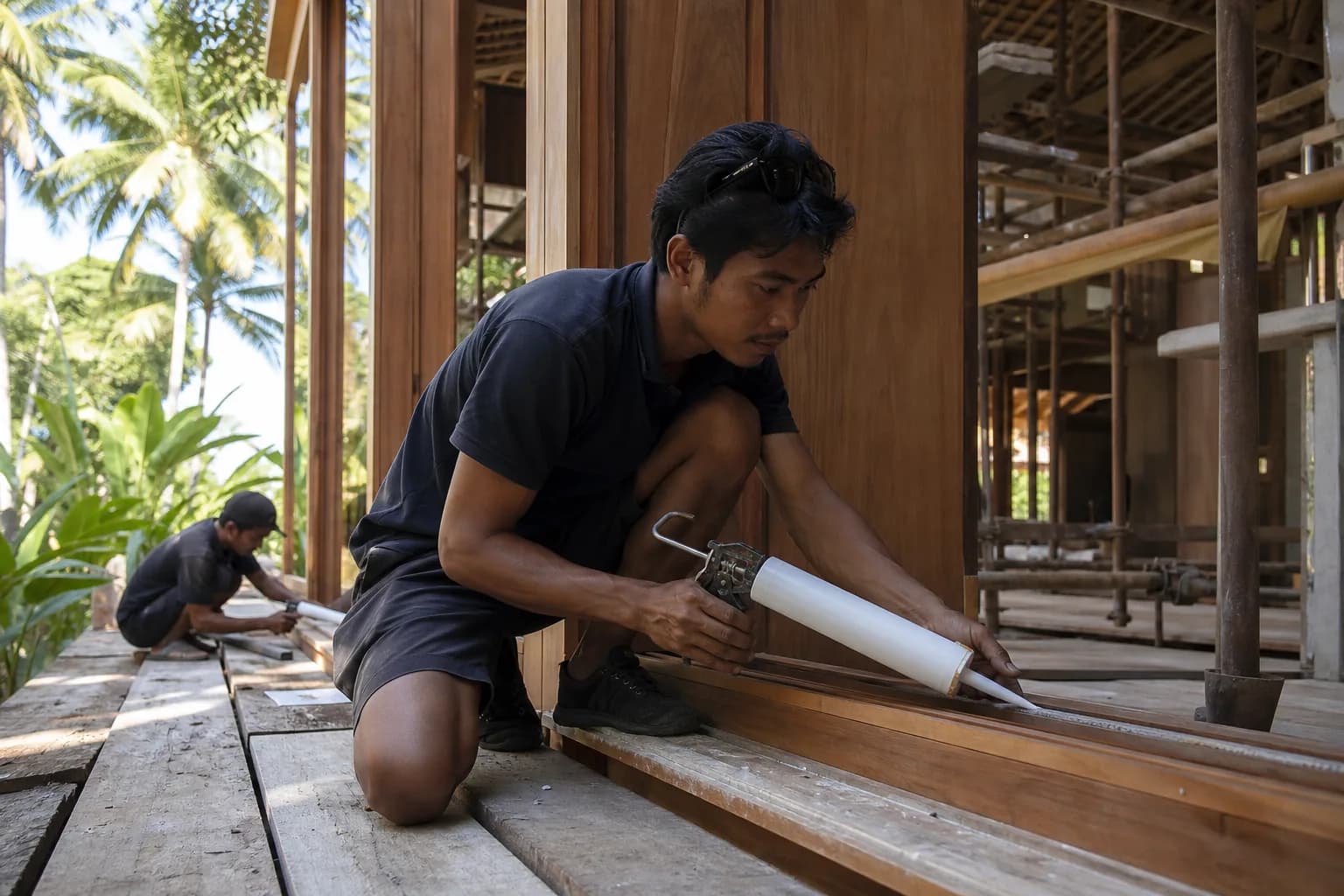
Prefinished Timber Joinery: Silicone Seals Fixings Bali
Professional prefinished timber joinery installation in Bali with silicone seals and fixings for durable weatherproof performance and a premium finish.
10 min read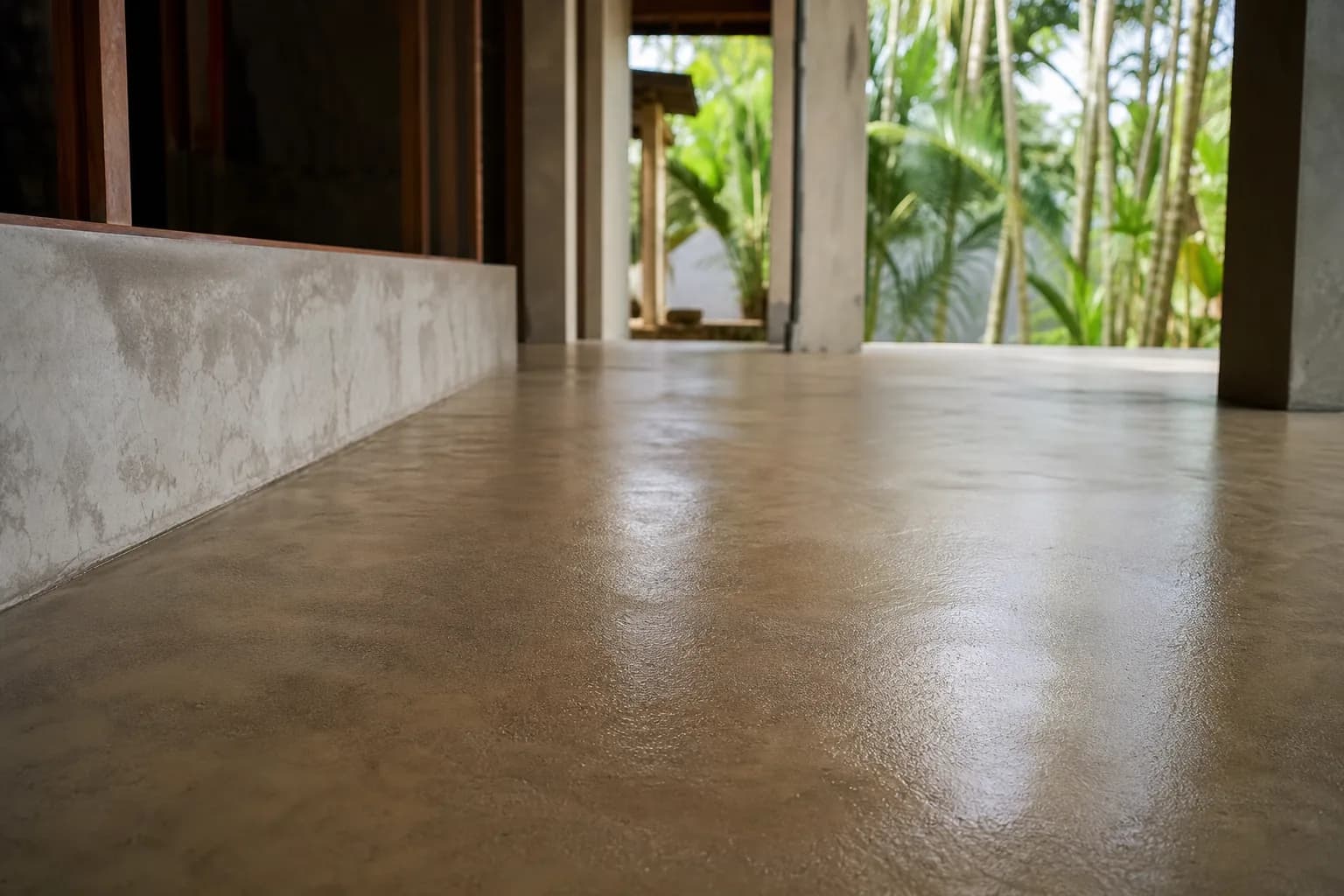
Polished Concrete Microtopping: Surface Prep Sealants Bali
Discover Bali s polished concrete microtopping: expert surface prep, durable sealants, and a flawless finish for modern floors with minimal maintenance.
9 min read