Rainwater Drainage for Bali Villa Bathrooms | Renovation
# Rainwater Drainage Integration for Bali Villa Bathroom Renovations
The Hidden Challenge of Bathroom Water Management in Bali’s Tropical Climate
Bathroom renovations in Bali villas face a unique challenge that many property owners discover too late: inadequate rainwater drainage integration. During Bali’s monsoon season, which brings intense rainfall from November through March, poorly designed bathroom drainage systems can lead to catastrophic water backup, structural damage, and persistent moisture problems. The issue becomes particularly critical when bathroom renovations fail to account for the intersection between internal plumbing systems and external rainwater management. Without proper integration, even the most beautifully finished bathroom can suffer from flooding, mold growth, and premature deterioration of fixtures and finishes.
Technical Deep Dive: Understanding Integrated Drainage Systems for Villa Bathrooms
Rainwater drainage integration for Bali villa construction bathrooms requires a comprehensive approach that connects internal waste systems with external stormwater management. This integration is not merely about installing floor drains—it demands careful coordination between multiple drainage layers that work together to handle both greywater from bathroom fixtures and rainwater infiltration during tropical storms.
Primary Drainage Components
The foundation of effective bathroom drainage integration begins with understanding the three critical drainage layers. The first layer consists of the internal bathroom floor drainage system, typically featuring a minimum 2% slope toward floor drains with 100mm diameter outlets. These drains must connect to dedicated greywater pipes, separate from blackwater sewage lines, using PVC-U pipes rated for tropical temperatures (minimum 60°C tolerance).
The second layer involves perimeter drainage channels that intercept rainwater before it reaches bathroom walls. For renovation Bali projects, this often means retrofitting French drains or linear channel drains around bathroom exterior walls, particularly for ground-floor or semi-outdoor bathroom designs popular in Balinese architecture. These channels should be positioned 300-500mm from foundation walls and connected to the property’s main stormwater system.
The third critical layer is the subsurface drainage system, which includes absorption wells (sumur resapan) or soak pits positioned strategically to handle overflow during peak rainfall. For bathroom renovations, these systems must be sized appropriately—typically 1.5-2 cubic meters capacity for a standard villa bathroom—and located at least 5 meters from the building foundation to prevent water seepage back toward the structure.
Integration Points and Technical Specifications
The most vulnerable integration point occurs where bathroom floor drains connect to the main drainage network. This junction requires a properly installed P-trap or S-trap with minimum 50mm water seal depth to prevent sewer gas backflow while allowing rapid water evacuation. For Bali’s climate, we specify stainless steel or brass trap components rather than plastic, as these materials withstand the corrosive effects of high humidity and mineral-rich water.
Bathroom wall penetrations for drainage pipes demand meticulous waterproofing. Each pipe passing through external walls must be sleeved with PVC sleeves 50mm larger than the pipe diameter, with the annular space filled with flexible polyurethane sealant. This detail prevents rainwater from tracking along pipes into interior spaces—a common failure point in interior finishing Bali projects that skip this critical step.
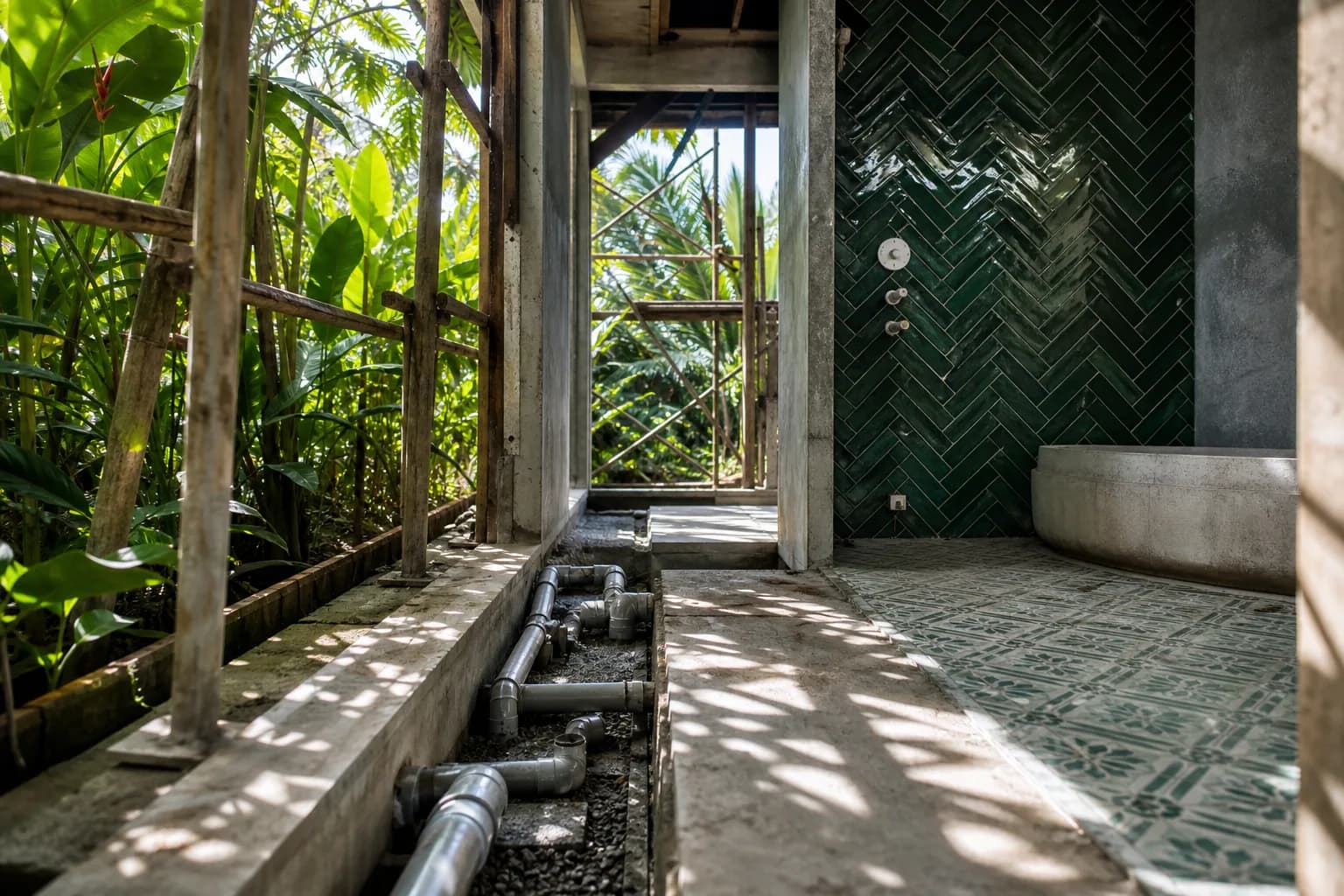
For semi-outdoor or open-air bathrooms characteristic of luxury Bali villas, the drainage integration becomes more complex. These spaces require perimeter trench drains with grated covers, positioned to capture both bathroom runoff and direct rainfall. The trenches should be minimum 150mm wide with 200mm depth, lined with waterproof membrane, and sloped at 1:100 gradient toward collection points. At Teville, we’ve refined this specification through numerous villa projects where proper drainage integration proved essential for long-term performance.
Tropical Climate Considerations
Bali’s volcanic soil composition significantly impacts drainage system design. The island’s clay-rich soils have poor permeability, meaning absorption wells must be properly constructed with gravel filtration layers and adequate depth (minimum 3 meters) to reach more permeable substrata. For bathroom renovations, this often requires coordination with existing site drainage infrastructure to ensure new bathroom systems don’t overwhelm undersized absorption capacity.
The intensity of Bali’s rainfall—often exceeding 50mm per hour during peak storms—means drainage systems must handle surge capacity far beyond normal bathroom use. We calculate drainage pipe sizing based on combined flow rates: typical bathroom fixture discharge (approximately 0.5 liters/second) plus potential rainwater infiltration through ventilation openings or semi-outdoor areas (calculated at 0.02 liters/second per square meter of exposed area). This approach ensures systems remain functional even during simultaneous heavy bathroom use and tropical downpours.
Materials and Standards for Tropical Drainage Systems
Material selection for rainwater drainage integration in bathroom renovations must prioritize corrosion resistance, UV stability, and compatibility with Bali’s water chemistry. Standard PVC drainage pipes used in temperate climates often fail prematurely in Bali’s intense UV exposure and high temperatures.
Pipe Materials and Specifications
For primary bathroom drainage, we specify PVC-U (unplasticized polyvinyl chloride) pipes conforming to SNI 06-0084-2002 Indonesian standards, with minimum wall thickness of 3.2mm for 100mm diameter pipes. These pipes must be UV-stabilized with titanium dioxide additives and rated for continuous operation at 60°C. Connection joints use solvent cement specifically formulated for tropical conditions, with minimum curing time of 24 hours before pressure testing.
Stormwater collection channels require either stainless steel (grade 316 for coastal areas) or polymer concrete materials. Traditional concrete channels deteriorate rapidly in Bali’s acidic rainfall (pH 5.5-6.0), making polymer concrete an increasingly popular choice for villa utilities applications. These channels incorporate fiberglass reinforcement and epoxy resins that resist both chemical attack and mechanical damage from debris.
Waterproofing and Membrane Systems
The critical interface between bathroom floors and drainage systems demands multi-layer waterproofing. We apply a base layer of cementitious waterproofing compound (minimum 2mm thickness) followed by a flexible polyurethane membrane (1.5mm minimum) that extends 300mm up walls from floor level. This redundant system ensures that even if the surface membrane is compromised during furniture installation or fixture mounting, the base layer maintains water integrity.
Drainage channel linings require sheet membrane materials rather than liquid-applied products, as sheet membranes provide more reliable performance in linear applications. EPDM rubber membranes (1.2mm thickness) or PVC geomembranes (1.5mm) offer excellent durability, with heat-welded seams that create monolithic waterproof barriers. These materials must extend beyond channel edges by minimum 200mm and be mechanically fastened before concrete encasement.
Grates, Covers, and Access Points
Floor drain grates in bathroom applications must balance aesthetic considerations with functional requirements. We specify bronze or stainless steel grates with minimum 8mm bar thickness and 10mm spacing between bars—narrow enough to prevent debris accumulation while allowing rapid water flow. For luxury villa bathrooms, linear drain systems with tile-insertable grates provide seamless interior finishing Bali aesthetics while maintaining 50 liters/minute minimum flow capacity.
All drainage systems require accessible cleanout points positioned at maximum 10-meter intervals and at every directional change exceeding 45 degrees. Cleanout covers should be flush-mounted stainless steel units with removable grates, allowing maintenance access without disrupting finished floor surfaces.
Step-by-Step Installation Process for Integrated Bathroom Drainage
Proper installation of integrated rainwater drainage systems follows a precise sequence that coordinates with other bathroom renovation activities. This process, refined through Teville’s construction methodology, ensures each layer functions correctly before subsequent work proceeds.
Phase 1: Site Assessment and Preparation (Days 1-2)
Begin with comprehensive site survey documenting existing drainage infrastructure, soil permeability testing, and water table depth measurement. For renovation projects, this includes camera inspection of existing drainage pipes to identify blockages or structural defects. Mark all underground utilities and establish drainage fall directions based on site topography. Excavate bathroom floor area to 400mm depth below finished floor level, removing all organic material and unstable soil. Compact subgrade to 95% maximum dry density using plate compactors, creating stable base for drainage infrastructure.
Phase 2: Subsurface Drainage Installation (Days 3-5)
Install absorption well or soak pit at designated location, ensuring minimum 5-meter separation from building foundations. Excavate pit to 3-meter depth with 1.5-meter diameter, line with geotextile fabric, and fill with graded gravel (50mm base layer, 30mm middle layer, 20mm top layer). Install 150mm diameter PVC riser pipe with perforations in lower 2 meters, extending to grade level with removable inspection cover.
Lay perimeter drainage pipes around bathroom exterior walls, using 100mm diameter perforated PVC pipes bedded in 150mm gravel layer. Slope pipes at minimum 1:100 gradient toward absorption well, with inspection chambers at corners and junctions. Wrap all perforated pipes in geotextile fabric to prevent soil infiltration while allowing water passage.
Phase 3: Primary Drainage Network (Days 6-9)
Install main bathroom drainage pipes according to approved plumbing layout. Position floor drain outlets at lowest points, typically centered in shower areas and near bathtub locations. Run 100mm diameter drainage pipes with minimum 2% slope toward main stack or external drainage connection. Install P-traps at each floor drain location, ensuring proper water seal depth and secure mounting to prevent movement during concrete pour.
Create drainage channels for semi-outdoor areas using formwork that establishes correct slopes and dimensions. Line channels with EPDM membrane, heat-welding all seams and extending membrane 200mm beyond channel edges. Install channel grates with adjustable height supports, setting final elevation 5mm below anticipated finished floor level to ensure positive drainage.
Phase 4: Waterproofing and Floor Construction (Days 10-14)
Apply base waterproofing layer across entire bathroom floor area, extending 300mm up walls and around all pipe penetrations. Allow 48-hour curing period before proceeding. Install reinforcement mesh (6mm diameter bars at 150mm spacing) elevated 50mm above waterproofing layer using plastic chairs. Pour concrete floor slab (minimum 100mm thickness, K-225 grade) with integrated slopes toward floor drains. Use vibrating screed to eliminate air pockets and ensure proper compaction around drainage fixtures.
After 7-day concrete curing period, apply flexible polyurethane waterproofing membrane in two coats, achieving minimum 1.5mm total thickness. Conduct flood testing by damming bathroom perimeter and maintaining 50mm water depth for 24 hours, checking for any leakage or drainage performance issues.
Phase 5: Final Finishing and Testing (Days 15-17)
Install tile or stone flooring according to design specifications, maintaining proper slopes and ensuring floor drain grates sit flush with finished surface. Apply flexible grout in all joints, with movement joints at maximum 3-meter intervals filled with polyurethane sealant. Install all bathroom fixtures and connect to drainage system using appropriate trap assemblies.
Perform comprehensive system testing including flow rate verification (minimum 50 liters/minute through floor drains), trap seal integrity testing, and simulated rainfall testing for semi-outdoor areas. Document all test results and provide maintenance guidelines to property owners. This systematic approach, demonstrated across our completed projects, ensures reliable long-term performance.
Costs and Timeline for Bathroom Drainage Integration
Understanding the investment required for proper rainwater drainage integration helps property owners budget appropriately for renovation Bali projects. Costs vary significantly based on bathroom size, complexity of semi-outdoor elements, and site-specific drainage challenges.
Material Cost Breakdown
For a standard 15-square-meter villa bathroom with moderate complexity, material costs typically range from IDR 25-40 million. This includes PVC drainage pipes and fittings (IDR 3-5 million), waterproofing membranes and compounds (IDR 8-12 million), absorption well construction materials (IDR 6-9 million), stainless steel grates and covers (IDR 4-7 million), and concrete, reinforcement, and bedding materials (IDR 4-7 million). Premium materials for luxury applications can increase costs by 40-60%.
Labor and Installation Costs
Professional installation by experienced teams costs approximately IDR 35-55 million for the same 15-square-meter bathroom, reflecting the specialized skills required for proper drainage integration. This includes excavation and site preparation (IDR 8-12 million), drainage system installation and testing (IDR 12-18 million), waterproofing application (IDR 8-12 million), and concrete work and finishing (IDR 7-13 million). These figures assume standard site conditions; challenging access or extensive existing system modifications can increase labor costs by 30-50%.
Project Timeline
Complete drainage integration for bathroom renovations typically requires 17

Want to calculate?
 3173 m²6 month(s)from 125.000 USD
TALA FOUR
 164 m²7 month(s)from 79.000 USD
Private: Haridas Villas, Tegallalang
 3124 m²6 month(s)from 123.000 USD
TALA 8
 172 m²8 month(s)from 120.000 USD
Keshava
 3104 m²11 month(s)from 99.000 USD
TALA 100
 3180 m²7 month(s)from 142.000 USD
Vasudeva
 4344 m²16 month(s)from 290.000 USD
Radha
 3127 m²9 month(s)from 177.000 USD
Mukunda
 2144 m²11 month(s)from 104.000 USD
Narayana
 1from 198.000 USD
Private: Haridas Villas
164 m²7 month(s)from 79.000 USDTALA TWO
Start With Real Numbers, Not Guesses
Before finalizing your finishing works plan, check realistic cost ranges for your Bali villa project.
Available lands
 3800 m²15 min$ 100616Bali, Pererenan
 2115 m²5 min$ 1139547Bali, Pererenan
 600 m²12 min$ 101970Bali, Mengwi
 5028 m²10 min$ 361000Bali, Ubud
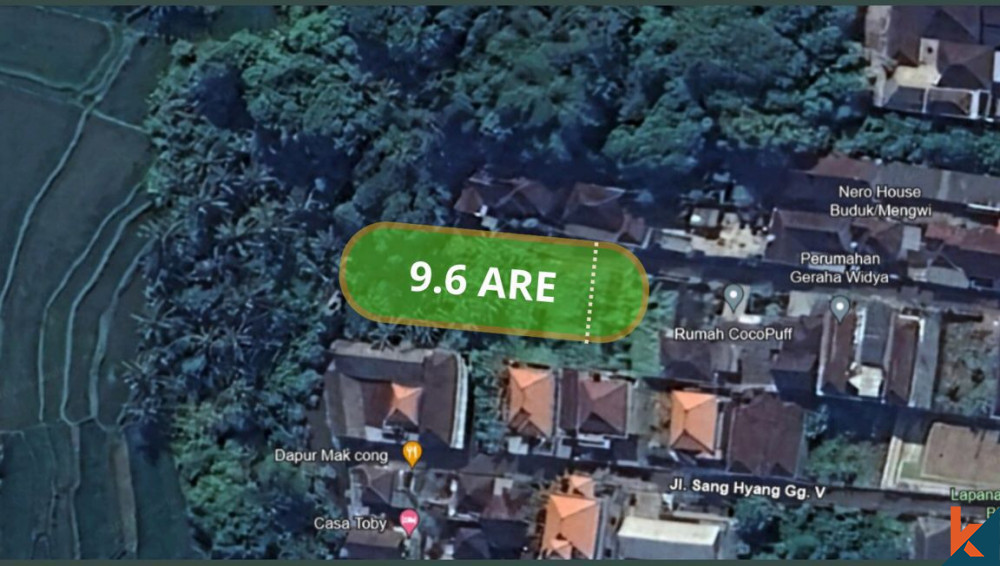 960 m²15 min$ 91034Bali, Mengwi
 1000 m²5 min$ 350431Bali, Drupadi
 700 m²15 min$ 109052Bali, Buduk
 200 m²5 min$ 59113Bali, Bukit
 1375 m²10 min$ 447044Bali, Canggu
 2000 m²15 min$ 110837Bali, Karangasem
 1600 m²32 min$ 266010Bali, Tabanan
 3100 m²20 min$ 272968Bali, Tabanan
 300 m²55 min$ 32475Bali, Tegelalang
 7000 m²36 min$ 284483Bali, Gianyar
 2230 m²15 min$ 410573Bali, Padonan
Essential Bali build & buy guides
- Bali villa construction cost per m² in 2026
- How much will your villa cost? Calculator
- Building a villa in Bali: the complete guide
- Buying land in Bali: step-by-step for foreigners
- Bali villa investment: yields, risks, returns
- Leasehold vs freehold: what foreigners can own
- Construction defect liability & 10-year warranty
- Bali building codes and construction standards
Related guides
Resin-Infused Plaster Finishes: Anti-Salt Systems Bali
Expert technical guide: Resin-Infused Plaster Finishes: Anti-Salt Systems Bali
8 min read
Prefinished Timber Joinery: Silicone Seals Fixings Bali
Professional prefinished timber joinery installation in Bali with silicone seals and fixings for durable weatherproof performance and a premium finish.
10 min read
Polished Concrete Microtopping: Surface Prep Sealants Bali
Discover Bali s polished concrete microtopping: expert surface prep, durable sealants, and a flawless finish for modern floors with minimal maintenance.
9 min read