Polished Concrete Stain Sealing for Bali Villa Interiors
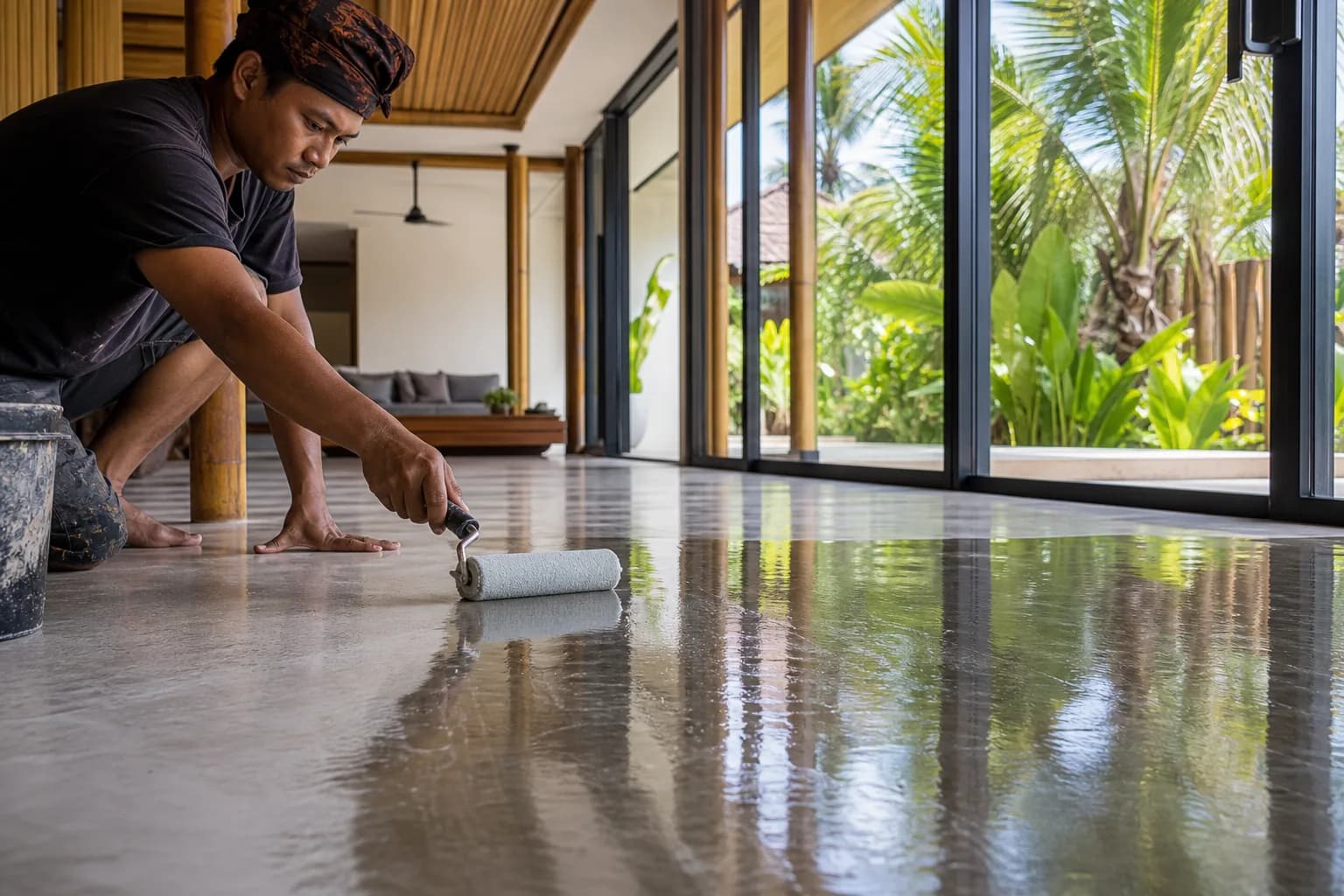
Polished Concrete Stain Sealing for Bali Villa Interior Floors: A Complete Technical Guide
The Specific Problem: Why Bali Villa Owners Struggle with Polished Concrete Floor Maintenance
Polished concrete floors have become increasingly popular in luxury Bali villa construction, offering a sophisticated, minimalist aesthetic that complements modern tropical design. However, villa owners frequently encounter a critical challenge: unprotected or improperly sealed polished concrete surfaces deteriorate rapidly in Bali’s tropical climate. The combination of high humidity, intense UV exposure, salt air from coastal properties, and heavy foot traffic creates an environment where bare polished concrete becomes vulnerable to staining, moisture penetration, and surface degradation within months. Without proper stain sealing, these premium interior floors lose their lustrous appearance, develop water marks, become susceptible to mold growth, and require costly restoration. This article addresses the technical specifications, installation methodology, and maintenance protocols for professional polished concrete stain sealing—a critical finishing work that separates exceptional Bali villa interiors from mediocre installations.
Technical Deep Dive: Understanding Polished Concrete Stain Sealing in Tropical Environments
Polished concrete stain sealing represents a sophisticated finishing process that combines aesthetic enhancement with protective functionality. Unlike standard concrete sealing, stain sealing involves applying colored or clear penetrating agents followed by protective topcoat sealers that create a unified, durable surface. In Bali’s tropical climate, this process becomes exponentially more complex due to environmental factors that accelerate material degradation.
The Tropical Climate Challenge
Bali’s climate presents unique challenges for polished concrete floor systems. Average humidity levels consistently exceed 70%, with seasonal monsoon periods pushing moisture saturation to 90% or higher. This persistent moisture environment creates several technical problems: capillary action draws moisture through concrete’s porous structure, salt spray from coastal locations accelerates efflorescence (white crystalline deposits), and thermal cycling from intense daytime heat (32-35°C) to cooler evenings causes micro-expansion and contraction that stresses sealer adhesion. Additionally, Bali’s intense UV radiation (approximately 12 hours daily during dry season) degrades lower-quality sealers, causing yellowing, chalking, and loss of protective properties within 18-24 months.
Sealer Chemistry and Performance Specifications
Professional polished concrete stain sealing in Bali villas requires understanding three primary sealer categories and their performance characteristics. Penetrating sealers work by chemically bonding with concrete’s silicate structure, creating hydrophobic properties without forming a surface film. These sealers allow concrete to breathe, preventing moisture entrapment, but provide moderate stain resistance and require more frequent reapplication (every 2-3 years in tropical climates). Semi-penetrating sealers combine penetrating and topical properties, offering enhanced stain resistance while maintaining some breathability. Topical sealers—including polyurethane and epoxy formulations—create a protective film layer on the concrete surface, providing maximum stain and moisture protection but potentially trapping subsurface moisture if applied over inadequately dried concrete.
For Bali villa interiors, polyurethane sealers represent the optimal choice for most applications. High-quality polyurethane formulations offer exceptional hardness (typically 80-90 Shore D), excellent UV resistance, superior abrasion resistance for high-traffic areas, and proven performance in tropical environments. Two-component polyurethane systems provide superior durability compared to single-component products, with cure times of 7-14 days before full hardness development. The molecular structure of polyurethane creates a flexible yet durable film that accommodates concrete’s minor movement without cracking or peeling—critical in tropical environments where thermal stress is constant.
Moisture Management and Substrate Preparation
The most common failure point in polished concrete stain sealing projects occurs during substrate preparation. Concrete moisture content represents the single most critical variable determining sealer success. In Bali’s humid environment, concrete typically contains 4-6% moisture by weight—significantly higher than the 2-3% maximum recommended for polyurethane sealer application. Applying sealers over moisture-saturated concrete creates several failure mechanisms: moisture vapor transmission causes sealer blistering and delamination, trapped moisture promotes mold growth beneath the sealer film, and incomplete sealer adhesion results in premature failure within 12-18 months.
Professional installations require moisture testing using calcium chloride or relative humidity testing methods before sealer application. Concrete moisture must be reduced to acceptable levels through extended drying periods (typically 4-8 weeks in Bali’s climate), mechanical dehumidification, or moisture mitigation systems. This extended timeline represents a significant cost factor that inexperienced contractors frequently underestimate or eliminate entirely, resulting in premature sealer failure.
Stain Application and Color Development
Concrete stains create aesthetic character while the sealer provides protection. Acid-based stains chemically react with concrete’s mineral content, creating permanent color variations that enhance the concrete’s natural texture and aggregate exposure. Water-based stains offer more consistent color application and faster drying but provide less depth and character than acid stains. In Bali villa applications, acid stains are typically preferred for their superior aesthetic qualities and permanent nature—the color becomes part of the concrete matrix rather than a surface coating.
Stain application requires precise technique. Uneven application creates blotchy, unprofessional results. The concrete surface must be completely clean and free of dust, oils, and contaminants. Stain penetration depends on concrete porosity, which varies significantly across a single floor slab. Professional installers conduct test applications in inconspicuous areas to verify color development and adjust application techniques accordingly. Stain drying times in Bali’s humidity typically extend 24-48 hours before sealer application, requiring climate-controlled conditions to prevent premature drying that creates uneven color development.
Materials and Standards for Bali Villa Polished Concrete Sealing
Sealer Specifications and Product Selection
Professional-grade polyurethane sealers for Bali villa applications must meet specific performance criteria. Two-component aliphatic polyurethane systems provide superior UV resistance compared to aromatic formulations, preventing the yellowing that compromises aesthetic appeal in tropical environments. Recommended specifications include:
- Solids Content: Minimum 50% by volume for adequate film thickness and durability
- Hardness: 80+ Shore D for abrasion resistance in high-traffic areas
- Flexibility: Minimum 3mm mandrel bend without cracking to accommodate thermal movement
- Water Vapor Transmission Rate: Less than 2 lbs/1000 sq ft/24 hours to prevent moisture-related failures
- UV Resistance: Aliphatic formulation with proven performance in tropical climates
- Slip Resistance: Minimum R11 rating for safety in wet areas and high-traffic zones
Leading manufacturers producing suitable products for Bali applications include Sika, Bona, Rust-Oleum, and Sherwin-Williams. Product selection should prioritize tropical climate performance data rather than generic specifications. Many standard polyurethane sealers perform inadequately in Bali’s environment; specifying products with documented tropical climate testing ensures superior long-term performance.
Concrete Stain Materials
Acid-based concrete stains for Bali villa applications should be sourced from reputable manufacturers with quality control standards. Stain composition typically includes hydrochloric acid, metallic salts (iron oxide, copper sulfate, or cobalt chloride), and water. The chemical reaction between stain components and concrete’s calcium hydroxide creates permanent color development. Water-based stains offer lower VOC emissions and faster drying but require multiple applications to achieve color depth comparable to acid stains.
For Bali villa interiors, acid stains in earth tones (terracotta, warm brown, charcoal) complement tropical design aesthetics while minimizing visibility of minor imperfections. Stain selection should consider the concrete’s existing color, aggregate exposure, and overall villa design direction. Professional installers maintain sample boards demonstrating stain colors on similar concrete substrates to facilitate client selection.
Substrate Preparation Materials and Equipment
Proper substrate preparation requires specialized equipment and materials. Concrete grinding equipment (typically 120-400 grit diamond grinding pads) removes surface contaminants, laitance, and creates the polished finish. Dust collection systems are essential—concrete dust in Bali’s humid environment creates slurry that compromises subsequent finishing work. Moisture testing equipment (calcium chloride test kits or relative humidity meters) verifies substrate readiness. Dehumidification equipment may be necessary to achieve acceptable moisture levels within project timelines.
Application Equipment and Safety Materials
Professional sealer application requires precision equipment: airless spray systems (2000+ PSI) for even film thickness, roller application tools for backup coverage, and brush application for edges and detail work. Protective equipment includes respirators (P100 rated for polyurethane fumes), chemical-resistant gloves, eye protection, and full-body coverage clothing. Bali’s tropical heat intensifies polyurethane fume exposure; proper ventilation and respiratory protection are non-negotiable safety requirements.
Step-by-Step Installation Process for Polished Concrete Stain Sealing
Phase 1: Pre-Installation Assessment and Moisture Testing (Days 1-3)
Professional installations begin with comprehensive substrate evaluation. Visual inspection identifies existing damage, cracks, spalling, or previous sealer applications that require remediation. Concrete moisture testing using calcium chloride or relative humidity methods establishes baseline conditions. In Bali’s climate, moisture testing should occur at multiple locations across the floor area, as moisture distribution varies significantly based on proximity to exterior walls, ventilation, and subsurface conditions.
If moisture levels exceed acceptable ranges (typically 2-3% for polyurethane sealers), a drying strategy must be implemented. This may include extended natural drying periods (4-8 weeks), mechanical dehumidification systems, or moisture mitigation treatments. Project timelines must account for this critical phase; rushing this step virtually guarantees premature sealer failure.
Phase 2: Concrete Surface Preparation and Polishing (Days 4-8)
Surface preparation begins with thorough cleaning to remove dust, oils, efflorescence, and contaminants. Pressure washing at 2000-3000 PSI removes surface debris, followed by acid washing to remove efflorescence and open concrete pores for optimal stain penetration. The concrete must dry completely after acid washing (typically 24-48 hours in Bali’s climate) before proceeding.
Concrete polishing creates the desired aesthetic finish and prepares the surface for stain application. Diamond grinding progresses through multiple grit sequences (typically 120, 220, 400, and 800 grit) to achieve the desired polish level. Bali villa applications typically target a semi-polished to high-polished finish that showcases aggregate exposure while maintaining practical slip resistance. Dust collection during grinding is critical; inadequate dust management creates slurry that compromises subsequent work.
After polishing, the concrete undergoes final cleaning with specialized concrete cleaners to remove all grinding dust and residue. The surface must be completely clean and dry before stain application.
Phase 3: Concrete Stain Application (Days 9-11)
Stain application requires precise technique and environmental control. Ideal application conditions include temperatures between 15-25°C and humidity below 85%—challenging parameters in Bali’s tropical climate. Application typically occurs during early morning hours when humidity is lowest and temperatures are moderate.
Acid stain application begins with light misting to dampen the concrete surface, promoting even stain penetration. The stain is then applied using low-pressure spray equipment, maintaining consistent wet edges to prevent lap marks. Application rate typically ranges from 200-400 square feet per hour, depending on concrete porosity and desired color intensity. Multiple thin applications produce superior results compared to single heavy applications.
After stain application, the concrete must cure undisturbed for 24-48 hours. During this period, the chemical reaction between stain components and concrete continues, developing final color. Environmental control is critical—excessive heat accelerates drying and creates uneven color development, while high humidity extends drying times and may cause stain streaking.
Once stain has fully cured, the surface is neutralized using a mild acid solution to stop the chemical reaction and remove excess stain residue. This neutralization step is frequently overlooked by inexperienced installers, resulting in continued stain development and color inconsistency. After neutralization, the concrete must dry completely (typically 24-48 hours) before sealer application.
Phase 4: Sealer Application and Curing (Days 12-28)
Polyurethane sealer application represents the most critical phase determining long-term performance. Two-component polyuret
 172 m²8 month(s)from 120.000 USD
Keshava
 3173 m²6 month(s)from 125.000 USD
TALA FOUR
 1from 198.000 USD
Private: Haridas Villas
 164 m²7 month(s)from 79.000 USD
Private: Haridas Villas, Tegallalang
164 m²7 month(s)from 79.000 USDTALA TWO
 3104 m²11 month(s)from 99.000 USD
TALA 100
 4344 m²16 month(s)from 290.000 USD
Radha

Want to calculate?
 3124 m²6 month(s)from 123.000 USD
TALA 8
 3180 m²7 month(s)from 142.000 USD
Vasudeva
 2144 m²11 month(s)from 104.000 USD
Narayana
 3127 m²9 month(s)from 177.000 USD
Mukunda
Start With Real Numbers, Not Guesses
Before finalizing your finishing works plan, check realistic cost ranges for your Bali villa project.
Available lands
 250 m²15 min$ 40025Bali, Munggu
 3254 m²5 min$ 631800Bali, All
 608 m²15 min$ 310377Bali, Seminyak
 615 m²15 min$ 113608Bali, Tabanan
 422 m²15 min$ 93547Bali, Kerobokan
 2400 m²7 min$ 496552Bali, Canggu
 325 m²15 min$ 44472Bali, Ungasan
 10000 m²19 min$ 232759Bali, Buleleng
 1430 m²5 min$ 209862Bali, Klungkung
 2000 m²15 min$ 523000Bali, Canggu
 1950 m²7 min$ 150092Bali, Tabanan
 1000 m²10 min$ 184729Bali, Kutuh South Bali
 5815 m²5 min$ 815740Bali, Tabanan
 2000 m²15 min$ 110837Bali, Karangasem
 1300 m²10 min$ 312192Bali, Kutuh South Bali
Essential Bali build & buy guides
- Bali villa construction cost per m² in 2026
- How much will your villa cost? Calculator
- Building a villa in Bali: the complete guide
- Buying land in Bali: step-by-step for foreigners
- Bali villa investment: yields, risks, returns
- Leasehold vs freehold: what foreigners can own
- Construction defect liability & 10-year warranty
- Bali building codes and construction standards
Related guides
Sanur and Nusa Dua vs Canggu: Stability Plays vs Hype
Canggu gets the headlines; Sanur and Nusa Dua quietly deliver steadier returns to a different kind of buyer. An honest 2026 comparison of the stability markets against the hype market — prices, demand drivers, oversupply risk, and who should buy where.
7 min read
Ubud and the Wellness Market: Buying or Building for Retreats
Ubud is Bali's wellness capital, and retreat-focused property behaves differently from beach villas: longer stays, group bookings, lower volatility. Here is what the market rewards, what zoning allows, and what it costs to buy or build a retreat property in 2026.
8 min read
Buying and Building on the Bukit: Uluwatu, Bingin and Balangan from a Buyer's Seat
A buyer's-seat 2026 guide to the Bukit peninsula — Uluwatu, Bingin and Balangan land prices, the water problem nobody budgets, cliff setbacks after the 2025 Bingin demolitions, and how to build there properly.
7 min read