Marble Staircase Polishing Sealing Services in Bali
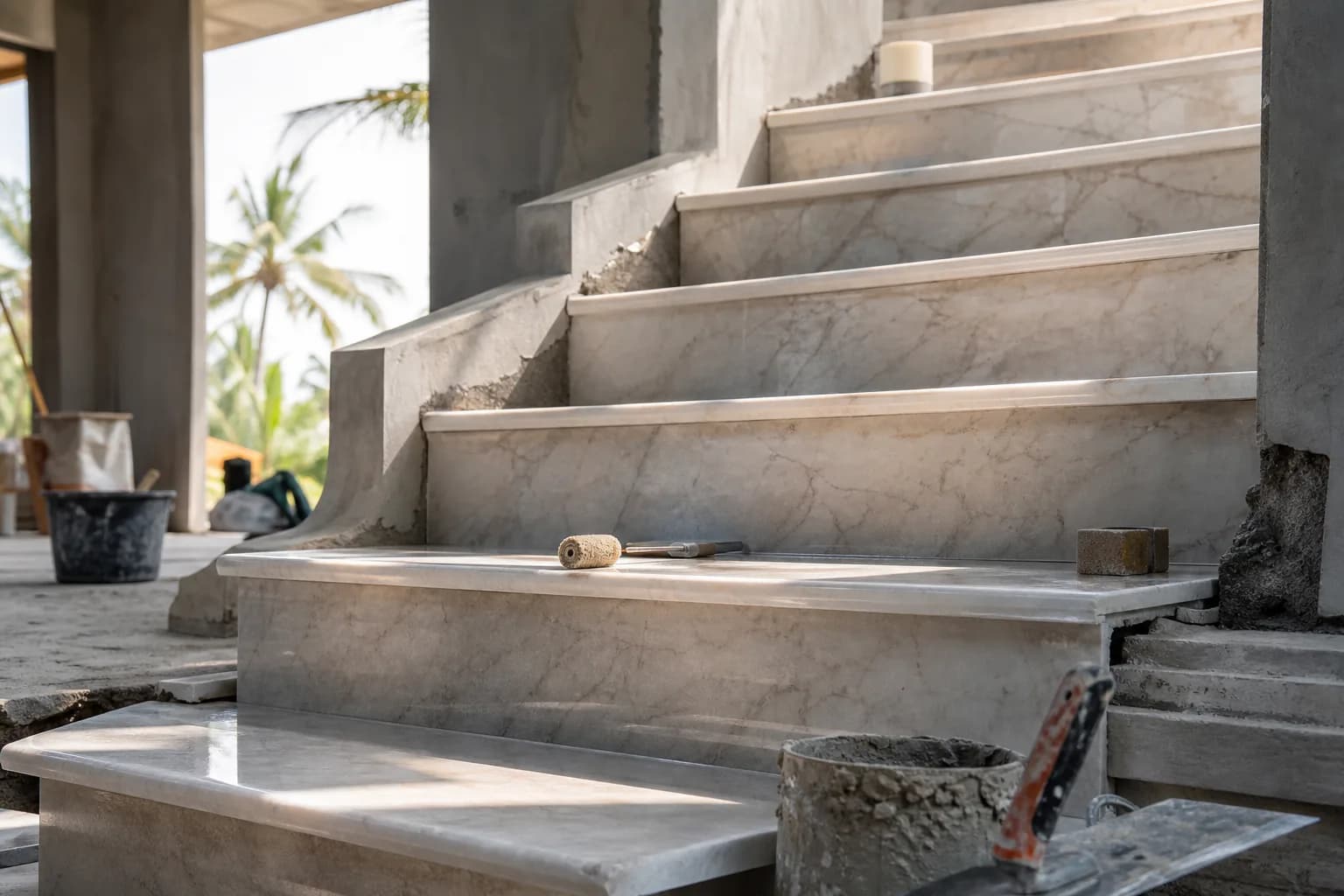
Marble Staircase Polishing and Sealing for Bali Villas: A Complete Technical Guide
The Specific Problem: Why Marble Staircases Deteriorate in Bali’s Tropical Climate
Marble staircases represent one of the most visible and trafficked finishing elements in luxury Bali villas. Yet many villa owners discover within months of completion that their pristine marble surfaces have become dull, etched, and vulnerable to staining. This deterioration isn’t a material failure—it’s a predictable consequence of Bali’s tropical environment combined with improper finishing protocols during initial construction or inadequate maintenance afterward.
The problem manifests in several ways: loss of natural polish and luster, visible etching from acidic substances, water spots from humidity and salt air, organic growth in porous areas, and accelerated wear patterns along high-traffic zones. Unlike marble staircases in temperate climates, Bali installations face constant moisture exposure, intense UV radiation, salt-laden air from proximity to the ocean, and temperature fluctuations that stress the stone’s crystalline structure. Without proper polishing and sealing protocols implemented during the finishing phase—or corrective restoration afterward—marble staircases become liabilities rather than architectural assets.
This guide addresses the technical specifications, materials, and processes that Teville employs to ensure marble staircases in Bali villas maintain their aesthetic and functional integrity for decades. Whether you’re completing new construction or restoring existing marble work, understanding these finishing protocols is essential for long-term durability.
Technical Deep Dive: Marble Staircase Finishing in Tropical Bali Conditions
Marble staircase finishing in Bali requires fundamentally different approaches than standard interior finishing work. The combination of high foot traffic, tropical humidity (typically 70-90% year-round), salt-laden air, and intense solar exposure creates unique challenges that demand specialized technical knowledge.
Understanding Marble’s Vulnerability in Tropical Environments
Marble is a metamorphic rock composed primarily of calcium carbonate crystals. This composition makes it beautiful but chemically reactive. In Bali’s environment, several degradation mechanisms operate simultaneously. Humidity penetrates the stone’s micro-porous structure, creating conditions for efflorescence (salt crystallization on surfaces) and biological growth. The salt air from Bali’s coastal proximity accelerates oxidation and creates a corrosive environment. Temperature variations between air-conditioned interiors and exterior exposure cause thermal stress that widens micro-fractures. UV radiation, while not directly damaging marble, accelerates the breakdown of protective sealants.
The tropical climate also means that marble staircases experience constant moisture cycling. Morning condensation, afternoon humidity spikes, and evening temperature drops create daily stress patterns that temperate climates never impose. This is why generic marble finishing specifications developed for European or North American applications fail in Bali—they don’t account for these specific environmental pressures.
The Polishing Process: Restoring Marble’s Crystalline Structure
Professional marble staircase polishing isn’t simply buffing the surface. It’s a systematic process of progressively finer abrasion that removes damaged surface layers and exposes fresh crystalline structure beneath. The process typically involves multiple stages using increasingly fine abrasive grits, each stage removing the scratches created by the previous stage.
For Bali villa staircases, the polishing process begins with assessment of the marble’s current condition. If the marble is new or recently installed, the focus is on achieving optimal polish from the factory finish. If the marble shows etching, staining, or wear patterns, the process must remove these defects while maintaining the staircase’s structural integrity and aesthetic proportions.
The initial polishing stage uses coarser grits (typically 400-600) to remove surface contaminants, old sealant residue, and minor damage. This stage is aggressive and generates significant dust and moisture. Proper containment and ventilation are critical—marble dust in Bali’s humid environment can create slurry that damages adjacent finishes if not managed carefully.
Intermediate stages (800-1200 grit) refine the surface and begin establishing the desired finish level. For Bali villas, most designers prefer a honed finish (matte appearance) rather than high-gloss polish, as honed finishes are more practical for high-traffic staircases and better conceal water spots and dust in humid environments. However, some luxury projects specify polished finishes, which require additional technical precision.
Final polishing stages (1500-3000+ grit) create the desired surface finish and prepare the marble for sealing. The final stage is critical—it must remove all residue from previous stages while creating a uniform surface that will accept sealant evenly. In Bali’s humidity, this final stage often requires extended drying time between applications to ensure moisture doesn’t interfere with sealant adhesion.
Sealing: Creating the Protective Barrier
Sealing is where most marble staircase finishing fails in Bali. Many contractors apply generic stone sealers without understanding the specific requirements of tropical environments. The result is sealers that break down within months, leaving marble vulnerable to the exact damage they were meant to prevent.
Marble requires penetrating sealers that bond with the stone’s crystalline structure rather than surface coatings. In Bali, the sealer must accomplish multiple objectives simultaneously: repel water and humidity, resist salt-air corrosion, maintain breathability (allowing trapped moisture to escape), resist UV degradation, and remain effective for 2-3 years before resealing becomes necessary.
The sealing process begins with complete surface preparation. Any residue from polishing must be removed—typically through multiple passes with clean, lint-free cloths and sometimes light solvent cleaning. The marble must be completely dry before sealing begins. In Bali’s humidity, this often requires 24-48 hours of controlled drying, sometimes with dehumidification equipment in the staircase area.
The sealer is applied in thin, even coats, typically 2-3 applications depending on the marble’s porosity and the sealer type. Each coat must cure completely before the next application—usually 4-6 hours in Bali’s climate, though humidity can extend this. The application technique is critical: too much sealer creates a surface coating that will eventually peel; too little leaves the marble inadequately protected.
After sealing, the marble requires a curing period of 48-72 hours before normal foot traffic resumes. During this period, the sealer bonds with the stone’s crystalline structure. Premature use can disrupt this bonding and compromise the seal’s effectiveness.
Tropical Climate Considerations Specific to Bali
Bali’s location near the equator creates specific finishing challenges. The intense UV radiation requires sealers with UV-resistant components. The salt air necessitates sealers with enhanced corrosion resistance. The consistent high humidity means that moisture management during the finishing process is more critical than in most other locations.
Additionally, Bali’s seasonal variations—while less extreme than temperate climates—still create stress. The dry season (April-October) and wet season (November-March) impose different environmental pressures. Finishing work scheduled during the wet season requires extended drying times and sometimes temporary dehumidification. Work during the dry season proceeds faster but requires careful moisture management to prevent the marble from drying too quickly, which can cause micro-cracking.
The proximity to the ocean in many Bali villa locations means salt-laden air penetrates inland, affecting even villas several kilometers from the coast. This requires sealers specifically formulated for salt-air environments, not generic stone sealers designed for inland applications.
Materials and Standards: Specifications for Bali Villa Marble Staircases
Marble Selection and Grading
The marble itself must be selected with tropical climate considerations. Not all marble performs equally in Bali’s environment. Softer marbles (such as some white Carrara varieties) are more susceptible to etching and wear. Harder marbles with tighter crystalline structures (such as certain black or dark-colored marbles) perform better in high-traffic applications and humid environments.
For Bali villa staircases, premium-grade marble with consistent coloring and minimal natural veining is preferable to lower grades with significant variation. While variation can be aesthetically interesting, it often indicates inconsistent density and porosity, which complicates finishing and sealing. Consistent material properties allow for uniform polishing and sealing results.
The marble should be sourced from suppliers with documented quality control and experience with tropical installations. Indonesian marble, while locally available, often lacks the consistency of imported premium grades. Many Bali villa projects specify Italian, Portuguese, or Turkish marble specifically because these sources maintain tighter quality standards.
Polishing Equipment and Abrasive Standards
Professional marble polishing requires specialized equipment. Handheld polishers with variable speed control and dust containment systems are standard. The abrasive pads must meet specific standards—typically diamond-impregnated pads in progressive grits from 400 to 3000+.
For Bali applications, equipment must include effective dust collection and moisture management. Marble dust combined with Bali’s humidity creates a slurry that can damage adjacent finishes and create slip hazards. Professional installations use HEPA-filtered dust collection systems and controlled water application to manage dust during polishing.
The polishing process should follow established standards such as those outlined by the Natural Stone Institute or equivalent professional organizations. These standards specify grit progression, dwell times, moisture management, and quality verification procedures.
Sealer Specifications for Tropical Environments
The sealer is the critical component determining long-term performance. For Bali villa staircases, the sealer must meet several specific criteria:
- Penetrating Formula: The sealer must penetrate the marble’s crystalline structure rather than creating a surface coating. Penetrating sealers maintain the marble’s natural appearance and allow moisture vapor transmission.
- Water Repellency: The sealer must provide hydrophobic properties, repelling liquid water while allowing vapor transmission. This prevents water from pooling on the surface while allowing trapped moisture to escape.
- Salt-Air Resistance: The sealer must resist corrosion from salt-laden air. This typically requires sealers with enhanced chemical resistance formulations.
- UV Stability: The sealer must resist UV degradation. In Bali’s intense sunlight, UV-unstable sealers break down within months. Premium sealers include UV-absorbing components.
- Durability in High-Humidity Environments: The sealer must maintain effectiveness in 70-90% humidity conditions. Some sealers that perform well in temperate climates fail in tropical humidity.
- Reapplication Compatibility: The sealer should allow for periodic resealing without requiring complete removal of previous applications. This is critical for long-term maintenance in Bali’s environment.
Premium sealers meeting these specifications typically cost 2-3 times more than generic stone sealers, but the performance difference in Bali’s environment justifies the investment. Budget sealers often fail within 6-12 months in Bali’s tropical conditions, requiring expensive restoration work.
Quality Standards and Verification
Professional marble staircase finishing should include quality verification procedures. These typically include water-drop tests (to verify hydrophobic properties), visual inspection under controlled lighting (to verify uniform polish and finish), and documentation of all materials used and application procedures followed.
For Bali villa projects, quality standards should be documented in the construction specifications and verified by independent inspection. This protects both the contractor and the villa owner by establishing clear expectations and verification procedures.
Step-by-Step Process: Marble Staircase Polishing and Sealing Execution
Phase 1: Pre-Polishing Assessment and Preparation (Days 1-2)
The process begins with comprehensive assessment of the marble staircase’s current condition. For new installations, this involves verifying that the marble was installed correctly and identifying any damage from construction activities. For existing staircases requiring restoration, assessment determines the extent of damage and the appropriate polishing approach.
The assessment includes visual inspection under controlled lighting, moisture testing to determine if the marble is adequately dry, and evaluation of any existing sealers or coatings that must be removed. In Bali’s humidity, moisture testing is critical—marble that appears dry may contain trapped moisture that will interfere with sealing.
Preparation involves protecting adjacent surfaces from polishing dust and moisture. This includes covering walls, railings, and adjacent flooring with protective sheeting. Temporary barriers are installed to prevent dust migration to other areas of the villa. Ventilation is established to manage dust and moisture during polishing.
The staircase is cleaned thoroughly to remove construction debris, dust, and any surface contaminants. In Bali’s environment, this cleaning often requires multiple passes to remove salt deposits and organic growth that may have begun accumulating.
Phase 2: Initial Polishing (Days 3-5)
Initial polishing begins with coarse-grit abrasives (ty
 1from 198.000 USD
Private: Haridas Villas

Want to calculate?
 3180 m²7 month(s)from 142.000 USD
Vasudeva
 2144 m²11 month(s)from 104.000 USD
Narayana
 3173 m²6 month(s)from 125.000 USD
TALA FOUR
 164 m²7 month(s)from 79.000 USD
Private: Haridas Villas, Tegallalang
 3127 m²9 month(s)from 177.000 USD
Mukunda
164 m²7 month(s)from 79.000 USDTALA TWO
 3104 m²11 month(s)from 99.000 USD
TALA 100
 3124 m²6 month(s)from 123.000 USD
TALA 8
 4344 m²16 month(s)from 290.000 USD
Radha
 172 m²8 month(s)from 120.000 USD
Keshava
Start With Real Numbers, Not Guesses
Before finalizing your finishing works plan, check realistic cost ranges for your Bali villa project.
Available lands
 1300 m²10 min$ 348214Bali, Tabanan
 2000 m²15 min$ 261700Bali, Babakan
 1000 m²10 min$ 230911Bali, Kerobokan
 6000 m²10 min$ 1330049Bali, Kutuh South Bali
 444 m²10 min$ 111000Bali, Tabanan
 7500 m²5 min$ 206281Bali, Kedungu
 515 m²7 min$ 570813Bali, Canggu
 3800 m²15 min$ 100616Bali, Pererenan
 1950 m²7 min$ 150092Bali, Tabanan
 3100 m²15 min$ 257697Bali, Tegallalang
 300 m²55 min$ 32475Bali, Tegelalang
 13000 m²1 min$ 920567Bali, Pekutatan
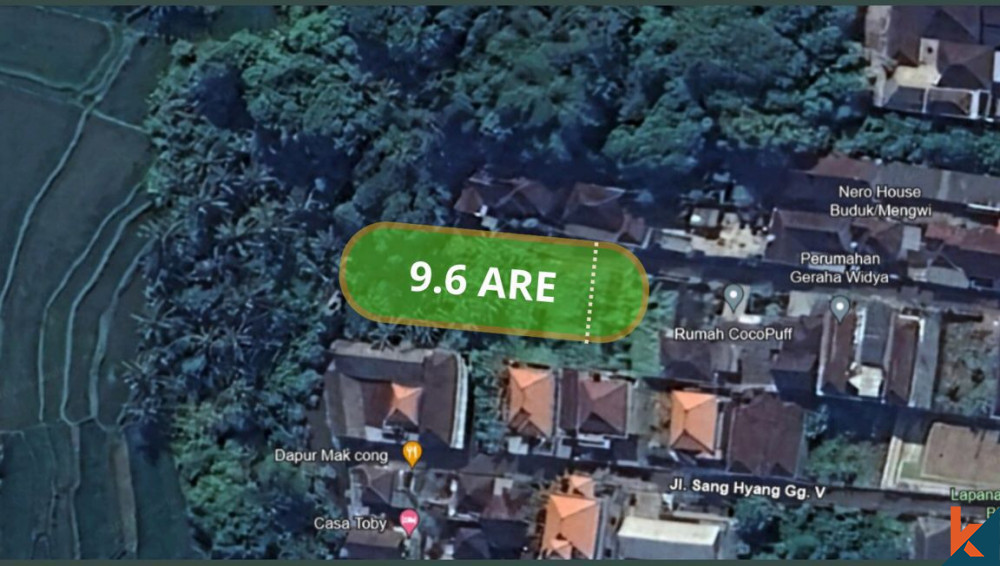 960 m²15 min$ 91034Bali, Mengwi
 1200 m²2 min$ 155172Bali, Klungkung
 2000 m²10 min$ 243842Bali, Mengwi
Essential Bali build & buy guides
- Bali villa construction cost per m² in 2026
- How much will your villa cost? Calculator
- Building a villa in Bali: the complete guide
- Buying land in Bali: step-by-step for foreigners
- Bali villa investment: yields, risks, returns
- Leasehold vs freehold: what foreigners can own
- Construction defect liability & 10-year warranty
- Bali building codes and construction standards
Related guides
Sanur and Nusa Dua vs Canggu: Stability Plays vs Hype
Canggu gets the headlines; Sanur and Nusa Dua quietly deliver steadier returns to a different kind of buyer. An honest 2026 comparison of the stability markets against the hype market — prices, demand drivers, oversupply risk, and who should buy where.
7 min read
Ubud and the Wellness Market: Buying or Building for Retreats
Ubud is Bali's wellness capital, and retreat-focused property behaves differently from beach villas: longer stays, group bookings, lower volatility. Here is what the market rewards, what zoning allows, and what it costs to buy or build a retreat property in 2026.
8 min read
Buying and Building on the Bukit: Uluwatu, Bingin and Balangan from a Buyer's Seat
A buyer's-seat 2026 guide to the Bukit peninsula — Uluwatu, Bingin and Balangan land prices, the water problem nobody budgets, cliff setbacks after the 2025 Bingin demolitions, and how to build there properly.
7 min read