Limestone Wall Cladding Installation in Bali Villas
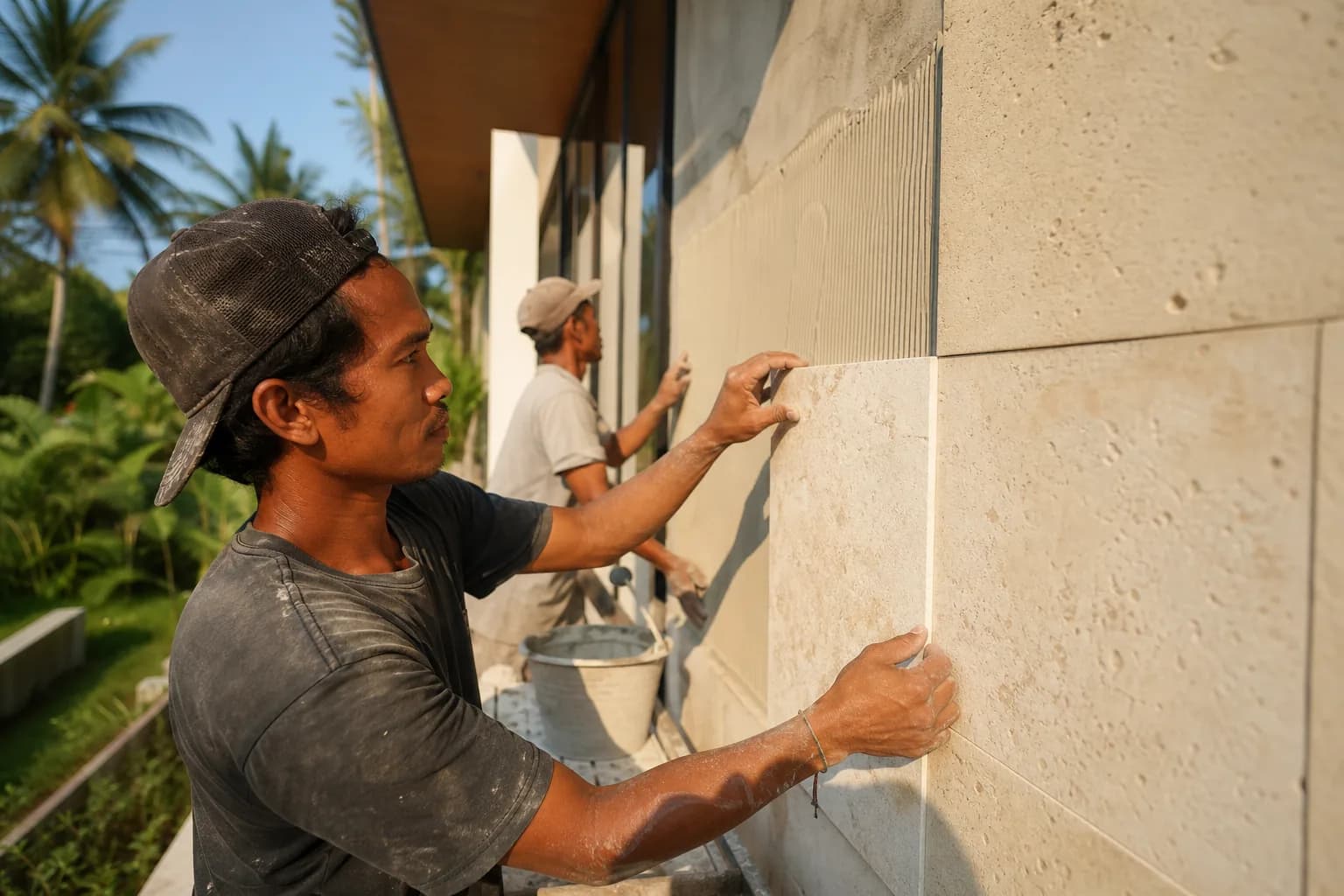
Why Moisture Barriers Are Critical for Limestone Wall Cladding in Bali’s Tropical Climate
Limestone wall cladding transforms Bali villas with natural elegance, but without proper moisture barriers, the humid tropical climate can cause catastrophic failures. Water infiltration behind limestone panels leads to efflorescence, mortar deterioration, structural damage, and mold growth within months. The challenge intensifies during Bali’s monsoon season when walls face driving rain and 80-90% humidity levels. Professional installation requires understanding how water-resistive barriers (WRB) interact with limestone’s porous nature, proper lapping techniques, and drainage plane creation to ensure your villa’s interior finishing Bali investment lasts decades rather than years.
Understanding Moisture Dynamics in Bali Villa Wall Systems
Limestone wall cladding installation in Bali requires fundamentally different moisture management approaches compared to temperate climates. The island’s year-round humidity, intense tropical downpours, and temperature fluctuations create unique challenges for exterior finishing works that demand specialized technical solutions.
Bali’s climate subjects wall systems to constant moisture pressure from multiple directions. External rainfall can deliver 200-300mm in a single storm event, while interior spaces generate moisture through daily activities. Without proper barriers, water migrates through limestone’s natural porosity—typically 3-8% by volume for quality Bali limestone—and accumulates behind cladding panels. This trapped moisture cannot evaporate quickly in humid conditions, creating ideal environments for biological growth and chemical reactions that degrade both stone and substrate.
The moisture barrier system functions as a drainage plane, not a waterproof membrane. This distinction is crucial for renovation Bali projects where understanding vapor permeability prevents common failures. A proper WRB allows water vapor to escape from wall cavities while preventing liquid water penetration. In Bali’s climate, this bidirectional moisture management is essential because walls must dry toward both interior and exterior surfaces.
Temperature differentials between air-conditioned interiors and hot exterior surfaces create condensation risks within wall assemblies. When warm, moisture-laden air contacts cooler surfaces behind limestone cladding, water droplets form and accumulate. Professional Bali villa construction addresses this through strategic barrier placement that positions the primary moisture defense at the optimal thermal boundary point.
Limestone’s alkaline composition reacts with moisture to produce efflorescence—white crystalline deposits that stain surfaces and indicate water movement through the system. While aesthetically problematic, efflorescence signals deeper issues: ongoing moisture infiltration that will eventually compromise mortar bonds, corrode metal fasteners, and damage structural substrates. Proper moisture barriers eliminate the water transport mechanism that causes these reactions.
The substrate material significantly influences moisture barrier requirements. Concrete block walls common in Bali construction are themselves porous and can wick moisture upward from foundations through capillary action. Brick substrates may contain soluble salts that migrate with water movement. Each substrate type requires specific barrier detailing to prevent moisture transmission while maintaining structural integrity of the cladding system.
Wind-driven rain poses particular challenges for exposed villa walls. Bali’s coastal locations and elevated sites experience significant wind pressure that forces water through microscopic gaps in mortar joints and stone interfaces. The moisture barrier must extend beyond simple water resistance to provide a continuous drainage plane that channels infiltrated water safely out of the wall system before it reaches interior spaces or damages structural elements.
Materials and Standards for Tropical Climate Moisture Protection
Selecting appropriate moisture barrier materials for limestone cladding in Bali requires understanding how different products perform under sustained tropical exposure. Standard building papers adequate for temperate climates often fail within 2-3 years when subjected to Bali’s environmental conditions.
Premium water-resistive barriers for Bali villa construction should meet minimum specifications: 60-minute water resistance rating per ASTM D779, vapor permeability of 5-15 perms, and UV stability for 90+ days exposure. Spunbonded polyolefin membranes outperform traditional asphalt-saturated felts in tropical applications, offering superior tear resistance and dimensional stability under temperature cycling. These synthetic barriers maintain integrity when wet, unlike paper-based products that can degrade during extended monsoon periods.
The two-layer WRB system provides redundancy essential for high-quality interior finishing Bali projects. The primary layer, applied directly to the substrate, serves as the main water defense. The secondary layer, installed over drainage mat or furring, catches any water that penetrates the first barrier and channels it to weep outlets. This redundant approach accommodates the reality that no single barrier remains perfectly intact through installation, stone fixing, and long-term service.
Drainage mats create the critical air gap between moisture barrier and limestone cladding. These three-dimensional polymer matrices—typically 6-8mm thick—provide continuous drainage paths while maintaining ventilation space. In Bali’s humid climate, this ventilation allows moisture vapor to escape and prevents the stagnant conditions that promote biological growth. Quality drainage mats resist compression under mortar loads while maintaining their drainage capacity throughout the wall system’s service life.
Sealants and flashing materials must withstand tropical UV exposure and thermal movement. Polyurethane and silyl-modified polymer sealants offer better long-term performance than standard silicones in Bali’s climate. Stainless steel or copper flashing prevents corrosion issues common with galvanized materials in coastal environments. All penetrations—windows, doors, utilities—require detailed flashing integration with the moisture barrier system to maintain continuity of the drainage plane.
Step-by-Step Moisture Barrier Installation Process
Professional limestone wall cladding installation begins with thorough substrate preparation. Inspect concrete or masonry walls for cracks, spalling, or structural defects. Repair all damage with appropriate patching compounds and allow full curing—minimum 28 days for concrete repairs in Bali’s humidity. Clean surfaces of dust, efflorescence, and biological growth using pressure washing followed by complete drying. Any substrate moisture content above 12% will compromise barrier adhesion and create ongoing moisture problems.
Apply the primary water-resistive barrier starting from the bottom of the wall, working upward in horizontal courses. This installation sequence ensures proper lapping where upper sheets overlap lower sheets by minimum 100mm (4 inches) horizontally and 150mm (6 inches) at vertical seams. The overlap direction is critical—water flowing down the wall surface must encounter the outer layer first, preventing capillary draw into seams. Secure barriers with corrosion-resistant fasteners spaced 300mm horizontally and 600mm vertically, avoiding over-fastening that creates puncture points for water entry.
Detail all penetrations and transitions with meticulous flashing integration. Window and door openings require pan flashing at sills that extends minimum 200mm beyond opening sides and integrates with the WRB through proper lapping sequences. Head flashing must project outward to direct water away from openings. Utility penetrations—electrical conduits, plumbing, HVAC lines—need individual boot flashings sealed to both the penetrating element and the moisture barrier. These details represent the most common failure points in renovation Bali projects and demand careful execution.
Install the drainage mat over the primary WRB, maintaining continuous coverage without gaps that would create water dams. Secure drainage mats with mechanical fasteners or adhesive appropriate for the substrate and climate conditions. At the wall base, ensure the drainage mat extends to weep outlets that allow accumulated water to exit the system. These weeps—typically 10mm diameter holes spaced 600mm apart—must remain clear of mortar during subsequent stone installation.
Apply the secondary moisture barrier over the drainage mat, following the same lapping protocols as the primary layer. This second WRB provides backup protection and creates a redundant drainage plane. The air gap between barriers allows any water penetrating the outer layer to drain freely without contacting the primary barrier. This separation is particularly valuable in Bali villa construction where driving rain can force water through mortar joints during severe weather events.
Install metal lath or mechanical anchoring systems for limestone attachment, securing through all barrier layers into the structural substrate. Use corrosion-resistant fasteners—stainless steel or hot-dipped galvanized minimum—with spacing appropriate for the stone weight and substrate material. Typical spacing ranges from 300-400mm for standard limestone panels. Ensure fasteners penetrate minimum 40mm into concrete substrates or fully through masonry units into solid backing.
Begin limestone installation from the bottom course, establishing level and plumb references. Apply mortar to both substrate and stone backs, ensuring full coverage without voids that could trap water. Maintain consistent joint widths—typically 10-12mm—that allow proper mortar filling and accommodate thermal movement. As installation progresses upward, periodically verify that weep holes remain clear and that no mortar bridges block the drainage cavity. These bridges create pathways for water to bypass the barrier system and reach interior spaces.
Complete the installation with proper joint treatment. Tool mortar joints to a slight concave profile that sheds water while maintaining full joint filling. After initial mortar set, clean limestone surfaces of residual mortar before it fully cures. Apply breathable penetrating sealers to limestone surfaces—never film-forming coatings that trap moisture—allowing the stone to function as part of the overall moisture management system rather than as a waterproof barrier.
Cost Considerations and Project Timeline for Bali Installations
Limestone wall cladding with proper moisture barriers represents a significant investment in villa quality and longevity. Material costs for premium WRB systems, drainage mats, and quality Bali limestone typically range from IDR 850,000 to IDR 1,500,000 per square meter, depending on stone selection and system complexity. Labor costs for professional installation add IDR 400,000 to IDR 750,000 per square meter, reflecting the technical expertise required for proper moisture barrier integration.
Project timelines depend on wall area, access conditions, and weather. A typical 50-square-meter feature wall requires 2-3 days for substrate preparation and moisture barrier installation, followed by 4-6 days for limestone fixing and finishing. Larger villa projects spanning 150-200 square meters of cladding extend to 3-4 weeks for complete installation. Bali’s monsoon season (November-March) can extend timelines by 20-30% due to weather delays and extended curing requirements in high humidity.
Cost optimization should never compromise moisture barrier quality. Attempting to reduce expenses by eliminating the secondary WRB, using substandard drainage mats, or inadequate flashing details creates long-term problems far exceeding initial savings. Moisture damage repairs typically cost 3-5 times the original installation investment, plus the disruption of removing failed cladding and rebuilding wall systems. Professional Bali villa construction prioritizes proper installation over short-term cost reduction.
For detailed cost estimation specific to your villa project, Teville provides comprehensive assessment services through our cost estimation process, evaluating site conditions, design requirements, and material selections to deliver accurate project budgets. Our construction process ensures quality finishing throughout every installation phase.
Frequently Asked Questions About Limestone Cladding Moisture Barriers
Can existing villa walls be retrofitted with proper moisture barriers during renovation?
Yes, renovation Bali projects can incorporate moisture barriers when adding limestone cladding to existing walls. The process requires removing any existing finishes, assessing substrate condition, making necessary repairs, and then installing the complete barrier system before limestone application. Retrofits often reveal hidden moisture damage that must be addressed before proceeding. While more complex than new construction, proper retrofit installation delivers the same long-term protection and durability as original installations.
How do moisture barriers affect interior finishing and furniture installation?
Properly installed exterior moisture barriers protect interior spaces from water infiltration that would damage interior finishing Bali work and furniture installation. By preventing moisture penetration, barriers maintain stable interior humidity levels and eliminate the mold growth, paint failure, and material degradation that occurs when walls remain chronically damp. Interior finishes can proceed with confidence once exterior moisture management is properly addressed, ensuring villa utilities and electrical systems remain protected from water damage.
What maintenance do moisture barrier systems require after installation?
The moisture barrier system itself requires no maintenance once properly installed behind limestone cladding. However, regular inspection of limestone surfaces, mortar joints, and weep holes ensures the overall system continues functioning correctly. Annual inspections should verify that weep holes remain clear, mortar joints show no significant cracking, and limestone surfaces display no efflorescence indicating water infiltration. Any identified issues should be addressed promptly to prevent moisture barrier system compromise.
Do all limestone types require the 164 m²7 month(s)from 79.000 USD
Private: Haridas Villas, Tegallalang
 2144 m²11 month(s)from 104.000 USD
Narayana

Want to calculate?
 1from 198.000 USD
Private: Haridas Villas
 3173 m²6 month(s)from 125.000 USD
TALA FOUR
 3104 m²11 month(s)from 99.000 USD
TALA 100
 4344 m²16 month(s)from 290.000 USD
Radha
 3124 m²6 month(s)from 123.000 USD
TALA 8
 3127 m²9 month(s)from 177.000 USD
Mukunda
164 m²7 month(s)from 79.000 USDTALA TWO
 3180 m²7 month(s)from 142.000 USD
Vasudeva
 172 m²8 month(s)from 120.000 USD
Keshava
Start With Real Numbers, Not Guesses
Before finalizing your finishing works plan, check realistic cost ranges for your Bali villa project.
Available lands
 1000 m²10 min$ 303571Bali, Tabanan
 10000 m²19 min$ 232759Bali, Buleleng
 200 m²11 min$ 89286Bali, Tabanan
 6000 m²10 min$ 1330049Bali, Kutuh South Bali
 7900 m²25 min$ 413485Bali, Tabanan
 422 m²15 min$ 93547Bali, Kerobokan
 260 m²5 min$ 51872Bali, Kedungu
 700 m²8 min$ 165517Bali, Umalas
 1600 m²32 min$ 266010Bali, Tabanan
 420 m²15 min$ 41897Bali, Tabanan
 500 m²2 min$ 175862Bali, Cemagi
 1700 m²10 min$ 632257Bali, Kuta
 250 m²15 min$ 40025Bali, Munggu
 3000 m²15 min$ 738916Bali, Cepaka
 700 m²20 min$ 90517Bali, Cepaka
Essential Bali build & buy guides
- Bali villa construction cost per m² in 2026
- How much will your villa cost? Calculator
- Building a villa in Bali: the complete guide
- Buying land in Bali: step-by-step for foreigners
- Bali villa investment: yields, risks, returns
- Leasehold vs freehold: what foreigners can own
- Construction defect liability & 10-year warranty
- Bali building codes and construction standards
Related guides
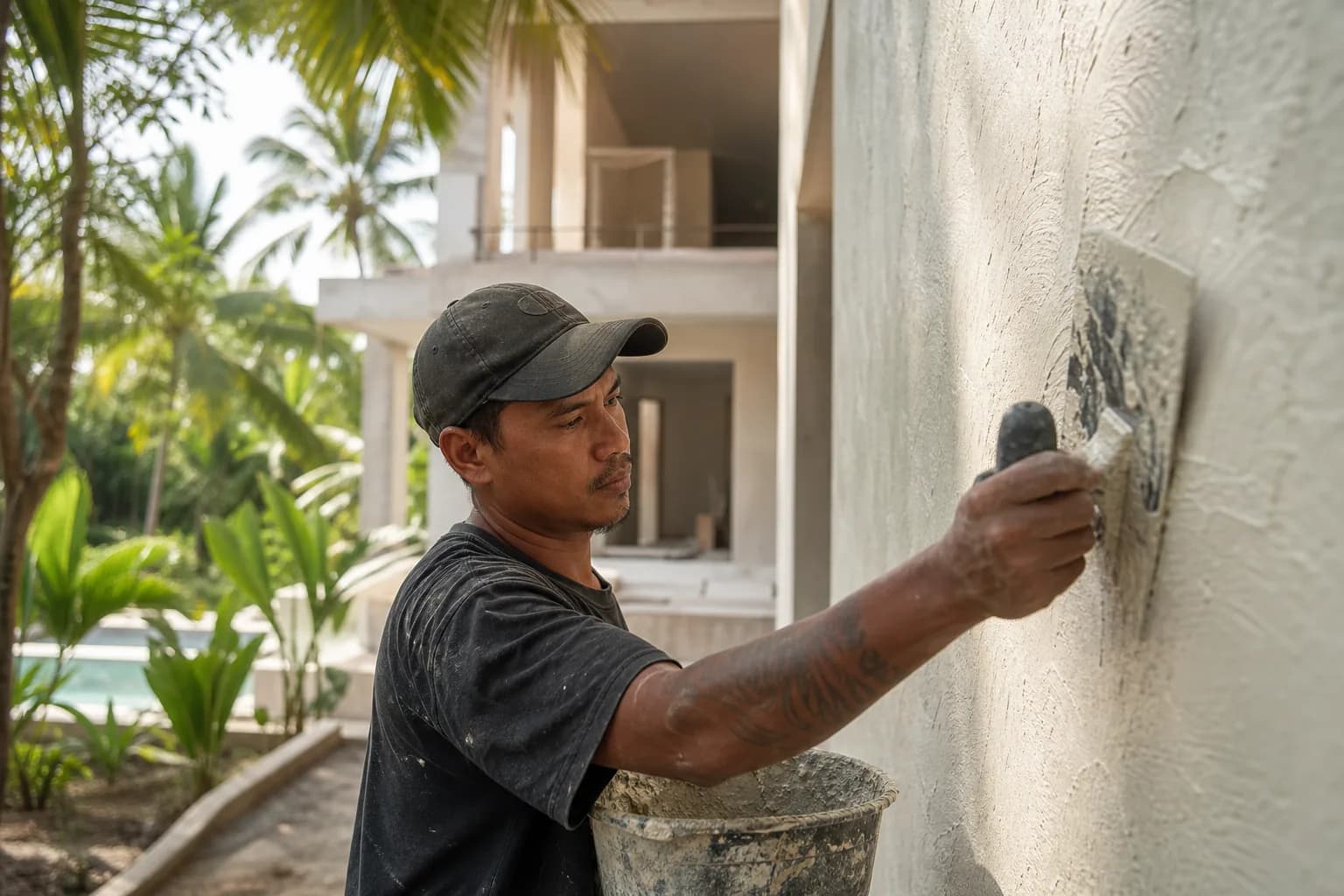
Resin-Infused Plaster Finishes: Anti-Salt Systems Bali
Expert technical guide: Resin-Infused Plaster Finishes: Anti-Salt Systems Bali
8 min read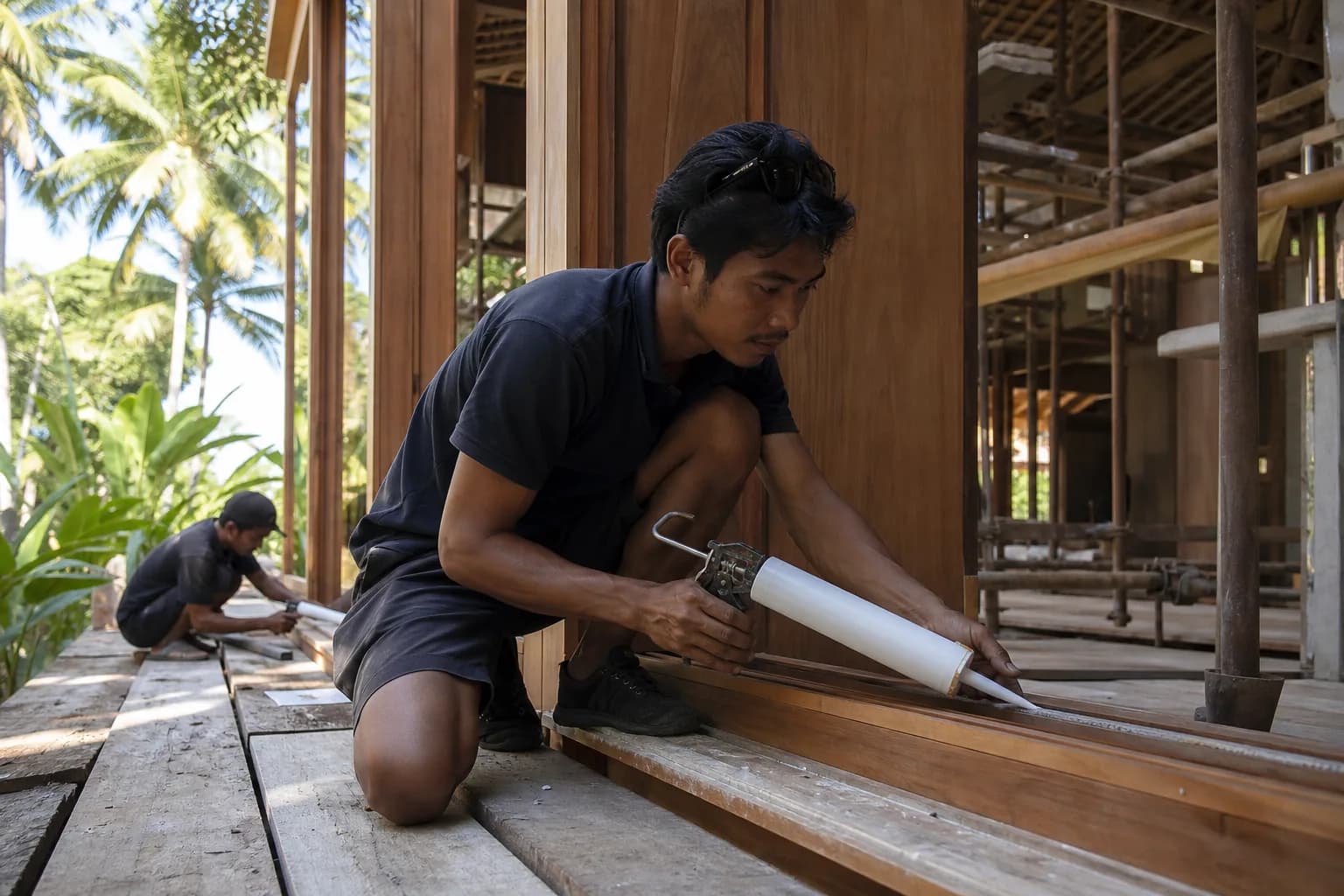
Prefinished Timber Joinery: Silicone Seals Fixings Bali
Professional prefinished timber joinery installation in Bali with silicone seals and fixings for durable weatherproof performance and a premium finish.
10 min read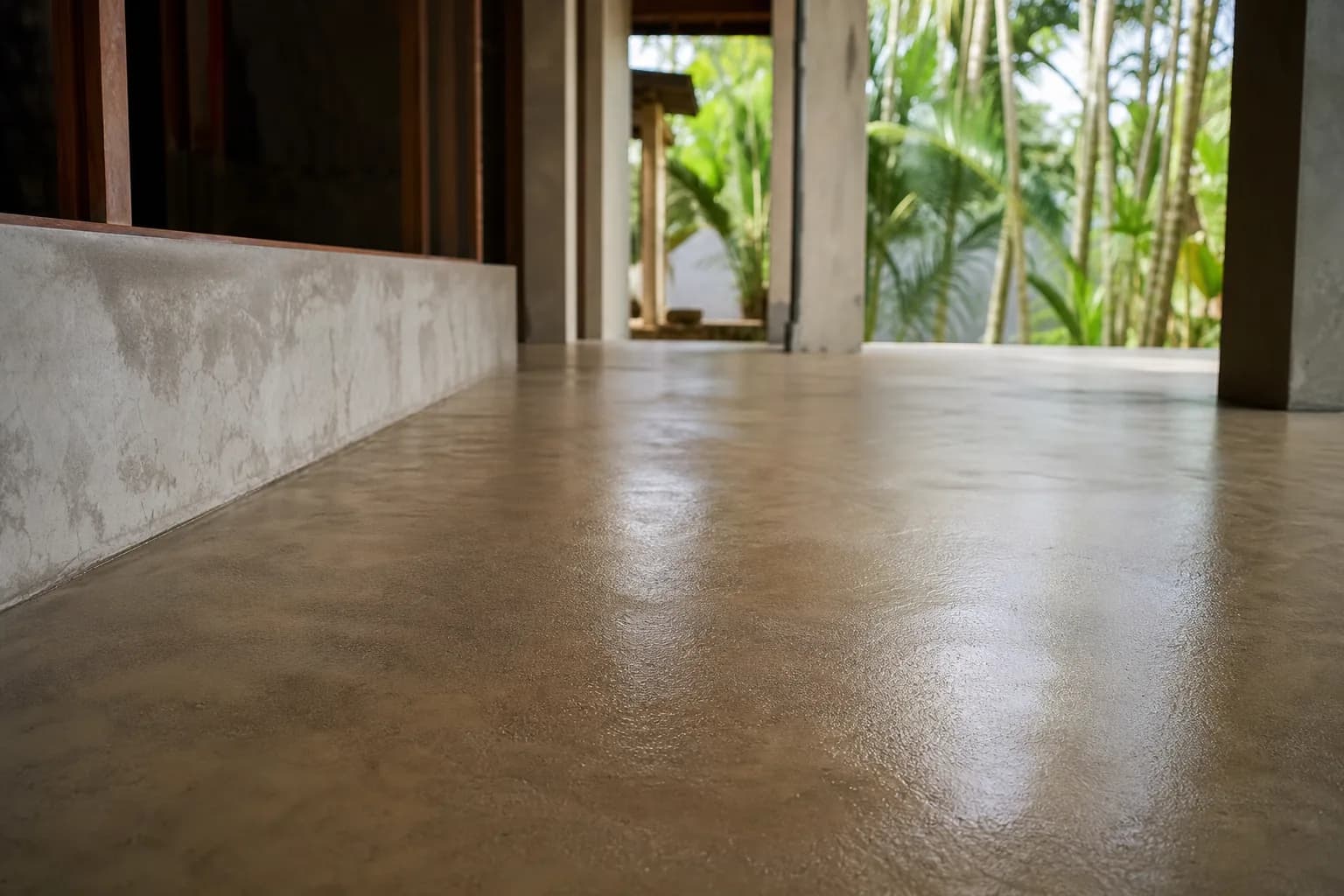
Polished Concrete Microtopping: Surface Prep Sealants Bali
Discover Bali s polished concrete microtopping: expert surface prep, durable sealants, and a flawless finish for modern floors with minimal maintenance.
9 min read