Limestone Bedrock Drilling Costs Foundation Solutions Bali
Why Bukit Peninsula’s Limestone Bedrock Creates Unique Foundation Engineering Challenges
The Bukit Peninsula’s geological composition presents one of Bali’s most technically demanding construction scenarios: dense limestone bedrock formations that begin at depths ranging from 0.5 to 3 meters below surface level. Unlike the volcanic soil substrates found in Ubud or Canggu, Bukit’s coralline limestone requires specialized drilling equipment, foundation engineering approaches, and cost structures that differ dramatically from standard Bali villa construction. Property developers purchasing land in Uluwatu, Pecatu, Ungasan, or Jimbaran frequently underestimate the 40-60% foundation cost premium associated with limestone bedrock penetration, leading to budget overruns and construction delays that can extend project timelines by 8-12 weeks.
Geological Engineering Reality: Bukit Peninsula Limestone Formation Characteristics
The Bukit Peninsula sits atop a raised coral reef platform formed during Pleistocene marine regression approximately 125,000 years ago. This geological history created a limestone substrate with compressive strengths ranging from 20-80 MPa, significantly harder than the volcanic tuff (5-15 MPa) found in central and northern Bali. The limestone presents in three distinct stratification patterns that directly impact drilling costs and foundation design:
Surface Weathered Layer (0-1.5m depth): Partially decomposed limestone with karst features, voids, and irregular density. This layer creates false bearing capacity readings during preliminary soil testing and frequently collapses during excavation, requiring immediate structural stabilization.
Intermediate Fractured Zone (1.5-4m depth): Competent limestone with horizontal and vertical fracture planes. Water infiltration through these fractures creates localized weakness zones that require geotechnical mapping before pile placement. Standard rotary drilling equipment experiences 60-70% reduced penetration rates in this zone compared to volcanic soil.
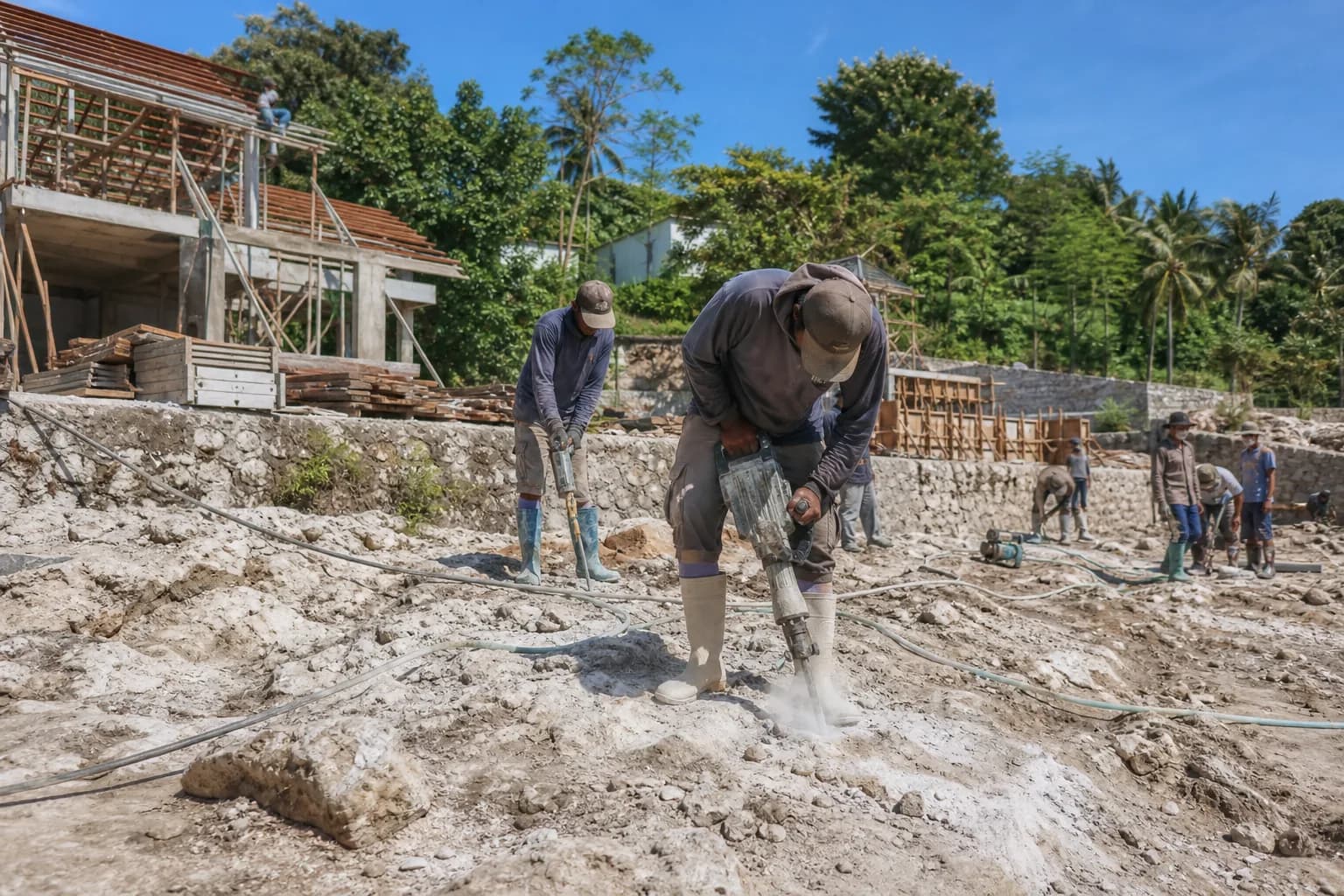
Solid Bedrock Formation (4m+ depth): Massive limestone requiring diamond-tipped core drilling or hydraulic rock breakers. Penetration rates drop to 0.3-0.8 meters per hour compared to 2-4 meters per hour in standard soil conditions. This zone provides excellent bearing capacity (300-500 kN/m²) but accessing it requires specialized equipment rental and extended drilling time.
The engineering challenge intensifies on sloped Bukit sites where limestone outcrops create uneven bedrock elevation across a single building footprint. A villa foundation might encounter bedrock at 0.8 meters on the uphill side while requiring 3.5-meter excavation on the downhill side—creating asymmetric loading conditions that demand custom structural engineering rather than template foundation designs.
Teville’s geotechnical assessment protocol for Bukit Peninsula projects includes minimum three-point soil boring to 6-meter depth, laboratory compressive strength testing of core samples, and ground-penetrating radar mapping to identify subsurface voids. This investigation phase, typically requiring 5-7 working days and costing IDR 25-40 million, prevents the foundation redesign scenarios that plague 40% of Bukit construction projects lacking proper geological surveys.
The limestone’s high calcium carbonate content (85-95%) also creates long-term durability concerns for reinforced concrete foundations. Groundwater with pH levels of 6.5-7.8 slowly dissolves limestone, creating settlement voids beneath footings while simultaneously attacking concrete through sulfate exposure. Foundation designs must incorporate waterproofing membranes, sulfate-resistant cement specifications, and drainage systems that standard Bali villa templates omit.
Critical Mistakes: What Property Developers Miss About Bukit Limestone Foundations
The most expensive error occurs when developers commission architectural designs before completing geotechnical investigation. A common scenario: purchasing land in Pecatu, designing a two-story villa based on standard strip footing assumptions, then discovering during excavation that limestone bedrock at 0.6-meter depth requires complete foundation redesign to bored pile or caisson systems. This sequence reversal adds IDR 180-350 million in unbudgeted costs and 6-10 weeks of schedule delay.
Underestimating drilling equipment requirements represents the second critical failure point. Standard hydraulic excavators with rock breaker attachments—adequate for volcanic soil—achieve only 30-40% efficiency in Bukit limestone. Developers who don’t budget for specialized rotary drilling rigs or diamond core drilling equipment face mid-project equipment rental cost escalations of 150-200% above initial estimates.
The third mistake involves misinterpreting soil test reports. A single soil boring showing “adequate bearing capacity at 1.5m depth” doesn’t account for the limestone’s heterogeneous nature. Karst voids, solution channels, and fracture zones can exist 2-3 meters laterally from test boring locations. Teville’s projects utilize minimum three-point testing with 8-12 meter spacing to map subsurface variability—a protocol that reveals foundation design constraints invisible in single-point testing.
Ignoring the seasonal groundwater table fluctuation in Bukit limestone creates long-term structural problems. During Bali’s wet season (November-March), the water table rises 1.5-2.5 meters, filling limestone fractures and creating hydrostatic pressure against foundation walls. Foundations designed without proper drainage systems and waterproofing experience concrete spalling, reinforcement corrosion, and differential settlement within 3-5 years of construction completion.
Step-by-Step Foundation Engineering Process for Bukit Peninsula Limestone Sites
Phase 1: Geotechnical Investigation (Week 1-2)
Commission minimum three-point soil boring to 6-meter depth across the building footprint. Specify core sample extraction for laboratory compressive strength testing and chemical analysis of groundwater pH and sulfate content. Request ground-penetrating radar survey if the site shows surface karst features or is located within 500 meters of known cave systems in Uluwatu or Pecatu areas. Budget IDR 25-40 million for comprehensive investigation including laboratory analysis and engineering report.
Phase 2: Foundation System Selection (Week 3)
Based on geotechnical data, structural engineers select appropriate foundation type. Shallow strip footings work only when competent limestone exists at 0.8-1.2 meter depth with no void spaces. Sites with deeper bedrock (2-4 meters) require bored pile foundations with 300-400mm diameter piles drilled to refusal depth in solid limestone. Extreme cases with significant voids or weak zones necessitate caisson foundations or ground improvement through cement grouting of fracture zones.
Phase 3: Specialized Equipment Mobilization (Week 4)
Secure rental contracts for rotary drilling rigs capable of 6-8 meter depth penetration in limestone. Verify equipment includes tungsten carbide or diamond-tipped drill bits suitable for 40-60 MPa compressive strength rock. For projects requiring 15+ bored piles, negotiate weekly rental rates (IDR 18-28 million per week) rather than daily rates to reduce standby costs during concrete curing periods.
Phase 4: Excavation and Drilling Execution (Week 5-8)
Execute controlled excavation with continuous monitoring for unexpected void spaces or water infiltration. Drilling operations in Bukit limestone typically achieve 0.5-1.2 meters penetration per hour depending on rock hardness—significantly slower than the 2-4 meters per hour in volcanic soil. Plan for 3-4 weeks of drilling work for a standard 300m² villa requiring 20-25 bored piles to 4-5 meter depth.
Phase 5: Specialized Concrete Placement (Week 9-10)
Use sulfate-resistant cement (Type V) for all below-grade concrete work in contact with limestone. Specify minimum 30 MPa concrete strength with reduced water-cement ratio (0.45 maximum) to minimize permeability. Install waterproofing membrane systems on all foundation walls before backfilling. This specification adds 15-20% to concrete material costs but prevents the reinforcement corrosion problems common in standard Bukit foundations after 5-7 years.
Phase 6: Drainage System Integration (Week 11)
Install perimeter drainage systems with gravel-packed French drains connecting to positive outfall points. In limestone terrain, subsurface water follows fracture planes rather than predictable flow patterns, requiring more extensive drainage infrastructure than volcanic soil sites. Budget IDR 35-55 million for comprehensive foundation drainage including sump pump systems for sites below natural drainage elevation.
Realistic Cost Structures: Bukit Peninsula Limestone Foundation Budget Ranges
Geotechnical investigation costs for Bukit Peninsula sites range from IDR 25-40 million for standard three-point soil boring with laboratory analysis, increasing to IDR 55-75 million for complex sites requiring ground-penetrating radar surveys and five-point testing arrays. This represents 1.5-2.5% of total foundation budget but prevents the 30-50% cost overruns associated with inadequate site investigation.
Bored pile foundation systems in Bukit limestone cost IDR 2.8-4.5 million per linear meter of pile depth, compared to IDR 1.2-1.8 million per meter in volcanic soil areas. A typical 300m² villa requiring 22 piles at 4.5-meter average depth incurs IDR 280-445 million in pile foundation costs alone—before pile caps, grade beams, and floor slabs. This compares to IDR 120-180 million for equivalent strip footing foundations in non-limestone areas.
Specialized drilling equipment rental adds IDR 18-28 million per week, with Bukit limestone projects typically requiring 3-5 weeks of drilling time compared to 1-2 weeks for standard excavation. Total equipment costs for limestone drilling range from IDR 54-140 million depending on site complexity and rock hardness variations.
Sulfate-resistant concrete specifications and waterproofing systems add 18-25% to below-grade concrete costs, translating to IDR 45-85 million premium for a 300m² villa foundation compared to standard concrete specifications. However, this investment prevents the IDR 150-300 million foundation repair costs that emerge 5-8 years post-construction when standard concrete deteriorates in limestone contact conditions.
Total foundation costs for Bukit Peninsula limestone sites range from IDR 850 million to 1.4 billion for a 300m² villa, representing 22-28% of total construction budget compared to 12-16% for equivalent projects in volcanic soil areas. Timeline extension averages 4-6 weeks beyond standard construction schedules due to slower drilling penetration rates and extended concrete curing requirements in tropical humidity conditions.
Frequently Asked Questions: Bukit Peninsula Limestone Foundation Engineering
Can I use standard strip footing foundations in Bukit Peninsula limestone areas?
Strip footings work only in specific conditions: competent limestone at 0.8-1.2 meter depth with no subsurface voids, confirmed through minimum three-point soil boring, and building loads under 150 kN/m² (typical for single-story structures). Sites with bedrock deeper than 1.5 meters, presence of karst features, or two-story villa designs require bored pile or caisson foundation systems. Approximately 65% of Bukit Peninsula sites need pile foundations rather than strip footings due to geological conditions. Attempting to use strip footings on unsuitable sites results in differential settlement of 15-40mm within the first two years, causing structural cracking and door/window operation failures.
How much more expensive are foundations in Uluwatu compared to Canggu or Ubud?
Bukit Peninsula limestone foundations cost 85-140% more than equivalent foundations in volcanic soil areas like Canggu, Ubud, or Tabanan. For a 300m² villa, expect foundation costs of IDR 850 million-1.4 billion in Uluwatu/Pecatu versus IDR 380-650 million in Canggu. The cost differential stems from specialized drilling equipment requirements (IDR 54-140 million), slower penetration rates extending labor duration by 3-5 weeks, and sulfate-resistant concrete specifications adding 18-25% to material costs. Sites with extreme limestone hardness or significant void spaces can reach 180-200% cost premiums compared to standard soil conditions.
What drilling equipment is required for Bukit Peninsula limestone bedrock?
Limestone with 40-80 MPa compressive strength requires rotary drilling rigs with tungsten carbide or diamond-tipped core barrels, capable of 300-400mm diameter borehole creation to 6-8 meter depths. Standard hydraulic excavators with rock breaker attachments achieve only 30-40% efficiency in solid limestone and cannot create the precise cylindrical boreholes required for bored pile foundations. Rental costs for appropriate rotary drilling rigs range from IDR 18-28 million per week with 3-5 week minimum rental periods typical for villa projects. Equipment must include casing systems to prevent borehole collapse in fractured limestone zones and slurry pumps for debris removal during drilling operations.
How do I prevent foundation problems from limestone dissolution and groundwater exposure?
Limestone dissolution prevention requires four integrated strategies: (1) Sulfate-resistant cement (Type V) for all below-grade concrete with maximum 0.45 water-cement ratio to reduce permeability, (2) Waterproofing membrane systems on all foundation walls contacting limestone, (3) Perimeter drainage with French drains and positive outfall to lower groundwater contact duration, (4) Minimum 50mm concrete cover over reinforcement with corrosion-inhibiting admixtures. These specifications add 18-25% to foundation costs but prevent the reinforcement corrosion and concrete spalling that affects 35-40% of Bukit foundations built with standard specifications within 5-8 years. Annual drainage system inspection and maintenance extends foundation service life to 40+ years in limestone contact conditions.
Should I complete geotechnical investigation before or after purchasing land in Bukit Peninsula?
Conduct preliminary geotechnical investigation before finalizing land purchase, particularly for sloped sites or areas within 500 meters of known cave systems in Uluwatu/Pecatu. A pre-purchas
 3127 m²9 month(s)from 177.000 USD
Mukunda
 2144 m²11 month(s)from 104.000 USD
Narayana
 164 m²7 month(s)from 79.000 USD
Private: Haridas Villas, Tegallalang
164 m²7 month(s)from 79.000 USDTALA TWO
 3124 m²6 month(s)from 123.000 USD
TALA 8

Want to calculate?
 1from 198.000 USD
Private: Haridas Villas
 3104 m²11 month(s)from 99.000 USD
TALA 100
 3173 m²6 month(s)from 125.000 USD
TALA FOUR
 4344 m²16 month(s)from 290.000 USD
Radha
 172 m²8 month(s)from 120.000 USD
Keshava
 3180 m²7 month(s)from 142.000 USD
Vasudeva
Start With Real Numbers, Not Guesses
Before buying land or finalizing a design, check the realistic build cost range for your project in Bali.
Our team reviews your inputs and gives a grounded estimate.
Available lands
 220 m²2 min$ 66565Bali, Cemagi
 8313 m²15 min$ 716670Bali, Buduk
 500 m²2 min$ 175862Bali, Cemagi
 1000 m²10 min$ 123154Bali, Jimbaran
 325 m²15 min$ 44472Bali, Ungasan
 1350 m²5 min$ 283467Bali, Pecatu
 1375 m²10 min$ 447044Bali, Canggu
 750 m²15 min$ 187038Bali, Kerobokan
 550 m²15 min$ 164594Bali, Mengwi
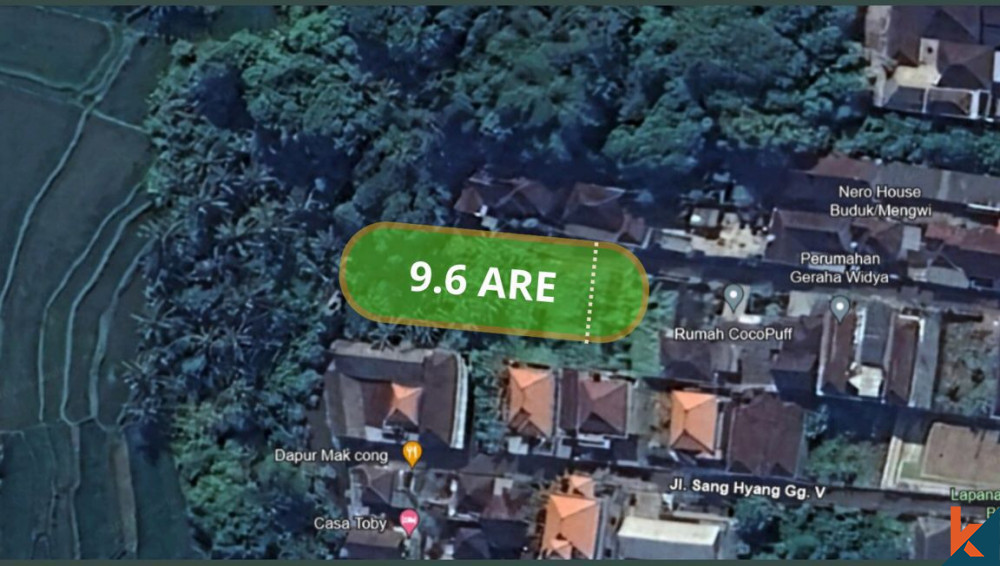 960 m²15 min$ 91034Bali, Mengwi
 1000 m²8 min$ 134544Bali, Bukit
 1000 m²10 min$ 184729Bali, Kutuh South Bali
 2230 m²15 min$ 410573Bali, Padonan
 1660 m²10 min$ 343448Bali, Kerobokan
 400 m²15 min$ 67192Bali, Tabanan
Essential Bali build & buy guides
- Bali villa construction cost per m² in 2026
- How much will your villa cost? Calculator
- Building a villa in Bali: the complete guide
- Buying land in Bali: step-by-step for foreigners
- Bali villa investment: yields, risks, returns
- Leasehold vs freehold: what foreigners can own
- Construction defect liability & 10-year warranty
- Bali building codes and construction standards
Related guides
Resin-Infused Plaster Finishes: Anti-Salt Systems Bali
Expert technical guide: Resin-Infused Plaster Finishes: Anti-Salt Systems Bali
8 min read
Prefinished Timber Joinery: Silicone Seals Fixings Bali
Professional prefinished timber joinery installation in Bali with silicone seals and fixings for durable weatherproof performance and a premium finish.
10 min read
Polished Concrete Microtopping: Surface Prep Sealants Bali
Discover Bali s polished concrete microtopping: expert surface prep, durable sealants, and a flawless finish for modern floors with minimal maintenance.
9 min read