Kerobokan Soil Bearing Capacity Pile Foundation Costs Bali
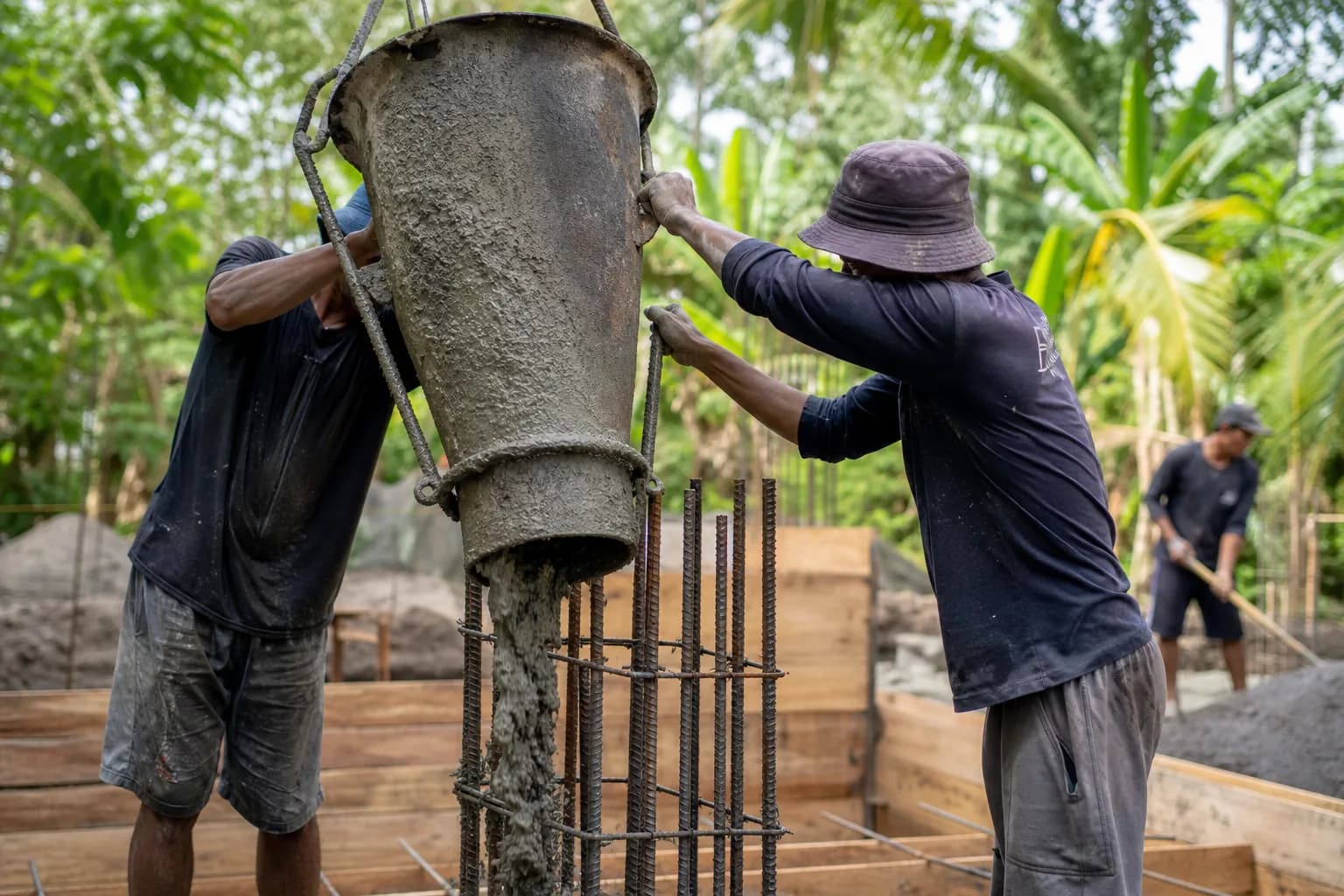
Why Kerobokan’s High Water Table and Alluvial Soils Demand Specialized Foundation Engineering
Kerobokan’s proximity to coastal zones and rice field conversions creates a unique geotechnical challenge: shallow groundwater tables (often 1-3 meters below surface) combined with soft alluvial clay deposits that compress under structural loads. Unlike Uluwatu’s limestone bedrock or Ubud’s volcanic soils, Kerobokan’s sedimentary layers require mandatory soil bearing capacity testing before any villa construction begins. Developers who skip this critical step face foundation settlement, cracked structural walls within 18 months, and remediation costs exceeding $40,000 USD. The question isn’t whether to conduct geotechnical surveys in Kerobokan—it’s understanding which testing methodology matches your site’s specific soil profile and how pile foundation requirements will impact your total construction budget.
Kerobokan Soil Composition and Geotechnical Testing Protocols
Kerobokan’s geological history as a coastal floodplain means most parcels contain layered stratigraphy: topsoil (0.5-1m), soft clay (2-6m), medium-dense sand (variable depth), and occasionally hard clay or sandstone at 8-12 meters. This variability demands site-specific testing rather than relying on neighboring property data.
Standard Penetration Test (SPT) Requirements
Indonesian construction standards (SNI 8460:2017) require SPT boreholes for structures exceeding two stories or 200m² footprint. In Kerobokan, geotechnical engineers typically drill 2-3 boreholes per 500m² plot to depths of 10-15 meters. The SPT hammer drops measure soil resistance every 1.5 meters, generating N-values that determine bearing capacity. Kerobokan’s typical N-values range from 4-8 in upper clay layers (indicating very soft to soft consistency) to 15-25 in deeper sand strata.
Critical data extracted includes:
- Bearing capacity: Safe load per square meter (typically 80-150 kPa for shallow foundations in Kerobokan’s clay)
- Groundwater depth: Influences foundation waterproofing and excavation dewatering costs
- Soil classification: Clay content, plasticity index, and organic matter percentage
- Settlement prediction: Expected compression under building loads over 10-20 years
When Pile Foundations Become Mandatory
Kerobokan sites trigger pile foundation requirements when SPT results show bearing capacity below 100 kPa in the upper 3 meters, or when two-story villas with swimming pools exceed safe settlement thresholds (typically 25mm differential settlement). Unlike spread footings that distribute loads across shallow soil, pile foundations transfer structural weight to deeper, competent strata—usually the sand layer at 6-10 meters depth.
Three pile types dominate Kerobokan construction:
Bored cast-in-place concrete piles (300-400mm diameter): Hydraulic rigs drill to bearing strata, insert rebar cages, and pour concrete. Ideal for sites with accessible drilling equipment and minimal vibration concerns. Load capacity: 40-80 tons per pile.
Driven precast concrete piles (250x250mm square): Factory-manufactured piles hammered to refusal depth. Faster installation but generates vibration affecting neighboring structures. Common in open Kerobokan rice field conversions. Load capacity: 30-60 tons per pile.
Mini-piles or micropiles (150-200mm diameter): Used in restricted access sites or when retrofitting existing structures. Drilled and grouted with high-strength cement. Load capacity: 15-35 tons per pile.
A typical 300m² two-story villa in Kerobokan with pool requires 25-40 piles depending on column spacing and structural loads. Pile caps (reinforced concrete blocks connecting pile tops to columns) add another layer of engineering complexity and cost.
Groundwater Management and Dewatering Costs
Kerobokan’s shallow water table (often encountered at 1.5-2.5m depth during dry season, rising to 0.8-1.5m in wet season) complicates excavation for basements, pools, and pile caps. Temporary dewatering systems using wellpoints or sump pumps run continuously during foundation construction, adding $2,500-$5,000 USD to project costs depending on excavation depth and duration. Permanent foundation waterproofing—critical in high water table zones—requires tanking membranes, hydrophilic waterstops, and crystalline admixtures in concrete mixes, adding 8-12% to foundation material costs.
Hidden Risks Developers Overlook in Kerobokan Foundation Planning
Assuming Uniform Soil Conditions Across the Plot
Kerobokan’s history of rice terracing means soil compaction varies dramatically within a single parcel. The former rice field bunds (raised earthen walls) contain denser, more stable soil than the flooded paddy areas. Developers who conduct only one borehole at plot center miss these variations, leading to differential settlement where one corner of the villa sinks faster than others. This manifests as diagonal cracks in walls, jammed doors, and pool shell fractures within 2-3 years.
Ignoring Seasonal Groundwater Fluctuations
Geotechnical surveys conducted during Bali’s dry season (May-October) may record groundwater at 2.5 meters depth, but wet season levels (November-April) can rise to 1 meter. Foundations designed for dry-season conditions experience hydrostatic uplift pressure during monsoons, causing basement flooding and undermining pile stability. Competent engineers design for worst-case wet season scenarios, incorporating drainage systems and buoyancy calculations.
Underestimating Organic Soil Content
Former rice fields contain decomposed plant matter in topsoil layers. Organic content above 3% causes long-term settlement as material continues decomposing under structural loads. Standard practice requires complete removal of organic topsoil (0.5-1m depth) and replacement with engineered fill—a step that adds $3,000-$6,000 USD but prevents catastrophic settlement issues. Developers who skip this “strip and replace” process face ongoing maintenance nightmares.
Choosing Pile Types Based on Cost Alone
Driven piles cost 20-30% less than bored piles but generate vibration that can damage neighboring structures—a critical concern in densely built Kerobokan neighborhoods. The legal liability for cracking a neighbor’s villa walls far exceeds the initial savings. Similarly, undersized mini-piles may meet budget constraints but fail to provide adequate safety factors for tropical storm loads and seismic events.
Step-by-Step Process for Kerobokan Soil Testing and Foundation Design
Phase 1: Pre-Purchase Geotechnical Assessment (Week 1-2)
Before finalizing land purchase, commission a preliminary soil investigation with 1-2 boreholes to 10m depth. This costs $1,800-$3,200 USD but reveals deal-breaker conditions: excessive organic content, contaminated soil from previous industrial use, or bearing capacity so poor that foundation costs exceed budget. Teville’s verified land listings include geotechnical data where available, eliminating this uncertainty for select parcels.
Phase 2: Detailed Site Investigation (Week 3-4)
After land acquisition, conduct comprehensive testing with 2-3 boreholes per 500m² plot. Accredited Indonesian geotechnical firms (members of HATTI – Indonesian Geotechnical Association) provide:
- SPT boring logs with N-values at 1.5m intervals
- Laboratory testing: grain size distribution, Atterberg limits, moisture content, organic content
- Groundwater monitoring over 7-14 days to capture fluctuations
- Bearing capacity calculations per SNI 8460:2017 standards
- Foundation recommendations: shallow vs. deep, pile type and spacing
Turnaround time: 10-14 days from drilling to final report. Cost: $3,500-$6,500 USD for typical Kerobokan villa plot.
Phase 3: Foundation Engineering Design (Week 5-7)
Structural engineers use geotechnical data to design foundation systems matching villa architecture. For pile foundations, this includes:
- Pile layout plans showing quantity, diameter, and depth for each column location
- Pile cap reinforcement drawings with waterproofing details
- Load calculations demonstrating safety factors (typically 2.5-3.0 for residential structures)
- Construction specifications for concrete grade (K-300 minimum for piles), rebar sizing, and installation tolerances
This engineering package becomes part of IMB (building permit) submissions to Badung Regency authorities. Teville’s integrated design-build process coordinates geotechnical, structural, and architectural teams to prevent costly redesigns.
Phase 4: Pile Installation and Testing (Week 8-11)
Specialized piling contractors mobilize equipment (drilling rigs for bored piles, hydraulic hammers for driven piles). Installation proceeds column-by-column with real-time monitoring:
- Bored piles: Drilling depth verified, rebar cage inspection before concrete pour, integrity testing via sonic logging
- Driven piles: Blow count records to confirm bearing strata reached, pile head condition checks
- Load testing: Minimum 2% of piles undergo static load tests to 200% design load, confirming capacity
Failed piles (inadequate capacity or installation defects) require replacement—a 5-8% occurrence rate in Kerobokan’s variable soils. Quality contractors include contingency piles in quotes.
Phase 5: Pile Cap and Grade Beam Construction (Week 12-14)
After pile acceptance, excavation for pile caps and grade beams proceeds with active dewatering. Waterproofing membranes applied before concrete pours. This phase connects individual piles into a unified foundation system ready for superstructure construction.
Realistic Cost Breakdown for Kerobokan Foundation Systems
Geotechnical Investigation Costs
- Preliminary assessment (1-2 boreholes): $1,800-$3,200 USD
- Comprehensive survey (2-3 boreholes, lab testing): $3,500-$6,500 USD
- Additional boreholes for large plots (>1,000m²): $1,200-$1,800 USD each
Pile Foundation Costs (Material + Installation)
- Bored concrete piles (350mm diameter, 8-10m depth): $180-$280 USD per pile
- Driven precast piles (250x250mm, 8-10m depth): $140-$220 USD per pile
- Mini-piles (180mm diameter, 8-10m depth): $160-$240 USD per pile
- Pile load testing: $800-$1,400 USD per test pile
- Pile caps and grade beams: $85-$140 USD per m² of foundation footprint
Total Foundation Cost Examples
Scenario 1 – 250m² two-story villa, moderate soil conditions: 28 bored piles required. Total foundation cost: $18,500-$26,000 USD (geotechnical survey + piles + caps + waterproofing).
Scenario 2 – 400m² villa with basement and pool, poor soil conditions: 45 driven piles + extensive dewatering. Total foundation cost: $32,000-$48,000 USD.
Foundation work typically represents 12-18% of total villa construction costs in Kerobokan when pile systems are required—compared to 6-9% for shallow foundations in better soil conditions elsewhere in Bali.
Timeline Considerations
Geotechnical investigation to completed pile foundation: 10-14 weeks. Wet season delays (November-March) can extend timelines by 2-4 weeks due to groundwater management challenges and equipment access issues on muddy sites.
Frequently Asked Questions: Kerobokan Soil Testing and Pile Foundations
Can I use my neighbor’s geotechnical report to save costs?
Indonesian building regulations and engineering liability standards prohibit using another property’s soil data for your foundation design. Soil conditions vary significantly within 20-30 meters in Kerobokan’s alluvial environment. More critically, your structural engineer and contractor assume legal responsibility for foundation performance—they will not sign off on designs based on third-party soil reports. The $4,000-$6,000 saved by skipping your own geotechnical survey becomes irrelevant when facing $50,000+ foundation failure remediation costs. Teville requires site-specific geotechnical data for all villa construction projects as non-negotiable risk management.
How do I know if the geotechnical firm is providing accurate data?
Verify the firm holds HATTI (Himpunan Ahli Teknik Tanah Indonesia) membership and employs licensed geotechnical engineers (Ahli Teknik certification). Request to observe borehole drilling—reputable firms welcome client presence and provide real-time depth measurements. The final report should include borehole logs with SPT N-values at each test depth, laboratory certificates for soil samples, and engineer’s stamp with registration number. Red flags: reports delivered in 2-3 days (proper lab testing requires 7-10 days), missing groundwater observations, or bearing capacity recommendations without supporting calculations. Teville works exclusively with accredited geotechnical consultants who provide third-party verification documentation.
What happens if soil conditions are worse than the geotechnical report predicted?
Competent geotechnical reports include contingency recommendations for encountering unexpected conditions during excavation. If pile installation reveals softer soils than anticipated, the structural engineer may specify deeper piles, additional piles, or larger pile caps—typically adding 10-20% to foundation costs. This is why experienced contractors include 5-8% contingency allowances in foundation quotes. The geotechnical firm’s professional liability insurance covers errors in their analysis, but claims processes take months. Practical solution: design foundations with conservative safety factors (3.0 instead of minimum 2.5) to absorb minor soil variability without redesign.
Are pile foundations required for single-story villas in Kerobokan?
Not automatically, but frequently necessary depending on specific site conditions. Single-story structures with lightweight roof systems (timber trusses, metal roofing) generate lower bearing pressures—often 60-90 kPa including pool and water features. If geotechnical testing shows bearing capacity above 100 kPa in the upper 2 meters and acceptable settlement pre
 1from 198.000 USD
Private: Haridas Villas
 164 m²7 month(s)from 79.000 USD
TALA TWO
 3104 m²11 month(s)from 99.000 USD
TALA 100
 3180 m²7 month(s)from 142.000 USD
Vasudeva
164 m²7 month(s)from 79.000 USDPrivate: Haridas Villas, Tegallalang
 172 m²8 month(s)from 120.000 USD
Keshava
 3124 m²6 month(s)from 123.000 USD
TALA 8
 4344 m²16 month(s)from 290.000 USD
Radha
 3127 m²9 month(s)from 177.000 USD
Mukunda
 3173 m²6 month(s)from 125.000 USD
TALA FOUR

Want to calculate?
 2144 m²11 month(s)from 104.000 USD
Narayana
Start With Real Numbers, Not Guesses
Before buying land or finalizing a design, check the realistic build cost range for your project in Bali.
Our team reviews your inputs and gives a grounded estimate.
Available lands
 2200 m²3 min$ 183842Bali, Berawa
 610 m²10 min$ 165271Bali, Seminyak
 1000 m²10 min$ 184729Bali, Kutuh South Bali
 700 m²20 min$ 90517Bali, Cepaka
 700 m²7 min$ 400000Bali, Canggu
 3800 m²15 min$ 100616Bali, Pererenan
 29000 m²6 min$ 3857143Bali, Tabanan
 1000 m²10 min$ 384852Bali, Canggu
 2200 m²15 min$ 508005Bali, Canggu
 1410 m²15 min$ 390702Bali, Tabanan
 422 m²15 min$ 93547Bali, Kerobokan
 3300 m²15 min$ 449889Bali, Tabanan
 500 m²15 min$ 124692Bali, Kaba Kaba
 325 m²15 min$ 44472Bali, Ungasan
 1600 m²32 min$ 266010Bali, Tabanan
Essential Bali build & buy guides
- Bali villa construction cost per m² in 2026
- How much will your villa cost? Calculator
- Building a villa in Bali: the complete guide
- Buying land in Bali: step-by-step for foreigners
- Bali villa investment: yields, risks, returns
- Leasehold vs freehold: what foreigners can own
- Construction defect liability & 10-year warranty
- Bali building codes and construction standards
Related guides
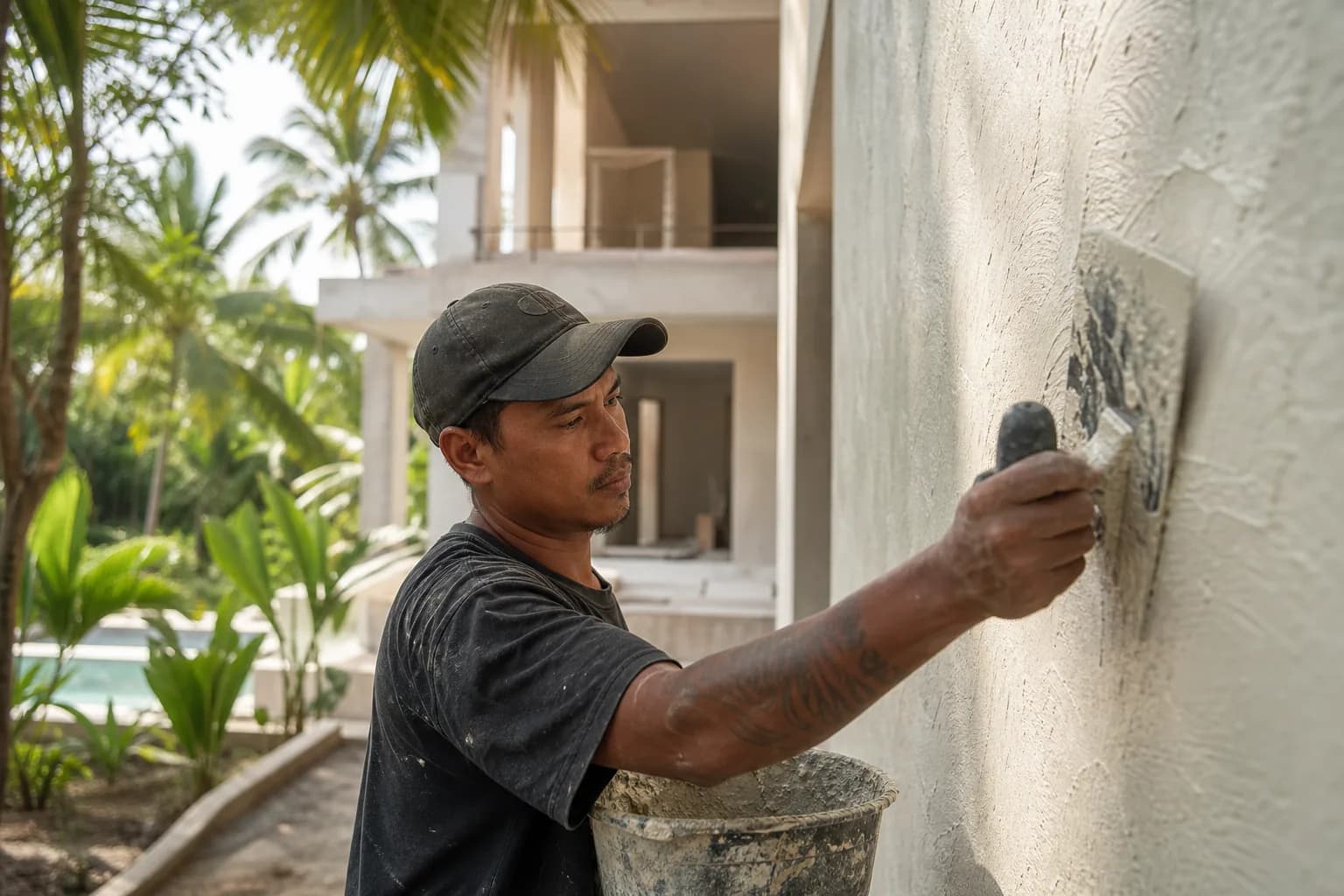
Resin-Infused Plaster Finishes: Anti-Salt Systems Bali
Expert technical guide: Resin-Infused Plaster Finishes: Anti-Salt Systems Bali
8 min read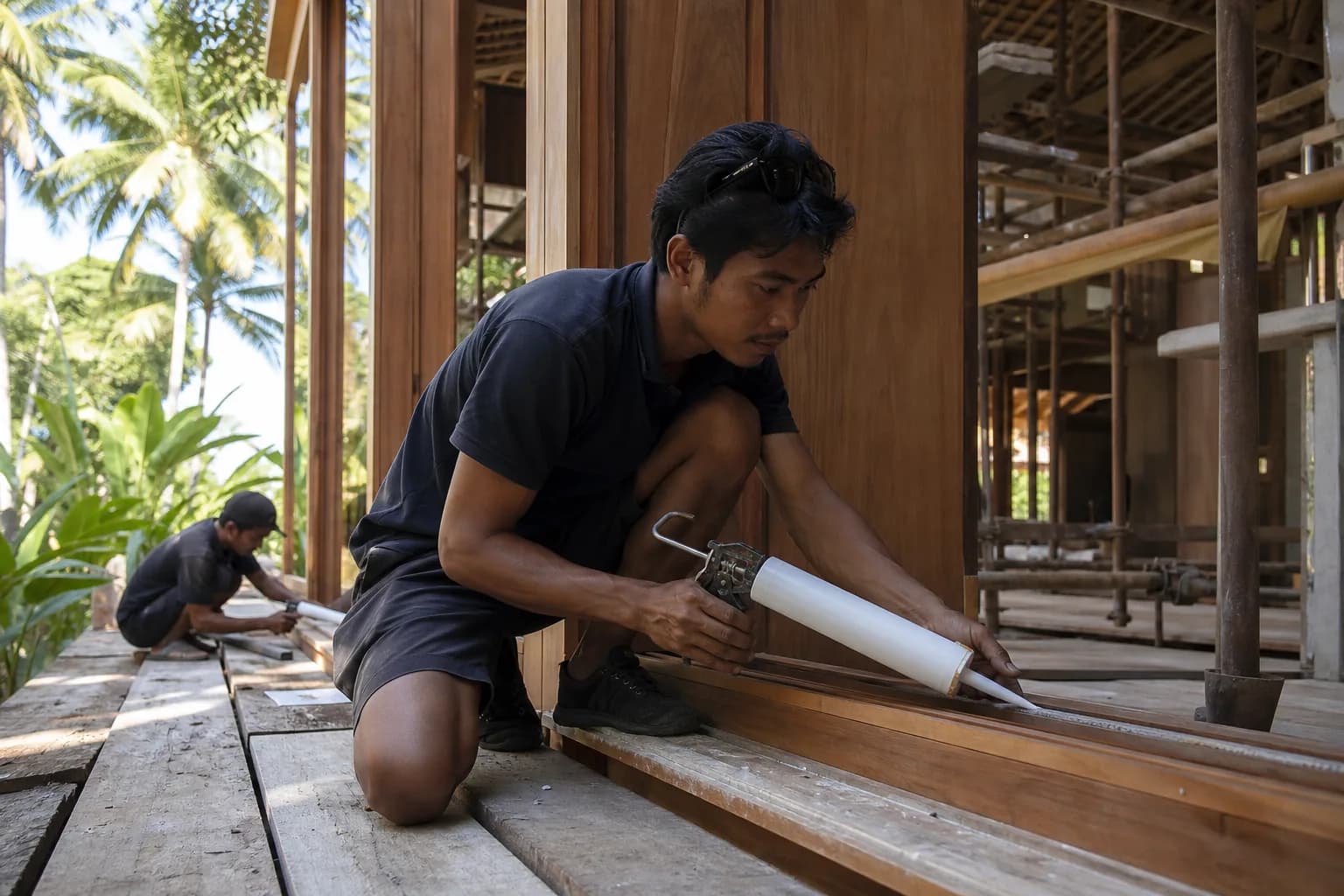
Prefinished Timber Joinery: Silicone Seals Fixings Bali
Professional prefinished timber joinery installation in Bali with silicone seals and fixings for durable weatherproof performance and a premium finish.
10 min read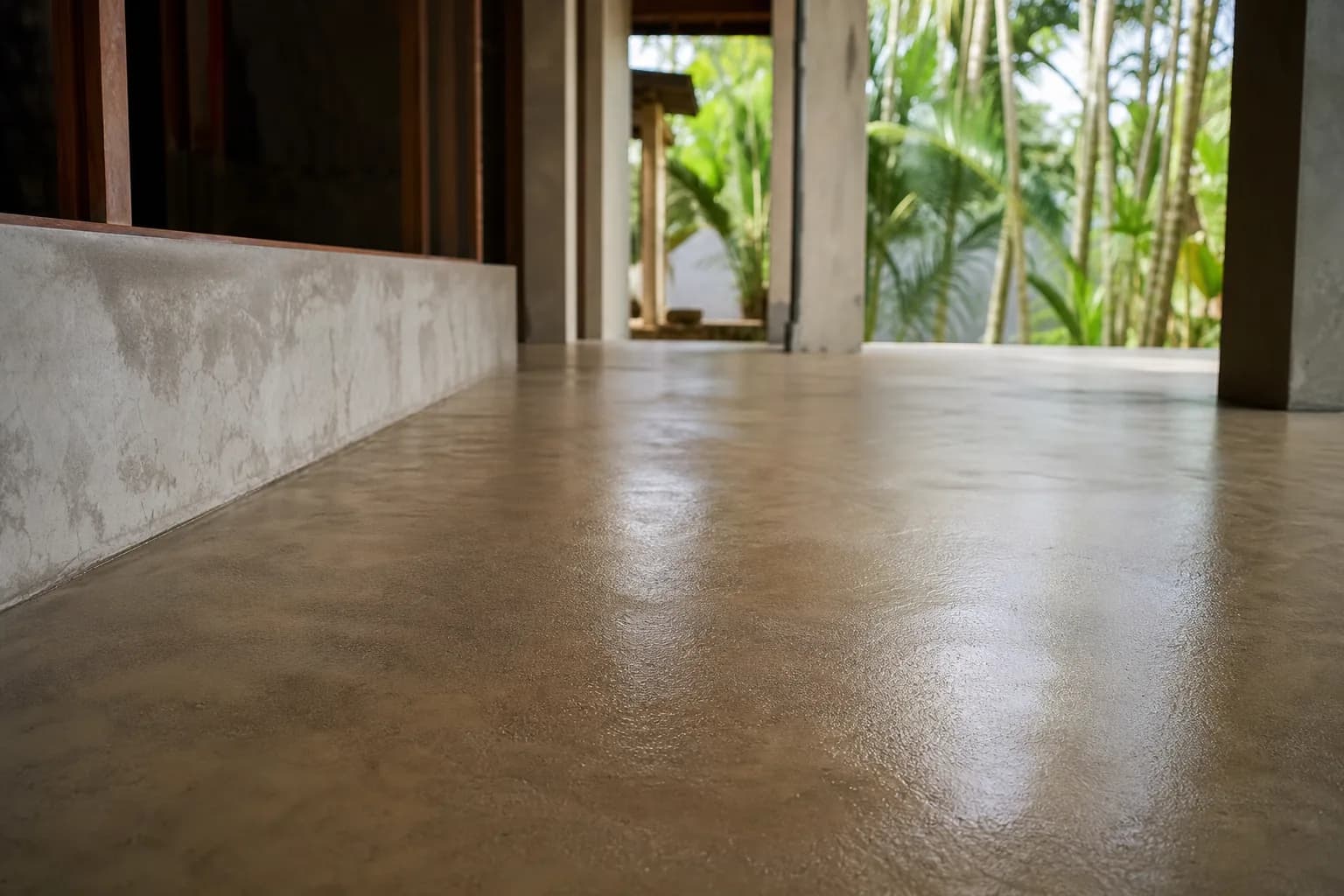
Polished Concrete Microtopping: Surface Prep Sealants Bali
Discover Bali s polished concrete microtopping: expert surface prep, durable sealants, and a flawless finish for modern floors with minimal maintenance.
9 min read