Jalousie Window Louver Replacement in Bali: Glass vs Aluminum
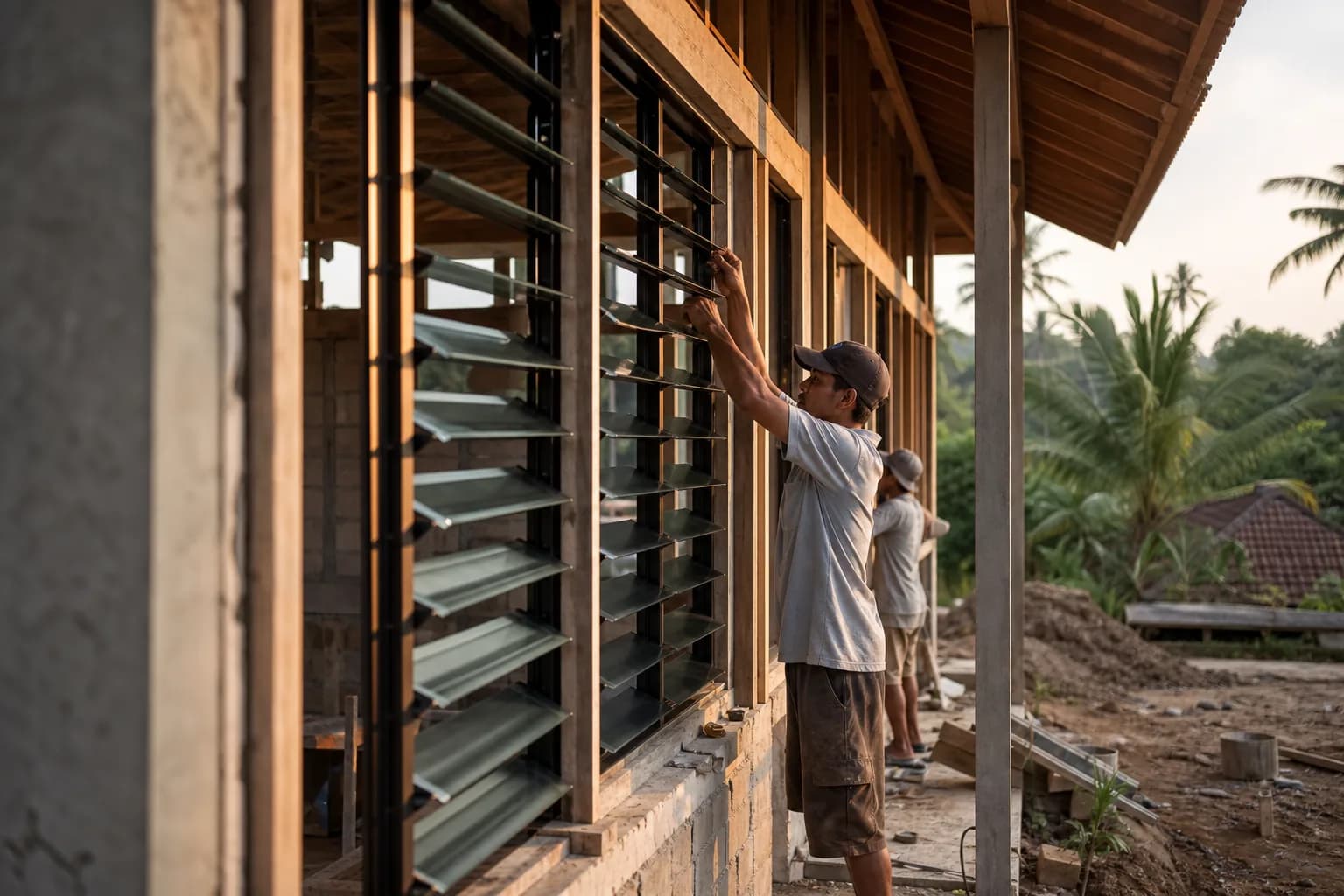
Jalousie Window Louver Replacement: Glass vs Aluminum for Bali Villas
Jalousie windows remain a defining architectural feature in Bali villas, offering the tropical ventilation and indoor-outdoor connection that makes island living exceptional. However, after years of exposure to Bali’s humid, salt-laden coastal air, louver blades deteriorate, mechanisms seize, and frames corrode. Villa owners face a critical decision during renovation: replace damaged glass louvers with identical materials, or upgrade to aluminum alternatives that promise superior durability in tropical conditions. This choice impacts not just aesthetics and maintenance schedules, but also long-term structural integrity, operational functionality, and the overall finishing quality that distinguishes premium Bali villa construction from standard renovations.
Technical Analysis: Glass vs Aluminum Louver Performance in Bali’s Climate
Understanding the technical performance characteristics of glass versus aluminum jalousie louvers requires examining how each material responds to Bali’s specific environmental stressors. The island’s tropical climate presents unique challenges: 70-90% humidity year-round, salt spray in coastal areas, intense UV exposure, and temperature fluctuations between air-conditioned interiors and exterior heat.
Glass Louver Technical Specifications
Traditional glass jalousie louvers typically measure 4-6mm in thickness, with standard blade widths of 100-150mm. The glass itself performs admirably in tropical conditions—it doesn’t corrode, maintains transparency indefinitely, and provides excellent weather sealing when properly installed. However, the critical vulnerability lies in the hardware system. Glass louvers require metal clips, pivots, and operating mechanisms that interface directly with the glass edges. In Bali’s coastal environment, these metal components experience accelerated corrosion, particularly where dissimilar metals contact each other or where moisture accumulates in pivot points.
The weight of glass louvers—approximately 2.5kg per square meter for 4mm glass—places continuous stress on operating mechanisms. Over time, this weight combined with corrosion leads to blade slippage, difficulty operating the window, and eventually complete mechanism failure. During interior finishing Bali projects, we frequently encounter glass jalousie systems where the glass blades remain intact but the hardware has deteriorated beyond repair, necessitating complete replacement rather than simple maintenance.
Aluminum Louver Engineering Advantages
Aluminum jalousie louvers, typically fabricated from 1.2-2.0mm marine-grade aluminum alloy (5052 or 6063), offer a fundamentally different performance profile. The material density of approximately 0.9kg per square meter—less than half the weight of equivalent glass—reduces mechanical stress on operating systems. More significantly, when properly anodized or powder-coated, aluminum louvers develop a protective oxide layer that resists corrosion even in direct salt spray environments.
The engineering advantage extends to thermal performance. Aluminum’s thermal conductivity, while higher than glass, becomes beneficial in jalousie applications where ventilation is the primary function. Aluminum blades don’t retain heat like glass, reducing radiant heat transfer into interior spaces. For Bali villa construction projects prioritizing natural cooling, this characteristic contributes to improved thermal comfort without mechanical cooling systems.
Operational Longevity and Maintenance Requirements
Field performance data from Teville’s completed villa projects demonstrates clear longevity differences. Glass jalousie systems in coastal Bali locations typically require hardware replacement every 5-7 years, with annual lubrication and adjustment necessary to maintain smooth operation. Aluminum systems, when installed with stainless steel hardware and proper sealing, maintain operational integrity for 15-20 years with minimal intervention—typically just annual cleaning and occasional lubrication of pivot points.
The maintenance differential becomes particularly significant in multi-story villas or locations with difficult access. Replacing corroded glass louver hardware requires careful removal of each blade to avoid breakage, sourcing matching replacement clips and pivots, and precise reinstallation to ensure proper sealing. Aluminum louver maintenance, by contrast, rarely requires blade removal—most issues can be addressed by adjusting the operating mechanism or replacing individual worn components.
Material Standards and Quality Specifications for Tropical Applications
Selecting appropriate materials for jalousie louver replacement in Bali requires understanding specific standards that ensure tropical climate performance. Not all glass or aluminum products deliver equivalent results—material grade, surface treatment, and hardware quality determine long-term success.
Glass Louver Material Requirements
For renovation Bali projects involving glass jalousie replacement, specify tempered or heat-strengthened glass meeting ASTM C1048 standards. Standard annealed glass, while less expensive, presents safety risks if blades break and lacks the thermal stress resistance necessary for Bali’s climate. Tempered glass provides 4-5 times the strength of annealed glass and breaks into small, relatively harmless fragments rather than dangerous shards.
Edge quality critically affects longevity. Glass louvers require polished or seamed edges to prevent stress concentrations where metal clips contact the glass. Rough-cut edges create failure points that propagate cracks over time, particularly when thermal expansion and contraction occur. Quality finishing work includes inspecting each blade edge before installation and rejecting any with chips or rough spots.
Aluminum Louver Specifications
Marine-grade aluminum alloys represent the minimum acceptable standard for Bali coastal applications. Alloy 5052 (with 2.5% magnesium) provides excellent corrosion resistance and moderate strength, while 6063 (magnesium-silicon alloy) offers superior extrudability for complex blade profiles. Both significantly outperform standard 3003 alloy commonly used in temperate climates but inadequate for tropical coastal environments.
Surface treatment determines corrosion resistance. Anodizing creates a controlled oxide layer 5-25 microns thick that protects the base metal. For Bali applications, specify Class II anodizing (10+ microns) or powder coating with minimum 60-micron thickness. Powder coating offers broader color options and slightly superior impact resistance, while anodizing provides better UV stability and maintains the metallic appearance many villa owners prefer.
Hardware and Operating Mechanism Standards
Regardless of louver material, hardware quality determines system longevity. Specify 316-grade stainless steel for all pivots, clips, and fasteners—304 stainless steel, while adequate for interior applications, corrodes in coastal Bali environments. Operating mechanisms should feature sealed bearings rather than simple bushings, and gear assemblies should be fabricated from corrosion-resistant materials with proper lubrication channels.
Step-by-Step Louver Replacement Process for Bali Villas
Professional jalousie louver replacement requires systematic methodology to ensure proper fit, operation, and weather sealing. The process differs significantly from simple window replacement due to the multiple moving components and precise alignment requirements.
Phase 1: Assessment and Measurement (Days 1-2)
Begin with comprehensive assessment of existing jalousie frames. Measure frame dimensions at multiple points—tropical humidity often causes wood frames to swell or warp, creating non-square openings. Document the number of louvers, blade width, overlap configuration, and operating mechanism type. Photograph hardware mounting points and note any frame damage requiring repair before louver installation.
For villa utilities integration, identify any electrical conduits, data cables, or plumbing that passes near the window frame. Coordinate with other trades to ensure louver replacement doesn’t interfere with existing systems or create opportunities for water intrusion around utility penetrations.
Phase 2: Frame Preparation and Repair (Days 2-3)
Remove existing louvers carefully, particularly if glass blades remain intact and will be disposed of safely. Extract all old hardware, including corroded clips, pivots, and operating mechanisms. Inspect frame channels for corrosion, rot (in wood frames), or structural damage. Aluminum frames may require wire brushing and treatment with corrosion inhibitor. Wood frames often need epoxy consolidation of deteriorated sections or complete replacement of damaged members.
Clean frame channels thoroughly, removing all salt deposits, old lubricant, and corrosion products. Apply appropriate primer to prepared surfaces—zinc-rich primer for metal frames, exterior-grade primer for wood. This preparation phase determines whether new louvers will operate smoothly and seal properly, making it critical for quality interior finishing Bali work.
Phase 3: Hardware Installation (Days 3-4)
Install new operating mechanisms according to manufacturer specifications, ensuring proper alignment and secure mounting. The gear assembly must be positioned so that when louvers are fully closed, they overlap sufficiently to prevent water intrusion. Test mechanism operation before installing louvers—adjusting alignment after louver installation is significantly more difficult.
Install pivot brackets or clips at precise spacing intervals. For glass louvers, ensure clips are positioned to distribute load evenly across the blade width without creating stress concentrations. For aluminum louvers, verify that pivot points align with reinforced sections of the blade profile. Apply marine-grade lubricant to all pivot points and moving components.
Phase 4: Louver Installation and Adjustment (Days 4-5)
Install louvers sequentially from bottom to top, checking alignment and operation after each blade. Glass louvers require careful handling to prevent edge damage—use padded gloves and support the full blade length during installation. Aluminum louvers, while more durable, still require attention to avoid bending or denting during handling.
After all louvers are installed, perform comprehensive operational testing. Cycle the window through full open and closed positions multiple times, checking for binding, uneven movement, or gaps in the closed position. Adjust individual blade positions as necessary to achieve uniform overlap and smooth operation. Apply weatherstripping or sealing gaskets according to design specifications, ensuring water resistance without impeding operation.
Phase 5: Finishing and Quality Control (Day 5)
Complete all trim work, caulking, and touch-up painting. Seal the junction between window frame and wall structure with appropriate sealant—polyurethane or silicone formulations designed for tropical climates. Test water resistance by spraying the closed window with water while observing for leaks from interior side.
Document the installation with photographs and provide the owner with maintenance instructions specific to the louver material and hardware type. For projects documented in Teville’s portfolio, this documentation becomes part of the comprehensive project record that demonstrates our commitment to quality finishing work.
Cost Analysis and Project Timeline for Louver Replacement
Understanding the financial and scheduling implications of jalousie louver replacement helps villa owners make informed decisions aligned with their renovation budgets and timelines.
Material Cost Comparison
Glass jalousie louver replacement typically costs IDR 1,200,000-1,800,000 per square meter of window area, including tempered glass blades, stainless steel hardware, and professional installation. This pricing assumes standard clear glass; tinted or textured glass increases costs by 20-30%. Aluminum louver replacement ranges from IDR 1,500,000-2,200,000 per square meter, with the premium reflecting higher-quality marine-grade aluminum and more durable powder coating or anodizing.
While aluminum presents higher initial costs, the total cost of ownership over 15-20 years favors aluminum due to reduced maintenance requirements and longer replacement intervals. Glass systems requiring hardware replacement every 5-7 years accumulate additional costs of IDR 400,000-600,000 per square meter per maintenance cycle, narrowing the long-term cost differential.
Project Timeline Considerations
Standard jalousie louver replacement for a typical Bali villa with 8-12 windows requires 5-7 working days, including frame preparation, installation, and finishing. This timeline assumes materials are pre-ordered and available on-site. Custom aluminum louvers with specific powder coating colors may require 2-3 weeks lead time for fabrication. Glass louvers, being more standardized, typically have shorter lead times of 1-2 weeks.
For comprehensive renovation Bali projects involving multiple trades, schedule louver replacement after major structural work and plastering but before final painting and furniture installation. This sequencing prevents damage to new louvers during other construction activities while allowing trim painting to be completed as part of final finishing work.
Cost Estimation and Planning
Villa owners planning louver replacement can obtain detailed cost estimates through Teville’s cost estimation process, which accounts for specific site conditions, material selections, and integration with other renovation work. Accurate estimation requires site inspection to assess frame condition, access constraints, and any structural repairs necessary before louver installation.
Frequently Asked Questions: Jalousie Louver Replacement in Bali
Can I mix glass and aluminum louvers in the same villa?
Yes, many villa owners choose glass louvers for protected interior courtyards where aesthetics and view clarity are priorities, while specifying aluminum louvers for coastal-facing windows exposed to salt spray. This hybrid approach op

Want to calculate?
 3104 m²11 month(s)from 99.000 USD
TALA 100
 172 m²8 month(s)from 120.000 USD
Keshava
 3180 m²7 month(s)from 142.000 USD
Vasudeva
 2144 m²11 month(s)from 104.000 USD
Narayana
 3124 m²6 month(s)from 123.000 USD
TALA 8
 164 m²7 month(s)from 79.000 USD
TALA TWO
 3127 m²9 month(s)from 177.000 USD
Mukunda
 3173 m²6 month(s)from 125.000 USD
TALA FOUR
164 m²7 month(s)from 79.000 USDPrivate: Haridas Villas, Tegallalang
 4344 m²16 month(s)from 290.000 USD
Radha
 1from 198.000 USD
Private: Haridas Villas
Start With Real Numbers, Not Guesses
Before finalizing your finishing works plan, check realistic cost ranges for your Bali villa project.
Available lands
 2130 m²10 min$ 495776Bali, Pecatu
 500 m²10 min$ 107143Bali, Tabanan
 610 m²10 min$ 165271Bali, Seminyak
 800 m²5 min$ 295567Bali, Seseh
 3700 m²15 min$ 738177Bali, Tabanan
 2680 m²10 min$ 1732759Bali, Pererenan
 420 m²15 min$ 41897Bali, Tabanan
 2230 m²15 min$ 410573Bali, Padonan
 3100 m²15 min$ 257697Bali, Tegallalang
 4270 m²10 min$ 394397Bali, Ubud
 750 m²15 min$ 187038Bali, Kerobokan
 7250 m²56 min$ 235714Bali, Tabanan
 7900 m²25 min$ 413485Bali, Tabanan
 200 m²11 min$ 89286Bali, Tabanan
 3000 m²15 min$ 1246921Bali, Tabanan
Essential Bali build & buy guides
- Bali villa construction cost per m² in 2026
- How much will your villa cost? Calculator
- Building a villa in Bali: the complete guide
- Buying land in Bali: step-by-step for foreigners
- Bali villa investment: yields, risks, returns
- Leasehold vs freehold: what foreigners can own
- Construction defect liability & 10-year warranty
- Bali building codes and construction standards
Related guides
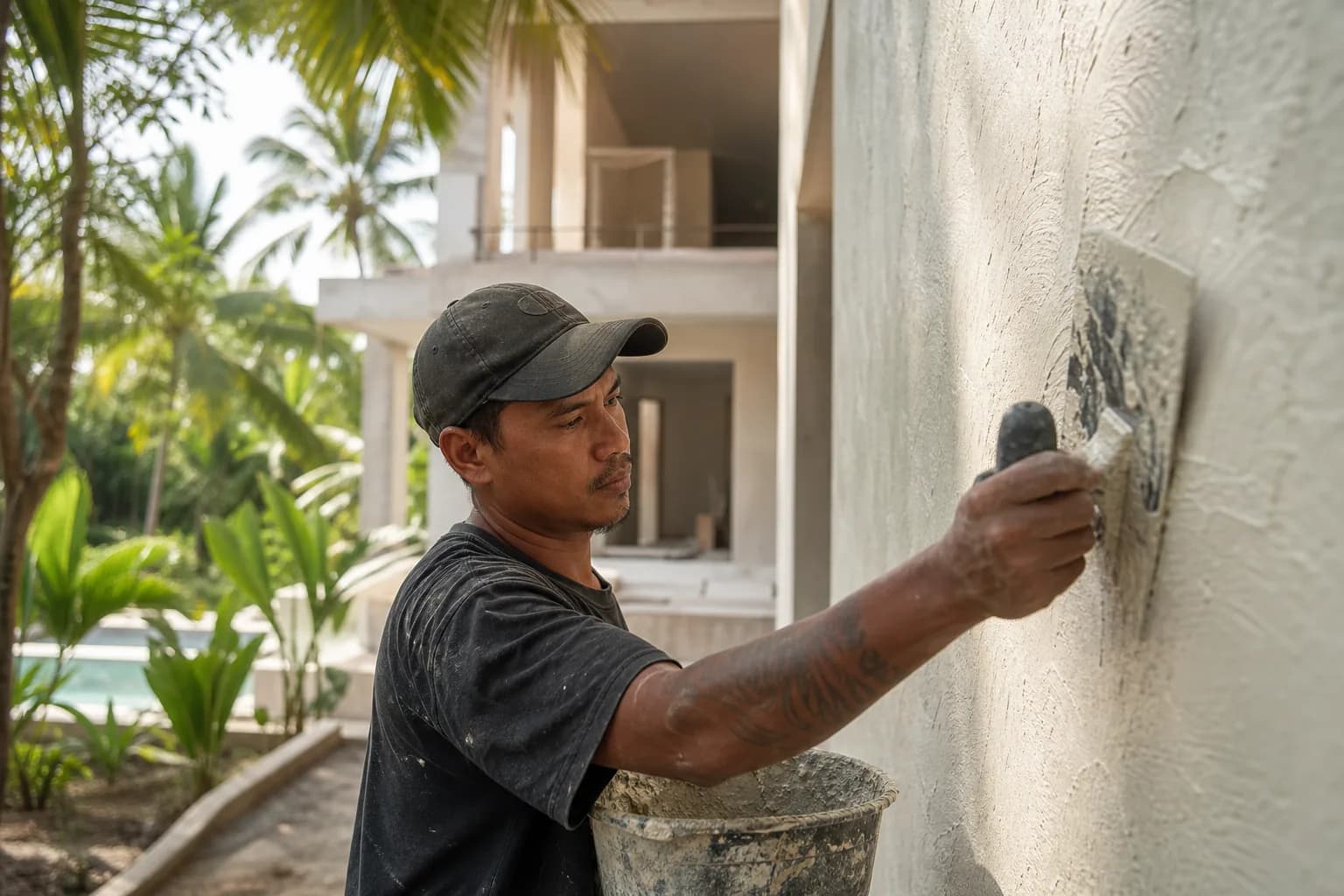
Resin-Infused Plaster Finishes: Anti-Salt Systems Bali
Expert technical guide: Resin-Infused Plaster Finishes: Anti-Salt Systems Bali
8 min read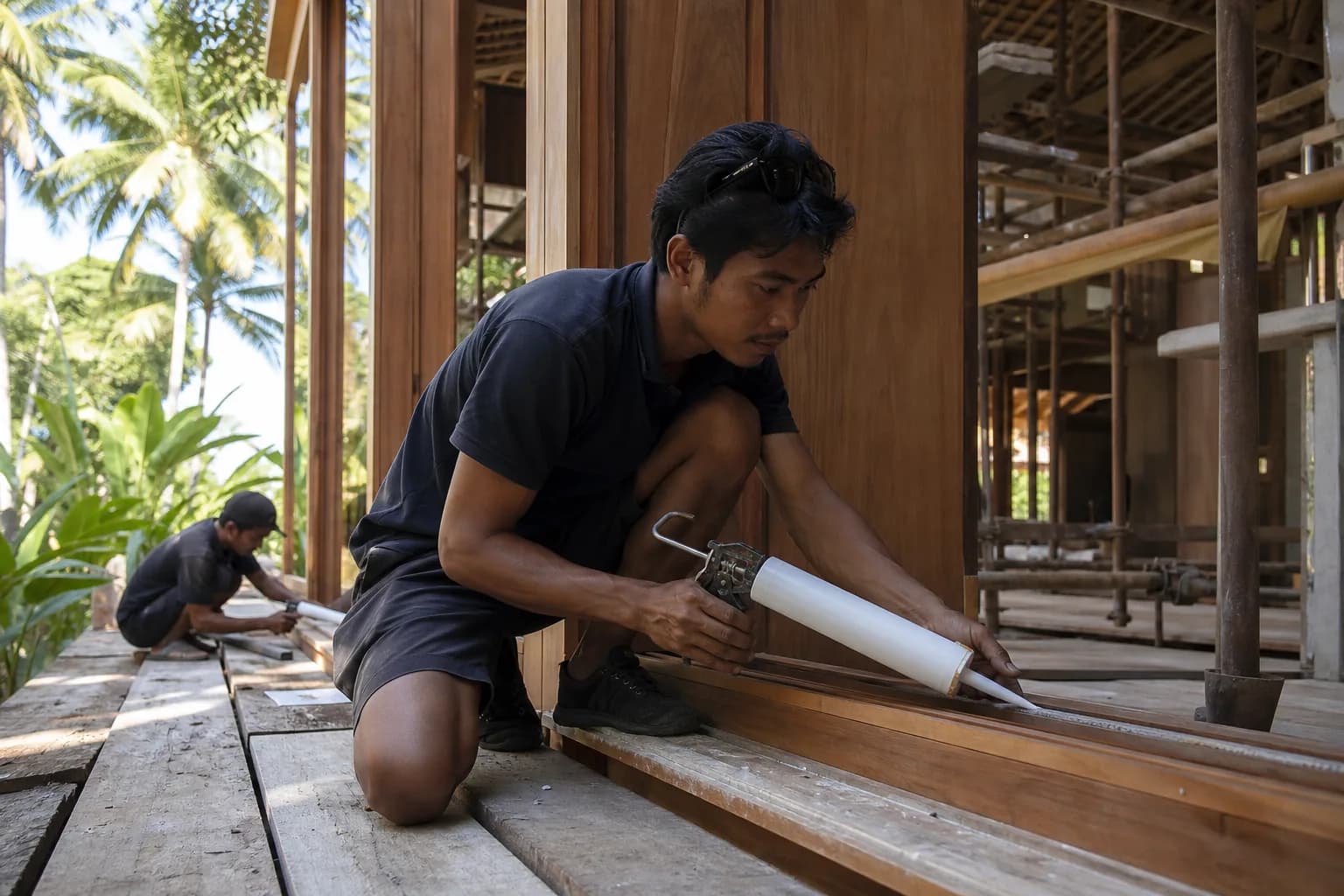
Prefinished Timber Joinery: Silicone Seals Fixings Bali
Professional prefinished timber joinery installation in Bali with silicone seals and fixings for durable weatherproof performance and a premium finish.
10 min read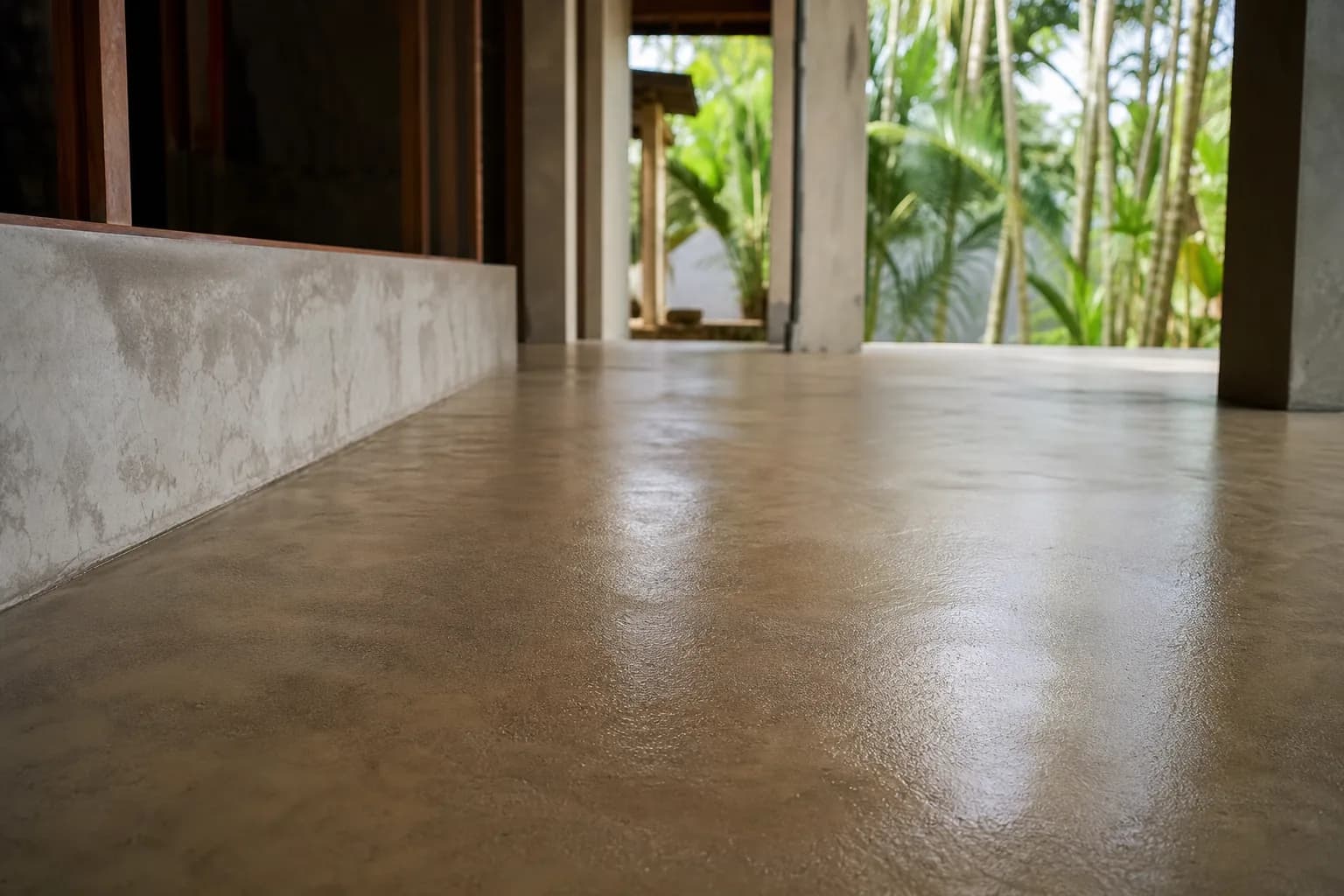
Polished Concrete Microtopping: Surface Prep Sealants Bali
Discover Bali s polished concrete microtopping: expert surface prep, durable sealants, and a flawless finish for modern floors with minimal maintenance.
9 min read