Grout Joint Width Standards for Natural Stone Flooring Bali

# Grout Joint Width Standards for Natural Stone Flooring Bali Villas
The Hidden Detail That Determines Your Villa’s Floor Longevity
When renovating or constructing a Bali villa, most owners focus on selecting beautiful natural stone—travertine, limestone, or Palimanan stone—but overlook the critical specification that determines whether their flooring will last decades or crack within years: grout joint width. In Bali’s tropical climate with temperature fluctuations, high humidity, and seasonal ground movement, incorrect grout joint spacing causes 60% of premature natural stone floor failures. The difference between a 1/16″ joint and the proper 1/8″ specification isn’t aesthetic—it’s structural. This technical guide explains exactly how Bali villa construction professionals determine, measure, and execute grout joint standards for natural stone flooring that withstands Indonesia’s unique environmental challenges.
Technical Standards for Natural Stone Grout Joint Width in Tropical Construction
Natural stone flooring in interior finishing Bali projects requires fundamentally different grout joint specifications than ceramic or porcelain tile. The Tile Council of North America (TCNA) establishes baseline standards, but Bali’s tropical environment demands specific adaptations that experienced construction teams implement.
Industry Standard Specifications
The standard grout joint width for natural stone flooring in 2026 ranges from 1/16″ (1.5mm) to 1/8″ (3mm), with 1/8″ being the professional recommendation for most villa utilities and living spaces. This specification exists for three technical reasons: natural stone edges are never perfectly straight due to cutting and fabrication processes; stone expands and contracts with temperature changes more than manufactured tiles; and wider joints accommodate the substrate movement common in tropical construction.
For Bali villa projects specifically, we at Teville implement 1/8″ (3mm) joints as the minimum standard for several reasons. Indonesian natural stones like Palimanan, Jogja stone, and local limestone have higher porosity rates than imported materials—typically 3-7% water absorption compared to 0.5% for porcelain. This porosity means greater dimensional changes with Bali’s 70-95% humidity fluctuations. Additionally, most Bali villas use concrete slab foundations that experience more movement than Western construction due to soil composition and seismic activity. The 1/8″ joint provides the expansion buffer that prevents cracking.
Climate-Specific Adjustments
Bali’s tropical climate requires modifications to standard specifications. During the wet season (November-March), relative humidity reaches 90-95%, causing natural stone to absorb moisture and expand. During dry season (April-October), stones contract. This annual cycle creates stress that narrow grout joints cannot accommodate. For large-format natural stone tiles (600x600mm or larger), we increase joint width to 3/16″ (5mm) to provide additional movement capacity.
Temperature differentials also impact joint width decisions. Open-air Bali villa designs expose flooring to direct sunlight in some areas while other sections remain shaded. Stone in direct tropical sun can reach 45-50°C, while shaded areas stay at 26-28°C. This temperature gradient across a single floor plane creates differential expansion that requires properly sized joints to prevent lippage (tile edge height differences) and cracking.
Stone Type Variations
Different natural stones used in renovation Bali projects require adjusted joint widths. Travertine, with its porous structure and natural pitting, performs best with 1/8″ to 3/16″ joints. The material’s inherent irregularity makes consistent narrow joints impossible to achieve without excessive grinding. Limestone and sandstone, being softer stones, require 1/8″ minimum joints to prevent edge chipping during installation and use. Harder stones like granite or basalt can technically accommodate 1/16″ joints, but we still recommend 1/8″ for Bali installations due to substrate movement factors.
Honed and tumbled finishes require wider joints than polished stones. The irregular surface texture of honed natural stone means edges are less precise, making 1/8″ joints necessary for visual consistency. Polished stones with rectified (precisely cut) edges can theoretically use 1/16″ joints, but this creates maintenance challenges in Bali’s dusty, tropical environment where narrow joints trap debris and organic matter.
Material Selection and Quality Standards for Tropical Performance
Proper grout joint execution depends equally on material selection as on width specification. In Bali’s climate, standard grout products fail rapidly without proper formulation and application techniques.
Grout Types for Natural Stone
For natural stone interior finishing Bali applications, we exclusively use polymer-modified sanded grout for joints 1/8″ and wider. Sanded grout contains fine silica sand that prevents shrinkage in wider joints and provides structural strength. The polymer modification—typically latex or acrylic additives—creates flexibility that accommodates stone movement and improves water resistance critical in Bali’s humidity.
Unsanded grout, recommended for joints under 1/8″, is rarely appropriate for Bali natural stone installations. The fine consistency lacks the structural integrity needed for tropical movement, and it scratches softer stone surfaces during application. Epoxy grout offers superior water resistance and stain protection, making it ideal for wet areas like villa bathrooms and pool decks, though it requires specialized installation expertise and costs 3-4 times more than polymer-modified options.
Color and Sealing Considerations
Grout color selection impacts both aesthetics and maintenance in Bali villa construction. Light-colored grouts (white, cream, light gray) show dirt and mold quickly in tropical environments, requiring frequent cleaning. Medium to dark grouts (charcoal, brown, terracotta) hide staining better but can create stark contrast with light stones. We typically recommend grout colors within two shades of the stone color for visual cohesion and practical maintenance.
All natural stone and grout in Bali installations require penetrating sealers applied after installation. For grout joints, we apply silicone-based or fluoropolymer sealers that penetrate 2-3mm deep, creating water and stain resistance without forming a surface film that can peel. Sealer application should occur 72 hours after grouting to allow complete curing, with reapplication every 12-18 months in Bali’s climate.
Step-by-Step Installation Process for Proper Joint Width
Achieving consistent grout joint width in natural stone flooring requires systematic processes that professional renovation Bali teams follow meticulously. This process differs significantly from ceramic tile installation.
Phase 1: Substrate Preparation and Layout (Days 1-2)
Before any stone placement, we verify substrate flatness within 3mm over 3 meters—the tolerance required for natural stone. Concrete slabs receive grinding to remove high spots and self-leveling compound to fill depressions. This preparation prevents lippage that makes consistent joint width impossible. We then perform dry layout, arranging stones to minimize cuts and establish joint line positions. During dry layout, we measure actual stone dimensions, which vary ±2-3mm even in “calibrated” natural stone, and plan joint width adjustments to maintain visual consistency.
Phase 2: Spacer Selection and Stone Setting (Days 3-5)
We use professional tile spacers—typically 3mm cross-shaped spacers for 1/8″ joints—placed at all four corners of each stone. For large-format stones, additional spacers go at midpoints to prevent sagging. The key difference in natural stone installation: spacers serve as minimum joint width, not exact specification. Because stone edges are irregular, actual joints may vary from 3mm to 4mm, which is acceptable. Attempting to force exact 3mm joints throughout causes stone edges to chip or creates lippage.
Stone setting uses polymer-modified thin-set mortar applied with 10mm notched trowel for stones up to 400x400mm, or 12mm notches for larger formats. We back-butter each stone (apply additional mortar to stone back) to ensure 95% coverage—critical in Bali where voids under stones trap moisture and cause efflorescence. Each stone is set, checked for level with adjacent stones, and adjusted before mortar skins over (approximately 20 minutes in Bali’s heat).
Phase 3: Joint Cleaning and Preparation (Day 6)
After 24-hour mortar cure, we remove spacers and clean joints thoroughly. This step is critical and often rushed. We use vacuum and compressed air to remove all mortar residue, dust, and debris from joints. Any remaining material prevents proper grout adhesion and creates weak points. For natural stone, we also check that mortar level in joints sits 2-3mm below stone surface—the depth that grout will fill. Mortar flush with stone surface creates shallow grout that cracks easily.
Phase 4: Grouting Application (Day 7)
Grout mixing follows manufacturer specifications precisely—typically 3.5-4 liters of water per 20kg bag for polymer-modified sanded grout. We mix to peanut butter consistency and let slake (rest) for 10 minutes before remixing. This slaking activates polymers and ensures proper workability. Application uses rubber grout float held at 45-degree angle, working diagonally across stones to pack grout fully into joints. We work in 2-3 square meter sections due to Bali’s heat, which causes grout to set faster than in temperate climates.
Initial cleanup begins when grout firms enough that sponge wiping doesn’t pull material from joints—typically 15-20 minutes in Bali conditions. We use damp (not wet) sponge in circular motions, rinsing frequently. Multiple passes remove grout haze while maintaining consistent joint depth and profile. Final joint surface should sit 0.5-1mm below stone surface, creating slight concave profile that sheds water and resists cracking.
Phase 5: Curing and Sealing (Days 8-10)
Grout requires 72 hours minimum cure time before sealing, longer in humid conditions. We protect newly grouted floors from traffic and moisture during this period. After curing, we apply penetrating sealer to both stone and grout using microfiber applicator, allowing 15-minute penetration before buffing excess. Two coats provide optimal protection in Bali’s environment.
Cost Analysis and Project Timeline for Bali Villa Flooring
Understanding the investment required for proper natural stone flooring installation helps villa owners budget appropriately for quality interior finishing Bali work.
Material Costs
Natural stone prices in Bali vary significantly by type and origin. Local Palimanan stone costs Rp 150,000-250,000 per square meter, while imported travertine or limestone ranges from Rp 400,000-800,000 per square meter. Polymer-modified sanded grout costs approximately Rp 150,000-200,000 per 20kg bag, covering 8-12 square meters at 1/8″ joint width. Penetrating sealers cost Rp 500,000-800,000 per liter, covering 8-10 square meters for two coats. Thin-set mortar adds Rp 100,000-150,000 per 25kg bag, covering 4-6 square meters.
Labor and Installation Costs
Professional natural stone installation in Bali costs Rp 200,000-350,000 per square meter for labor, depending on stone size, pattern complexity, and site accessibility. This rate includes substrate preparation, stone setting, grouting, and sealing. Complex patterns like herringbone or versailles increase labor costs by 30-40%. For a typical 150 square meter villa living area using mid-range natural stone, total flooring investment ranges from Rp 75,000,000 to Rp 120,000,000 including materials and labor.
Project Timeline
A complete natural stone flooring installation for a 150 square meter area requires 10-14 working days: 2 days substrate preparation, 3-5 days stone installation, 1 day joint cleaning, 1 day grouting, 3 days curing, and 1 day sealing. Weather impacts timeline significantly—we avoid grouting during heavy rain periods when humidity exceeds 85%, as this prevents proper curing. Villa owners should plan flooring work during Bali’s dry season (May-September) when possible, or add 20-30% timeline buffer during wet season.
For comprehensive Bali villa construction projects, flooring installation occurs after wall finishing and before furniture installation, typically in the final third of the construction schedule. Detailed project timelines and cost estimation tools are available at Teville’s construction process page.
Frequently Asked Questions About Natural Stone Grout Joints
Can I use narrower grout joints for a more seamless look?
While 1/16″ joints create minimal visual interruption, they’re inappropriate for natural stone in Bali’s climate. Narrow joints cannot accommodate stone movement from humidity and temperature changes, leading to cracked grout within 6-12 months. Additionally, natural stone edges are never perfectly straight—forcing narrow joints causes lippage where tile edges don’t align, creating trip hazards and uneven appearance. The 1/8″ standard provides the best balance of aesthetics and long-term performance. For truly seamless appearance, consider large-format stones (800x800mm or larger) with 1/8″ joints, which creates visual continuity while maintaining structural integrity.
How do I maintain grout joints in Bali’s tropical climate?
Proper maintenance extends grout life significantly in humid environments. Clean floors weekly with pH-neutral stone cleaner and microfiber mop—acidic or alkaline cleaners damage both stone and grout. Address spills immediately, as Bali’s humidity accelerates staining. Every 3-4 months, deep clean joints with soft brush and stone-safe cleaner to remove organic buildup that feeds mold growth. Reapply penetrating sealer annually, or every 6 months in high-traffic areas. Watch for grout deterioration signs: darkening, crumbling edges, or water absorption. Address these immediately to prevent moisture penetration under stones, which causes more extensive damage.
What causes grout to crack in natural stone floors?
Grout cracking in renovation Bali projects stems from s
 2144 m²11 month(s)from 104.000 USD
Narayana
 3180 m²7 month(s)from 142.000 USD
Vasudeva

Want to calculate?
 4344 m²16 month(s)from 290.000 USD
Radha
 3127 m²9 month(s)from 177.000 USD
Mukunda
 3124 m²6 month(s)from 123.000 USD
TALA 8
 172 m²8 month(s)from 120.000 USD
Keshava
 164 m²7 month(s)from 79.000 USD
Private: Haridas Villas, Tegallalang
 3104 m²11 month(s)from 99.000 USD
TALA 100
164 m²7 month(s)from 79.000 USDTALA TWO
 3173 m²6 month(s)from 125.000 USD
TALA FOUR
 1from 198.000 USD
Private: Haridas Villas
Start With Real Numbers, Not Guesses
Before finalizing your finishing works plan, check realistic cost ranges for your Bali villa project.
Available lands
 8313 m²15 min$ 716670Bali, Buduk
 7900 m²25 min$ 413485Bali, Tabanan
 2230 m²15 min$ 410573Bali, Padonan
 585 m²8 min$ 165702Bali, Mengwi
 3000 m²15 min$ 1246921Bali, Tabanan
 1230 m²15 min$ 132543Bali, Tegallalang
 610 m²10 min$ 165271Bali, Seminyak
 1100 m²8 min$ 280419Bali, Ungasan
 2850 m²15 min$ 315887Bali, Tabanan
 400 m²15 min$ 67192Bali, Tabanan
 7500 m²5 min$ 206281Bali, Kedungu
 1600 m²32 min$ 266010Bali, Tabanan
 3800 m²15 min$ 100616Bali, Pererenan
 10000 m²19 min$ 232759Bali, Buleleng
 220 m²2 min$ 66565Bali, Cemagi
Essential Bali build & buy guides
- Bali villa construction cost per m² in 2026
- How much will your villa cost? Calculator
- Building a villa in Bali: the complete guide
- Buying land in Bali: step-by-step for foreigners
- Bali villa investment: yields, risks, returns
- Leasehold vs freehold: what foreigners can own
- Construction defect liability & 10-year warranty
- Bali building codes and construction standards
Related guides
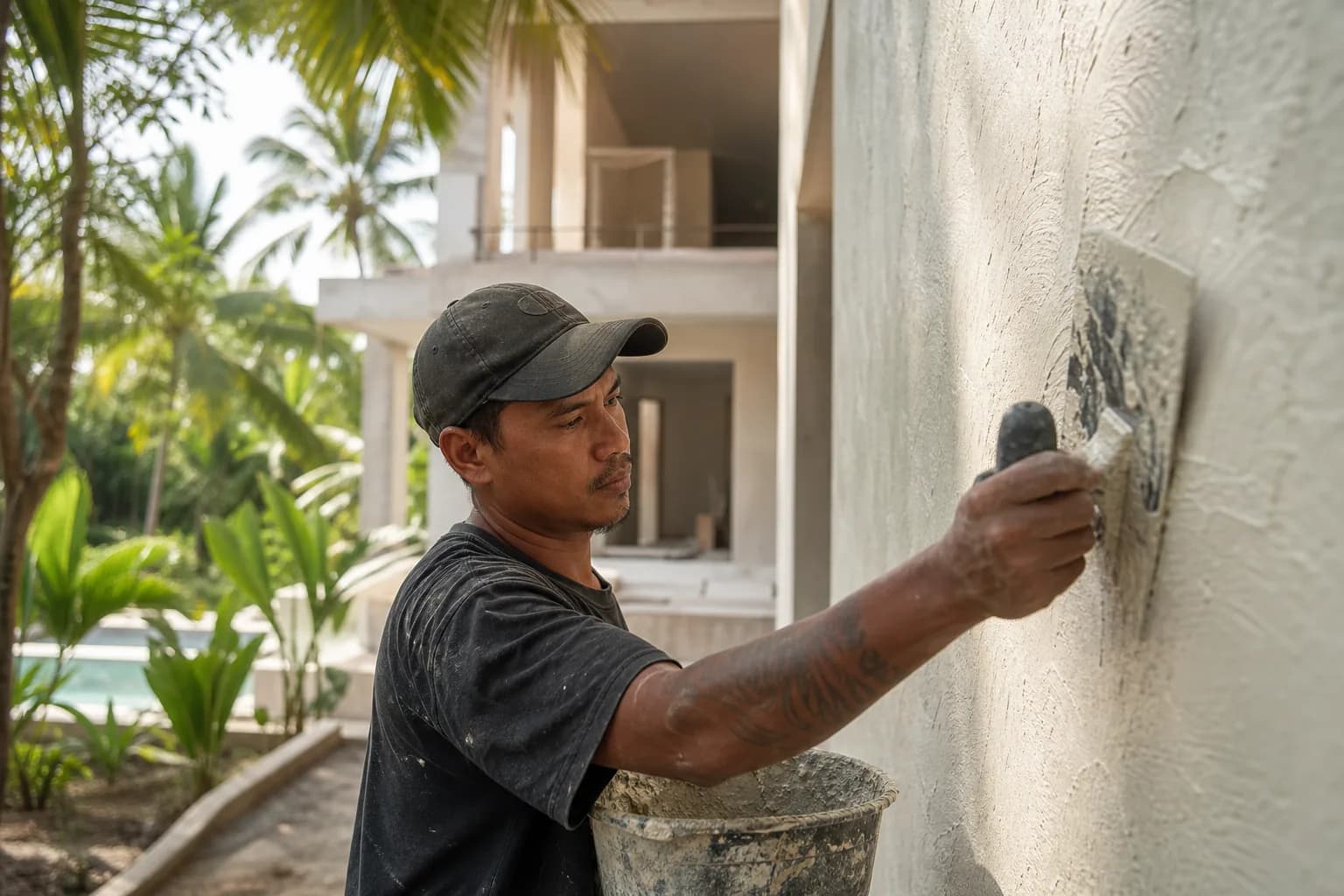
Resin-Infused Plaster Finishes: Anti-Salt Systems Bali
Expert technical guide: Resin-Infused Plaster Finishes: Anti-Salt Systems Bali
8 min read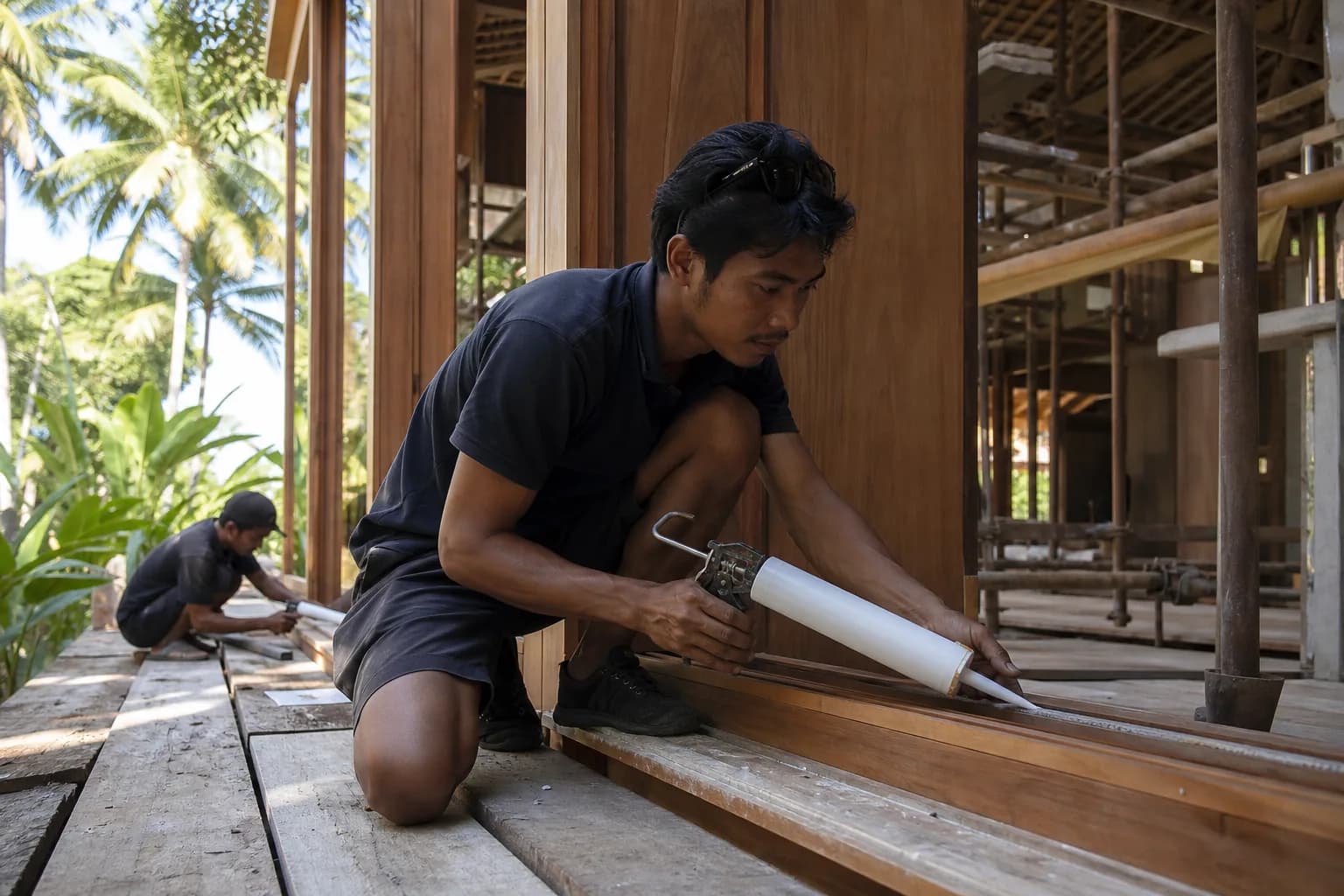
Prefinished Timber Joinery: Silicone Seals Fixings Bali
Professional prefinished timber joinery installation in Bali with silicone seals and fixings for durable weatherproof performance and a premium finish.
10 min read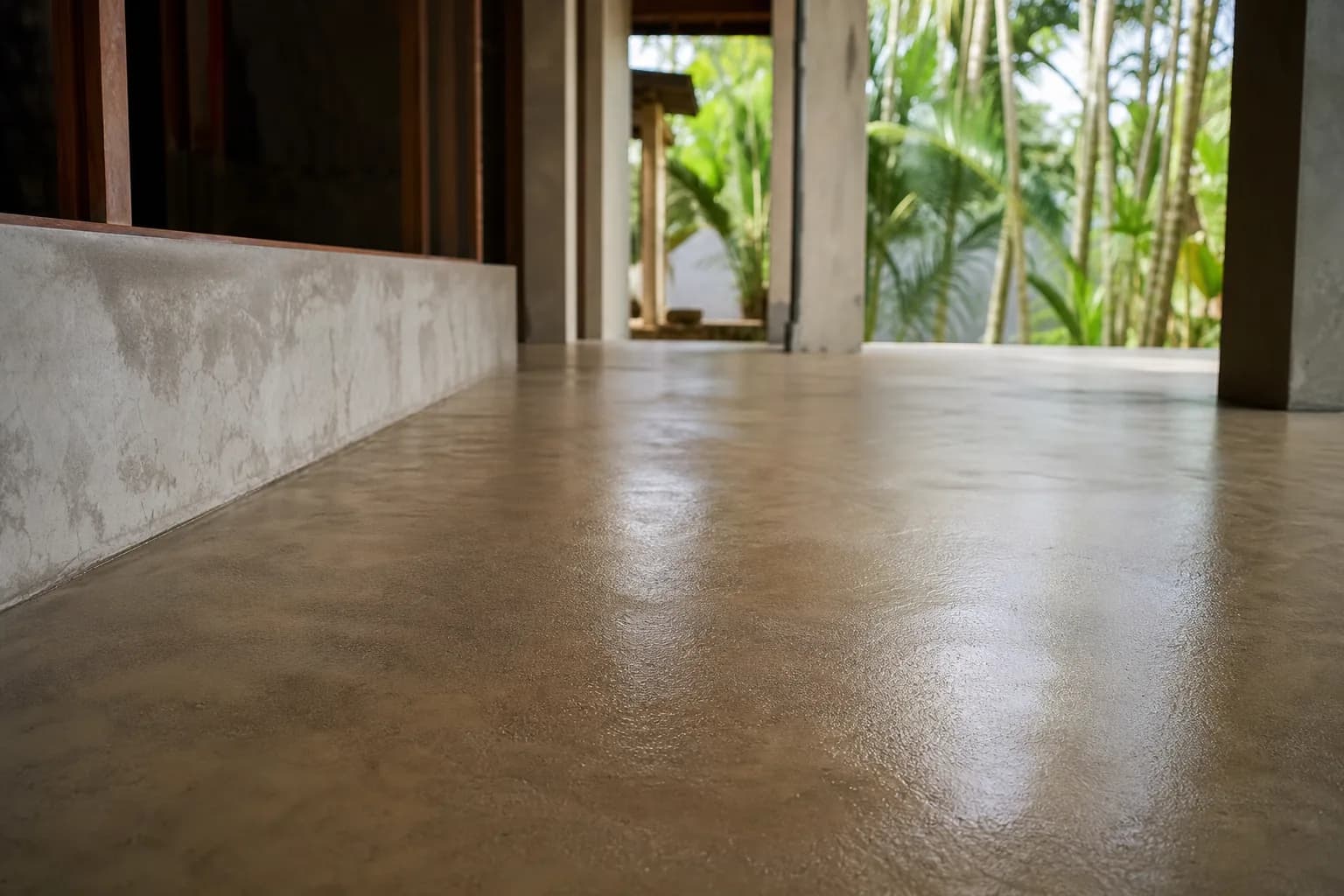
Polished Concrete Microtopping: Surface Prep Sealants Bali
Discover Bali s polished concrete microtopping: expert surface prep, durable sealants, and a flawless finish for modern floors with minimal maintenance.
9 min read