Fiber Optic Internet Installation Conduit Routing Bali
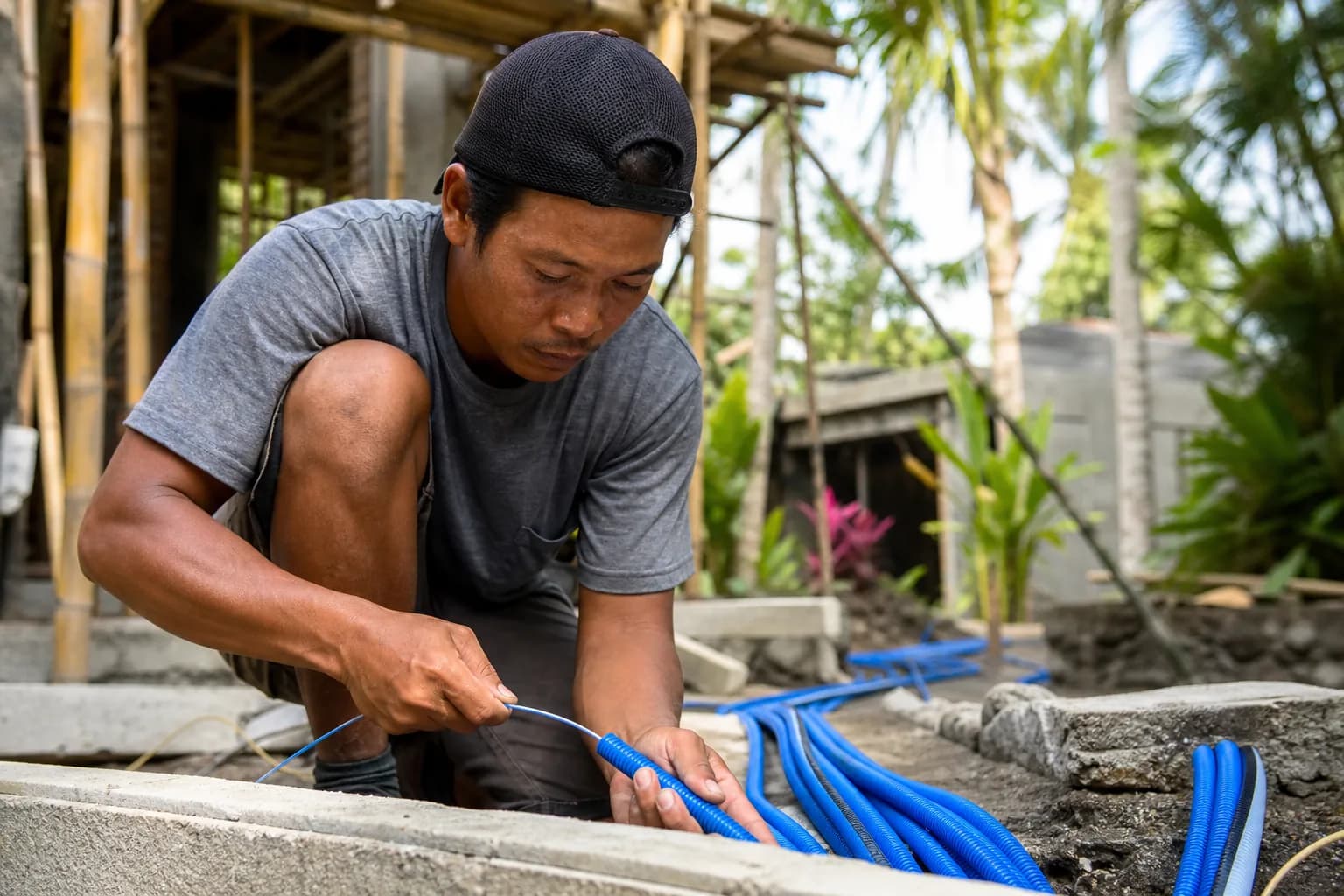
Why Fiber Optic Conduit Routing Determines Your Bali Villa’s Internet Reliability
When constructing or renovating luxury villas in Bali, fiber optic internet installation represents a critical utility infrastructure decision that directly impacts property functionality and guest satisfaction. The conduit routing phase—often overlooked during initial construction planning—determines whether your villa will have reliable, high-speed connectivity or face costly retrofitting challenges. In Bali’s tropical climate with monsoon rains, high humidity, and aggressive vegetation growth, improper conduit installation leads to water infiltration, cable degradation, and service interruptions that compromise your villa’s operational standards and finishing quality.
Technical Deep Dive: Conduit Routing Systems for Bali Villa Construction
Fiber optic conduit routing in Bali villa construction requires specialized technical knowledge that accounts for tropical environmental factors, local infrastructure limitations, and long-term durability standards. Unlike standard electrical conduit work, fiber optic pathways demand precise planning to prevent signal degradation and physical cable damage over decades of service life.
Underground Conduit Routing Methodology
Underground conduit installation represents the preferred method for Bali villa projects due to aesthetic considerations and protection from tropical weather elements. The routing process begins at the property boundary where telecommunications providers terminate their fiber network, typically requiring coordination with local ISPs like Telkom Indonesia, Biznet, or CBN Fiber. From this demarcation point, conduit pathways must navigate through villa grounds while avoiding existing utilities, drainage systems, and landscape features that characterize premium Bali properties.
The technical challenge lies in maintaining proper conduit depth and gradient throughout the route. In Bali’s volcanic soil composition, trenching depth should reach minimum 600mm to protect conduits from garden maintenance equipment and root penetration from tropical vegetation. However, areas with high water tables—common in southern Bali regions like Canggu and Seminyak—require additional waterproofing measures and potential depth adjustments to prevent seasonal flooding from compromising conduit integrity.
Conduit sizing follows critical specifications: minimum 40mm internal diameter for single-dwelling villas, with 50mm recommended for properties anticipating multiple service providers or future bandwidth expansion. This sizing accommodates standard fiber optic cables while allowing sufficient space for cable pulling without exceeding bend radius limitations that cause signal loss. For villa compounds with multiple buildings, main distribution conduits should increase to 63mm or 75mm diameter to accommodate fiber bundles serving various structures.
Aerial and Building-Integrated Routing
Renovation projects and properties with challenging terrain often necessitate aerial conduit routing or building-integrated pathways. Aerial installations in Bali require UV-resistant conduit materials rated for continuous tropical sun exposure, with proper support spacing every 1.5 meters to prevent sagging that creates water pooling points. Building-integrated routing—running conduits through wall cavities, ceiling spaces, or along architectural features—demands careful coordination with interior finishing work to maintain aesthetic standards expected in luxury villa construction.
The intersection between conduit routing and villa finishing quality becomes particularly evident at penetration points where conduits enter buildings. These transitions require waterproof sealing systems, proper flashing integration, and architectural detailing that preserves the villa’s design integrity. Teville’s construction methodology emphasizes these finishing details during the utilities installation phase, ensuring conduit entries align with wall finishes, flooring transitions, and interior design specifications before final surface treatments are applied.
Tropical Climate Considerations
Bali’s tropical environment presents unique challenges for conduit routing that mainland construction standards don’t adequately address. High humidity levels accelerate corrosion in metal conduit systems, making PVC or HDPE materials essential for long-term durability. Monsoon season flooding requires elevated conduit routing in low-lying areas, with proper drainage provisions at conduit low points to prevent water accumulation. Termite activity—prevalent throughout Bali—necessitates physical barriers or treated materials around conduit entry points to prevent pest infiltration that compromises cable protection.
Materials and Standards for Bali Villa Fiber Optic Conduit Systems
Material selection for fiber optic conduit installation in Bali villa construction directly impacts system longevity and maintenance requirements. The tropical climate demands materials that resist UV degradation, moisture penetration, and biological attack while maintaining structural integrity under soil pressure and temperature fluctuations.
Conduit Material Specifications
High-density polyethylene (HDPE) conduit represents the optimal choice for underground fiber optic installations in Bali. HDPE offers superior resistance to chemical exposure from fertilizers and soil treatments common in villa landscaping, while its flexibility accommodates ground settlement without cracking. Specification should call for SDR-11 or SDR-13.5 rated HDPE conduit with minimum wall thickness of 3.0mm for 40mm diameter installations. The material must carry UV stabilization ratings even for underground use, as exposed sections at building entries face direct sunlight.
For aerial and building-integrated sections, rigid PVC conduit with UV inhibitors provides cost-effective protection while maintaining aesthetic appearance when properly painted or concealed. Schedule 40 PVC conduit meets structural requirements for spans up to 1.5 meters between supports, with expansion joints every 10 meters to accommodate thermal movement in Bali’s temperature range.
Installation Hardware and Accessories
Complete conduit systems require specialized fittings, junction boxes, and sealing components engineered for fiber optic applications. Pull boxes positioned at maximum 30-meter intervals facilitate cable installation and future maintenance access. These junction points must feature IP65-rated weatherproof enclosures with removable covers secured by stainless steel hardware that resists tropical corrosion. Conduit sweeps and bends should maintain minimum bend radius of 10 times the conduit diameter to prevent fiber cable damage during installation and service life.
Sealing systems at building penetrations require silicone-based compounds rated for continuous water immersion and UV exposure. Standard foam sealants deteriorate rapidly in Bali’s climate, leading to water infiltration and pest entry. Professional installations incorporate mechanical sealing glands that maintain compression around cables while allowing future additions without compromising weatherproofing integrity.
Step-by-Step Conduit Routing Process for Bali Villa Projects
Implementing fiber optic conduit routing within Bali villa construction follows a systematic process that integrates with overall building schedules and finishing work timelines. Teville’s construction methodology positions conduit installation during the rough-in utilities phase, before final landscaping and interior finishing commence.
Phase 1: Site Survey and Route Planning
The process begins with comprehensive site surveying to identify the telecommunications provider’s connection point, existing underground utilities, and optimal pathways to villa buildings. This survey phase coordinates with civil engineering drawings to locate water lines, drainage systems, electrical services, and septic infrastructure that constrain conduit routing options. Topographic considerations include identifying low points requiring drainage provisions and elevated areas where reduced trenching depth may be acceptable. The planning phase produces detailed conduit routing drawings that specify trench depths, conduit sizes, junction box locations, and building entry points with precise coordinates for construction implementation.
Phase 2: Excavation and Pathway Preparation
Trenching operations follow marked routes with minimum 300mm width to accommodate conduit installation and proper backfilling. In Bali’s volcanic soil, excavation typically proceeds efficiently, though rocky areas may require mechanical breaking equipment. Trench bottoms receive 50mm sand bedding to provide uniform support and prevent sharp objects from damaging conduit walls. For properties with completed landscaping, trenching employs narrow excavation techniques that minimize surface disturbance and facilitate restoration of garden features. Aerial route preparation involves installing support structures, cable trays, or mounting brackets according to architectural specifications and structural load requirements.
Phase 3: Conduit Installation and Securing
Conduit sections are laid in prepared trenches with joints properly solvent-welded or mechanically coupled according to manufacturer specifications. The installation maintains consistent gradient toward drainage points, avoiding low spots where water accumulation could occur. Pull boxes are positioned at direction changes exceeding 90 degrees cumulative and at maximum 30-meter straight runs. Each conduit end receives temporary sealing caps to prevent soil, water, or pest entry during construction. Building penetrations are core-drilled at specified locations with proper slope away from interior spaces, and conduit entries are temporarily sealed pending final weatherproofing during finishing work.
Phase 4: Backfilling and Surface Restoration
After conduit installation verification, trenches receive careful backfilling in 150mm layers with compaction at each level to prevent future settling. The backfill process avoids dropping heavy soil or rocks directly onto conduits, which could cause damage. Warning tape positioned 300mm above conduit depth alerts future excavation activities to buried telecommunications infrastructure. Surface restoration returns landscaping to original condition, coordinating with villa finishing schedules to ensure proper integration with hardscaping, irrigation systems, and planted areas.
Phase 5: Cable Pulling and Termination Preparation
Once conduit systems are complete and inspected, fiber optic cable pulling proceeds using proper techniques that prevent exceeding cable tension limits or minimum bend radius specifications. Pull ropes are first drawn through conduit runs using compressed air or fish tape methods. Cable pulling employs appropriate lubricants and tension monitoring to ensure installation within manufacturer specifications. At building entry points, cables receive service loops—extra length coiled for future termination flexibility—and temporary protection pending final connection work by telecommunications providers.
Costs and Timeline for Fiber Optic Conduit Installation
Understanding the investment required for proper fiber optic conduit routing helps villa owners and developers budget appropriately within overall construction costs. Conduit installation represents a relatively small percentage of total villa construction expenses but delivers disproportionate value through reliable connectivity infrastructure.
Material and Labor Cost Factors
For typical Bali villa projects, conduit routing costs range from IDR 150,000 to IDR 350,000 per linear meter of installed pathway, depending on installation method, site conditions, and material specifications. Underground installations in accessible areas with favorable soil conditions fall toward the lower range, while challenging terrain, rocky soil, or aerial installations requiring structural supports increase costs. These figures include conduit materials, fittings, junction boxes, excavation, installation labor, and surface restoration, but exclude fiber optic cable itself and telecommunications provider connection fees.
Material costs for quality HDPE conduit and fittings typically represent 30-40% of total installation expenses, with labor and equipment comprising the remainder. Villa projects requiring extensive conduit runs—properties exceeding 500 square meters or compounds with multiple buildings—benefit from economies of scale that reduce per-meter costs. Renovation projects generally incur 20-30% premium costs due to working around existing structures, landscaping, and finished surfaces requiring protection or restoration.
Project Timeline Considerations
Conduit routing installation for standard single-villa projects typically requires 3-5 working days from excavation through backfilling and surface restoration. This timeline assumes favorable weather conditions and straightforward site access. Complex villa compounds with multiple buildings may extend to 7-10 working days depending on total conduit length and number of junction points. The installation schedule must coordinate with overall villa construction timelines, ideally occurring after structural work completion but before final landscaping and interior finishing commence. For detailed project scheduling and cost estimation specific to your Bali villa construction, Teville provides comprehensive planning through our cost estimation service.
Frequently Asked Questions About Fiber Optic Conduit Routing
Can fiber optic conduit be installed after villa construction is complete?
Yes, conduit installation is possible in completed villas through renovation work, though costs increase 20-30% due to careful excavation around existing landscaping, protection of finished surfaces, and restoration requirements. Post-construction installations often necessitate alternative routing that may be less direct or require aerial sections to avoid disturbing completed hardscaping, pools, or mature plantings. Planning conduit routing during initial construction provides optimal pathway selection and cost efficiency while avoiding aesthetic compromises.
What conduit size should I specify for future-proofing my Bali villa?
Minimum 50mm internal diameter conduit provides adequate future-proofing for residential villa applications, accommodating multiple fiber cables or future service provider changes witho
 4344 m²16 month(s)from 290.000 USD
Radha
 164 m²7 month(s)from 79.000 USD
Private: Haridas Villas, Tegallalang

Want to calculate?
164 m²7 month(s)from 79.000 USDTALA TWO
 3180 m²7 month(s)from 142.000 USD
Vasudeva
 3124 m²6 month(s)from 123.000 USD
TALA 8
 3173 m²6 month(s)from 125.000 USD
TALA FOUR
 1from 198.000 USD
Private: Haridas Villas
 2144 m²11 month(s)from 104.000 USD
Narayana
 3104 m²11 month(s)from 99.000 USD
TALA 100
 3127 m²9 month(s)from 177.000 USD
Mukunda
 172 m²8 month(s)from 120.000 USD
Keshava
Start With Real Numbers, Not Guesses
Before finalizing your finishing works plan, check realistic cost ranges for your Bali villa project.
Available lands
 1300 m²10 min$ 348214Bali, Tabanan
 600 m²10 min$ 206897Bali, Canggu
 1660 m²10 min$ 343448Bali, Kerobokan
 200 m²11 min$ 89286Bali, Tabanan
 325 m²15 min$ 44472Bali, Ungasan
 2200 m²15 min$ 508005Bali, Canggu
 4270 m²10 min$ 394397Bali, Ubud
 1000 m²10 min$ 123154Bali, Jimbaran
 260 m²5 min$ 51872Bali, Kedungu
 1000 m²10 min$ 303571Bali, Tabanan
 7000 m²36 min$ 284483Bali, Gianyar
 1000 m²5 min$ 350431Bali, Drupadi
 515 m²7 min$ 570813Bali, Canggu
 400 m²15 min$ 67192Bali, Tabanan
 5028 m²10 min$ 361000Bali, Ubud
Essential Bali build & buy guides
- Bali villa construction cost per m² in 2026
- How much will your villa cost? Calculator
- Building a villa in Bali: the complete guide
- Buying land in Bali: step-by-step for foreigners
- Bali villa investment: yields, risks, returns
- Leasehold vs freehold: what foreigners can own
- Construction defect liability & 10-year warranty
- Bali building codes and construction standards
Related guides
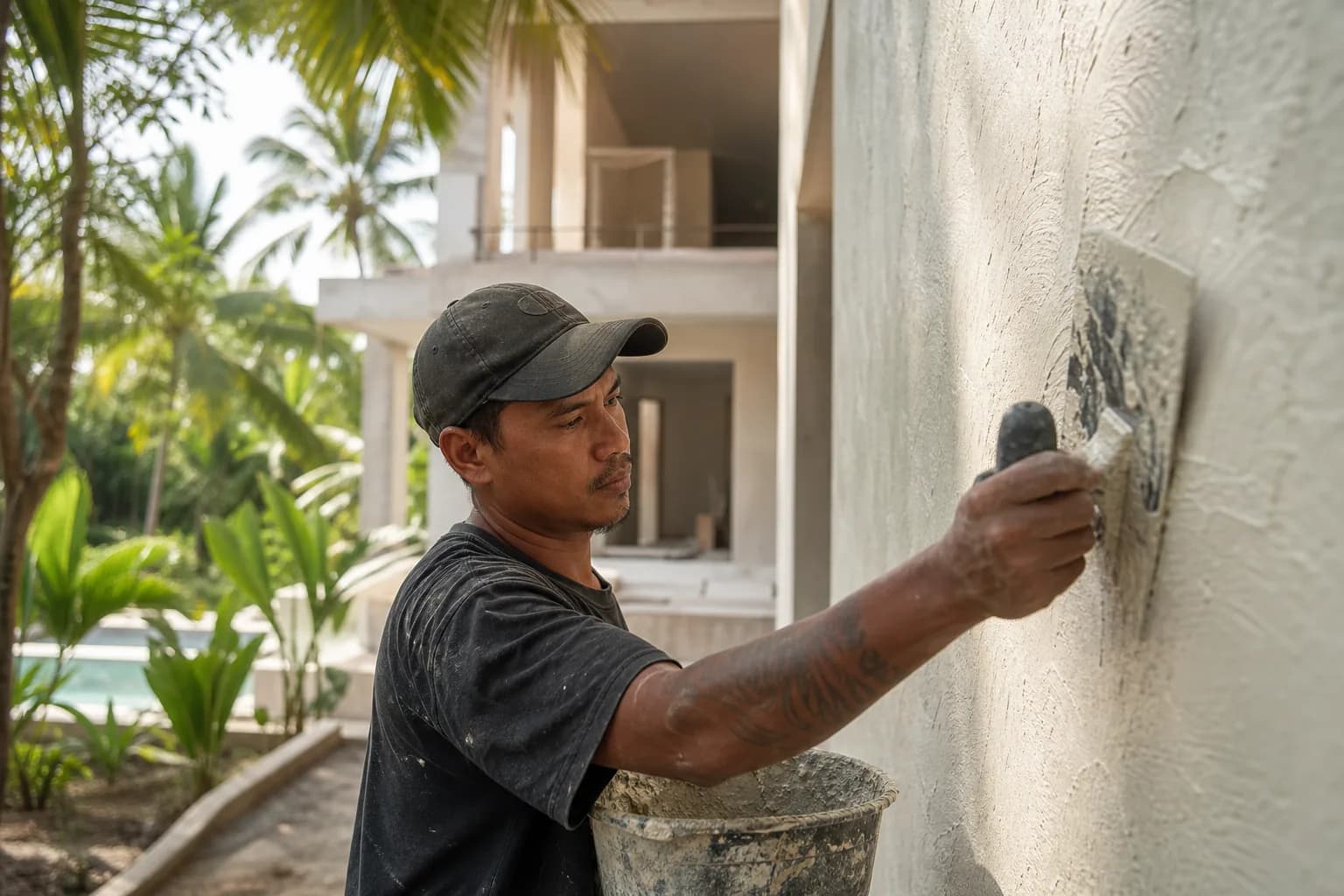
Resin-Infused Plaster Finishes: Anti-Salt Systems Bali
Expert technical guide: Resin-Infused Plaster Finishes: Anti-Salt Systems Bali
8 min read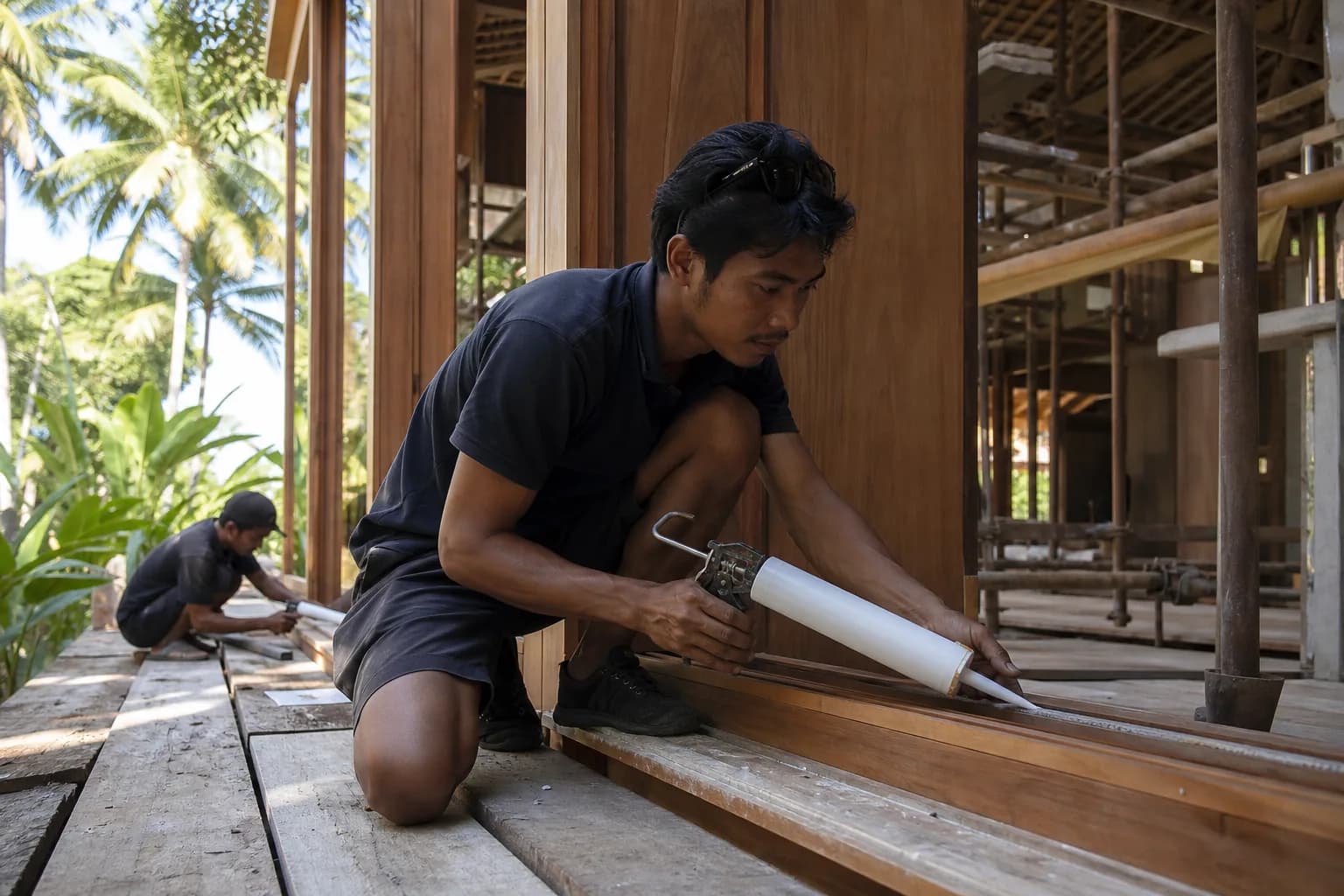
Prefinished Timber Joinery: Silicone Seals Fixings Bali
Professional prefinished timber joinery installation in Bali with silicone seals and fixings for durable weatherproof performance and a premium finish.
10 min read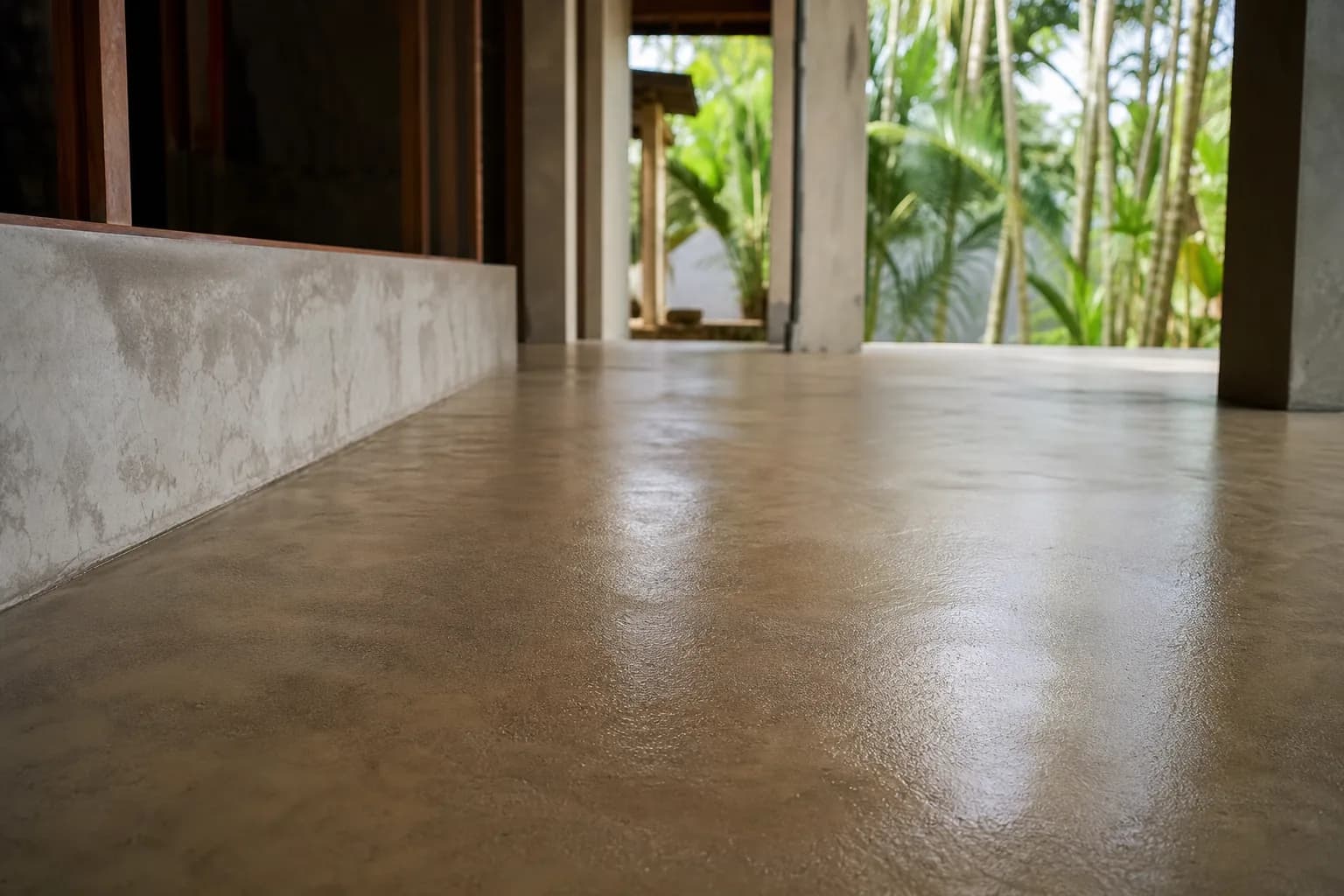
Polished Concrete Microtopping: Surface Prep Sealants Bali
Discover Bali s polished concrete microtopping: expert surface prep, durable sealants, and a flawless finish for modern floors with minimal maintenance.
9 min read