Fiber Cement vs Clay Roof Tiles: Wind Uplift Resistance Sanur, Ba
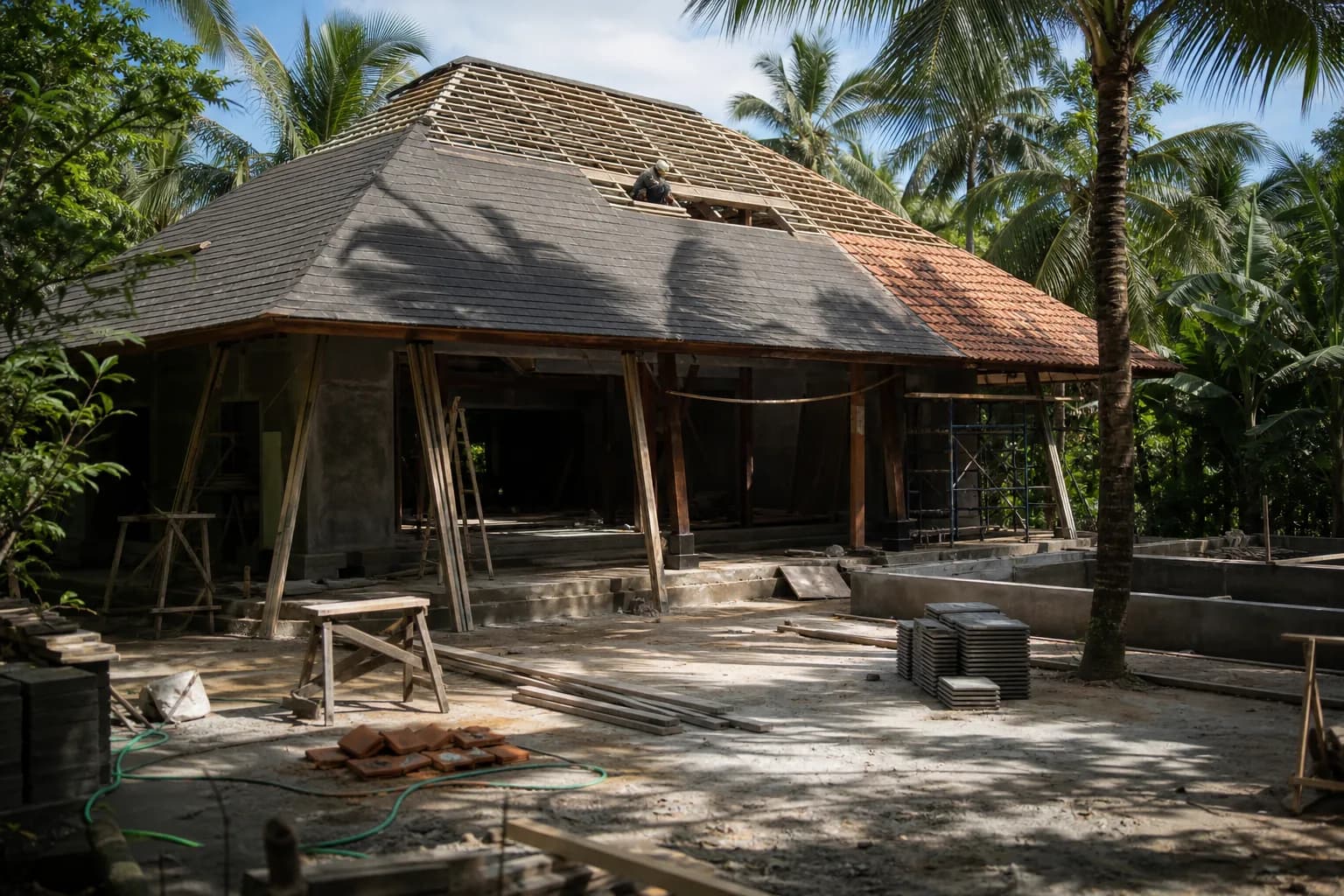
Fiber Cement vs Clay Roof Tiles: Wind Uplift Resistance on Sanur’s Exposed Coastline
Sanur’s coastal position creates a unique engineering challenge that many villa developers underestimate until their first monsoon season. The combination of sustained easterly trade winds, seasonal tropical storms, and salt-laden air creates wind uplift forces that can exceed 2.4 kPa on exposed roof sections. Property owners along Jalan Danau Tamblingan and beachfront areas report tile displacement, water infiltration, and progressive fastener corrosion within 18-36 months of construction when inappropriate roofing systems are specified. The question isn’t whether fiber cement or clay tiles look better—it’s which material system can maintain structural integrity under Sanur’s specific wind load profile while resisting the accelerated degradation caused by marine aerosol exposure.
Engineering Analysis: Wind Uplift Mechanics in Sanur’s Coastal Microclimate
Sanur’s coastal exposure creates wind uplift conditions that differ significantly from inland Bali locations. The fetch distance across the Badung Strait generates sustained wind speeds of 45-65 km/h during normal conditions, with storm events reaching 110-140 km/h. These velocities translate to uplift pressures that concentrate at roof edges, ridges, and corners—the exact locations where traditional clay tile installations show the highest failure rates.
Fiber Cement Panel Performance Under Coastal Wind Loads
Modern fiber cement roofing panels engineered for tropical coastal applications demonstrate wind resistance ratings up to 195 km/h when tested according to TAS 100 and TAS 135 standards. The material composition—Portland cement, cellulose fibers, and silica—creates a monolithic structure that distributes wind loads across the entire panel rather than concentrating stress at individual fastener points. For Bali villa construction projects in Sanur, this translates to a continuous load path from roof surface through battens to the primary structural frame.
The critical engineering advantage lies in the fastening methodology. Fiber cement panels typically use corrosion-resistant stainless steel screws at 300mm centers, creating 12-16 attachment points per square meter. Each fastener penetrates through the panel into treated timber battens or steel purlins, establishing a mechanical connection that resists both uplift and lateral movement. The panel’s flexural strength of 18-22 MPa allows it to span 600mm between supports without deflection under wind load, reducing the number of structural penetrations through the waterproofing membrane.
Salt spray resistance becomes crucial within 500 meters of Sanur’s shoreline. Fiber cement’s alkaline matrix (pH 12-13) provides inherent protection against chloride penetration, while the absence of metallic reinforcement eliminates the primary corrosion pathway that degrades other roofing materials. Field testing in similar coastal environments shows less than 2% strength degradation after 15 years of marine exposure, compared to 15-25% degradation in improperly specified clay tile systems.
Clay Tile Behavior in High-Wind Coastal Installations
Traditional clay roof tiles achieve wind resistance ratings up to 241 km/h, but this performance depends entirely on installation methodology—a critical distinction often overlooked in tropical construction engineering specifications. Standard hook-and-nail installations, common in inland Bali applications, provide inadequate resistance for Sanur’s coastal conditions. Each tile relies on a single fastener and gravitational weight, creating a point-load system vulnerable to progressive failure when individual tiles loosen.
Mortar-set and adhesive-set systems significantly improve wind resistance by bonding each tile to the substrate, but introduce new failure modes. The mortar-tile interface becomes the weak point, with differential thermal expansion between clay (5-7 × 10⁻⁶/°C) and cement mortar (10-13 × 10⁻⁶/°C) creating micro-cracks that propagate under cyclic wind loading. Sanur’s daily temperature swings of 8-12°C accelerate this degradation, particularly on west-facing roof slopes exposed to afternoon solar gain.
The weight differential presents both advantages and complications. Clay tiles at 45-55 kg/m² provide gravitational resistance to uplift, but this mass requires structural framing designed for 1.5-2.0 kN/m² dead load—approximately 60% heavier than fiber cement systems at 18-22 kg/m². For villa construction on Sanur’s coastal soils, which often include compressible marine clays and loose sands, this additional structural demand translates to larger foundation footprints and increased seismic vulnerability.
Critical Oversights in Sanur Coastal Roofing Specifications
The most expensive mistake in Sanur roofing projects occurs during the design phase, when developers specify materials based on aesthetic preference or inland performance data without accounting for coastal wind dynamics. Standard Indonesian building codes (SNI 1727:2020) provide wind load calculations, but the simplified exposure categories don’t capture Sanur’s specific microclimate. Properties within 300 meters of the shoreline experience wind speeds 15-25% higher than the code-prescribed values for “coastal exposure,” yet most structural calculations use the standard coefficients.
Fastener corrosion represents the hidden failure mode that compromises both fiber cement and clay tile installations. Galvanized steel fasteners, adequate for inland applications, show 40-60% section loss within 3-5 years in Sanur’s salt-laden environment. This degradation occurs beneath the visible roof surface, creating a progressive failure condition that becomes apparent only when tiles begin displacing during wind events. The specification must explicitly require marine-grade stainless steel (316 series minimum) for all roof fasteners, battens, and flashing components—an upgrade that adds 8-12% to roofing material costs but prevents catastrophic failure.
Underlayment selection critically affects long-term performance but receives minimal attention in typical construction specifications. Standard bituminous felt deteriorates rapidly under Sanur’s UV exposure and thermal cycling, losing waterproofing integrity within 24-36 months. High-performance synthetic underlayments with UV stabilization and 180+ day exposure ratings provide the necessary durability, but cost 3-4 times more than standard products. This cost differential leads contractors to substitute inferior materials during construction, creating a hidden defect that manifests years after project completion.
Implementation Protocol for Wind-Resistant Roofing in Sanur Coastal Zones
Phase 1: Site-Specific Wind Load Assessment
Begin with computational fluid dynamics (CFD) analysis or empirical wind tunnel testing for properties within 200 meters of the shoreline. Standard code calculations underestimate actual wind pressures by 20-35% in Sanur’s coastal microclimate. The assessment should identify pressure coefficients for all roof zones, with particular attention to edge and corner regions where uplift forces concentrate. For land purchase Bali decisions, this analysis should occur before finalizing site selection, as properties with natural windbreaks (existing mature trees, topographic features) reduce structural demands by 15-25%.
Document the exposure category based on actual site conditions, not generalized zoning maps. Properties on Jalan Hang Tuah face different wind profiles than those on Jalan Danau Poso, despite similar proximity to the coastline. The assessment must account for surrounding structures, vegetation density, and seasonal variations in wind direction. This data establishes the design wind speed for structural calculations and material selection.
Phase 2: Material System Selection and Engineering Integration
Compare fiber cement and clay tile systems based on the site-specific wind load profile, not generic performance specifications. For design wind speeds exceeding 130 km/h, fiber cement panels with mechanical fastening provide superior reliability and lower lifecycle costs. For projects prioritizing traditional aesthetics where wind speeds remain below 120 km/h, adhesive-set clay tile systems can achieve adequate performance with proper installation protocols.
The structural engineering must integrate the roofing system into the overall load path. This requires coordination between the architect, structural engineer, and roofing contractor—a collaboration that rarely occurs in typical villa construction projects. The roof framing, battens, and fasteners must be designed as a unified system, with connection details specified for the actual uplift forces rather than prescriptive code minimums. For fiber cement installations, this typically requires 50x75mm treated timber battens at 600mm centers, fastened to trusses with two 90mm stainless steel screws at each intersection.
Phase 3: Installation Quality Control and Verification
Implement a three-stage inspection protocol: pre-installation material verification, in-progress fastening inspection, and post-installation pull testing. Material verification confirms that all components meet marine-grade specifications, with particular attention to fastener metallurgy and underlayment UV ratings. In-progress inspection occurs at 25% completion intervals, verifying fastener spacing, penetration depth, and proper lap details before subsequent layers conceal the work.
Pull testing provides quantitative verification of installation quality. Random sampling of 5 fasteners per 100m² of roof area, tested to 150% of design uplift load, confirms adequate holding capacity. This testing should occur before final inspection and payment, providing objective evidence of system performance. For projects requiring building permits Bali, this documentation satisfies engineering certification requirements and provides liability protection for all parties.
Cost Analysis and Project Timeline Implications
Fiber cement roofing systems for Sanur coastal applications range from IDR 385,000-520,000 per square meter installed, including marine-grade fasteners, synthetic underlayment, and proper flashing details. This represents a 25-35% premium over standard inland installations, but eliminates the maintenance and replacement costs associated with inadequate specifications. The material cost breakdown allocates 45% to panels, 20% to structural battens and fasteners, 15% to underlayment and flashing, and 20% to skilled labor.
Clay tile systems with adhesive-set installation range from IDR 450,000-680,000 per square meter, reflecting the additional labor intensity and material costs of proper coastal installation. The weight penalty adds IDR 120,000-180,000 per square meter to structural framing costs, as larger beams, columns, and foundations become necessary. Total project timeline extends 2-3 weeks beyond standard construction schedules due to the sequential nature of mortar curing and tile bonding processes.
Lifecycle cost analysis over 25 years shows fiber cement systems delivering 30-40% lower total cost of ownership in Sanur coastal environments. The calculation includes initial installation, scheduled maintenance (resealing and fastener inspection every 5 years), and expected replacement intervals. Clay tile systems require more frequent intervention, with mortar joint repointing every 7-10 years and individual tile replacement averaging 2-3% annually due to wind damage and thermal stress cracking.
Frequently Asked Questions: Sanur Coastal Roofing Engineering
How do I determine if my Sanur property requires enhanced wind-resistant roofing specifications?
Properties within 500 meters of the shoreline, or those with unobstructed eastern exposure across open water or rice fields, require enhanced specifications. The critical factor is fetch distance—the uninterrupted distance wind travels before reaching your structure. If your site has 1+ kilometers of open exposure, design wind speeds should be increased by 20% above code minimums. Engage a structural engineer familiar with villa construction cost Bali implications to perform site-specific wind load calculations before finalizing material selections. This analysis costs IDR 8-12 million but prevents specification errors that lead to IDR 150-300 million in remedial work.
Can I use standard clay tiles with additional fasteners instead of upgrading to fiber cement panels?
Additional fasteners improve performance but don’t address the fundamental issue of point-load stress concentration. Each fastener creates a potential crack initiation site in clay tiles, and over-fastening can cause more damage than under-fastening. If aesthetic requirements mandate clay tiles, specify adhesive-set installation with polyurethane-based tile adhesives rated for marine environments. This approach achieves wind resistance comparable to fiber cement but at 40-50% higher installed cost. The adhesive creates a continuous bond that distributes wind loads across the entire tile rather than concentrating stress at fastener points.
What maintenance schedule should I plan for coastal roofing systems in Sanur?
Fiber cement systems require biannual visual inspection focusing on fastener corrosion, sealant degradation at penetrations, and panel edge condition. Every 5 years, conduct detailed inspection with selective fastener removal and replacement of any showing corrosion. Budget IDR 35,000-50,000 per square meter for this quinquennial maintenance. Clay tile systems need annual inspection with immediate replacement of cracked or displaced tiles, plus mortar joint repointing every 7-10 years at IDR 85,000-120,000 per square meter. The maintenance differential significantly impacts lifecycle costs for villa construction projects in coastal zones.
How does roof material selection affect my building permit approval timeline in Sanur?
Sanur’s coastal zoning requires structural engineering certification for all new construction, with specific attention to wind load calculations. Fiber cement systems with documented wind resistance ratings and standardized installation details typically receive faster approval, as the engineering review is straightforward. Clay tile systems require additional documentat
 4344 m²16 month(s)from 290.000 USD
Radha
 3124 m²6 month(s)from 123.000 USD
TALA 8
 3127 m²9 month(s)from 177.000 USD
Mukunda
 3104 m²11 month(s)from 99.000 USD
TALA 100
 164 m²7 month(s)from 79.000 USD
TALA TWO
 2144 m²11 month(s)from 104.000 USD
Narayana

Want to calculate?
 3180 m²7 month(s)from 142.000 USD
Vasudeva
 3173 m²6 month(s)from 125.000 USD
TALA FOUR
 1from 198.000 USD
Private: Haridas Villas
164 m²7 month(s)from 79.000 USDPrivate: Haridas Villas, Tegallalang
 172 m²8 month(s)from 120.000 USD
Keshava
Start With Real Numbers, Not Guesses
Before buying land or finalizing a design, check the realistic build cost range for your project in Bali.
Our team reviews your inputs and gives a grounded estimate.
Available lands
 5815 m²5 min$ 815740Bali, Tabanan
 7500 m²5 min$ 206281Bali, Kedungu
 700 m²20 min$ 90517Bali, Cepaka
 1375 m²10 min$ 447044Bali, Canggu
 1158 m²12 min$ 291996Bali, Mengwi
 1430 m²5 min$ 209862Bali, Klungkung
 1410 m²15 min$ 390702Bali, Tabanan
 29000 m²6 min$ 3857143Bali, Tabanan
 1700 m²10 min$ 392549Bali, Nusadua
 2230 m²15 min$ 410573Bali, Padonan
 1100 m²8 min$ 280419Bali, Ungasan
 444 m²10 min$ 111000Bali, Tabanan
 7000 m²36 min$ 284483Bali, Gianyar
 3000 m²15 min$ 1246921Bali, Tabanan
 585 m²8 min$ 165702Bali, Mengwi
Essential Bali build & buy guides
- Bali villa construction cost per m² in 2026
- How much will your villa cost? Calculator
- Building a villa in Bali: the complete guide
- Buying land in Bali: step-by-step for foreigners
- Bali villa investment: yields, risks, returns
- Leasehold vs freehold: what foreigners can own
- Construction defect liability & 10-year warranty
- Bali building codes and construction standards
Related guides
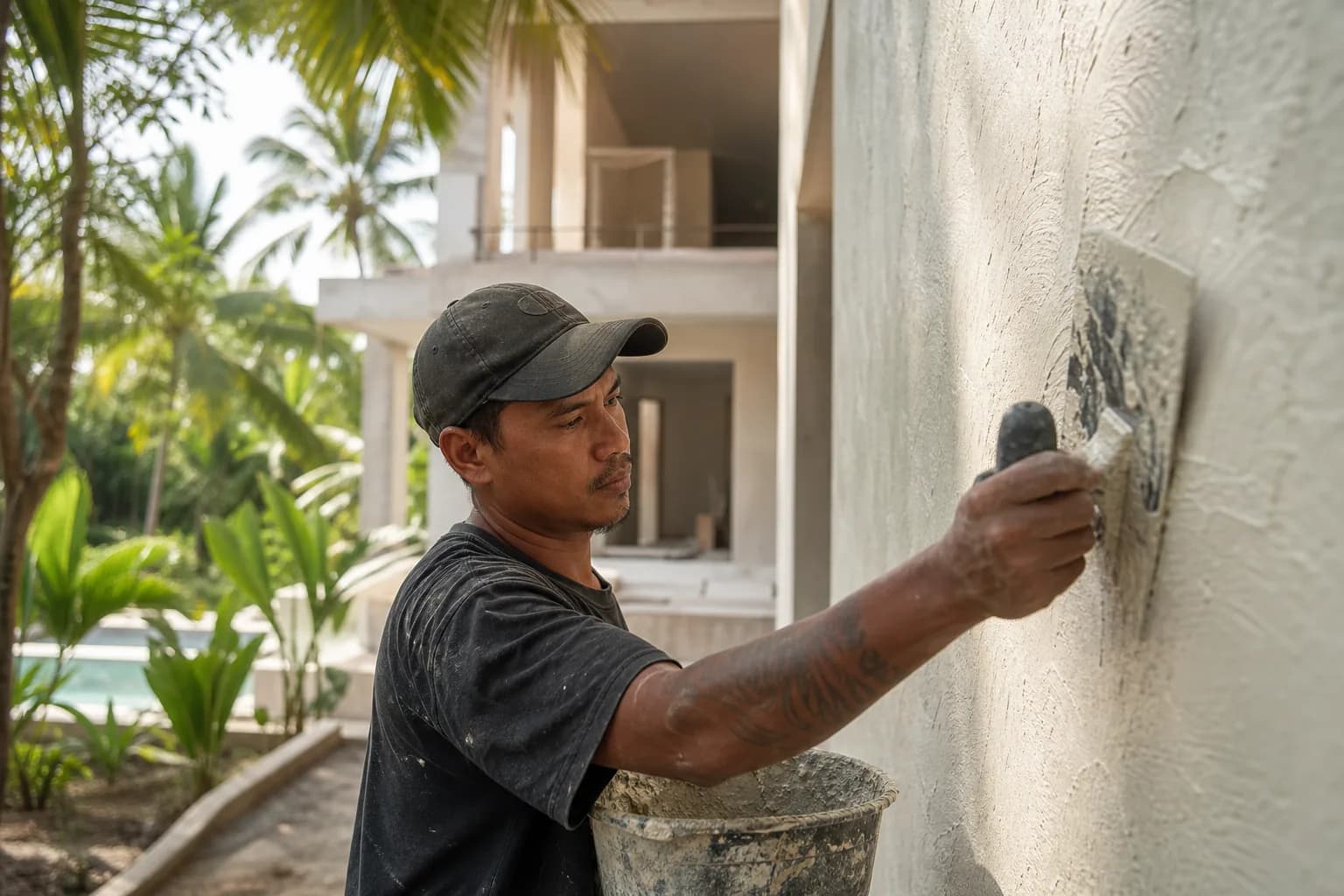
Resin-Infused Plaster Finishes: Anti-Salt Systems Bali
Expert technical guide: Resin-Infused Plaster Finishes: Anti-Salt Systems Bali
8 min read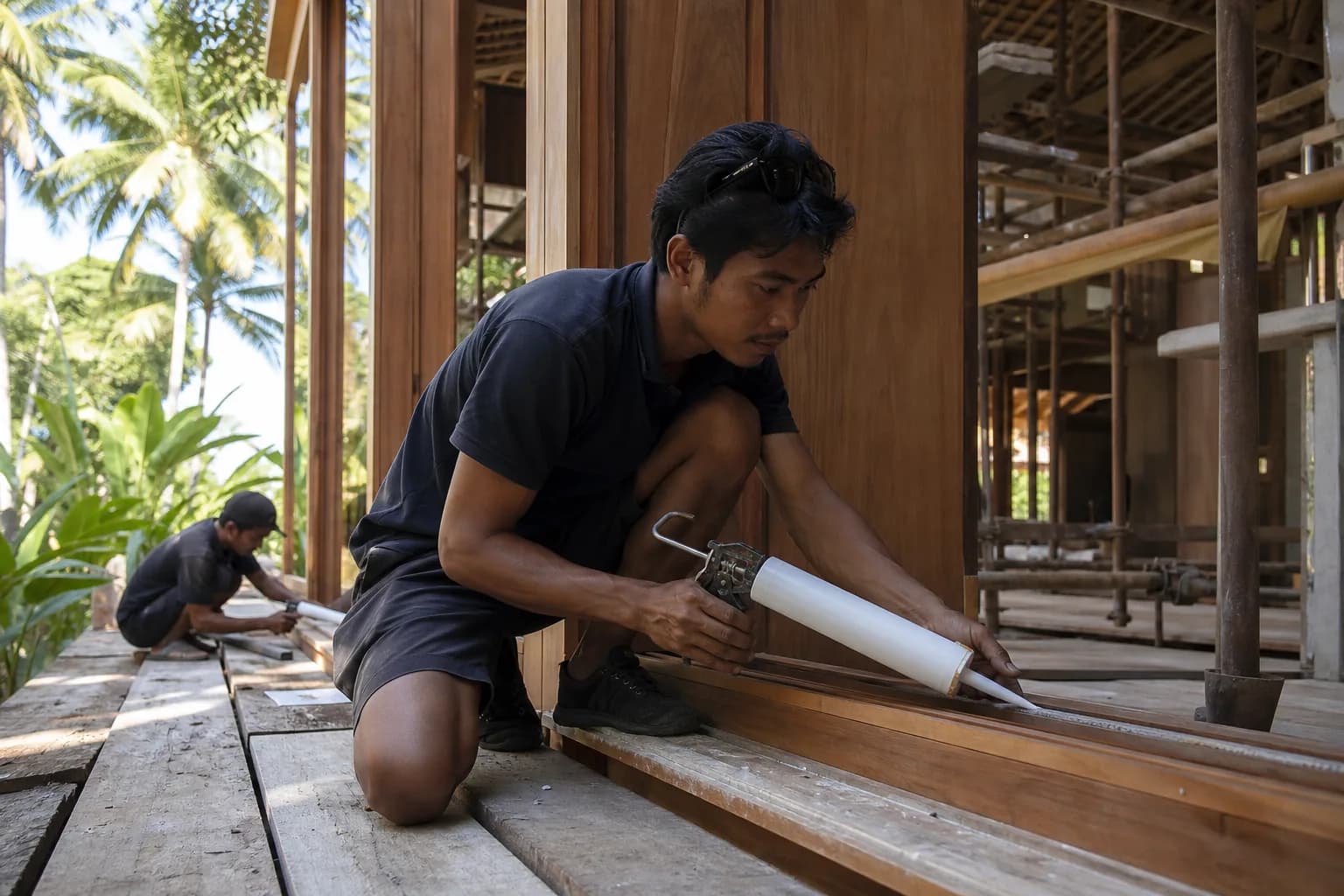
Prefinished Timber Joinery: Silicone Seals Fixings Bali
Professional prefinished timber joinery installation in Bali with silicone seals and fixings for durable weatherproof performance and a premium finish.
10 min read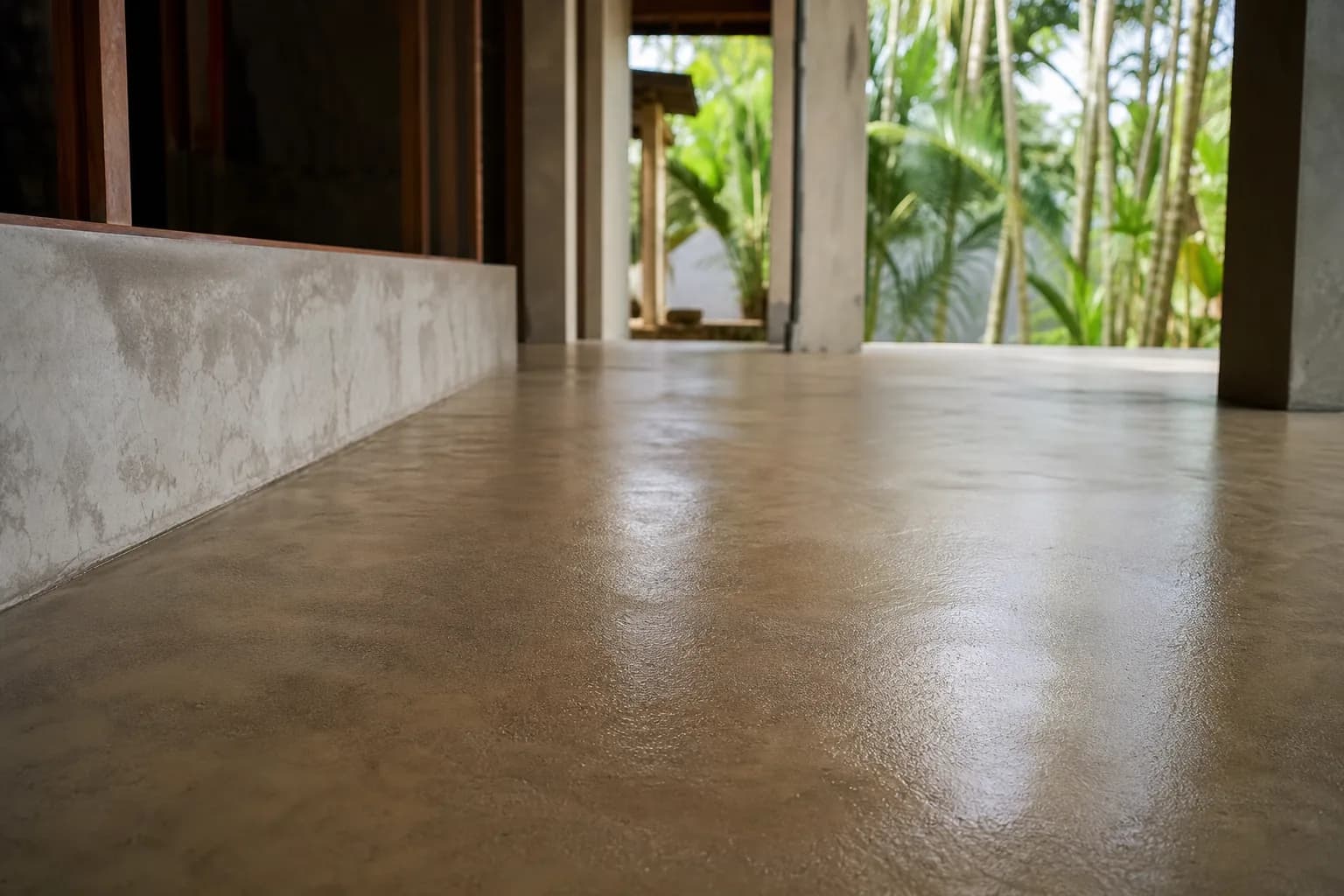
Polished Concrete Microtopping: Surface Prep Sealants Bali
Discover Bali s polished concrete microtopping: expert surface prep, durable sealants, and a flawless finish for modern floors with minimal maintenance.
9 min read