Epoxy vs Polyurethane Floor Coatings for Bali Villas
# Epoxy vs Polyurethane Floor Coatings: Bali Villa Wet Areas
The Critical Flooring Decision for Tropical Wet Zones
Bali villa wet areas—bathrooms, outdoor showers, pool decks, and spa zones—face unique challenges that mainland construction rarely encounters. The combination of constant moisture, intense UV exposure, temperature fluctuations between 24-32°C, and high humidity levels creates an environment where standard flooring solutions fail within months. Property owners frequently discover their beautifully finished wet areas developing yellowing, delamination, or surface cracking within the first year. The choice between epoxy and polyurethane floor coatings isn’t merely aesthetic—it determines whether your interior finishing Bali investment withstands tropical conditions or requires costly remediation. Understanding the technical performance characteristics of each coating system in Bali’s specific climate is essential for any serious villa construction or renovation Bali project.
Technical Performance Analysis: Tropical Wet Area Applications
Epoxy floor coatings consist of two-part thermosetting resins that create rigid, highly adhesive surfaces through chemical cross-linking. In Bali villa construction wet areas, epoxy systems deliver exceptional compressive strength (8,000-12,000 PSI) and superior chemical resistance against cleaning agents, chlorinated water, and organic matter. The molecular structure creates a completely impermeable barrier when properly applied, preventing water penetration into substrate concrete—critical for preventing structural degradation in tropical environments.
However, epoxy’s rigid molecular chains make it susceptible to UV degradation. Bali’s equatorial position (8°S latitude) means intense year-round solar radiation. Outdoor wet areas receive UV indices regularly exceeding 11, causing epoxy’s aromatic compounds to break down. This manifests as yellowing within 6-12 months and eventual chalking where the surface becomes powdery. The rigid structure also means limited flexibility—thermal expansion from Bali’s daily temperature swings can cause micro-cracking at substrate joints.
Polyurethane coatings utilize different chemistry—urethane linkages create elastic polymer chains with significantly greater flexibility. This elasticity (elongation rates of 400-600% versus epoxy’s 2-5%) allows polyurethane to accommodate substrate movement without cracking. For renovation Bali projects where existing structures may have settled or developed minor movement, this flexibility prevents coating failure at expansion joints and structural transitions.
Polyurethane’s aliphatic formulations resist UV degradation through stable molecular structures that don’t yellow under sunlight exposure. In Bali’s outdoor shower areas, pool surrounds, and semi-open bathrooms—increasingly popular in contemporary villa design—polyurethane maintains color stability and gloss retention for 5-7 years versus epoxy’s 1-2 years. The coating’s softer surface (Shore D hardness 50-70 versus epoxy’s 80-85) provides better impact resistance, important for areas where dropped objects are common.
Moisture vapor transmission presents another critical consideration. Bali’s ground moisture levels remain high year-round, with relative humidity rarely dropping below 70%. Concrete slabs continuously transmit moisture vapor upward. Epoxy’s rigid impermeability can trap this vapor, causing osmotic blistering where pressure builds beneath the coating. Polyurethane’s slight breathability (while still waterproof at the surface) allows controlled vapor transmission, reducing blister formation in ground-level wet areas.
Chemical resistance profiles differ significantly. Epoxy excels against alkaline cleaning solutions, acids, and petroleum products—relevant for maintenance areas or utility zones. Polyurethane shows superior resistance to abrasion and organic staining but can be affected by strong solvents. For typical villa wet area maintenance using pH-neutral cleaners, both perform adequately, though epoxy provides additional protection if harsh chemical cleaning is anticipated.
Temperature performance reveals another distinction. Epoxy becomes brittle below 10°C and softens above 60°C—rarely problematic in Bali’s stable climate. However, dark-colored epoxy on sun-exposed surfaces can reach 70°C+, approaching glass transition temperature where properties degrade. Polyurethane maintains stable properties across -40°C to +90°C, providing safety margin for black or dark gray finishes popular in contemporary interior finishing Bali designs.
Material Specifications and Quality Standards
Professional-grade epoxy systems for Bali wet areas require 100% solids formulations—solvent-based or water-based versions lack durability in tropical moisture. Minimum specifications include 3,000 PSI tensile strength, <2% water absorption (ASTM D570), and chemical resistance rating of "excellent" against 10% hydrochloric acid and 25% sodium hydroxide. Reputable manufacturers include Sika, BASF MasterTop, and Flowcrete, with products specifically rated for tropical climates.
Polyurethane specifications should specify aliphatic formulations for UV resistance—aromatic polyurethanes yellow similarly to epoxy. Look for Shore D hardness 55-75, elongation >400%, and UV stability certification per ASTM G154 (minimum 2,000 hours without significant color change). Acceptable moisture vapor transmission rates range 0.1-0.3 perms—enough breathability to prevent blistering while maintaining waterproofing. Quality brands include Sherwin-Williams, PPG, and Teknos, with tropical-rated product lines.
Substrate preparation materials prove equally critical. Concrete surfaces require diamond grinding to CSP-2 or CSP-3 profile (Concrete Surface Profile per ICRI standards), creating adequate mechanical key. Moisture barriers using epoxy primers rated <0.1 perms prevent ground moisture transmission. For renovation Bali projects over existing tiles, specialized bonding primers with >350 PSI adhesion strength ensure coating longevity.
Bali’s climate demands modified application procedures. Ambient temperature during application must remain 15-30°C with <85% relative humidity—challenging during rainy season. Professional contractors schedule wet area coating during dry season (April-October) or use climate-controlled application with dehumidifiers. Pot life reduces significantly in tropical heat—epoxy working time drops from 45 minutes at 20°C to 15 minutes at 30°C, requiring smaller batch mixing and rapid application.
Professional Installation Process for Tropical Wet Areas
Phase 1: Substrate Assessment and Preparation (Days 1-2)
Installation begins with concrete moisture testing using calcium chloride tests (ASTM F1869) or relative humidity probes (ASTM F2170). Acceptable moisture vapor emission rates must not exceed 3 lbs/1000 sq ft/24 hours for epoxy, or 5 lbs for breathable polyurethane systems. Bali’s ground moisture often exceeds these limits, requiring moisture mitigation primers or extended drying periods with forced ventilation.
Surface preparation involves diamond grinding to remove laitance, existing sealers, and create proper profile. Wet areas require particular attention to drainage slopes—minimum 1:80 gradient toward drains prevents water pooling that could penetrate coating edges. Expansion joints receive flexible sealant installation before coating application. All substrate cracks >0.5mm require epoxy crack injection or routing and filling to prevent reflective cracking through the coating.
Phase 2: Primer Application (Day 3)
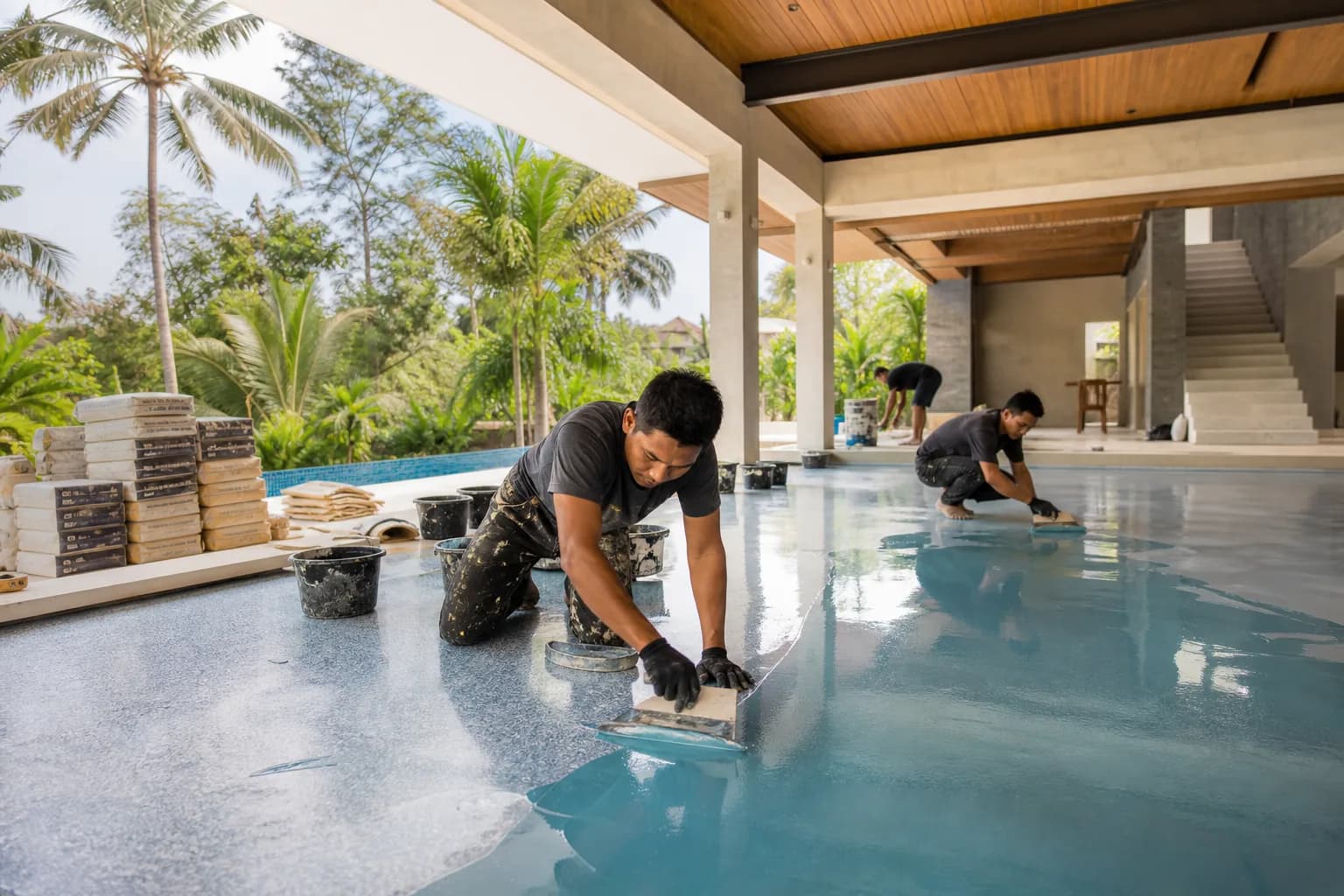
Moisture-blocking epoxy primers apply at 200-250 microns DFT (dry film thickness) using notched squeegee or roller. Application occurs during coolest hours (6-9 AM) when humidity drops below 80%. The primer penetrates concrete pores, creating mechanical and chemical bond while blocking moisture transmission. Broadcast silica sand (16/30 mesh) into wet primer creates mechanical key for subsequent coating layers—essential for polyurethane topcoats which bond mechanically rather than chemically.
Phase 3: Base Coat Installation (Days 4-5)
Epoxy base coats apply at 400-600 microns DFT in single or multiple passes depending on system design. Self-leveling formulations flow to create seamless surfaces, while trowel-applied systems build thickness for heavy-duty applications. Polyurethane base coats typically apply thinner (250-350 microns) due to superior flexibility—excessive thickness can reduce elasticity. Color pigments integrate at this stage, with UV-stable pigments mandatory for outdoor wet areas.
Anti-slip aggregates broadcast into wet base coat provide essential safety in wet areas. Aluminum oxide (36-60 grit) or polymer beads create texture without compromising cleanability. Aggregate density determines slip resistance—SCOF (Static Coefficient of Friction) values should exceed 0.60 for wet barefoot traffic per ADA standards. Excess aggregate removal after cure prevents loose particles in finished surface.
Phase 4: Topcoat Sealing (Days 6-7)
Clear topcoats provide UV protection, enhanced chemical resistance, and easier cleaning. Aliphatic polyurethane topcoats over epoxy base coats combine epoxy’s strength with polyurethane’s UV stability—a hybrid approach popular in Bali’s semi-outdoor wet areas. Topcoat thickness ranges 100-150 microns, applied in two passes for uniform coverage. Edge details around drains, fixtures, and wall transitions require careful brush work to ensure complete encapsulation.
Phase 5: Curing and Quality Control (Days 8-10)
Tropical curing requires controlled conditions. Epoxy reaches foot traffic hardness in 24-48 hours at 25°C but requires 7 days for full chemical cure before exposure to standing water. Polyurethane cures faster (16-24 hours to foot traffic) but benefits from 5-day cure before full wet exposure. Temperature and humidity monitoring throughout cure cycle ensures proper cross-linking. Pull-off adhesion testing (ASTM D4541) verifies >250 PSI bond strength before project completion.
Cost Analysis and Project Timeline
Material costs for professional-grade epoxy systems in Bali range IDR 350,000-550,000 per square meter including primer, base coat, and topcoat. Polyurethane systems cost IDR 450,000-750,000 per square meter due to more expensive raw materials and specialized formulations. These figures reflect imported quality materials with tropical climate ratings—local alternatives may cost 30-40% less but often fail within 12-18 months in wet area applications.
Labor costs for proper installation add IDR 200,000-350,000 per square meter depending on surface preparation requirements and area complexity. Renovation projects over existing finishes increase costs 25-35% due to additional preparation, removal, and substrate repair work. Small wet areas (<20 sqm) incur higher per-meter costs due to mobilization and minimum project charges.
Standard wet area coating projects (bathroom, outdoor shower, small pool deck) spanning 30-50 square meters require 10-14 days from preparation through final cure. Larger projects benefit from economies of scale but extend timelines proportionally. Weather delays during rainy season can add 3-7 days waiting for appropriate application conditions. Rush projects using fast-cure formulations reduce timeline to 7-8 days but increase material costs 20-30%.
Long-term value considerations favor polyurethane for UV-exposed areas despite higher initial cost. Epoxy requiring recoating every 2-3 years versus polyurethane’s 6-8 year lifespan shifts total cost of ownership significantly. For covered, indoor wet areas, epoxy’s lower cost and excellent performance make it economically optimal. Professional Bali villa construction specifications should match coating type to specific exposure conditions rather than applying single solution across all wet areas.
Frequently Asked Questions
Can epoxy or polyurethane coatings be applied over existing tile in Bali villa bathrooms?
Yes, both coating types can overlay existing ceramic or porcelain tile if properly prepared, making them excellent options for renovation Bali projects. The tile surface requires thorough cleaning, deglossing with 80-grit abrasive, and application of specialized bonding primer rated for non-porous surfaces. All grout joints must be sound—loose or cracked grout requires removal and epoxy grout replacement before coating. Tile adhesion to substrate must be verified by test removal—hollow-sounding tiles indicate delamination requiring removal. Success rates exceed 95% when proper preparation protocols are followed, but warranty coverage typically reduces from 5-7 years to 3-5 years for overlay applications versus new concrete.
How do these coatings perform in Bali’s outdoor shower areas with direct sun exposure?
Aliphatic polyurethane significantly outperforms epoxy in direct sun exposure common to Bali’s outdoor shower designs. Standard epoxy yellows noticeably within 6-12 months and requires recoating every 18-24 months to maintain appearance. UV-stable polyurethane maintains color and gloss for 5-7 years under the same conditions. For outdoor wet areas, specify aliphatic polyurethane topcoat even over epoxy base coat—this hybrid system costs 15-20% more than full epoxy but delivers 3-4x longer service life. Dark colors (black, charcoal, deep blue) show UV degradation more rapidly than lighter tones; consider this in interior finishing Bali color selection for sun-exposed areas.
What maintenance procedures extend coating lifespan in tropical wet areas?
Weekly cleaning with pH-neutral cleaners (pH 6-8) and soft brushes prevents organic buildup that can harbor moisture and promote coating degradation. Avoid acidic cleaners (pH <5) which etch polyurethane, and strong alkaline solutions (pH >10) which can soften epoxy over time. Quarterly inspection of drainage areas, expansion joints, and wall transitions identifies early failure signs—addressing small delaminations immediately prevents expansion. Annual professional cleaning with rotary scrubbers and reapplication of sacrificial wax coatings (for polyurethane) maintains slip resistance and appearance. Proper maintenance extends epoxy lifespan 30-40% and polyurethane 20-25% beyond typical service life.
Which coating system works best for infinity pool edges and wet decks?
 1from 198.000 USD
Private: Haridas Villas
 172 m²8 month(s)from 120.000 USD
Keshava
 3124 m²6 month(s)from 123.000 USD
TALA 8
 3104 m²11 month(s)from 99.000 USD
TALA 100
 2144 m²11 month(s)from 104.000 USD
Narayana
 3127 m²9 month(s)from 177.000 USD
Mukunda
 3180 m²7 month(s)from 142.000 USD
Vasudeva
 3173 m²6 month(s)from 125.000 USD
TALA FOUR
 164 m²7 month(s)from 79.000 USD
TALA TWO

Want to calculate?
 4344 m²16 month(s)from 290.000 USD
Radha
164 m²7 month(s)from 79.000 USDPrivate: Haridas Villas, Tegallalang
Start With Real Numbers, Not Guesses
Before finalizing your finishing works plan, check realistic cost ranges for your Bali villa project.
Available lands
 3300 m²15 min$ 449889Bali, Tabanan
 585 m²8 min$ 165702Bali, Mengwi
 204 m²5 min$ 40899Bali, Kedungu
 1720 m²2 min$ 241478Bali, Tabanan
 8313 m²15 min$ 716670Bali, Buduk
 7900 m²25 min$ 413485Bali, Tabanan
 3000 m²15 min$ 738916Bali, Cepaka
 6000 m²10 min$ 1330049Bali, Kutuh South Bali
 660 m²10 min$ 175567Bali, Mengwi
 1100 m²8 min$ 280419Bali, Ungasan
 1430 m²5 min$ 209862Bali, Klungkung
 500 m²10 min$ 107143Bali, Tabanan
 2680 m²10 min$ 1732759Bali, Pererenan
 800 m²5 min$ 295567Bali, Seseh
 1000 m²8 min$ 134544Bali, Bukit
Essential Bali build & buy guides
- Bali villa construction cost per m² in 2026
- How much will your villa cost? Calculator
- Building a villa in Bali: the complete guide
- Buying land in Bali: step-by-step for foreigners
- Bali villa investment: yields, risks, returns
- Leasehold vs freehold: what foreigners can own
- Construction defect liability & 10-year warranty
- Bali building codes and construction standards
Related guides
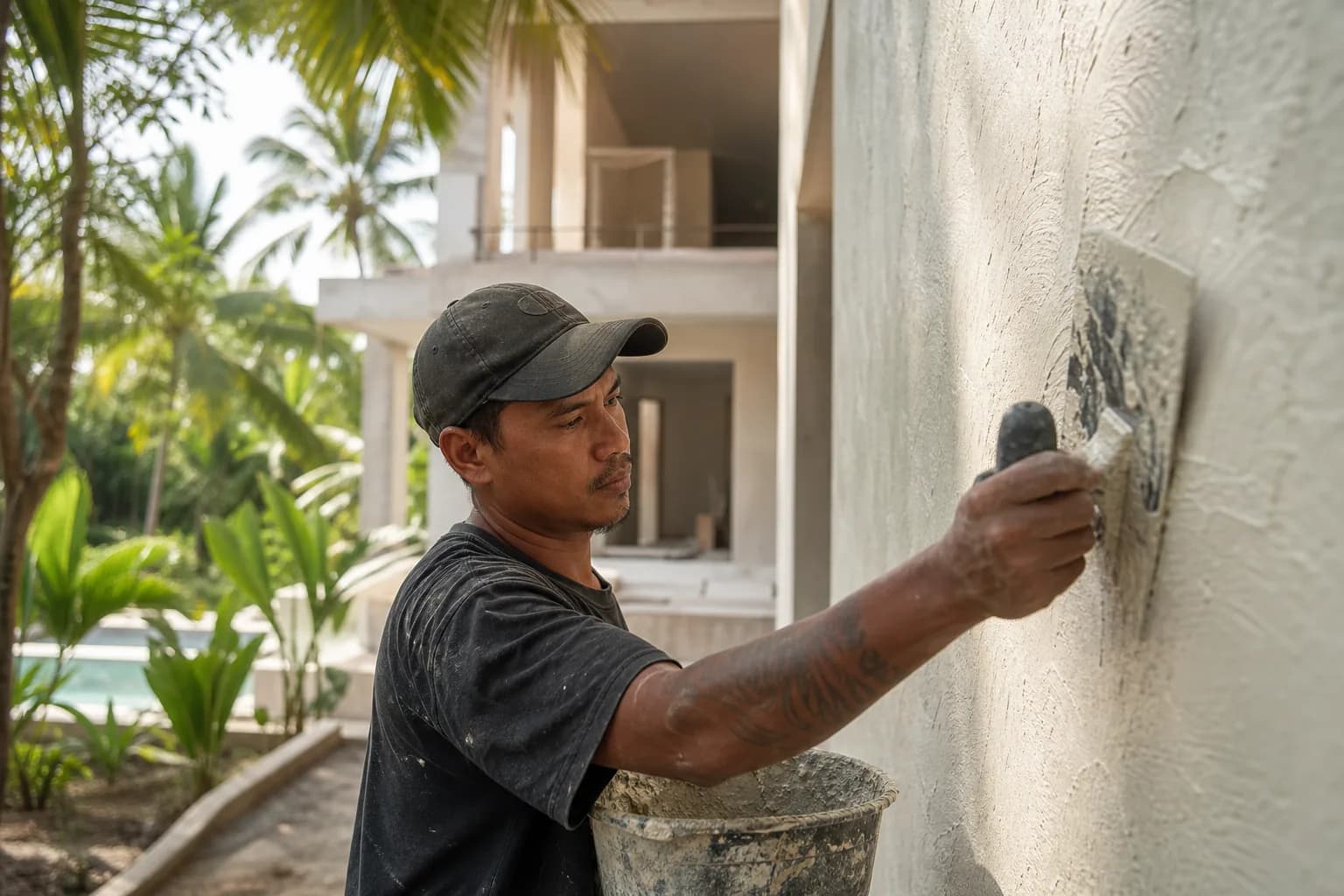
Resin-Infused Plaster Finishes: Anti-Salt Systems Bali
Expert technical guide: Resin-Infused Plaster Finishes: Anti-Salt Systems Bali
8 min read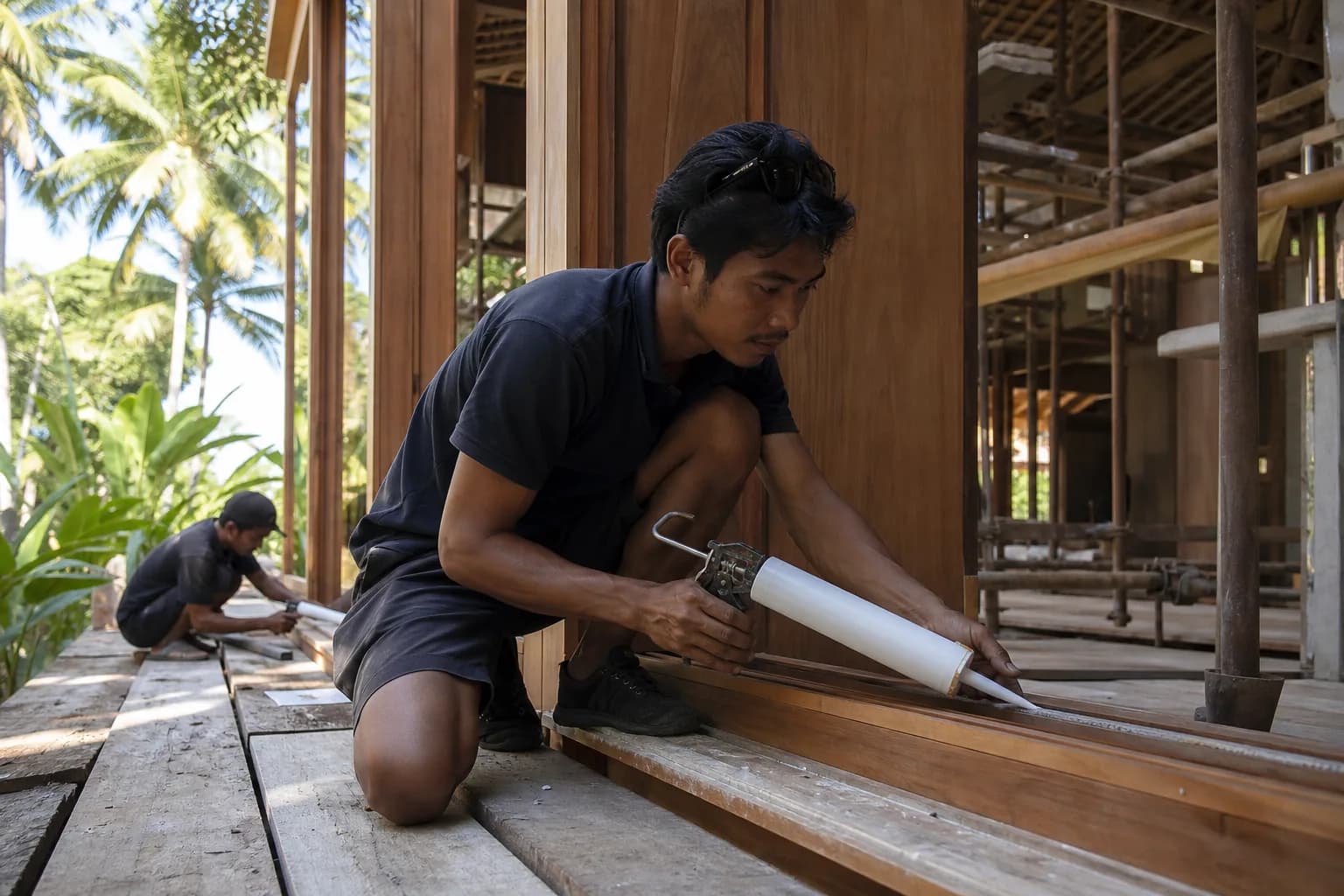
Prefinished Timber Joinery: Silicone Seals Fixings Bali
Professional prefinished timber joinery installation in Bali with silicone seals and fixings for durable weatherproof performance and a premium finish.
10 min read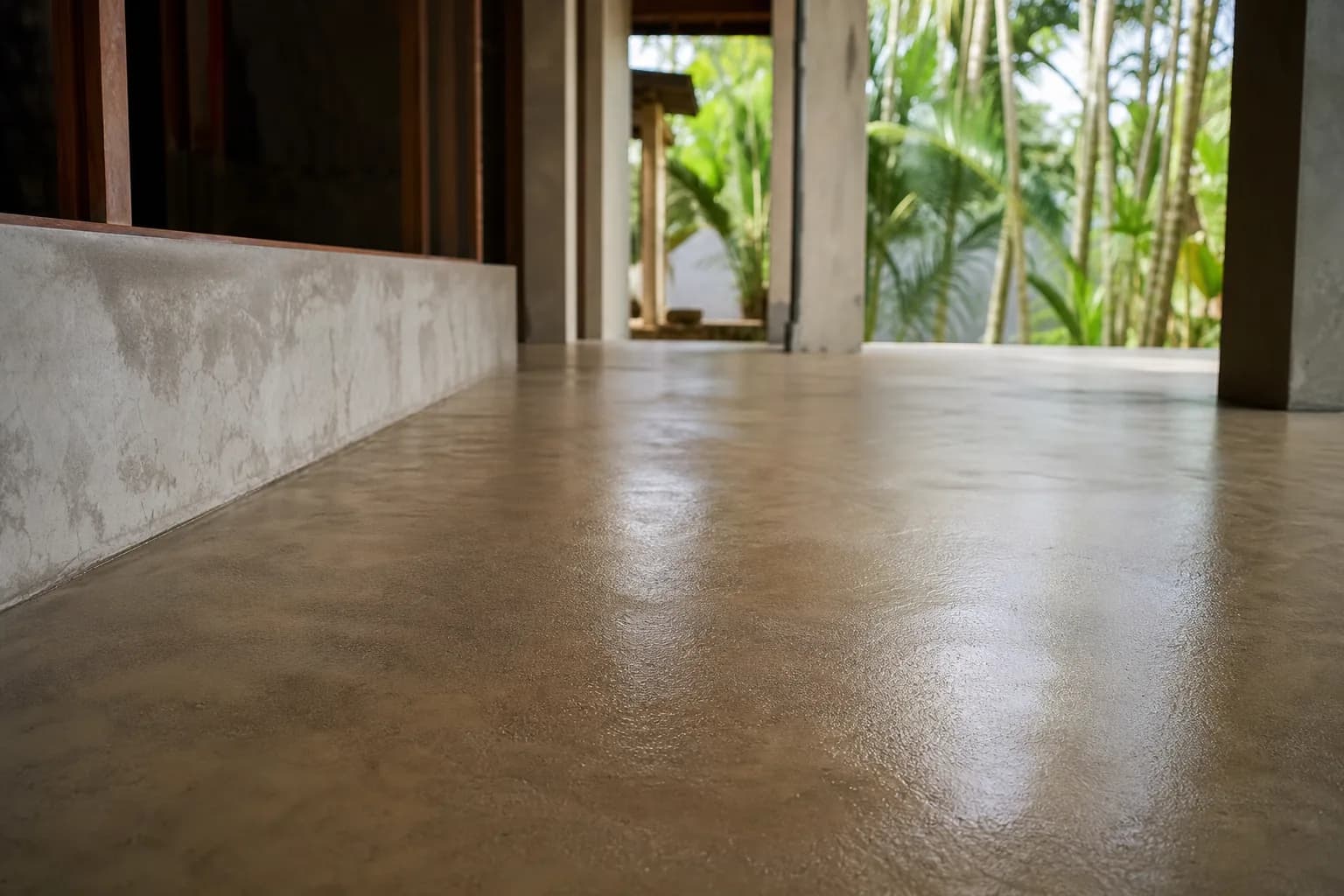
Polished Concrete Microtopping: Surface Prep Sealants Bali
Discover Bali s polished concrete microtopping: expert surface prep, durable sealants, and a flawless finish for modern floors with minimal maintenance.
9 min read