Epoxy Resin Flooring Moisture Testing in Bali Villas
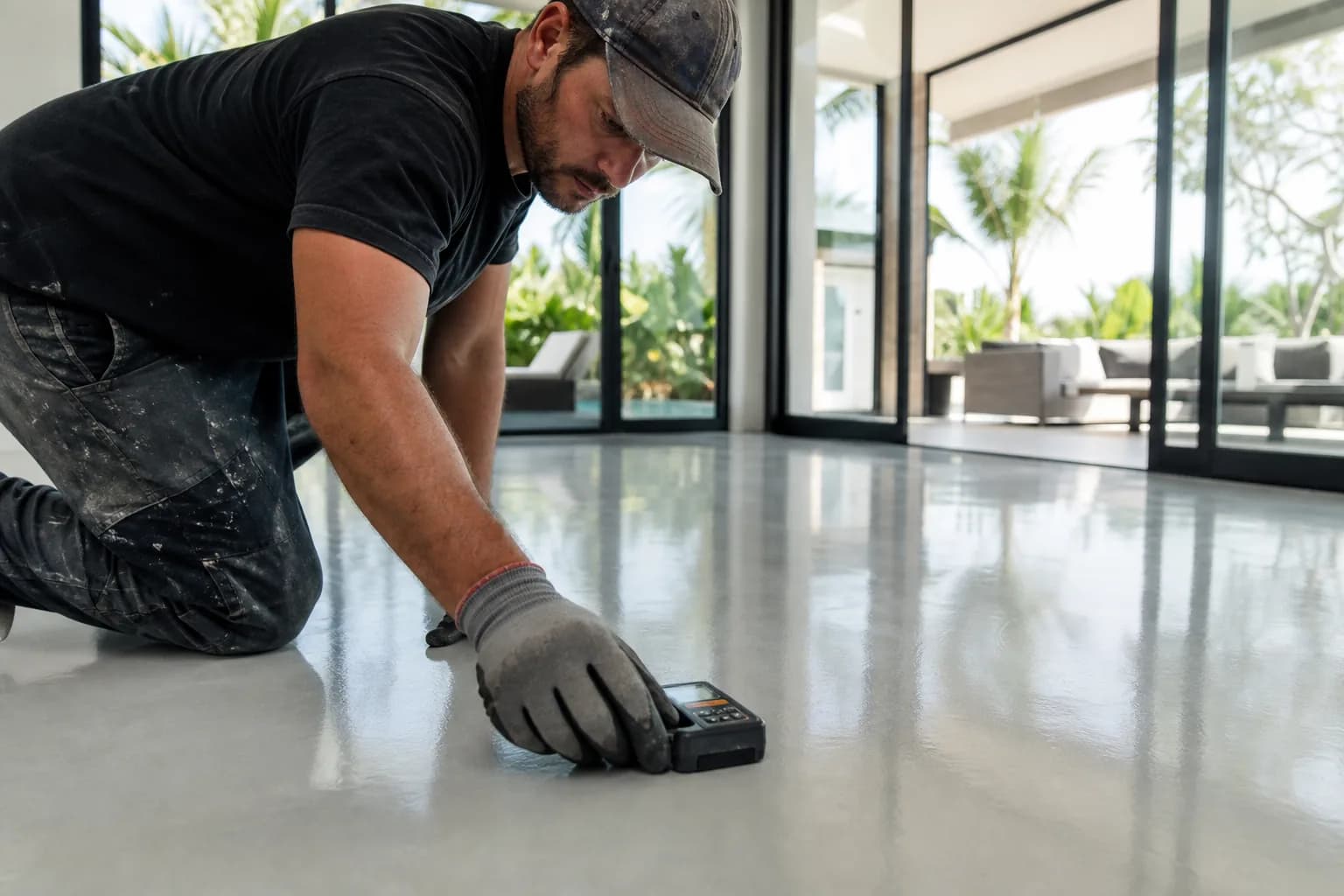
# Epoxy Resin Flooring Installation: Moisture Testing for Bali Villas
The Hidden Threat to Your Villa’s Epoxy Flooring Investment
You’ve selected the perfect epoxy resin finish for your Bali villa’s living spaces—a sleek, modern surface that promises durability and aesthetic appeal. However, three months after installation, you notice bubbling, delamination, and cloudy patches spreading across the floor. This devastating scenario affects countless villa projects across Bali, and the culprit is almost always the same: inadequate moisture testing before installation. In Bali’s tropical climate, where humidity regularly exceeds 80% and concrete slabs absorb moisture year-round, proper moisture assessment isn’t optional—it’s the critical difference between a flawless finish and a costly renovation failure.
Understanding Moisture Dynamics in Bali’s Tropical Environment
Epoxy resin flooring failures in Bali villa construction projects stem from a fundamental incompatibility: epoxy creates an impermeable barrier over concrete, but concrete in tropical environments constantly exchanges moisture with its surroundings. When excess moisture becomes trapped beneath the epoxy coating, vapor pressure builds until the bond fails, resulting in blistering, delamination, or complete coating failure.
Bali’s unique environmental conditions create exceptional challenges for interior finishing Bali projects. The island experiences consistent humidity levels between 75-95% throughout the year, with minimal seasonal variation. Unlike temperate climates where concrete naturally dries over time, Bali’s concrete slabs continuously absorb atmospheric moisture, particularly in ground-floor applications without proper vapor barriers. Coastal villas face additional complications from salt-laden air, which accelerates moisture absorption and can introduce chlorides that further compromise epoxy adhesion.
The concrete curing process itself generates internal moisture that must escape before epoxy application. A standard 100mm concrete slab requires approximately 28 days to achieve initial cure, but achieving moisture equilibrium suitable for epoxy coating can take 60-90 days in Bali’s climate—significantly longer than the 30-45 days typical in drier regions. Many renovation Bali contractors rush this timeline, applying epoxy to slabs that appear surface-dry but retain excessive internal moisture content.
Temperature fluctuations, though less dramatic than in temperate zones, still affect moisture behavior. Bali’s daily temperature range of 24-32°C creates thermal cycling that drives moisture movement within concrete. Morning condensation, particularly in air-conditioned spaces, can deposit surface moisture that interferes with epoxy adhesion even when internal moisture levels are acceptable. Understanding these dynamics is essential for any finishing works specialist working on villa projects across the island.
The consequences of moisture-related failures extend beyond aesthetics. Failed epoxy coatings create uneven surfaces that trap dirt and moisture, potentially leading to mold growth—a serious concern in tropical environments. Remediation requires complete removal of the failed coating, moisture mitigation measures, and reinstallation, typically costing 150-200% of the original installation budget. For villa owners and developers, this represents not just financial loss but significant project delays and reputational damage.
Professional Moisture Testing Methods and Standards
Professional moisture testing for epoxy flooring installations employs two primary methodologies, each with specific applications and accuracy levels. The calcium chloride test (ASTM F1869) measures moisture vapor emission rate (MVER) from the concrete surface over a 60-72 hour period. This method involves placing anhydrous calcium chloride in a sealed dome on the concrete surface, then weighing the salt to determine how much moisture it absorbed. Results are expressed in pounds per 1,000 square feet per 24 hours, with most epoxy manufacturers requiring readings below 3-5 lbs/1,000 sq ft/24 hrs.
The relative humidity (RH) probe method (ASTM F2170) provides more accurate assessment of internal moisture conditions. This technique involves drilling holes to 40% of the slab depth, inserting sealed sleeves, and allowing the environment to equilibrate for 24-72 hours before measuring internal RH with calibrated probes. For Bali applications, internal RH should typically remain below 70-75% before epoxy installation, though specific thresholds vary by product specification.
Quality interior finishing Bali contractors implement both testing methods for comprehensive assessment. The calcium chloride test reveals surface emission rates affected by ambient conditions, while RH probes measure the slab’s true internal moisture state. This dual approach is particularly valuable in Bali’s variable climate, where surface conditions can mislead single-method assessments. Testing should occur at multiple locations—minimum one test per 100 square meters—with additional tests in areas near plumbing, exterior walls, or locations with suspected moisture issues.
Step-by-Step Moisture Testing and Preparation Process
The moisture testing and preparation process for epoxy flooring in Bali villas follows a systematic protocol that typically spans 7-14 days before actual epoxy application. This timeline accounts for tropical climate variables and ensures reliable results.
Phase 1: Initial Assessment and Environmental Control (Days 1-2)
Begin by establishing controlled environmental conditions in the installation area. The space should maintain temperatures between 18-30°C with relative humidity below 60% for at least 48 hours before testing. In Bali’s climate, this typically requires air conditioning and dehumidification. Document ambient temperature, humidity, and concrete surface temperature using calibrated instruments. Inspect the slab for visible moisture, efflorescence, or previous coating failures that indicate moisture problems. Remove any existing coatings, adhesives, or surface contaminants through mechanical grinding or shot blasting—essential preparation that also opens the concrete pore structure for accurate moisture assessment.
Phase 2: RH Probe Installation (Days 3-4)
Drill test holes using rotary hammer drills equipped with vacuum attachments to minimize dust. For a 100mm slab, drill to 40mm depth; for 150mm slabs, drill to 60mm depth. Clean holes thoroughly with wire brushes and compressed air, then insert RH probe sleeves and seal with manufacturer-approved plugs. Allow 24-72 hours for the microenvironment within each sleeve to equilibrate with the surrounding concrete. This waiting period is critical—rushed measurements produce unreliable results that can lead to installation failures.
Phase 3: Calcium Chloride Test Setup (Days 3-4)
Simultaneously with RH probe installation, establish calcium chloride test locations. Clean test areas to remove surface contaminants, then place pre-weighed calcium chloride dishes inside sealed plastic domes adhered to the concrete surface. Ensure perfect seals to prevent atmospheric moisture from affecting results. Leave tests undisturbed for 60-72 hours, maintaining consistent environmental conditions throughout the testing period.
Phase 4: Data Collection and Analysis (Days 6-7)
After equilibration periods, collect measurements from RH probes using calibrated meters, recording readings from each location. Remove and immediately weigh calcium chloride samples in sealed containers to determine moisture absorption. Calculate MVER values and compare all results against epoxy manufacturer specifications and industry standards. For Bali villa construction projects, expect higher baseline readings than temperate climate projects—this is normal and manageable with proper product selection and surface preparation.
Phase 5: Moisture Mitigation (If Required, Days 8-14)
If moisture levels exceed acceptable thresholds, implement mitigation strategies. Options include extended drying time with continued dehumidification, application of moisture-mitigating primers specifically formulated for high-moisture environments, or installation of moisture vapor barrier systems. In severe cases, particularly in ground-floor applications without proper vapor barriers, consider installing a moisture-blocking membrane system before proceeding with epoxy coating. Retest after mitigation measures to confirm moisture levels have reached acceptable ranges.
Phase 6: Final Surface Preparation (Days 7-8 or 14-15)
Once moisture testing confirms suitable conditions, perform final surface preparation. This includes additional mechanical abrading to achieve the profile required by the epoxy manufacturer (typically CSP 2-3), thorough cleaning to remove all dust and contaminants, and final moisture verification immediately before epoxy application. The concrete surface must be completely dry to touch, with no visible moisture or dark spots indicating dampness.
Cost Analysis and Project Timeline for Bali Villa Applications
Professional moisture testing and epoxy flooring installation for Bali villas involves several cost components that vary based on project scope, location, and specific site conditions. Understanding these costs helps villa owners and developers budget appropriately for quality interior finishing Bali work.
Moisture testing services typically cost IDR 2,500,000-4,500,000 for a standard villa floor area (100-150 square meters), including both calcium chloride and RH probe testing at appropriate intervals. This includes equipment rental, calibrated instruments, professional technician time, and detailed reporting. Larger projects or those requiring extensive testing due to moisture concerns may increase costs proportionally.
Surface preparation represents a significant cost component, ranging from IDR 75,000-150,000 per square meter depending on existing conditions. This includes mechanical grinding or shot blasting, crack repair, and thorough cleaning. Villas with existing coatings or severe surface contamination require more intensive preparation, increasing costs toward the higher end of this range.
Epoxy resin materials and installation for quality systems suitable for Bali’s climate cost IDR 350,000-750,000 per square meter. This range reflects different epoxy systems—basic two-component epoxies at the lower end, and premium moisture-tolerant or decorative systems at the upper end. High-performance systems with enhanced moisture resistance, essential for ground-floor applications in Bali, typically cost IDR 500,000-650,000 per square meter installed.
Moisture mitigation measures, if required, add IDR 150,000-300,000 per square meter depending on the solution implemented. Moisture-mitigating primers cost less, while complete vapor barrier membrane systems represent the higher investment but provide superior long-term protection in challenging moisture environments.
Timeline considerations for complete moisture testing and epoxy installation span 14-21 days for typical villa projects. This includes initial assessment (2 days), moisture testing and equilibration (5-7 days), surface preparation (2-3 days), moisture mitigation if needed (3-5 days), epoxy application (2-3 days), and curing before occupancy (2-3 days). Rushed timelines compromise testing accuracy and installation quality, leading to premature failures. Experienced renovation Bali contractors build adequate time into project schedules to ensure proper procedures.
Frequently Asked Questions About Moisture Testing for Epoxy Floors
How long must concrete cure before moisture testing in Bali’s climate?
Concrete slabs in Bali require minimum 28 days initial cure before meaningful moisture testing, but achieving moisture equilibrium suitable for epoxy coating typically takes 60-90 days. This extended timeline compared to temperate climates reflects Bali’s high ambient humidity, which slows moisture evaporation from concrete. Ground-floor slabs without vapor barriers may require even longer drying periods. Professional contractors perform preliminary testing at 28 days to establish baseline moisture levels, then conduct final testing closer to the planned installation date. Attempting to accelerate this timeline through artificial drying methods often produces misleading test results and subsequent installation failures.
Can epoxy be installed during Bali’s rainy season?
Epoxy installation during rainy season (November-March) is possible but requires stringent environmental controls and extended preparation timelines. The installation area must be completely enclosed and climate-controlled, maintaining humidity below 60% and preventing any water intrusion. Moisture testing becomes even more critical during this period, as concrete slabs absorb additional moisture from atmospheric humidity. Many experienced interior finishing Bali specialists recommend scheduling epoxy installations during the dry season (April-October) when environmental conditions naturally support successful installation. If rainy season installation is unavoidable, budget additional time and costs for dehumidification, extended moisture testing, and potentially more robust moisture-mitigation systems.
What happens if moisture testing is skipped or rushed?
Skipping or inadequately performing moisture testing leads to predictable failure patterns typically appearing 2-6 months after installation. Initial symptoms include small bubbles or blisters where vapor pressure has overcome adhesion. These expand into larger delaminated areas where the epoxy coating separates from the concrete substrate. In severe cases, entire sections of flooring fail, requiring complete removal and reinstallation. The financial impact includes removal costs (IDR 100,000-150,000/sqm), moisture remediation, and complete reinstallation—typically 150-200% of original installation costs. Beyond financial losses, failed flooring creates safety hazards, disrupts villa operations, and damages contractor reputations. Professional moisture testing represents approximately 5-8% of total project costs but prevents failures that cost multiples of the entire original investment.
Are there epoxy systems specifically designed for high-moisture environments?
Yes, moisture-tolerant epoxy systems formulated
 1from 198.000 USD
Private: Haridas Villas
 3173 m²6 month(s)from 125.000 USD
TALA FOUR
 164 m²7 month(s)from 79.000 USD
TALA TWO
 172 m²8 month(s)from 120.000 USD
Keshava
164 m²7 month(s)from 79.000 USDPrivate: Haridas Villas, Tegallalang

Want to calculate?
 2144 m²11 month(s)from 104.000 USD
Narayana
 3104 m²11 month(s)from 99.000 USD
TALA 100
 3180 m²7 month(s)from 142.000 USD
Vasudeva
 4344 m²16 month(s)from 290.000 USD
Radha
 3127 m²9 month(s)from 177.000 USD
Mukunda
 3124 m²6 month(s)from 123.000 USD
TALA 8
Start With Real Numbers, Not Guesses
Before finalizing your finishing works plan, check realistic cost ranges for your Bali villa project.
Available lands
 700 m²15 min$ 109052Bali, Buduk
 1200 m²2 min$ 155172Bali, Klungkung
 700 m²20 min$ 90517Bali, Cepaka
 1700 m²10 min$ 632257Bali, Kuta
 3100 m²20 min$ 272968Bali, Tabanan
 250 m²15 min$ 40025Bali, Munggu
 615 m²15 min$ 113608Bali, Tabanan
 3800 m²15 min$ 100616Bali, Pererenan
 1375 m²10 min$ 447044Bali, Canggu
 2000 m²15 min$ 523000Bali, Canggu
 7500 m²5 min$ 206281Bali, Kedungu
 550 m²5 min$ 217629Bali, Tabanan
 660 m²10 min$ 175567Bali, Mengwi
 10000 m²19 min$ 232759Bali, Buleleng
 1430 m²5 min$ 209862Bali, Klungkung
Essential Bali build & buy guides
- Bali villa construction cost per m² in 2026
- How much will your villa cost? Calculator
- Building a villa in Bali: the complete guide
- Buying land in Bali: step-by-step for foreigners
- Bali villa investment: yields, risks, returns
- Leasehold vs freehold: what foreigners can own
- Construction defect liability & 10-year warranty
- Bali building codes and construction standards
Related guides
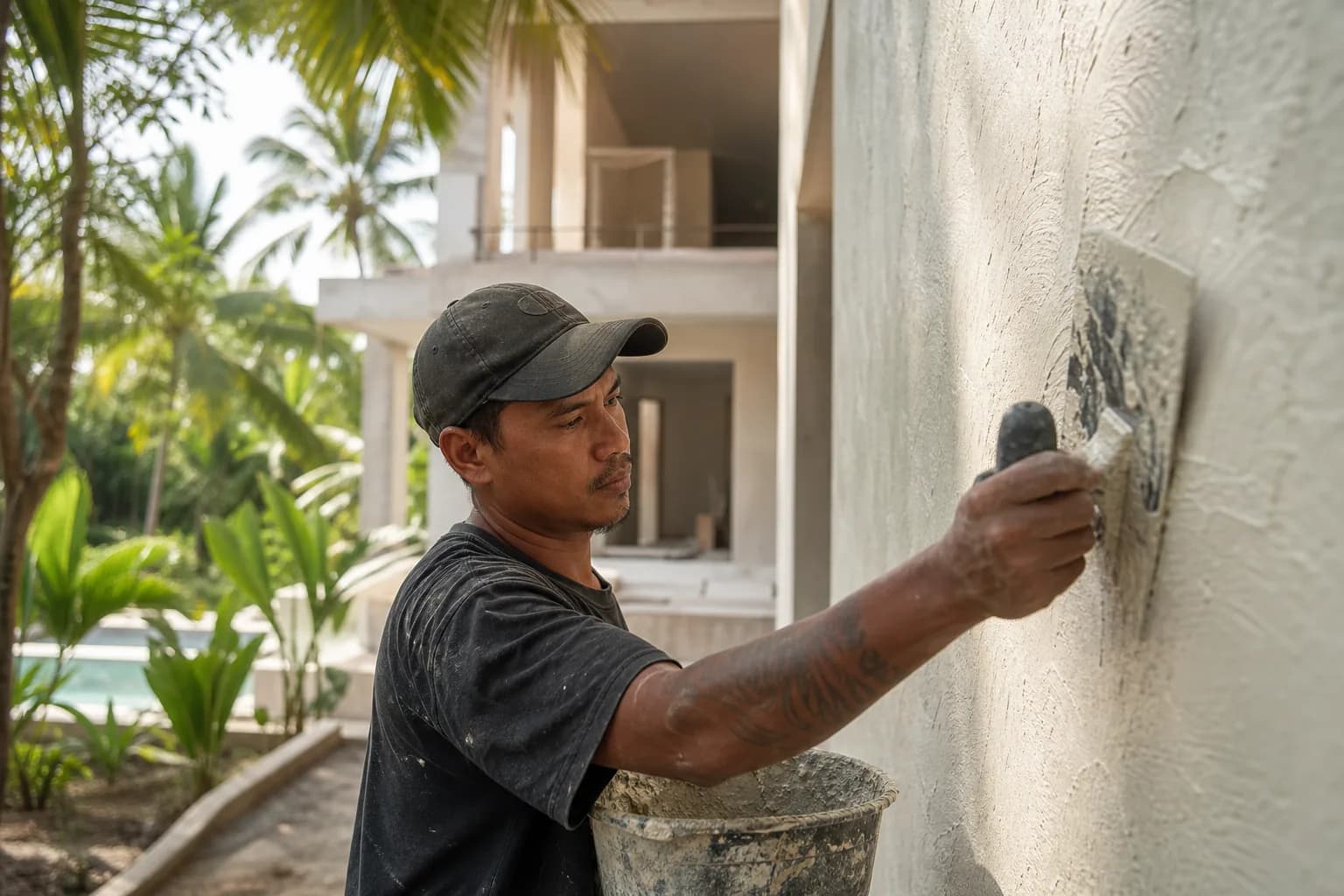
Resin-Infused Plaster Finishes: Anti-Salt Systems Bali
Expert technical guide: Resin-Infused Plaster Finishes: Anti-Salt Systems Bali
8 min read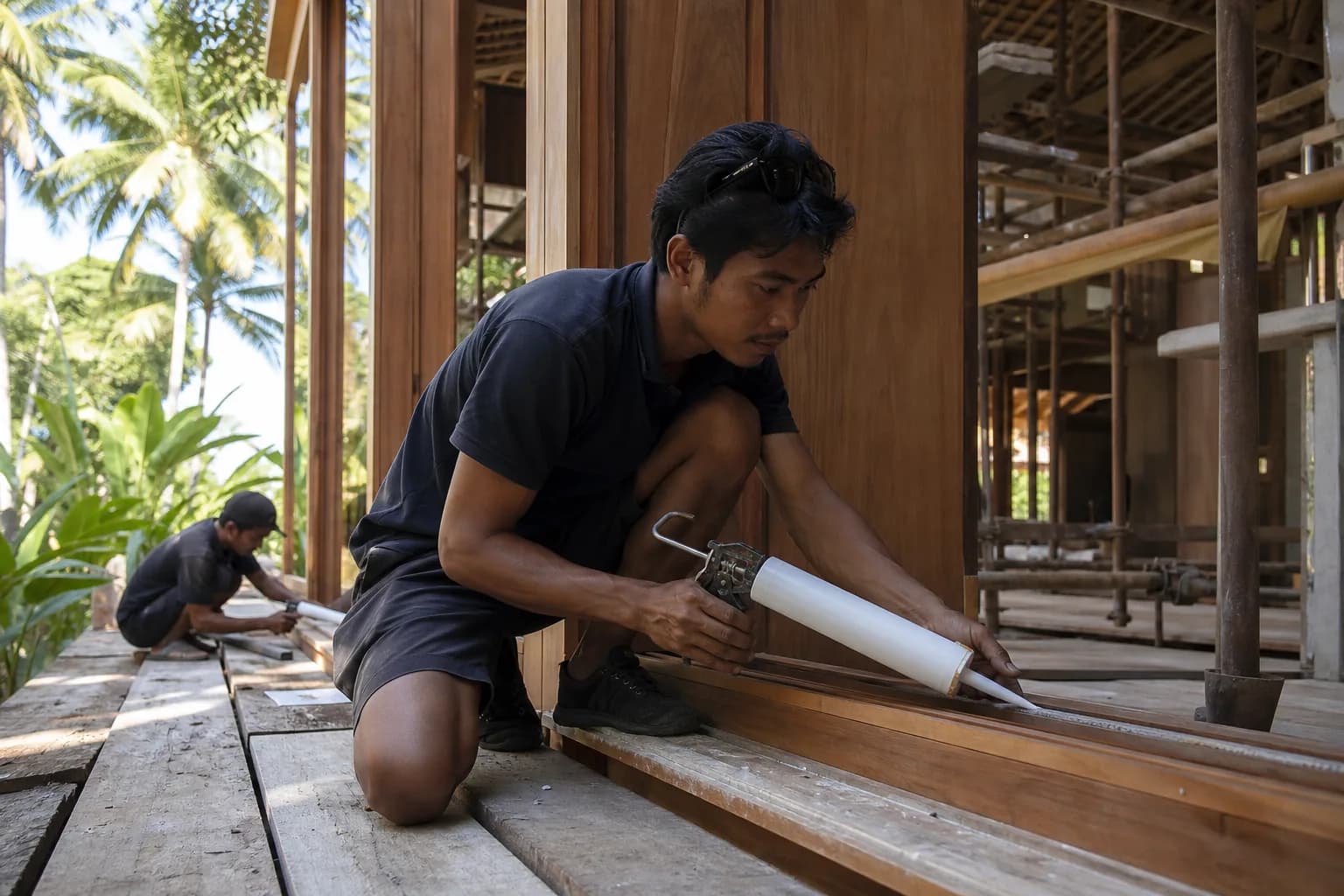
Prefinished Timber Joinery: Silicone Seals Fixings Bali
Professional prefinished timber joinery installation in Bali with silicone seals and fixings for durable weatherproof performance and a premium finish.
10 min read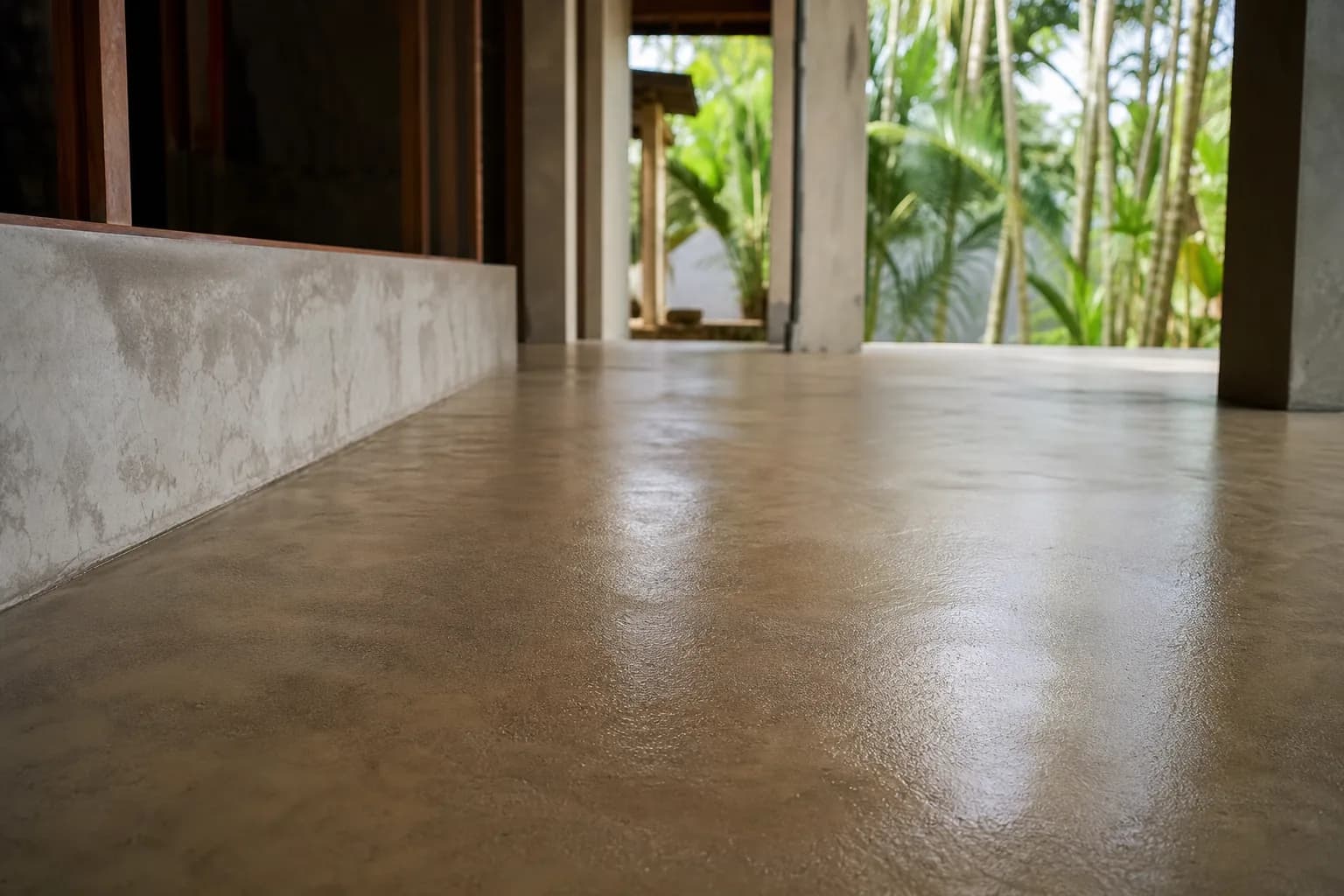
Polished Concrete Microtopping: Surface Prep Sealants Bali
Discover Bali s polished concrete microtopping: expert surface prep, durable sealants, and a flawless finish for modern floors with minimal maintenance.
9 min read